Carboxylic Acids
Carboxylic acids are organic molecules characterized by having a carboxyl-type functional group (-COOH). These acids are fundamental in various chemical reactions, including esterification, amidation, and decarboxylation. Carboxylic acids are widely used in the production of pharmaceuticals, polymers, and agrochemicals. In this section, you can find a large number of carboxylic acids ready to be used. At CymitQuimica, we provide a broad range of high-quality carboxylic acids to support your research and industrial applications.
Found 12453 products of "Carboxylic Acids"
Sort by
Purity (%)
0
100
|
0
|
50
|
90
|
95
|
100
2-Hydroxy-3-mercapto-1-propanesulfonic acid sodium salt
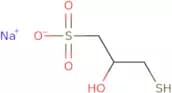
CAS:<p>2-Hydroxy-3-mercapto-1-propanesulfonic acid sodium salt (2HMP) is a diagnostic agent that can be used for the detection of bacterial infections. The conformational properties of 2HMP are similar to those of ATP, which allows it to bind to the polymerase chain reaction enzyme and initiate an enzymatic reaction. This leads to the production of a signal that can be detected by spectrophotometry or fluorometry. 2HMP has also been shown to have chemokine activity in vitro, but this has not been tested in vivo. 2HMP is a competitive inhibitor of human protein serine proteases, such as trypsin and chymotrypsin, with an IC50 value of approximately 1 μM.</p>Formula:C3H7NaO4S2Purity:Min. 95%Molecular weight:194.2 g/molMethyl 3-chlorophenylacetate
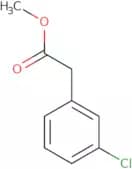
CAS:<p>Methyl 3-chlorophenylacetate is a chemical intermediate that has been used in the synthesis of pharmaceuticals and organic compounds. It has also been used as a reagent for research, especially in the study of organic chemistry. Methyl 3-chlorophenylacetate is a versatile building block and can be used as a reaction component to synthesize other chemicals. This compound is also an excellent scaffold for medicinal chemistry.</p>Formula:C9H9ClO2Purity:Min. 95%Color and Shape:Clear LiquidMolecular weight:184.62 g/molN-α-Fmoc-Nβ-allyloxycarbonyl-L-2,3-diaminopropionic acid
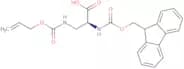
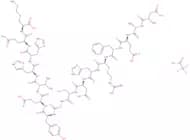
CAS:<p>Please enquire for more information about N-alpha-Fmoc-Nbeta-allyloxycarbonyl-L-2,3-diaminopropionic acid including the price, delivery time and more detailed product information at the technical inquiry form on this page</p>Formula:C22H22N2O6Purity:Min. 95%Molecular weight:410.53 g/molFibronectin CS-1 Fragment (1978-1985) trifluoroacetate salt
CAS:<p>Fibronectin CS-1 Fragment (1978-1985) trifluoroacetate salt H-Glu-Ile-Leu-Asp-Val-Pro-Ser-Thr-OH trifluoroacetate salt is a peptidomimetic with peroxidase activity. It has the ability to bind to red blood cells and monoclonal antibodies, which are used in spatially specific immunoassays. Fibronectin CS-1 Fragment (1978-1985) trifluoroacetate salt H-Glu-Ile-Leu-Asp-Val-Pro-Ser-Thr-OH trifluoroacetate salt also has an effect on hyperresponsiveness and can be used as a costimulatory antigen for cancer immunotherapy.</p>Formula:C38H64N8O15Purity:Min. 95%Molecular weight:872.96 g/mol(Deamino-Cys1,Leu4,Lys8)-Vasopressin trifluoroacetate salt
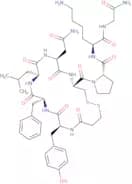
CAS:<p>Vasopressin is a hormone that belongs to the family of peptide hormones. Vasopressin has been shown to be localized in many tissues, including the brain, where it acts as a neurotransmitter and neuromodulator. Vasopressin is released by the paraventricular nucleus of the hypothalamus and stored in the posterior pituitary gland, from which it is released into the circulation when needed. Vasopressin binds to V1 receptors and causes an increase in cytosolic calcium levels through activation of voltage-gated calcium channels. It also stimulates cell growth and proliferation through activation of tyrosine kinase receptors on cells.</p>Formula:C47H67N11O11S2Purity:Min. 95%Molecular weight:1,026.23 g/molH-Lys-Phe-Gly-Lys-OH acetate salt
CAS:<p>Please enquire for more information about H-Lys-Phe-Gly-Lys-OH acetate salt including the price, delivery time and more detailed product information at the technical inquiry form on this page</p>Formula:C23H38N6O5Purity:Min. 95%Molecular weight:478.59 g/mol(Deamino-Phe19,D-Ala24,D-Pro26-psi(CH2NH)Phe27)-GRP (19-27) (human, porcine, canine) trifluoroacetate salt
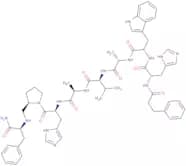
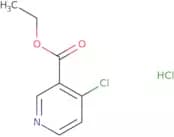
CAS:<p>Please enquire for more information about (Deamino-Phe19,D-Ala24,D-Pro26-psi(CH2NH)Phe27)-GRP (19-27) (human, porcine, canine) trifluoroacetate salt including the price, delivery time and more detailed product information at the technical inquiry form on this page</p>Formula:C57H72N14O8Purity:Min. 95%Molecular weight:1,081.27 g/mol4-Chloro-Nicotinic acid ethyl ester hydrochloride
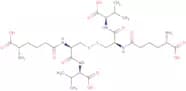
CAS:<p>4-Chloro-Niacin is a lead compound for the treatment of diabetes. The drug is an agonist of the G protein coupled receptor, which is involved in glucose homeostasis and insulin secretion. 4-Chloro-Niacin has been shown to decrease blood glucose levels in diabetic rats by activating the G protein coupled receptor, thereby increasing the release of insulin from pancreatic beta cells. This compound also has an affinity for pyridine nucleotide receptors, suggesting that it may be useful for treating metabolic syndromes.</p>Formula:C8H8ClNO2·HClPurity:Min. 95%Molecular weight:222.07 g/molBis-ACV trifluoroacetate salt
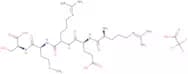
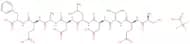
CAS:<p>Bis-ACV trifluoroacetate salt is a regulatory compound that belongs to the class of bis-acids. It is a cytosolic calcium ionophore that binds to the cytosolic calcium ion channel and regulates its activity. Bis-ACV trifluoroacetate salt also has nucleophilic attack on phosphate groups, which are essential for biosynthesis. The enzyme activity of this compound has been studied in various strains of bacteria such as E. coli and S. cerevisiae, and it was found to be involved in the synthesis of oligosaccharides and polysaccharides. This compound can be solubilized by the addition of sodium bicarbonate or urea, which facilitates its use in synthetic reactions. The synthase gene for this compound has been identified from various strains of bacteria such as E. coli and S. cerevisiae, but not from mammalian cells or plants.</p>Formula:C28H48N6O12S2Purity:Min. 95%Molecular weight:724.85 g/mol(Asn670,Leu671)-Amyloid b/A4 Protein Precursor770 (667-675) trifluoroacetate salt
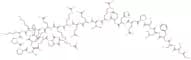
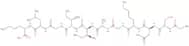
CAS:<p>Please enquire for more information about (Asn670,Leu671)-Amyloid b/A4 Protein Precursor770 (667-675) trifluoroacetate salt including the price, delivery time and more detailed product information at the technical inquiry form on this page</p>Formula:C44H66N10O18Purity:Min. 95%Molecular weight:1,023.05 g/mol(Des-octanoyl)-Ghrelin (human) trifluoroacetate salt
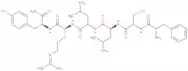
CAS:<p>Trifluoroacetate salt</p>Formula:C141H235N47O41Purity:Min. 95%Molecular weight:3,244.67 g/molTyr-Amyloid P Component (27-38) amide trifluoroacetate salt
CAS:<p>Please enquire for more information about Tyr-Amyloid P Component (27-38) amide trifluoroacetate salt including the price, delivery time and more detailed product information at the technical inquiry form on this page</p>Formula:C77H116N20O19SPurity:Min. 95%Molecular weight:1,657.93 g/molN-Acetoacetylcresidine sulfonic acid sodiumsalt
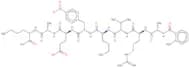
CAS:<p>Please enquire for more information about N-Acetoacetylcresidine sulfonic acid sodiumsalt including the price, delivery time and more detailed product information at the technical inquiry form on this page</p>Formula:C12H14NNaO6SPurity:Min. 95%Molecular weight:323.3 g/molMca-Pro-Leu-Ala-Nva-Dap (Dnp)-Ala-Arg-NH2 trifluoroacetate salt
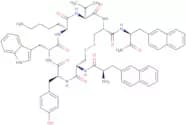
CAS:<p>Please enquire for more information about Mca-Pro-Leu-Ala-Nva-Dap (Dnp)-Ala-Arg-NH2 trifluoroacetate salt including the price, delivery time and more detailed product information at the technical inquiry form on this page</p>Formula:C49H68N14O15Purity:Min. 95%Molecular weight:1,093.15 g/mol(D-2-Nal 5,Cys6·11,Tyr7,D-Trp8,Val10, 2-Nal 12)-Somatostatin-14 (5-12) amide trifluoroacetate salt
CAS:<p>Please enquire for more information about (D-2-Nal 5,Cys6·11,Tyr7,D-Trp8,Val10, 2-Nal 12)-Somatostatin-14 (5-12) amide trifluoroacetate salt including the price, delivery time and more detailed product information at the technical inquiry form on this page</p>Formula:C63H73N11O9S2Purity:Min. 95%Molecular weight:1,192.45 g/mol4-Abz-Gly-Pro-D-Leu-D-Ala-NHOH trifluoroacetate salt
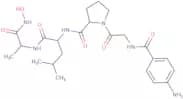
CAS:<p>4-Abz-Gly-Pro-D-Leu-D-Ala-NHOH trifluoroacetate salt is a synthetic, hydroxamic acid that inhibits the activity of collagenase, gelatinase and stromelysin. It also has inhibitory activities against metalloproteinases, such as matrix metalloproteinases and serine proteinases. 4-Abz-Gly-Pro-D-Leu-D-Ala-NHOH trifluoroacetate salt has been shown to inhibit the production of proinflammatory cytokines in human skin fibroblasts. This agent also induces the production of granulocytes in vitro.</p>Formula:C23H34N6O6Purity:Min. 95%Molecular weight:490.55 g/molAnthranilyl-HIV Protease Substrate V trifluoroacetate salt
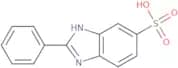
CAS:<p>Please enquire for more information about Anthranilyl-HIV Protease Substrate V trifluoroacetate salt including the price, delivery time and more detailed product information at the technical inquiry form on this page</p>Formula:C50H76N14O13Purity:Min. 95%Molecular weight:1,081.23 g/mol2-Phenyl-5-benzimidazolesulfonic acid
CAS:<p>2-Phenyl-5-benzimidazolesulfonic acid is a chemical compound that has been shown to have stability in vitro. It was used as a skin cancer treatment in the past, but is now mainly used as an analytical reagent. It has been shown to be effective against coumarin derivatives and enzyme activities. 2-Phenyl-5-benzimidazolesulfonic acid can be used as a chelating agent for metals and also binds to zirconium oxide, which is one of the materials used in radiation shielding. The compound can also be used for wastewater treatment and polymerase chain reaction (PCR) analysis. This compound can be synthesized using sodium salts, solid phase microextraction (SPME), and sodium citrate in order to form the benzene ring. The synthesis can then be completed by adding two phenyl groups onto the benzene ring with various reactions such as transfer reactions or radiation. Finally,</p>Formula:C13H10N2O3SPurity:Min. 95%Molecular weight:274.3 g/molApelin-36 (1-16) amide (human) trifluoroacetate salt
CAS:<p>Please enquire for more information about Apelin-36 (1-16) amide (human) trifluoroacetate salt including the price, delivery time and more detailed product information at the technical inquiry form on this page</p>Formula:C74H117N27O20Purity:Min. 95%Molecular weight:1,704.89 g/molBiotinyl-Atrial Natriuretic Factor (1-28) (human) trifluoroacetate salt
CAS:<p>Please enquire for more information about Biotinyl-Atrial Natriuretic Factor (1-28) (human) trifluoroacetate salt including the price, delivery time and more detailed product information at the technical inquiry form on this page</p>Formula:C137H217N47O41S4Purity:Min. 95%Molecular weight:3,306.75 g/molAmyloid β-Protein (1-16) trifluoroacetate salt
CAS:<p>Amyloid beta-Protein (1-16) trifluoroacetate salt is a modified form of amyloid beta protein. It is synthesized by the modification of amino acids with trifluoroacetic acid and can be used to study the pathogenesis of Alzheimer's disease. Amyloid beta-Protein (1-16) trifluoroacetate salt has been shown to bind to β-amyloid, which is thought to be the main component of plaques in Alzheimer's disease. This binding inhibits the formation of β-amyloid aggregates, which are associated with neurotoxicity and neuronal cell death.</p>Formula:C84H119N27O28Purity:Min. 95%Molecular weight:1,955.01 g/mol(Nle 35)-Amyloid b-Protein (25-35) trifluoroacetate salt
CAS:<p>Please enquire for more information about (Nle 35)-Amyloid b-Protein (25-35) trifluoroacetate salt including the price, delivery time and more detailed product information at the technical inquiry form on this page</p>Formula:C46H83N13O14Purity:Min. 95%Molecular weight:1,042.23 g/molBromofluoroacetic Acid
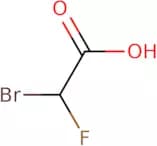
CAS:<p>Bromofluoroacetic acid is a synthetic, chiral molecule with the chemical formula CF3CO2H. It has the molecular weight of 109.07 and a boiling point of 212 °C. Bromofluoroacetic acid is used in industry as an intermediate for fluoroacetic acid. It is also used to manufacture bromofluorocarbons, which are used as propellants in aerosol sprays. Bromofluoroacetic acid has been studied in clinical studies as a treatment for epilepsy and as an antimicrobial agent against bacteria such as Staphylococcus aureus and Enterobacter aerogenes.</p>Formula:C2H2BrFO2Purity:Min. 95%Molecular weight:156.94 g/molH-Gly-His-Arg-Pro-NH2 acetate salt
CAS:<p>Please enquire for more information about H-Gly-His-Arg-Pro-NH2 acetate salt including the price, delivery time and more detailed product information at the technical inquiry form on this page</p>Formula:C19H32N10O4Purity:Min. 95%Molecular weight:464.52 g/mol5,6-Dichloronicotinic acid
CAS:<p>5,6-Dichloronicotinic acid is a compound that can be synthesized by reacting methyl ketones with chloroacetic acid. It is used in the synthesis of maleic anhydride and has been shown to inhibit the catalysis of acetylcholine chloride. 5,6-Dichloronicotinic acid has also been shown to have an inhibitory effect on Alzheimer's disease. The kinetic mechanism for this inhibition occurs through the hydrolysis step of 5,6-Dichloronicotinic acid by magnesium chloride in hexane solution. The reactive acylation reaction proceeds when 5,6-Dichloronicotinic acid reacts with acetic anhydride in the presence of pyridine.</p>Formula:C6H3Cl2NO2Color and Shape:PowderMolecular weight:192 g/molNeuroendocrine Regulatory Peptide-1 (rat) trifluoroacetate salt
CAS:<p>Please enquire for more information about Neuroendocrine Regulatory Peptide-1 (rat) trifluoroacetate salt including the price, delivery time and more detailed product information at the technical inquiry form on this page</p>Formula:C110H180N32O38Purity:Min. 95%Molecular weight:2,558.8 g/molAc-Arg-Cys-Met-5-aminopentanoyl-Arg-Val-Tyr-5-aminopentanoyl-Cys-NH2 trifluoroacetate salt (Disulfide bond)
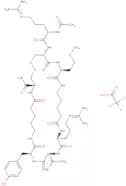
CAS:<p>Please enquire for more information about Ac-Arg-Cys-Met-5-aminopentanoyl-Arg-Val-Tyr-5-aminopentanoyl-Cys-NH2 trifluoroacetate salt (Disulfide bond) including the price, delivery time and more detailed product information at the technical inquiry form on this page</p>Formula:C49H82N16O11S3Purity:Min. 95%Molecular weight:1,167.47 g/mol2-[3-(S)-[3-(2-(7-Chloro-2-quinolinyl)ethenyl)phenyl]-3-hydroxypropyl]benzoic acid methyl ester
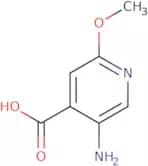
CAS:<p>2-[3-(S)-[3-(2-(7-Chloro-2-quinolinyl)ethenyl)phenyl]-3-hydroxypropyl]benzoic acid methyl ester is a synthetic compound that can be used as a reagent in the synthesis of polynucleotides and polypeptides. It can also be used as an inhibitor of ketoreductase, which is an enzyme involved in the synthesis of fatty acids and ketones. 2-[3-(S)-[3-(2-(7-Chloro-2-quinolinyl)ethenyl)phenyl]-3-hydroxypropyl]benzoic acid methyl ester has been shown to inhibit the growth of wild type and mutant strains of E. coli. The molecular weight of this compound is 439.</p>Formula:C28H24ClNO3Purity:Min. 95%Molecular weight:457.95 g/mol5-Amino-2-methoxyisonicotinic acid
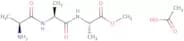
CAS:<p>5-Amino-2-methoxyisonicotinic acid is a carboxylic acid that is used in the synthesis of aminopyridines. The compound can be synthesized from formamidine acetate and diethyl dicarbonate. This process involves lithiation, followed by addition of an amine and finally conversion to the desired product with formamidine acetate. 5-Amino-2-methoxyisonicotinic acid can also be synthesized from formamide and diethyl ether. 5-Amino-2-methoxyisonicotinic acid is an analog of 2,4,6-trimethylaniline and has been shown to have similar properties to this compound, including strong basicity.</p>Formula:C7H8N2O3Purity:Min. 95%Molecular weight:168.15 g/molH-Ala-Ala-Ala-OMe acetate salt
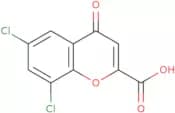
CAS:Controlled Product<p>Please enquire for more information about H-Ala-Ala-Ala-OMe acetate salt including the price, delivery time and more detailed product information at the technical inquiry form on this page</p>Formula:C10H19N3O4Purity:Min. 95%Molecular weight:245.28 g/mol6,8-Dichlorochromone-2-carboxylic acid
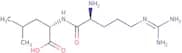
CAS:<p>6,8-Dichlorochromone-2-carboxylic acid is a fine chemical that is used as a building block in the synthesis of complex compounds. It is also a versatile building block that can be used in many reactions, such as nucleophilic substitution, electrophilic addition, and condensation reactions. This compound has CAS number 16722-38-6 and is a reagent for research purposes.</p>Formula:C10H4Cl2O4Purity:Min. 95%Color and Shape:PowderMolecular weight:259.04 g/molH-Arg-Leu-OH acetate salt
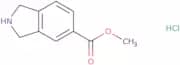
CAS:<p>H-Arg-Leu-OH acetate salt is a synthetic version of the natural amino acid Arginine. It has been shown to have anti-inflammatory effects and to inhibit the growth of cancer cells in cell culture. H-Arg-Leu-OH acetate salt also inhibits the production of messenger RNA that leads to the synthesis of inflammatory proteins and growth factors, as well as light emission, which may be due to its effect on response elements in cells.</p>Formula:C12H25N5O3Purity:Min. 95%Molecular weight:287.36 g/molMethyl isoindoline-5-carboxylate HCl
CAS:<p>Please enquire for more information about Methyl isoindoline-5-carboxylate HCl including the price, delivery time and more detailed product information at the technical inquiry form on this page</p>Formula:C10H12ClNO2Purity:Min. 95%Molecular weight:213.66 g/mol(Val671)-Amyloid b/A4 Protein Precursor770 (667-676) trifluoroacetate salt
CAS:<p>Please enquire for more information about (Val671)-Amyloid b/A4 Protein Precursor770 (667-676) trifluoroacetate salt including the price, delivery time and more detailed product information at the technical inquiry form on this page</p>Formula:C51H82N14O18Purity:Min. 95%Molecular weight:1,179.28 g/molH-Ile-Arg-OH acetate salt
CAS:<p>H-Ile-Arg-OH acetate salt is an antioxidant that belongs to the group of amino acids. It has been shown to have antioxidative activity in vitro, as well as interaction with radicals and free radicals. Cryo-electron microscopy was used to show this compound's radical scavenging activity. H-Ile-Arg-OH acetate salt has also been found to have antioxidative properties in eukaryotes. This compound is composed of two isomers: H-Ile and Arg. The hydroxyl group on the H-Ile isomer gives this compound its antioxidative properties, while the Arg isomer possesses hydrolytic properties. The subunits are linked together by a peptide bond between the carboxyl group on Arg and the amine group on H-Ile. In addition, H-Ile has an -OH hydroxyl group that can be scavenged by hydroxyl radicals, which provides antioxidative activity.</p>Formula:C12H25N5O3Purity:Min. 95%Molecular weight:287.36 g/mol(Tyr(Me)21)-Neuropeptide Y (human, rat) trifluoroacetate salt
CAS:<p>Please enquire for more information about (Tyr(Me)21)-Neuropeptide Y (human, rat) trifluoroacetate salt including the price, delivery time and more detailed product information at the technical inquiry form on this page</p>Formula:C190H287N55O57SPurity:Min. 95%Molecular weight:4,285.71 g/molAmyloid β/A4 Protein Precursor770 (403-407) trifluoroacetate salt
CAS:<p>Please enquire for more information about Amyloid beta/A4 Protein Precursor770 (403-407) trifluoroacetate salt including the price, delivery time and more detailed product information at the technical inquiry form on this page</p>Formula:C25H47N11O9SPurity:Min. 95%Molecular weight:677.78 g/molL-Lysine acetate
CAS:Controlled Product<p>L-Lysine acetate is a precursor of L-lysine and is used in the treatment of cancers. It has been shown to promote the growth of pluripotent cells, which can differentiate into any tissue type. L-Lysine acetate promotes cellular transformation by increasing the expression of growth factor-β1 in cells. This compound also enhances cellular physiology, energy metabolism, and protein degradation. L-Lysine acetate inhibits the ubiquitin ligases that are involved in protein degradation, leading to an increase in cell proliferation. The use of L-Lysine acetate has shown promising results for the treatment of infectious diseases such as HIV/AIDS and tuberculosis. L-Lysine acetate blocks the replication of human immunodeficiency virus (HIV) by inhibiting reverse transcriptase activity and blocking its DNA chain elongation process.</p>Formula:C8H18N2O4Purity:Min. 95%Color and Shape:PowderMolecular weight:206.24 g/molDSP
CAS:<p>DSP is a widely used disulfide crosslinker in ADC synthesis. It forms reversible conjugates via intracellular reduction, enabling payload release.</p>Formula:C14H16N2O8S2Purity:Min. 95%Color and Shape:SolidMolecular weight:404.42 g/mol(Phe1,Ser2,Tyr6)-PAR-1 (1-6) amide (human) trifluoroacetate salt
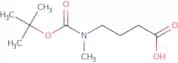
CAS:<p>Please enquire for more information about (Phe1,Ser2,Tyr6)-PAR-1 (1-6) amide (human) trifluoroacetate salt including the price, delivery time and more detailed product information at the technical inquiry form on this page</p>Formula:C39H60N10O8Purity:Min. 95%Molecular weight:796.96 g/molBoc-N-Methyl-γ-aMinobutyric acid
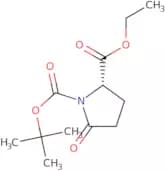
CAS:<p>Please enquire for more information about Boc-N-Methyl-gaMMa-aMinobutyric acid including the price, delivery time and more detailed product information at the technical inquiry form on this page</p>Formula:C10H19NO4Purity:Min. 95%Molecular weight:217.26 g/molN-Boc-L-pyroglutamic acid ethyl ester
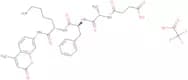
CAS:<p>N-Boc-L-pyroglutamic acid ethyl ester is a chiral building block that can be used for the preparation of amides. It is a good activating agent and is used to synthesize amide bonds from carboxylic acids. N-Boc-L-pyroglutamic acid ethyl ester can be used to synthesize sulfoxides and piperidines, which are ligands. It is also an amido, stereoselective and DPP-4 inhibitor. This chemical simplifies catalysis reactions by replacing the use of toxic solvents.</p>Formula:C12H19NO5Purity:Min. 95%Molecular weight:257.28 g/molSuc-Ala-Phe-Lys-AMC trifluoroacetate salt
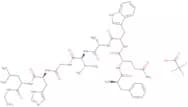
CAS:<p>Please enquire for more information about Suc-Ala-Phe-Lys-AMC trifluoroacetate salt including the price, delivery time and more detailed product information at the technical inquiry form on this page</p>Formula:C32H39N5O8·C2HF3O2Purity:Min. 95%Molecular weight:735.7 g/mol(D-Phe6,Leu-NHEt 13,des-Met14)-Bombesin (6-14) trifluoroacetate salt
CAS:<p>Bombesin is a peptide hormone that is secreted by the intestines and the pancreas. Bombesin stimulates the adrenal glands to release adrenaline, which in turn stimulates the bladder to contract. Bombesin has been shown to increase bladder efficiency significantly when given intravenously to patients with chronic urinary retention. This drug also has significant effects on pain syndrome, as it can facilitate or inhibit pain depending on its concentration. Bombesin's mechanism of action is still unclear, but it may work by antagonizing other neurotransmitters like noradrenaline or adrenaline.</p>Formula:C49H69N13O9Purity:Min. 95%Molecular weight:984.15 g/mol12-Doxyl stearic acid
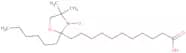
CAS:<p>12-Doxyl stearic acid is a fatty acid that inhibits the vasoactive intestinal peptide (VIP). The inhibitory effect of 12-Doxyl stearic acid on VIP was demonstrated by incubating the cells with this fatty acid and measuring the change in mitochondrial Ca2+ concentration. This inhibition was shown to be due to the inhibition of fatty acids and not an effect on Ca2+ ion channels. Fatty acids are important for normal cellular function, such as maintaining membrane fluidity and aiding in signal transduction. 12-Doxyl stearic acid has been shown to inhibit the production of cardiac fatty acids and may be useful in treating cardiac disorders. 12-Doxyl stearic acid also has a fluorescence probe that can be used to study how cells react to different conditions, such as changes in water vapor or pH levels.</p>Formula:C22H42NO4Purity:Min. 95%Color and Shape:Yellow Clear LiquidMolecular weight:384.57 g/molAlloferon 2 trifluoroacetate salt
CAS:<p>Please enquire for more information about Alloferon 2 trifluoroacetate salt including the price, delivery time and more detailed product information at the technical inquiry form on this page</p>Formula:C46H69N19O15Purity:Min. 95%Molecular weight:1,128.16 g/molBombesin trifluoroacetate salt
CAS:<p>Trifluoroacetate salt</p>Formula:C71H110N24O18SPurity:Min. 95%Molecular weight:1,619.85 g/molDynorphin A (1-8) acetate salt
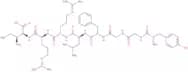
CAS:<p>Dynorphin A (1-8) acetate salt H-Tyr-Gly-Gly-Phe-Leu-Arg-Arg-Ile-OH acetate salt is a synthetic, nonpeptide opioid agonist. It binds to the delta receptor and inhibits nociception in the central nervous system. This compound has been shown to produce acute phase and subchronic toxicity in rats and has been shown to possess antinociceptive effects in mice. Dynorphin A (1-8) acetate salt H-Tyr-Gly-Gly-Phe-Leu-Arg-Arg-Ile-OH acetate salt has also been shown to antagonize the enzyme inhibitors of phospholipase A2, cyclooxygenase, and lipoxygenase.<br>MECHANISM OF ACTION: Dynorphin A (1–8) is an endogenous peptide that modulates neurotransmission at the</p>Formula:C46H72N14O10Purity:Min. 95%Molecular weight:981.15 g/mol1-(Mercaptomethyl)cyclopropaneacetic acid
CAS:<p>1-(Mercaptomethyl)cyclopropaneacetic acid is a reaction product of hydrolysis, transfer, and industrialization. It is used in the synthesis of organic compounds such as quinolinediols and thioureas. 1-(Mercaptomethyl)cyclopropaneacetic acid is typically prepared by the reaction of an alkylsulfonyl chloride with an inorganic base such as lithium or sodium carbonate in an organic solvent such as acetonitrile. The compound is also used to produce other organosulfur compounds, including imino sulfides and disulfides.</p>Formula:C6H10O2SPurity:Min. 95%Color and Shape:PowderMolecular weight:146.21 g/molC5a Anaphylatoxin (human) trifluoroacetate salt )
CAS:<p>Please enquire for more information about C5a Anaphylatoxin (human) trifluoroacetate salt ) including the price, delivery time and more detailed product information at the technical inquiry form on this page</p>Formula:C350H578N108O107S8Purity:Min. 95%Molecular weight:8,267.53 g/mol







![2-[3-(S)-[3-(2-(7-Chloro-2-quinolinyl)ethenyl)phenyl]-3-hydroxypropyl]benzoic acid methyl ester](/_next/image/?url=https%3A%2Fstatic.cymitquimica.com%2Fproducts%2F3D%2Fthumb-webp%2FFC20038.webp&w=3840&q=75)