Carboxylic Acids
Carboxylic acids are organic molecules characterized by having a carboxyl-type functional group (-COOH). These acids are fundamental in various chemical reactions, including esterification, amidation, and decarboxylation. Carboxylic acids are widely used in the production of pharmaceuticals, polymers, and agrochemicals. In this section, you can find a large number of carboxylic acids ready to be used. At CymitQuimica, we provide a broad range of high-quality carboxylic acids to support your research and industrial applications.
Found 12453 products of "Carboxylic Acids"
Sort by
Purity (%)
0
100
|
0
|
50
|
90
|
95
|
100
((R)-4-Hydroxy-4-methyl-Orn (FITC)7)-Phalloidin trifluoroacetate salt
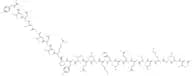
CAS:<p>Please enquire for more information about ((R)-4-Hydroxy-4-methyl-Orn (FITC)7)-Phalloidin trifluoroacetate salt including the price, delivery time and more detailed product information at the technical inquiry form on this page</p>Formula:C56H60N10O15S2Purity:Min. 95%Molecular weight:1,177.27 g/molent-[Amyloid b-Protein (20-16)]-b-Ala-D-Lys(ent-[Amyloid b-Protein (16-20)]) trifluoroacetate salt
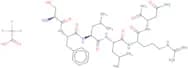
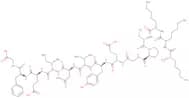
CAS:<p>Please enquire for more information about ent-[Amyloid b-Protein (20-16)]-b-Ala-D-Lys(ent-[Amyloid b-Protein (16-20)]) trifluoroacetate salt including the price, delivery time and more detailed product information at the technical inquiry form on this page</p>Formula:C79H119N15O13Purity:Min. 95%Molecular weight:1,486.88 g/molAcetyl-(Asn30,Tyr32)-Calcitonin (8-32) (salmon I) trifluoroacetate salt
CAS:<p>Please enquire for more information about Acetyl-(Asn30,Tyr32)-Calcitonin (8-32) (salmon I) trifluoroacetate salt including the price, delivery time and more detailed product information at the technical inquiry form on this page</p>Formula:C127H205N37O40Purity:Min. 95%Molecular weight:2,890.21 g/molLys-Lys-IRS-1 (891-902) (dephosphorylated) (human) trifluoroacetate salt
CAS:<p>Please enquire for more information about Lys-Lys-IRS-1 (891-902) (dephosphorylated) (human) trifluoroacetate salt including the price, delivery time and more detailed product information at the technical inquiry form on this page</p>Formula:C73H114N18O22Purity:Min. 95%Molecular weight:1,595.79 g/molMethyl carbamate
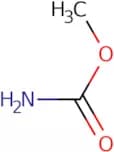
CAS:<p>Methyl carbamate is a carbamate that inhibits a number of enzymes, including mitochondrial membrane potential, cell nuclei, and dinucleotide phosphate. It also inhibits the synthesis of DNA, RNA, and proteins. Methyl carbamate has been shown to inhibit the growth of infectious diseases such as malaria and tuberculosis. It is a potent inhibitor of hyperproliferative diseases such as cancer. Methyl carbamate is used in analytical chemistry to determine the amount of an unknown compound in a sample by measuring its concentration with mass spectrometry or other methods. The compound can be prepared in various ways depending on the type of analysis needed. Methyl carbamate is usually prepared by reacting methyl iodide with sodium cyanide at 150 °C for 24 hours.</p>Formula:C2H5NO2Purity:Min. 95%Molecular weight:75.07 g/mol[4-(1-Cyano-1-methylethyl)phenyl]boronic acid
CAS:<p>Please enquire for more information about [4-(1-Cyano-1-methylethyl)phenyl]boronic acid including the price, delivery time and more detailed product information at the technical inquiry form on this page</p>Formula:C10H12BNO2Purity:Min. 95%Molecular weight:189.02 g/molSPARC (119-122) (mouse) acetate salt
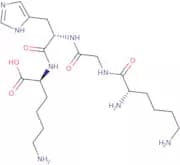
CAS:<p>SPARC (119-122) (mouse) is an acetate salt of H-Lys-Gly-His-Lys-OH. SPARC (119-122) has been shown to be a mimetic of the c-terminal region of the protein SPARC and can bind to many metal ions including Zn2+, Mn2+, Cu2+, Co2+, Ni2+ and Mg2+. The binding affinity for these metals is dose dependent, with saturation occurring at high concentrations. This property may make this compound a therapeutic target for drug discovery strategies.</p>Formula:C20H36N8O5Purity:Min. 95%Molecular weight:468.55 g/molGLP-1 (7-37) (human, bovine, guinea pig, mouse, rat) trifluoroacetate salt
CAS:Controlled Product<p>Please enquire for more information about GLP-1 (7-37) (human, bovine, guinea pig, mouse, rat) trifluoroacetate salt including the price, delivery time and more detailed product information at the technical inquiry form on this page</p>Formula:C151H228N40O47Purity:Min. 95%Molecular weight:3,355.67 g/mol2,6-Dichloro-5-fluoronicotinic acid
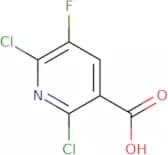
CAS:<p>2,6-Dichloro-5-fluoronicotinic acid (2,6-DCFNA) is a chlorinating agent that is activated in acidic solutions. It is used to produce the disinfectant peracetic acid and in the industrial process of producing phenol. 2,6-DCFNA reacts with chloride to form hypochlorous acid (HOCl), which causes inflammation in cells by activating inflammatory cells such as neutrophils and macrophages. 2,6-DCFNA also inhibits tyrosine kinase activity, which may contribute to its anti-inflammatory properties. The toxic effects of 2,6-DCFNA have been studied on hematopoietic cells in vitro. Studies show that this compound can cause apoptosis or death of these cells and may be useful for the treatment of inflammatory diseases such as rheumatoid arthritis. 2,6-DCFNA has also been shown to inhibit tumor growth when</p>Formula:C6H2Cl2FNO2Purity:Min. 95%Color and Shape:PowderMolecular weight:209.99 g/molGambogic acid
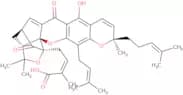
CAS:<p>Gambogic acid is a xanthonoid compound, which is a naturally occurring product derived from the resin of Garcinia hanburyi, a tree found in Southeast Asia. It functions primarily through its apoptotic and anti-proliferative effects on cancer cells. Mechanistically, Gambogic acid binds to transferrin receptors, leading to the disruption of cell survival pathways, inhibition of the NF-kB signaling pathway, and induction of apoptosis by activating caspases and influencing mitochondrial pathways.</p>Purity:Min. 95%Mca-Lys-Pro-Leu-Gly-Leu-Dap (Dnp)-Ala-Arg-NH2 trifluoroacetate salt
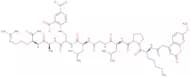
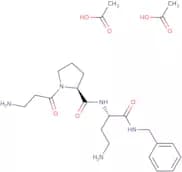
CAS:<p>Please enquire for more information about Mca-Lys-Pro-Leu-Gly-Leu-Dap (Dnp)-Ala-Arg-NH2 trifluoroacetate salt including the price, delivery time and more detailed product information at the technical inquiry form on this page</p>Formula:C55H80N16O16Purity:Min. 95%Molecular weight:1,221.32 g/mol(2S)-β-Alanyl-L-prolyl-2,4-diamino-N-(phenylmethyl)butanamideacetate
CAS:Controlled Product<p>(2S)-beta-Alanyl-L-prolyl-2,4-diamino-N-(phenylmethyl)butanamideacetate (BAP) is a skin care product that can be applied topically to the skin. BAP is an amino acid derivative that has been shown in clinical studies to hydrate the skin. It acts as a humectant and binds to water molecules, thus increasing the moisture content of the skin. This product also has antioxidant and anti-inflammatory properties, as well as anti-aging effects. BAP is often used in cosmetic products for its film forming properties and ability to form polymeric films on the surface of cells.</p>Formula:C21H33N5O5Purity:Min. 95%Molecular weight:435.52 g/molH-Leu-Trp-Met-Arg-Phe-Ala-OH acetate salt
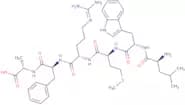
CAS:<p>H-Leu-Trp-Met-Arg-Phe-Ala-OH acetate salt is a synthetic amino acid. It has been shown to be a substrate for peptidases and proteolytic enzymes, including serine protease. H-Leu-Trp-Met-Arg-Phe-Ala-OH acetate salt also has catalytic activity, which leads to the formation of methyl ketones. This product is used as an analytical reagent in the determination of specificities of proteolytic enzymes. It is also used to measure the activity of amyloid protein and peptidases.</p>Formula:C40H58N10O7SPurity:Min. 95%Molecular weight:823.02 g/molOM99-2trifluoroacetate salt
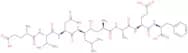
CAS:<p>Please enquire for more information about OM99-2trifluoroacetate salt including the price, delivery time and more detailed product information at the technical inquiry form on this page</p>Formula:C41H64N8O14Purity:Min. 95%Molecular weight:892.99 g/molBiotinyl-Pancreatic Polypeptide (human) trifluoroacetate salt
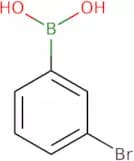
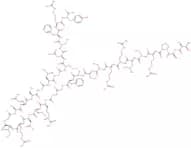
CAS:<p>Please enquire for more information about Biotinyl-Pancreatic Polypeptide (human) trifluoroacetate salt including the price, delivery time and more detailed product information at the technical inquiry form on this page</p>Formula:C195H301N55O56S3Purity:Min. 95%Molecular weight:4,408.01 g/mol3-Bromophenyl boronic acid
CAS:<p>3-Bromophenyl boronic acid is a group P2 molecule with functional groups of vibrational and cross-coupling. It has been shown to inhibit the activity of aryl boronic acids, which are commonly used in analytical methods. 3-Bromophenyl boronic acid is also capable of inhibiting the production of alizarin, which is a dye that is used for staining biological tissue. The molecular modeling study revealed that this molecule has an atomic orbital with electron density distribution around the central carbon atom. This distribution indicates that it is more stable than other molecules with similar structures.</p>Formula:C6H6BBrO2Purity:Min. 95%Color and Shape:PowderMolecular weight:200.83 g/mol(Arg17)-Amyloid b-Protein (1-42) trifluoroacetate salt
CAS:<p>Please enquire for more information about (Arg17)-Amyloid b-Protein (1-42) trifluoroacetate salt including the price, delivery time and more detailed product information at the technical inquiry form on this page</p>Formula:C203H312N58O60SPurity:Min. 95%Molecular weight:4,557.07 g/mol3,4,5-Trimethoxybenzoic acid anhydride
CAS:<p>3,4,5-Trimethoxybenzoic acid anhydride is a synthetic chemical compound that is used as a pharmaceutical intermediate. It is mainly used to prepare potent anticancer agents and potent anticancer drugs. 3,4,5-Trimethoxybenzoic acid anhydride reacts with amines in the presence of a base to form substituted amides. This reaction has been shown by crystal x-ray diffraction to be sensitive to the solvent polarity and temperature of the reaction medium. The compound can also react with chloride ion to form 3,4,5-trichlorobenzoic acid anhydride (3TCBA).</p>Formula:C20H22O9Purity:(%) Min. 85%Color and Shape:PowderMolecular weight:406.38 g/molTRAP-6 amide trifluoroacetate salt
CAS:<p>Protease-activated receptor 1 (PAR-1) selective activating peptide, TFA salt. 98%.</p>Formula:C34H57N11O8Purity:Min. 95%Color and Shape:PowderMolecular weight:747.89 g/molThr-Ala-Pro-Arg-Atrial Natriuretic Factor (1-28) (human, bovine, porcine) trifluoroacetate salt
CAS:<p>Thr-Ala-Pro-Arg-Atrial Natriuretic Factor (1-28) (human, bovine, porcine) trifluoroacetate salt is a peptide hormone that regulates blood pressure by causing the kidneys to excrete sodium and water. It is used as a model system for studying the physiological effects of urodilatin and has been shown to inhibit the cyclase enzyme. Thr-Ala-Pro-Arg-Atrial Natriuretic Factor (1-28) (human, bovine, porcine) trifluoroacetate salt may also have an antihypertensive effect through its ability to reduce levels of natriuretic peptides in plasma. This drug is also being investigated as a possible treatment for congestive heart failure. The small molecular weight makes it suitable for use as a natriuretic or antihypertensive drug with minimal side effects.</p>Formula:C145H234N52O44S3Purity:Min. 95%Molecular weight:3,505.93 g/molGLP-1 (7-37) (human, bovine, guinea pig, mouse, rat) acetate salt
CAS:<p>Please enquire for more information about GLP-1 (7-37) (human, bovine, guinea pig, mouse, rat) acetate salt including the price, delivery time and more detailed product information at the technical inquiry form on this page</p>Formula:C151H228N40O47·xC2H4O2Purity:Min. 95%Molecular weight:3,355.67 g/molOrphan GPCR SP9155 Agonist P550 (mouse) trifluoroacetate salt
CAS:<p>Please enquire for more information about Orphan GPCR SP9155 Agonist P550 (mouse) trifluoroacetate salt including the price, delivery time and more detailed product information at the technical inquiry form on this page</p>Formula:C126H195N37O37Purity:Min. 95%Molecular weight:2,820.12 g/molRVG-9R trifluoroacetate salt
CAS:<p>Please enquire for more information about RVG-9R trifluoroacetate salt including the price, delivery time and more detailed product information at the technical inquiry form on this page</p>Formula:C201H334N82O55S2Purity:Min. 95%Molecular weight:4,843.45 g/mol(2-Chlorophenyl)boronic acid
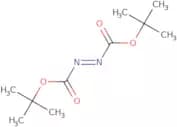
CAS:<p>2-Chlorophenylboronic acid is a diphenyl ether that can be used as a building block for the synthesis of benzodiazepine receptor ligands. It has been shown to be an efficient nucleophile, leading to the formation of carbonyl groups in the presence of halides. 2-Chlorophenylboronic acid has also been shown to inhibit p38 kinase activity and may be useful for anticancer therapy.</p>Formula:C6H6BClO2Purity:Min. 95%Molecular weight:156.37 g/molDi-tert-butyl azodicarboxylate
CAS:<p>Di-tert-butyl azodicarboxylate (DTBA) is an organic compound that is used in organic synthesis as a dienophile. DTBA reacts with various electrophiles to form dihydro derivatives through a transfer mechanism, which can be monitored by the change in magnetic resonance spectroscopy signals. The reaction of DTBA with trifluoroacetic acid and hydrogen chloride forms the desired product, 3-amino-2,4,6-trichloropyridine. DTBA is also used for the synthesis of 1,4-dihydropyridines from 2-aminobenzene derivatives and bromoacetaldehyde diethyl acetal. This process is catalyzed by palladium on carbon. DTBA is asymmetric at position C5 and C6 because it has two chiral centers: one at C3 and one at C5 or C6. The use of this reagent allows for the scalable</p>Formula:C10H18N2O4Purity:Min. 98%Color and Shape:PowderMolecular weight:230.26 g/molNeuromedin S (human) trifluoroacetate salt
<p>Please enquire for more information about Neuromedin S (human) trifluoroacetate salt including the price, delivery time and more detailed product information at the technical inquiry form on this page</p>Formula:C173H265N53O44Purity:Min. 95%Molecular weight:3,791.29 g/molNeurokinin B trifluoroacetate salt
CAS:<p>Neurokinin B trifluoroacetate salt H-Asp-Met-His-Asp-Phe-Phe-Val-Gly-Leu-Met-NH2 trifluoroacetate salt is a synthetic peptide that is a potent and selective antagonist of the NMDA receptor. Neurokinin B trifluoroacetate salt H-Asp-Met-His-Asp-Phe-Phe-Val-Gly-Leu-Met NH2 trifluoroacetate salt has been shown to be effective in animal models of chronic pain, neuropathic pain, and bone age delay. This synthetic peptide has also been shown to be effective in the treatment of squamous cell carcinoma and acid lesions in human subjects. The molecular weight of this compound is 624.6 g/mol.br><br>Neurokinin B trifluoroacetate salt H Asp Met His Asp P</p>Formula:C55H79N13O14S2Purity:Min. 95%Molecular weight:1,210.43 g/mol5-Formyltetrahydropteroic acid
CAS:<p>5-Formyltetrahydropteroic acid is a labile, water soluble compound that can be used as a chromatographic standard. It has been used to determine the purity of water by measuring the concentration of this impurity in the sample. 5-Formyl tetrahydropterin has been shown to inhibit tumor growth and induce apoptosis in cancer cells. This compound also inhibits protein synthesis in cells by inhibiting ribosomal RNA processing and decreasing the rate of protein synthesis. 5-Formyltetrahydropteroic acid is also used to prevent bone marrow from producing red blood cells when given with leucovorin, which prevents the breakdown of bone marrow cells caused by radiation therapy or chemotherapy.</p>Formula:C15H16N6O4Purity:Min. 95%Molecular weight:344.33 g/molPep-1-cysteamide trifluoroacetate salt
CAS:<p>Please enquire for more information about Pep-1-cysteamide trifluoroacetate salt including the price, delivery time and more detailed product information at the technical inquiry form on this page</p>Formula:C140H202N36O33SPurity:Min. 95%Molecular weight:2,949.39 g/molNuclear Factor NF-KB Inhibitor SN50 trifluoroacetate salt
CAS:<p>SN50 is a nuclear factor NF-KB inhibitor that blocks the activity of transcription factors that are involved in inflammation and cancer. SN50 inhibits protease activity, which may be due to its ability to bind to response elements on DNA, leading to cytosolic calcium release and activation of signal pathways. It also binds to endothelin-a receptor and induces apoptosis. SN50 has been shown to have anti-tumour effects in resistant breast cancer cells as well as reducing serum aminotransferase levels in rats. This drug also activates transcriptional regulation by binding toll-like receptors and inducing colony stimulating factors. SN50 also has cardioprotective properties, which may be due to its ability to inhibit fatty acid synthase in cardiomyocytes.</p>Formula:C129H230N36O29SPurity:Min. 95%Molecular weight:2,781.5 g/molVIP (3-28) (human, mouse, rat) trifluoroacetate salt
CAS:<p>Please enquire for more information about VIP (3-28) (human, mouse, rat) trifluoroacetate salt including the price, delivery time and more detailed product information at the technical inquiry form on this page</p>Formula:C138H226N40O39SPurity:Min. 95%Molecular weight:3,101.58 g/mol3-(3,5-Dimethoxyphenyl)propionic acid methyl ester
CAS:<p>3-(3,5-Dimethoxyphenyl)propionic acid methyl ester is a reagent that is used as a reactant in organic synthesis. It is also useful as a scaffold for the synthesis of heterocycles and other complex compounds. 3-(3,5-Dimethoxyphenyl)propionic acid methyl ester is used in research chemical synthesis and as a versatile building block for the production of fine chemicals. This chemical can be used to create products such as pharmaceuticals, pesticides, and cosmetics.</p>Formula:C12H16O4Purity:Min. 95%Molecular weight:224.25 g/molH-Gly-Gly-Lys-Ala-Ala-OH acetate salt
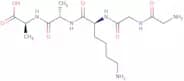
CAS:<p>Please enquire for more information about H-Gly-Gly-Lys-Ala-Ala-OH acetate salt including the price, delivery time and more detailed product information at the technical inquiry form on this page</p>Formula:C16H30N6O6Purity:Min. 95%Molecular weight:402.45 g/mol4,4',4''-Nitrilotribenzoic acid
CAS:<p>4,4',4''-Nitrilotribenzoic acid is a low molecular weight activated compound with a hexane molecule and luminescence properties. This compound has been used in the detection of human pathogens, for example, Salmonella enterica serovar Typhimurium. The uptake of 4,4',4''-nitrilotribenzoic acid by these bacteria has been shown to be due to its peroxidase-like activity. 4,4',4''-Nitrilotribenzoic acid has also been used for the activation of polybenzimidazole and for polymerization reactions in polybenzimidazole films. The time required for polymerization depends on the concentration of 4,4',4''-nitrilotribenzoic acid used.</p>Formula:C21H15NO6Purity:Min. 95%Molecular weight:377.35 g/molEndothelin-1 (human, bovine, dog, mouse, porcine, rat) trifluoroacetate salt
CAS:<p>Please enquire for more information about Endothelin-1 (human, bovine, dog, mouse, porcine, rat) trifluoroacetate salt including the price, delivery time and more detailed product information at the technical inquiry form on this page</p>Formula:C109H159N25O32S5·C2HF3O2Purity:Min. 95%Molecular weight:2,605.93 g/mol(Gly1,Ser3·22,Gln4·34,Thr6,Arg19,Tyr21,Ala23·31, Aib 32)-Pancreatic Polypeptide (human) trifluoroacetate salt
CAS:<p>Please enquire for more information about (Gly1,Ser3·22,Gln4·34,Thr6,Arg19,Tyr21,Ala23·31, Aib 32)-Pancreatic Polypeptide (human) trifluoroacetate salt including the price, delivery time and more detailed product information at the technical inquiry form on this page</p>Formula:C183H281N57O54S2Purity:Min. 95%Molecular weight:4,207.67 g/molNeuropeptide VF (124-131) (human) trifluoroacetate salt
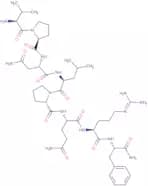
CAS:<p>Neuropeptide VF (124-131) (human) trifluoroacetate salt H-Val-Pro-Asn-Leu-Pro-Gln-Arg-Phe-NH2 trifluoroacetate salt is a peptide that is synthesized in the hypothalamus and is involved in the regulation of gonadotropin secretion. It has been shown to inhibit cell growth in vitro and to have an inhibitory effect on cancer cells. This peptide also binds to receptors α, adenohypophyseal, cellular, testicular, vasoactive intestinal peptide, messenger RNA, estradiol benzoate, cancer, and progesterone receptor.</p>Formula:C45H72N14O10Purity:Min. 95%Molecular weight:969.14 g/mol(Des-octanoyl)-Ghrelin (mouse, rat) trifluoroacetate salt
CAS:<p>Please enquire for more information about (Des-octanoyl)-Ghrelin (mouse, rat) trifluoroacetate salt including the price, delivery time and more detailed product information at the technical inquiry form on this page</p>Formula:C139H231N45O41Purity:Min. 95%Molecular weight:3,188.6 g/mol(D-Ala2)-Leu-Enkephalin-Arg acetate salt
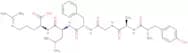
CAS:<p>Please enquire for more information about (D-Ala2)-Leu-Enkephalin-Arg acetate salt including the price, delivery time and more detailed product information at the technical inquiry form on this page</p>Formula:C35H51N9O8·xC2H4O2Purity:Min. 95%Molecular weight:725.84 g/mol3,4,9,10-Perylenetetracarboxylic diimide
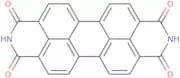
CAS:<p>3,4,9,10-Perylenetetracarboxylic diimide is a model system for studying the mechanism of protonated pyridine. It is a bicyclic heterocycle that contains two phenyl rings and one imide group. The nitrogen atoms in the molecule form hydrogen bonds with other molecules and can be substituted with chlorine or bromine. 3,4,9,10-Perylenetetracarboxylic diimide has been shown to have chemical stability under conditions of hydrochloric acid and heat. This compound also has a high melting point and is not soluble in water. 3,4,9,10-Perylenetetracarboxylic diimide has been used to study the reaction mechanisms of chemical reactions involving light emission. This compound absorbs light at wavelengths longer than 400 nm (e.g., ultraviolet) and emits light at wavelengths shorter than 400 nm (e.g.,</p>Formula:C24H10N2O4Color and Shape:PowderMolecular weight:390.35 g/mol1,3,6,8-Pyrenetetrasulfonic acid tetrasodium, 10% aqueous solution
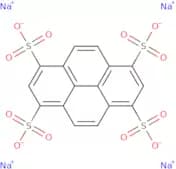
CAS:<p>1,3,6,8-Pyrenetetrasulfonic acid tetrasodium salt (PTS) is a palladium complex that is used as a catalyst in the chemical industry. It can be prepared by the reaction of palladium chloride with sodium sulfide and sodium hydroxide. PTS has been shown to react with diethyl succinate, forming a solid catalyst that can be stored for longer periods of time. This compound has been found to catalyze hydrogenations under constant pressure conditions and also exhibit low energy consumption when performing reactions. PTS is able to bind to DNA, leading to cancer cell death. PTS also has fluorescence properties and can be used in electrochemical impedance spectroscopy.</p>Formula:C16H10O12S4•Na4Purity:Min. 95%Color and Shape:Clear LiquidMolecular weight:614.47 g/molAdrenomedullin 5 (primate) trifluoroacetate salt
CAS:<p>Please enquire for more information about Adrenomedullin 5 (primate) trifluoroacetate salt including the price, delivery time and more detailed product information at the technical inquiry form on this page</p>Formula:C253H394N82O71S2Purity:Min. 95%Molecular weight:5,784.48 g/mol(Des-Thr5)-Glucagon trifluoroacetate salt
CAS:<p>Please enquire for more information about (Des-Thr5)-Glucagon trifluoroacetate salt including the price, delivery time and more detailed product information at the technical inquiry form on this page</p>Formula:C149H218N42O47SPurity:Min. 95%Molecular weight:3,381.65 g/molHexanedioic acid
CAS:<p>Hexanedioic acid is a glycol ether that is used as an extraction solvent. It has been shown to be a good solvent for the separation of organic acids and aromatic compounds, such as malonic acid and caproic acid. Hexanedioic acid has also been shown to be a good solvent for the removal of sulfur and nitrogen compounds from water vapor. Hexanedioic acid can also be used as an oxidation catalyst in the chemical industry. Hexanedioic acid is stable in acidic and alkaline environments, but not in basic environments.</p>Formula:C6H10O4Color and Shape:White Off-White PowderMolecular weight:146.14 g/mola-(Trichloromethyl)benzyl acetate
CAS:<p>a-(Trichloromethyl)benzyl acetate is an organic compound with the formula CHClCOCH. It is a colorless liquid which is soluble in organic solvents. This compound exhibits oxidative carbonylation activity, and has been shown to be used for the coating of particles, detergent compositions, and analytical methods. The microcapsules are prepared by encapsulating a fatty acid in a glycol ether. The health effects of this compound are not well understood but it is believed that it may have some carcinogenic properties.</p>Formula:C10H9Cl3O2Purity:Min. 95%Molecular weight:267.54 g/mol(Lys22)-Amyloid b-Protein (1-40) trifluoroacetate salt
CAS:<p>Please enquire for more information about (Lys22)-Amyloid b-Protein (1-40) trifluoroacetate salt including the price, delivery time and more detailed product information at the technical inquiry form on this page</p>Formula:C195H300N54O56SPurity:Min. 95%Molecular weight:4,328.86 g/mol(Lys4)-Sarafotoxin C acetate salt
CAS:<p>A component of snake venom, this product contains disulfide bonds between Cys1 and Cys15/Cys3 and Cys11. <br>Due to their structural and functional homology to the endothelin peptides, Sarafotoxins can enhance vasoconstriction through stimulating the class A G-protein-coupled, endothelin ETA and ETB receptors. This in turn leads to left ventricular dysfunction and bronchoconstriction.</p>Formula:C105H153N27O36S5Purity:Min. 95%Molecular weight:2,529.83 g/mol1-Pyreneboronic Acid (contains varying amounts of Anhydride)
CAS:<p>1-Pyreneboronic acid is a fluorescent derivative of boronic acid. It has been shown to have synergistic effects with other compounds, such as glucose monitoring. 1-Pyreneboronic acid is used in the preparation of a fluorescent probe for use in dna duplex assays. The fluorescence properties of this compound are affected by the presence of hydroxy groups and benzyl groups, making it useful for protein detection and identification. This compound can be prepared using the suzuki coupling reaction and it has been shown that it has an effect on cell line raw264.7 cells.</p>Formula:C16H11BO2Purity:Min. 95%Molecular weight:246.07 g/molNeuropeptide Y (2-36) (human, rat) trifluoroacetate salt
CAS:<p>Please enquire for more information about Neuropeptide Y (2-36) (human, rat) trifluoroacetate salt including the price, delivery time and more detailed product information at the technical inquiry form on this page</p>Formula:C180H276N54O55SPurity:Min. 95%Molecular weight:4,108.51 g/mol(Ala11·22·28)-VIP (human, mouse, rat) trifluoroacetate salt
CAS:<p>(Ala11·22·28)-VIP is an endogenous peptide which is involved in the regulation of inflammation. It is a specific agonist for the vasoactive intestinal peptide receptor (VIP-R) and has been shown to exacerbate inflammatory responses such as those seen in tissues, intestines, and phagocytes. VIP also has effects on other cells types that are mediated by its ability to activate the VIP-R. These include increased vascular permeability and vasodilation, as well as increases in reactive oxygen species and cytokine production.</p>Formula:C139H231N43O39SPurity:Min. 95%Molecular weight:3,160.65 g/mol

![ent-[Amyloid b-Protein (20-16)]-b-Ala-D-Lys(ent-[Amyloid b-Protein (16-20)]) trifluoroacetate salt](/_next/image/?url=https%3A%2Fstatic.cymitquimica.com%2Fproducts%2F3D%2Fthumb-webp%2FFE109711.webp&w=3840&q=75)
![[4-(1-Cyano-1-methylethyl)phenyl]boronic acid](/_next/image/?url=https%3A%2Fstatic.cymitquimica.com%2Fproducts%2F3D%2Fthumb-webp%2FFC121870.webp&w=3840&q=75)