Carboxylic Acids
Carboxylic acids are organic molecules characterized by having a carboxyl-type functional group (-COOH). These acids are fundamental in various chemical reactions, including esterification, amidation, and decarboxylation. Carboxylic acids are widely used in the production of pharmaceuticals, polymers, and agrochemicals. In this section, you can find a large number of carboxylic acids ready to be used. At CymitQuimica, we provide a broad range of high-quality carboxylic acids to support your research and industrial applications.
Found 12453 products of "Carboxylic Acids"
Sort by
Purity (%)
0
100
|
0
|
50
|
90
|
95
|
100
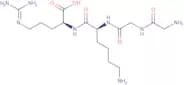
H-Gly-Gly-Lys-Arg-OH acetate salt
CAS:<p>The H-Gly-Gly-Lys-Arg-OH acetate salt is a diagnostic agent that belongs to the group of active analogues. It is an analogue of sialin, a compound that has been shown to be involved in the molecular pathogenesis of cancer tissues. Sialic acid is an important component of many glycoproteins and glycolipids found in the human body. This compound is metabolized by sialidase enzymes, which are present in various tissues and organs such as the brain, kidney, liver, and plasma. The H-Gly-Gly-Lys-Arg-OH acetate salt inhibits these enzymes by binding to them and preventing their action. This drug also inhibits ATP dependent transport systems for neuronal cells.</p>Formula:C16H32N8O5Purity:Min. 95%Molecular weight:416.48 g/molACTH (4-10) trifluoroacetate salt
CAS:<p>ACTH (4-10) trifluoroacetate salt is a cholinergic agent that belongs to the class of neurotransmitters. It is synthesized from the naturally occurring hormone ACTH, which is released by the anterior pituitary gland in response to a variety of stimuli. This compound has been shown to have physiological effects on various organs, including adipose tissue and locomotor activity. It also shows neuroprotective effects in animal models and has neurotrophic properties. The therapeutic potential of this compound for brain functions is currently being explored.</p>Formula:C44H59N13O10SPurity:Min. 95%Molecular weight:962.09 g/molHeat Shock Protein (hsp) Fragment trifluoroacetate salt
CAS:<p>Please enquire for more information about Heat Shock Protein (hsp) Fragment trifluoroacetate salt including the price, delivery time and more detailed product information at the technical inquiry form on this page</p>Formula:C63H113N22O25PSPurity:Min. 95%Molecular weight:1,641.74 g/molNeuromedin N trifluoroacetate salt
CAS:<p>Neuromedin N trifluoroacetate salt is a neurotrophin that regulates the growth and differentiation of nerve cells. It has been shown to increase locomotor activity in rats and to activate the receptor for neurotrophins. Neuromedin N trifluoroacetate salt also binds to response elements in DNA and can also modulate camp levels, cytosolic calcium, and protein kinase C levels in cells. This molecule has been shown to have antinociceptive properties by inhibiting the pain-causing action of substance P on sensory neurons. It is possible that this drug may be used as a growth factor or as a messenger RNA (mRNA) in fatty acid synthesis.</p>Formula:C38H63N7O8Purity:Min. 95%Molecular weight:745.95 g/molDiphenolic acid
CAS:<p>Diphenolic acid is a reactive compound that is used as a solid catalyst. It has a hydroxyl group and a fatty acid, which makes it soluble in organic solvents. The methyl ethyl ester of diphenolic acid can be obtained from the reaction of diphenolic acid with methanol, ethanol or ethylene glycol. Diphenolic acid can also be obtained by reacting dibenzalacetone with an alcohol.<br>Diphenolic acid has been used to synthesize monoclonal antibodies and linear calibration curves for electrochemical impedance spectroscopy. The hydroxyl group on diphenolic acid allows it to undergo reactions that are not possible for other compounds such as phenols, leading to its use in surface methodology and flow systems.</p>Formula:C17H18O4Color and Shape:White PowderMolecular weight:286.32 g/molNeuropeptide Y-Lys(biotinyl) (free acid) (human, rat) trifluoroacetate salt
<p>Please enquire for more information about Neuropeptide Y-Lys(biotinyl) (free acid) (human, rat) trifluoroacetate salt including the price, delivery time and more detailed product information at the technical inquiry form on this page</p>Formula:C205H310N58O61S2Purity:Min. 95%Molecular weight:4,627.14 g/molUroguanylin Topoisomer B (human) trifluoroacetate salt
<p>Please enquire for more information about Uroguanylin Topoisomer B (human) trifluoroacetate salt including the price, delivery time and more detailed product information at the technical inquiry form on this page</p>Formula:C64H102N18O26S4Purity:Min. 95%Molecular weight:1,667.86 g/molH-Met-Arg-OH acetate salt
CAS:<p>H-Met-Arg-OH acetate salt is a metabolite of the amino acid L-methionine. It is also a dipeptide, which consists of two amino acids that are linked by an amide bond. The linkage between the amino acids in this compound is clockwise instead of the usual left to right orientation. This means that H-Met-Arg-OH acetate salt is not an essential amino acid and can be synthesized by the body. Salmonella typhimurium uses H-Met-Arg-OH acetate salt as a precursor for its synthesis of L-arginine and L-methionine, which are essential to bacterial growth and survival. Residues have been found in foods such as milk and eggs, and it has been shown that cotransduction can lead to resistance against antibiotics such as streptomycin and tetracycline.</p>Formula:C11H23N5O3SPurity:Min. 95%Molecular weight:305.4 g/mol(Val438)-Tyrosinase (432-444) (human) acetate salt
CAS:<p>H-SYLQDSVPDSFQD-OH peptide, corresponding to amino acids 432-444 of human Tyrosinase. The peptide is supplied as an acetate salt.</p>Formula:C65H93N15O26Purity:Min. 95%Molecular weight:1,500.52 g/molDansyl-Tyr-Val-Gly-OH trifluoroacetate salt
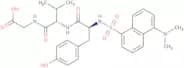
CAS:<p>Dansyl-Tyr-Val-Gly-OH trifluoroacetate salt is a glyoxylate analog that can be used as a substrate in the kinetic assays for glyoxalase I. The enzyme catalyses the conversion of this compound to Dansylglyoxal, which can be detected by absorbance at 360 nm. The second order rate constant and acidic pH of the reaction have been determined using biophysical experiments and expressed as a function of substrate concentration. Inactivates papilloma virus, which is the virus that causes genital warts, at low concentrations.</p>Formula:C28H34N4O7SPurity:Min. 95%Molecular weight:570.66 g/molPAR-4 (1-6) amide (human) trifluoroacetate salt
CAS:<p>Please enquire for more information about PAR-4 (1-6) amide (human) trifluoroacetate salt including the price, delivery time and more detailed product information at the technical inquiry form on this page</p>Formula:C28H42N8O8Purity:Min. 95%Molecular weight:618.68 g/molVIP (3-28) (human, mouse, rat) trifluoroacetate salt
CAS:<p>Please enquire for more information about VIP (3-28) (human, mouse, rat) trifluoroacetate salt including the price, delivery time and more detailed product information at the technical inquiry form on this page</p>Formula:C138H226N40O39SPurity:Min. 95%Molecular weight:3,101.58 g/molH-Ser-Ile-Gly-Ser-Leu-Ala-Lys-OH trifluoroacetate salt
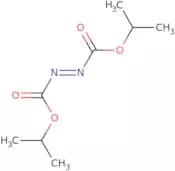
CAS:<p>H-Ser-Ile-Gly-Ser-Leu-Ala-Lys-OH trifluoroacetate salt is a recombinant, fluorescent, hydrazide, labile protein that has been synthesized with a murine amino acid sequence. This protein has been shown to be reactive with the cytokine IL2 and can be used for labeling of cells or proteins in cytometric analysis. The N-terminal end of this protein is acidic, allowing for it to react with periodate or hydroxylamine for tagging purposes.</p>Formula:C29H54N8O10Purity:Min. 95%Molecular weight:674.79 g/molDiisopropyl azodicarboxylate - 40% toluene solution
CAS:<p>Diisopropyl azodicarboxylate is a chemical compound that reacts with hydrogen fluoride to form a mixture of diazo and triazole products. The chemical reaction is the first step in the synthesis of many pharmaceuticals, such as penicillin. Diisopropyl azodicarboxylate is used in eye disorders, metabolic disorders, and autoimmune diseases. It has been shown to be effective in treating bowel disease. This drug has been shown to have chemotherapeutic properties, which may be due to its ability to inhibit protein synthesis by binding to the nitrogen atoms on receptor molecules. Diisopropyl azodicarboxylate also reacts with trifluoroacetic acid, forming a disulfide bond that can be analyzed using structural analysis techniques or reaction solution methods.</p>Formula:C8H14N2O4Purity:Min. 95%Color and Shape:Yellow To Yellow Orange LiquidMolecular weight:202.21 g/mol(D-Trp8)-γ2-MSH trifluoroacetate salt
CAS:<p>Please enquire for more information about (D-Trp8)-gamma2-MSH trifluoroacetate salt including the price, delivery time and more detailed product information at the technical inquiry form on this page</p>Formula:C74H99N21O16SPurity:Min. 95%Molecular weight:1,570.78 g/mol(Des-His6)-ACTH (1-24) (human, bovine, rat) trifluoroacetate salt
<p>Please enquire for more information about (Des-His6)-ACTH (1-24) (human, bovine, rat) trifluoroacetate salt including the price, delivery time and more detailed product information at the technical inquiry form on this page</p>Formula:C130H203N37O30SPurity:Min. 95%Molecular weight:2,796.3 g/mol(Des-Gly10,D-Tyr5,D-Ser(tBu)6,Pro-NHEt 9)-LHRH acetate salt
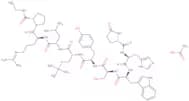
CAS:Controlled Product<p>Please enquire for more information about (Des-Gly10,D-Tyr5,D-Ser(tBu)6,Pro-NHEt 9)-LHRH acetate salt including the price, delivery time and more detailed product information at the technical inquiry form on this page</p>Formula:C60H86N16O13Purity:Min. 95%Molecular weight:1,239.42 g/molTIMP-2 (145-168) (human, bovine) trifluoroacetate salt
<p>Please enquire for more information about TIMP-2 (145-168) (human, bovine) trifluoroacetate salt including the price, delivery time and more detailed product information at the technical inquiry form on this page</p>Formula:C131H189N33O35S3Purity:Min. 95%Molecular weight:2,882.3 g/molCecropin B (free acid) trifluoroacetate salt
CAS:<p>Please enquire for more information about Cecropin B (free acid) trifluoroacetate salt including the price, delivery time and more detailed product information at the technical inquiry form on this page</p>Formula:C176H301N51O42SPurity:Min. 95%Molecular weight:3,835.66 g/molH-Met-AMC acetate salt
CAS:<p>Please enquire for more information about H-Met-AMC acetate salt including the price, delivery time and more detailed product information at the technical inquiry form on this page</p>Formula:C15H18N2O3SPurity:Min. 95%Molecular weight:306.38 g/molMyristoyl-(Lys12·27·28)-VIP-Gly-Gly-Thr (free acid) trifluoroacetate salt
CAS:<p>Please enquire for more information about Myristoyl-(Lys12·27·28)-VIP-Gly-Gly-Thr (free acid) trifluoroacetate salt including the price, delivery time and more detailed product information at the technical inquiry form on this page</p>Formula:C171H283N45O47SPurity:Min. 95%Molecular weight:3,753.42 g/mol(Ile5,Trp23,Tyr36)-pTH-Related Protein (1-36) (human, mouse, rat) trifluoroacetate salt
CAS:<p>Please enquire for more information about (Ile5,Trp23,Tyr36)-pTH-Related Protein (1-36) (human, mouse, rat) trifluoroacetate salt including the price, delivery time and more detailed product information at the technical inquiry form on this page</p>Formula:C196H308N58O53Purity:Min. 95%Molecular weight:4,324.9 g/molPyrrole-2-carboxylic acid
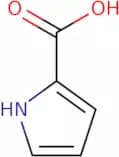
CAS:<p>Pyrrole-2-carboxylic acid is a polycyclic aromatic compound that can be found in coal tar. It has been shown to have anti-inflammatory, antiallergic, and antifungal properties. Pyrrole-2-carboxylic acid is produced by the human body as an intermediate in the metabolism of tryptophan. This compound can also be synthesized and used to treat chronic bronchitis, which is caused by excessive mucus production and inflammation of the airways. The reaction mechanism for pyrrole-2-carboxylic acid is similar to that of other drugs that are used in respiratory therapy, such as aminophylline or acetylcysteine.</p>Formula:C5H5NO2Purity:Min. 95%Molecular weight:111.1 g/molDimethyl benzyl carbinol acetate
CAS:<p>Dimethyl benzyl carbinol acetate is a polymer that forms a film on the skin and prevents water loss. It has been shown to have enzyme-inhibiting properties, which may be due to its ability to prevent geranyl production. Dimethyl benzyl carbinol acetate has also been used as a sealant in microcapsules, which are then broken down by enzymes in order to release the contents of the capsule. Dimethyl benzyl carbinol acetate can also be used as an antimicrobial agent, where it inhibits bacterial cell growth by interfering with fatty acid synthesis.</p>Purity:Min. 95%H-Cit-AMC trifluoroacetate salt
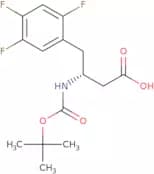
CAS:<p>Please enquire for more information about H-Cit-AMC trifluoroacetate salt including the price, delivery time and more detailed product information at the technical inquiry form on this page</p>Formula:C16H20N4O4Purity:Min. 95%Molecular weight:332.35 g/molBoc-(R)-3-Amino-4-(2,4,5-trifluorophenyl)butanoic acid
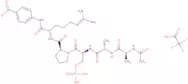
CAS:<p>Intermediate in the synthesis of sitagliptin</p>Formula:C15H18F3NO4Purity:Min. 95%Molecular weight:333.3 g/molAc-Ala-Ala-Ser(PO3H2)-Pro-Arg-pNA trifluoroacetate salt
CAS:<p>Please enquire for more information about Ac-Ala-Ala-Ser(PO3H2)-Pro-Arg-pNA trifluoroacetate salt including the price, delivery time and more detailed product information at the technical inquiry form on this page</p>Formula:C28H43N10O12PPurity:Min. 95%Molecular weight:742.67 g/mol1-Pyreneboronic Acid (contains varying amounts of Anhydride)
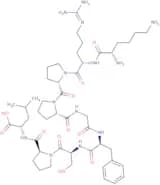
CAS:<p>1-Pyreneboronic acid is a fluorescent derivative of boronic acid. It has been shown to have synergistic effects with other compounds, such as glucose monitoring. 1-Pyreneboronic acid is used in the preparation of a fluorescent probe for use in dna duplex assays. The fluorescence properties of this compound are affected by the presence of hydroxy groups and benzyl groups, making it useful for protein detection and identification. This compound can be prepared using the suzuki coupling reaction and it has been shown that it has an effect on cell line raw264.7 cells.</p>Formula:C16H11BO2Purity:Min. 95%Molecular weight:246.07 g/molLys-(Des-Arg9,Leu8)-Bradykinin trifluoroacetate salt
CAS:<p>Bradykinin is a peptide that is released in response to injury and inflammation. It has two receptors, B1 and B2. Bradykinin binds to the B2 receptor which leads to vasodilation, increased vascular permeability, and bronchoconstriction. Lys-(Des-Arg9,Leu8)-Bradykinin trifluoroacetate salt H-Lys-Arg-Pro-Pro-Gly-Phe-Ser-Pro-Leu (LBP) is a synthetic analogue of bradykinin that competes with bradykinin for binding sites on the bradykinin b2 receptor. LBP also inhibits lipoxygenase activity in vitro and in animals. This drug can be used as an antagonist against bradykinin b2 receptor or as an antiplatelet agent.</p>Formula:C47H75N13O11Purity:Min. 95%Molecular weight:998.18 g/mol(D-Phe2·6,Pro3)-LHRH trifluoroacetate salt
CAS:<p>Please enquire for more information about (D-Phe2·6,Pro3)-LHRH trifluoroacetate salt including the price, delivery time and more detailed product information at the technical inquiry form on this page</p>Formula:C59H80N14O13Purity:Min. 95%Molecular weight:1,193.35 g/molProadrenomedullin (1-20) (rat) trifluoroacetate salt
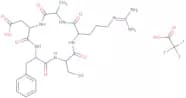
CAS:<p>Please enquire for more information about Proadrenomedullin (1-20) (rat) trifluoroacetate salt including the price, delivery time and more detailed product information at the technical inquiry form on this page</p>Formula:C111H177N37O28Purity:Min. 95%Molecular weight:2,477.83 g/molCyclo(-Arg-Ala-Asp-D-Phe-Cys) trifluoroacetate salt
CAS:<p>Please enquire for more information about Cyclo(-Arg-Ala-Asp-D-Phe-Cys) trifluoroacetate salt including the price, delivery time and more detailed product information at the technical inquiry form on this page</p>Formula:C25H36N8O7SPurity:Min. 95%Molecular weight:592.67 g/mol4-Sulfamylbenzoic acid
CAS:<p>4-Sulfamylbenzoic acid is a model system for the study of transporter and receptor activity. It has been shown to have the ability to inhibit tubule cells in carcinoma cell lines by binding to the protein target, nitrogen atoms, and hydrophobic effect. 4-Sulfamylbenzoic acid has also been shown to bind to the drug transporter and receptor activity. This binding prevents the formation of an inhibitor-transmitter complex with the enzyme that is required for transport or receptor activity, as well as inhibiting protein synthesis and cell division. The kinetic and reaction mechanism are not known at this time.</p>Formula:C7H7NO2SPurity:Min. 95%Molecular weight:169.2 g/molGhrelin-Cys(BMCC-biotinyl) (human) trifluoroacetate salt
<p>Please enquire for more information about Ghrelin-Cys(BMCC-biotinyl) (human) trifluoroacetate salt including the price, delivery time and more detailed product information at the technical inquiry form on this page</p>Formula:C178H293N53O48S2Purity:Min. 95%Molecular weight:4,007.69 g/molPAR-3 (1-6) amide (human) trifluoroacetate salt
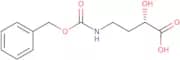
<p>Please enquire for more information about PAR-3 (1-6) amide (human) trifluoroacetate salt including the price, delivery time and more detailed product information at the technical inquiry form on this page</p>Formula:C29H46N10O7Purity:Min. 95%Molecular weight:646.74 g/mol(S)-N-Carbobenzyloxy-4-amino-2-hydroxybutyric acid
CAS:<p>(S)-N-Carbobenzyloxy-4-amino-2-hydroxybutyric acid is a benzene ring with a carboxylic acid group. It has the ability to modify polylactic acid, polycarbonate, and other polymers. The chain can be modified to include amino groups or antibacterial groups. (S)-N-Carbobenzyloxy-4-amino-2-hydroxybutyric acid also has antibacterial properties and is compatible with polylactic acid, which makes it ideal for use in polymer modifications.</p>Formula:C12H15NO5Purity:Min. 95%Molecular weight:253.25 g/mol(D-Leu7)-LHRH trifluoroacetate salt
CAS:<p>Please enquire for more information about (D-Leu7)-LHRH trifluoroacetate salt including the price, delivery time and more detailed product information at the technical inquiry form on this page</p>Formula:C55H75N17O13Purity:Min. 95%Molecular weight:1,182.29 g/molAntifreeze Polypeptide 6 (winter flounder) trifluoroacetate salt
CAS:<p>Antifreeze Polypeptide 6 (AFP6) is a protein that belongs to the family of antifreeze proteins. AFP6 binds to ion channels and prevents the flow of ions, which prevents the formation of ice crystals. It also has been shown to interact with other proteins, such as receptors and peptides. This protein has been shown to be a research tool for studying cell biology and pharmacology. The CAS number for AFP6 is 122604-16-4.</p>Formula:C133H225N43O51•xC2HF3O2Purity:Min. 95%Molecular weight:3,242.47 g/molC-Peptide 2 (rat) trifluoroacetate salt
CAS:<p>Please enquire for more information about C-Peptide 2 (rat) trifluoroacetate salt including the price, delivery time and more detailed product information at the technical inquiry form on this page</p>Formula:C135H222N38O49Purity:Min. 95%Molecular weight:3,161.43 g/molAmyloid β/A4 Protein Precursor770 (586-595) (human, mouse, rat) trifluoroacetate salt
CAS:<p>Please enquire for more information about Amyloid beta/A4 Protein Precursor770 (586-595) (human, mouse, rat) trifluoroacetate salt including the price, delivery time and more detailed product information at the technical inquiry form on this page</p>Formula:C47H73N11O16SPurity:Min. 95%Molecular weight:1,080.21 g/molN-Acetoacetylcresidine sulfonic acid sodiumsalt
CAS:<p>Please enquire for more information about N-Acetoacetylcresidine sulfonic acid sodiumsalt including the price, delivery time and more detailed product information at the technical inquiry form on this page</p>Formula:C12H14NNaO6SPurity:Min. 95%Molecular weight:323.3 g/molAmyloid P Component (33-38) amide trifluoroacetate salt
CAS:<p>Please enquire for more information about Amyloid P Component (33-38) amide trifluoroacetate salt including the price, delivery time and more detailed product information at the technical inquiry form on this page</p>Formula:C37H56N10O7SPurity:Min. 95%Molecular weight:784.97 g/mol5-FAM-Amylin (mouse, rat) trifluoroacetate salt
CAS:<p>Please enquire for more information about 5-FAM-Amylin (mouse, rat) trifluoroacetate salt including the price, delivery time and more detailed product information at the technical inquiry form on this page</p>Formula:C188H282N52O59S2Purity:Min. 95%Molecular weight:4,278.7 g/molPhenyl pyruvic acid
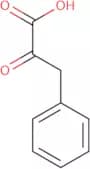
CAS:<p>Phenyl pyruvic acid is a sodium salt of phenylpyruvic acid that can be synthesized from phenylalanine, an amino acid. It has been shown to have antioxidant and anti-inflammatory properties. Phenyl pyruvic acid was found to inhibit oxidative injury caused by sodium nitroprusside in the rat brain, liver, and heart. Phenyl pyruvic acid also increased the activity of 3t3-l1 preadipocytes and improved energy metabolism in these cells. The synthesis of phenylpyruvate is catalyzed by a decarboxylase enzyme and it can be converted into insulin or phenylalanine.</p>Formula:C9H8O3Purity:Min. 95%Color and Shape:PowderMolecular weight:164.16 g/molOrotic acid anhydrous
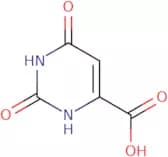
CAS:<p>Orotic acid anhydrous is a hydrogen bonding interaction that can be found in biological systems. It plays a role in the physiological effects of orotic acid, which is a metabolite of uridine and an intermediate in the synthesis of pyrimidine nucleotides. Orotic acid has antimicrobial properties and has been shown to inhibit enzyme activities involved in energy metabolism, such as polymerase chain reaction (PCR) and adenosine triphosphate (ATP) synthase. Orotic acid also inhibits the growth of bacteria, fungi, and parasites. Orotic acid anhydrous is used for treating myocardial infarcts or brain functions. The untreated group was given no treatment at all.</p>Formula:C5H4N2O4Purity:Min. 98 Area-%Color and Shape:White PowderMolecular weight:156.1 g/molNeurotensin (1-6) trifluoroacetate salt Pyr-Leu-Tyr-Glu-Asn-Lys-OH trifluoroacetate salt
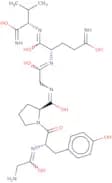
CAS:<p>Please enquire for more information about Neurotensin (1-6) trifluoroacetate salt Pyr-Leu-Tyr-Glu-Asn-Lys-OH trifluoroacetate salt including the price, delivery time and more detailed product information at the technical inquiry form on this page</p>Formula:C35H52N8O12Purity:Min. 95%Molecular weight:776.83 g/molAc-Leu-Glu-His-Asp-aldehyde (pseudo acid) trifluoroacetate salt
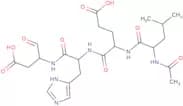
CAS:<p>Ac-Leu-Glu-His-Asp-aldehyde (pseudo acid) trifluoroacetate salt is a chemical compound that belongs to the group of apoptosis proteins. It has been shown to have anti-inflammatory and neuroprotective effects in primary cells, as well as to induce apoptosis in HL60 cells. Ac-Leu-Glu-His-Asp-aldehyde (pseudo acid) trifluoroacetate salt is also able to inhibit the activation of the caspase pathway by preventing the release of cytochrome c from mitochondria and decreasing the mitochondrial membrane potential. The protein may be used as an agent for skin cancer treatment.</p>Formula:C23H34N6O9Purity:Min. 95%Molecular weight:538.55 g/molPAR-4 (1-6) (human) trifluoroacetate salt
CAS:<p>Please enquire for more information about PAR-4 (1-6) (human) trifluoroacetate salt including the price, delivery time and more detailed product information at the technical inquiry form on this page</p>Formula:C28H41N7O9Purity:Min. 95%Molecular weight:619.67 g/molCART (61-102) (human, rat) trifluoroacetate salt
CAS:<p>Please enquire for more information about CART (61-102) (human, rat) trifluoroacetate salt including the price, delivery time and more detailed product information at the technical inquiry form on this page</p>Formula:C189H310N58O56S7Purity:Min. 95%Molecular weight:4,515.3 g/molH-Val-Ala-pNA acetate salt
CAS:<p>Please enquire for more information about H-Val-Ala-pNA acetate salt including the price, delivery time and more detailed product information at the technical inquiry form on this page</p>Formula:C14H20N4O4Purity:Min. 95%Molecular weight:308.33 g/mol