Carboxylic Acids
Carboxylic acids are organic molecules characterized by having a carboxyl-type functional group (-COOH). These acids are fundamental in various chemical reactions, including esterification, amidation, and decarboxylation. Carboxylic acids are widely used in the production of pharmaceuticals, polymers, and agrochemicals. In this section, you can find a large number of carboxylic acids ready to be used. At CymitQuimica, we provide a broad range of high-quality carboxylic acids to support your research and industrial applications.
Found 12453 products of "Carboxylic Acids"
Sort by
Purity (%)
0
100
|
0
|
50
|
90
|
95
|
100
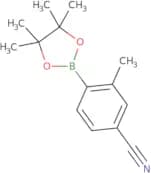
4-Cyano-2-methylphenylboronic acid, pinacol ester
CAS:<p>Please enquire for more information about 4-Cyano-2-methylphenylboronic acid, pinacol ester including the price, delivery time and more detailed product information at the technical inquiry form on this page</p>Formula:C14H18BNO2Purity:Min. 95%Molecular weight:243.11 g/mol2-Thiazoleacetic acid
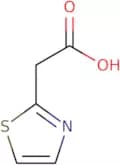
CAS:<p>2-Thiazoleacetic acid is a heterocyclic compound that can bind to iron and is an efficient ligand for the virus. It has been used as a linker in the synthesis of biologically active methylene compounds. 2-Thiazoleacetic acid also has anti-inflammatory properties and is used to treat inflammatory diseases. The compound reacts with hydrochloric acid, forming an acetic acid derivative. This reaction is catalyzed by metal ions such as Fe2+ or Hg2+. 2-Thiazoleacetic acid can be synthesized from two molecules of formaldehyde, two molecules of hydrogen cyanide, and two molecules of hydroxamic acids.</p>Formula:C5H5NO2SPurity:Min. 95%Molecular weight:143.16 g/molL-Menthyl 2,2-dihydroxyacetate
CAS:<p>L-Menthyl 2,2-dihydroxyacetate is a synthetic compound that belongs to the group of salicylic acid derivatives. It is an intermediate in the synthesis of other compounds and can be recycled. L-Menthyl 2,2-dihydroxyacetate reacts with primary amines to form iminoacetic esters and glyoxylates by acidic hydrolysis. The reaction time depends on the type of amine and the acidity of the solution. This compound has been used as a reagent to synthesize maleic anhydride from maleic acid. L-Menthyl 2,2-dihydroxyacetate is also used in methodologies for oxidizing aromatic compounds to produce benzoic acids or phenols.</p>Formula:C12H22O4Purity:Min. 95%Color and Shape:PowderMolecular weight:230.3 g/mol[1-(2-Methoxyethyl)-1H-indol-3-yl]acetic acid
CAS:Controlled Product<p>Please enquire for more information about [1-(2-Methoxyethyl)-1H-indol-3-yl]acetic acid including the price, delivery time and more detailed product information at the technical inquiry form on this page</p>Formula:C13H15NO3Purity:Min. 95%Molecular weight:233.26 g/mol2-(4-Bromophenyl)-2,2'-dimethylacetic acid
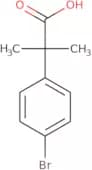
CAS:<p>2-Bromo-2-(4-bromophenyl)-2,2'-dimethylacetic acid (2bpd) is the sodium salt of 2-(4-bromophenyl)-2,2'-dimethylacetic acid. It is a metabolite of terfenadine and thionyl chloride. 2bpd has been shown to be an inhibitor of the histamine H1 receptor. This drug is also a brominated derivative of 2-amino-2-methyl-1-propanol, which has been shown to be an inhibitor of the histamine H1 receptor.</p>Formula:C10H11BrO2Purity:Min. 95%Molecular weight:243.1 g/molBoc-L-aspartic acid 4-tert-butyl ester
CAS:<p>Boc-L-aspartic acid 4-tert-butyl ester is a synthetic aminoacylase that is used in the synthesis of ergosterol. It is an efficient and economical reagent for the preparation of esters of aspartic acid, which are used in fungal antifungal agents. Boc-L-aspartic acid 4-tert-butyl ester has been shown to have various physiological functions, including the ability to inhibit ergosterol synthesis by inhibiting the enzyme polymeric ergosterol synthase in fungi. This compound can also be used to synthesize n-substituted aspartates.</p>Formula:C13H23NO6Purity:Min. 95 Area-%Color and Shape:PowderMolecular weight:289.32 g/molGibberellic acid methyl ester
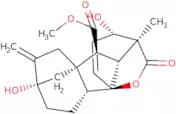
CAS:<p>Gibberellic acid methyl ester is a specialized plant growth regulator, which is synthetically derived from the naturally occurring gibberellins found in plants. These gibberellins are vital phytohormones that regulate various aspects of growth and development in higher plants. Gibberellic acid methyl ester functions by mimicking these natural gibberellins, interacting with plant cellular processes to stimulate and enhance growth. Its mode of action involves promoting cell elongation, division, and differentiation, thereby accelerating plant growth and influencing the lifecycle.</p>Formula:C20H24O6Purity:Min. 95%Molecular weight:360.4 g/moltert-Butyl 4-(2-bromophenyl)piperazine-1-carboxylate
CAS:Controlled Product<p>Please enquire for more information about tert-Butyl 4-(2-bromophenyl)piperazine-1-carboxylate including the price, delivery time and more detailed product information at the technical inquiry form on this page</p>Purity:Min. 95%Fluorometholone acetate
CAS:Controlled Product<p>Fluorometholone acetate is a fluorinated corticosteroid that is used in ophthalmology to treat eye disorders. It has been shown to reduce intraocular pressure in patients with glaucoma and other eye diseases. Fluorometholone acetate inhibits the activity of the glucocorticoid receptor, which prevents it from binding to DNA and altering gene expression. This leads to a decrease in inflammatory responses by decreasing the production of cytokines and chemokines that are involved in inflammation. Fluorometholone acetate also binds to other receptors, such as the mineralocorticoid receptor, which may lead to its use as a potential biomarker for infectious diseases.</p>Formula:C24H31FO5Purity:Min. 95%Molecular weight:418.5 g/molEltrombopag olamine
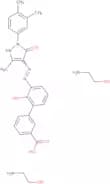
CAS:<p>Eltrombopag olamine is an orally active drug that belongs to the class of thiazolidinones. It has been used for the treatment of thrombocytopenia in patients with chronic liver disease and myelodysplastic syndrome. Eltrombopag olamine inhibits platelet aggregation by binding to glycoprotein IIb/IIIa receptors on the surface of platelets. The drug is a prodrug that is metabolized in vivo to its active form, eltrombopag. This conversion is catalysed by CYP3A4 and CYP2D6 enzymes and can be inhibited by drugs that inhibit these enzymes, such as trifluoroacetic acid and hydroxyl group-containing compounds. Eltrombopag olamine binds to erythrocytes, which may be due to its ability to form intramolecular hydrogen bonds with nitrogen atoms. The synthesis of elt</p>Formula:C25H22N4O4•(C2H7NO)2Purity:Min. 95%Color and Shape:PowderMolecular weight:564.63 g/mol4-Chloro-3,5-difluorobenzoic acid
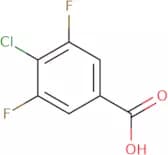
CAS:<p>Please enquire for more information about 4-Chloro-3,5-difluorobenzoic acid including the price, delivery time and more detailed product information at the technical inquiry form on this page</p>Formula:C7H3ClF2O2Purity:Min. 95%Molecular weight:192.55 g/mol(D-His1)-Exenatide trifluoroacetate salt
CAS:<p>Please enquire for more information about (D-His1)-Exenatide trifluoroacetate salt including the price, delivery time and more detailed product information at the technical inquiry form on this page</p>Formula:C184H282N50O60SPurity:Min. 95%Molecular weight:4,186.57 g/mol(6R,7R)-3-(Acetoxymethyl)-8-oxo-7-(2-(thiophen-2-yl)acetamido)-5-thia-1-azabicyclo[4.2.0]oct-2-ene-2-carboxylic acid
CAS:<p>(6R,7R)-3-(Acetoxymethyl)-8-oxo-7-(2-(thiophen-2-yl)acetamido)-5-thia-1-azabicyclo[4.2.0]oct-2-ene-2-carboxylic acid is an antimicrobial agent that inhibits bacterial growth by binding to the penicillin binding protein (PBP), which prevents the synthesis of peptidoglycan. This drug has shown effectiveness against gram positive bacteria, including aerobacter aerogenes, as well as infectious diseases in wastewater treatment plants. It has also been demonstrated to be effective in experimental models of infection due to high resistance and cell signaling pathways. The reaction solution was analyzed by plasma mass spectrometry.</p>Formula:C16H16N2O6S2Purity:Min. 98%Color and Shape:White PowderMolecular weight:396.44 g/mol4-Chloro-6-methylnicotinic acid
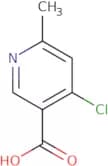
CAS:<p>4-Chloro-6-methylnicotinic acid (4C6MNA) is a chemical substance that is used in the study of plant leaves and their permeability. This substance has been found to be an excellent indicator of chlorophyll content, as it stains leaf cells with a green color. 4C6MNA is taken up by healthy plant cells and mitochondria, where it binds to the chromophore molecule in the mitochondria. The binding of 4C6MNA to the chromophore molecule leads to the production of fluorescence, which can be detected via microscopy. This substance has been used for laser microbeam studies on natural leaves and tobacco plants.</p>Formula:C7H6CINO2Purity:Min. 95%Molecular weight:275.04 g/mol1-[2-(5-Chloro-1H-indol-3-yl)ethyl]-5-oxopyrrolidine-3-carboxylic acid
CAS:Controlled Product<p>Please enquire for more information about 1-[2-(5-Chloro-1H-indol-3-yl)ethyl]-5-oxopyrrolidine-3-carboxylic acid including the price, delivery time and more detailed product information at the technical inquiry form on this page</p>Formula:C15H15ClN2O3Purity:Min. 95%Molecular weight:306.74 g/molRibonucleic acid free acid
CAS:<p>Ribonucleic acid free acid (ribo-FAA) is a derivative of the immunosuppressive drug rapamycin. It is an immunosuppressant that inhibits the immune system by binding to a protein called FKBP12, which is involved in the activation of T cells and other immune system cells. Ribo-FAA has been shown to be effective in treating HIV patients undergoing active antiretroviral therapy, as well as for treatment of other infectious diseases such as tuberculosis or leishmaniasis. Ribo-FAA binds to FKBP12 and prevents it from activating T cells or other immune system cells, which leads to suppression of the immune response.</p>Purity:Min. 95%Color and Shape:Yellow PowderMycophenolic acid carboxybutoxy ether
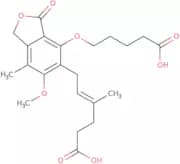
CAS:<p>Mycophenolic acid carboxybutoxy ether is an active form of mycophenolic acid. It has been shown to activate the immune system by increasing the production of lymphokines, including interleukin-2 and gamma-interferon. Mycophenolic acid carboxybutoxy ether has been shown to be effective in vivo in models for autoimmune diseases and cancer. This compound has a high affinity for glycoside derivatives, which are important for the formation of body tissues, such as collagen and elastin. The drug binds to monoclonal antibodies that are used in diagnostic tests for cervical cancer and other cancers. Mycophenolic acid carboxybutoxy ether also binds to x-ray diffraction data, which aids in the structural analysis of glycoside derivatives. This drug can be analyzed using surface methodology.</p>Formula:C22H28O8Purity:Min. 95%Molecular weight:420.45 g/molD,L-Threo-b-hydroxy aspartic acid
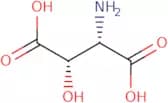
CAS:<p>D,L-Threo-b-hydroxy aspartic acid is a stereoselective synthetic amino acid that has been used to study the uptake and hydrolysis of D,L-threo-b-hydroxy aspartic acid by rat brain synaptosomes. It has also been used in the synthesis of an L-alanine analogue with the same stereochemistry at the chiral center. The stereoselective synthesis of this compound is achieved by epimerization reaction using d-alanine as a starting material. Threo bhda has been shown to inhibit glutamate release from neurons and stimulate GABA release in synaptosomes, which may be due to its ability to bind to ion channels. Threo bhda has also been found to inhibit the binding of radioactive thymidine to calf thymus DNA with a high degree of stereoselectivity.</p>Formula:C4H7NO5Purity:Min. 95%Molecular weight:149.1 g/mol4-Bromo-2-methylbenzoic acid
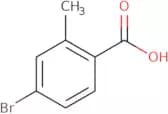
CAS:<p>4-Bromo-2-methylbenzoic acid is a nucleophilic compound that can be used for the synthesis of esters, amides and peptides. It is also an intermediate in the synthesis of 4-bromo-2-methylbenzoic acid methyl ester, which can be used as a cardiac marker. The hydroxylamine group on this molecule reacts with electrophiles such as benzoate to form bromoacetic acid derivatives. This reaction is catalyzed by palladium and other metals. The multidimensional nature of this reaction means it can be used for cross-coupling reactions.</p>Formula:C8H7BrO2Purity:Min. 95%Molecular weight:215.04 g/molChlorogenic acid hemihydrate
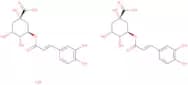
CAS:<p>Chlorogenic acid hemihydrate is a natural phenolic compound that belongs to the family of flavonol glycosides. The molecule has two caffeoylquinic acids and one chlorogenic acid functional groups, which are responsible for its antioxidant properties. Chlorogenic acid hemihydrate is soluble in water and can be used as a solid dispersion. This compound has been shown to have significant interactions with other drugs, including polymeric matrix, protocatechuic acid, and α-amyrin acetate. It also has been shown to have cell culture and in vivo model evidence of efficacy against cancer cells.</p>Purity:Min. 95%


![[1-(2-Methoxyethyl)-1H-indol-3-yl]acetic acid](/_next/image/?url=https%3A%2Fstatic.cymitquimica.com%2Fproducts%2F3D%2Fthumb-webp%2FFM135744.webp&w=3840&q=75)



![(6R,7R)-3-(Acetoxymethyl)-8-oxo-7-(2-(thiophen-2-yl)acetamido)-5-thia-1-azabicyclo[4.2.0]oct-2-ene…](/_next/image/?url=https%3A%2Fstatic.cymitquimica.com%2Fproducts%2F3D%2Fthumb-webp%2FFA32097.webp&w=3840&q=75)
![1-[2-(5-Chloro-1H-indol-3-yl)ethyl]-5-oxopyrrolidine-3-carboxylic acid](/_next/image/?url=https%3A%2Fstatic.cymitquimica.com%2Fproducts%2F3D%2Fthumb-webp%2FFC119446.webp&w=3840&q=75)