


Carboxylic Acids
Carboxylic acids are organic molecules characterized by having a carboxyl-type functional group (-COOH). These acids are fundamental in various chemical reactions, including esterification, amidation, and decarboxylation. Carboxylic acids are widely used in the production of pharmaceuticals, polymers, and agrochemicals. In this section, you can find a large number of carboxylic acids ready to be used. At CymitQuimica, we provide a broad range of high-quality carboxylic acids to support your research and industrial applications.
Found 12454 products of "Carboxylic Acids"
Sort by
Purity (%)
0
100
|
0
|
50
|
90
|
95
|
100
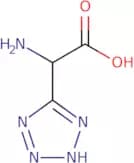
alpha-Amino-2H-tetrazole-5-acetic acid
CAS:<p>Alpha-amino-2H-tetrazole-5-acetic acid (AAT) is a neurotoxin that inhibits glutamate receptors and causes neuronal cell death. It also decreases heart function in rats by inhibiting the cardiac sodium channel. AAT has been shown to be effective for inducing neuronal death in Xenopus oocytes, as well as decreasing the expression of certain receptor protein, such as NMDA and AMPA receptor subtypes. AAT is also known to cause apoptosis, which may be due to its inhibition of receptor function.</p>Formula:C3H5N5O2Purity:Min. 95%Color and Shape:Light (Or Pale) Green To Green SolidMolecular weight:143.1 g/mol3,5-Di-(tert-butyl)benzoic acid
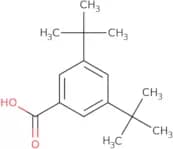
CAS:<p>3,5-Di-(tert-butyl)benzoic acid (3,5-DTBA) is a polynuclear organic solvent that is used as an additive in polymers, plastics, and rubbers. 3,5-DTBA has potent antiproliferative effects on cells and can be used to inhibit the growth of cancer cells. This compound also stabilizes terephthalic acid from oxidation and prevents the formation of amide products. 3,5-DTBA is synthesized from benzoic acid by reacting with methylene chloride in the presence of a catalyst such as aluminum chloride or zinc chloride.</p>Formula:C15H22O2Purity:Min. 95%Molecular weight:234.33 g/molBromosuccinic acid
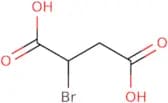
CAS:<p>Bromosuccinic acid is a type of organic compound with the chemical formula HOCCH=CHOH. It is an ester that contains a hydroxyl group, a carboxylic acid group, and a bromine atom. Bromosuccinic acid has been shown to have biocompatible properties and can be used as a polymer for biomedical applications. It also has the ability to form covalent bonds with basic proteins due to its hydroxyl group, which is important for protein stability. Bromosuccinic acid has been shown to inhibit trypsin activity in soybean trypsin, which may be due to its disulfide bond or low energy content. This substance also reacts with malonic acid and carbonic acid, producing galacturonic acid and fatty acids respectively. Bromosuccinic acid is produced by bacteria of the genus Enterobacteriaceae and belongs to the family of short-chain fatty acids.</p>Purity:Min. 95%2-[2-(1H-Indol-3-yl)ethyl]-1,3-dioxoisoindoline-5-carboxylic acid
CAS:Controlled Product<p>Please enquire for more information about 2-[2-(1H-Indol-3-yl)ethyl]-1,3-dioxoisoindoline-5-carboxylic acid including the price, delivery time and more detailed product information at the technical inquiry form on this page</p>Formula:C19H14N2O4Purity:Min. 95%Molecular weight:334.33 g/molEthyl 2-amino-thiazole-4-carboxylate
CAS:<p>Ethyl 2-amino-thiazole-4-carboxylate (ETAC) is an inhibitor of protein synthesis. It binds to the dna and inhibits transcription, leading to cell death by inhibiting the production of proteins vital for cell division. ETAC has been shown to have cytotoxic activity against cancer cells and hemolytic activity. It also has a strong fluorescence probe property, which may be used in cancer diagnosis. ETAC can inhibit protein synthesis in cells that are resistant to other antimicrobial agents and platinum-based chemotherapy, making it a potential treatment for these infections. The pharmacokinetic properties of ETAC are not well studied but it is excreted through urine, suggesting that it is hydrophilic and may be metabolized with glucuronidation or sulfation. The molecular modeling study suggests that the hydrogen bond between ETAC and the dna phosphate group may explain its inhibitory effects on DNA synthesis.</p>Formula:C6H8N2O2SPurity:Min. 99.0 Area-%Molecular weight:172.21 g/molIsopentylboronic acid
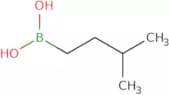
CAS:<p>Isopentylboronic acid is a boron-containing organic compound that is used for the catalysis of cross-coupling reactions, such as the Suzuki reaction. It reacts with aryl halides to form an alkylboronic ester and a metal salt. Isopentylboronic acid is also used to produce trimers in the presence of formyl or nitro groups. Isopentylboronic acid may also be used as a reagent to convert alcohols into chlorides or bromides. This compound has been shown to react with alkali metal ions on one side and alkyl substituents on the other side, leading to deuterium incorporation at the carbon atom adjacent to the carboxylic acid group. Isopentylboronic acid can also be used for dehydrating alcohols and converting alkynes into alkenes when heated in the presence of an alkali metal chloride.</p>Formula:C5H13BO2Purity:Min. 95%Molecular weight:115.97 g/molTrifluoro acetic anhydride
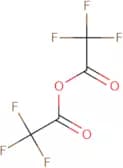
CAS:<p>Trifluoro acetic anhydride is a chemical compound that is used in the laboratory as a model system to study antimicrobial agents and the reaction mechanism of these compounds. It has been shown to have receptor activity against infectious diseases and enzyme activities against bacterial growth. Trifluoroacetic anhydride has also been shown to inhibit plasma mass spectrometry, which may be due to its ability to react with water vapor. The chemical inhibitor can be recovered and reused for other experiments.</p>Formula:C4F6O3Purity:Min. 95%Color and Shape:Colorless Clear LiquidMolecular weight:210.03 g/mol5-(4-Ethoxyphenyl)-5-ethylbarbituric acid
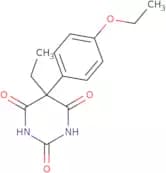
CAS:Controlled Product<p>Please enquire for more information about 5-(4-Ethoxyphenyl)-5-ethylbarbituric acid including the price, delivery time and more detailed product information at the technical inquiry form on this page</p>Formula:C14H16N2O4Purity:Min. 95%Molecular weight:276.29 g/molGanoderic acid S
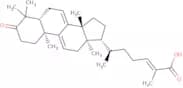
CAS:Controlled Product<p>Ganoderic acid S is a triterpenoid compound that has been shown to inhibit the growth of human cancer cells in vitro. It contains a carbonyl group and an hydroxyl group, which are reactive molecules that can form covalent bonds with proteins and other molecules. Ganoderic acid S also has anti-inflammatory properties and can inhibit the release of growth factors, such as monoclonal antibodies, from immune cells. In addition, it inhibits the production of mitochondrial enzymes, such as hydroxylases and oxidases, by binding to the heme moiety in their active site.<br>Ganoderic acid S is found in rhizoma gastrodiae (a type of mushroom), which has been used for centuries in traditional Chinese medicine to treat various conditions. The populations of mice given ganoderic acid S orally for three months showed increased life span and reduced tumor incidence.</p>Purity:Min. 95%Tauroursodeoxycholic acid, sodium salt
CAS:<p>Tauroursodeoxycholic acid, sodium salt is a taurine-conjugated bile acid derivative, which is synthesized in the liver from ursodeoxycholic acid. It functions through its role in stabilizing the mitochondria and inhibiting apoptosis by modulating the unfolded protein response. This molecular action involves reducing endoplasmic reticulum stress, thereby providing cytoprotective effects in various cellular environments.</p>Formula:C26H44NNaO6SPurity:Min. 95%Molecular weight:521.69 g/molOxaloacetic acid-13C4
CAS:A labelled form of the oxalacetic acid (FO12113).Formula:C4H4O5Purity:Min. 95%Molecular weight:136.04 g/mol3-Hydroxy-4-amino-butyric acid
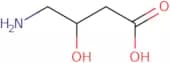
CAS:Controlled Product<p>3-Hydroxy-4-amino-butyric acid is a synthetase that catalyzes the formation of 3-hydroxy-4 amino butyric acid from 3-hydroxy butyric acid and ammonia. This reaction occurs in the presence of chloride ions, ethyl bromoacetate and butyric acid. The isolated yield of this reaction is 47%. The product can be converted to 3-amino butyric acid by dehydrating it with hydrochloric acid. 3-Hydroxy-4 amino butyric acid has been shown to have anticancer properties in vitro. It also has been shown to have antiinflammatory properties, which may be due to its ability to inhibit the production of prostaglandin E2, an inflammatory mediator.</p>Formula:C4H9NO3Purity:Min. 95%Color and Shape:PowderMolecular weight:119.12 g/mol4,4-Difluorpentanoic acid
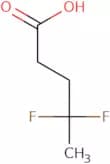
CAS:<p>4,4-Difluorpentanoic acid is an intermediate in the synthesis of amantadine hydrochloride. It is also used as a food additive to inhibit proteolytic enzymes and to produce alkyl esters. 4,4-Difluorpentanoic acid can be used as a competitive inhibitor of serine proteases and cysteine proteases. The compound binds reversibly to the active site of these enzymes and inhibits their activity by competing with the natural substrate for binding. This compound is often used in combination with other protease inhibitors such as phenylmethanesulfonyl fluoride or N-phenylmaleimide.</p>Formula:C5H8F2O2Purity:Min. 95%Molecular weight:138.11 g/molSodium acetate trihydrate
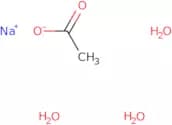
CAS:<p>Sodium acetate trihydrate is a salt that is used in the production of sodium salts and surface methodology, as well as in analytical methods. It is also used to prepare anhydrous sodium. Sodium acetate trihydrate can be used as a cell lysis agent for water vapor.</p>Formula:CH3COONa·3H2OPurity:Min. 95%Color and Shape:White/Off-White SolidMolecular weight:136.08 g/molPiperidinium acetate
CAS:Controlled Product<p>Piperidinium acetate is a photochemical agent that has been used in the photochemical oxidation of organic compounds. It is also used as a catalyst for the oxidative coupling of piperidinium salts with sodium salts to form piperidine. Piperidinium acetate can be used for the treatment of metabolic disorders, such as lactic acidosis and hyperglycemia, and autoimmune diseases such as rheumatoid arthritis and systemic lupus erythematosus. This compound is also known to cause allergic symptoms and anhydrous sodium may be generated in the process.</p>Formula:C5H11N·C2H4O2Purity:Min. 95%Color and Shape:PowderMolecular weight:145.20 g/mol1-(4-Chlorophenyl)-3-phenyl-1H-pyrazole-5-carboxylic acid
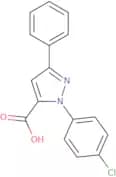
CAS:Controlled Product<p>Please enquire for more information about 1-(4-Chlorophenyl)-3-phenyl-1H-pyrazole-5-carboxylic acid including the price, delivery time and more detailed product information at the technical inquiry form on this page</p>Formula:C16H11ClN2O2Purity:Min. 95%Color and Shape:PowderMolecular weight:298.72 g/mol4-(Trifluoromethoxy)phenylboronic Acid (contains varying amounts of Anhydride)
CAS:<p>4-(Trifluoromethoxy)phenylboronic acid is a boron-containing compound that has been shown to be a potent inhibitor of the histone deacetylase (HDAC) enzyme. It also has surfactant properties and can be used as a photochemical reagent. 4-(Trifluoromethoxy)phenylboronic acid is orally bioavailable and may have therapeutic potential for neurodegenerative diseases, such as Alzheimer's disease, Parkinson's disease, and Huntington's disease. It also has the ability to inhibit cancer cell growth by inhibiting HDAC activity. This drug has been found to cross-couple with organosilicon compounds in order to form new compounds with potent inhibitory activity against HDAC enzymes.</p>Formula:C7H6BF3O3Purity:Min. 95%Molecular weight:205.93 g/mol(S)-alpha-Ethyl-2-oxo-1-pyrrolidineacetic acid(R)-alpha-methylbenzenemethanaminesalt
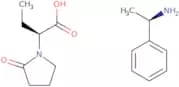
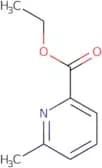
CAS:Controlled Product<p>Please enquire for more information about (S)-alpha-Ethyl-2-oxo-1-pyrrolidineacetic acid(R)-alpha-methylbenzenemethanaminesalt including the price, delivery time and more detailed product information at the technical inquiry form on this page</p>Formula:C16H24N2O3Purity:Min. 95%Molecular weight:292.37 g/molEthyl 6-methylpyridine-2-carboxylate
CAS:<p>Ethyl 6-methylpyridine-2-carboxylate is a pyridine derivative that has a nitrogen at the 6 position. It is an anionic compound, which is soluble in methanol and dichloromethane. The compound can be used to synthesize pharmaceuticals or as a precursor for polymers. It has been shown to inhibit the growth of tumor cells by binding to type 1 receptor sites on the surface of cancer cells. It also binds to quinine and enolate groups, which are found in many drugs. These binding sites may be exploited for drug design purposes.</p>Formula:C9H11NO2Purity:Min. 95%Molecular weight:165.19 g/molTetrakis[N-tetrachlorophthaloyl-(S)-tert-leucinato]dirhodium Bis(ethyl Acetate) Adduct
CAS:<p>Please enquire for more information about Tetrakis[N-tetrachlorophthaloyl-(S)-tert-leucinato]dirhodium Bis(ethyl Acetate) Adduct including the price, delivery time and more detailed product information at the technical inquiry form on this page</p>Formula:C56H40Cl16N4O16Rh2·C8H16O4Purity:Min. 95%Molecular weight:1,974.2 g/mol

![2-[2-(1H-Indol-3-yl)ethyl]-1,3-dioxoisoindoline-5-carboxylic acid](/_next/image/?url=https%3A%2Fstatic.cymitquimica.com%2Fproducts%2F3D%2Fthumb-webp%2FFI124769.webp&w=3840&q=75)





![Tetrakis[N-tetrachlorophthaloyl-(S)-tert-leucinato]dirhodium Bis(ethyl Acetate) Adduct](/_next/image/?url=https%3A%2Fstatic.cymitquimica.com%2Fproducts%2F3D%2Fthumb-webp%2FFT60020.webp&w=3840&q=75)