Aldehydes
Found 8576 products of "Aldehydes"
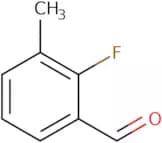
2-Fluoro-3-methylbenzaldehyde
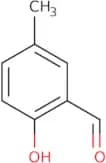
CAS:2-Fluoro-3-methylbenzaldehyde is a chemical that can be used in the synthesis of other chemicals, such as pharmaceuticals. It is a versatile building block that can be used in the synthesis of complex compounds and scaffolds. The compound has been shown to react with amines to form ureas.Formula:C8H7FOPurity:80%Molecular weight:138.14 g/mol2-Hydroxy-5-methylbenzaldehyde
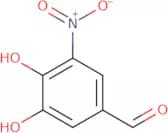
CAS:2-Hydroxy-5-methylbenzaldehyde (2HMBA) is a biologically active molecule that has been shown to bind to human serum albumin. The binding constants for the two molecules are relatively low, with a Kd of approximately 2.6 x 10 M. The nitrogen atoms in the molecule form hydrogen bonds with the hydroxyl group on the ethylene diamine, which stabilizes it and prevents it from dissolving in water. This compound also has a cyclohexane ring and can be found in natural products such as erythronolide B, an antibiotic produced by Streptomyces erythreus. 2HMBA is stable when complexed with hydrochloric acid or potassium dichromate and can be used in structural analysis of other molecules.Formula:C8H8O2Purity:Min. 95%Color and Shape:Off-White PowderMolecular weight:136.15 g/mol3,4-Dihydroxy-5-nitrobenzaldehyde
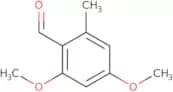
CAS:3,4-Dihydroxy-5-nitrobenzaldehyde is a chemical substance that is used in an analytical method to measure the level of methoxy groups in chronic kidney disease. The methanol solvent and hydrochloric acid are used to dissolve the sample, which is then titrated with trifluoroacetic acid. The chloride ion reacts with the methylene group from the 3,4-dihydroxy-5-nitrobenzaldehyde molecule to form a new compound that can be detected by ultraviolet light at 254 nm. The active methylene group is quantified by measuring its absorbance at this wavelength and comparing it with a calibration curve using known concentrations of sodium salts. This test has been shown to be more sensitive than other chromatographic methods for detecting methoxy groups in chronic kidney disease.Formula:C7H5NO5Purity:Min. 95%Color and Shape:Yellow PowderMolecular weight:183.12 g/mol2,4-Dimethoxy-6-methylbenzaldehyde
CAS:2,4-Dimethoxy-6-methylbenzaldehyde is a biomolecular that belongs to the class of depsidones. It is a tetracyclic compound that has been isolated from the fungus Antrodia camphorata and the lichen Xanthoria polycarpa. 2,4-Dimethoxy-6-methylbenzaldehyde has been shown to inhibit the growth of fungi by preventing oxidative phosphorylation in mitochondria. This compound also shows regioselectivity for phenanthrenes, which are aromatic hydrocarbons with two benzene rings and one or more methyl groups on each ring. The synthesis of 2,4-dimethoxy-6-methylbenzaldehyde is achieved through a Witting reaction between olefinic compounds and diethyl malonate in the presence of base. 2,4-Dimethoxy-6-methylbenzaldehyde can also be synthesized by oxidizing dibFormula:C10H12O3Purity:Min. 95%Color and Shape:PowderMolecular weight:180.2 g/mol4-Nitrocinnamaldehyde
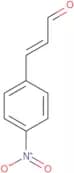
CAS:4-Nitrocinnamaldehyde is a diazonium salt that is used as an efficient method for the synthesis of nitro compounds. Nitro compounds are used in the production of explosives, insecticides, and herbicides. 4-Nitrocinnamaldehyde reacts with hydrochloric acid to produce trifluoroacetic acid, which is then reacted with an organic compound to produce a nitro compound. This reaction has been shown to be irreversible and not sensitive to functional groups. 4-Nitrocinnamaldehyde binds to the enzyme cytochrome P450 reductase, inhibiting its function. The binding of 4-nitrocinnamaldehyde to enzymes such as pyruvate kinase and acetylcholinesterase has also been observed in binding experiments.
Formula:C9H7NO3Purity:Min. 95%Color and Shape:PowderMolecular weight:177.16 g/mol2,3,4-Trihydroxybenzaldehyde
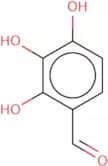
CAS:2,3,4-Trihydroxybenzaldehyde is a chemical compound that has been shown to have anti-cancer properties. It is used in the detection of cancer cells and as an indicator for the presence of palladium complexes. 2,3,4-Trihydroxybenzaldehyde is also a skin allergen and can cause allergic reactions. This chemical reacts with potassium ions in solution to form a precipitate or sludge. 2,3,4-Trihydroxybenzaldehyde has been shown to be effective against colorectal carcinoma cells and Group P2 bacteria.Formula:C7H6O4Purity:Min. 95%Color and Shape:PowderMolecular weight:154.12 g/mol4-Acetyl syringaldehyde
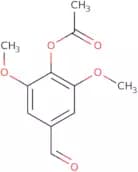
CAS:4-Acetyl syringaldehyde is a gaseous compound that has been shown to have antitumor properties. It is synthesized from 5-iodovanillin, which can be found in Australian marine sponge and organic acids such as citric acid. 4-Acetyl syringaldehyde has been shown to inhibit the growth of human colorectal cancer cells (HCT116) and induce apoptosis. This compound also inhibits the growth of bacteria by binding to the bacterial dna gyrase and dna topoisomerase, inhibiting their ability to maintain the integrity of bacterial DNA. 4-Acetyl syringaldehyde undergoes a number of reactions when exposed to chlorine or nitro compounds, including oxidation products that are formed when it reacts with formic acid and hct116 cells.Formula:C11H12O5Purity:Min. 95%Color and Shape:PowderMolecular weight:224.21 g/mol5-Fluoro-2-methylbenzaldehyde
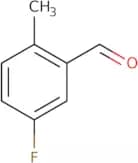
CAS:5-Fluoro-2-methylbenzaldehyde is a fine chemical that is used as an intermediate in the synthesis of pharmaceuticals, agrochemicals, and other organic molecules. It is also useful in the preparation of synthetic resins, dyes, and flavors. 5-Fluoro-2-methylbenzaldehyde has been shown to be a versatile building block with many potential applications. This molecule can be used as a reaction component or as a speciality chemical to produce high quality reagents.
Formula:C8H7FOPurity:90%Color and Shape:Clear LiquidMolecular weight:138.14 g/mol4-(Trifluoromethoxy)benzaldehyde
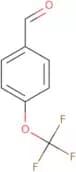
CAS:4-(Trifluoromethoxy)benzaldehyde is a chemical compound that is a substrate for tyrosinase and an inhibitor of the enzyme. It is also an anticancer compound that can be used to inhibit tumor growth by inhibiting protein synthesis. 4-(Trifluoromethoxy)benzaldehyde has been shown to have potent tyrosinase inhibition activity in vitro and in vivo, as well as binding activities with the CB2 receptor. This chemical has also been shown to inhibit virus replication, including HIV-1, and tuberculosis. 4-(Trifluoromethoxy)benzaldehyde can be used in assays to measure the potency of other compounds that are involved in tyrosinase activity or have anti-cancer properties. 4-(Trifluoromethoxy)benzaldehyde specifically binds to residues in the kinase domain of the enzyme tyrosinase, which is responsible for catalysis and regulation of this enzyme.Formula:C8H5F3O2Purity:Min. 95%Color and Shape:Colorless Clear LiquidMolecular weight:190.12 g/mol7-Hydroxy-4-methyl-2-oxo-2H-chromene-8-carbaldehyde
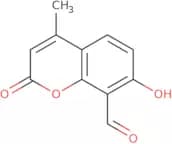
CAS:7-Hydroxy-4-methyl-2-oxo-2H-chromene-8-carbaldehyde is an activated molecule that exhibits significant cytotoxicity to human liver cancer cells. It inhibits the mitochondrial membrane potential, leading to the release of cytochrome c and apoptosis induction. 7HMOCA has been shown to be a reactive molecule with benzimidazole derivative properties. This compound depletes cellular glutathione levels and increases intracellular reactive oxygen species (ROS) levels, which leads to DNA fragmentation, cell cycle arrest, and ultimately apoptosis induction when combined with other agents. The fluorescence properties of this molecule have enabled its detection in living cells without the need for additional reagents or labeling.Formula:C11H8O4Purity:Min. 95 Area-%Color and Shape:White PowderMolecular weight:204.18 g/mol3-Hydroxy-4-iodobenzaldehyde
CAS:3-Hydroxy-4-iodobenzaldehyde is a fluorophore that is used in the synthesis of amide compounds, as well as in the production of other synthetic molecules. 3-Hydroxy-4-iodobenzaldehyde has been shown to have pharmacokinetic properties that are similar to those of fluorescein, and can be used to study the distribution and metabolism of this compound. This compound also has an oxidation potential that is higher than that of fluorescein, which makes it more useful for studying drug metabolism. The labile nature of 3-hydroxy-4-iodobenzaldehyde means it will not remain intact for long periods of time.Formula:C7H5IO2Purity:Min. 95%Color and Shape:PowderMolecular weight:248.02 g/mol2-Bromo-4,5-difluorobenzaldehyde
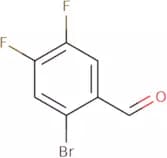
CAS:2-Bromo-4,5-difluorobenzaldehyde is a chemical intermediate and speciality chemical. It is an important building block for the synthesis of organic compounds, such as pharmaceuticals and agrochemicals. This product is a versatile building block, which can be used in a wide range of reactions and is suitable for use as an intermediate or scaffold. It has high quality and complex structure that can be used to synthesize a number of different compounds.
Formula:C7H3BrF2OPurity:Min. 97%Color and Shape:PowderMolecular weight:221 g/mol4-Fluoro-3-nitrobenzaldehyde
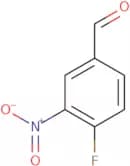
CAS:4-Fluoro-3-nitrobenzaldehyde is a diphenyl ether that has been used as a starting material for the synthesis of dihydroisoquinolines and related compounds. The compound also inhibits IL-10 production in an experiment with human cells, which might be due to its ability to act as a pro-inflammatory cytokine. 4-Fluoro-3-nitrobenzaldehyde can be used as a control experiment for 4-fluoroaniline, which was found to inhibit IL-10 production in an experiment with human cells.
4-Fluoro-3-nitrobenzaldehyde is not active against P. aeruginosa, but does have antinociceptive effects and can be considered to have nucleophilic properties.Formula:C7H4FNO3Purity:Min. 95%Color and Shape:PowderMolecular weight:169.11 g/mol4-Bromo-3,5-dimethylbenzaldehyde
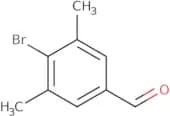
CAS:4-Bromo-3,5-dimethylbenzaldehyde is an organic compound that contains a benzene ring with a bromine atom in the 4 position. It is used as a reagent and intermediate in organic synthesis. The compound can be converted to radical cations by reaction with electron-deficient alkylating agents such as methyl iodide or trimethylsilyl chloride. Radical cations are classified as reactive intermediates and have been shown to react with other organic compounds to form new products.Formula:C9H9BrOPurity:Min. 95%Molecular weight:213.07 g/molβ-Resorcylic aldehyde oxime
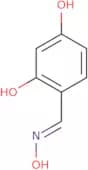
CAS:beta-Resorcylic aldehyde oxime is a compound that can be used as a reagent, speciality chemical, and research chemical. It has the CAS number 5399-68-8, and it is a fine chemical that has been shown to be useful in organic synthesis. beta-Resorcylic aldehyde oxime is soluble in methanol, ethanol, benzene, diethyl ether, and acetone. This compound can be used as a building block for other compounds by reacting with amines or carboxylic acids. It can also be used as an intermediate for other reactions. beta-Resorcylic aldehyde oxime has been shown to have versatile properties that make it an excellent scaffold for creating new compounds.Formula:C7H7NO3Molecular weight:153.14 g/mol3-Fluoro-2-methoxybenzaldehyde
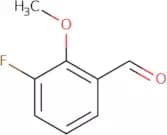
CAS:3-Fluoro-2-methoxybenzaldehyde is a synthetic chemical that has been used as a precursor in the synthesis of pharmaceuticals and other organic compounds. 3-Fluoro-2-methoxybenzaldehyde can be prepared through the lithiation, chloromethylation, or trimethylation of 3-fluoroacetophenone. The compound can be oxidized to 3,4-dihydrobenzofuran with peroxide at low temperature. This conversion can be achieved using a variety of reagents, such as boron tribromide or boron trichloride.
Formula:C8H7FO2Purity:Min. 95%Color and Shape:Colorless PowderMolecular weight:154.14 g/mol3-Hydroxy-4-methylbenzaldehyde
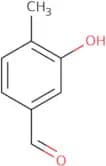
CAS:3-Hydroxy-4-methylbenzaldehyde is a chemical that is synthesized from 3-hydroxy-4-methylphenol and dimethylformamide. It has been shown to interact with aluminium, which may be due to its ability to form a 1:1 complex with the metal. 3-Hydroxy-4-methylbenzaldehyde also exhibits electrochemical methods and isomers with other aldehydes. This chemical can be used in gas chromatography/mass spectrometry (GCMS) as an internal standard for fatty acid analysis.Formula:C8H8O2Purity:Min. 95%Color and Shape:White PowderMolecular weight:136.15 g/mol4-Bromo-3,5-dimethoxybenzaldehyde
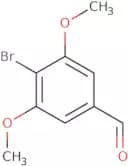
CAS:4-Bromo-3,5-dimethoxybenzaldehyde is a compound that inhibits the replication of cells. It has been shown to induce apoptosis and inhibit tumor growth, including skin tumors and malignant melanoma cells. This chemical is synthesized by reacting an acrylonitrile with sodium hydroxide in a biphenyl amide. 4-Bromo-3,5-dimethoxybenzaldehyde has been used to inhibit bacterial growth, but it is not active against Mycobacterium tuberculosis or Mycobacterium avium complex.
Formula:C9H9BrO3Purity:Min. 95%Color and Shape:PowderMolecular weight:245.07 g/mol3-Hydroxy-5-nitrobenzaldehyde
CAS:3-Hydroxy-5-nitrobenzaldehyde is a solvent that has been used as a probe to measure chloride concentration in multimedia. It can be used as a sensor and an algorithm to detect the colorimetric change of 3-hydroxy-5-nitrobenzaldehyde in the presence of chloride ions. This probe is also used in colorimetric tests for linker, nonpolar, and surfactant compounds. The 3-hydroxy-5-nitrobenzaldehyde oxime can be cleaved by UV light to produce an unstable nitronium ion that reacts with metal ions such as copper(II) or silver(I) to form an insoluble precipitate.Formula:C7H5NO4Purity:Min. 95%Color and Shape:PowderMolecular weight:167.12 g/mol4-Ethoxy-3-methoxybenzaldehyde
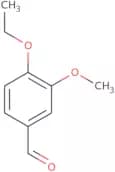
CAS:4-Ethoxy-3-methoxybenzaldehyde is an organic compound that can be found in plants, such as in the leaves of the nutmeg plant. It is a cleavage product of 4-hydroxycoumarin. 4-Ethoxy-3-methoxybenzaldehyde is a dicarboxylic acid by substructure and it has been shown to be an intermediate in the synthesis of ethylene acetal and hydrogen peroxide. It is also postulated to react with chloride to form 4-chloroacetophenone and chloride ions, which are then reacted with hydrogen peroxide to form hydrochloric acid. The acute toxicity of this compound has not been determined but it may cause toxic effects on extracellular cells, such as radical species. The toxicities of 4-ethoxy-3-methoxybenzaldehyde have been observed in biphenyl which causes skin irritation, liver toxicity, kidney damage, and respiratory irritationFormula:C10H12O3Purity:Min. 95%Color and Shape:PowderMolecular weight:180.2 g/mol