Aldehydes
Found 8576 products of "Aldehydes"
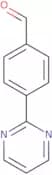
4-(Pyrimidin-2-yl)benzaldehyde
CAS:Please enquire for more information about 4-(Pyrimidin-2-yl)benzaldehyde including the price, delivery time and more detailed product information at the technical inquiry form on this page
Formula:C11H8N2OPurity:Min. 95%Color and Shape:PowderMolecular weight:184.19 g/molTetrafluoroterephthaldehyde
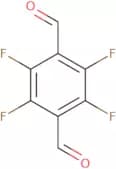
CAS:Tetrafluoroterephthaldehyde (TFPA) is a reactive aldehyde that can be synthesized in the laboratory by the reaction of trifluoromethanesulfonic acid with an aromatic hydrocarbon or ester compound. TFPA has been used to study the synthesis of supramolecular assemblies and supramolecular chemistry. The radiation-induced formation of TFPA is a useful method for the synthesis of polymers, and the thermal expansion of TFPA is high enough to be used as a thermometer. TFPA has shown chemical stability in both acidic and alkaline media, as well as resistance to radiation and oxidation. TFPA also has a high boiling point, making it useful for desolvation during gas chromatography experiments.
Formula:C8H2F4O2Purity:Min. 95%Color and Shape:PowderMolecular weight:206.09 g/mol3-(Trifluoromethyl)benzaldehyde
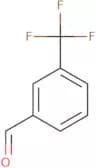
CAS:3-(Trifluoromethyl)benzaldehyde is an organic compound that has the chemical formula C8H7FO. It is a trifunctional molecule with three phenolic hydroxyl groups, which makes it a good candidate for drug design. 3-(Trifluoromethyl)benzaldehyde can be synthesized by reacting an imine with a chiral acid chloride in the presence of a base and a catalytic amount of DMAP. The reaction yield is low, but this synthetic method is efficient. 3-(Trifluoromethyl)benzaldehyde has been shown to inhibit the growth of Mycobacterium avium, but not Mycobacterium tuberculosis or other bacteria such as Listeria monocytogenes and Escherichia coli. This might be due to its ability to inhibit protein synthesis by binding to ribosomes. This compound also possesses anti-inflammatory properties and inhibits leukemia Hl-
Formula:C8H5F3OPurity:Min. 95%Color and Shape:Clear LiquidMolecular weight:174.12 g/molRef: 3D-FT29109
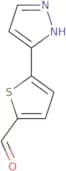
Discontinued product5-(1H-Pyrazol-5-yl)thiophene-2-carbaldehyde
CAS:Please enquire for more information about 5-(1H-Pyrazol-5-yl)thiophene-2-carbaldehyde including the price, delivery time and more detailed product information at the technical inquiry form on this pageFormula:C8H6N2OSPurity:Min. 95%Molecular weight:178.21 g/molRef: 3D-FP54683
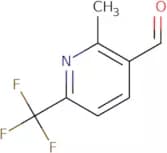
Discontinued product2-Methyl-6-(trifluoromethyl)nicotinaldehyde
CAS:Please enquire for more information about 2-Methyl-6-(trifluoromethyl)nicotinaldehyde including the price, delivery time and more detailed product information at the technical inquiry form on this page
Formula:C8H6F3NOPurity:Min. 95%Molecular weight:189.13 g/molRef: 3D-FM88006
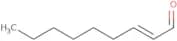
Discontinued productTrans-2-nonenal
CAS:Trans-2-nonenal is a monoclonal antibody that recognizes the physiological function of cardiac and rat liver microsomes. It has been shown to inhibit enzyme activities in both cell lines. Trans-2-nonenal has also been shown to protect against ischemia/reperfusion injury in rats by reducing the release of intracellular Ca2+ and ATP levels. Trans-2-nonenal is genotoxic and induces oxidative injury, which may be due to its ability to react with caproic acid to form reactive oxygen species.
Formula:C9H16OPurity:Min. 95%Molecular weight:140.22 g/molRef: 3D-FT35477
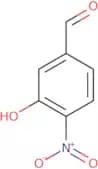
Discontinued product3-Hydroxy-4-nitrobenzaldehyde
CAS:3-Hydroxy-4-nitrobenzaldehyde is a ternary complex, which consists of three molecules that are bound to each other in a specific way. It has been observed in the nmr spectra and it has been proposed as a fluorescence probe for the detection of hydrogen bonds. 3-Hydroxy-4-nitrobenzaldehyde catalyzes the reaction by forming a covalent bond with the pbr322 dna, which is an important DNA molecule in bacteria. The enzyme mechanism is not fully understood, but it has been shown that it can bind to Toll-like receptor 4 (TLR4), which is an innate immune system protein. This binding event activates TLR4, leading to the inflammatory response. 3-Hydroxy-4-nitrobenzaldehyde has shown efficacy against microglia cells and animal experiments have shown that this compound may be useful for reducing pain after surgery or injury.
Formula:C7H5NO4Purity:Min. 95%Color and Shape:PowderMolecular weight:167.12 g/mol4-Bromobenzaldehyde
CAS:Please enquire for more information about 4-Bromobenzaldehyde including the price, delivery time and more detailed product information at the technical inquiry form on this page
Formula:C7H5BrOMolecular weight:185.03 g/molRef: 3D-B-5782
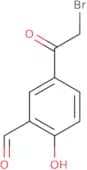
Discontinued product5-(2-Bromo-acetyl)-2-hydroxy-benzaldehyde
CAS:5-Bromo-2-hydroxybenzaldehyde is an organic compound with a chemical formula of CHBrO. It is a white solid that is soluble in water, ethanol, and acetone. The synthesis of 5-bromo-2-hydroxybenzaldehyde has been achieved by the acylation reaction of benzaldehyde with bromide ion. The selectivity for this reaction can be increased by using sodium borohydride as a reducing agent instead of lithium aluminum hydride. This method can be applied to the synthesis of salmeterol, which is used as a medicine in the treatment of asthma.
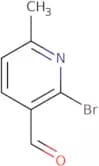
Formula:C9H7BrO3Purity:Min. 95%Molecular weight:243.05 g/mol2-Bromo-6-methylpyridine-3-carboxaldehyde
CAS:2-Bromo-6-methylpyridine-3-carboxaldehyde (BMPCA) is a pharmacological agent that belongs to the group of antagonists. It has been shown to be a potent antagonist at the NMDA receptor and may be used for treating neuropathic pain. BMPCA also has been shown to have competitive inhibition at the naphthyridine receptor, which may allow it to act as an antagonist or an agonist depending on its binding site. The regioisomeric analogs of BMPCA are 2-(2,5-dichloropyridyl)-6-methylpyridine-3-carboxaldehyde and 2-(2,5-dimethylpyridyl)-6-methylpyridine-3-carboxaldehyde. These analogs have been shown to inhibit the growth of tumor cells in vitro and in vivo.
Formula:C7H6BrNOPurity:Min. 95%Molecular weight:200.03 g/molAc-Tyr-Val-Lys-Asp-aldehyde (pseudo acid)
CAS:Ac-Tyr-Val-Lys-Asp-aldehyde is a synthetic compound that can be used to study the apoptotic process. It is an aldehyde and has been found to activate caspases, aspartyl proteases, at high concentrations. This pseudo acid also has a significant activation of n-terminal protein kinase (SB203580) when irradiated with UV light. Ac-Tyr-Val-Lys-Asp-aldehyde can be used as a marker for the apoptotic process because it is synthesized by cells during this process. In addition, it has been shown to produce a red color during staining and can be detected using immunohistochemical techniques.Formula:C26H39N5O8Purity:Min. 95%Molecular weight:549.62 g/molRef: 3D-FA111038
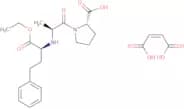
Discontinued productEnalapril maleate
CAS:Angiotensin-converting enzyme inhibitor; anti-hypertensive
Formula:C20H28N2O5•C4H4O4Purity:Min. 95%Color and Shape:PowderMolecular weight:492.52 g/molBetulinaldehyde
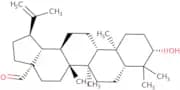
CAS:Controlled ProductBetulinaldehyde is a natural compound that belongs to the group of betulinic acid. It has been shown to have antimicrobial activity against oral pathogens and has been shown to inhibit the growth of bacteria by reacting with their cell walls. Betulinaldehyde has also been shown to have an effect on autoimmune diseases such as multiple sclerosis, as well as infectious diseases such as HIV and tuberculosis. Betulinaldehyde can be extracted from the bark of birch trees using acetate, which is then reacted with hydrogen peroxide in a reaction solution. The resulting product is purified using preparative high-performance liquid chromatography (HPLC).
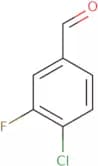
Formula:C30H48O2Purity:Min. 95%Color and Shape:PowderMolecular weight:440.7 g/mol4-Chloro-3-fluorobenzaldehyde
CAS:4-Chloro-3-fluorobenzaldehyde is an atypical molecule that has a deuterium atom. It is classified as a group p2 functional theory reuptake inhibitor, which blocks the reuptake of noradrenaline at the synapse. The vibrational and spectroscopic properties of this molecule are similar to those of other molecules in its class. 4-Chloro-3-fluorobenzaldehyde was shown to inhibit the production of noradrenaline in rat brain tissue and is used as a model for studying genetic polymorphism. Techniques such as nuclear magnetic resonance spectroscopy, infrared spectroscopy, and X-ray crystallography have been used to investigate the structure and reactivity of 4-chloro-3-fluorobenzaldehyde.
Formula:C7H4ClFOPurity:Min. 95%Molecular weight:158.56 g/molZ-Ile-Glu(OtBu)-Ala-Leu-aldehyde
CAS:Z-Ile-Glu(OtBu)-Ala-Leu-aldehyde, also known as ZILEAL, is a potent immunosuppressant that binds to the Toll-like receptor (TLR) and inhibits NF-κB binding activity. It has been shown to reduce the activation of macrophages by inhibiting the production of proinflammatory cytokines such as tumor necrosis factor alpha (TNFα), IL-1β, and IL-6. This drug has been shown to inhibit HIV replication in vitro and was also found to have an antiviral effect against herpes simplex virus type 1 in vivo. ZILEAL also inhibits dsDNA binding activity, which may have potential applications in cancer treatment.
Formula:C32H50N4O8Purity:Min. 95%Molecular weight:618.76 g/molRef: 3D-FI111570
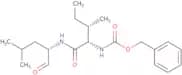
Discontinued productZ-Ile-Leu-aldehyde
CAS:Please enquire for more information about Z-Ile-Leu-aldehyde including the price, delivery time and more detailed product information at the technical inquiry form on this page
Formula:C20H30N2O4Purity:Min. 95%Molecular weight:362.46 g/molRef: 3D-FI111102
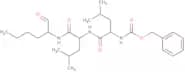
Discontinued productZ-Leu-Leu-Nle-aldehyde
CAS:Z-Leu-Leu-Nle (ZLL) is a small molecule that selectively inhibits the activity of the aspartyl protease, BACE1, which is an enzyme that cleaves amyloid precursor protein (APP) to produce amyloid beta peptides. The inhibition of this enzyme has been shown to be effective in preventing or delaying the onset of Alzheimer's disease. ZLL also inhibits estrogen receptor alpha and has antiestrogenic effects in breast cancer cells. This compound induces apoptosis by binding to apoptotic proteins, such as tumor necrosis factor receptor 1, Fas ligand, and TRAIL receptors. It also inhibits cell growth and induces chemoresistance in breast cancer cells.
Formula:C26H41N3O5Purity:Min. 95%Molecular weight:475.62 g/molRef: 3D-FL111080
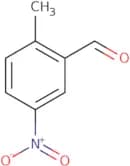
Discontinued product2-Methyl-5-nitrobenzaldehyde
CAS:2-Methyl-5-nitrobenzaldehyde is a nitro compound that is used in the synthesis of dobutamine. It has been shown to undergo rearrangements, with the formation of 2-methyl-5-nitrophenol. Kinetic studies have shown that chlorine can be substituted for hydrogen at the 2 position, and this substitution leads to an increase in reactivity. 2-methyl-5-nitrobenzaldehyde also reacts with dopamine to form a ketone. The hydroxy group on this molecule is nucleophilic and can attack electrophiles, making it useful as an active site for synthetic reactions. This compound is also pyrophoric, which means it will spontaneously ignite in air and burn until all its fuel is consumed.
Formula:C8H7NO3Purity:Min. 95%Color and Shape:Off-White PowderMolecular weight:165.15 g/molRef: 3D-FM16343
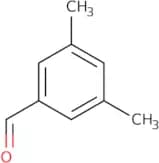
Discontinued product3,5-Dimethylbenzaldehyde
CAS:3,5-Dimethylbenzaldehyde is an organic compound that is a colorless liquid. It has a chemical formula of C9H12O2 and is classified as an aldehyde. 3,5-Dimethylbenzaldehyde can be synthesized by the reaction of isopropyl palmitate with xylene in the presence of carbon as a source. The reaction time required for this synthesis is approximately one day. The major products of this reaction are 3,5-dimethylbenzaldehyde and 2-methylbutanal. This reaction mechanism can also be used to determine the concentration of urinary metabolites in human urine samples. Analysis of these samples requires an organic solvent such as hexane or dichloromethane. Kinetic data was collected from the rate at which zinc powder reacts with 3,5-dimethylbenzaldehyde over time at different concentrations. A kinetic experiment was conducted using c–h bond activation to produce 3,5-dimethoxy
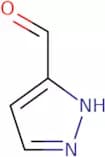
Formula:C9H10OPurity:Min. 95%Color and Shape:Colorless Clear LiquidMolecular weight:134.18 g/mol1-H-Pyrazole-3-carboxaldehyde
CAS:1-H-Pyrazole-3-carboxaldehyde (1HP) is a β-unsaturated ketone that has been shown to inhibit the growth of chronic pulmonary fungal infections, such as histoplasmosis, coccidioidomycosis, and blastomycosis. It has also been shown to have anticancer activity in vitro and in vivo. 1HP inhibits cellular proliferation by inducing cell cycle arrest at the G(2)/M checkpoint. The molecular mechanism of this inhibition is due to an increase in the expression of p21 protein and p27 protein, which are tumor suppressor proteins that regulate progression through the cell cycle. 1HP also inhibits HIV infection by inhibiting reverse transcriptase and proteases, which are enzymes involved in viral replication. This compound binds to active methylene groups on the enzyme's surface, blocking its ability to perform chemical reactions with other molecules. 1HP also has strong inhibitory effects on cancer cells because it causes structural
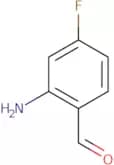
Formula:C4H4N2OPurity:Min. 95%Molecular weight:96.09 g/mol2-Amino-4-fluorobenzaldehyde
CAS:2-Amino-4-fluorobenzaldehyde is a plant growth regulator that has been shown to be effective at increasing the yield of flowers and fruit crops. It is used as an intermediate in the synthesis of agrochemicals, such as 2-aminobenzaldehyde and anthranilic acid. The biosynthesis of 2-amino-4-fluorobenzaldehyde starts from methanol and intermediates such as anthranilic acid, aminoaldehydes, or alcohols. It can also be produced by oxidative coupling of 2-aminobenzaldehyde with phenylacetone in the presence of sodium hydroxide. 2-Amino-4-fluorobenzaldehyde has been shown to be more efficient than other plant growth regulators such as robinia or aminocyclopentane carboxylic acid (ACC).
Formula:C7H6FNOPurity:Min. 95%Color and Shape:SolidMolecular weight:139.13 g/molRef: 3D-FA67377
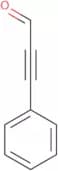
Discontinued productPhenylpropargylaldehyde
CAS:Phenylpropargylaldehyde is an organic compound that is a chiral molecule, which means it has two enantiomers. It was first synthesized in 1964 by R.B. Woodward and T.W. Rittenberg at the University of Chicago, and is used as a chemical intermediate in the synthesis of other compounds with biological activity such as matrix metalloproteinase inhibitors, for example marimastat. Phenylpropargylaldehyde can be prepared from malonic acid and phenylboronic acid in a reaction mechanism that involves nucleophilic substitutions, carbonyl group activation and hydrogen bonding to lysine residues on proteins. The asymmetric synthesis of this compound has been shown to suppress genes associated with metabolic disorders such as diabetes mellitus type 2, fatty acid metabolism disorders and endocrine disorders (e.g., thyroid). It also has adjuvant therapeutic properties in cancer treatment, especially when combined with synthetic fatty acids such as oleic acid or ar
Purity:Min. 95%3-Fluoro-2-nitrobenzaldehyde
CAS:3-Fluoro-2-nitrobenzaldehyde is a pyridine derivative that has been used in the synthesis of a number of important heterocyclic compounds. This compound can be prepared by reacting 3,4-dichloroaniline with nitrous acid and then hydrolyzing the resulting 3-chloroquinoline with hydrochloric acid. The reaction yields anilines and quinolines in regiospecifically, as well as formylation, cyclisation, and condensation products. It is also capable of aromatisation reactions with benzene to produce benzofuran derivatives.
Formula:C7H4FNO3Purity:Min. 95%Color and Shape:Yellow PowderMolecular weight:169.11 g/molRef: 3D-FF67734
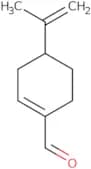
Discontinued product(+/-)-Perillaldehyde
CAS:Perillaldehyde is a natural compound that has been used in food and medicine for centuries. It is an antimicrobial agent with dextran sulfate, which is a sugar polymer that inhibits the growth of fungi and bacteria. Perillaldehyde also has been shown to inhibit the energy metabolism of microorganisms by decreasing ATP production. Perillaldehyde has also been shown to have genotoxic activity, as it can cause DNA strand breaks. This compound also causes oxidative stress in cells by reducing mitochondrial membrane potential and inducing reactive oxygen species (ROS). Perillaldehyde has acute toxicities, as it causes electrochemical impedance spectroscopy changes that indicate cell death.
Formula:C10H14OPurity:Min. 95%Color and Shape:PowderMolecular weight:150.22 g/mol2,3,5-Trichlorobenzaldehyde
CAS:2,3,5-Trichlorobenzaldehyde is a chemical compound that has been shown to have anticancer and apoptotic effects. It inhibits the growth of bacteria by chelating iron ions and inhibiting bacterial dna synthesis. 2,3,5-Trichlorobenzaldehyde has also been shown to inhibit the growth of cancer cells in culture in an experimental study. This chemical has been used as a substrate for nmr spectroscopy to study its functional groups and radical scavenging activities. 2,3,5-Trichlorobenzaldehyde can be synthesized from phenacyl chloride and benzaldehyde in the presence of hydrogen chloride gas. The carbonyl group in 2,3,5-trichlorobenzaldehyde may cause metabolic disorders such as diabetes mellitus or hyperglycemia.
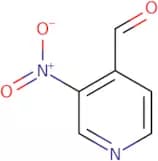
Formula:C7H3Cl3OPurity:Min. 95%Color and Shape:PowderMolecular weight:209.46 g/mol3-Nitroisonicotinaldehyde
CAS:3-Nitroisonicotinaldehyde is a kinase inhibitor that binds to the ATP binding site of receptor tyrosine kinases. It inhibits the activation of these receptors and prevents the phosphorylation of tyrosine residues on the receptor. 3-Nitroisonicotinaldehyde has been shown to inhibit VEGFR-2, ABCG2, and efflux in human cancer cells. This drug has been shown to inhibit tumor growth in mice by inhibiting angiogenesis, which is a process that involves the formation of new blood vessels from pre-existing ones. 3-Nitroisonicotinaldehyde also inhibits tumor growth by blocking the production of vascular endothelial growth factor (VEGF) from angiogenic cells.
Formula:C6H4N2O3Purity:Min. 95%Molecular weight:152.11 g/mol