Aldehydes
Aldehydes are organic compounds containing a carbonyl group (C=O) bonded to at least one hydrogen atom. These versatile compounds are fundamental in various chemical reactions, including oxidation, reduction, and nucleophilic addition. Aldehydes are essential building blocks in the synthesis of pharmaceuticals, fragrances, and polymers. At CymitQuimica, we provide a diverse selection of high-quality aldehydes to support your research and industrial applications.
Found 8540 products of "Aldehydes"
Sort by
Purity (%)
0
100
|
0
|
50
|
90
|
95
|
100
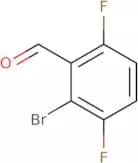
2-Bromo-3,6-difluorobenzaldehyde
CAS:<p>2-Bromo-3,6-difluorobenzaldehyde is a versatile building block that is used in the synthesis of many complex compounds. It has been shown to be a useful intermediate and reaction component in organic synthesis. 2-Bromo-3,6-difluorobenzaldehyde can be used as a reagent or speciality chemical for research purposes. This compound has high quality and is a useful scaffold for the preparation of fine chemicals.</p>Formula:C7H3BrF2OPurity:Min. 95%Color and Shape:Off-White PowderMolecular weight:221 g/mol5-Chloro-2-methoxybenzaldehyde
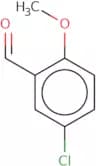
CAS:<p>5-Chloro-2-methoxybenzaldehyde is a potent inhibitor of the bacterial enzyme acetylcholinesterase. It has been shown to have an interaction with biomolecules, such as chalcones, and can be used in the manufacture of antibacterial agents. 5-Chloro-2-methoxybenzaldehyde has been found to have potent inhibitory activity against organocatalytic aldehydes and atypical aldehydes and can be used as an active ingredient in the synthesis of novel compounds with antibacterial activity.</p>Formula:C8H7ClO2Purity:Min. 95%Color and Shape:PowderMolecular weight:170.59 g/mol3,6-Dimethoxyterephthaldicarboxaldehyde
<p>3,6-Dimethoxyterephthaldicarboxaldehyde is a chemical compound that can be used in the synthesis of complex compounds. It has been shown to be an effective reagent for the synthesis of heterocycles and has also been used as a building block in the synthesis of pharmaceuticals and other organic compounds. 3,6-Dimethoxyterephthaldicarboxaldehyde is a versatile building block with many potential uses. It has also been identified as a useful scaffold for drug design and development.</p>Purity:Min. 95%Thiophene-3-carboxaldehyde
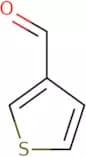
CAS:<p>Thiophene-3-carboxaldehyde is an electron-rich, reactive chemical substance that can be used as a polymer film. It is a heterocyclic compound with a thiophene ring and a carbonyl group in the 3-position. Thiophene-3-carboxaldehyde is synthesized by reacting methyl ketones with glycol ethers. This reaction produces redox potential, malonic acid, and nmr spectra.</p>Formula:C5H4OSPurity:Min. 95%Color and Shape:Colorless Clear LiquidMolecular weight:112.15 g/mol3,4-Difluorobenzaldehyde
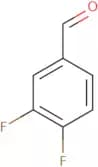
CAS:<p>3,4-Difluorobenzaldehyde is a chemical inhibitor that has been shown to be effective in the treatment of cancer. It inhibits the activity of an enzyme called tyrosine kinase by reacting with its functional group, leading to decreased production of growth factors and cell proliferation. 3,4-Difluorobenzaldehyde has been shown to have a high reaction yield in animal health studies, and it can be used as a drug for treating carcinoma cells. This compound also has strong liquid crystal properties and can be used as a component of diphenyl ether molecules. 3,4-Difluorobenzaldehyde is metabolized by the liver or excreted through urine. The pharmacokinetic properties of this compound are similar to those of other drugs that are metabolized by humans.</p>Formula:C7H4F2OPurity:Min. 95%Color and Shape:Colorless Clear LiquidMolecular weight:142.1 g/molBourgeonal
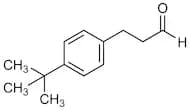
CAS:Formula:C13H18OPurity:>90.0%(GC)Color and Shape:Colorless to Yellow to Yellow green clear liquidMolecular weight:190.291,6-Dimethyl-1H-indole-3-carbaldehyde
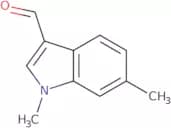
CAS:<p>1,6-Dimethyl-1H-indole-3-carbaldehyde is a compound that can be used in the synthesis of many organic and pharmaceutical compounds. It is also an intermediate for the production of other chemicals. 1,6-Dimethyl-1H-indole-3-carboxylic acid has been shown to be useful as a building block in organic synthesis, due to its versatility and reactivity. The compound is also a reagent and can be used as part of research studies. This chemical has CAS number 202584-14-3.</p>Formula:C11H11NOPurity:Min. 95%Color and Shape:PowderMolecular weight:173.21 g/molBenzo[d]oxazole-5-carbaldehyde
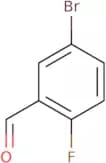
CAS:<p>Benzo[d]oxazole-5-carbaldehyde is a chemical compound that can be used as a building block in the synthesis of more complex molecules. It is a high quality, versatile building block with many applications. Benzo[d]oxazole-5-carbaldehyde can be used as a reagent in organic chemistry and as a reaction component in the synthesis of more complex compounds. This compound can also serve as an intermediate or scaffold for the synthesis of other compounds.</p>Formula:C8H5NO2Purity:Min. 95%Color and Shape:White PowderMolecular weight:147.13 g/mol5-Bromo-2-fluorobenzaldehyde
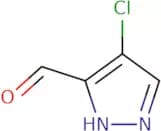
CAS:<p>Intermediate in the synthesis of ipragliflozin</p>Formula:C7H4BrFOPurity:Min. 95%Color and Shape:PowderMolecular weight:203.01 g/mol4-Chloro-1H-pyrazole-3-carboxaldehyde
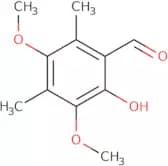
CAS:<p>4-Chloro-1H-pyrazole-3-carboxaldehyde is a fine chemical that is used as a building block in research and development. The CAS number is 623570-54-7. This compound has been found to be useful in the synthesis of complex compounds and versatile scaffolds.</p>Formula:C4H3ClN2OPurity:Min. 95%Color and Shape:SolidMolecular weight:130.53 g/mol2-Hydroxy-4,6-dimethoxy-3,5-dimethylbenzaldehyde
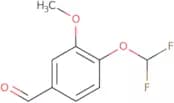
CAS:<p>2-Hydroxy-4,6-dimethoxy-3,5-dimethylbenzaldehyde is a versatile building block that can be used in research chemicals, reagents, and speciality chemicals. It is also a useful building block that can be used as a reaction component or scaffold for high-quality compounds. This chemical has been shown to have antihistamine properties with applications in treatment of allergies and asthma.</p>Formula:C11H14O4Purity:Min. 95%Color and Shape:PowderMolecular weight:210.23 g/mol3-Methoxy-4-(difluoromethoxy)benzaldehyde
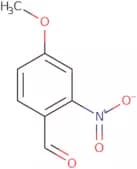
CAS:<p>3-Methoxy-4-(difluoromethoxy)benzaldehyde is a chemical compound that has been found to have anti-tumor properties. It inhibits tumor cells by inducing cell apoptosis. 3-Methoxy-4-(difluoromethoxy)benzaldehyde induces apoptosis in human carcinoma cells, with optimal activity at doses of 10 micromolar and higher. This chemical can be used as an anti-tumor agent because it shows no genotoxic effects, and has high yield with a low toxicity profile. When this compound is exposed to UV radiation, the formation of reactive oxygen species (ROS) increases the rate of cell death. 3-Methoxy-4-(difluoromethoxy)benzaldehyde also has anti-inflammatory properties, which may be due to its ability to inhibit prostaglandin synthesis.</p>Formula:C9H8F2O3Purity:Min. 95%Color and Shape:Colourless To Pale Yellow LiquidMolecular weight:202.15 g/mol4-Methoxy-2-nitro-benzaldehyde
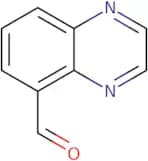
CAS:<p>4-Methoxy-2-nitrobenzaldehyde is a chemical that is used in the synthesis of many pharmaceuticals. It has been shown to be an effective agent in the treatment of cancer cells and is activated by chloride ions. 4-Methoxy-2-nitrobenzaldehyde reacts with nucleophiles such as hydroxide, amines, or thiols in order to form alkylating agents. This reaction can be used for the synthesis of many drugs including antihistamines, antidiabetic drugs, and antipsychotics. The rate of this reaction increases with increasing temperature. It also undergoes demethylation when exposed to nitrous acid, which may lead to a different product.</p>Formula:C8H7NO4Purity:Min. 95%Molecular weight:181.15 g/molQuinoxaline-5-carboxaldehyde
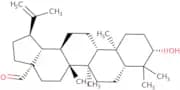
CAS:<p>Quinoxaline-5-carboxaldehyde is a versatile building block and reagent for organic chemistry. It is a complex compound that can be used as a research chemical or as a speciality chemical, with high quality and a useful scaffold. This compound has been shown to be an intermediate in the synthesis of other compounds, such as quinoxaline-5-carboxylic acid.</p>Formula:C9H6N2OPurity:Min. 95%Color and Shape:Off-White PowderMolecular weight:158.16 g/molBetulinaldehyde
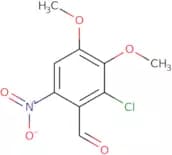
CAS:Controlled Product<p>Betulinaldehyde is a natural compound that belongs to the group of betulinic acid. It has been shown to have antimicrobial activity against oral pathogens and has been shown to inhibit the growth of bacteria by reacting with their cell walls. Betulinaldehyde has also been shown to have an effect on autoimmune diseases such as multiple sclerosis, as well as infectious diseases such as HIV and tuberculosis. Betulinaldehyde can be extracted from the bark of birch trees using acetate, which is then reacted with hydrogen peroxide in a reaction solution. The resulting product is purified using preparative high-performance liquid chromatography (HPLC).</p>Formula:C30H48O2Purity:Min. 95%Color and Shape:PowderMolecular weight:440.7 g/mol2-Chloro-3,4-dimethoxy-6-nitrobenzaldehyde
CAS:<p>2-Chloro-3,4-dimethoxy-6-nitrobenzaldehyde is a fine chemical with a CAS number of 82330-54-9. It is a versatile building block that can be used as a reagent or intermediate for the production of other chemicals. This product has been shown to have many different reactions. It is useful in the synthesis of complex compounds and offers high quality and purity.</p>Formula:C9H8ClNO5Purity:Min. 95%Color and Shape:PowderMolecular weight:245.62 g/mol2,5-Dibromobenzaldehyde
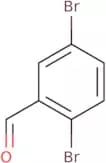
CAS:<p>2,5-Dibromobenzaldehyde is a synthetic compound that has been shown to have a red fluorescent emission. It is also thermally stable and can be used in the synthesis of quinoline derivatives. 2,5-Dibromobenzaldehyde may be used as a potential fluorescent label for viologen or amines. This compound can undergo an intermolecular Diels-Alder reaction with diacetate to form a bicyclic system, which is important to the understanding of its interactions with other compounds.</p>Formula:C7H4Br2OPurity:Min. 95%Color and Shape:PowderMolecular weight:263.91 g/mol2-Methoxy-3-methylbenzaldehyde
CAS:<p>2-Methoxy-3-methylbenzaldehyde is a natural product that belongs to the class of methoxymethyl. It has been shown to be synthesized by permethylation of methoxy, which is an important intermediate in the synthesis of many naturally occurring compounds such as terpenes and sterols. This compound exists in two enantiomers that can be separated chromatographically. The technique used for this separation is known as equivalence. The elution time for each enantiomer is different, and its spectroscopic properties are also different, making it possible to separate them by these means.</p>Formula:C9H10O2Purity:Min. 95%Color and Shape:PowderMolecular weight:150.17 g/mol2,5-Dimethoxyterephthalaldehyde
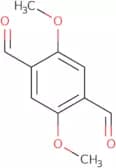
CAS:<p>2,5-Dimethoxyterephthalaldehyde (2,5DMP) is a protonated molecule that can be used in sample preparation for analytical methods. 2,5DMP has been used as a dispersive solid-phase extraction solvent and an adsorbent material. This compound has been shown to exhibit strong hydrophobic interactions with the carbonyl group of aromatic compounds and to have a high chemical stability. 2,5DMP also has an electrochemical impedance spectroscopy (EIS) property that can be used for monitoring the electrochemical behaviour of molecules and magnetic particles in the solution. The EIS property has been enhanced by hydrogen bonding between the protonated molecules and metal ions in the solution.</p>Formula:C10H10O4Purity:Min. 95%Color and Shape:PowderMolecular weight:194.18 g/mol9,10-Anthracenedicarboxaldehyde
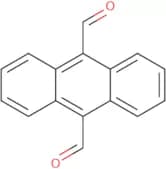
CAS:<p>9,10-Anthracenedicarboxaldehyde is a chemical compound that is used to measure the terminal half-life of drugs in humans. It is an inhibitor of collagen synthesis and has anticancer properties. 9,10-Anthracenedicarboxaldehyde has been shown to inhibit cancer cells by interfering with DNA replication and cell division. The chemical stability of 9,10-anthracenedicarboxaldehyde has been demonstrated in the reaction solution by the formation of chloromethyl ketone. This product also inhibits activity at the camp level and shows antineoplastic properties. The terminal half-life of 9,10-anthracenedicarboxaldehyde was determined to be 48 hours in a study involving human volunteers. The terminal half-life of this product can be shortened by hydrochloric acid or nitro (a reagent).</p>Formula:C16H10O2Purity:Min. 95%Color and Shape:PowderMolecular weight:234.25 g/mol2-Bromo-5-fluorobenzaldehyde
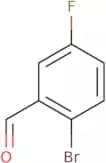
CAS:<p>2-Bromo-5-fluorobenzaldehyde is a chemical compound that has been shown to inhibit the activity of ns3 protease, an enzyme responsible for the cleavage of peptides in HIV. 2-Bromo-5-fluorobenzaldehyde binds to the active site of ns3 protease and prevents it from carrying out its function. This drug has also been shown to bind to the active site of ns5b polymerase and inhibit its activity, which is necessary for viral DNA synthesis. 2-Bromo-5-fluorobenzaldehyde has been used as a fungicide and has shown high potency against Candida albicans, Cryptococcus neoformans, Saccharomyces cerevisiae, and Aspergillus fumigatus.</p>Formula:C7H4BrFOPurity:Min. 95%Color and Shape:PowderMolecular weight:203.01 g/mol3-Ethynylbenzaldehyde
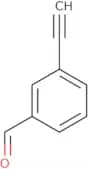
CAS:<p>3-Ethynylbenzaldehyde is a tryptic, nitro compound that contains terminal alkynes and has functional groups. The functional theory of this compound suggests that it may be used as a chemosensor for the detection of acidic compounds. 3-Ethynylbenzaldehyde reacts with sodium trifluoroacetate to form an aldehyde, which is then oxidized to an acid by the addition of water. This acid can be detected using NMR spectroscopy. 3-Ethynylbenzaldehyde has been shown to react with sodium trifluoroacetate in solid form at room temperature and above. The resulting product is a yellow crystalline solid that can be identified by its UV spectrum.</p>Formula:C9H6OPurity:Min. 95%Color and Shape:PowderMolecular weight:130.14 g/mol4-Diethylaminobenzaldehyde
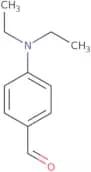
CAS:<p>4-Diethylaminobenzaldehyde is an organic compound that contains a hydroxyl group. It is a fluorescent probe and can be used to measure the transcriptional regulation of genes. This molecule has been shown to be an effective fluorescence probe for the detection of cb2 receptors in Langmuir adsorption isotherms and LC-MS/MS methods. 4-Diethylaminobenzaldehyde has also been shown to have chemopreventive properties against carcinoma cells.</p>Formula:C11H15NOPurity:Min. 98%Color and Shape:PowderMolecular weight:177.24 g/mol2,6-Dimethylbenzaldehyde
CAS:<p>2,6-Dimethylbenzaldehyde is a colorless liquid with a sweet odor. It is used in the synthesis of fatty acids and as an intermediate for other compounds. This chemical has significant cytotoxicity against leukemia cells, and is used in the production of acrylonitrile. 2,6-Dimethylbenzaldehyde can be synthesized by reacting an amine with an acyl chloride, followed by hydrolysis of the resulting ester. A contactor is usually added to facilitate the reaction. The reaction can also be carried out in the presence of a phosphorane or organic solvent.<br>2,6-Dimethylbenzaldehyde can be hydrogenated to produce 2,4-dimethylaniline and 2,4,6-trimethylaniline.</p>Formula:C9H10OPurity:Min. 95%Color and Shape:Clear White Solid Or Liquid (May Vary)Molecular weight:134.18 g/molIsoquinoline-6-carbaldehyde
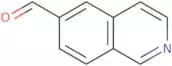
CAS:<p>Isoquinoline-6-carbaldehyde is a fine chemical that belongs to the group of research chemicals. It can be used as a reagent for organic synthesis, a speciality chemical, or a building block in complex organic molecules. Isoquinoline-6-carbaldehyde is also an intermediate for the synthesis of many pharmaceuticals and other useful compounds. Isoquinoline-6-carbaldehyde has been shown to react with 2-aminoethanol to form (2E)-3-(4-(1,1'-biphenyl)-2-yl)butanal, which is an important reaction component in the synthesis of nitroaromatics. Isoquinoline-6-carbaldehyde is also a versatile scaffold for the synthesis of other fine chemicals.</p>Formula:C10H7NOPurity:Min. 95%Color and Shape:SolidMolecular weight:157.17 g/mol2,3-Dichlorobenzaldehyde
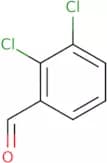
CAS:<p>2,3-Dichlorobenzaldehyde (2,3-DBA) is an organic compound that is used as a synthetic intermediate in the preparation of other chemicals. It is prepared by reacting 2-chloroacetophenone with hydrochloric acid and sodium carbonate in a reaction vessel. The product can be purified through fractional distillation or crystallization. The optical properties of 2,3-DBA are determined by its dipole moment and the substituents attached to the methylene group. Molecular modeling studies have shown that felodipine can bind to 2,3-DBA through its active methylene group. The reaction products between sulfadiazine and 2,3-DBA are pyridinedicarboxylic acid and 3-chlorobenzaldehyde.</p>Formula:C7H4Cl2OPurity:Min. 95%Color and Shape:White PowderMolecular weight:175.01 g/mol2,3,6-Trichlorobenzaldehyde
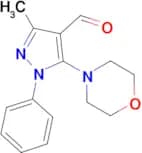
CAS:Formula:C7H3Cl3OPurity:95%Color and Shape:Solid, Off-white powderMolecular weight:209.453-Methyl-5-morpholin-4-yl-1-phenyl-1H-pyrazole-4-carbaldehyde
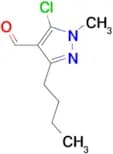
CAS:Formula:C15H17N3O2Purity:95.0%Molecular weight:271.323-butyl-5-chloro-1-methyl-1H-pyrazole-4-carbaldehyde
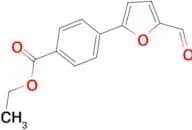
CAS:Formula:C9H13ClN2OPurity:95.0%Molecular weight:200.674-(5-Formylfuran-2-yl)benzoic acid ethyl ester
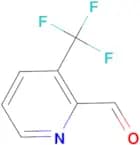
CAS:Formula:C14H12O4Purity:97%Color and Shape:SolidMolecular weight:244.2463-(Trifluoromethyl)pyridine-2-carboxaldehyde
CAS:Formula:C7H4F3NOPurity:98%;RGColor and Shape:LiquidMolecular weight:175.114-Bromo-3,5-dimethyl-1H-pyrrole-2-carbaldehyde
CAS:Formula:C7H8BrNOPurity:95%Color and Shape:SolidMolecular weight:202.0513-(METHOXYMETHOXY)PROPANAL
CAS:Formula:C5H10O3Purity:95.0%Color and Shape:LiquidMolecular weight:118.1324-Ethoxy-2-fluorobenzaldehyde
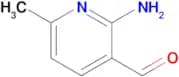
CAS:Formula:C9H9FO2Purity:≥95%Color and Shape:SolidMolecular weight:168.1672-Amino-6-methylnicotinaldehyde
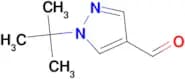
CAS:Formula:C7H8N2OPurity:98%Color and Shape:SolidMolecular weight:136.1541-(tert-Butyl)-1H-pyrazole-4-carbaldehyde
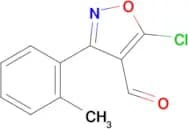
CAS:Formula:C8H12N2OPurity:95%Color and Shape:LiquidMolecular weight:152.1975-chloro-3-(2-methylphenyl)-1,2-oxazole-4-carbaldehyde
CAS:Formula:C11H8ClNO2Purity:95.0%Molecular weight:221.64


![Benzo[d]oxazole-5-carbaldehyde](/_next/image/?url=https%3A%2Fstatic.cymitquimica.com%2Fproducts%2F3D%2Fthumb-webp%2FFB143425.webp&w=3840&q=75)








![6-BROMOBENZO[B]THIOPHENE-3-CARBALDEHYDE](/_next/image/?url=https%3A%2Fstatic.cymitquimica.com%2Fproducts%2F10%2Fthumb-webp%2FF332121.webp&w=3840&q=75)