Pharmaceutical Standards
Pharmaceutical standards are a comprehensive set of reference materials essential for ensuring the safety, efficacy, and quality of pharmaceutical products. This category includes standards for active pharmaceutical ingredients (APIs), which are the core components responsible for therapeutic effects. Additionally, it covers compounds and metabolites relevant to both the pharmaceutical and veterinary industries, providing benchmarks for the accurate measurement and analysis of these substances. Nitrosamine control standards are crucial for detecting and mitigating potentially harmful nitrosamines in drug formulations. Toxicology standards help assess the safety and potential adverse effects of pharmaceutical compounds. Furthermore, enzyme activators and inhibitors standards are vital for research and development, enabling precise studies of biochemical pathways and drug mechanisms. These pharmaceutical standards are indispensable tools for regulatory compliance, quality control, and research, ensuring that pharmaceutical products meet stringent safety and effectiveness criteria.
Subcategories of "Pharmaceutical Standards"
- APIs for research and impurities(273,444 products)
- Enzyme Activators and Inhibitors(2,827 products)
- Nitrosamines(2,605 products)
- Pharmaceutical and Veterinary Compounds and Metabolites(2,577 products)
- Toxicology(13,652 products)
Found 7836 products of "Pharmaceutical Standards"
Sort by
Purity (%)
0
100
|
0
|
50
|
90
|
95
|
100
4,5-Dimethoxy-2-nitrocinnamic acid
CAS:<p>4,5-Dimethoxy-2-nitrocinnamic acid is a versatile building block that can be used as a reagent or speciality chemical. It is useful for the synthesis of complex compounds, and can be used as a reaction component or scaffold in organic chemistry. 4,5-Dimethoxy-2-nitrocinnamic acid is a high quality intermediate with CAS No. 20567-38-8.</p>Formula:C11H11NO6Purity:Min. 95%Molecular weight:253.21 g/mol3-Bromo-4-methoxycinnamic acid
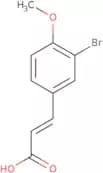
CAS:<p>3-Bromo-4-methoxycinnamic acid is an organic compound that is used as a reagent, a useful scaffold, and a useful intermediate. It has been shown to be an excellent building block for the synthesis of complex compounds. 3-Bromo-4-methoxycinnamic acid can be used in the production of fine chemicals.</p>Formula:C10H9BrO3Purity:Min. 95%Color and Shape:PowderMolecular weight:257.08 g/molL-Fucono-γ-lactone
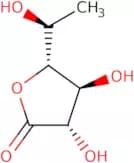
CAS:<p>L-Fucono-gamma-lactone is a compound that has been identified as a possible antibiotic for the treatment of multidrug resistant bacteria. L-Fucono-gamma-lactone inhibits the growth of bacterial cells by binding to the enzyme 4-deoxy-L-fucose dehydrogenase, which catalyzes the conversion of 4-deoxy-L-fucose to L-fuconate. This binding prevents the formation of L-fuconate, which is required for cell growth. The structural biology and bioinformatics analysis have shown that L-Fucono gamma lactone may be an effective inhibitor of bacterial enzymes, such as dehydrogenases and hexokinases. These enzymes are important for maintaining cellular energy levels and preventing cell death.</p>Formula:C6H10O5Purity:Min. 95%Color and Shape:White PowderMolecular weight:162.14 g/moltrans-4-(Diethylamino)cinnamaldehyde
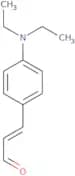
CAS:<p>Trans-4-(Diethylamino)cinnamaldehyde is a molecule that has been systematically studied with several techniques, such as x-ray crystallography. It has been shown to be a fluorophore and can be used as a fluorescent probe. Trans-4-(Diethylamino)cinnamaldehyde can be used in the fluorescence method in which it reacts with other molecules and emits light. This reaction scheme is based on the principle of irradiation by UV light or visible light to produce an excited state. Fluorescence is detected at various wavelengths depending on the dye used. Trans-4-(Diethylamino)cinnamaldehyde also emits fluorescence when irradiated with ultraviolet light, which is often referred to as "violet" fluorescence. The wavelength of this emission is 365 nm and it can be detected using high yield techniques, such as fluorometers.</p>Formula:C13H17NOPurity:Min. 95%Color and Shape:PowderMolecular weight:203.28 g/mol3,3',5-Triiodo-L-thyronine sodium salt
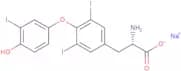
CAS:<p>Synthetic thyroid hormone (T3) analog; promotes adipogenic differentiation</p>Formula:C15H11I3NNaO4Purity:Min. 95 Area-%Color and Shape:Slightly Yellow PowderMolecular weight:672.96 g/mol3-Acetoxy-2,4-dimethoxyacetophenone
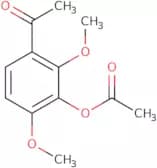
CAS:<p>3-Acetoxy-2,4-dimethoxyacetophenone is a chemical building block that has been shown to be useful in the synthesis of complex compounds. This compound can be used as a reaction component and reagent in organic synthesis. 3-Acetoxy-2,4-dimethoxyacetophenone can be used as a versatile building block for the synthesis of high quality research chemicals and speciality chemicals. It is also a useful intermediate for the preparation of fine chemicals such as pharmaceuticals, agrochemicals, and dyestuffs. 3-Acetoxy-2,4-dimethoxyacetophenone has CAS number 63604-86-4.</p>Formula:C12H14O5Purity:Min. 95%Molecular weight:238.24 g/mol4-Nitrophenylmethylcarbinol
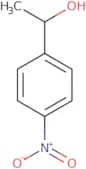
CAS:<p>4-Nitrophenylmethylcarbinol is a nitro compound that has been isolated from the nitration of 4-nitrophenol. It is used as a reagent to synthesize β-unsaturated ketones. The inhibitory effect of 4-nitrophenylmethylcarbinol is due to the presence of two nitro groups and one methyl group on its structure. This compound has been shown to have an inhibitory effect on glucose 6-phosphate dehydrogenase, which functions in cellular respiration by catalyzing the conversion of glucose 6-phosphate to glucose 1,6-bisphosphate. The inhibition of this enzyme leads to a reduction in the formation of ATP and NADPH, which are essential for cell growth. 4-Nitrophenylmethylcarbinol also has reductase activities that allow it to reduce phosphotriesters (e.g., DNA) and dehydrogenase deficiency (e.g., py</p>Formula:C8H9NO3Purity:Min. 95%Color and Shape:Orange Clear LiquidMolecular weight:167.16 g/molIbogamine-18-carboxylic acid methyl ester
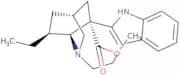
CAS:<p>Ibogamine is a naturally occurring alkaloid that is found in the roots of plants from the Apocynaceae family. It has been shown to be low-potency and act as an α7 nicotinic acetylcholine receptor agonist. Ibogamine also possesses transport properties through the blood-brain barrier. In addition, it has been shown to inhibit coronaridine-induced convulsions in mice and alkaloids have been isolated from its leaves. Molecular docking analysis has shown that ibogamine binds to the protein data of hep-2 cells, which are used for tissue culture. Ibogamine is a monoterpenoid indole alkaloid with anti-inflammatory properties. It has been shown to have activity against infectious diseases such as tissue culture and plate test experiments, which are used to study fatty acid synthesis and β-oxidation respectively.</p>Formula:C21H26N2O2Purity:Min. 98 Area-%Color and Shape:PowderMolecular weight:338.44 g/mol(2-Nitrophenyl)acetone
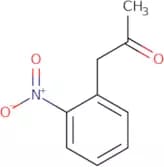
CAS:<p>2-Nitrophenylacetone is a polycyclic compound with an alkyl group, phenyl group, and a diterpenoid substituent. It is acylated with an acetate group on the 2-nitrophenyl group. The skeleton of this molecule contains a ketone (C=O) framework. The hydrogen atom in the molecule constitutes its chemistry. This molecule has been expressed in E. coli and purified to homogeneity. It constitutes the first example of a ketone containing framework for which biomolecular chemistry has been studied.</p>Formula:C9H9NO3Purity:Min. 95%Color and Shape:PowderMolecular weight:179.17 g/mol6-Hydroxycoumarin
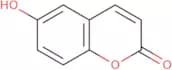
CAS:<p>6-Hydroxymethylcoumarin is a reactive, hydroxyl-containing molecule that has been shown to have inhibitory properties against the bacteria Pseudomonas aeruginosa. It is an inhibitor of nucleophilic substitutions, which are necessary for the synthesis of DNA and RNA. 6-Hydroxycoumarin has been shown to be effective in vitro against p. aeruginosa and other bacteria with similar mechanisms of action. Coumarins have also been found to be cytotoxic and cancerous in nature, as well as inhibiting growth factor activity. They are also used as pharmaceutical preparations for treating gastric ulcers due to their ability to inhibit the production of hydrochloric acid by parietal cells in the stomach lining.</p>Formula:C9H6O3Purity:Min. 95 Area-%Color and Shape:PowderMolecular weight:162.14 g/mol1-(4-Nitrophenyl)glycerol
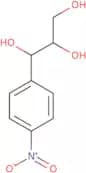
CAS:<p>1-(4-Nitrophenyl)glycerol has been shown to inhibit the growth of Gram-positive bacteria, including Streptococcus faecalis, and Gram-negative bacteria, including Pseudomonas aeruginosa. It is also used as a sample preparation for antimicrobial resistance testing.</p>Formula:C9H11NO5Purity:Min. 97 Area-%Color and Shape:Off-White PowderMolecular weight:213.19 g/mol1,5-Dinitronaphthalene
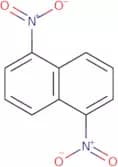
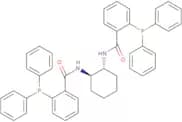
CAS:<p>1,5-Dinitronaphthalene is a test compound that has been used in the analytical method to determine the presence of basophilic leukemia cells. This reaction mechanism involves hydrogen bonding interactions with naphthalene, which is a test sample. The results are then read by chromatographic science and solubility data are collected. The 1,5-dinitronaphthalene can be used as a test compound for steric interactions with other compounds. It can also be used to measure the solubility of other compounds in different solvents.</p>Formula:C10H6N2O4Purity:Min. 97.0 Area-%Molecular weight:218.17 g/mol(1R,2R)-(+)-1,2-Diaminocyclohexane-N,N'-bis(2'-diphenylphosphinobenzoyl)
CAS:<p>(+)-1,2-Diaminocyclohexane-N,N'-bis(2'-diphenylphosphinobenzoyl) is an important chemical building block and intermediate that can be used in a wide range of organic synthesis. This compound is a versatile building block with high quality and has been shown to be useful for the synthesis of complex compounds. (+)-1,2-Diaminocyclohexane-N,N'-bis(2'-diphenylphosphinobenzoyl) can be used as a reagent in many reactions. CAS No. 138517-61-0 is a fine chemical that has been widely used in research laboratories around the world.</p>Formula:C44H40N2O2P2Purity:Min. 95%Color and Shape:White PowderMolecular weight:690.75 g/molHydroxy naphthol blue
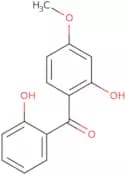
CAS:<p>羟基萘酚蓝是一种合成偶氮染料,是一种含有官能团RN=N-R的化合物。羟基萘酚蓝三钠盐和二钠盐用作分光光度法测定碱土和镧系元素含量的指示剂,最长为~650 nm(λ麦克斯= 647.6 纳米)。羟基萘酚蓝钠盐的常见用途的一个例子是通过测量钙和镁的浓度来确定水的硬度。在碱性或碱性pH值下,羟基萘酚蓝与金属离子形成粉红色/红色络合物,用EDTA滴定后,羟基萘酚蓝被释放出来,使溶液变成蓝色,指示终点。</p>Formula:C20H11N2O11S3·3NaColor and Shape:Black Blue PowderMolecular weight:620.48 g/mol2,2'-Dihydroxy-4-methoxybenzophenone
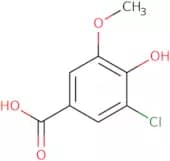
CAS:<p>2,2'-Dihydroxy-4-methoxybenzophenone (DHMB) is a chemical compound used in the manufacturing of sunscreens. It is also used as an antioxidant and antiinflammatory agent in topical preparations. The genotoxic effects of DHMB are well documented, but it is unclear whether these effects are due to UV radiation or other mechanisms. DHMB has been shown to be toxic to cells in vivo and in vitro. There have been reports of skin cancer developing on the ears of rats following chronic exposure to this chemical. DHMB binds to the estrogen receptor, which may be responsible for its genotoxic activity. This chemical has also been shown to inhibit the growth of bacteria such as Pseudomonas aeruginosa and Escherichia coli by binding with fatty acids on the cell membrane surface. DHMB is used for wastewater treatment because it can bind with heavy metals and remove them from water sources.</p>Formula:C14H12O4Purity:Min. 95%Color and Shape:Yellow To Dark Yellow SolidMolecular weight:244.24 g/mol5-Chlorovanillic acid
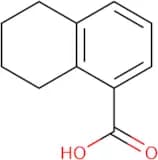
CAS:<p>5-Chlorovanillic acid is a weight compound that belongs to the group of methoxylated compounds. It is a precursor in the catabolic pathway of vanillic acid, which is synthesized from p-hydroxybenzoic acid. This compound can be found as one of the major phenolic acids in many plants and fruits, such as strawberries and apples. 5-Chlorovanillic acid has been shown to be an inhibitor for the growth of bacterial strains in culture, including C. perfringens. It has also been shown to have anti-inflammatory properties by inhibiting prostaglandin synthesis.</p>Formula:C8H7ClO4Purity:80%Color and Shape:PowderMolecular weight:202.59 g/mol5,6,7,8-Tetrahydro-1-naphthoic acid
CAS:<p>5,6,7,8-Tetrahydro-1-naphthoic acid is a synthetic organic compound that is used to make dyes and paints. It has toxic properties and can cause irritation of the skin or lungs. The mechanism of its toxicity is not known, but it may be due to the formation of reactive oxygen species in the body or the inhibition of monoamine oxidase. 5,6,7,8-Tetrahydro-1-naphthoic acid exhibits dose-dependent toxicity with increasing doses resulting in more severe reactions. It also has a high potential for long term carcinogenicity.</p>Formula:C11H12O2Purity:Min. 95%Molecular weight:176.21 g/mol(+)-Biotin sulfoxide
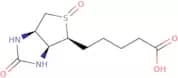
CAS:<p>Biotin sulfoxide is a biotin derivative that can be used to treat a number of human pathogens. This drug has been shown to inhibit the growth of wild-type strains in vivo and in vitro, as well as human pathogens. Biotin sulfoxide is a metal chelate that binds to molybdenum in the bacterial cell wall and prevents the formation of bacterial enzymes, such as reductase and sulfoxide reductase. This binding leads to a decrease in enzyme activities, which results in decreased protein synthesis and cell division. Biotin sulfoxide also has an inhibitory effect on light signal production, which may be due to its inhibition of proteins involved in electron transport. When administered orally, this drug can accumulate in the plasma and tissues, leading to chronic effects.</p>Formula:C10H16N2O4SPurity:Min. 95%Color and Shape:PowderMolecular weight:260.31 g/mol2,4-Dichlorophenylthiourea
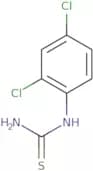
CAS:<p>2,4-Dichlorophenylthiourea is a hydrogen-bonding molecule that has dihedral angles of 109.5° and a molecular weight of 202.2 g/mol. 2,4-Dichlorophenylthiourea has been shown to form dimers with benzene and hydrogen bonds with itself and other molecules.</p>Purity:Min. 95%2-Hydroxy-3-cyclohexyl-1,4-naphthoquinone
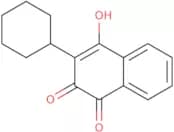
CAS:<p>Parvaquone is a drug used in the diagnosis and treatment of rheumatoid arthritis. It is a synthetic naphthoquinone that inhibits the production of prostaglandins by inhibiting cyclooxygenase enzymes, which are involved in the biosynthesis of these compounds. Parvaquone also has antimicrobial effects against some bacteria, fungi, and viruses. The bioavailability of parvaquone is low due to its high lipophilicity and poor aqueous solubility. When it does enter the bloodstream, it binds to plasma proteins such as albumin or alpha-1-acid glycoprotein. Parvaquone binds to collagen and other macromolecules in tissues, where it inhibits the synthesis of DNA by binding to the polymerase chain reaction (PCR). This binding leads to inhibition of transcription factors that regulate cell growth, leading to decreased cell division and tissue proliferation. Parvaquone also has some anti-inflammatory properties due</p>Formula:C16H16O3Purity:Min. 95%Color and Shape:Yellow PowderMolecular weight:256.3 g/mol(R)-N-Methyl-3-(1-naphthoxy)-3-(2-thienyl)propylamine hydrochloride
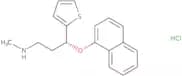
CAS:Controlled Product<p>(R)-N-Methyl-3-(1-naphthoxy)-3-(2-thienyl)propylamine hydrochloride is a nonsteroidal anti-inflammatory drug that has been shown to be effective for the treatment of osteoarthritis, rheumatoid arthritis, ankylosing spondylitis, and chronic low back pain. This drug can also be used for other inflammatory conditions such as psoriasis and Crohn's disease. The mechanism of action of (R)-N-Methyl-3-(1-naphthoxy)-3-(2-thienyl)propylamine hydrochloride is not fully understood. It may work by blocking the synthesis of prostaglandins in the body. This drug is metabolized in the liver to its active form, which binds to cyclooxygenase 1 and 2 enzymes to inhibit the production of prostaglandins. It also inhibits human serum x-ray</p>Formula:C18H19NOS•HClPurity:Min. 95%Color and Shape:White To Off-White SolidMolecular weight:333.88 g/molL-Thyronine
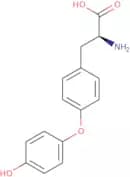
CAS:<p>L-Thyronine is a hormone that is synthesized in the thyroid gland and has a variety of biological functions. It is used to treat congestive heart failure, atherosclerosis, and other types of heart disease. L-Thyronine binds to receptors on cells and activates them, which stimulates production of energy for the cell. L-Thyronine also increases the number of mitochondria in cells and regulates the production of nitric oxide, which plays an important role in vascular relaxation. L-Thyronine can be administered orally or intravenously as a solution. The clinical response to treatment is evaluated by measurement of serum thyroxin levels before and after administration of L-Thyronine.</p>Formula:C15H15NO4Purity:Min. 95%Color and Shape:PowderMolecular weight:273.28 g/molBiotin-PEG4-propionic acid
CAS:<p>Biotin-PEG4-propionic acid is a PEG compound with two different functional groups (also known as heterobifunctional). Unlike homobifunctional PEG compounds (same functional group on both ends), this type of compounds are more versatile as have two different anchor points. Biotin-PEG4-propionic acid is used as a linker and spacer to add a PEG moiety, via pegylation (a bioconjugation technique) to proteins, peptides, oligonucleotides, small molecules and nanoparticles.</p>Formula:C21H37N3O8SPurity:Min. 95%Color and Shape:PowderMolecular weight:491.6 g/mol2-Methoxy-1-naphthaldehyde
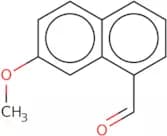
CAS:<p>2-Methoxy-1-naphthaldehyde is a potential chemical intermediate for the synthesis of a variety of biologically active compounds. It has been shown to have anti-tumor activity in solid tumours and can be used as a precursor for the production of new drugs that inhibit the growth of cancer cells. 2-Methoxy-1-naphthaldehyde is synthesized via an intramolecular hydrogen addition reaction with salicylaldehyde, which generates resonance stabilization. It also has an intermolecular hydrogen bond with naphthalene to form the dimer or trimer. The vibrational spectra and analytical methods are used to identify the functional groups present in 2-Methoxy-1-naphthaldehyde, which includes a hydrogen bond between the two methoxy groups. Computational methods can be used to predict how different molecules bind to this chemical intermediate and its role in biological activity.</p>Formula:C12H10O2Purity:Min. 95%Color and Shape:PowderMolecular weight:186.21 g/mol2,7-Dichloro-1,8-naphthyridine
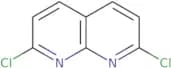
CAS:<p>2,7-Dichloro-1,8-naphthyridine is a structural analog of the functional group 2,7-dichloroquinoline. The protonated form of this molecule reacts with aryl chlorides to produce hydrogen bonds and generate supramolecular complexes. These complexes have been shown to be stable in solution and have low efficiency for electron transfer reactions. This compound has been shown to react with fluorine gas to generate reduction products with an nmr spectrum that is different from that of 2,7-dichloroquinoline. Crystallographic studies on this molecule show hydrogen bonding interactions between the molecules.</p>Formula:C8H4Cl2N2Purity:Min. 95%Color and Shape:Yellow PowderMolecular weight:199.04 g/mol3-Iodo-L-thyronine
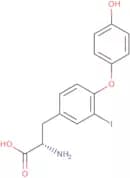
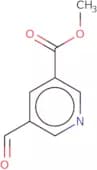
CAS:<p>3-Iodo-L-thyronine is a thyroid hormone that is synthesized from thyroxine. It has a high maximal response in humans and it may be useful for the treatment of hypothyroidism. 3-Iodo-L-thyronine is not active against rat liver microsomes because it is a noncompetitive inhibitor. The clinical relevance of this drug needs to be evaluated before it can be used as a therapeutic agent, but its analytical methods are similar to those used for other thyroid hormones, such as T3, T4, and 3,5,3'-triiodothyronine. This molecule has been successfully detected in human serum and tissues by using an analytical method based on iodoacetic acid.</p>Formula:C15H14INO4Purity:Min. 95%Color and Shape:PowderMolecular weight:399.18 g/mol5-Formyl nicotinic acid methyl ester
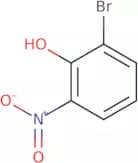
CAS:<p>5-Formyl nicotinic acid methyl ester (5-FNA) is a derivative of nicotinic acid that is used in research to measure the level of nicotine in urine. The affinity of 5-FNA for nicotine is much stronger than the affinity of acetone. 5-FNA is detectable in urine samples from humans and animals, and it can be used to study the health effects of tobacco use. It has also been used for toxicology research on animals and detection methods for tobacco use among humans. 5-FNA binds to nicotine receptors on cells and antibodies are produced against these receptors. The antibodies can be detected by an immunosorbant assay or radioimmunoassay, which are two techniques that are often used in 5-FNA studies.</p>Formula:C8H7NO3Purity:(%) Min. 98%Color and Shape:PowderMolecular weight:165.15 g/mol2-Bromo-6-nitrophenol
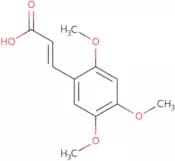
CAS:<p>2-Bromo-6-nitrophenol is a synthetic chemical that is used as an intermediate in the synthesis of other chemicals. It can be prepared by reacting ammonium formate with hydroxyl group of 2-bromo-6-nitropyridine. The reaction yield can be improved by activating the hydroxyl group and removing impurities through a dehydration reaction. The time required for the reaction to occur can be shortened by using acetonitrile as a solvent instead of water. This chemical is also synthesized by coupling metal salts with nitro groups or amines, which are called Suzuki coupling reactions.</p>Formula:C6H4BrNO3Color and Shape:PowderMolecular weight:218 g/mol2,4,5-Trimethoxycinnamic acid
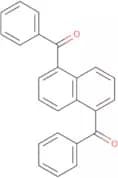
CAS:<p>2,4,5-Trimethoxycinnamic acid is a phenolic acid that is found in plants. It is a precursor to many other compounds that are biologically active, such as the caffeic acids and their derivatives. 2,4,5-Trimethoxycinnamic acid has been shown to have anti-cancer effects on cervical cancer cells. It also exhibits biological properties and has been used as an ingredient in traditional Chinese medicine.</p>Formula:C12H14O5Purity:Min. 95%Color and Shape:PowderMolecular weight:238.24 g/mol1,5-Dibenzoylnaphthalene
CAS:<p>1,5-Dibenzoylnaphthalene (1,5-DBN) is a reactive anion radical that can be used to synthesize flavonoids. It can be used in the preparation of dyestuffs and reacts quickly with aldehydes in Friedel-Crafts reactions. 1,5-DBN is also antibacterial and has been shown to inhibit the growth of Staphylococcus aureus and Clostridium perfringens. It is toxic to humans when ingested and should be handled with care.</p>Formula:C24H16O2Purity:Min. 95%Color and Shape:PowderMolecular weight:336.38 g/molKinetin-9-glucoside
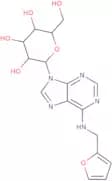
CAS:<p>Kinetin-9-glucoside is a conjugate of kinetin and glucose. It has been shown to inhibit the growth of several types of bacteria, including Pseudomonas aeruginosa, Staphylococcus aureus, and Streptococcus pyogenes. Kinetin-9-glucoside also has anti-inflammatory properties that may be due to its ability to inhibit prostaglandin synthesis. Kinetin-9-glucoside is used in tissue culture for the induction of plant regeneration from callus tissue or from excised root tissues. Kinetin-9-glucoside has been shown to stimulate the formation of apical roots in plantlets and promote cell division in neuronal cells.</p>Formula:C16H19N5O6Purity:Min. 95 Area-%Color and Shape:PowderMolecular weight:377.35 g/mol2-Bromo-4-chlorobenzoic acid methyl ester
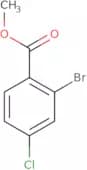
CAS:<p>2-Bromo-4-chlorobenzoic acid methyl ester is a versatile chemical that can be used as a building block in the synthesis of many complex chemical compounds. It is also a useful reagent, and can be used to synthesize speciality chemicals. 2-Bromo-4-chlorobenzoic acid methyl ester has a high quality that makes it useful for research purposes. It is also an important intermediate in the synthesis of other compounds and has been found to be an effective scaffold for drug discovery. This compound is also commercially available under CAS No. 57381-62-1.</p>Formula:C8H6BrClO2Purity:Min. 95%Color and Shape:Clear LiquidMolecular weight:249.49 g/molPigment YellOw 5;2-[(2-NitrOphenyl)azO]-3-OxO-N-phenylbutanamide
CAS:<p>Please enquire for more information about Pigment YellOw 5;2-[(2-NitrOphenyl)azO]-3-OxO-N-phenylbutanamide including the price, delivery time and more detailed product information at the technical inquiry form on this page</p>Purity:Min. 95%Pigment Red 38;Diethyl 4,4'-[(3,3'-dichlOrO[1,1'-biphenyl]-4,4'-diyl)bis(azO)]bis[4,5-dihydrO-5-OxO-1-phenyl-1H-pyrazOle-3-carbOxyla te]
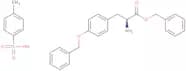
CAS:<p>Pigment Red 38 is a red dye that is used in the production of magnetic particles, cross-linking agents, and fluorescent dyes. Pigment Red 38 has a hydroxyl group at the 4 position and a methyl ethyl group at the 2 position. It can be synthesized from diethyl 4,4'-(3,3'-dichlorobiphenyl)-4,4'-diylbisazolate. Pigment Red 38 is thermoreversible because it can be converted to its anhydrous form when heated or dissolved in water and then reconverted back to its original form when cooled or dried. The pigment was named for its ability to produce light emission when exposed to ultraviolet radiation. Pigment Red 38 has a diameter of 6 nm and reacts with coordination complexes to form particle clusters with diameters ranging from 10-200 nm.</p>Purity:Min. 95%O-Benzyl-L-tyrosine benzyl ester 4-toluenesulfonate
CAS:<p>O-Benzyl-L-tyrosine benzyl ester 4-toluenesulfonate salt is a fine chemical that belongs to the category of useful scaffolds and versatile building blocks. It is a high quality reagent that can be used as a reaction component in the preparation of complex compounds. This compound has shown to be useful in research on various types of drugs, including analgesics, antibiotics, antihistamines, antidepressants, antipsychotics and others.</p>Formula:C23H23NO3•C7H8O3SPurity:Min. 95%Color and Shape:White solid.Molecular weight:533.64 g/mol1-(4-Cyanophenyl)-2-nitropropene
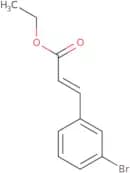
<p>Please enquire for more information about 1-(4-Cyanophenyl)-2-nitropropene including the price, delivery time and more detailed product information at the technical inquiry form on this page</p>Formula:C10H8N2O2Purity:Min. 95%Molecular weight:188.18 g/mol3-Bromocinnamic acid ethyl ester
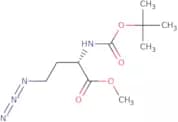
CAS:<p>3-Bromocinnamic acid ethyl ester is a chemical that is useful as a building block for the synthesis of more complex compounds. It is an intermediate in the synthesis of organic compounds and can be used as a reaction component. 3-Bromocinnamic acid ethyl ester has CAS No. 24398-80-9 and is a reagent that can be used to synthesize other chemicals. 3-Bromocinnamic acid ethyl ester is also useful as a scaffold in the development of new drugs, because it has an amide bond, which may lead to new types of drug molecules with different properties.</p>Formula:C11H11BrO2Purity:Min. 95%Molecular weight:255.11 g/mol(2S)-N-Boc-2-amino-4-azido-butanoic acid methyl ester
CAS:<p>(2S)-N-Boc-2-amino-4-azido-butanoic acid methyl ester is a high quality, reagent, complex compound, useful intermediate, fine chemical that is used as a building block in the synthesis of speciality chemicals.</p>Formula:C10H18N4O4Purity:Min. 95%Color and Shape:PowderMolecular weight:258.27 g/molN,O-Bis-Boc-L-tyrosine
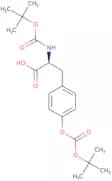
CAS:<p>N,O-Bis-Boc-L-tyrosine is a synthetic protease inhibitor that is a diastereomer of the natural substrate tyrosine. It binds to the active site of the enzyme and prevents it from cleaving peptide bonds. N,O-Bis-Boc-L-tyrosine has been shown to inhibit proteolytic activity in vitro and in vivo, specifically targeting proteases such as trypsin, chymotrypsin, elastase, cathepsin G, and thrombin. The analogues show specific interaction with various glycoconjugates and have been used to synthesize tripeptides and peptidomimetics for use as drugs against cancer. Dermorphin is an opioid peptide derived from the N,O-bis Boc L tyrosine analogue that is able to interact with receptors on neurons in the brain.</p>Formula:C19H27NO7Purity:Min. 95%Color and Shape:SolidMolecular weight:381.42 g/mol5,5'-Diamino-2,2'-bipyridine
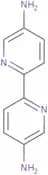
CAS:<p>5,5'-Diamino-2,2'-bipyridine is an acidic metalloporphyrin that has been shown to react with epoxides to form nucleophilic adducts. This compound can be used as a ligand for lanthanide ions and reacts with aminopyridine to form bromoethane. 5,5'-Diamino-2,2'-bipyridine has been shown to have carcinogenic properties and may induce bromoethane mutagenicity in the liver. This compound is also mutagenic when added to propylene carbonate. 5,5'-Diamino-2,2'-bipyridine is luminescent in air or water when exposed to UV light.</p>Formula:C10H10N4Purity:Min. 97 Area-%Color and Shape:PowderMolecular weight:186.21 g/molN-Isovalerylglycine
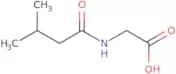
CAS:<p>N-Isovalerylglycine is a metabolite of the branched-chain amino acid leucine. It is found in the urine of patients with acidemia due to ethylmalonic aciduria, but not in healthy individuals. N-Isovalerylglycine has been shown to be an intermediate compound for the synthesis of acetoacetate and isovalerylglycine from acetyl-CoA. This metabolite can be used as a marker for diagnosing metabolic disorders such as diabetes mellitus, obesity, and polycystic ovary syndrome.</p>Formula:C7H13NO3Purity:Min. 95%Color and Shape:White PowderMolecular weight:159.18 g/molEcgonine ethyl ester
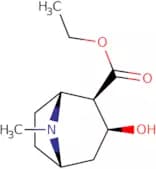
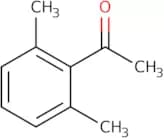
CAS:Controlled Product<p>Ecgonine ethyl ester is a metabolite of cocaine that is found in the blood, urine, and cerebrospinal fluid of humans. It is used in drug assays to detect cocaine use. Ecgonine ethyl ester binds to the dopamine transporter and blocks dopamine uptake into cells, which leads to elevated levels of dopamine in the synapses. Ecgonine ethyl ester also inhibits serotonin reuptake and has been shown to induce apoptotic cell death in human cancer cells.</p>Formula:C11H19NO3Purity:Min. 95%Color and Shape:Clear LiquidMolecular weight:213.27 g/mol2',6'-Dimethylacetophenone
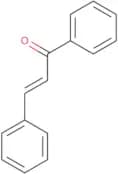
CAS:<p>2',6'-Dimethylacetophenone is an organic compound that is used as a precursor in the production of other chemicals. This substance has two different isomers, namely 2,6-dimethoxybenzaldehyde and 2,6-dimethoxyphenol. The former is more stable than the latter. 2',6'-Dimethylacetophenone has a carbonyl group and a chloride. It can be found in the resonance mass spectrum between 190 and 250 MHz, with proton on the left and mesomeric on the right. It's ultraviolet absorption peaks at about 290 nm (nmr spectra), which corresponds to its molecule. Spectrometry reveals that this substance has two isomers: 2,6-dimethoxybenzaldehyde and 2,6-dimethoxyphenol. The former has a kinetic molecular modeling of 3.2 kcal/mol while the latter has a kinetic molecular modeling of 4.3 kcal/mol.br</p>Formula:C10H12OColor and Shape:Clear LiquidMolecular weight:148.2 g/moltrans-Chalcone
CAS:<p>Trans-chalcone is a natural compound that has been shown to inhibit bacterial growth and dna synthesis in vitro. Trans-chalcone is an oxo-flavonoid with a chalcone skeleton and two hydroxyl groups. It has been shown to have inhibitory properties against the bacterial enzyme dinucleotide phosphate (DNP) synthase, which catalyzes the synthesis of DNP from nicotinamide mononucleotide (NMN) and 5-phospho-D-ribose 1-diphosphate. Trans-chalcone is also a potential anticancer agent due to its ability to bind to response elements in DNA. This binding inhibits the transcription of genes that regulate cell proliferation. Trans-chalcone also exhibits antiinflammatory activity, which may be due to inhibition of proinflammatory cytokines such as tumor necrosis factor alpha (TNFα).</p>Formula:C15H12OPurity:Min. 95%Color and Shape:PowderMolecular weight:208.26 g/molRivaroxaban
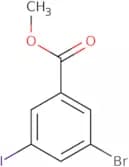
CAS:<p>Rivaroxaban is a natural drug that is a direct factor Xa inhibitor. It has been shown to be an effective therapy for the treatment of atrial fibrillation, deep vein thrombosis (DVT) and pulmonary embolism (PE). It works by inhibiting the enzyme, thrombin, which is responsible for the formation of blood clots. Rivaroxaban also has an effect on the coagulation system by decreasing the levels of fibrinogen and increases in antithrombin III. This drug does not have any specific antidote, but it can be reversed with heparin. Pharmacodynamics and drug interactions have been studied extensively in preclinical models, demonstrated by the concentration–time curves.</p>Formula:C19H18ClN3O5SPurity:Min. 98 Area-%Color and Shape:White Off-White PowderMolecular weight:435.88 g/mol3-Bromo-5-iodobenzoic acid methyl ester
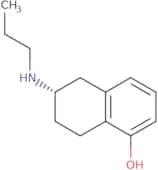
CAS:<p>3-Bromo-5-iodobenzoic acid methyl ester is a reactive, insensitive and phosphine-sensitive chemical that can be used as a probe for the detection of azides and anions. This compound has been shown to be damaging to DNA and peptidic bonds in proteins. 3-Bromo-5-iodobenzoic acid methyl ester reacts with anions such as chloride, bromide, iodide, fluoride, nitrate, and thiocyanate. It also reacts with azides such as sodium azide. The reactivity of 3-bromo-5-iodobenzoic acid methyl ester towards halides and polysulfides is not yet known.</p>Formula:C8H6BrIO2Purity:Min. 95%Color and Shape:PowderMolecular weight:340.94 g/mol(6S)-5,6,7,8-Tetrahydro-6-(propylamino)-1-naphthalenol
CAS:Controlled Product<p>Rotigotine is a drug that is used to treat Parkinson's disease. It is a dopamine agonist that stimulates the release of dopamine in the brain. Rotigotine has been shown to be effective in controlling symptoms of Parkinson's disease, such as tremors and stiffness, and improving motor skills. This drug has also been shown to have a good tolerability profile, with few side effects reported. Rotigotine is rapidly absorbed from the gastrointestinal tract and metabolized by CYP2D6 into desalkyl rotigotine, which are pharmacologically inactive compounds. The mean terminal half-life for rotigotine is about 2 hours.</p>Formula:C13H19NOPurity:Min. 95%Molecular weight:205.3 g/mol2',3'-Di-O-isopropylidene-5-hydroxymethyl uridine
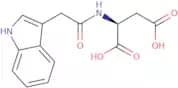
CAS:<p>2',3'-Di-O-isopropylidene-5-hydroxymethyl uridine (DIOI) is a fine chemical that can be used as a versatile building block or an intermediate in the research of complex compounds. DIOI is also a useful reagent, which may be used as a starting material for the synthesis of other compounds. It has been shown to have high quality and is available at CAS No. 3816-77-1.</p>Formula:C13H18N2O7Purity:Min. 95 Area-%Color and Shape:PowderMolecular weight:314.29 g/molIndole-3-acetyl-L-aspartic acid
CAS:<p>Indole-3-acetyl-L-aspartic acid, also known as 3IAA or IAA, is a naturally occurring amino acid. It is used in the study of plant physiology and serves as a substrate for ATP synthesis. 3IAA is synthesized from tryptophan by the enzyme indole acetyltransferase. The kinetic data obtained with 3IAA can be used to compare the effects of light exposure on ATP levels in plants. Indole-3-acetyl-L-aspartic acid inhibits cell growth and induces apoptosis, which may be due to its ability to inhibit protein synthesis by preventing RNA and DNA synthesis. This compound has been shown to have surface membrane inhibiting properties, which may be due to its ability to cross the plasma membrane.</p>Formula:C14H14N2O5Purity:Min. 95%Color and Shape:White PowderMolecular weight:290.27 g/mol3-Amino-3'-nitrobiphenyl hydrochloride
CAS:<p>3-Amino-3'-nitrobiphenyl hydrochloride is a versatile intermediate that can be used in the synthesis of complex compounds. It is a white crystalline solid with a melting point of 178 °C. This product is soluble in water, methanol, ethanol, acetone and chloroform. 3-Amino-3'-nitrobiphenyl hydrochloride has many applications including research chemicals and speciality chemicals.</p>Formula:C12H10N2O2·HClPurity:Min. 95%Color and Shape:PowderMolecular weight:250.68 g/mol




![Pigment YellOw 5;2-[(2-NitrOphenyl)azO]-3-OxO-N-phenylbutanamide](/_next/image/?url=https%3A%2Fstatic.cymitquimica.com%2Fproducts%2F3D%2Fthumb-webp%2FFP40385.webp&w=3840&q=75)
![Pigment Red 38;Diethyl 4,4'-[(3,3'-dichlOrO[1,1'-biphenyl]-4,4'-diyl)bis(azO)]bis[4,5-dihydrO-5-Ox…](/_next/image/?url=https%3A%2Fstatic.cymitquimica.com%2Fproducts%2F3D%2Fthumb-webp%2FFP43985.webp&w=3840&q=75)