Pharmaceutical Standards
Subcategories of "Pharmaceutical Standards"
- APIs for research and impurities(276,377 products)
- Enzyme Activators and Inhibitors(2,829 products)
- Nitrosamines(2,627 products)
- Pharmaceutical and Veterinary Compounds and Metabolites(2,901 products)
- Toxicology(13,531 products)
Found 7963 products of "Pharmaceutical Standards"
3,4'-Dihexyl-2,2'-bithiophene
CAS:Please enquire for more information about 3,4'-Dihexyl-2,2'-bithiophene including the price, delivery time and more detailed product information at the technical inquiry form on this page
Purity:Min. 95%Ref: 3D-FD44193
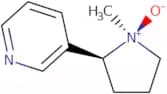
Discontinued product(1'S,2'S)-Nicotine 1'-oxide
CAS:Nicotine 1'-oxide is a metabolite of nicotine which is a naturally occurring alkaloid. Nicotine 1'-oxide is produced by the oxidation of nicotine and can be found in tobacco smoke, as well as in the urine of humans. Nicotine 1'-oxide has been shown to have enzyme inhibiting properties, and has been shown to decrease insulin-stimulated glucose transport rate in human liver cells. This product also has potential use as a stabilizer for pharmaceuticals or other organic substances, and can inhibit demethylation reactions that may lead to carcinogenesis. Nicotine 1'-oxide may also play a role in the transport of chemicals across membranes.
Formula:C10H14N2OPurity:Min. 95%Color and Shape:PowderMolecular weight:178.23 g/molRef: 3D-FN26201
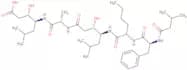
Discontinued productIsovaleryl-Phe-Nle-Sta-Ala-Sta-OH
CAS:Isovaleryl-Phe-Nle-Sta-Ala-Sta-OH (IVAS) is a small molecule that has been shown to be an angiotensin system inhibitor. IVAS blocks the binding site of the angiotensin receptor and prevents the activation of this system. This effect is dose dependent and can be used to treat high blood pressure in humans. IVAS is a long-acting drug and has been shown to be effective in primates as well as humans. The drug is rapidly absorbed from the gastrointestinal tract and eliminated by metabolism, mainly through hydrolysis by esterases or glucuronidases, oxidation by cytochrome P450 enzymes, reduction by glutathione reductase, or conjugation with glucuronic acid. IVAS also specifically binds to markers expressed at high levels in Mycobacterium tuberculosis strains (e.g., ESX-1 secretion system protein) and inhibits cell growth in culture.
Formula:C39H65N5O9Purity:Min. 95%Molecular weight:747.96 g/molRef: 3D-FI49358
Discontinued productIbuprofen Sorbitol Ester - (Mixture of Diastereomers)
Please enquire for more information about Ibuprofen Sorbitol Ester - (Mixture of Diastereomers) including the price, delivery time and more detailed product information at the technical inquiry form on this page
Formula:C19H30O7Purity:Min. 95%Molecular weight:370.44 g/molRef: 3D-FI157430
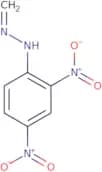
Discontinued productFormaldehyde-2,4-dinitrophenylhydrazone
CAS:Formaldehyde-2,4-dinitrophenylhydrazone (FDNH) is a chemical compound that inhibits the production of galacturonic acid. It is used as an analytical method to measure the concentration of galacturonic acid in biological samples. FDNH reacts with galacturonic acid to form a diazonium salt and a hydrazone derivative. The diazonium salt can be measured by liquid chromatography, while the hydrazone derivative can be measured by gas chromatography. This test has been used to measure the concentration of galacturonic acid in plants, pharmaceutical drugs, and reaction products.Formula:C7H6N4O4Purity:Min. 95%Molecular weight:210.15 g/molRef: 3D-FF146197
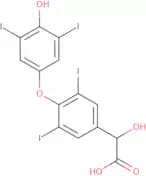
Discontinued product3,5,3',5' -Tetraiodo thyromandelic acid
CAS:Please enquire for more information about 3,5,3',5' -Tetraiodo thyromandelic acid including the price, delivery time and more detailed product information at the technical inquiry form on this page
Formula:C14H8I4O5Purity:Min. 95%Color and Shape:PowderMolecular weight:763.83 g/molRef: 3D-FT35076
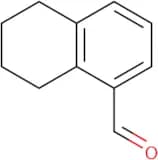
Discontinued product5,6,7,8-Tetrahydronaphthalene-1-carbaldehyde
CAS:Please enquire for more information about 5,6,7,8-Tetrahydronaphthalene-1-carbaldehyde including the price, delivery time and more detailed product information at the technical inquiry form on this page
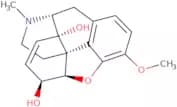
Formula:C11H12OPurity:Min. 95%Color and Shape:Clear LiquidMolecular weight:160.21 g/molCodeine Impurity F
CAS:Controlled ProductCodeine Impurity F is a biochemical that is an impurity of codeine. Codeine Impurity F is a byproduct of the enzymatic reaction with morphine and the bacterial strain Pseudomonas putida. Codeine Impurity F has been shown to inhibit the growth of gram-negative bacteria, including Escherichia coli and Salmonella enterica, by binding to cellular membranes and inhibiting their function. It also binds to RNA in vitro and prevents translation of mRNA from its ribosome complex. The hydroxyl group on Codeine Impurity F binds to aluminium ions, which may interfere with the absorption of other drugs such as ampicillin or tetracycline. This impurity has been shown to have an effect on biological products such as immunoglobulins and albumin.
Formula:C18H21NO4Purity:Min. 95%Molecular weight:315.36 g/molRef: 3D-FC161072
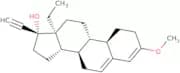
Discontinued product(17a)-13-Ethyl-3-methoxy-18,19-dinorpregna-3,5-dien-20-yn-17-ol
CAS:Controlled ProductPlease enquire for more information about (17a)-13-Ethyl-3-methoxy-18,19-dinorpregna-3,5-dien-20-yn-17-ol including the price, delivery time and more detailed product information at the technical inquiry form on this pageFormula:C22H30O2Purity:Min. 95%Molecular weight:326.47 g/molRef: 3D-FE23118
Discontinued productNaphthalene
CAS:Naphthalene is a chemical that is used for wastewater treatment and as a pesticide. It is also used in the manufacturing of polymers, resins, and plastics. Naphthalene has antimicrobial properties due to its hydrophobic effect. Naphthalene's antimicrobial activity is based on its ability to react with the skeleton of bacterial cells and disrupt the integrity of their outer membrane. Naphthalene also interacts with proteins and DNA, causing cell death. The molecular mechanisms of naphthalene's antibacterial activity are not well understood but have been studied using Hl-60 cells, which are immortalized human monocytic leukemia cells. This study showed that naphthalene affects the cell cycle by inhibiting protein synthesis in bacteria through binding to ribosomes or by disrupting the dna replication process.
Formula:C10H8Purity:Min. 95%Molecular weight:128.17 g/molRef: 3D-FN10260
Discontinued product1-(2-Aminoethyl)-3-Phenylurea Hydrochloride
CAS:Please enquire for more information about 1-(2-Aminoethyl)-3-Phenylurea Hydrochloride including the price, delivery time and more detailed product information at the technical inquiry form on this page
Formula:C9H13N3O·HClPurity:Min. 95%Molecular weight:215.68 g/molRef: 3D-FA53557
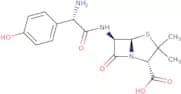
Discontinued productAmoxicillin trihydrate impurity B
CAS:Amoxicillin trihydrate impurity B is an impurity of amoxicillin trihydrate, a penicillin antibiotic. Impurities are substances that are not intentionally added to the drug and may be formed during the manufacturing process. Impurities can affect the quality and safety of drugs, although their presence does not necessarily indicate a problem with the drug. Impurities in amoxicillin trihydrate include clavulanate potassium (impurity A) and heptane-2-carboxylic acid (impurity C). Impurity A is present in small quantities, typically less than 1% of the total amount of amoxicillin trihydrate. Impurity C is present in larger quantities and can make up to 10% of the total amount of amoxicillin trihydrate.
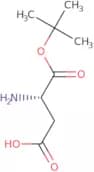
Formula:C16H19N3O5SPurity:Min. 95%Molecular weight:365.41 g/molL-Aspartic acid alpha-tert-butyl ester
CAS:L-Aspartic acid alpha-tert-butyl ester is a synthetic amino acid that can be used as a substrate for the synthesis of L-cysteine in the presence of selenomethionine. This compound is an auxotroph and cannot be synthesized by the body, so it must be obtained through diet or supplementation. It has been shown to have anti-cancer properties, which may be due to its role in regulating cell proliferation, apoptosis, and angiogenesis. L-Aspartic acid alpha-tert-butyl ester may also inhibit colon cancer cells by preventing them from recycling proteins. This compound was shown to inhibit HCT116 human colon cancer cells in both experimentally and computationally studies. Additionally, this molecule was seen to induce tumor regression in mice with colitis by inhibiting eukaryotic protein synthesis. This inhibition was found to be mediated through a trifluoromethyl group on the molecule's
Formula:C8H15NO4Purity:Min. 95%Color and Shape:PowderMolecular weight:189.21 g/molRef: 3D-FA47669
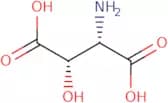
Discontinued productD,L-Threo-b-hydroxy aspartic acid
CAS:D,L-Threo-b-hydroxy aspartic acid is a stereoselective synthetic amino acid that has been used to study the uptake and hydrolysis of D,L-threo-b-hydroxy aspartic acid by rat brain synaptosomes. It has also been used in the synthesis of an L-alanine analogue with the same stereochemistry at the chiral center. The stereoselective synthesis of this compound is achieved by epimerization reaction using d-alanine as a starting material. Threo bhda has been shown to inhibit glutamate release from neurons and stimulate GABA release in synaptosomes, which may be due to its ability to bind to ion channels. Threo bhda has also been found to inhibit the binding of radioactive thymidine to calf thymus DNA with a high degree of stereoselectivity.
Formula:C4H7NO5Purity:Min. 95%Molecular weight:149.1 g/molRef: 3D-FT28259
Discontinued productChloro[2-(di-tert-butylphosphino)-2',4',6'-triisopropyl-1,1'-biphenyl][2-(2-aminoethyl)phenyl)]palladium(II)
CAS:Controlled ProductChloro[2-(di-tert-butylphosphino)-2',4',6'-triisopropyl-1,1'-biphenyl][2-(2-aminoethyl)phenyl)]palladium(II) is a molecule that inhibits the adenosine receptor in autoimmune diseases and cancer. It also has an inhibitory effect on the membrane transport of glucose, glucosan, and aziridine. This drug can be used to treat inflammatory diseases such as diabetes, asthma, and inflammatory bowel disease. The geometric isomers of this molecule are not identical in shape or size and can have different effects on the body.
Formula:C37H55ClNPPdPurity:Min. 95%Molecular weight:686.69 g/molRef: 3D-FC156938
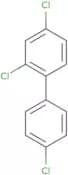
Discontinued product2,4,4’-Trichlorobiphenyl
CAS:Controlled Product2,4,4’-Trichlorobiphenyl is a polychlorinated biphenyl congener. It has been shown to have an adverse effect on the central nervous system, causing neurotoxicity. 2,4,4’-Trichlorobiphenyl has been used as a model system for the study of the effects of environmental toxins on mitochondrial membrane potential and lipid peroxidation. 2,4,4’-Trichlorobiphenyl binds to fatty acids in mitochondria and inhibits fatty acid β-oxidation. The inhibition of fatty acid oxidation leads to increased levels of protocatechuic acid in the serum and liver tissue. 2,4,4’-Trichlorobiphenyl has also been found to be toxic to aquatic organisms such as fish and shrimp at low concentrations.
Formula:C12H7Cl3Purity:Min. 95%Molecular weight:257.54 g/molRef: 3D-FT170755
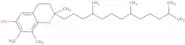
Discontinued productTocopherols
CAS:Tocopherols are fat-soluble vitamins that belong to the family of tocopherols and tocotrienols. Tocopherols have a number of biochemical properties and antioxidant properties. These properties make them important for maintaining energy metabolism in cells, preventing oxidation of other molecules, and protecting the body from damage by reactive oxygen species. Tocopherols are found in a variety of biological sources such as plants, vegetable oils, nuts, grains, fruits and vegetables. The most common form is alpha-tocopherol (a-T). Other forms include gamma-tocopherol (g-T), delta-tocopherol (d-T), beta-tocopherol (b-T), and alpha-tocotrienol (a-TT). Biochemical assays for tocopherols and tocotrienols use p-hydroxybenzoic acid as an analytical reagent. This vitamin can be found in human serum or in
Purity:Min. 95%Ref: 3D-FT168528
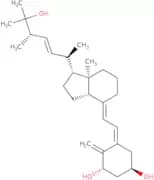
Discontinued product1a,25-Dihydroxy vitamin D2
CAS:1a,25-Dihydroxy vitamin D2 is a compound that exhibits various characteristics and applications. It is known for its bioavailability and water-soluble properties, making it easily absorbed by the body. This compound has been extensively studied in the field of research chemicals. One of the notable features of 1a,25-Dihydroxy vitamin D2 is its potential therapeutic effects on ganglioside GM2-related disorders. It has been shown to interact with GM2 activator proteins and fatty acids, which are involved in the metabolism of GM2 gangliosides. This interaction may have implications for the treatment of certain neurological conditions. Additionally, 1a,25-Dihydroxy vitamin D2 has been investigated for its role in modulating immune responses and inflammatory processes. Studies have suggested that this compound can inhibit the production of pro-inflammatory substances like prostaglandins, offering potential anti-inflammatory benefits. Moreover, 1a,25-Dihydroxy vitamin D
Formula:C28H44O3Purity:Min. 95%Color and Shape:White PowderMolecular weight:428.65 g/molRef: 3D-FD22066
Discontinued productBiotinyl-Atrial Natriuretic Factor (1-28) (human) trifluoroacetate salt
CAS:Please enquire for more information about Biotinyl-Atrial Natriuretic Factor (1-28) (human) trifluoroacetate salt including the price, delivery time and more detailed product information at the technical inquiry form on this pageFormula:C137H217N47O41S4Purity:Min. 95%Molecular weight:3,306.75 g/molRef: 3D-FB110153
Discontinued productBiotinyl-Amylin (mouse, rat) trifluoroacetate salt
CAS:Please enquire for more information about Biotinyl-Amylin (mouse, rat) trifluoroacetate salt including the price, delivery time and more detailed product information at the technical inquiry form on this pageFormula:C177H286N54O55S3Purity:Min. 95%Molecular weight:4,146.69 g/molRef: 3D-FB110085
Discontinued product




![Chloro[2-(di-tert-butylphosphino)-2',4',6'-triisopropyl-1,1'-biphenyl][2-(2-aminoethyl)phenyl)]pal…](/_next/image/?url=https%3A%2Fstatic.cymitquimica.com%2Fproducts%2F3D%2Fthumb-webp%2FFC156938.webp&w=3840&q=75)