Glycoscience
Glycoscience is the study of carbohydrates and their derivatives, as well as the interactions and biological functions they participate in. This field of research is crucial for understanding a wide variety of biological processes, including cell recognition, signaling, immune response, and disease development. Glycoscience has important applications in biotechnology, medicine, and the development of new drugs and therapies. At CymitQuimica, we offer a wide selection of high-quality, high-purity products for glycoscience research. Our catalog includes monosaccharides, oligosaccharides, polysaccharides, glycoconjugates, and specific reagents, designed to support researchers in their studies on the structure, function, and applications of carbohydrates in biological systems. These resources are intended to facilitate scientific discoveries and practical applications in various areas of bioscience and medicine.
Subcategories of "Glycoscience"
- Aminosugars(108 products)
- Glyco-Related Antibodies(282 products)
- Glycolipids(46 products)
- Glycosaminoglycans (GAGs)(55 products)
- Glycosides(419 products)
- Monosaccharides(6,621 products)
- Oligosaccharides(3,681 products)
- Polysaccharides(503 products)
Found 11041 products of "Glycoscience"
Sort by
Purity (%)
0
100
|
0
|
50
|
90
|
95
|
100
(2R,3S,4R)-2-Benzylamino-2-methyl-3,4-dihydroxypyrrolidine
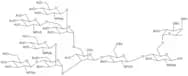
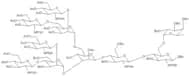
<p>(2R,3S,4R)-2-Benzylamino-2-methyl-3,4-dihydroxypyrrolidine is a synthetic compound that can be used as a research tool for the study of protein glycosylation. It has been shown to be an efficient glycosylant and can be used in the synthesis of oligosaccharides and saccharides. The compound was first synthesized by adding two methyl groups to the amino group at the nitrogen atom in position 2 of pyrrolidine. This modification allows for the attachment of sugar molecules through an amide bond. (2R,3S,4R)-2-Benzylamino-2-methyl-3,4-dihydroxypyrrolidine is not currently used in any commercial products.</p>Purity:Min. 95%4-O-{4-O-[[2,4-Di-O-acetyl-3-O-[2,4-di-O-(3,4,6-tri-O-acetyl-2-deoxy-2-phthalimido-β-D-glucopyranosyl)-3,6-di-O-benzyl-α-D-mannopyra nosyl]-6-O-[3,4-di-O-acetyl-2,6-di-O-(3,4,6-tri-O-acetyl-2-deoxy-2-phthalimido-β-D-glucopyranosyl)-α-D-mannopyranosyl]
CAS:<p>4-O-{4-O-[[2,4-Di-O-acetyl-3-O-[2,4-di-O-(3,4,6-tri-O-acetyl-2-deoxy-2--phthalimido--bD--glucopyranosyl)-3,6--di--O--benzyl aDmannopyra nosyl]-6--O-[3,4--di--O--acetyl 2,6--di--O-(3,4,6--tri - O - acetyl 2 - deoxy 2 - phthalimido bDglucopyranosyl) aDmannopyranosyl] } is a synthetic complex carbohydrate. It is an oligosaccharide that can be used in glycosylation reactions. This carbohydrate has been custom synthesized and modified to include methyl groups. The CAS number for this compound is 9461642899.</p>Formula:C196H200N6O72Purity:Min. 95%Molecular weight:3,791.68 g/molL-Xylose
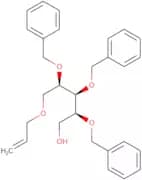
CAS:<p>L-Xylose is a monosaccharide that is found in many plants. It is used as a sweetener, and also has been shown to be beneficial in the treatment of diabetic neuropathy. L-Xylose can be metabolized by the enzyme xylitol dehydrogenase to produce energy for the cell. The enzyme catalyzes the conversion of xylitol to D-xylulose and then D-xylulose 1-phosphate, which can be converted into ATP for use by cells. L-Xylose is not metabolized by bacterial enzymes and does not affect blood sugar levels. L-Xylose has been shown to have an effect on taste perception, with a sweet taste at concentrations of 10 milligrams per liter (mg/L). This sweet taste is due to its hydroxymethyl group on the C2 position, which reacts with sodium ions in the mouth. The optimum pH for L-xylose</p>Formula:C5H10O5Purity:Min. 99.0 Area-%Molecular weight:150.13 g/mol5-O-Allyl-2,3,4-tri-O-benzyl-D-ribitol
CAS:<p>5-O-Allyl-2,3,4-tri-O-benzyl-D-ribitol is an acid that has been used in preparative organic chemistry. It is a benzyloxymethyl derivative of ribose, which can be converted to the corresponding methyl ether by hydrolysis with sodium methoxide in methanol. 5-O-Allyl-2,3,4-tri-O-benzyl-D-ribitol functions as an isomer and dimerization reagent for the preparation of propenyl derivatives. 5-O-Allyl 2,3,4 tri O benzyl D ribitol has been shown to inhibit Influenza A H1N1 strains in vitro with a 50% inhibitory concentration (IC50) of 1 μM.</p>Formula:C29H34O5Purity:Min. 90.0 Area-%Color and Shape:Yellow Clear LiquidMolecular weight:462.58 g/mol(2R, 3S, 4R, 5S) -3,4-Di-O-Isopropylidene-2- methyl- 1- nonyl-3, 4, 5- piperidinetriol
<p>2R, 3S, 4R, 5S) -3,4-Di-O-Isopropylidene-2- methyl- 1- nonyl-3, 4, 5- piperidinetriol is a modification of the oligosaccharide. It is synthesized by custom synthesis and has high purity. This product can be found under CAS No. 9062-16-7 and has a molecular weight of 873. The chemical formula is (C6H10O5)n and the structural formula is CHNO. This product is an Oligosaccharide and Carbohydrate.</p>Purity:Min. 95%1,2,3,4-Tetra-O-pivaloyl-6-O-trityl-b-D-galactopyranose
<p>Tetra-O-pivaloyl-6-O-trityl-b-D-galactopyranose is a sugar that can be used in the synthesis of glycosylation, complex carbohydrate, methylation, click modification, polysaccharide, fluorination, saccharide and modification. Tetra-O-pivaloyl-6-O-trityl-b-D-galactopyranose is a white or colorless crystalline powder that has a melting point of about 160°C. The chemical formula for this compound is C24H34N2O4 and its molecular weight is 432.53 g/mol. Tetra -O -pivaloyl -6 - O -trityl -b - D -galactopyranose has CAS No. 15892–06–8 (EINECS No. 259–737–3) and it can be custom</p>Formula:C45H58O10Purity:Min. 95%Molecular weight:758.94 g/molMethyl 2-acetamido-4,6-di-O-acetyl-2,3-dideoxy-3-fluoro-D-mannopyranoside
CAS:<p>Methyl 2-acetamido-4,6-di-O-acetyl-2,3-dideoxy-3-fluoro-D-mannopyranoside is a custom synthesis of a modified monosaccharide. It is fluorinated and methylated at the 2 and 6 positions respectively. The acetyl group at position 2 is replaced with an acetamido group to increase the stability of the molecule. This product has not been studied in vivo or in vitro. It is not on any international lists of prohibited substances and it is not banned by any sporting organization.</p>Formula:C13H20FNO7Purity:Min. 95%Molecular weight:321.3 g/mol(2S, 3S, 4R) -3- [[[(2S, 3S, 4R) - 3- [[[(2S, 3S, 4R) - 3- Azido- 4- [[[(1, 1- dimethylethyl) dimethylsilyl] oxy] methyl] - 1- (phen ylmethyl) - 2- azetidinyl] carbonyl] amino] - 4- [[[(1, 1- dimethylethyl) dimethylsilyl] oxy] methyl] - 1- (phenylmeth
CAS:<p>The compound has been shown to be a methylating agent, which is used in the synthesis of saccharides and oligosaccharides. The compound can also be used as a fluorinating reagent. It is an effective synthesis of complex carbohydrates. The compound has been shown to be an excellent protecting group for carbonyl groups. The compound is not very soluble in water, but it is soluble in organic solvents such as DMSO or DMF.</p>Formula:C55H86N8O7Si3Purity:Min. 95%Molecular weight:1,055.58 g/mol3,4-O-(1',1',3',3'-Tetraisopropyl-1,3-disiloxanediyl)-L-rhamnal
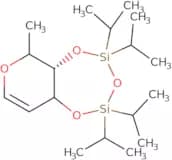
CAS:<p>3,4-O-(1',1',3',3'-Tetraisopropyl-1,3-disiloxanediyl)-L-rhamnal is a synthetic sugar that is used as a building block for the synthesis of glycoproteins and other polymers. It can be methylated to give 3,4-O-(1',1',3',3'-tetramethyl-1,3-disiloxanediyl)-L-rhamnal, which is an inhibitor of protein glycosylation. 3,4-O-(1',1',3',3'-Tetraisopropyl-1,3-disiloxanediyl)-L-rhamnal has been fluorinated to give 3,4-O-(2'-fluoroethylidene) -L-rhamnal and used in Click chemistry reactions.</p>Formula:C18H36O4Si2Purity:Min. 95%Molecular weight:372.65 g/molD-Erythrono-1.4-lactone
<p>D-Erythrono-1.4-lactone is a carbohydrate that belongs to the group of oligosaccharides. It is a synthetic sugar with the CAS number 687-83-0. This carbohydrate is a monosaccharide with an oxygen atom in the alpha position, which has been fluorinated and methylated. The methylation on this sugar can be accomplished by either a glycosylation or click chemistry modification. This sugar can be used as an anti-tumor agent or as an adjuvant for chemotherapy treatments.</p>Purity:Min. 95%2-Deoxy-2-fluoro-D-glucose
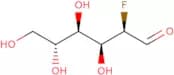
CAS:<p>Inhibitor of hexokinase isozymes and cellular glycosylation</p>Formula:C6H11FO5Purity:Min. 95%Color and Shape:White PowderMolecular weight:182.15 g/molMethyl(methyl 3,4-di-O-methyl-α-D-galactopyranoside)uronate
CAS:<p>A uronic acid of galactose</p>Formula:C10H18O7Purity:Min. 95%Color and Shape:PowderMolecular weight:250.25 g/mol(2S, 3S, 4S) -1-Butyl-4- (hydroxymethyl) - N- methyl- 3- (phenylmethoxy) - 2- azetidinecarboxamide
<p>(2S, 3S, 4S) -1-Butyl-4- (hydroxymethyl) - N- methyl- 3- (phenylmethoxy) - 2- azetidinecarboxamide is a synthetic compound that can be used for glycosylation reactions. It has the following characteristics: Glycosylation, complex carbohydrate, Methylation, Click modification, Polysaccharide, Fluorination and Saccharide Modification. The CAS registry number for this compound is 109972-04-6. This product is available for custom synthesis and can be ordered with high purity.</p>Purity:Min. 95%2, 5- Anhydro- 3- [(2, 5- anhydro- 3- azido- 3- deoxy- 4- O- tert.butyldimethylsilyl- L- xylonoyl) amino] - 3- deoxy- 4- O- tert but yldimethylsilyl-D-xylonic acid methyl ester
<p>2, 5-Anhydro-3- [(2, 5- anhydro- 3-azido- 3-deoxy- 4-O-tert.butyldimethylsilyl-L-xylonoyl) amino] -3-deoxy-[4-(2,5,-anhydro-, 3,4,6 -trioxo-, 2,5,-dideoxy-) -D--xylonic acid methyl ester] is a synthetic sugar with a fluorination group and is used as a building block for oligosaccharides and complex carbohydrates. This product is synthesized by the reaction of 2,5 anhydro D--mannitol with ethyl chloroformate followed by the addition of dimethylaminoazobenzene to form an azido sugar derivative. The product is then reacted with tert butyldimethylsilyl chloride to form the silylated derivative. The product has been</p>Purity:Min. 95%1-Deoxy- 4- C- methyl- 3, 4-isopropylidene-L- erythro- 2- pentulose
<p>1-Deoxy-4-C-methyl-3,4-isopropylidene-L-erythro-2-pentulose is a custom synthesis of saccharide in nature. It has fluorination and methylation modification. It is a monosaccharide, which can be modified to form an oligosaccharide or polysaccharide. The CAS number for this compound is</p>Purity:Min. 95%2-Acetamido-2-deoxy-b-D-glucopyranosyl amine
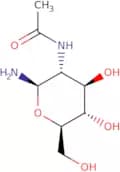
CAS:<p>2-Acetamido-2-deoxy-b-D-glucopyranosyl amine is a synthetic molecule that has shown to be an effective therapeutic agent for the treatment of juvenile idiopathic arthritis. It binds to the surface of cells and activates the immune system by generating antibodies against the disease. This drug has been shown to reduce disease activity in patients with juvenile idiopathic arthritis, as well as improve quality of life. 2-Acetamido-2-deoxy-b-D-glucopyranosyl amine is being developed for use in other autoimmune diseases such as systemic lupus erythematosus, rheumatoid arthritis, and psoriasis.</p>Formula:C8H16N2O5Purity:Min. 95 Area-%Color and Shape:PowderMolecular weight:220.22 g/mol(1S) -1- [(2S, 3R,4R) -N-Benzyl-3- benzyloxy- 4-hydroxymethyl-1- azetidinyl] -1, 2- ethanediol
<p>(1S) -1- [(2S, 3R,4R) -N-Benzyl-3- benzyloxy- 4-hydroxymethyl-1- azetidinyl] -1, 2- ethanediol is a water soluble, white to off-white powder that can be used as a synthetic carbohydrate. It has the CAS number of 112065-78-8 and can be custom synthesized for specific modifications. The purity of this product is high and it is methylated and glycosylated. This product can be used in click chemistry to make other compounds.</p>Purity:Min. 95%1,2,3,4,6-Penta-O-acetyl-β-D-mannopyranose
CAS:<p>1,2,3,4,6-Penta-O-acetyl-β-D-mannopyranose is a custom synthesis of an oligosaccharide that is used in the modification of saccharides and complex carbohydrates. It has been used in the synthesis of glycosylations and methylations. This product is a fluorinated monosaccharide with high purity.</p>Formula:C16H22O11Purity:Min. 98 Area-%Color and Shape:PowderMolecular weight:390.34 g/molN-[N-[N-[2,4-Anhydro-3-azido-3-deoxy-5-O-tert-butyldimethylsilyl-D-arabinonoyl-]-3-amino-2,4-anhydro-5-O-tert-butyldimethylsilyl-D-a rabinonoyl-]-3-amino-2,4-anhydro-5-O-tert-butyldimethylsilyl-D-arabinonoyl-]-3-amino-2,4-anhydro-5-O-tert-butyldimethy
<p>N-[N-[N-[2,4-Anhydro-3-azido-3-deoxy-5-O-tert-butyldimethylsilyl-D-arabinonoyl]-3 amino]-2,4 anhydro -5 O -tert -butyldimethylsilyl D arabinonoyl]-3 amino]-2,4 anhydro -5 O -tert -butyldimethylsilyl D arabinonoyl]-3 amino]-2,4 anhydro -5 O -tert</p>Purity:Min. 95%D-Mannitol
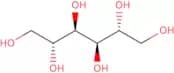
CAS:<p>Mannitol is a sugar alcohol occurring widely in plants and they are exudates, for example, in olive and plane trees (Collins, 2006). It is produced commercially by the catalytic hydrogenation of fructose (Zelin, 2019). Mannitol is used extensively in food and pharmaceutical industries because of its unique functional properties. It is about 50% as sweet as sucrose and has a desirable cooling effect often used to mask bitter tastes. Mannitol is non-cariogenic and has a low caloric content. Mannitol is an osmotic diuretic that is metabolically inert in humans and is used for: the promotion of diuresis before irreversible renal failure becomes established, the promotion of urinary excretion of toxic substances, as an Antiglaucoma agent, and as a renal function diagnostic aid (OâNeil, 2013). Additonally, in 2020, mannitol was approved by the FDA as add-on maintenance therapy for the control of pulmonary symptoms associated with cystic fibrosis in adult patients (McKenna, 2020).</p>Formula:C6H14O6Purity:Min. 95%Color and Shape:White PowderMolecular weight:182.17 g/molD-Mannose
CAS:<p>Mannose (Man) is the C2 epimer of glucose with one hydroxyl group axial which by Hudsons rules makes it slightly less stable than glucose (Hudson, 1948). However, mannose is very common in plants and animals, and occurs in many polysaccharides, such as, galactomannans (e.g. Guar, Locust Bean Gum), mananns (e.g. Ivory Nut Mannan), Spruce Galactoglucomannan, Gum Ghatti (Whistler, 1993) and bakerâs yeast (Saccharomyces cerevisiae) (Manners, 1973). Mannose is one of the key mammalian monosaccharides (Glucose, Galactose, Mannose, Fucose, N-Acetyl Glucosamine, N-Acetyl galactosamine and Sialic acid) and occurs in N-linked glycans where it is a core oligosaccharide (Gabius, 2009).</p>Formula:C6H12O6Purity:Min. 98 Area-%Color and Shape:White PowderMolecular weight:180.16 g/mol(2R, 3S, 4R) -3, 4- Dihydroxy-2, 4- pyrrolidinedimethano l hydrochloride
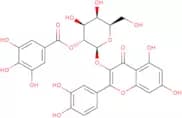
<p>(2R, 3S, 4R) -3, 4- Dihydroxy-2, 4- pyrrolidinedimethano l hydrochloride is a high purity custom synthesis product. It can be synthesized using Click modification and fluorination methods. The compound is used in the production of glycoconjugates for glycosylation and other synthetic purposes.</p>Purity:Min. 95%Quercetin 3-b-galactoside-2'-O-gallate
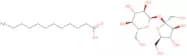
CAS:<p>Quercetin 3-b-galactoside-2'-O-gallate is a compound that has been shown to have hepatoprotective effects, inhibiting the mitochondrial membrane potential and microbial infection. Quercetin 3-b-galactoside-2'-O-gallate also has anti-inflammatory properties and reduces the production of inflammatory cells, such as hepg2 cells. The mechanism of action for its protective effect is due to the inhibition of mapk activation, which leads to decreased necrosis factor and interleukin (IL) production. Quercetin 3-b-galactoside-2'-O-gallate can be used in the treatment of acute liver injury induced by LPS.</p>Formula:C28H24O16Purity:Min. 95%Color and Shape:Yellow PowderMolecular weight:616.48 g/molSucrose dodecanoate
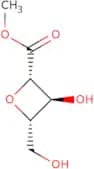
CAS:<p>Sucrose dodecanoate is a sugar ester that has been shown to be a 5-HT agonist. It is used as an absorption enhancer for the treatment of choroidal neovascularization. Sucrose dodecanoate was also found to have trypsin-like protease activity and cyclic peptide properties. This drug has been shown to increase insulin sensitivity and growth factor levels in animal models, which may be due to its effects on serine proteases. Sucrose dodecanoate is available as a pharmaceutical dosage form containing fatty acid esters at a concentration of 10%. It has a viscosity of approximately 100 cP, which is expected to provide good bioavailability.</p>Formula:C12H24O2•(C12H22O11)xColor and Shape:Clear LiquidMolecular weight:342.3 g/mol2,4-Anhydro-L-ribonic acid methyl ester
CAS:<p>2,4-Anhydro-L-ribonic acid methyl ester is a glycosylation agent that can be used to modify complex carbohydrates. It is synthesized by the click reaction of methyl 2,4-anhydro-D-riboate and chloromethylated polystyrene in the presence of sodium azide. This compound has been shown to be an effective fluorinating agent for saccharides.<br>2,4-Anhydro-L-ribonic acid methyl ester is also useful in preparing oligosaccharides and monosaccharides, which can be used as building blocks for custom synthesis with high purity.</p>Purity:Min. 95%Hyaluronic acid sodium salt - Low molecular weight 80,000 - 100,000
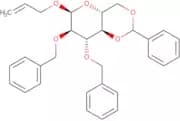
CAS:<p>Gycosaminoglycan in many organs; joint lubricant and shock absorber. Made by a bacterial, Streptococcus fermentation.</p>Formula:(C14H20NO11Na)nPurity:Min. 91%Color and Shape:PowderAllyl 2,3-di-O-benzyl-4,6-O-benzylidene-a-D-glucopyranoside
CAS:<p>Allyl 2,3-di-O-benzyl-4,6-O-benzylidene-a-D-glucopyranoside is a synthetic, water soluble glycoside with a high purity that has been fluorinated and methylated. This product is stable at room temperature in both the solid and liquid form. It has a CAS number of 20746-71-8.</p>Formula:C30H32O6Purity:Min. 95%Molecular weight:488.57 g/molPhenyl 3,4-di-O-benzoyl-2-O-benzyl-β-L-thiofucopyranoside
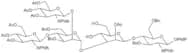
<p>Phenyl 3,4-di-O-benzoyl-2-O-benzyl-b-L-thiofucopyranoside is a fluorinated sugar that is used in the synthesis of oligosaccharides and polysaccharides. The modification of phenyl 3,4-di-O-benzoyl-2-O-benzyl-b-L -thiofucopyranoside with a methoxy group at the C1 position is done by a click reaction. The product is purified to greater than 99% purity using an ion exchange column.</p>Formula:C33H30O6SPurity:Min. 95%Color and Shape:White to off-white solid.Molecular weight:554.65 g/molBenzyl 4-O-{4-O-[[2,4-di-O-acetyl-3-O-[2,4-di-O-(3,4,6-tri-O-acetyl-2-deoxy-2-phthalimido-b-D-glucopyranosyl)-3,6-di-O-benzyl-a-D-ma nnopyranosyl]-6-O-[3,4-di-O-acetyl-2,6-di-O-(3,4,6-tri-O-acetyl-2-deoxy-2-phthalimido-b-D-glucopyranosyl)-a-D-mannopyr
CAS:<p>The benzyl group is a type of organic group in which the hydrogen atom at the alpha position is replaced with a phenyl group. In this compound, the benzyl group is attached to a sugar molecule through an ether bond. The benzyl group can be modified to produce different compounds. For example, it can be fluorinated to produce fluoro-benzyl compounds that are used as anti-cancer agents.</p>Formula:C203H206N6O71SPurity:Min. 95%Molecular weight:3,897.87 g/mol3,4,6-Tri-O-acetyl-2-azido-2-deoxy-D-galactose
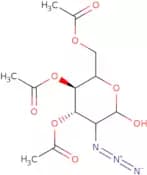
CAS:<p>3,4,6-Tri-O-acetyl-2-azido-2-deoxy-D-galactose is a sialylated glycoside with a carbohydrate and an amino sugar. It is a stereoselective analog of sialoside, which is the product of the reaction between neuraminic acid with D-galactose. The enzyme that catalyzes this reaction is called sialoglycolysis. 3,4,6-Tri-O-acetyl-2-azido-2-deoxy -D -galactose has been shown to be an efficient catalyst for the synthesis of glycosylamines from disaccharides and trifluoromethanesulfonate in solid phase.</p>Formula:C12H17N3O8Purity:Min. 98 Area-%Color and Shape:PowderMolecular weight:331.28 g/molBenzyl 2-acetamido-3,4-di-O-acetyl-2-deoxy-a-D-galactopyranoside
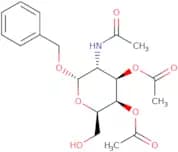
CAS:<p>Benzyl 2-acetamido-3,4-di-O-acetyl-2-deoxy-a-D-galactopyranoside is a glycosylation agent that is used in the synthesis of complex carbohydrate. It has the CAS No. 55652-76-1 and is custom synthesized to meet customers' requirements. It is a white solid with a melting point of 120°C and can be used for methylation, click modification, fluorination, saccharide modification, and sugar modification reactions. Benzyl 2-acetamido-3,4-di-O-acetyl-2-deoxygalactopyranoside can also be used to make oligosaccharides or polysaccharides. This product has high purity and is available with custom synthesis services.</p>Formula:C19H25NO8Purity:Min. 95%Color and Shape:White To Off-White SolidMolecular weight:395.4 g/mol5-Phospho-D-ribose 1-diphosphate pentasodium
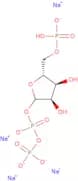
CAS:<p>Substrate for phosphoribosyltransferases</p>Formula:C5H8Na5O14P3Purity:Min. 80 Area-%Color and Shape:PowderMolecular weight:499.98 g/mol2-Acetamido-2-deoxy-D-mannono-1,4-lactone
CAS:<p>2-Acetamido-2-deoxy-D-mannono-1,4-lactone is a chemical compound that is an aldonic acid and is classified as an ester. It has a molecular formula of C8H10O5 and it has the following structural formula:<br>This product can be synthesized from benzoic acid and glyceraldehyde. 2-Acetamido-2-deoxy-D-mannono-1,4-lactone is also known as benzoylated mannose. It has been reconfirmed to have high yield in acetylation reactions with molybdate. 2-Acetamido-2deoxy-Dmannono1,4lactone can also undergo epimerization to form the optical antipode of 2,3,4,6tetraacetyloxybenzoic acid (2,3,4,6tetraacetyl</p>Formula:C8H13NO6Purity:Min. 95%Color and Shape:White to off-white solid.Molecular weight:219.19 g/mol1,2,3,4-Tetra-O-acetyl-6-deoxy-6-gluoro-D-glucopyranose
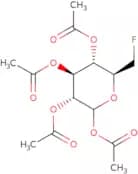
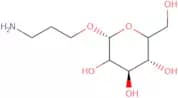
CAS:<p>1,2,3,4-Tetra-O-acetyl-6-deoxy-6-gluoro-D-glucopyranose is a glycosylation sugar that is synthesized by the click reaction of 2,3,4,6-tetraacetylpyridine with 6-deoxygluconohexose. It is a white to off white powder that is soluble in water and ethanol. This compound has been used as a building block for oligosaccharides and polysaccharides because it can be modified with methyl groups or fluorine atoms. 1,2,3,4-Tetra-O-acetyl-6-deoxyglucofuranose is also known for its high purity and chemical stability.</p>Formula:C14H19FO9Purity:Min. 95%Molecular weight:350.29 g/mol3-Aminopropyl β-D-galactopyranoside
CAS:<p>3-Aminopropyl b-D-galactopyranoside is a custom synthesis of a carbohydrate, which is an oxidative modification of the natural saccharide β-D-galactopyranose. It contains an aminopropyl group attached to the 3 position on the galactose ring. 3-Aminopropyl b-D-galactopyranoside has been shown to inhibit tumor cell growth in vitro and in vivo by inhibiting DNA synthesis and protein synthesis. This product has been custom synthesized for research purposes and is available with high purity and at custom quantities.</p>Formula:C9H19NO6Purity:Min. 95%Color and Shape:PowderMolecular weight:237.25 g/mol3,5,6-Tri-O-benzyl-1,2-O-Isopropylidene-a-D-glucofuranose
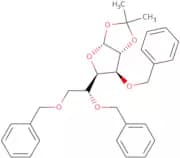
CAS:<p>3,5,6-Tri-O-benzyl-1,2-O-isopropylidene-a-D-glucofuranose is a synthetic monosaccharide that has been fluorinated at the C3 position. It is an oligosaccharide with a complex carbohydrate structure. This glycosylation product can be custom synthesized and has been modified by methylation. 3,5,6-Tri-O-benzyl-1,2-O-isopropylidene Glucuronic acid can be used in the synthesis of polysaccharides or as a sugar for click chemistry. The chemical formula is C13H28O4F3 and its molecular weight is 322.32 g/mol.</p>Formula:C30H34O6Purity:Min. 95%Color and Shape:PowderMolecular weight:490.59 g/mol1,5-Anhydro-4,6-O-benzylidene-D-glucitol
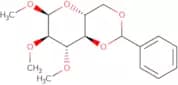
CAS:<p>1,5-Anhydro-4,6-O-benzylidene-D-glucitol is a type of d-mannitol that is used as an intermediate in organic chemistry. It can be converted to a number of other compounds such as epoxides and nucleophilic agents. 1,5-Anhydro-4,6-O-benzylidene-D-glucitol is also an inhibitor of thrombin. It has been shown to inhibit the activity of trypsin and epoxide by forming hydrogen bonds with the enzyme's active sites. This molecule has been studied using molecular modeling and simulations with axial hydrogens found on the purine ring. In addition, 1,5-Anhydro-4,6-O-benzylidene -D -glucitol can be synthesized in organic chemistry through different routes. One method starts from dibenzoylmethane and 3-(</p>Formula:C13H16O5Purity:Min. 95%Color and Shape:PowderMolecular weight:252.26 g/molMethyl 4,6-O-benzylidene-2,3-di-O-methyl-a-D-glucopyranoside
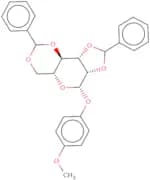
CAS:<p>Methyl 4,6-O-benzylidene-2,3-di-O-methyl-a-D-glucopyranoside is a high purity synthetic compound. It is an oligosaccharide that consists of a methylated glucose unit with four acetate groups and one benzyl group attached. Methyl 4,6-O-benzylidene-2,3-di-O-methyl-a-D-glucopyranoside is used as a substrate for glycosylation reactions and as a chromatographic marker.</p>Formula:C16H22O6Purity:Min. 95%Color and Shape:White Off-White PowderMolecular weight:310.35 g/mol4-Methoxyphenyl 2,3:4,6-di-O-benzylidene-β-D-mannopyranoside
<p>The product is a Modification, Oligosaccharide, Carbohydrate, complex carbohydrate. It is Custom synthesis, Synthetic, High purity, CAS No., Monosaccharide, Methylation, Glycosylation, Polysaccharide. The product has Fluorination and saccharide.</p>Purity:Min. 95%Glycyl-sialyllacto-N-tetraose α
<p>Glycyl-sialyllacto-N-tetraose a is a custom synthesis that is an oligosaccharide with a molecular weight of 471. It has the CAS No. of 882859-14-6 and can be modified by methylation, glycosylation, and fluorination. This saccharide is a polysaccharide that can be modified by glycosylation, methylation, and click modification. The carbohydrate has a high purity and can be synthesized using organic chemistry or biochemistry techniques. Glycyl-sialyllacto-N-tetraose a is an Oligosaccharide with a sugar composition of (1) D-Glyceraldehyde 3-phosphate (2) D-Sorbitol 3 phosphate (3) Lactose (4) Glycyl-(1→4)-β--D--Galactopyranosyl-(1→3)-α</p>Formula:C39H66N4O29Purity:Min. 95%Color and Shape:White to off-white solid.Molecular weight:1,054.95 g/molEthyl 2-O-benzyl-4,6-O-benzylidene-b-D-thioglucopyranoside
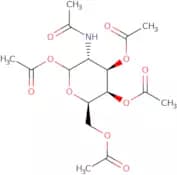
<p>Ethyl 2-O-benzyl-4,6-O-benzylidene-b-D-thioglucopyranoside is a custom synthesis of a monosaccharide. It consists of an ethoxy group at the 4th position and a benzyl group at the 6th position on the ring. The compound has been fluorinated, methylated, and modified with click chemistry to make it more stable. This product is a synthetic oligosaccharide that has been glycosylated and modified with saccharide chains. It is used as a complex carbohydrate for dietary supplements.</p>Purity:Min. 95%2-Acetamido-1,3,4,6-tetra-O-acetyl-2-deoxy-D-galactopyranose
CAS:<p>2-Acetamido-1,3,4,6-tetra-O-acetyl-2-deoxy-D-galactopyranose is fully acetylated D-Galactosamine (C4 epimer of D-Glucosamine). 2-Acetamido-1,3,4,6-tetra-O-acetyl-2-deoxy-D-galactopyranose is used in the synthesis of α- and β-linked acetamido pyranosides, which have anti-inflammatory properties as inhibitors of TLR4.</p>Formula:C16H23NO10Purity:Min. 95%Color and Shape:White PowderMolecular weight:389.35 g/mol1,2-O-Benzylidene -β- L- idofuranuronic acid γ-lactone
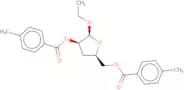
<p>1,2-O-Benzylidene -beta- L- idofuranuronic acid gamma-lactone is a custom synthesis of a fluorinated monosaccharide. The modification of the sugar is accomplished by methylation and click chemistry. The monosaccharide can be used as a building block for oligosaccharides and polysaccharides. It is also used as an intermediate in the glycosylation process that produces complex carbohydrates.</p>Purity:Min. 95%Ethyl 3-deoxy-2,5-di-O-toluoyl-L-threo-pentofuranoside
<p>Ethyl 3-deoxy-2,5-di-O-toluoyl-L-threo-pentofuranoside is a custom synthesis that can be modified to fluorinate and methylate the sugar. It is an oligosaccharide that is synthesized from a monosaccharide. The saccharide has been glycosylated to form a complex carbohydrate.</p>Formula:C23H26O6Purity:Min. 95%Molecular weight:398.45 g/mol2-Deoxy-2-fluoro-β-D-glucopyranosyl azide
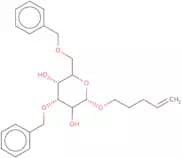
CAS:<p>2-Deoxy-2-fluoro-b-D-glucopyranosyl azide is a fluorinated carbohydrate that can be used for custom synthesis of saccharides and polysaccharides. It is a methylated derivative of 2,3,4,6-tetrafluorobenzoyl azide which can be used to synthesize glycosylations using an oxazaborolidine (e.g., BOP) activation method or click modification. The compound has been shown to react with glycosylations in the presence of copper ions.</p>Formula:C6H10FN3O4Purity:Min. 95%Color and Shape:PowderMolecular weight:207.16 g/mol4-Pentenyl 3,6-di-O-benzyl-a-D-mannopyranoside
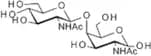
CAS:<p>4-Pentenyl 3,6-di-O-benzyl-a-D-mannopyranoside is a synthetic oligosaccharide containing a single monosaccharide. It is fluorinated at the C4 position and methylated at the C6 position. This product is available for custom synthesis and modification to meet specific customer needs. It has not been evaluated by the FDA and should be used only in research settings.</p>Formula:C25H32O6Purity:Min. 95%Molecular weight:428.52 g/mol2-Acetamido-4-O-(2-acetamido-2-deoxy-b-D-glucopyranosyl)-2-deoxy-D-galactopyranose
CAS:<p>2-Acetamido-4-O-(2-acetamido-2,3-dideoxy-b-D-glucopyranosyl)-2,3,6,7-tetraaminopyranose (1) is a custom synthesis that has been modified by fluorination of the C5 and C6 hydroxyl groups and methylation of the C2 hydroxy group. It has also been shown to be effective in inhibiting the growth of bacteria such as Staphylococcus aureus and Clostridium perfringens. 2-Acetamido-4-O-(2,3,6,7,-tetraaminopyranose) (1) is an oligosaccharide with four sugar units that can be glycosylated to produce complex carbohydrates.</p>Formula:C16H28N2O11Purity:Min. 95%Molecular weight:424.4 g/mol1,2,3,6-Tetra-O-acetyl-4-O-(2,3,4,6-tetra-O-acetyl-b-D-galactopyranosyl)-b-D-thioglucopyranose
CAS:<p>This is a synthetic, high purity and custom-synthesized carbohydrate. The chemical name is 1,2,3,6-Tetra-O-acetyl-4-O-(2,3,4,6-tetra-O-acetyl-b-D-galactopyranosyl)-b-D-thioglucopyranose. It has been modified with the Click reaction to allow for chemical modification. This product is a complex carbohydrate that has been fluorinated to create an organic fluorine compound.</p>Formula:C28H38O18SPurity:Min. 95%Molecular weight:694.66 g/mol4-Methoxyphenyl 4-O-{2-O-acetyl-4-O-[2,4-di-O-(3,4,6-tri-O-acetyl-2-deoxy-2-phthalimido-β-D-glucopyranosyl)-3,4-di-O-benzyl-α-D-mann opyranosyl]-β-D-mannopyranosyl}-3,6-di-O-benzyl-2-deoxy-2-phthalimido-β-D-glucopyranoside
<p>4-Methoxyphenyl 4-O-{2-O-acetyl-4-O-[2,4-di-O-(3,4,6-tri-O-acetyl-2,3,5,6 -tetra-O-[(triisopropylsilyl)oxy]-2,5 -dideoxyglucan]-b-(D)-glucopyranosyl)-3,4di O-[benzyl]-a-(D)-mannopyranosyl}b-(D)-mannopyranoside is a high purity custom synthesis sugar. It can be fluorinated and glycosylated with methylation and modification. This compound is an oligosaccharide that can be used as a monosaccharide or complex carbohydrate.</p>Formula:C103H105N3O37Purity:Min. 95%Molecular weight:1,976.93 g/mol1,3,4,6-Tetra-O-acetyl-2-{2-[(2-aminoethyl)amino]-acetamido]}-2-deoxy-D-glucopyranose
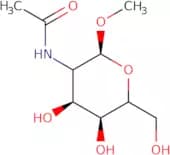
<p>1,3,4,6-Tetra-O-acetyl-2-{2-[(2-aminoethyl)amino]-acetamido}-2-deoxy-D-glucopyranose is a custom synthetic sugar that has been modified to include fluorine atoms in the 1,3 and 4 positions. This sugar can be used as a fluorescent probe for DNA methylation. The fluorine atoms in 1,3 and 4 positions provide increased stability and prevent the sugar from being hydrolyzed by esterases.</p>Purity:Min. 95%Methyl 2-acetamido-2-deoxy-α-D-glucopyranoside
CAS:<p>Methyl 2-acetamido-2-deoxy-α-D-glucopyranoside is a fluorinated sugar that is used as a building block in the synthesis of complex carbohydrates. It can be custom synthesized to order with purity levels up to 99.8%. The modification process includes methylation, monosaccharide, and polysaccharide modifications. This product is not intended for use in humans or animals.</p>Formula:C9H17NO6Purity:Min. 95%Color and Shape:PowderMolecular weight:235.23 g/mol(3S, 4R,5S) -3-O-Benzhydryloxybis(trimethylsilyloxy)silyl- 1-benzyl-4,5-O-isopropylidene-3, 4, 5- piperidinetriol
<p>(3S, 4R,5S) -3-O-Benzhydryloxybis(trimethylsilyloxy)silyl- 1-benzyl-4,5-O-isopropylidene-3, 4, 5- piperidinetriol is a synthetic monosaccharide that can be used in the synthesis of oligosaccharides and complex carbohydrates. This compound has a molecular weight of 487.43 g/mol and a CAS number of 634265-09-2. It is an Oligosaccharide that contains a sugar chain with three to five monosaccharide units. This product has been custom synthesized for the modification of glycans or polysaccharides by methylation or click chemistry.</p>Purity:Min. 95%Maltotriose
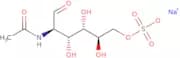
CAS:<p>Used to differentiate microorganisms based on their metabolic properties.</p>Formula:C18H32O16Purity:Min. 95 Area-%Molecular weight:504.44 g/mol2-Acetamido-2-deoxy-D-glucopyranose 6-sulphate sodium salt
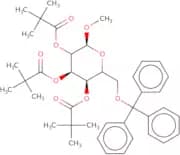
CAS:<p>2-Acetamido-2-deoxy-D-glucopyranose 6-sulphate sodium salt is an Oligosaccharide which is a carbohydrate. It has a CAS No. 108321-79-5 and is available for custom synthesis. 2-Acetamido-2-deoxy-D-glucopyranose 6 sulphate sodium salt can be modified with methylation, saccharide, polysaccharide, click modification, or modification. It can also be glycosylated and fluorinated. The chemical formula of this compound is C6H11NO4SNaO6</p>Formula:C8H14NNaO9SPurity:(%) Min. 95%Color and Shape:White PowderMolecular weight:323.25 g/molMethyl 2,3,4-tri-O-pivaloyl-6-O-trityl-a-D-mannopyranoside
<p>Methyl 2,3,4-tri-O-pivaloyl-6-O-trityl-a-D-mannopyranoside is a custom synthesis of a complex carbohydrate. It is an Oligosaccharide that has been modified with saccharide Methylation and glycosylation. This product is also fluorinated and Click modified. The CAS number for this product is <br>[[Category:Chemical compounds]]</p>Formula:C41H52O9Purity:Min. 95%Molecular weight:688.87 g/mol2-Acetamido-1,3,6-tri-O-benzyl-2-deoxy-b-D-glucopyranoside
CAS:<p>2-Acetamido-1,3,6-tri-O-benzyl-2-deoxy-b-D-glucopyranoside is a synthetic monosaccharide that can be modified to the desired structures. It is used as a building block for the synthesis of polysaccharides and oligosaccharides. It is also used as an intermediate in the preparation of saccharides. 2 - Acetamido - 1,3,6 - tri - O - benzyl - 2 - deoxy - b - D - glucopyranoside is available in high purity and custom synthesis.</p>Formula:C29H33NO6Purity:Min. 95%Color and Shape:PowderMolecular weight:491.58 g/molEthyl 3-O-allyl-4,6-O-benzylidene-b-D-thiogalactopyranoside
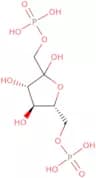
<p>Ethyl 3-O-allyl-4,6-O-benzylidene-b-D-thiogalactopyranoside is an oligosaccharide that has been synthesized by a modified Click reaction. It is a white powder with a melting point of 116°C and a molecular weight of 554. The purity of this compound is greater than 98%. Ethyl 3-O-allyl-4,6-O-benzylidene-b-D-thiogalactopyranoside can be used for glycosylation reactions. This product can be custom synthesized to meet your specific needs.</p>Purity:Min. 95%D-Fructose-1,6-diphosphate
CAS:<p>D-Fructose-1,6-diphosphate is a chemical that is found in the cytosol of cells. It is an intermediate in the metabolism of fructose and also has an important role in the synthesis of fatty acids and phospholipids. D-Fructose-1,6-diphosphate is an effective inhibitor of sodium succinate dehydrogenase, which converts succinate to fumarate. D-Fructose-1,6-diphosphate has a neutral pH profile and is not affected by changes in pH levels. The optimum pH for this compound is between 6.5 and 7.5. D-Fructose-1,6-diphosphate binds to proteins with unsaturated alkyl chains such as creatine kinase and glutamate dehydrogenase. It has been shown to have hemolytic effects on erythrocytes (red blood cells) at high concentrations, which may be due to its ability to bind</p>Formula:C6H14O12P2Purity:(¹H-Nmr) Min. 95 Area-%Color and Shape:White PowderMolecular weight:340.12 g/mol5-Azido-2-C-(benzylaminomethyl)-5-deoxy-2,3-O-isopropylidene-L-lyxonic acid b-lactam
<p>5-Azido-2-C-(benzylaminomethyl)-5-deoxy-2,3-O-isopropylidene-L-lyxonic acid b-lactam is a synthetic glycoside. It is an intermediate in the synthesis of various saccharides and oligosaccharides. 5-Azido-2-C-(benzylaminomethyl)-5-deoxy-2,3-O-isopropylidene L -lyxonic acid b -lactam has been shown to be useful for click modification, a technique used to modify saccharides and oligosaccharides with azide groups.</p>Purity:Min. 95%4-Methoxyphenyl 3-O-benzyl-4,6-O-benzylidene-2-deoxy-2-phthalimido-β-D-glucopyranoside
CAS:<p>4-Methoxyphenyl 3-O-benzyl-4,6-O-benzylidene-2-deoxy-2-phthalimido-b-D-glucopyranoside is a complex carbohydrate that has been modified with methylation and glycosylation. It has been synthesized using the following reactants: 4-(methoxy)phenol, benzaldehyde, and 2,3,4,6,-tetraacetylpiperidine. This product has a CAS number of 129575–88–8 and is available for custom synthesis in quantities from 1 gram to 50 kilograms. This product is used as a custom synthesis for oligosaccharides or polysaccharides.</p>Formula:C35H31NO8Purity:Min. 95%Molecular weight:593.62 g/molAllyl 2-O-acetyl-3-O-benzyl-a-L-rhamnopyranoside
CAS:<p>Allyl 2-O-acetyl-3-O-benzyl-a-L-rhamnopyranoside is a synthetic monosaccharide that is used in the synthesis of complex carbohydrates. It has a CAS number of 940274-20-4 and may be modified with fluorine or methyl groups. Synthetic allyl 2-O-acetyl-3-O-benzyl-a -L -rhamnopyranoside is also known as "Methylated, Custom synthesis, Click modification, Oligosaccharide, Polysaccharide, saccharide, sugar."</p>Formula:C18H24O6Purity:Min. 95%Molecular weight:336.39 g/mol1,2:3,5-Di-O-Isopropylidene-α-L-xylofuranose
CAS:<p>1,2:3,5-Di-O-Isopropylidene-a-L-xylofuranose is a fluorinated sugar that is used as a building block in the synthesis of complex carbohydrates and oligosaccharides. It has a CAS number of 131156-47-3. 1,2:3,5-Di-O-Isopropylidene-a-L-xylofuranose is an active component in the modification of saccharide and polysaccharide structures by click chemistry. It can be modified with various functional groups such as methylation or monosaccharide to produce specific compounds. This product is available for custom synthesis.</p>Formula:C11H18O5Purity:Min. 95%Color and Shape:PowderMolecular weight:230.26 g/mol5-Bromo-5,6-dideoxy-3-O-benzoyl-D-gulono-1.4-lactone
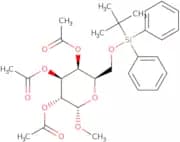
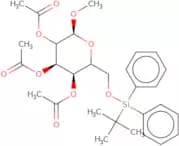
<p>5-Bromo-5,6-dideoxy-3-O-benzoyl-D-gulono-1.4-lactone is a Carbohydrate with the molecular formula C8H12Br2O7 and a molecular weight of 338. The CAS number for this compound is 9061-52-8. This compound is an Oligosaccharide with a molecular weight of 334. The structure of this compound is related to the structure of the natural sugar, glucose. 5-Bromo-5,6-dideoxy-3-O-(benzoyl)-D--gulono--1.4--lactone has been synthesized from 5,6 dideoxy erythrose in which one hydroxyl group has been replaced by bromine and one hydroxyl group has been replaced by benzoyl chloride. It has also been methylated and glycosylated.</p>Purity:Min. 95%Methyl 2,3,4-tri-O-acetyl-6-O-tert-butyldiphenylsilyl-a-D-mannopyranoside
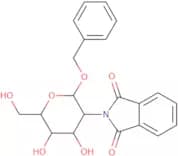
<p>Methyl 2,3,4-tri-O-acetyl-6-O-tert-butyldiphenylsilyl-a-D-mannopyranoside is a custom synthesis of an oligosaccharide. It is modified by fluorination, methylation and acetylation. This compound can be used in the production of glycosylated proteins for use as pharmaceuticals. The CAS number for this compound is 568792–66–8.</p>Formula:C29H38O9SiPurity:Min. 95%Molecular weight:558.71 g/molBenzyl 2-deoxy-2-phthalimido-β-D-glucopyranoside
CAS:<p>Benzyl 2-deoxy-2-phthalimido-b-D-glucopyranoside is a custom synthesis that belongs to the group of complex carbohydrates. It is an oligosaccharide or polysaccharide that is modified with methylation, glycosylation, and carbamylation, and has a CAS number of 80035-32-1. This compound has been used in the synthesis of saccharides for the preparation of an antibody drug conjugate. Benzyl 2-deoxy-2-phthalimido-b-D-glucopyranoside is also known as 6Fluoro 3 indoxyl beta D galactopyranoside.</p>Formula:C21H21NO7Purity:Min. 95%Molecular weight:399.39 g/mol2,5-Anhydro-D-mannitol-1-phosphate barium salt hydrate
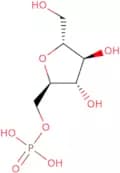
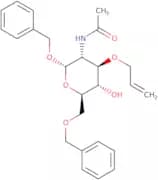
CAS:<p>2,5-Anhydro-D-mannitol-1-phosphate barium salt hydrate is a fluorinated synthetic oligosaccharide. It is a complex carbohydrate that can be modified with the addition of methyl groups or click chemistry. This product is CAS No. 352000-02-3 and has been synthesized with glycosylation and polysaccharide modifications. The chemical formula for this product is C6H14O7P2Ba.</p>Formula:C6H11BaO8P·H2OPurity:Min. 95%Molecular weight:397.46 g/molBenzyl 2-acetamido-3-O-allyl-6-O-benzyl-2-deoxy-a-D-glucopyranoside
CAS:<p>Benzyl 2-acetamido-3-O-allyl-6-O-benzyl-2-deoxy-aDglucopyranoside is an Oligosaccharide that contains a benzene ring. It has been synthesized by the method of glycosylation and click modification. This product is for research purposes only and should not be used as a food additive, preservative, or dietary supplement.</p>Formula:C25H31NO6Purity:Min. 95%Color and Shape:Off-White Beige PowderMolecular weight:441.52 g/molN-[(4'-Nitrophenyl)-1-propenyl]imino-2,3,4,6-tetra-O-pivaloyl-D-glucopyranoside
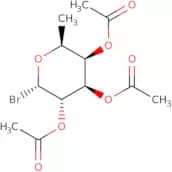
<p>N-[(4'-Nitrophenyl)-1-propenyl]imino-2,3,4,6-tetra-O-pivaloyl-D-glucopyranoside is a synthetic polysaccharide. It is a complex carbohydrate that is modified by methylation and glycosylation. The monomeric unit of this polysaccharide is a 6-(nitrophenoxy)hexose. N-[(4'-Nitrophenyl)-1-propenyl]imino-2,3,4,6-tetra-O-pivaloyl-D-glucopyranoside has been shown to have antiviral effects in the past.</p>Formula:C35H50N2O11Purity:Min. 95%Molecular weight:674.78 g/mol2,3,4-Tri-O-acetyl-a-L-fucopyranosyl bromide
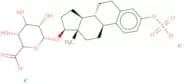
CAS:<p>2,3,4-Tri-O-acetyl-a-L-fucopyranosyl bromide is a modification of the carbohydrate 2,3,4-tri-O-acetyl-a-L-fucopyranose. This compound is a complex carbohydrate that has been custom synthesized for use in glycosylation reactions. The compound is an oligosaccharide with 1 alpha and 3 beta linkage sites. It is a high purity product that can be used to synthesize monosaccharides, methylated sugars, and glycosylations. 2,3,4 Tri-O-acetyl-a-L Fucopyranosyl Bromide has also been fluorinated to produce fluoro derivatives.</p>Formula:C12H17BrO7Color and Shape:PowderMolecular weight:353.16 g/molEstradiol 3-sulfate 17β-glucuronide dipotassium
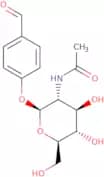
CAS:<p>Estradiol 3-sulfate 17b-glucuronide dipotassium salt is an estradiol ester that is a metabolite of estradiol. It has been shown to be an intermediate in the synthesis of estrone sulfate and other steroid hormones. Estradiol 3-sulfate 17b-glucuronide dipotassium salt is formed from estradiol by the addition of one molecule of sulfuric acid followed by the addition of glucuronic acid, which results in a salt form. It may also be formed by oxidation of allylic hydroperoxides and photooxygenation in families with oxygenated moieties. Irradiation leads to formation of oxygenated steroids. The alkene reactivity depends on the substitution pattern, the cyclic reactivity depends on the ring size and substitution pattern, and the reactivity with peroxides depends on the position of substitution.</p>Formula:C24H32O11S•K2Purity:Min. 95%Color and Shape:White to off-white solid.Molecular weight:606.77 g/mol4-Formylphenyl 2-acetamido-2-deoxy-b-D-glucopyranoside
CAS:<p>This product is a custom synthesis of a complex carbohydrate. It has the CAS number 135608-48-9, and is a fluorinated saccharide with an acetamide group in the 4-position. It is synthesized from 2,3-dihydroxybenzoic acid and methyl bromoacetate, which are reacted to form the mesylate ester. This product can be modified by methylation or glycosylation to produce desired derivatives. The purity of this compound is high, with no contaminants detected.</p>Formula:C15H19NO7Purity:Min. 95%Color and Shape:PowderMolecular weight:325.31 g/molAcetaminophen D-glucuronide
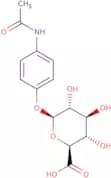
CAS:<p>Acetaminophen D-glucuronide (APG) is a metabolite of acetaminophen. It is a major metabolite produced by the liver after acetaminophen is converted to APG by UDP-glucuronyltransferase. The biological properties of APG are similar to acetaminophen, but it has been shown that APG may have greater potency than acetaminophen in some tissues. For example, in vitro studies using hepatocyte-like cells have shown that APG has higher activity than acetaminophen on the induction of CYP2E1 and CYP3A4, two enzymes involved in drug metabolism. Acetaminophen D-glucuronide can be detected in blood samples for up to 48 hours after administration of an intravenous dose of acetaminophen, which provides a more precise measurement than other methods such as plasma concentrations or urinary excretion measurements.</p>Formula:C14H17NO8Purity:Min. 95%Color and Shape:White PowderMolecular weight:327.29 g/mol1,2,3,5-Tetra-O-acetyl-b-L-ribofuranose
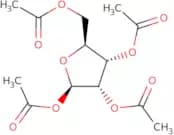
CAS:<p>1,2,3,5-Tetra-O-acetyl-b-L-ribofuranose is a synthetic carbohydrate that can be modified with fluorination, methylation, or monosaccharide. It is a monomeric sugar that is used in the synthesis of oligosaccharides and polysaccharides. The compound has been shown to have antiviral properties against human immunodeficiency virus type 1 (HIV-1).</p>Formula:C13H18O9Purity:Min. 95%Color and Shape:White PowderMolecular weight:318.3 g/molPhenyl 2-azido-3-O-benzyl-2-deoxy-4-O-p-methoxybenzyl-b-D-thioglucopyranoside
<p>Phenyl 2-azido-3-O-benzyl-2-deoxy-4-O-p-methoxybenzyl bDthioglucopyranoside is a glycosylation, complex carbohydrate, methylation, click modification, polysaccharide, fluorination and saccharide. It is a CAS No. and monosaccharide. It is custom synthesis and high purity.</p>Purity:Min. 95%4,6-O-Benzylidene-1,2,3-tri-O-pivaloyl-b-D-glucopyranose
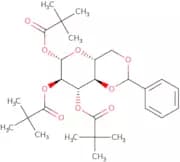
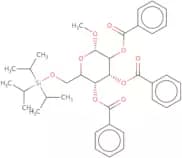
CAS:<p>4,6-O-Benzylidene-1,2,3-tri-O-pivaloyl-b-D-glucopyranose is a carbohydrate that belongs to the group of saccharides. It is a simple sugar that has been modified with fluorination. This compound has been synthesized by custom synthesis and has high purity and can be used in research. 4,6-O-Benzylidene-1,2,3-tri-O-pivaloyl-b-D-glucopyranose is not currently available on the market.</p>Formula:C28H40O9Purity:Min. 95%Molecular weight:520.63 g/molMethyl 2,3,4-tri-O-benzoyl-6-O-triisopropylsilyl-a-D-mannopyranoside
<p>Methyl 2,3,4-tri-O-benzoyl-6-O-triisopropylsilyl-a-D-mannopyranoside is a synthetic glycosylation agent with high purity and custom synthesis. The product is used to modify saccharides and oligosaccharides with the addition of the methyl group at C2 of the sugar. It can be used for modification of complex carbohydrates, fluorination, and saccharide. Methyl 2,3,4-tri-O-benzoyl-6-O-triisopropylsilyl-a -D -mannopyranoside has CAS No. 617069–91–8. The product can be synthesized in various configurations to meet customer needs.</p>Formula:C37H46O9SiPurity:Min. 95%Molecular weight:662.86 g/mol2- C- (Hydroxymethyl) - 2, 3- O-isopropylidene)-D- ribose
<p>2-C-(Hydroxymethyl)-2,3-O-isopropylidene)-D-ribose is a sugar that is an important component of glycosylation. It can be used as a monosaccharide or as part of a larger sugar molecule such as an oligosaccharide or polysaccharide. 2-C-(Hydroxymethyl)-2,3-O-isopropylidene)-D-ribose can be modified by either methylation, fluorination, click modification, saccharide modification, or custom synthesis. This product has high purity and can be custom synthesized to meet your specifications.</p>Purity:Min. 95%(5R, 6R, 7R, 8S) -5, 7-Bis[[tert.butyl dimethylsilyl] oxy] - 8- [(tert.butyldimethylsilyl)oxy] methyl-1- azabicyclo[4.2.0] octan- 2- one
<p>(5R, 6R, 7R, 8S) -5, 7-Bis[[tert.butyl dimethylsilyl] oxy] - 8- [(tert.butyldimethylsilyl)oxy] methyl-1- azabicyclo[4.2.0] octan- 2- one is a custom synthesis that can be modified to fit your needs. It is an oligosaccharide with a high purity and low toxicity. This product is used in glycosylation reactions and has a CAS number of 976841-40-0. The modification of this product includes fluorination, methylation, and click chemistry modifications.</p>Purity:Min. 95%D-Arabinose
CAS:<p>The aldopentose D-arabinose also known as aloinose, Aloe sugar, pectinose (Collins, 2006), is not as common in nature as its enantiomer L-arabinose. D-arabinose is a component of the polysaccharide in Aloe (Haynes, 1963) and is present in the unripe (green) tomato (Lycopersicon esculentum) (Chandra, 2009). The major cell wall carbohydrate of Corynebacterineae (a bacterial group that includes tuberculosis, leprosy and diphtheriae) is an arabinogalactan, a branched polysaccharide that is essential for the physiology of these bacteria. The arabinogalactan complex is often referred to as mycolyl-arabinogalactan-peptidoglycan complex. As arabinogalactan is made up of D-arabinofuranosyl and D-galactofuranosyl residues, a complete understanding of their biosynthethic pathways could provide suitable targets for new chemotherapeutics (Meniche, 2008).</p>Formula:C5H10O5Purity:Min. 99 Area-%Color and Shape:PowderMolecular weight:150.13 g/molPolymannuronic acid sodium salt - Average MW < 5000 Da
CAS:<p>Polymannuronic acid is produced from alginates by partial hydrolysis and chromatography of brown algae such as Laminaria digitata, Ascophyllum nodosum and Fucus spp.<br>The image was kindly provided by Prof Mike Guiry from Cork who runs ‘The Seaweed Site’.</p>Color and Shape:Powder6-O-a-Maltosyl-b-cyclodextrin
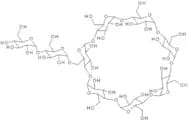
CAS:<p>This beta-cyclodextrin (β-CD) derivative is a functionalized cyclic oligosaccharide composed of seven glucose units, characterized by a hydrophilic exterior and a lipophilic cavity (bigger than α-CD and smaller than γ-CDs), which allows it to encapsulate various guest molecules. This structural feature facilitates its use in multiple applications, including pharmaceuticals, food enhancement, and cosmetics. In the pharmaceutical industry, it enhances the solubility and stability of poorly water-soluble drugs, improving their bioavailability and efficacy while also masking unpleasant tastes. The food sector utilizes it as a stabilizer for flavors, colors, and nutrients, extending shelf life by protecting sensitive ingredients from degradation. In cosmetics, it serves as a complexing agent for fragrances and active components, ensuring their stability and controlled release. Its use expands to many other fields, including nanotechnology for drug delivery systems, environmental remediation for extracting organic pollutants, textiles for slow-release fragrances, and analytical chemistry for chiral separation.</p>Formula:C54H90O45Purity:Min. 95%Color and Shape:White PowderMolecular weight:1,459.27 g/mol5-Aldo-1,2-O-isopropylidene-b-D-arabinofuranose
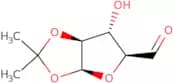
CAS:<p>5-Aldo-1,2-O-isopropylidene-b-D-arabinofuranose is a sugar that is synthesized from D-glucose. It has been modified with fluorine to produce an analogue of 5-fluoroarabinofuranose. The methylation and glycosylation of this compound have also been investigated. This chemical can be used for the synthesis of complex carbohydrates.</p>Formula:C8H12O5Purity:Min. 95%Color and Shape:PowderMolecular weight:188.18 g/mol3-O-Benzyl-6-O-tert-butyldimethylsilyl-1,2-O-isopropylidene-a-D-glucofuranose
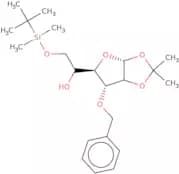
<p>3-O-Benzyl-6-O-tert-butyldimethylsilyl-1,2-O-isopropylidene-a-D-glucofuranose is a custom synthesis of a monosaccharide. It is synthesized by fluorinating the hydroxyl group on C3 and then methylating the benzyl group. The resulting product is a glycosylation that can be used as a carbohydrate for biosynthesis or as a research tool for studying saccharides.</p>Formula:C22H36O6SiPurity:Min. 95%Molecular weight:424.6 g/mol2,4,6-Tri-O-benzoyl-3-benzyl-D-mannopyranosyl trichloroacetimidate
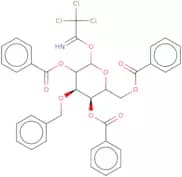
<p>2,4,6-Tri-O-benzoyl-3-benzyl-D-mannopyranosyl trichloroacetimidate is a synthetic glycosylation compound. It can be used for the synthesis of complex carbohydrates, such as polysaccharides and oligosaccharides. This product is a high purity, custom synthesis that has been modified with fluorination and methylation. CAS No.: 59978-06-0</p>Formula:C36H30Cl3NO9Purity:Min. 95%Molecular weight:726.98 g/mol2-Amino-2-deoxy-D-allose hydrochloride
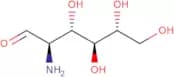
CAS:<p>2-Amino-2-deoxy-D-allose hydrochloride is a structural isomer of 2-amino-2-deoxy-daltrose. This substance has a nuclear magnetic resonance spectrum that is consistent with the proposed structure. The coupling constants are in agreement with the expected values for this type of molecule. A mass spectrum of this substance shows peaks corresponding to the molecular ion, a tetrazole fragment, and the two vicinal hydrogens. The measurement of 2-amino-2-deoxy-daltrose by nuclear magnetic resonance spectroscopy is shown below:</p>Formula:C6H13NO5·HClPurity:Min. 95%Molecular weight:215.63 g/mol5-O-Benzoyl-1,2,-O-isopropylidene-3-deoxy-3-ethylidene-a-D-xylofuranoside
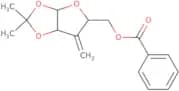
CAS:<p>5-O-Benzoyl-1,2,-O-isopropylidene-3-deoxy-3-ethylidene-a-D-xylofuranoside is a custom synthesis that is a modification of the natural product 5-O-(4'-methylbenzoyl)-1,2,-O-(isopropylidene)-3,5'-di--deoxyxylofuranoside. The fluorination and methylation reactions were carried out to produce the desired product. 5--O--Benzoyl--1,2,-O--isopropylidene--3,5'-di--deoxyxylofuranoside is a monosaccharide that is part of an oligosaccharide or polysaccharide. This compound has been synthesized by Click modification and glycosylation with sugar.</p>Purity:Min. 95%D-Glucosamine sulfate sodium chloride
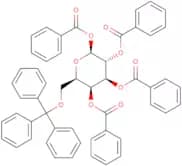
CAS:<p>D-Glucosamine sulfate is a sugar that belongs to the group of polysaccharides. It is a natural compound that is found in the human body and is important for the synthesis of glycosaminoglycans, which are found in cartilage and synovial fluid. D-Glucosamine sulfate can also be used as a raw material for the production of methylated compounds or saccharides. This product can be custom synthesized in different forms (D-glucosamine sulfate sodium chloride, D-glucosamine sulfate potassium salt, D-glucosamine sulfate calcium salt) and with different purity levels depending on your requirements.</p>Formula:C6H13NO5xNaClxH2SO4Purity:Min. 98 Area-%Color and Shape:White PowderMolecular weight:179.17 g/mol1,2,3,4-Tetra-O-benzoyl-6-O-trityl-b-D-galactopyranose
CAS:<p>1,2,3,4-Tetra-O-benzoyl-6-O-trityl-b-D-galactopyranose is a custom synthetic sugar that can be modified using a variety of glycosylation and modification techniques. This product has been synthesized and purified to high purity standards. It is an Oligosaccharide, Polysaccharide, Modification, saccharide with CAS No. 100740-75-8.</p>Formula:C53H42O10Purity:Min. 95%Molecular weight:838.89 g/mol5-Azido-5,6-dideoxy-2,3-O-isopropylidene-D-glucono-1.4-lactone
<p>5-Azido-5,6-dideoxy-2,3-O-isopropylidene-D-glucono-1.4-lactone is a synthetic carbohydrate. It is an oligosaccharide that has been modified with methylation, saccharide and Click modification. It is a complex carbohydrate that is synthesized by glycosylation and fluorination. 5-Azido-5,6-dideoxy-2,3-O-isopropylidene--D--glucono--1.4--lactone can be used in the treatment of diabetes mellitus type 2 and other conditions associated with metabolic syndrome.</p>Purity:Min. 95%Maltotriosyltrehalose
CAS:<p>Maltotriosyltrehalose is a sugar that is found in plants, fungi, and bacteria. It can be used as a substrate for the production of hydrogen-bonded oligosaccharides. Maltotriosyltrehalose has been shown to have a protective effect against death induced by high temperatures in mammalian cells. This sugar is also a good substrate for the production of hydrogen-bonded oligosaccharides and can be used as an additive to dry food products such as bread or cereals. Maltotriosyltrehalose is stable at high temperatures and has been shown to protect against cell death caused by heat stress. It can be used in both animal feed and human food products. Maltotriosyltrehalose is not active against proteases, but it does not inhibit the activity of mammalian cells that produce proteases.</p>Formula:C20H52O26Purity:Min. 95%Molecular weight:708.61 g/molN-(2-Phenyl-1-cyano-3-butene)-2,3,4,6-tetra-O-pivaloyl-D-glucopyranoside
<p>N-(2-Phenyl-1-cyano-3-butene)-2,3,4,6-tetra-O-pivaloyl-D-glucopyranoside is a compound that is used as an intermediate in the synthesis of glycosylated polysaccharides. It has been used to synthesize saccharides and oligosaccharides with a wide range of compositions. This compound can be custom synthesized to meet your specifications.</p>Formula:C37H54NO9Purity:Min. 95%Molecular weight:656.84 g/mol4-O-Benzyl-L-rhamnal
CAS:<p>4-O-Benzyl-L-rhamnal is a functionalized, asymmetric, glycosylating agent that is used in the synthesis of glycoconjugates. 4-O-Benzyl-L-rhamnal is synthesized by the reaction of benzaldehyde with an aldehyde group on the sugar molecule. The product is then reacted with an alcohol to form a glycosidic bond. This process can be repeated until the desired number of sugar molecules are added. It can also be used to synthesize disaccharides and polysaccharides by convergent or nucleophile reactivity. 4-O-Benzyl-L-rhamnal utilizes a chiral auxiliary to produce its product, which can be used for synthesis purposes or as a starting material for other reactions.</p>Formula:C13H16O3Purity:Min. 95%Color and Shape:PowderMolecular weight:220.27 g/mol1,2,3-Tri-O-acetyl-4,6-O-benzylidene-b-D-galactopyranose
CAS:<p>1,2,3-Tri-O-acetyl-4,6-O-benzylidene-b-D-galactopyranose is a high purity and custom synthesis sugar. This product has been modified with fluorination, glycosylation, methylation, and modifications. It is also known by the CAS number 78962-43-3. 1,2,3-Tri-O-acetyl-4,6-O-benzylidene b -D -galactopyranose is an oligosaccharide that can be used as a monosaccharide or saccharide. It is a complex carbohydrate that has many uses in the food industry.</p>Formula:C19H22O9Purity:Min. 95%Color and Shape:White PowderMolecular weight:394.37 g/mol2-Propynyl-2,3,4,6-tetra-O-acetyl-b-D-glucopyranoside
CAS:<p>2-Propynyl-2,3,4,6-tetra-O-acetyl-b-D-glucopyranoside is a carbohydrate. It is an oligosaccharide that contains a glucose molecule with four acetyl groups at the 2 position. This type of modification can be used to create high purity compounds for research purposes. 2-Propynyl-2,3,4,6-tetra-O-acetyl-b-D-glucopyranoside also has methylation and glycosylation sites available for custom synthesis.</p>Formula:C17H22O10Purity:Min. 95%Color and Shape:White PowderMolecular weight:386.35 g/molMethyl 2,3,4-tri-O-acetyl-6-O-tert-butyldiphenylsilyl-a-D-galactopyranoside
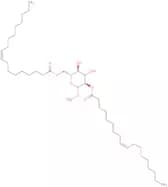
CAS:<p>Methyl 2,3,4-tri-O-acetyl-6-O-tert-butyldiphenylsilyl a-D-galactopyranoside is an oligosaccharide that has been modified with methylation, glycosylation and fluorination. It is an important compound in carbohydrate chemistry. The oligosaccharide is synthesized by the condensation of 3 molecules of galactose with 1 molecule of mannose to form a disaccharide. This product is manufactured by custom synthesis and has been purified to high purity.</p>Formula:C29H38O9SiPurity:Min. 95%Molecular weight:558.71 g/molMethyl glucoside dioleate
CAS:<p>Methyl glucoside dioleate is a fatty acid ester that is a cross-linking agent. It can be used as a neutralizer and surfactant in cosmetic products. Methyl glucoside dioleate has been shown to have synergistic effects with hyaluronic acid, which stimulates the production of collagen and elastin. It also has skin-softening properties due to its ability to form films on the skin surface and reduce water loss by forming a hydrophobic barrier. Methyl glucoside dioleate is not known to cause allergic reactions or other adverse effects when applied to humans, although there are no long-term studies on this topic.</p>Purity:Min. 95%Allyl 2-acetamido-2-deoxy-?-D-glucopyranoside
CAS:<p>Allyl 2-acetamido-2-deoxy-a-D-glucopyranoside is a synthetic oligosaccharide that has the ability to bind to the O antigen of bacterial cells. It is used in vaccines as an adjuvant and has been shown to increase antibody production and provide protection against Shigella, a bacterial infection. This compound also shows chemoenzymatic activity, which allows for regiospecifically catalytic conversion of glycosides. Allyl 2-acetamido-2-deoxy-a-D-glucopyranoside binds to specific microbial enzymes that contain an acceptor site, with its catalytic function being activated by these enzymes.</p>Formula:C11H19NO6Purity:Min. 95%Color and Shape:PowderMolecular weight:261.27 g/mol1-Deoxy-D- tagatofuranose
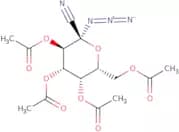
<p>1-Deoxy-D-tagatofuranose is a sugar that is found in many plants. It is a monosaccharide with a carbohydrate group at the reducing end of the molecule. 1-Deoxy-D-tagatofuranose has been synthesized by Click chemistry, which enables selective modification of its hydroxyl groups. This sugar is methylated, glycosylated, and fluorinated to make it more stable and resistant to chemical degradation. 1-Deoxy-D-tagatofuranose has various applications such as use as a food additive and as a pharmaceutical drug in the treatment of cancer.</p>Purity:Min. 95%2,3,4,6-Tetra-O-acetyl-1-azido-1-deoxy-α-D-galactopyranosyl cyanide
CAS:<p>A solar thermal collector is a device that absorbs the sun's heat, or thermal energy, and converts it to useful heat energy. It consists of a dark-colored surface (usually metal) that absorbs sunlight and transfers the heat by radiation to a fluid such as water or oil, which then carries the heat away for use. The efficiency of this type of collector depends on the quantity of sunlight that reaches it, the temperature difference between the hot fluid and ambient air, and its design. A typical solar thermal collector has an efficiency of about 10%.</p>Formula:C15H18N4O9Purity:Min. 95%Color and Shape:White/Off-White SolidMolecular weight:398.32 g/mol5,7-Dichloro-8-hydroxyquinoline b-D-glucuronide
CAS:<p>Chromogenic substrate targeting beta-glucuronidase</p>Formula:C15H13Cl2NO7Purity:Min. 98 Area-%Color and Shape:Yellow PowderMolecular weight:390.17 g/mol






![(1S) -1- [(2S, 3R,4R) -N-Benzyl-3- benzyloxy- 4-hydroxymethyl-1- azetidinyl] -1, 2- ethanediol](/_next/image/?url=https%3A%2Fstatic.cymitquimica.com%2Fproducts%2F3D%2Fthumb-webp%2FMB163355.webp&w=3840&q=75)

![N-[N-[N-[2,4-Anhydro-3-azido-3-deoxy-5-O-tert-butyldimethylsilyl-D-arabinonoyl-]-3-amino-2,4-anhyd…](/_next/image/?url=https%3A%2Fstatic.cymitquimica.com%2Fproducts%2F3D%2Fthumb-webp%2FMA168719.webp&w=3840&q=75)








![1,3,4,6-Tetra-O-acetyl-2-{2-[(2-aminoethyl)amino]-acetamido]}-2-deoxy-D-glucopyranose](/_next/image/?url=https%3A%2Fstatic.cymitquimica.com%2Fproducts%2F3D%2Fthumb-webp%2FMT145162.webp&w=3840&q=75)




![N-[(4'-Nitrophenyl)-1-propenyl]imino-2,3,4,6-tetra-O-pivaloyl-D-glucopyranoside](/_next/image/?url=https%3A%2Fstatic.cymitquimica.com%2Fproducts%2F3D%2Fthumb-webp%2FMN08501.webp&w=3840&q=75)
![(5R, 6R, 7R, 8S) -5, 7-Bis[[tert.butyl dimethylsilyl] oxy] - 8- [(tert.butyldimethylsilyl)oxy] met…](/_next/image/?url=https%3A%2Fstatic.cymitquimica.com%2Fproducts%2F3D%2Fthumb-webp%2FMB170688.webp&w=3840&q=75)