Glycoscience
Glycoscience is the study of carbohydrates and their derivatives, as well as the interactions and biological functions they participate in. This field of research is crucial for understanding a wide variety of biological processes, including cell recognition, signaling, immune response, and disease development. Glycoscience has important applications in biotechnology, medicine, and the development of new drugs and therapies. At CymitQuimica, we offer a wide selection of high-quality, high-purity products for glycoscience research. Our catalog includes monosaccharides, oligosaccharides, polysaccharides, glycoconjugates, and specific reagents, designed to support researchers in their studies on the structure, function, and applications of carbohydrates in biological systems. These resources are intended to facilitate scientific discoveries and practical applications in various areas of bioscience and medicine.
Subcategories of "Glycoscience"
- Aminosugars(108 products)
- Glyco-Related Antibodies(282 products)
- Glycolipids(46 products)
- Glycosaminoglycans (GAGs)(55 products)
- Glycosides(419 products)
- Monosaccharides(6,622 products)
- Oligosaccharides(3,682 products)
- Polysaccharides(503 products)
Found 11041 products of "Glycoscience"
Sort by
Purity (%)
0
100
|
0
|
50
|
90
|
95
|
100
1,2-a-1,2-a-L-Rhamnotriose
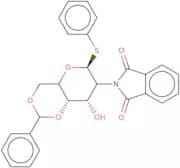
<p>1,2-a-1,2-a-L-Rhamnotriose is a carbohydrate that can be modified to suit your needs. It has a CAS number of 57749-83-5. This oligosaccharide is a sugar made up of two monosaccharides joined by an alpha 1,2 glycosidic bond. The product can be custom synthesized and its purity is high. It can be fluorinated or methylated and it can also be glycosylated. Click modification is also possible with this product.</p>Formula:C18H32O13Purity:Min. 95%Color and Shape:White PowderMolecular weight:456.44 g/molPhenyl 4,6-O-benzylidene-2-deoxy-2-phthalimido-b-D-thioglucopyranoside
CAS:<p>Phenyl 4,6-O-benzylidene-2-deoxy-2-phthalimido-b-D-thioglucopyranoside is a custom synthesis sugar that has been modified with fluorination, glycosylation, and carbamoylation. It is an oligosaccharide that contains a saccharide at the reducing end of the molecule. The CAS number for this compound is 79528-51-1.</p>Formula:C27H23NO6SPurity:Min. 95%Color and Shape:White PowderMolecular weight:489.54 g/mol2-C-(Hydroxymethyl)-2,3-O-isopropylidene-L-lyxono-1.4-lactone
<p>2-C-(Hydroxymethyl)-2,3-O-isopropylidene-L-lyxono-1.4-lactone is a synthetic modification of the oligosaccharide, 2,3-O-isopropylidene L-lyxonic acid lactone. It is a white to off-white crystalline powder that is soluble in water. This product has been custom synthesized and can be used as a monosaccharide or methylated in the glycosylation step. The CAS number for this product is 72893-21-6 and it has a molecular weight of 252.24 g/mol.</p>Purity:Min. 95%2,3,4,6-Tetra-O-acetyl-b-D-glucopyranosyl chloride
CAS:<p>2,3,4,6-Tetra-O-acetyl-b-D-glucopyranosyl chloride is a fluorescent probe for nuclei and quadrupole resonance spectroscopy. It has been used to study the nuclear quadrupole resonance of anions in aqueous solution. The fluorescence intensity of 2,3,4,6-Tetra-O-acetyl-b-D-glucopyranosyl chloride is proportional to the concentration of anions in water. Fluorescence properties were evaluated by measuring the emission spectrum at various excitation wavelengths. The absorption spectrum was also measured to determine the fluorescence quantum yield and fluorescence lifetime.</p>Formula:C14H19ClO9Purity:Min. 95 Area-%Color and Shape:White Off-White PowderMolecular weight:366.8 g/mol3,4,5,7-Tetra-O-acetyl-2,6-anhydro-D-lyxo-hept-2-enononitrile
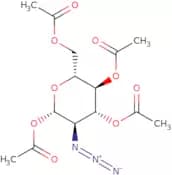
CAS:<p>3,4,5,7-Tetra-O-acetyl-2,6-anhydro-D-lyxo-hept-2-enononitrile is a synthetic compound that is used in the synthesis of glycosylation and oligosaccharide. This product has been modified with fluorine and methyl groups. The purity of this product is greater than 99%. 3,4,5,7-Tetra-O-acetyl-2,6-anhydro-D-lyxo-hept-2 -enononitrile is also known as CAS No. 120085–67–8.</p>Formula:C15H17NO9Purity:Min. 95%Color and Shape:PowderMolecular weight:355.3 g/mol1,3,4,6-Tetra-O-acetyl-2-azido-2-deoxy-β-D-glucopyranose
CAS:<p>1,3,4,6-Tetra-O-acetyl-2-azido-2-deoxy-b-D-glucopyranose is a monosaccharide that has been shown to be a potential biomarker for protein synthesis. It has been used in the diagnosis of dissections and potential models in vitro. 1,3,4,6-Tetra-O-acetyl-2-azido-2-deoxy--b -D--glucopyranose has also been used as a model system for the study of protein transport and whole genome sequencing. It is an experimental tool for studying protein synthesis and cell nuclei in vitro.</p>Formula:C14H19N3O9Purity:Min. 95%Color and Shape:PowderMolecular weight:373.32 g/molD-Glucoheptonic acid-1,4-lactone
CAS:<p>D-Glucoheptonic acid-1,4-lactone is a chiral compound that can be used as an enantiomer of the natural sugar glucose. The human liver has been shown to metabolize this compound into proton and an analog of glucofuranose. This means that D-Glucoheptonic acid-1,4-lactone is able to be broken down by glycosidases. D-Glucoheptonic acid-1,4-lactone also inhibits α-L-rhamnosidase and other enzymes responsible for the breakdown of carbohydrates. This inhibition may lead to increased blood glucose levels in humans. D-Glucoheptonic acid-1,4-lactone has been shown to have inhibitory activities against both bacterial and mammalian enzymes. Hydrogen fluoride (HF) was used as a catalyst in the synthesis of this compound with benzylidene acetal</p>Formula:C7H12O7Purity:Min. 95%Color and Shape:PowderMolecular weight:208.17 g/molCarboxymethyl-dextran sodium salt 10-20% COOH - Average molecular weight 40000
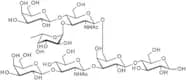
CAS:<p>Drug carrier for cancer therapy & imaging, biocompatible, soluble, biodegradable</p>Color and Shape:White Powder4-O-[3-O-(2-Acetamido-2-deoxy-b-D-galactopyranosyl)-b-D-galactopyranosyl]-D-glucose
CAS:<p>4-O-[3-O-(2-Acetamido-2-deoxy-b-D-galactopyranosyl)-b-D-galactopyranosyl]-D-glucose is a synthetic sugar that is used in the production of monosaccharide derivatives. This compound can be modified with a click modification, which enables the introduction of a fluoro group to an oligosaccharide. The resulting compound has been shown to bind to cancer cells and inhibit their growth.</p>Formula:C20H35NO16Purity:Min. 95%Molecular weight:545.49 g/molMonofucosyllacto-N-hexaose III
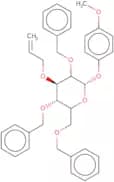
CAS:<p>Sialylated tetrasaccharide found in human milk, possible health benefits for the neonate by supporting resistance to pathogens, gut maturation, immune function, and cognitive development. Purity typically above 60%. Contains other oligosaccharide fragments. For a typical IC trace see datasheet section</p>Formula:C46H78N2O35Purity:(By Hpaec) Min. 60%Color and Shape:PowderMolecular weight:1,219.12 g/mol4-Methoxyphenyl-3-O-allyl-2,4,6-tri-O-benzyl-β-D-galactopyranoside
CAS:<p>4-Methoxyphenyl-3-O-allyl-2,4,6-tri-O-benzyl-b-D-galactopyranoside is a synthetic monosaccharide that is used for glycosylation reactions. It has been used in the synthesis of oligosaccharides and polysaccharides. This product is available for custom synthesis and can be ordered with a purity of >98% (w/w).</p>Formula:C37H40O7Purity:Min. 95%Color and Shape:White to off-white solid.Molecular weight:596.71 g/mol(2-Hydroxypropyl)-γ-cyclodextrin
CAS:<p>This gamma-cyclodextrin (γ-CD) derivative is a modified cyclic oligosaccharide composed of eight glucose units, featuring a larger cavity size than α- and β-cyclodextrins. This structural characteristic allows γ-CDs to form inclusion complexes with a wider range of guest molecules, making it particularly versatile in various industries. In the food sector, it is used as a carrier and stabilizer for flavors, fat-soluble vitamins, and polyunsaturated fatty acids, protecting volatile compounds from evaporation. In pharmaceuticals, it enhances the solubility and bioavailability of poorly water-soluble drugs and, thanks to its larger ring size, allows for the encapsulation of larger molecules or even entire drug molecules. γ-CDs and derivatives are also used for environmental remediation and, in analytical chemistry, for the extraction and concentration of target substances.</p>Purity:98 To 102%Color and Shape:Powderb-Cyclodextrin sulfobutyl ether sodium salt
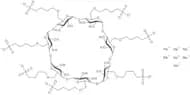
CAS:<p>Beta-cyclodextrin sulfobutyl ether is an excipient compound incorporating a chemically modified cyclodextrin with a structure that optimizes the solubility and stability of active pharmaceuticals and their properties. It is a highly water-soluble anionic cyclodextrin derivative. It can easily form non-covalent inclusion complexes with drug molecules and therefore reduce drug toxicity and haemolysis as well as control drug release rate. Its complexing properties also make it suitable for masking unpleasant odors and tastes of pharmaceutical products. It is used as an excipient in injection, oral, nasal, and eye medication.</p>Formula:C70H119Na7O56S7Purity:95 To 105%Color and Shape:White PowderMolecular weight:2,242.05 g/mol1,3-α-1,6-α-D-Mannotriose
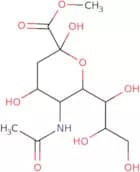
CAS:<p>Intermediate for synthesis of N-acetyllactosaminic glycans</p>Formula:C18H32O16Purity:Min. 95 Area-%Color and Shape:White Off-White PowderMolecular weight:504.44 g/molN-Acetylneuraminic acid methyl ester
CAS:<p>Biologically relevant in neurotransmission and carbohydrate-protein recognition</p>Formula:C12H21NO9Purity:Min. 97 Area-%Color and Shape:White PowderMolecular weight:323.3 g/mol(2E) -4- [(3aS, 4R, 5aR) -5-Hydroxy-( 2, 2- dimethyltetrahydro- 4H- 1, 3- dioxolo)[3, 4- c] piperidin- 2- yl] -2- butenoic acid meth yl ester
<p>2-Butenoic acid methylester is a carbohydrate compound with a molecular formula of C4H6O4 and a molecular weight of 136.09. It has the chemical name of (2E) -4- [(3aS, 4R, 5aR) -5-hydroxy-( 2, 2-dimethyltetrahydro- 4H- 1, 3- dioxolo)[3, 4- c] piperidin- 2- yl] -2- butenoic acid meth yl ester. This product is an oligosaccharide that can be custom synthesized to meet your needs. This product is also known as an Oligosaccharide or sugar and can be fluorinated to produce a complex carbohydrate. The CAS number for this product is 72695-10-8. This product is available in high purity and has been methylated and glycosylated.</p>Purity:Min. 95%Succinyl-β-cyclodextrin
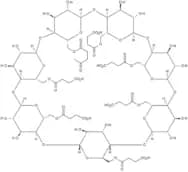
CAS:<p>This beta-cyclodextrin (β-CD) derivative is a functionalized cyclic oligosaccharide composed of seven glucose units, characterized by a hydrophilic exterior and a lipophilic cavity (bigger than α-CD and smaller than γ-CDs), which allows it to encapsulate various guest molecules. This structural feature facilitates its use in multiple applications, including pharmaceuticals, food enhancement, and cosmetics. In the pharmaceutical industry, it enhances the solubility and stability of poorly water-soluble drugs, improving their bioavailability and efficacy while also masking unpleasant tastes. The food sector utilizes it as a stabilizer for flavors, colors, and nutrients, extending shelf life by protecting sensitive ingredients from degradation. In cosmetics, it serves as a complexing agent for fragrances and active components, ensuring their stability and controlled release. Its use expands to many other fields, including nanotechnology for drug delivery systems, environmental remediation for extracting organic pollutants, textiles for slow-release fragrances, and analytical chemistry for chiral separation.</p>Formula:C71H100O55Purity:Min. 95%Color and Shape:White PowderMolecular weight:1,833.52 g/molL-Tagatose
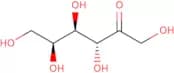
CAS:<p>Low-calorie sweetener; additive in detergents, cosmetics, and pharmaceuticals</p>Formula:C6H12O6Purity:Min. 98 Area-%Color and Shape:White PowderMolecular weight:180.16 g/mol1,2,3,5-Tetra-O-benzoyl-2-C-methyl-b-D-ribofuranose
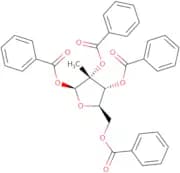
CAS:<p>Building block for the synthesis of 2'-C-methyl substituted nucleosides</p>Formula:C34H28O9Purity:Min. 95%Color and Shape:White Off-White PowderMolecular weight:580.58 g/mol1-O-Sinapoyl-b-D-glucose
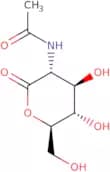
CAS:<p>A synthetically produced glucoside. It is also a natural product found in the Swertia Japonica.</p>Formula:C17H22O10Purity:Min. 95 Area-%Color and Shape:PowderMolecular weight:386.35 g/mol2-Acetamido-2-deoxy-D-glucono-1,5-lactone
CAS:<p>2-Acetamido-2-deoxy-D-glucono-1,5-lactone is a diagnostic agent that inhibits the activities of enzymes such as protein synthesis and cell division. It can be used to identify viral infections in animals, plants and marine microorganisms. 2-Acetamido-2-deoxy-D-glucono-1,5-lactone has been shown to inhibit the biochemical activity of enzymes in cells grown in culture. 2AADG is also a diagnostic agent that can be used to detect tumors in subcutaneous tissues due to its ability to inhibit the production of proteins essential for cell division.</p>Formula:C8H13NO6Purity:Min. 95%Color and Shape:PowderMolecular weight:219.19 g/mol2,3,5-Tri-O-acetyl-L-arabinofuranosyl fluoride
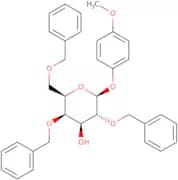
<p>2,3,5-Tri-O-acetyl-L-arabinofuranosyl fluoride is a monosaccharide sugar that has been fluorinated. It is a custom synthesis of methylation and click modification. The CAS number for this product is 565-64-8. This product has been modified to make it more resistant to degradation by enzymes such as alpha amylase and beta amylase. It is also used for polysaccharide synthesis and saccharides with higher purity than other products on the market. This product is synthesized from natural sources, making it high in purity and suitable for use in food production.END></p>Formula:C11H15FO7Purity:Min. 95%Color and Shape:Colourless To Yellow LiquidMolecular weight:278.23 g/mol4-Methoxyphenyl 2,4,6-tri-O-benzyl-b-D-galactopyranoside
CAS:<p>4-Methoxyphenyl 2,4,6-tri-O-benzyl-b-D-galactopyranoside is a custom synthesis that belongs to the group of complex carbohydrates. It is an Oligosaccharide with CAS No. 247027-79-8 and Polysaccharide. 4MPG has been modified by Methylation, Glycosylation, Carbohydrate, Click modification, sugar, High purity, Fluorination and Synthetic methods. This product is available in high purity and can be used for research purposes.</p>Formula:C34H36O7Purity:Min. 97 Area-%Color and Shape:PowderMolecular weight:556.65 g/mol2-Acetamido-3,4,6-tri-O-acetyl-2-deoxy-D-galactopyranose
CAS:<p>2-Acetamido-3,4,6-tri-O-acetyl-2-deoxy-D-galactopyranose is a sugar that is used in the synthesis of glycosides and other carbohydrate derivatives. It can be modified with various groups to produce new compounds. This product is an important raw material for the synthesis of saccharides and oligosaccharides with specific properties.</p>Formula:C14H21NO9Purity:Min. 95%Color and Shape:PowderMolecular weight:347.32 g/mol2,3-O-Isopropylidene-1,4-di-C-methyl-L-erythrofuranose
<p>2,3-O-Isopropylidene-1,4-di-C-methyl-L-erythrofuranose is a fluorinated monosaccharide. It is synthesized by the reaction of 2,3-O-isopropylidene L-erythroascorbic acid with sodium difluoromethanesulfinate in toluene under refluxing conditions. It can be used as an intermediate for the preparation of oligosaccharides and polysaccharides. This product has been shown to be resistant to degradation by enzymes such as glycosidases and esterases. It also has a high purity level and can be used for custom synthesis projects.</p>Purity:Min. 95%5-(Dimethylamino)naphthalene-1-sulfonamidooctyl-O-(a-D-galactopyranosyl)-1,4-(b-D-galactopyranosyl)-1,4-b-D-glucopyranose
<p>The compound is an oligosaccharide with a complex carbohydrate. The product is custom synthesized and has been modified by fluorination. It is a high purity, synthetic monosaccharide sugar that is methylated.</p>Purity:Min. 95%Methyl 2-O-(a-D-mannopyranosyl)-b-D-mannopyranoside
<p>Methyl 2-O-(a-D-mannopyranosyl)-b-D-mannopyranoside is a glycosylation product of mannose and glucose. It is an intermediate in the synthesis of the complex carbohydrate, methylated mannan. This compound is also an intermediate in the synthesis of saccharides with a fluorinated sugar moiety. Methyl 2-O-(a-D-mannopyranosyl)-b-D-mannopyranoside can be custom synthesized to meet your needs.</p>Formula:C13H24O11Purity:Min. 95%Molecular weight:356.32 g/molBlood Group H type II trisaccharide, spacer-biotin conjugate
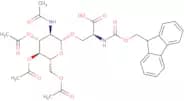
CAS:<p>Blood group H type II trisaccharide is a carbohydrate that is modified with a spacer-biotin conjugate. It can be used in the synthesis of oligosaccharides and saccharides. This product has been fluorinated, has high purity, and is custom synthesized to order. The product also has methylation, glycosylation, and click modification.</p>Formula:C39H67N5O18SPurity:Min. 95%Color and Shape:PowderMolecular weight:926.04 g/mol2-Acetamido-3,4,6-tri-O-acetyl-2-deoxy-β-D-glucopyranosyl-Fmoc serine
CAS:<p>2-Acetamido-3,4,6-tri-O-acetyl-2-deoxy-β-D-glucopyranosyl Fmoc serine is a modified sugar that is synthesized by the glycosylation of 2,3,4,6-tetra‑O‑acetyl‑2‑deoxy‑α‑D‑glucopyranose with an amino acid. It is used in peptide synthesis and as a building block for other oligosaccharides and saccharides. This compound has been shown to be useful in the production of complex carbohydrates.</p>Formula:C32H36N2O13Purity:Min. 95 Area-%Color and Shape:White To Off-White SolidMolecular weight:656.63 g/mol3'-Sialyl Lewis X, sodium salt
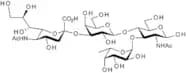
CAS:<p>Sialyl Lewis X (SLeX) is a carbohydrate antigen, related to cell adhesion and it has been shown that inhibition of SLeX synthesis leads to decreased adhesion of trophoblast cells to endometrial epithelial cells (Collins, 2006). Sialyl Lewis X is displayed on the terminus of glycolipids that are present on the surface of white blood cells and it has been shown that SLeX has an important role in inflamation processes. The inital adhesion of white blood cells to a site of injury is mediated by E-selectins which are specific for SLeX. Cell-cell recognition between leukocytes and endothelial cells in blood is believed to occur in part through interactions between lectins and oligosaccharide ligands. SLeX is frequently expressed in human cancer cells and primary tumors. It has been demonstrated that SLeX was involved in the adhesion of tumor cells to vascular endothelium. The potential role of SLeX in the tumor metastatic process has been supported by several clinical studies (Liang, 2016).</p>Formula:C31H51N2NaO23Purity:Min. 95%Color and Shape:White PowderMolecular weight:842.73 g/molβ-D-Glucose-1-phosphate disodium
CAS:<p>b-D-Glucose-1-phosphate disodium salt is a white crystalline powder that is soluble in water, ethanol, and acetone. It is a monosaccharide with the molecular formula C6H12O6P2Na2. It has a molecular weight of 348.08 g/mol.</p>Formula:C6H13O9P•Na2Purity:Min. 95%Color and Shape:PowderMolecular weight:306.12 g/mol2,3,4,6-Tetra-O-benzyl-D-mannopyranosyl fluoride
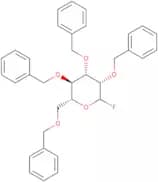
CAS:<p>2,3,4,6-Tetra-O-benzyl-D-mannopyranosyl fluoride is a glycosylamine that has been synthesized from l-threonine. The chemical structure of this compound can be classified as a pyranose sugar with an O-methylated benzyl group at the C2 position. This sugar is synthesized by reductive cleavage of the methyl ether and subsequent reaction with sodium borohydride. The conformational analysis of the molecule was performed using molecular mechanics calculations and quantum mechanical simulations. In addition, electron paramagnetic resonance (EPR) experiments were conducted to determine the chemical shift in the 1H NMR spectrum and to identify the acceptor or donor in the molecule. Trichloroacetimidates are used as monomers for this type of synthesis because they provide good yields and can be easily prepared by reacting chloroacetic acid with chloral hydrate.</p>Formula:C34H35FO5Purity:Min. 95%Color and Shape:Yellow PowderMolecular weight:542.64 g/molLactose - anhydrous
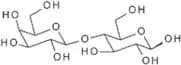
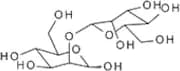
CAS:<p>Anhydrous lactose is an excipient, filler, diluent, and bulking agent in a wide variety of pharmaceutical tablets, capsules, powders and other preparations. It also has applications as a nutrient and multi-functional ingredient in infant formulae, geriatric, dietetic and health foods and may be used as an ingredient in culture media.</p>Formula:C12H22O11Purity:Min. 98 Area-%Color and Shape:PowderMolecular weight:342.3 g/mol2-O-(b-D-Mannopyranosyl)-D-mannopyranose
CAS:<p>β-(1→2)-Oligomannoside constituents of the Candida albicans cell wall have been shown to possess immunostimulatory properties, as evidenced by induction of cytokine production, including tumor necrosis factor (TNF) production, in humans and mice. In particular, oligosaccharide fractions, isolated and fractionated from the C. albicans cell wall, have been shown to induce TNF production in mouse macrophages. Therefore, biological studies employing well-defined synthetic β-(1→2)-linked oligomannoside compounds are of interest for verifying and studying in detail the proposed immunostimulatory properties of such constructs.</p>Formula:C12H22O11Purity:Min. 90 Area-%Color and Shape:PowderMolecular weight:342.3 g/mol2-Chloro-2-Deoxy-1,3,5-tri-O-benzoyl-D-ribofuranose
<p>2-Chloro-2-deoxy-1,3,5-tri-O-benzoyl-D-ribofuranose is a custom synthesis of an oligosaccharide. It is a complex carbohydrate with a CAS number. The molecular weight of this saccharide is 837.38 g/mol and it has a molecular formula of C9H11F4O5. This product is modified by methylation and glycosylation. The purity level is high and the product contains no impurities. The fluorination process on 2C2DBR has been done to increase the stability of the molecule at higher temperatures and to make it more soluble in polar solvents such as water or alcohols. This product can be used in click chemistry reactions to modify other molecules or can be used as a substrate for glycosylation reactions where glucose will be added to the sugar part of the molecule in order to form an Oligosac</p>Purity:Min. 95%2,3,4,6-Tetra-O-acetyl-α-D-glucopyranosyl fluoride
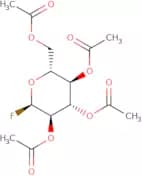
CAS:<p>2,3,4,6-Tetra-O-acetyl-a-D-glucopyranosyl fluoride is a halide with the chemical formula of F. It has an axial conformation and is a crystalline solid at room temperature. 2,3,4,6-Tetra-O-acetyl-a-D-glucopyranosyl fluoride reacts with water to form hydrofluoric acid (HF). This compound is an important reagent in carbohydrate analysis because its presence or absence can be used to distinguish between the two anomers of maltose: α-(1→2) and β-(1→4). It also reacts with sodium chloride to give the chloride salt sodium tetrafluoroborate. The molecule has three substituents: a hydroxymethyl group (-OH), a glycosidic oxygen atom (O), and a glucosyl group (-CHO). Watanabe's numbering system for</p>Formula:C14H19FO9Purity:Min. 95%Color and Shape:PowderMolecular weight:350.29 g/molL-Lyxose
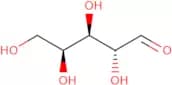
CAS:<p>Starting material for chiral-pool based organic synthesis</p>Formula:C5H10O5Purity:Min. 98 Area-%Color and Shape:White PowderMolecular weight:150.13 g/molAllyl α-D-mannopyranoside
CAS:<p>Allyl α-D-mannopyranoside (AAM) is a custom synthesis that can be used in the modification of oligosaccharides and polysaccharides. It is also a monosaccharide with a methylation and glycosylation pattern that can be used for Click modification. AAM has been fluorinated to provide high purity and is synthesized from allyl alcohol, acetone, and hydrochloric acid.</p>Formula:C9H16O6Purity:Min. 95%Color and Shape:White PowderMolecular weight:220.22 g/molL-Mannitol
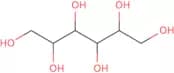
CAS:<p>L-Mannitol is a sugar alcohol that is an important component of pharmaceutical preparations. It is used as a preservative, diluent, and sweetener in many pharmaceutical products. L-Mannitol has been shown to have anti-inflammatory properties and may help prevent allergic reactions by inhibiting the production of prostaglandin D2. L-Mannitol also inhibits the activity of xylitol dehydrogenase, which prevents the conversion of xylitol to DHA, an intermediate metabolite that can cause tissue damage in animals and humans. L-Mannitol has been shown to have a laxative effect when taken orally or injected as an intravenous solution. This property may be due to its ability to stimulate chloride secretion from intestinal cells and increase water reabsorption from the colon. L-Mannitol is also used as a chromatographic matrix for saponins and conjugates with other amino acids.</p>Formula:C6H14O6Purity:Min. 95%Color and Shape:PowderMolecular weight:181.6 g/mol2'-Fucosyllactose - min 90%
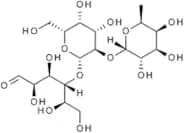
CAS:<p>Substrate for fucosidase; used in infant formula; improves health in infants</p>Formula:C18H32O15Purity:Min. 90%Color and Shape:White PowderMolecular weight:488.44 g/mol1,2-Di-O-acetyl-3-O-benzyl-4-C-(phenylmethoxy)methyl-L-Lyxofuranose 5-methanesulfonate
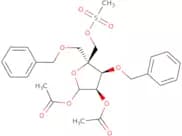
CAS:<p>1,2-Di-O-acetyl-3-O-benzyl-4-C-(phenylmethoxy)methyl-L-Lyxofuranose 5-methanesulfonate is a high purity, custom synthesis sugar that has been modified with fluorination, glycosylation and methylation. It is also a synthetic saccharide that can be used in the modification of oligosaccharides and monosaccharides. This product is available in a variety of different quantities.</p>Formula:C25H30O10SPurity:Min. 95%Molecular weight:522.57 g/mol4-Methoxyphenyl 4-O-(3,6-di-O-benzyl-2-deoxy-4-O-levulinoyl-2-phthalimido-β-D-glucopyranosyl)-6-O-tert-butyldimethylsilyl-3-O-benzyl -2-deoxy-2-phthalimido-β-D-glucopyranoside
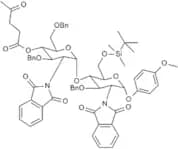
<p>4-Methoxyphenyl 4-O-(3,6-di-O-benzyl-2-deoxy-4-O-levulinoyl-2-phthalimido-b-D-glucopyranosyl)-6-O-tert butyldimethylsilyl 3,O benzyl 2 deoxy 2 phthalimido b D glucopyranoside is a custom synthesis of a synthetic oligosaccharide. This glycosylation product is soluble in water and has CAS No. of 81238.</p>Formula:C67H72N2O16SiPurity:Min. 95%Molecular weight:1,189.38 g/mol1-O-Methyl-β-D-xylopyranoside
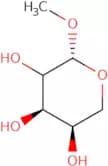
CAS:<p>1-O-Methyl-beta-D-xylopyranoside is a matrix component that is used as an artificial sweetener. This product has been shown to have the ability to protect cells against radiation and toxic chemicals. 1-O-Methyl-beta-D-xylopyranoside also inhibits the growth of coliform bacteria by inhibiting their energy metabolism and may be used for wastewater treatment. It has been shown to be effective in analytical methods to identify the presence of human feces in water samples.</p>Formula:C6H12O5Purity:Min. 98 Area-%Color and Shape:White PowderMolecular weight:164.16 g/mol(2R, 3S, 4S, 5R) -3-Hydroxy- 5- [(methylamino) carbonyl] - 4- (phenylmethoxy) - 2- [(phenylmethoxy) methyl] -1- pyrrolidinecarboxyli c acid 1, 1- dimethylethyl ester
CAS:<p>(2R, 3S, 4S, 5R) -3-Hydroxy- 5- [(methylamino) carbonyl] - 4- (phenylmethoxy) - 2- [(phenylmethoxy) methyl] -1- pyrrolidinecarboxylic acid 1, 1-dimethylethyl ester is a synthetic modification of the sugar maltose. It is a highly pure and custom synthesis that is fluorinated and methylated. It has been modified with glycosylation and click chemistry.</p>Formula:C26H34N2O6Purity:Min. 95%Molecular weight:470.56 g/mol3,4-Dihydro-5-hydroxy-2-(3-hydroxy-4-methoxyphenyl)-4-oxo-2H-1-benzopyran-7-yl β-D-glucopyranosiduronic acid
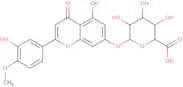
CAS:<p>Hesperetin 7-O-b-D-glucuronide is a metabolite of hesperetin, a flavonoid primarily sourced from citrus fruits. This compound is formed through the glucuronidation process, a metabolic pathway that modifies hesperetin to enhance its solubility and facilitate its excretion from the human body. Hesperetin 7-O-b-D-glucuronide exerts biological effects through various modes of action, including antioxidant and anti-inflammatory mechanisms. It is thought to scavenge free radicals and modulate inflammatory pathways by inhibiting specific enzymes and cytokines.In scientific research, Hesperetin 7-O-b-D-glucuronide is studied for its potential therapeutic applications, particularly its role in reducing oxidative stress and inflammation-related diseases. It has garnered attention in the context of cardiovascular health, neuroprotection, and metabolic disorders. The exploration of its bioavailability and specific interactions at the molecular level continues to provide insights into its promising applications in nutraceuticals and pharmaceuticals. Researchers investigate its efficacy and safety to better understand its potential role in disease prevention and therapy.</p>Formula:C22H22O12Purity:Min. 95%Color and Shape:PowderMolecular weight:478.4 g/molBenzyl β-L-arabinopyranoside
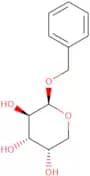
CAS:<p>Benzyl β-L-arabinopyranoside is a Glycosylation, complex carbohydrate, Methylation, Click modification, Polysaccharide, Fluorination, CAS No. 7473-38-3 that can be synthesized in the lab and is available for custom synthesis. It is used in the synthesis of saccharides and other glycosylated natural products.</p>Formula:C12H16O5Purity:(%) Min. 98%Color and Shape:White Off-White PowderMolecular weight:240.25 g/molGalactosyl diglyceride - 10 mg/ml solution in chloroform/methanol
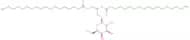
CAS:<p>The galactosyl diglyceride (GalDG) is a lipid molecule that is found naturally in plants. The chemical formula for GalDG is C22H44O8 and it has a molecular weight of 464.36 g/mol. This lipid molecule is composed of two fatty acid chains, one glycerol molecule and one galactose molecule. It can be synthesized with the help of a transition metal catalyst and an oxidizing agent such as hydrogen peroxide or sodium hypochlorite. When heated to a temperature of about 200-250 degrees Celsius, the transformation process takes place which results in the conversion of the lamellar phase to the crystalline phase. The diffraction method was used to determine its crystal structure and it was found that this lipid molecule has a lamellar phase at room temperature but transforms into a crystalline phase when heated to 250 degrees Celsius. The diffraction pattern obtained from x-ray diffraction analysis indicated that this</p>Formula:C45H86O10Purity:Min. 95%Color and Shape:Colourless to yellow liquid.Molecular weight:787.16 g/molD-Galactose non-animal origin
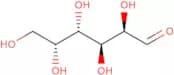
CAS:<p>Galactose from plant origin, animal free production</p>Formula:C6H12O6Purity:Min. 99.0 Area-%Color and Shape:White PowderMolecular weight:180.16 g/mol2-Amino-b-L-arabinofurano[1,2:4,5]oxazoline
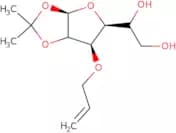
CAS:<p>2-Amino-b-L-arabinofurano[1,2:4,5]oxazoline is a custom synthesis. It is a white to off-white powder with a molecular weight of 264.50 and a melting point of about 160°C. The purity of this compound is >98% by HPLC analysis. This product has been modified with glycosylation, methylation, click modification, fluorination, saccharide modification, sugar modification, and oligosaccharide modification.</p>Formula:C6H10N2O4Purity:Min. 95%Color and Shape:PowderMolecular weight:174.15 g/mol3-O-Allyl-1,2-O-isopropylidene-α-D-galactofuranose
CAS:<p>3-O-Allyl-1,2-O-isopropylidene-α-D-galactofuranose is a synthetic glycoside that can be custom synthesized. It is a fluorinated monosaccharide that reacts with an allyl group to form an allyl glycoside. This modification increases the solubility of the molecule and can make it soluble in organic solvents. 3-O-Allyl-1,2-O-isopropylidene α D galactofuranose is used to modify saccharides or complex carbohydrates for use in research.</p>Formula:C12H20O6Purity:Min. 95%Color and Shape:Clear LiquidMolecular weight:260.28 g/mol






![4-O-[3-O-(2-Acetamido-2-deoxy-b-D-galactopyranosyl)-b-D-galactopyranosyl]-D-glucose](/_next/image/?url=https%3A%2Fstatic.cymitquimica.com%2Fproducts%2F3D%2Fthumb-webp%2FOA10781.webp&w=3840&q=75)


![(2E) -4- [(3aS, 4R, 5aR) -5-Hydroxy-( 2, 2- dimethyltetrahydro- 4H- 1, 3- dioxolo)[3, 4- c] piperi…](/_next/image/?url=https%3A%2Fstatic.cymitquimica.com%2Fproducts%2F3D%2Fthumb-webp%2FMH168767.webp&w=3840&q=75)






![(2R, 3S, 4S, 5R) -3-Hydroxy- 5- [(methylamino) carbonyl] - 4- (phenylmethoxy) - 2- [(phenylmethoxy…](/_next/image/?url=https%3A%2Fstatic.cymitquimica.com%2Fproducts%2F3D%2Fthumb-webp%2FMH163363.webp&w=3840&q=75)
![2-Amino-b-L-arabinofurano[1,2:4,5]oxazoline](/_next/image/?url=https%3A%2Fstatic.cymitquimica.com%2Fproducts%2F3D%2Fthumb-webp%2FMA06535.webp&w=3840&q=75)