Glycoscience
Subcategories of "Glycoscience"
- Aminosugars(108 products)
- Glyco-Related Antibodies(283 products)
- Glycolipids(46 products)
- Glycosaminoglycans (GAGs)(55 products)
- Glycosides(419 products)
- Monosaccharides(6,619 products)
- Oligosaccharides(3,709 products)
- Polysaccharides(505 products)
Found 11027 products of "Glycoscience"
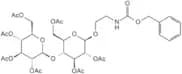
[2-[[2,3,6-Tri- O- acetyl- 4- O- (2, 3, 4, 6- tetra- O- acetyl- b- D- glucopyranosyl) - b- D- glucopyranosyl] oxy] ethyl] - carbamic acid phenylmethyl ester
CAS:The conformation of the 2-[[2,3,6-tri-O-acetyl-4-O-(2,3,4,6-tetra-O-acetyl-βDglucopyranosyl)-βDglucopyranosyl]oxy]ethyl]carbamic acid phenylmethyl ester molecule has been studied by X-ray crystallography. The molecule adopts a chair conformation with the two acetyl groups occupying equatorial positions. The molecule is planar with an angle of 110° between the NH and CO axes. The calculated electron diffraction pattern was in good agreement with the experimental data. The analysis yielded a set of independent amplitudes for each reflection that were analysed to give structure constants and electron distributions.Purity:Min. 95%4,6-O-Isopropylidene-D-mannopyranose
4,6-O-Isopropylidene-D-mannopyranose is a custom synthesis of a polysaccharide that has been modified with fluorination, methylation, and click modification. This product can be used in the synthesis of oligosaccharides or saccharides. It may also be used in glycosylation reactions to produce complex carbohydrates.Purity:Min. 95%Allyl 2,3,4-tri-O-benzyl-a-D-glucopyranoside
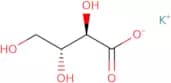
CAS:Allyl 2,3,4-tri-O-benzyl-a-D-glucopyranoside is a sugar that is used in the synthesis of glycosides. It can be synthesized by a click modification reaction that yields an allyl ether from an allylic alcohol. This product has been shown to react with bromine in the presence of UV light and produce a monobenzylated product, which can be used as a fluorescent probe for labeling saccharides. Allyl 2,3,4-tri-O-benzyl-a-D-glucopyranoside can also be modified with methyl groups or glycosidic bonds to form complex carbohydrates.Formula:C30H34O6Purity:Min. 95%Color and Shape:PowderMolecular weight:490.59 g/molPotassium D-erythronate
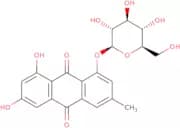
CAS:Versatile resource for organic synthesis, e.g. of the inhibitor swainsonineFormula:C4H7KO5Purity:Min. 95%Color and Shape:White PowderMolecular weight:174.19 g/molEmodin 1-glucoside
CAS:Emodin 1-glucoside is a natural anthraquinone glycoside that is produced by plants and has been shown to have cytotoxic effects against human cells. Emodin 1-glucoside inhibits the function of enzymes, such as glycosidases, phosphatases, and proteases. This compound is activated by calcium ions and has been shown to disrupt mitochondrial membrane potential. Emodin 1-glucoside also inhibits sugar residues and has shown significant cytotoxicity against cultured human cells at higher concentrations. It may be used as a medicine for the treatment of inflammation or cancer.Formula:C21H20O10Purity:Min. 95%Color and Shape:PowderMolecular weight:432.38 g/mola,a-D-Trehalose dihydrate
CAS:Please enquire for more information about a,a-D-Trehalose dihydrate including the price, delivery time and more detailed product information at the technical inquiry form on this page
Formula:C12H26O13Purity:Min. 98 Area-%Molecular weight:378.33 g/mol1-Deoxymannojirimycin HCl
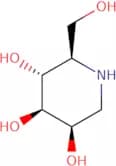
CAS:Potent and specific inhibitor of α-mannosidase I. It is active against the Golgi isoform (GMI) of the enzyme and blocks carbohydrate branch elongation from immature to complex and hybrid N-glycans. Its anti-viral activity against HIV-1 is characterized by the alteration of N-glycan pattern and shift to high-mannose glycans on viral glycoprotein gp120, resulting in decreased infectivity of newly synthesized virions.
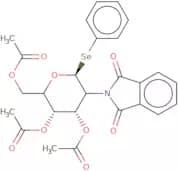
Formula:C6H13NO4·HClPurity:Min. 98 Area-%Color and Shape:White Off-White PowderMolecular weight:199.63 g/molPhenyl 3,4,6-tri-O-acetyl-2-deoxy-2-phthalimido-b-D-selenoglucopyranoside
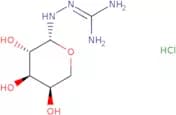
CAS:Phenyl 3,4,6-tri-O-acetyl-2-deoxy-2-phthalimido b-D-selenoglucopyranoside is a chemical compound that is used in the synthesis of saccharides and oligosaccharides. It has been modified with the Click reaction to give it a reactive group. This modification can be used for glycosylation or for incorporation into polysaccharides such as starch. Phenyl 3,4,6-tri-O-acetyl-2-deoxy b -D selenoglucopyranoside is a high purity synthetic compound that is available in custom synthesis quantities.Formula:C26H25NO9SePurity:Min. 95%Molecular weight:574.44 g/molN1-β-D-Arabinopyranosylamino-guanidine hydrochloride
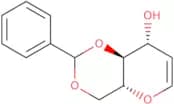
CAS:N1-b-D-arabinopyranosylamino-guanidine HCl is a modified carbohydrate. It is a synthetic monosaccharide that is custom synthesized by methylation and glycosylation. This product has high purity and can be used for modification of saccharides or oligosaccharides to create new carbohydrates with desired properties.Formula:C6H14N4O4•HClPurity:Min. 95%Color and Shape:White to light beige solid.Molecular weight:242.66 g/mol4,6-O-Benzylidene-D-glucal
CAS:Glucal is a carbohydrate that is used as a synthon in organic synthesis. It has been shown to be anomeric and can be synthesized by acetylation of the corresponding aldose, or by the glycosidic bond reaction with borohydride reduction. Glucal is not stable at high pH and can undergo ring-opening reactions with nucleophiles such as sodium borohydride. Glucal also reacts with glycoconjugates to form new molecules, which are called glycosidic products.
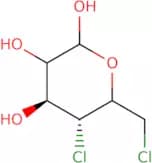
Formula:C13H14O4Purity:Min. 95%Color and Shape:White PowderMolecular weight:234.25 g/mol4,6-Dichloro-4,6-dideoxy-D-galactose
4,6-Dichloro-4,6-dideoxy-D-galactose (4,6DDG) is a chlorinated sugar that is used as a precursor for the synthesis of glycosides. It has been shown to react with cellulose to form 4,6-dichloro-4,6-dideoxycellulose. Chlorination of 4,6DDG at the hydroxyl group leads to the formation of 4,6-dichloro-4,6-dideoxyhydroxyl chloride (4,6DDH). The chlorination process can be done in two ways: nonreducing and reducing. The nonreducing chlorination process occurs by reacting 4,6DDG with chlorine and dimethylformamide. The reducing chlorination process occurs by reacting 4,6DDG with hydrogen chloride and sodium borohydride or lithium aluminum hydride. An excess of hydrogen chlorideFormula:C6H10Cl2O4Purity:Min. 95%Molecular weight:217.05 g/molMaltol glucoside
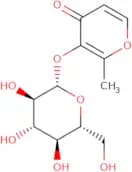
CAS:Maltol is a polyhydric alcohol that is a natural product of plants. Maltol glucoside is an oligomer of maltol that is formed by the glycosylation of maltol with glucose. This compound has been used as a diagnostic agent to detect lymphocyte transformation and bound form in viruses. It has also been shown to inhibit cancer cell growth, which may be due to its ability to interact with complex enzyme systems. Maltol glucoside has been shown to have anti-inflammatory effects in humans, which may be due to its inhibition of inflammatory enzymes such as cyclooxygenase-2 (COX-2) and lipoxygenase (LOX).Formula:C12H16O8Purity:Min. 95%Color and Shape:PowderMolecular weight:288.25 g/molIsomalto oligomers (Dp 4-8)
Isomalto oligomers are a custom synthesis of polysaccharide oligosaccharides. These compounds are modified with methylation, glycosylation, and fluorination to create a high purity product that is free of undesirable contaminants. Isomalto oligomers (DP 4-8) are synthesized from sugars and can be used in the modification of saccharide chains during glycosylation reactions. This product also has the ability to produce click chemistry modifications.Purity:ReportedColor and Shape:Powder3,4,6-Tri-O-acetyl-L-glucal
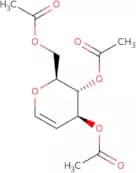
CAS:Resource for the synthesis of 2-azido- and 2-deoxy-L-glucoses and 1,2-epoxidesFormula:C12H16O7Purity:Min. 95%Color and Shape:White PowderMolecular weight:272.25 g/molMethyl a-L-fucopyranoside
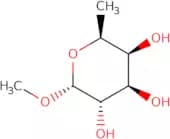
CAS:Methyl a-L-fucopyranoside is a natural product that has been shown to have many biological effects, including antioxidant and anti-inflammatory properties. It has been shown to inhibit the growth of bacteria by binding to the ribosome, preventing protein synthesis and cell division. The compound has also been shown to have anti-inflammatory effects in mice with inflammatory bowel disease. Methyl a-L-fucopyranoside inhibits the production of pro-inflammatory cytokines, such as interferon alfa-2b (IFNα2β), which is induced by IFNγ. This inhibition of IFNα2β activity may be due to methyl a-L-fucopyranoside's ability to bind to cytosolic calcium and inhibit its transport into the nucleus. Methyl a-L-fucopyranoside also blocks the production of antimicrobial peptides, such as defensins or cathelicidins.Formula:C7H14O5Purity:Min. 98 Area-%Color and Shape:White PowderMolecular weight:178.18 g/molKojipentaose
CAS:Kojipentaose is a glycosidic oligosaccharide that is synthesized by the enzyme phosphorylase. It is an important nutrient for many organisms, including bacteria and fungi. Kojipentaose has been found to be synthesized from the terminal sugars of teichoic acids in both Gram-positive and Gram-negative bacteria. The stereoselectivity of the synthesis may be due to enzymatic activity or the availability of chiral substrates.
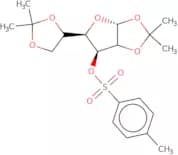
Formula:C30H52O26Purity:Min. 95%Molecular weight:828.72 g/mol1,2:5,6-Di-O-isopropylidene-3-O-p-toluenesulfonyl-α-D-allofuranose
CAS:1,2:5,6-Di-O-isopropylidene-3-O-p-toluenesulfonyl-a-D-allofuranose is a synthetic carbohydrate with a 5 carbon backbone. The methylation of the C1 and C2 carbon atoms is required to obtain this compound. It is used in the synthesis of complex carbohydrates. This product can be custom synthesized on request and has a purity of 99%.
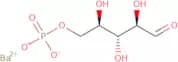
Formula:C19H26O8SPurity:Min. 95%Color and Shape:White To Off-White SolidMolecular weight:414.47 g/molD-Ribose-5-phosphate barium salt hexahydrate
CAS:D-Ribose-5-phosphate barium salt hexahydrate is a Modification, Oligosaccharide, Carbohydrate, complex carbohydrate. It is a Custom synthesis, Synthetic, High purity, Monosaccharide, Methylation, Glycosylation and Polysaccharide. D-Ribose-5-phosphate barium salt hexahydrate has CAS No. 15673-79-7 and Fluorination. It is an saccharide sugar.Formula:C5H9BaO8P·6H2OPurity:Min. 95%Color and Shape:White PowderMolecular weight:473.51 g/molD-Glucose - anhydrous
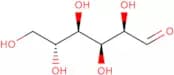
CAS:Glucose (Glu) is the most common carbohydrate on the planet, found in all living organisms and is the major source of metabolic energy for plants and animals. Glucose is a building block in numerous oligosaccharides and polysaccharides. It is present in blood and milk, in gangliosides and in N- and O-linked glycans (Collins, 2006). Glucose is wrongly called a simple sugar because in solution it exists in five forms: two six membered rings (α/β), two five membered rings (α/β) and a straight chain form, a system known as mutarotation (Robyt, 2012). The proportions of different glucose forms are dictated by temperature and pH. D-Glucose is optically active (dextrorotary) and L-Glucose is its enantiomer (Levorotary). Its hydroxyl groups are all equatorial, providing maximum stability, according to Hudsons rules (Hudson, 1948).Formula:C6H12O6Purity:Min. 96 Area-%Color and Shape:White PowderMolecular weight:180.16 g/molCerebroside sulfate
CAS:Myelin component; opioid receptorFormula:C42H80NNaO11SPurity:Min. 95%Color and Shape:White PowderMolecular weight:830.14 g/mol