Antimicrobials
Antimicrobials are agents that destroy or inhibit the growth of microorganisms, including bacteria, viruses, fungi, and parasites. These compounds are essential in the prevention and treatment of infections, playing a crucial role in medicine, agriculture, and the food industry. At CymitQuimica, we offer an extensive range of high-quality, high-purity antimicrobials suitable for various scientific and industrial applications. Our catalog includes antibiotics, antifungals, antivirals, and disinfectants, all designed to meet the needs of research and development, as well as clinical and production applications. With our products, professionals can ensure the effectiveness and safety in infection control and public health protection.
Subcategories of "Antimicrobials"
- Antibiotics(4,111 products)
- Antifungals(835 products)
- Antiparasitics(704 products)
- Antivirals(762 products)
Found 2422 products of "Antimicrobials"
Sort by
Purity (%)
0
100
|
0
|
50
|
90
|
95
|
100
Aqabamycin B
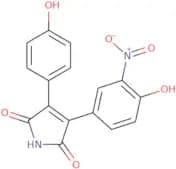
CAS:<p>Aqabamycin B is a novel antibiotic compound, which is derived from marine microorganisms. This secondary metabolite is isolated from a marine sponge-associated bacterium, showcasing the rich potential of oceanic sources for discovering new antimicrobial agents. The mode of action of Aqabamycin B involves inhibition of bacterial cell wall synthesis, disrupting the structural integrity and leading to cell lysis. Its efficacy extends predominantly to combatting multi-drug resistant bacterial strains.</p>Formula:C16H10N2O6Purity:Min. 95%Molecular weight:326.26 g/molAqabamycin C
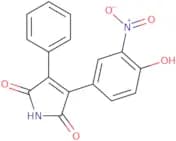
CAS:<p>Aqabamycin C is an antibiotic compound, which is derived from marine bacteria, specifically, the actinomycete strain found in marine environments. Its mode of action involves the disruption of bacterial cell wall synthesis, making it particularly effective against certain gram-negative bacteria. This antibiotic selectively inhibits pathogens by interfering with their essential cellular processes.</p>Formula:C16H10N2O5Purity:Min. 95%Molecular weight:310.26 g/molClindamycin-2,4-diphosphate
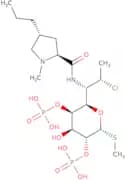
CAS:<p>Clindamycin-2,4-diphosphate is a phosphorylated derivative of the antibiotic clindamycin, which is a semi-synthetic lincosamide antibiotic originally derived from Streptomyces lincolnensis. Its mode of action involves the inhibition of bacterial protein synthesis by binding to the 50S ribosomal subunit, thereby preventing peptide chain elongation during translation. This mechanism effectively disrupts protein production in susceptible bacteria, leading to their growth inhibition or death.</p>Formula:C18H35ClN2O11P2SPurity:Min. 95%Molecular weight:584.94 g/mol(R)-(+)-Pantoprazole
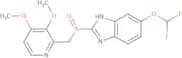
CAS:<p>(R)-(+)-Pantoprazole is a proton pump inhibitor (PPI), which is derived from benzimidazole compounds. Its mode of action involves the selective and irreversible inhibition of the H+/K+ ATPase enzyme system, commonly known as the proton pump, located on the gastric parietal cells. By binding covalently to this enzyme, (R)-(+)-Pantoprazole effectively reduces gastric acid secretion, leading to an increase in gastric pH.</p>Formula:C16H15F2N3O4SPurity:Min. 95%Molecular weight:383.4 g/mol6-(2-Chlorophenoxy)-5-fluoro-4(3H)-pyrimidinone
CAS:<p>6-(2-Chlorophenoxy)-5-fluoro-4(3H)-pyrimidinone is a heterocyclic compound, which is a synthetic derivative developed for biochemical research. This compound is synthesized through a series of organic reactions, involving halogenation and cyclization techniques, typically conducted in a controlled laboratory setting. Its design incorporates specific structural features, such as the chlorophenoxy and fluoro groups, which are strategically positioned to enhance its binding affinity and specificity.</p>Formula:C10H6ClFN2O2Purity:Min. 95%Molecular weight:240.62 g/molFenamiphos-sulfoxide d3 (S-methyl d3)
CAS:<p>Fenamiphos-sulfoxide d3 (S-methyl d3) is a deuterated, labeled pesticide intermediate, which is often utilized in advanced laboratory settings for precise analytical studies. This compound is synthesized as a stable isotope-labeled analog, enabling researchers to conduct sophisticated mass spectrometric analyses. Its mode of action involves serving as a reference or tracer in studies concerning the metabolism and degradation of fenamiphos, a well-known organophosphate pesticide.</p>Formula:C13H22NO4PSPurity:Min. 95%Molecular weight:322.38 g/molFamciclovir-d4
CAS:<p>Famciclovir-d4 is a deuterium-labeled antiviral nucleoside analog, which is a synthetic derivative of the guanine analog famciclovir. This compound is sourced through advanced chemical synthesis where deuterium atoms replace specific hydrogen atoms, providing an isotopic label that aids in the tracking and analysis of the pharmaceutical compound within biological systems.</p>Formula:C14H19N5O4Purity:Min. 95%Molecular weight:325.36 g/molBPH-1358
CAS:<p>BPH-1358 is a novel synthetic inhibitor, which is derived from a series of advanced chemoinformatics-based design strategies. It functions through the targeted binding to specific cell surface receptors involved in the modulation of immune responses. By blocking these receptors, BPH-1358 effectively alters signaling pathways that are crucial for immune activation and inflammatory responses.</p>Formula:C32H28N6O2Purity:Min. 95%Molecular weight:528.6 g/molThiabendazole NH d6
CAS:<p>Thiabendazole NH d6 is a deuterated derivative of Thiabendazole, which is an antifungal agent and pesticide. It is derived from synthetic sources, specifically designed by incorporating deuterium atoms into the molecular structure. This subtle isotopic modification enhances its utility in research settings, particularly in studies related to pharmacokinetics and metabolic profiling. The mode of action of Thiabendazole involves the inhibition of the enzyme fumarate reductase, interfering with the energy metabolism of fungal and parasitic organisms. Additionally, it disrupts microtubule formation, preventing cell division and growth.</p>Formula:C10H7N3SPurity:Min. 95%Molecular weight:207.29 g/mol4'-Ethynyl-2'-deoxyadenosine
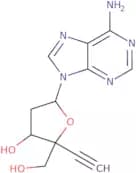
CAS:<p>4'-Ethynyl-2'-deoxyadenosine is a deoxynucleoside analogue, which is synthesized through chemical processes. This compound acts as an antiviral agent, primarily targeting the viral replication machinery. Its mode of action involves the incorporation into viral DNA by mimicking natural nucleosides, which subsequently inhibits the enzymatic activity of reverse transcriptase. This inhibition disrupts the synthesis of viral DNA, effectively curtailing viral replication.</p>Formula:C12H13N5O3Purity:Min. 95%Molecular weight:275.26 g/molTebufenozide-1-hydroxyethyl
CAS:<p>Tebufenozide-1-hydroxyethyl is an insect growth regulator, which is a synthetic chemical derived from a modified benzoic acid structure. Its mode of action involves mimicking the molting hormone ecdysone, which disrupts the normal development process of insects by inducing premature molting. This specific interference targets lepidopteran larvae, leading to incomplete development and eventual death, thereby controlling pest populations effectively without harming non-target organisms.</p>Formula:C22H28N2O3Purity:Min. 95%Molecular weight:368.5 g/molClarithromycin - EP
CAS:<p>A macrolide, broad-spectrum antibiotic that targets cytochrome P4503A4 (CYP3A4). Clarithromycin has been used to potentiate the pharmacological effects of some drugs that are metabolised by the cytochrome P450.</p>Formula:C38H69NO13Purity:Min. 95%Molecular weight:747.95 g/molCladospirone bisepoxide
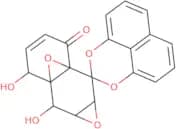
CAS:<p>Cladospirone bisepoxide is a naturally occurring bioactive compound, classified specifically as a fungal metabolite, which is derived from species within the Cladosporium genus. The compound exhibits a complex bisepoxide structure, contributing to its unique chemical properties. Its mode of action involves disrupting microbial cellular processes, displaying potent antimicrobial activity by interfering with the synthesis and functioning of vital cellular components in targeted microorganisms.</p>Formula:C20H14O7Purity:Min. 95%Molecular weight:366.3 g/molTioconazole
CAS:<p>Tioconazole is an antifungal agent, which is a synthetic derivative of imidazole with broad-spectrum activity against fungi. This compound is chemically synthesized through complex organic reactions to enhance its antimycotic efficacy. Tioconazole functions by inhibiting the synthesis of ergosterol, an essential component of the fungal cell membrane. By disrupting the ergosterol biosynthesis pathway, tioconazole destabilizes the fungal cell membrane, leading to increased permeability and eventual cell death.</p>Formula:C16H13Cl3N2OSPurity:Min. 95%Molecular weight:387.71 g/molTigecycline, Antibiotic for Culture Media Use Only
CAS:<p>Tigecycline is an antibiotic specifically tailored for use in culture media, which is derived from glycylcycline, a structural analogue of minocycline. Its mode of action involves binding to the 30S ribosomal subunit, thereby inhibiting protein synthesis in a broad spectrum of Gram-positive and Gram-negative bacteria. This action is distinct and not easily circumvented by common resistance mechanisms, such as efflux or ribosomal protection proteins, making tigecycline an effective agent in controlling bacterial contamination during microbiological studies.</p>Formula:C29H39N5O8Purity:Min. 95 Area-%Molecular weight:585.65 g/molHsv-tk substrate
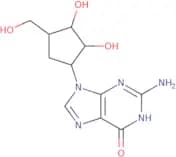
CAS:<p>HSV-tk substrate is a nucleotide analogue, which is a synthetic compound derived from the herpes simplex virus thymidine kinase (HSV-tk) gene. This substrate is specifically phosphorylated by the HSV-tk enzyme, a property that provides significant utility in molecular biology and genetic research. The mode of action involves the selective phosphorylation of the substrate by HSV-tk, which is typically absent in mammalian cells but can be introduced via genetic engineering. Once phosphorylated, the substrate becomes toxic to the host cell, allowing researchers to selectively target and eliminate cells expressing the HSV-tk gene.</p>Formula:C11H15N5O4Purity:Min. 95%Molecular weight:281.27 g/molEntecavir-13C2,15N
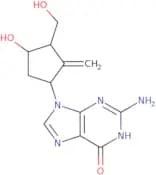
CAS:<p>Entecavir-13C2,15N is an isotopically labeled antiviral agent, which is a synthetic nucleoside analogue derived from natural sources. Its mode of action involves selectively inhibiting the reverse transcription activity of the hepatitis B virus (HBV) polymerase. By mimicking the natural substrates of the viral polymerase, Entecavir-13C2,15N becomes incorporated into viral DNA, ultimately leading to chain termination and suppression of viral replication.</p>Formula:C12H15N5O3Purity:Min. 95%Molecular weight:280.26 g/molSitafloxacin
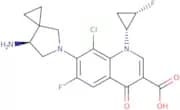
CAS:<p>Sitafloxacin is an antibacterial agent belonging to the fluoroquinolone class of antibiotics, which is synthetically derived from chemical processes involving fluorinated quinolones. Its mode of action involves the inhibition of bacterial DNA gyrase and topoisomerase IV, enzymes crucial for bacterial DNA replication and transcription. By interfering with these enzymes, Sitafloxacin effectively hampers bacterial DNA synthesis, leading to the eventual demise of the bacterial cell.</p>Formula:C19H18ClF2N3O3Purity:Min. 95%Color and Shape:SolidMolecular weight:409.81 g/molBensulide-oxon
CAS:<p>Bensulide-oxon is a metabolite derived from the organophosphate pesticide bensulide, which is predominantly used in agricultural settings. It forms as a result of environmental or biological processes that involve the oxidation of bensulide. As a potent acetylcholinesterase (AChE) inhibitor, bensulide-oxon disrupts normal neuronal signaling by preventing the breakdown of the neurotransmitter acetylcholine, leading to an accumulation that affects the nervous systems of target organisms.</p>Formula:C14H24NO5PS2Purity:Min. 95%Molecular weight:381.5 g/molButafenacil
CAS:<p>Butafenacil is a herbicide, which is a chemical formulation sourced from synthetic compounds. It acts by inhibiting protoporphyrinogen oxidase (PPO), an enzyme critical in the biosynthesis of chlorophyll. This inhibition disrupts the photosynthetic process, leading to the accumulation of reactive oxygen species that cause cell membrane damage and ultimately result in plant death.</p>Formula:C17H14ClF3N2O6Purity:Min. 95%Molecular weight:434.7 g/mol