Antimicrobials
Antimicrobials are agents that destroy or inhibit the growth of microorganisms, including bacteria, viruses, fungi, and parasites. These compounds are essential in the prevention and treatment of infections, playing a crucial role in medicine, agriculture, and the food industry. At CymitQuimica, we offer an extensive range of high-quality, high-purity antimicrobials suitable for various scientific and industrial applications. Our catalog includes antibiotics, antifungals, antivirals, and disinfectants, all designed to meet the needs of research and development, as well as clinical and production applications. With our products, professionals can ensure the effectiveness and safety in infection control and public health protection.
Subcategories of "Antimicrobials"
- Antibiotics(4,135 products)
- Antifungals(896 products)
- Antiparasitics(696 products)
- Antivirals(766 products)
Found 2434 products of "Antimicrobials"
Sort by
Purity (%)
0
100
|
0
|
50
|
90
|
95
|
100
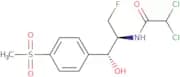
Florfenicol - Bio-X ™
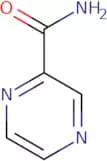
CAS:Florfenicol is a broad-spectrum antibiotic used for the treatment of various bacteria infections. This drug is used in veterinary medicine and to treat animals with those infections. This drug works by inhibiting bacteria synthesis. It is a fluorinated synthetic analog of thiamphenicol.Formula:C12H14Cl2FNO4SPurity:Min. 98 Area-%Color and Shape:PowderMolecular weight:358.21 g/molPirazinecarboxamide
CAS:Pirazinecarboxamide (Pyrazinamide) is an antitubercular agent with action on Mycobacterium tuberculosis by disrupting membrane energetics and is used for treating tuberculosis in combination with other drugs.Formula:C5H5N3OPurity:Min. 95%Color and Shape:PowderMolecular weight:123.11 g/molMarbofloxacin
CAS:Antibiotic of fluoroquinolone class; DNA replication inhibitor
Formula:C17H19N4O4FPurity:Min. 95%Color and Shape:Yellow PowderMolecular weight:362.36 g/molCeftriaxone sodium hydrate - Bio-X ™
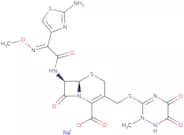
CAS:Ceftriaxone is a broad-spectrum cephalosporin antibiotic that is used for the treatment of bacterial infections in different locations such as the skin, soft tissue and respiratory tract. This drug works by inhibiting mucopeptide synthesis in the bacterial cell wall. As a result, bacteria will produce defective cell walls leading to cell death.Formula:C18H16N8Na2O7S3·5H2OPurity:Min. 95%Color and Shape:PowderMolecular weight:661.6 g/molTenofovir diphosphate triethylamine(mixture of diastereomers)
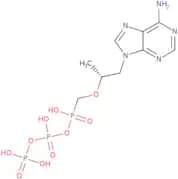
CAS:Tenofovir diphosphate triethylamine (mixture of diastereomers) is an antiviral compound, which is a synthetic chemical product derived from the parent compound, tenofovir. This formulation includes a mixture of diastereomers to enhance its solubility and bioavailability. The compound primarily functions as a nucleotide reverse transcriptase inhibitor (NRTI). It targets viral reverse transcriptase enzymes, inhibiting DNA synthesis and subsequent viral replication by causing premature chain termination.Formula:C9H16N5O10P3•(C6H15N)xPurity:Min. 95%Herbicidin E
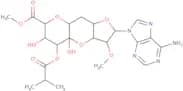
CAS:Herbicidin E is a potent herbicidal compound, derived from blue-green algae, with a biochemical mode of action focused on inhibiting photosynthetic electron transport. It effectively disrupts the photosynthetic process by binding to specific sites within the chloroplasts of target plants, impairing their ability to convert light energy into chemical energy. This leads to a depletion of essential energy reserves, resulting in the controlled demise of the plant.Formula:C22H29N5O10Purity:Min. 95%Molecular weight:523.49 g/molCefuroxime
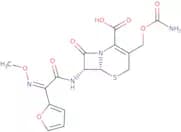
CAS:Cefuroxime is a second-generation cephalosporin antibiotic with action on bacterial cell wall synthesis and is used for treating respiratory tract infections, urinary tract infections, and Lyme disease.Formula:C16H16N4O8SPurity:Min. 98.0 Area-%Color and Shape:White Orange PowderMolecular weight:424.39 g/molAzithromycin N-oxide
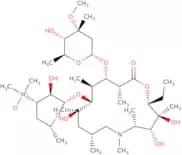
CAS:Azithromycin N-oxide is a macrolide antibiotic derivative and is used for research purposes. Its mode of action is similar to azithromycin.
Formula:C38H72N2O13Purity:Min. 95%Color and Shape:White PowderMolecular weight:764.98 g/mol3-Formyl rifamycin
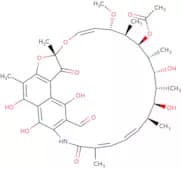
CAS:3-Formyl rifamycin is an intermediate in the synthesis of rifampicin that has been used to develop rifamycin derivatives with antibiotic activity. Rifampicin is aa anti-tuberculosis drug that inhibits bacterial DNA replicationFormula:C38H47NO13Purity:Min. 99 Area-%Color and Shape:Red PowderMolecular weight:725.78 g/molStreptomycin sulfate, Antibiotic for Culture Media Use Only
CAS:Streptomycin sulfate is an antibiotic that inhibits the growth of bacteria by binding to the ribosomal subunit and interfering with protein synthesis. It is used in culture media for the production of human antibodies as well as in drug therapy for methicillin-resistant staphylococcus. Streptomycin sulfate has a high specific activity and low sensitivity, but it also has a low solubility in water. The active form of streptomycin sulfate is streptomycin A, which is produced by the addition of a phenyl ring to neomycin sulfate. In plant roots, streptomycin sulfate inhibits cyanogenic glycosides from being hydrolyzed into hydrogen cyanide (HCN) and benzaldehyde.Formula:C42H84N14O36S3Molecular weight:1,457.40 g/molRef: 3D-S-8500
25gTo inquire50gTo inquire100gTo inquire250gTo inquire500gTo inquire-Unit-kgkgTo inquireCefadroxil monohydrate
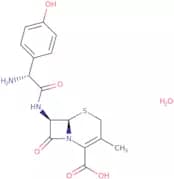
CAS:Cefadroxil monohydrate is a hydrated form of cefadroxil with similar action and applications as cefadroxil.Formula:C16H17N3O5S•H2OPurity:Min. 95%Color and Shape:PowderMolecular weight:381.41 g/molOmadacycline tosylate
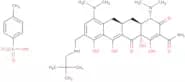
CAS:Omadacycline tosylate is a aminomethylcycline antibiotic with action on bacterial protein synthesis inhibition and is used for treating community-acquired bacterial pneumonia and skin infections.Formula:C36H48N4O10SPurity:Min. 95%Color and Shape:PowderMolecular weight:728.85 g/molErythromycin thiocyanate
CAS:Erythromycin thiocyanate is a macrolide antibiotic derivative with action on bacterial protein synthesis inhibition and is used for research and pharmaceutical applications.Formula:C37H67NO13•CHNSPurity:Min. 95%Color and Shape:PowderMolecular weight:793.02 g/molGentamycin sulphate
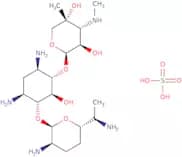
CAS:Gentamycin sulphate is the salt form of the broad-spectrum antibiotic gentamycin (a.k.a. gentamicin). Gentamycin is active against clinically relevant bacteria, such as: Pseudomonas aeruginosa, Klebsiella pneumoniae, Escherichia coli, Serratia marcescens, and is used to fight infections from Staphylococcus, Citrobacter and Enterobacteriaceae species. Gentamycin is a natural mixture of four congeners, one of which is gentamicin C2a. Gentamycin has been included in biomedical implantable materials, such as, bone grafts, to reduce the risk of infection.Formula:C21H43N5O7·H2SO4Color and Shape:White PowderMolecular weight:575.68 g/molEnrofloxacin, Antibiotic for Culture Media Use Only
CAS:Enrofloxacin is a rapidly bactericidal antibiotic, that inhibits bacterial growth by binding to the 50S ribosomal subunit and blocking protein synthesis, thereby preventing the bacteria from making new proteins. Enrofloxacin also has strong activity against gram-positive bacteria, including Clostridium perfringens which is an anaerobic bacterium that causes food-borne illness. This antibiotic is used for the treatment of acute bacterial infections in humans, such as, skin or soft tissue infections, urinary tract infections (UTIs) and septicemia (bloodstream infection). Enrofloxacin has shown excellent bioavailability with high serum protein binding capacity. Additionally, it has good efficacy against clinical isolates of Escherichia coli and Klebsiella pneumoniae. Enrofloxacin can be used effective in treatments for Pseudomonas aeruginosa and Enterobacter species.Formula:C19H22FN3O3Purity:Min. 98.5 Area-%Molecular weight:359.39 g/molGanciclovir - Bio-X ™
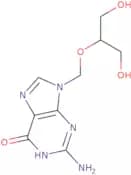
CAS:Ganciclovir is an acyclovir analog that is used in the treatment of cytomegalovirus and herpetic keratitis of the eye. This drug is a DNA polymerase inhibitor and exhibits its anti-viral properties by inhibiting viral replication.
Formula:C9H13N5O4Purity:Min. 95%Color and Shape:PowderMolecular weight:255.23 g/molFusidic acid
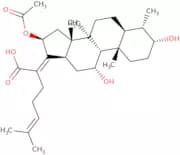
CAS:Inhibitor of protein synthesis; steroid antibiotic
Formula:C31H48O6Purity:Min. 95 Area-%Color and Shape:White Off-White PowderMolecular weight:516.71 g/molLinezolid
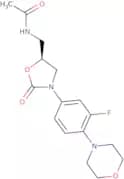
CAS:Antibiotic; inhibits bacterial mRNA translation; inhibits monoamine oxidaseFormula:C16H20FN3O4Purity:Min. 98 Area-%Color and Shape:White PowderMolecular weight:337.35 g/molMaraviroc
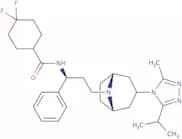
CAS:CCR-5 chemokine receptor antagonist; inhibits HIV entry via gp120 protein
Formula:C29H41F2N5OPurity:Min. 95%Color and Shape:PowderMolecular weight:513.67 g/molRibavirin, Antibiotic for Culture Media Use Only
CAS:Controlled ProductRibavirin is an antiviral agent used for the treatment of hepatitis C, respiratory syncytial virus infection and influenza. It is a monocarboxylic acid derived from vitamin B2. Ribavirin inhibits viral replication by interfering with the function of RNA polymerase. Ribavirin also has immunosuppressive properties that can be useful in treating autoimmune disorders such as systemic lupus erythematosus and it has been approved by the FDA for treatment of chronic hepatitis C virus (HCV) genotype 1 infection with compensated liver disease or decompensated liver disease with or without HCV genotype 3 infection. The antiviral activity of ribavirin against other viruses, including HIV-1, herpes simplex virus type 2, varicella zoster virus, cytomegalovirus, respiratory syncytial virus, influenza A and B viruses has been reported but not largely studied.Formula:C8H12N4O5Purity:Min. 97.0 Area-%Molecular weight:244.20 g/molRef: 3D-Q-201670
1kgTo inquire100gTo inquire250gTo inquire500gTo inquire2500gTo inquire-Unit-ggTo inquire