Terpenoids
Subcategories of "Terpenoids"
- Diterpenes (C₂₀)(671 products)
- Hemiterpenes (C₅)(21 products)
- Monoterpenes (C₁₀)(709 products)
- Sesquiterpenes (C₂₅)(452 products)
- Tetraterpenes (C₄₀)(63 products)
- Triterpenes (C₃₀)(1,128 products)
Found 1423 products of "Terpenoids"
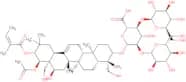
Escin Ib
CAS:Escin Ib is a natural saponin glycoside, which is derived from the seeds of Aesculus hippocastanum, commonly known as horse chestnut. Its mode of action involves inhibiting the enzyme hyaluronidase, thereby reducing capillary permeability and effectively controlling edema and inflammation. Additionally, it acts by stabilizing lysosomal membranes, further contributing to its anti-inflammatory effects.
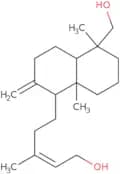
Purity:Min. 95%8(17)13-Labdadiene-15,18-diol - Xcupressocyparis leylandii (cypress)
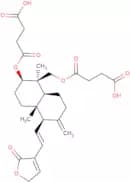
CAS:8(17)13-Labdadiene-15,18-diol is a diterpenoid compound, which is derived from the hybrid plant Xcupressocyparis leylandii, commonly known as Leyland cypress. This compound belongs to the labdane-type diterpenes, which are known for their diverse biological activities. The source, Xcupressocyparis leylandii, is a fast-growing evergreen tree often used in horticulture.Formula:C20H34O2Purity:Min. 95%Molecular weight:306.48 g/molDehydroandrographolide succinate
CAS:Dehydroandrographolide succinate is a pharmacological agent derived from the diterpenoid lactone, andrographolide, which is found in the plant *Andrographis paniculata*. This compound exhibits its mode of action primarily by modulating inflammatory pathways, including inhibition of nuclear factor kappa-light-chain-enhancer of activated B cells (NF-κB) and the reduction of pro-inflammatory cytokines. These actions contribute to its anti-inflammatory and immunomodulatory properties.
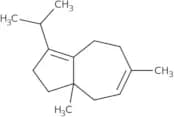
Formula:C28H36O10Purity:Min. 95%Molecular weight:532.58 g/molDaucene
CAS:Daucene is a sesquiterpene lactone, which is isolated from plant sources, particularly from certain species of the Apiaceae family. It functions through modulating cellular pathways, primarily by inhibiting the NF-κB signaling pathway and inducing apoptosis in cancerous cells. This biochemical mode of action demonstrates Daucene's potential in disrupting cancer cell proliferation and promoting cell cycle arrest.Formula:C15H24Purity:Min. 95%Molecular weight:204.35 g/mol8(17)13-Labdadien-15-ol - Pinus halepensis (Aleppo pine)
CAS:8(17)13-Labdadien-15-ol is a sesquiterpene alcohol, which is a bioactive compound originating from the oleoresin of Pinus halepensis, commonly known as the Aleppo pine. This compound is naturally produced in the pine’s resin and plays a critical role in the plant's defense mechanisms against pathogens and herbivores. Its mode of action involves disrupting the cell membranes of these invaders, ultimately impeding their growth and survival.Formula:C15H24O3Purity:Min. 95%Molecular weight:252.35 g/mol(-)-trans-Myrtanol
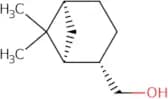
CAS:(-)-trans-Myrtanol is a type of monoterpenoid, classified as a terpene alcohol. It is primarily derived from essential oils found in various plants, including those in the coniferous and Lauraceae families. Myrtanol is a chiral compound, and its stereochemistry is vital for its biological activities.
Formula:C10H18OPurity:Min. 95%Color and Shape:Colorless Clear LiquidMolecular weight:154.25 g/molEscin IA
CAS:Escin IA is a potent anti-inflammatory agent, which is a natural compound extracted from the seeds of the horse chestnut tree (Aesculus hippocastanum). This triterpenoid saponin operates by enhancing blood circulation and reducing capillary permeability through the stabilization of endothelial barriers. Additionally, it exhibits anti-edematous and venotonic activities by modifying vascular wall integrity and decreasing inflammatory mediators. Escin IA is widely utilized in biomedical research for its therapeutic potential in the management of chronic venous insufficiency, edema, and associated conditions. Its unique mechanism of action provides an intriguing area of study for scientists exploring vascular health, anti-inflammatory strategies, and natural therapeutic compounds. The ongoing research continues to validate its efficacy and explore broader applications in vascular and inflammatory disorders.Purity:Min. 95%Daucol
CAS:Please enquire for more information about Daucol including the price, delivery time and more detailed product information at the technical inquiry form on this page
Formula:C15H26O2Purity:Min. 95%Color and Shape:PowderMolecular weight:238.37 g/molGeniposide
CAS:Geniposide is a natural iridoid glycoside, which is found in the fruit of Gardenia jasminoides Ellis, a plant commonly used in traditional Chinese medicine. As a prominent secondary metabolite, geniposide plays a critical role in various biological pathways. It undergoes enzymatic hydrolysis to genipin, which is believed to be the active component responsible for many of its biological effects.Formula:C17H24O10Purity:Min. 95.0 Area-%Molecular weight:388.37 g/molRef: 3D-Q-100317
-Unit-ggTo inquire1kgTo inquire50gTo inquire100gTo inquire250gTo inquire500gTo inquireGlycyrrhetic acid 3-O-b-D-glucuronide
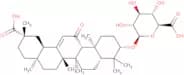
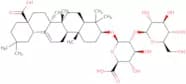
CAS:Glycyrrhetic acid 3-O-b-D-glucuronide is a bioactive compound derived from the root of the licorice plant (Glycyrrhiza glabra). Licorice has been used for centuries in traditional medicine, and this compound is one of its active components. The compound functions by modulating inflammatory pathways, primarily through inhibiting enzymes like cyclooxygenase and phospholipase A2, which play key roles in the inflammatory response. In addition, it exhibits effects on glucocorticoid metabolism, enhancing the activity of endogenous glucocorticoids and subsequently leading to anti-inflammatory and immune-modulating effects.Formula:C36H54O10Purity:Min. 95%Molecular weight:646.81 g/molNerolidol (cis/trans)
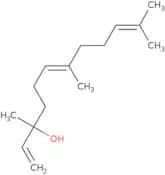
CAS:Nerolidol (cis/trans) is a naturally occurring sesquiterpene alcohol, which is typically sourced from essential oils of several aromatic plants, including lavender, jasmine, and tea tree. Its chemical structure includes two isomers: cis and trans, which differ in the spatial arrangement of their atoms, influencing their olfactory and biological activities.Formula:C15H26OPurity:Min. 95%Color and Shape:Clear LiquidMolecular weight:222.37 g/molXylopic acid
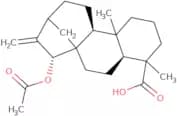
CAS:Xylopic acid is a bioactive compound, which is a diterpenoid isolated from the plant species Xylopia aethiopica. This compound is derived primarily from the fruits of the plant, often referred to as the African pepper or grains of Selim. Xylopic acid exhibits its mode of action by interacting with various biological pathways, including anti-inflammatory and antimicrobial processes, as well as modulating specific cellular receptors and enzymatic activities.Formula:C22H32O4Purity:Min. 95%Molecular weight:360.49 g/molGibberellic acid methyl ester
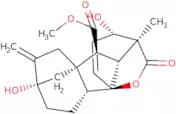
CAS:Gibberellic acid methyl ester is a specialized plant growth regulator, which is synthetically derived from the naturally occurring gibberellins found in plants. These gibberellins are vital phytohormones that regulate various aspects of growth and development in higher plants. Gibberellic acid methyl ester functions by mimicking these natural gibberellins, interacting with plant cellular processes to stimulate and enhance growth. Its mode of action involves promoting cell elongation, division, and differentiation, thereby accelerating plant growth and influencing the lifecycle.Formula:C20H24O6Purity:Min. 95%Molecular weight:360.4 g/mol8,11,13-Totaratrien-13-ol - Thuja plicata (western red cedar)
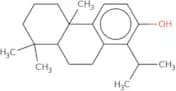
CAS:8,11,13-Totaratrien-13-ol is a sesquiterpene alcohol, which is a bioactive compound derived from the heartwood of Thuja plicata, commonly known as western red cedar. This source is renowned for its complex mixture of organic compounds, which contribute to the wood's natural resistance to decay and pests.Formula:C20H30OPurity:Min. 95%Molecular weight:286.45 g/molGypenoside L
CAS:Gypenoside L is a saponin compound, which is a secondary metabolite derived from the plant Gynostemma pentaphyllum. This herbaceous plant, commonly known as Jiaogulan, is native to South China and other parts of Asia, where it has been traditionally used in herbal medicine. The mode of action of Gypenoside L involves modulating various biochemical pathways, potentially influencing cellular signaling and metabolic processes. It is known for its role in activating AMP-activated protein kinase (AMPK) pathways, enhancing cellular energy homeostasis, and exhibiting antioxidant properties.Formula:C42H72O14Purity:Min. 95%Molecular weight:801.01 g/molZingibroside R1
CAS:Triterpenoid saponin with anti-tumour and antiangiogenic activityFormula:C42H66O14Purity:Min. 95%Molecular weight:794.97 g/molEsculentoside H
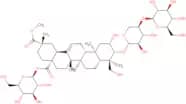
CAS:Esculentoside H is a naturally occurring triterpenoid saponin, which is derived from the plant Phytolacca esculenta, commonly known as the pokeweed. This compound has garnered significant interest due to its unique mode of action as an anti-inflammatory and immunomodulatory agent. By modulating cellular signaling pathways, Esculentoside H can inhibit the expression of pro-inflammatory cytokines and suppress the activation of NF-kB, a key transcription factor involved in inflammatory responses.
Formula:C48H76O21Purity:Min. 95%Molecular weight:989.1 g/molbeta-Hederin
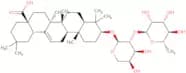
CAS:Beta-Hederin is a saponin, which is a type of soap-like compound, derived from the leaves of the ivy plant, Hedera helix. Saponins are glycosides characterized by their ability to form stable, soap-like foams in aqueous solutions. This particular compound is notable for its amphiphilic nature, allowing it to interact with biological membranes.Purity:Min. 97 Area-%Rotundone - 30%
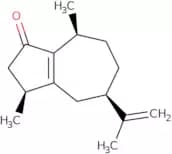
CAS:Peppery aroma constituent of essential oil of Cyperus rotundus (nutgrass)Formula:C15H22OPurity:Min. 95%Molecular weight:218.33 g/molPhyllanthostatin 2 - Phyllanthus acuminatus
CAS:Phyllanthostatin 2 is a bioactive compound, classified as a lignan, which is isolated from the plant Phyllanthus acuminatus. This compound is part of a broader group of naturally occurring phytochemicals known for exhibiting various biological activities. The primary source of Phyllanthostatin 2, Phyllanthus acuminatus, is a plant found in tropical regions and is traditionally used in herbal medicine.Formula:C40H52O18Purity:Min. 95%Molecular weight:820.83 g/mol