Terpenoids
Terpenoids, also known as isoprenoids, are the largest class of naturally occurring organic compounds, derived from five-carbon isoprene units. They are found in a variety of plants and are known for their aromatic properties, as well as their roles in plant defense and signaling. Terpenoids have been widely studied for their therapeutic effects, including anti-inflammatory, antimicrobial, and anticancer properties. They are used in pharmaceuticals, cosmetics, and food industries for their health benefits and aromatic qualities. At CymitQuimica, you will find a wide selection of terpenoids, essential for research in plant biology, pharmacology, and natural product synthesis.
Subcategories of "Terpenoids"
- Diterpenes (C₂₀)(671 products)
- Hemiterpenes (C₅)(21 products)
- Monoterpenes (C₁₀)(708 products)
- Sesquiterpenes (C₂₅)(448 products)
- Tetraterpenes (C₄₀)(63 products)
- Triterpenes (C₃₀)(1,130 products)
Found 1423 products of "Terpenoids"
Sort by
Purity (%)
0
100
|
0
|
50
|
90
|
95
|
100
Cinnamodial
CAS:<p>Cinnamodial is a naturally occurring compound classified as a sesquiterpene dialdehyde, which is isolated from cinnamon oil, derived primarily from the bark of the Cinnamomum tree. Its primary mode of action involves disrupting cellular integrity through binding with fungal cell membranes, leading to increased permeability and ultimately cell death. This mechanism highlights its potential as an effective antifungal agent.</p>Formula:C17H24O5Purity:Min. 95%Color and Shape:White PowderMolecular weight:308.37 g/molCedrodorin - Cedrela tonduzii
CAS:<p>Cedrodorin is a natural insecticidal compound extracted from the wood of Cedrela tonduzii, a species native to Central America. This compound functions by disrupting the feeding behavior of herbivorous insects, effectively reducing their ability to cause damage to plants. Cedrodorin’s mode of action involves interference with the neural pathways that regulate feeding, leading to reduced ingestion and eventual starvation of the pests.</p>Formula:C27H34O9Purity:Min. 95%Molecular weight:502.55 g/molPseudolaric acid A β-D-glucoside
CAS:<p>Pseudolaric acid A beta-D-glucoside is a bioactive compound, which is a natural product derived from Pseudolarix amabilis, a species of tree native to certain regions of China. It belongs to the diterpenoid family, known for their diverse structural features and significant biological activities. This compound exhibits its mode of action primarily through interactions with cellular pathways, modulating specific enzymatic activities and receptor responses, which can lead to varying effects at the cellular and molecular levels.</p>Purity:Min. 95%Gibberellic Acid Acetoxymethyl Ester
CAS:<p>Gibberellic Acid Acetoxymethyl Ester is a plant growth regulator, derived from the gibberellin family of diterpenoid acids, which is synthesized through microbiological processes involving certain fungal species like *Gibberella fujikuroi*. It acts by mimicking endogenous gibberellins, which are natural plant hormones that regulate various developmental processes. Upon application, it binds to specific receptors in plant cells, triggering a cascade of gene expressions that promote cell elongation, division, and differentiation.</p>Formula:C22H26O8Purity:Min. 95%Molecular weight:418.44 g/molDesmethylfrutescin - Argyranthemum frutescens (Marguerite)
CAS:<p>Desmethylfrutescin is a bioactive compound, which is a secondary metabolite isolated from the plant Argyranthemum frutescens, commonly known as Marguerite. This compound is derived from the chemical constituents of the plant, which has long been studied for its various biological activities.</p>Formula:C14H12O3Purity:Min. 95%Molecular weight:228.24 g/mol20(R)Ginsenoside Rg2
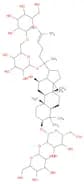
CAS:<p>20(R)Ginsenoside Rg2 is a bioactive compound, specifically a saponin, derived from Panax ginseng, a perennial plant in the Araliaceae family. This compound is one of the ginsenosides, which are the primary active constituents responsible for ginseng's pharmacological properties. Its mode of action involves modulation of cellular signaling pathways and neurotransmitter regulation, which contributes to its neuroprotective and cognitive enhancing effects.</p>Purity:Min. 95%Ginsenoside F3
CAS:<p>Ginsenoside F3 is a bioactive compound, specifically a saponin, which is extracted from the roots of Panax ginseng, a perennial plant widely studied for its medicinal properties. This compound is of significant interest in the field of pharmacology due to its multifaceted mode of action at the cellular level. Ginsenoside F3 is known to modulate various signaling pathways, including those involved in immune response, apoptosis, and anti-inflammatory processes. Its ability to interact with cellular receptors and enzymes makes it a potent candidate for therapeutic applications.</p>Formula:C41H70O13Purity:Min. 95%Molecular weight:770.99 g/molProsaikogenin G
CAS:<p>Prosaikogenin G is a saponin derivative, which is a bioactive compound commonly found in medicinal plants, traditionally used in Eastern medicine. Saponins are naturally occurring glycosides, and they have a wide range of biological activities due to their amphiphilic nature. Prosaikogenin G is specifically sourced from Bupleurum species, a well-known genus in herbal medicine. These compounds have been extensively studied for their anti-inflammatory and immunomodulatory effects.</p>Formula:C36H58O8Purity:Min. 95%Molecular weight:618.84 g/molCongmunosideV
CAS:<p>Congmunoside V is a triterpenoid saponin, which is a bioactive compound isolated from the plant Gynostemma pentaphyllum, also known as Jiaogulan. This plant is traditionally recognized in herbal medicine and is a member of the Cucurbitaceae family, primarily found in East Asia. Triterpenoid saponins are a class of chemical compounds composed of a sapogenin (triterpene) attached to sugar moieties, which confer a variety of biological activities.</p>Purity:Min. 95%llludin S
CAS:<p>Illudin S is a sesquiterpene toxin, which is a naturally occurring compound isolated from several species of fungi belonging to the genus Omphalotus, such as Omphalotus olearius, commonly known as the Jack-o'-lantern mushroom. Its mode of action involves alkylating DNA, which leads to DNA cross-linking and subsequent inhibition of DNA synthesis. This mechanism renders it highly cytotoxic, as it can induce cell death by disrupting normal cellular replication processes.</p>Formula:C15H20O4Purity:Min. 95%Molecular weight:264.13616Juvenile hormone I
CAS:<p>Juvenile hormone I is a sesquiterpenoid hormone, which is an endogenous regulatory compound found in insects. Its source is primarily the corpora allata, a pair of endocrine glands associated with the insect brain. Juvenile hormone I functions by modulating the expression of specific genes involved in development, metamorphosis, and reproduction, acting through a receptor-mediated mechanism that influences the transcriptional activity of target genes.</p>Formula:C18H30O3Purity:Min. 95%Color and Shape:Clear LiquidMolecular weight:294.43 g/molα-Selinine
CAS:<p>alpha-Selinine is a sesquiterpene compound, which is a naturally occurring organic molecule. It is extracted primarily from the essential oils of certain plant species, such as those within the Apiaceae family, including celery and parsley. The compound’s mode of action involves interactions at the molecular level with cellular targets, which can influence a range of biological pathways. Studies suggest that alpha-Selinine may exhibit various bioactivities, including antimicrobial, anti-inflammatory, and antioxidant effects, by modulating enzyme activity and cell signaling pathways.</p>Formula:C15H24Purity:85%MinMolecular weight:204.35 g/mol(+)-Nootkatone
CAS:<p>Flavour and scent of grapefruit</p>Formula:C15H22OPurity:Min. 95%Molecular weight:218.33 g/molTagitinin A
CAS:<p>Tagitinin A is a naturally occurring sesquiterpene lactone, which is derived from the plant *Tithonia diversifolia*. This compound is known for its potential therapeutic properties, particularly in the field of oncology. As a sesquiterpene lactone, Tagitinin A is part of a larger class of secondary metabolites found in various plant species, which often exhibit diverse biological activities.</p>Purity:Min. 95%Prosaikogenin F
CAS:<p>Prosaikogenin F is a saponin derivative, which is a bioactive compound typically derived from ginseng or related plants within the Araliaceae family. These sources are renowned for their complex saponins, known as ginsenosides, which play significant roles in traditional medicine and modern pharmacology.</p>Formula:C36H58O8Purity:Min. 95%Molecular weight:618.84 g/molEscin Ib
CAS:<p>Escin Ib is a natural saponin glycoside, which is derived from the seeds of Aesculus hippocastanum, commonly known as horse chestnut. Its mode of action involves inhibiting the enzyme hyaluronidase, thereby reducing capillary permeability and effectively controlling edema and inflammation. Additionally, it acts by stabilizing lysosomal membranes, further contributing to its anti-inflammatory effects.</p>Purity:Min. 95%8(17)13-Labdadiene-15,18-diol - Xcupressocyparis leylandii (cypress)
CAS:<p>8(17)13-Labdadiene-15,18-diol is a diterpenoid compound, which is derived from the hybrid plant Xcupressocyparis leylandii, commonly known as Leyland cypress. This compound belongs to the labdane-type diterpenes, which are known for their diverse biological activities. The source, Xcupressocyparis leylandii, is a fast-growing evergreen tree often used in horticulture.</p>Formula:C20H34O2Purity:Min. 95%Molecular weight:306.48 g/mol8(17)13-Labdadien-15-ol - Pinus halepensis (Aleppo pine)
CAS:<p>8(17)13-Labdadien-15-ol is a sesquiterpene alcohol, which is a bioactive compound originating from the oleoresin of Pinus halepensis, commonly known as the Aleppo pine. This compound is naturally produced in the pine’s resin and plays a critical role in the plant's defense mechanisms against pathogens and herbivores. Its mode of action involves disrupting the cell membranes of these invaders, ultimately impeding their growth and survival.</p>Formula:C15H24O3Purity:Min. 95%Molecular weight:252.35 g/molEscin IA
CAS:<p>Escin IA is a potent anti-inflammatory agent, which is a natural compound extracted from the seeds of the horse chestnut tree (Aesculus hippocastanum). This triterpenoid saponin operates by enhancing blood circulation and reducing capillary permeability through the stabilization of endothelial barriers. Additionally, it exhibits anti-edematous and venotonic activities by modifying vascular wall integrity and decreasing inflammatory mediators. Escin IA is widely utilized in biomedical research for its therapeutic potential in the management of chronic venous insufficiency, edema, and associated conditions. Its unique mechanism of action provides an intriguing area of study for scientists exploring vascular health, anti-inflammatory strategies, and natural therapeutic compounds. The ongoing research continues to validate its efficacy and explore broader applications in vascular and inflammatory disorders.</p>Purity:Min. 95%Tagitinin F
CAS:<p>Tagitinin F is a sesquiterpene lactone, which is an organic compound derived from the aerial parts of the plant *Tithonia diversifolia*, commonly known as the Mexican sunflower. This plant-based compound functions through a mechanism that involves modulation of various cellular pathways, notably those related to inflammation and cancer progression, by interacting with cellular proteins and inhibiting key signaling molecules.</p>Purity:Min. 95%