Flavonoids
Flavonoids are a group of plant metabolites with antioxidant properties that contribute to the color of fruits and flowers. They play a significant role in protecting plants from UV radiation and pathogens. Flavonoids are studied for their potential health benefits, including anti-inflammatory, antiviral, and anticancer properties. They are widely researched in the fields of pharmacology, nutrition, and molecular biology.
Subcategories of "Flavonoids"
- Anthocyanidins(46 products)
- Anthocyanin(46 products)
- Catechin(88 products)
- Chalcones(237 products)
- Pterocarpan(28 products)
Found 2404 products of "Flavonoids"
Sort by
Purity (%)
0
100
|
0
|
50
|
90
|
95
|
100
6-Methoxyflavanone
CAS:<p>6-Methoxyflavanone is a naturally occurring flavonoid compound, which is typically derived from plant sources, particularly those high in flavonoids such as certain fruits and herbs. The compound is characterized by the presence of a methoxy group, which distinguishes it from other flavanones and may influence its bioactivity and solubility properties. Its mode of action often involves interactions with biological pathways that regulate inflammation, oxidative stress, and cellular metabolism, potentially through mechanisms such as enzyme inhibition or modulation of receptor activity.</p>Formula:C16H14O3Purity:Min. 95%Color and Shape:PowderMolecular weight:254.28 g/mol4',6-Dihydroxyflavone
CAS:<p>4',6-Dihydroxyflavone is a naturally occurring flavonoid, commonly found in various plants and foods. It is a compound derived from the flavonoid class, which is known for its wide range of biological activities. This compound is isolated from plant sources, and it shares the common structure of flavones, consisting of a 15-carbon skeleton with hydroxyl groups at specific positions, enhancing its antioxidant properties.</p>Formula:C15H10O4Purity:Min. 95%Color and Shape:PowderMolecular weight:254.24 g/molPatuletin
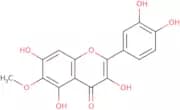
CAS:<p>Patuletin is a naturally occurring flavonoid, which is derived primarily from various plants. It is a type of polyphenolic compound that is widely recognized for its potential therapeutic properties. The source of Patuletin is mostly plant-based, where it is usually extracted from species in the Asteraceae family. The mode of action of Patuletin involves multiple biochemical interactions, including its potential to modulate oxidative stress and inflammation pathways. It acts by scavenging free radicals and may inhibit key enzymes linked to inflammation.</p>Formula:C16H12O8Purity:80%Color and Shape:White PowderMolecular weight:332.26 g/mol7,8-Dimethoxyflavone
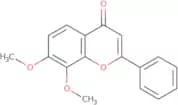
CAS:<p>7,8-Dimethoxyflavone is a synthetic flavonoid compound, which is derived from natural flavones found in various plant species. As a structurally modified version of naturally occurring flavonoids, it exhibits a range of biological activities. The mode of action of 7,8-Dimethoxyflavone involves interaction with various cellular pathways, including modulation of kinase and receptor activity, potentially impacting signal transduction processes.</p>Formula:C17H14O4Color and Shape:PowderMolecular weight:282.29 g/molCitrus bioflavonoids
CAS:<p>Citrus bioflavonoids are a complex of compounds, which are derived from the peel and pulp of citrus fruits such as oranges, lemons, and grapefruits. These bioflavonoids function primarily as antioxidants, neutralizing free radicals and reducing oxidative stress within biological systems. By supporting the integrity of cellular structures, they contribute to the maintenance of optimal physiological conditions.</p>Purity:Min. 95%Demethoxysudachitin
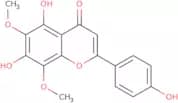
CAS:<p>Demethoxysudachitin is a flavonoid compound, which is naturally sourced from the peel of the sudachi fruit, a type of small citrus fruit native to Japan. This compound exhibits a mode of action primarily through its potent antioxidant activity, which involves scavenging free radicals and reducing oxidative stress within biological systems. It also plays a role in modulating various enzymatic pathways, contributing to its pharmacological properties.</p>Purity:Min. 95%(±)-Eriodictyol
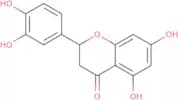
CAS:<p>(±)-Eriodictyol is a flavonoid compound, which is a type of bioactive polyphenol. It is derived primarily from certain plant sources, notably within the Ericaceae and Solanaceae families. The compound exhibits its mode of action through its potent antioxidant and anti-inflammatory activities, mechanisms that involve the scavenging of free radicals and the inhibition of pro-inflammatory pathways.</p>Formula:C15H12O6Purity:Min. 95%Color and Shape:PowderMolecular weight:288.25 g/molQuercetin-3-O-β-glucopyranoside
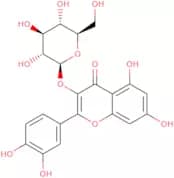
CAS:<p>Mitochondrial ATPase and phosphodiesterase inhibitor</p>Formula:C21H20O12Purity:Min. 90 Area-%Color and Shape:PowderMolecular weight:464.38 g/molOrobol
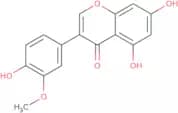
CAS:<p>Please enquire for more information about Orobol including the price, delivery time and more detailed product information at the technical inquiry form on this page</p>Formula:C15H10O6Purity:Min. 95%Color and Shape:Yellow PowderMolecular weight:286.24 g/molLuteolin 3'-O-β-D-glucuronide
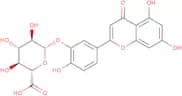
CAS:<p>Luteolin 3'-O-β-D-glucuronide is a flavonoid glucuronide, which is primarily derived from various plant sources, including fruits, vegetables, and certain herbs. As a metabolite of luteolin, it is formed through the addition of a glucuronic acid moiety, enhancing its solubility and bioavailability in biological systems.</p>Formula:C21H18O12Purity:Min. 97 Area-%Color and Shape:White PowderMolecular weight:462.36 g/mol3,7,4'-Trihydroxyflavone
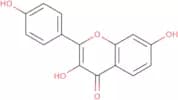
CAS:<p>3,7,4'-Trihydroxyflavone is a flavonoid compound, which is a naturally occurring polyphenolic phytochemical. These compounds are commonly sourced from various plants, where they are present in fruits, vegetables, and certain herbs. Flavonoids such as 3,7,4'-Trihydroxyflavone are known for their role in plant pigmentation and protection against environmental stressors.</p>Formula:C15H10O5Purity:Min. 95%Color and Shape:PowderMolecular weight:270.24 g/molOrobol-3'-methyl ether
CAS:<p>Orobol-3'-methyl ether is a synthetic flavonoid compound, which is derived from natural flavonoids that are typically extracted from plants. Flavonoids like Orobol-3'-methyl ether are important due to their roles in various biological processes. This compound operates primarily by interacting with enzymes, potentially inhibiting or modifying their activity. The methyl ether modification can enhance its biological activity or stability, making it a valuable tool in biochemical research.</p>Formula:C16H12O6Purity:Min. 98 Area-%Molecular weight:300.26 g/molQuercetin 3-O-glucoside-7-O-rhamnoside
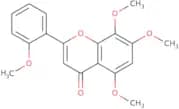
CAS:<p>Quercetin 3-O-glucoside-7-O-rhamnoside is a flavonoid glycoside, which is a type of secondary metabolite present in many plants. It is derived from natural sources such as fruits, vegetables, and certain grains. These compounds are known for their potential health benefits and are widely studied in the context of plant biochemistry and physiology.</p>Formula:C27H30O16Purity:Min. 95%Color and Shape:PowderMolecular weight:610.52 g/mol5,7,8,2'-Tetramethoxyflavone
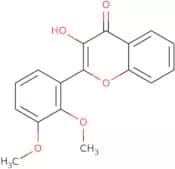
CAS:<p>5,7,8,2'-Tetramethoxyflavone is a naturally occurring flavone compound, which is classified as a polyphenolic molecule commonly found in certain plant species. As a flavonoid, it is derived from plant sources, often extracted from species within the Rutaceae family, among others. These compounds are known for their complex biosynthetic pathways, which involve modified phenylpropanoid and acetate pathways.</p>Formula:C19H18O6Purity:Min. 95%Molecular weight:342.34 g/mol2',3'-Dimethoxy-3-hydroxyflavone
CAS:<p>2',3'-Dimethoxy-3-hydroxyflavone is a specialized flavonoid compound, which is synthesized and not typically found in natural sources. As a flavonoid derivative, this compound is formed through chemical modification of naturally occurring flavones, a class of polyphenolic compounds recognized for their diverse biological activities. With a structure characterized by methoxy and hydroxyl groups, this compound exhibits unique interactions at the molecular level.</p>Formula:C17H14O5Purity:Min. 95%Color and Shape:PowderMolecular weight:298.29 g/mol3'-Hydroxy-3,5,7,8,4'-pentamethoxyflavone
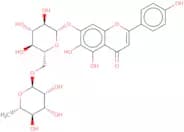
CAS:<p>3'-Hydroxy-3,5,7,8,4'-pentamethoxyflavone is a specialized flavonoid compound, which is typically derived from various plant sources. This compound is part of the flavone subclass of flavonoids, known for their wide presence in the plant kingdom, contributing to the plant's pigmentation and offering various physiological benefits. The mode of action for 3'-Hydroxy-3,5,7,8,4'-pentamethoxyflavone primarily involves antioxidant activity, where it functions to neutralize free radicals and reduce oxidative stress within biological systems. This property is crucial in mitigating cellular damage, thus playing a role in the prevention of various degenerative diseases.</p>Formula:C20H20O8Purity:Min. 95%Molecular weight:388.37 g/molScutellarein 7-O-rutinoside
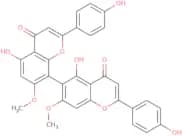
CAS:<p>Scutellarein 7-O-rutinoside is a flavonoid glycoside, which is a type of organic compound found predominantly in various plant species. This compound is mainly extracted from plants such as Scutellaria and Verbena, known for their rich flavonoid content. Its mode of action involves modulating various cellular pathways due to its antioxidant properties, which can scavenge free radicals and reduce oxidative stress in biological systems.</p>Formula:C27H30O15Purity:Min. 95%Molecular weight:594.52 g/molAgathisflavone-7,7”-dimethyl ether
CAS:<p>Agathisflavone-7,7”-dimethyl ether is a methylated flavonoid, a type of natural compound belonging to the biflavonoid family. This compound is primarily derived from plant sources, particularly from the leaves and seeds of certain leguminous plants. It presents unique biochemical properties due to the dimethyl ether groups attached to its flavonoid structure.</p>Formula:C32H22O10Purity:Min. 95%Color and Shape:solid.Molecular weight:566.51 g/mol5,7,4'-Trimethoxyisoflavone
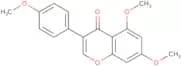
CAS:<p>5,7,4'-Trimethoxyisoflavone is a naturally occurring isoflavone compound, which is a type of phytochemical typically extracted from various plant sources, including legumes and certain medicinal herbs. Isoflavones are a class of phytoestrogens – plant-derived compounds with estrogenic activity – found predominantly in soy products.</p>Formula:C18H16O5Purity:Min. 98 Area-%Color and Shape:PowderMolecular weight:312.32 g/molConrauinone A
CAS:<p>Conrauinone A is a naturally derived compound, which is a specialized natural product extracted from a specific plant source. This compound is known for its unique structural properties and potential biological activities. Conrauinone A functions primarily through a mode of action that involves interaction with specific cellular targets, leading to modulation of biochemical pathways that are crucial for certain cellular processes.</p>Formula:C24H22O8Purity:Min. 95%Molecular weight:438.43 g/mol