Flavonoids
Flavonoids are a group of plant metabolites with antioxidant properties that contribute to the color of fruits and flowers. They play a significant role in protecting plants from UV radiation and pathogens. Flavonoids are studied for their potential health benefits, including anti-inflammatory, antiviral, and anticancer properties. They are widely researched in the fields of pharmacology, nutrition, and molecular biology.
Subcategories of "Flavonoids"
- Anthocyanidins(46 products)
- Anthocyanin(46 products)
- Catechin(88 products)
- Chalcones(237 products)
- Pterocarpan(28 products)
Found 2404 products of "Flavonoids"
Sort by
Purity (%)
0
100
|
0
|
50
|
90
|
95
|
100
3'-Hydroxyflavanone
CAS:<p>3'-Hydroxyflavanone is a naturally occurring flavonoid compound, which is derived from various plant sources, including citrus fruits and some leguminous plants. Its chemical structure contains a flavanone backbone with a hydroxyl group at the 3' position, contributing to its unique properties and biological activity.</p>Formula:C15H12O3Purity:Min. 95%Color and Shape:White PowderMolecular weight:240.25 g/molSalvigenin
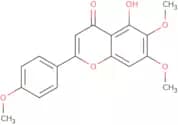
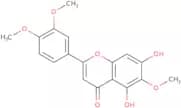
CAS:<p>Salvigenin is a flavone compound, which is found in various species of the Salvia plant. It is a naturally occurring phytochemical characterized by its potential to modulate biological pathways. Salvigenin primarily acts by interacting with biochemical pathways, exhibiting antioxidant and anti-inflammatory activities. These activities are thought to result from its ability to modulate enzyme activity, influence signaling pathways, and scavenge free radicals.</p>Formula:C18H16O6Purity:Min. 95%Color and Shape:Off-White PowderMolecular weight:328.32 g/molKaempferol 3-O-b-D-glucuronide
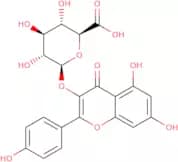
CAS:<p>Kaempferol 3-O-b-D-glucuronide is a bioactive flavonoid glucuronide, which is a naturally occurring compound found in various plants, fruits, and vegetables. It is formed through the glucuronidation of the parent compound, kaempferol, a process which enhances its solubility and bioavailability. This compound exhibits significant antioxidant activity through its ability to scavenge free radicals and reduce oxidative stress within biological systems.</p>Formula:C21H18O12Purity:Min. 95%Color and Shape:PowderMolecular weight:462.36 g/molNaringin hydrate
CAS:<p>Naringin hydrate is a flavonoid compound, which is found predominantly in citrus fruits such as grapefruits. This compound is a glycoside, sourced primarily from the peels and seeds of these fruits, playing a role as a natural constituent of the fruit's phytonutrient profile. The mode of action of naringin hydrate involves its ability to modulate a variety of biological pathways. It exhibits antioxidant properties by scavenging free radicals and enhancing the body’s endogenous antioxidant enzymes. Additionally, naringin hydrate demonstrates anti-inflammatory actions through the inhibition of pro-inflammatory cytokines and the modulation of signaling pathways such as NF-kB and MAPK.</p>Formula:C27H32O14•H2OPurity:Min. 95%Color and Shape:PowderMolecular weight:598.55 g/molKaempferol-3-glucoside-7-rhamnoside
CAS:<p>Kaempferol-3-glucoside-7-rhamnoside is a flavonoid glycoside, which is a natural compound found in several plant species, including tea, broccoli, and propolis. It is synthesized through glycosylation, where sugar moieties are enzymatically attached to the kaempferol backbone. This compound is known for its potent antioxidant activity, capable of scavenging free radicals and protecting cells from oxidative stress.</p>Formula:C27H30O15Purity:Min. 95%Color and Shape:PowderMolecular weight:594.52 g/molBryacarpene-2
CAS:<p>Bryacarpene-2 is a terpene compound, which is derived from natural sources, specifically marine bryozoans. Its mode of action involves interacting with specific biological pathways, potentially influencing cellular processes such as apoptosis and inflammation. This interaction suggests its potential as a therapeutic agent in various biomedical fields. The uses and applications of Bryacarpene-2 are currently under investigation, particularly its role in medical research related to anti-cancer, anti-inflammatory, and antimicrobial properties. The exploration of Bryacarpene-2 highlights its capacity as a candidate for drug development, offering a promising avenue for scientific exploration and potential clinical applications.</p>Formula:C18H16O6Purity:Min. 95%Molecular weight:328.32 g/molMyricetin
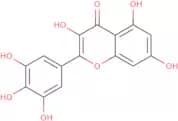
CAS:<p>Myricetin is a naturally occurring flavonoid, which is primarily sourced from various fruits, vegetables, teas, and medicinal plants. It is found abundantly in the bark of the Myrica species, as well as in grapes, onions, and berries. Myricetin functions as an antioxidant by scavenging free radicals, thus mitigating oxidative stress. It also exerts anti-inflammatory effects through modulation of signaling pathways, including the inhibition of nuclear factor-κB (NF-κB) and downregulation of pro-inflammatory cytokines.</p>Formula:C15H10O8Purity:Min. 95%Color and Shape:Yellow Green PowderMolecular weight:318.24 g/mol5,7-Dimethoxy-4'-hydroxyflavanone
CAS:<p>5,7-Dimethoxy-4'-hydroxyflavanone is a synthetic flavonoid compound, which is derived from the structural modification of naturally occurring flavonoids found in plants. Alterations in its chemical structure provide enhanced properties for various scientific applications. The mode of action of this compound primarily involves its ability to act as a potent antioxidant. By scavenging free radicals, it protects biological systems from oxidative stress, thereby playing a pivotal role in cellular protection and homeostasis.</p>Formula:C17H16O5Purity:Min. 95%Color and Shape:PowderMolecular weight:300.31 g/molTheaflavin-3,3'-digallate
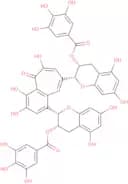
CAS:<p>Theaflavin-3,3'-digallate is a polyphenolic compound, which is primarily derived from black tea through the oxidative fermentation of tea leaves. This compound is part of the theaflavins, which result from the enzymatic oxidation of catechins, the major constituents of green tea. It exhibits various biological activities due to its complex molecular structure, which includes multiple hydroxyl groups that facilitate specific intermolecular interactions.</p>Formula:C43H32O20Purity:Min. 95%Color and Shape:Red PowderMolecular weight:868.7 g/molApigenin - 97%
CAS:<p>Apigenin - 97% is a high-purity flavonoid compound, which is primarily derived from various plant sources such as parsley, chamomile, and celery. This compound is known for its significant presence in the plant kingdom, where it functions as a secondary metabolite contributing to plant defense.</p>Formula:C15H10O5Purity:Min. 97 Area-%Color and Shape:PowderMolecular weight:270.24 g/molQuercetin 3,4'-dimethyl ether
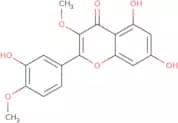
CAS:<p>Quercetin 3,4'-dimethyl ether is a flavonoid derivative, which is a naturally occurring compound found in various plants. It is part of the larger family of flavonoids, known for their diverse biological activities and presence in numerous botanical sources such as fruits, vegetables, and medicinal herbs. The modification of quercetin by methylation alters its solubility and bioavailability, potentially enhancing its biological effects.</p>Formula:C17H14O7Purity:Min. 95%Molecular weight:330.29 g/molIsorhamnetin-3-O-b-D-glucoside
CAS:<p>Isorhamnetin-3-O-b-D-glucoside is a flavonoid glycoside, which is typically extracted from various plant sources, notably from fruits and medicinal herbs like sea buckthorn and Ginkgo biloba. This compound is recognized for its role in modulating oxidative stress due to its antioxidant capabilities. The glycoside linkage enhances the solubility and bioavailability compared to the aglycone, isorhamnetin.</p>Formula:C22H22O12Purity:Min. 95 Area-%Color and Shape:Yellow PowderMolecular weight:478.4 g/molEupatilin
CAS:<p>Eupatilin is a flavonoid compound, which is derived from the Artemisia species. This plant-based source has been traditionally used in various medicinal applications across different cultures. Eupatilin’s mode of action involves inhibition of pro-inflammatory cytokines and modulation of signaling pathways associated with inflammation, such as the NF-kB pathway. Additionally, it has been found to possess antioxidant activities, which further contributes to its therapeutic potential.</p>Formula:C18H16O7Purity:Min. 95%Color and Shape:PowderMolecular weight:344.32 g/molCladrin-7-O-glucoside
CAS:<p>Cladrin-7-O-glucoside is a flavonoid glycoside, which is a type of secondary metabolite commonly found in various plants. This compound is derived from natural sources, particularly plants belonging to the genus Cleome. Flavonoid glycosides are known for having a sugar molecule attached to a flavonoid backbone, which influences their solubility and bioavailability.</p>Formula:C23H24O10Purity:Min. 95%Molecular weight:460.43 g/mol5,2',3'-Trimethoxyflavanone
<p>5,2',3'-Trimethoxyflavanone is a specialized methoxyflavanone, which is a derivative of flavanone compounds. This compound is typically sourced from naturally occurring flavonoids found in various plant species. Its structure incorporates methoxy groups that contribute to its distinct chemical properties and potential biological activity.</p>Formula:C18H16O5Purity:Min. 95%Molecular weight:312.3 g/molMonoxerutin
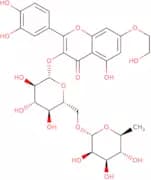
CAS:<p>Monoxerutin is a bioflavonoid derivative, which is sourced from plant-based compounds known for their beneficial effects on vascular function. Bioflavonoids are naturally occurring compounds present in various fruits, vegetables, and plants, playing a crucial role in plant defense mechanisms and offering significant health benefits when used in medicinal applications. The mode of action of Monoxerutin involves enhancing endothelial function and stabilizing capillary walls, thus improving vascular health. It achieves this by reducing capillary permeability and fragility, which in turn aids in enhancing circulation and providing anti-inflammatory benefits.</p>Purity:Min. 95%Narcissin
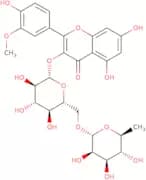
CAS:<p>Narcissin is a flavonoid glycoside, which is a bioactive compound isolated from the Narcissus species, particularly found in various plant parts of the genus Narcissus. The source of narcissin is primarily within the botanical family Amaryllidaceae, known for its diverse metabolic profile and prominent ornamental species.</p>Formula:C28H32O16Purity:Min. 95%Color and Shape:PowderMolecular weight:624.54 g/molPratol
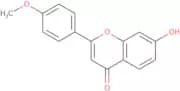
CAS:<p>Pratol is a synthetic antiparasitic agent, which is chemically synthesized from readily available organic precursors. It functions by disrupting the vital metabolic pathways of the targeted parasites, specifically inhibiting certain enzymes vital for parasite survival. Pratol's mode of action involves binding to the active site of these enzymes, effectively halting the necessary biochemical transformations and leading to the death of the parasite.</p>Formula:C16H12O4Purity:Min. 95%Color and Shape:PowderMolecular weight:268.26 g/molSyringetin
CAS:<p>Syringetin is a flavonoid compound, which is derived from natural sources such as grapes and other plants. This compound belongs to the class of polyphenolic compounds known as flavonols, which are secondary metabolites found abundantly in nature. Syringetin exhibits its mode of action primarily through its strong antioxidant properties, which allow it to neutralize free radicals and reduce oxidative stress in biological systems. This activity can contribute to the protection of cells and biomolecules from oxidative damage, a process implicated in aging and various diseases.</p>Formula:C17H14O8Purity:Min. 95%Color and Shape:PowderMolecular weight:346.29 g/molHispidulin
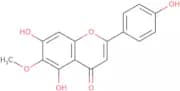
CAS:<p>Hispidulin is a naturally occurring flavonoid compound, which is predominantly derived from plants such as Salvia and Artemisia species. This bioactive compound exhibits a broad spectrum of pharmacological activities that have garnered attention in the scientific community. Its mode of action involves the modulation of cellular pathways, including the inhibition of enzymes like cyclooxygenases, which are pivotal in inflammatory responses. Furthermore, Hispidulin has been shown to influence neurotransmitter systems, including GABAergic activity, indicating potential neuroprotective effects.</p>Formula:C16H12O6Purity:Min. 98 Area-%Color and Shape:Off-White PowderMolecular weight:300.26 g/mol