Flavonoids
Flavonoids are a group of plant metabolites with antioxidant properties that contribute to the color of fruits and flowers. They play a significant role in protecting plants from UV radiation and pathogens. Flavonoids are studied for their potential health benefits, including anti-inflammatory, antiviral, and anticancer properties. They are widely researched in the fields of pharmacology, nutrition, and molecular biology.
Subcategories of "Flavonoids"
- Anthocyanidins(46 products)
- Anthocyanin(46 products)
- Catechin(88 products)
- Chalcones(237 products)
- Pterocarpan(28 products)
Found 2408 products of "Flavonoids"
Sort by
Purity (%)
0
100
|
0
|
50
|
90
|
95
|
100
R,S equol 4'-sulfate sodium salt
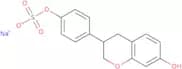
CAS:<p>R,S equol 4'-sulfate sodium salt is a synthetic derivative of equol, which is a type of flavonoid metabolite. This compound is primarily sourced from the biotransformation of the isoflavone daidzein through gut microbiota activity. As a sulfate salt, it is more soluble in aqueous environments, which may facilitate its use in various biological contexts.</p>Formula:C15H13NaO6SPurity:Min. 95%Molecular weight:344.32 g/mol4'-O-Hexanoyldaidzein
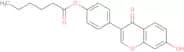
CAS:<p>4'-O-Hexanoyldaidzein is a chemically modified isoflavone, which is a derivative of daidzein. This compound is sourced from soybeans, renowned for being rich in naturally occurring isoflavones. The modification entails the addition of a hexanoyl group to the daidzein molecule, altering its physicochemical properties and potentially enhancing its biological activity.</p>Formula:C21H20O5Purity:Min. 95%Molecular weight:352.38 g/mol3-(4-Methyl benzoyloxy)flavone
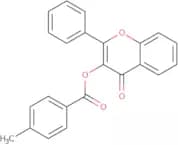
CAS:<p>3-(4-Methyl benzoyloxy)flavone is a synthetic flavonoid ester, which is derived from chemical modification of natural flavonoids. Flavonoids are a class of polyphenolic compounds commonly found in various fruits, vegetables, and beverages. The introduction of the 4-methylbenzoyloxy group offers structural diversity, which may enhance or modify the biological activities traditionally associated with flavonoids.</p>Formula:C23H16O4Purity:Min. 95%Molecular weight:356.37 g/mol2-Hydroxynaringenin
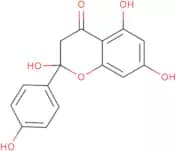
CAS:<p>2-Hydroxynaringenin is a flavonoid compound, which is derived from the extraction and purification of various citrus fruits, particularly from the peel and pulp. It belongs to a class of secondary metabolites found predominantly in these plants, functioning as part of their natural defense mechanism.</p>Formula:C15H12O6Purity:Min. 95%Molecular weight:288.25 g/molPicoxystrobin
CAS:<p>Picoxystrobin is a synthetic fungicide, belonging to the strobilurin chemical class, which is derived from naturally occurring compounds found in certain fungi. It functions by inhibiting mitochondrial respiration in fungal cells, specifically targeting the cytochrome bc1 complex in the electron transport chain. This mode of action disrupts energy production, effectively halting the growth and reproductive capabilities of pathogenic fungi.</p>Formula:C18H16F3NO4Purity:Min. 98 Area-%Molecular weight:367.32 g/molRef: 3D-J-003622
1kgTo inquire50gTo inquire100gTo inquire250gTo inquire500gTo inquire-Unit-ggTo inquire7-Hydroxy-5,8-dimethoxyflavanone
CAS:<p>7-Hydroxy-5,8-dimethoxyflavanone is a naturally occurring flavanone, which is a subcategory of flavonoids commonly found in various plants. This compound is derived from plant sources, often isolated during phytochemical studies examining the secondary metabolites produced by flora. The mode of action of 7-Hydroxy-5,8-dimethoxyflavanone involves modulating various biochemical pathways, potentially influencing enzymatic activity and signal transduction mechanisms. This flavanone has garnered scientific interest due to its reported bioactive properties, such as antioxidant and anti-inflammatory effects. <br><br>Uses and applications of 7-Hydroxy-5,8-dimethoxyflavanone are primarily in research settings, where it is utilized to explore its potential therapeutic benefits. Scientists investigate its efficacy in cell culture and animal models to better understand its effects on human health. Research is ongoing to assess its potential applications in developing nutraceuticals or pharmaceuticals, particularly in areas concerning oxidative stress and inflammation-related disorders. The exploration of its pharmacokinetic properties, safety profile, and bioavailability remains an active area of scientific inquiry.</p>Formula:C17H16O5Purity:Min. 95%Molecular weight:300.3 g/mol5,6,2'-Trimethoxyflavone
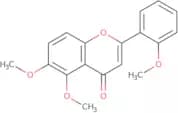
CAS:<p>5,6,2'-Trimethoxyflavone is a naturally occurring flavone compound, which is a type of polyphenolic compound found in various botanical species. It is derived primarily from plants belonging to the genus Kaempferia, as well as other related species that are known for their diverse secondary metabolites.</p>Formula:C18H16O5Purity:Min. 95%Molecular weight:312.32 g/molKaempferol-3,7-dirhamnoside
CAS:<p>Kaempferol-3,7-dirhamnoside is a flavonoid glycoside, which is commonly found in various plant species, particularly those in the Fabaceae family. This compound is structurally composed of the flavonoid kaempferol, linked to two rhamnopyranoside sugar moieties. It is primarily sourced from plants such as Tephrosia purpurea, where it plays a role in the plant's defense mechanisms.</p>Formula:C27H30O14Purity:Min. 95%Molecular weight:578.52 g/mol7,4'-Dibenzyl daidzein
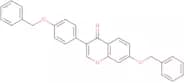
CAS:<p>7,4'-Dibenzyl daidzein is a synthetic isoflavonoid, derived from the modification of natural isoflavones commonly found in soy products. These isoflavones are known for their estrogenic activity and potential therapeutic benefits. The source of inspiration for this compound lies in natural phytoestrogens, which exhibit significant interaction with human estrogen receptors. This synthetic analog is designed to enhance specific bioactivities beyond those of its natural counterparts.</p>Formula:C29H22O4Purity:Min. 95%Molecular weight:434.48 g/mol6-Methoxykaempferol 3-O-rutinoside
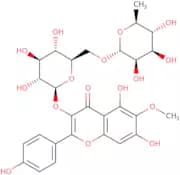
CAS:<p>6-Methoxykaempferol 3-O-rutinoside is a flavonoid glucoside, which is derived from various plants, particularly those belonging to the Leguminosae family. This compound is of significant interest due to its potential biological activities and natural occurrence. The mode of action of 6-Methoxykaempferol 3-O-rutinoside primarily involves its antioxidant properties, which may help in neutralizing free radicals and reducing oxidative stress in biological systems.</p>Purity:Min. 95%7-Hydroxy-2',5,8-trimethoxyflavanone
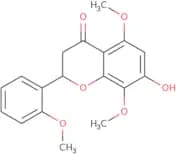
CAS:<p>7-Hydroxy-2',5,8-trimethoxyflavanone is a flavonoid compound, which is a type of naturally occurring phenolic compound. It can be sourced primarily from certain plant species, where it plays a role in the plant's defense mechanism against environmental stressors. Flavonoids like this one often exhibit a variety of biological activities.</p>Formula:C18H18O6Purity:Min. 95%Molecular weight:330.3 g/molProtogenkwanin 4'-glucoside
CAS:<p>Protogenkwanin 4'-glucoside is a flavonoid glucoside, which is a naturally occurring compound derived from various plant sources, particularly known to be present in certain medicinal herbs used in traditional medicine. As a flavonoid glucoside, it interacts with biological systems primarily through its antioxidant properties, which help in scavenging free radicals and reducing oxidative stress. This mode of action is crucial in mitigating cell damage and inflammation.</p>Formula:C22H24O11Purity:Min. 95%Molecular weight:464.42 g/molSinocrassoside C1
CAS:<p>Sinocrassoside C1 is a cycloartane triterpenoid, which is a class of chemical compounds. It is derived from the plant genus Sinocrassula, known for its traditional medicinal applications. The mode of action of Sinocrassoside C1 involves interactions with specific cellular targets, potentially influencing signal transduction pathways and modulating enzyme activities. These interactions may account for its reported bioactivities, including anti-inflammatory, anti-tumor, and neuroprotective effects.</p>Formula:C27H30O16Purity:Min. 95%Molecular weight:610.52 g/molPlantanone B
CAS:<p>Plantanone B is a naturally-derived compound, which is an anti-inflammatory agent sourced from the Plantago species. It is known for its distinct bioactive properties attributed to its unique phytochemical structure. The compound primarily functions by modulating inflammatory pathways, specifically targeting the downregulation of pro-inflammatory cytokines and inhibiting the production of reactive oxygen species. This mode of action underscores its potential in addressing inflammation-associated cellular processes.</p>Formula:C33H40O20Purity:Min. 95%Molecular weight:756.66 g/mol2,3-Dihydrohinokiflavone
CAS:<p>2,3-Dihydrohinokiflavone is a natural bioflavonoid compound, which is typically derived from various plant sources, particularly those native to East Asia. This compound belongs to the broader flavonoid family, known for their antioxidant properties. Its mode of action involves modulating various signaling pathways, which can lead to anti-inflammatory and antioxidant effects. It achieves this by inhibiting the production of pro-inflammatory cytokines and scavenging free radicals, thus reducing oxidative stress in biological systems.</p>Formula:C30H20O10Purity:Min. 95%Molecular weight:540.47 g/mol3'-Methoxypuerarin
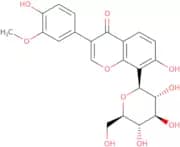
CAS:<p>3'-Methoxypuerarin is a specialized isoflavone derivative, which is a type of phytochemical compound. This compound is primarily sourced from the roots of *Pueraria* species, which are well-known for their rich content of isoflavones. As an organic chemical, 3'-Methoxypuerarin exhibits potential pharmacological activity by interacting with various cellular pathways, often involving signal transduction mechanisms.</p>Formula:C22H22O10Purity:Min. 95%Color and Shape:White PowderMolecular weight:446.4 g/mol7,4'-Dihydroxy-6,8-diprenylflavanone
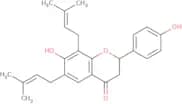
CAS:7,4'-Dihydroxy-6,8-diprenylflavanone is a prenylated flavonoid, which is a type of naturally occurring compound found in various plants. This compound is often derived from specific plant species known for their rich flavonoid content. The prenylation of flavonoids, such as 7,4'-Dihydroxy-6,8-diprenylflavanone, often enhances their biological activity.Formula:C25H28O4Purity:Min. 95%Molecular weight:392.5 g/mol8-Chloroflavanone
CAS:<p>8-Chloroflavanone is a synthetic flavonoid derivative, which is primarily obtained through chemical synthesis involving the chlorination of flavanone substrates. Its mode of action involves the modulation of various biological pathways, including potential inhibition of specific enzymes and interaction with receptor sites, which may influence cellular signaling mechanisms.</p>Formula:C15H11ClO2Purity:Min. 95%Molecular weight:258.7 g/mol5-Methoxyflavanone
CAS:5-Methoxyflavanone is an organic compound, which is a flavonoid derivative obtained primarily through synthetic procedures involving the modification of flavanones. This compound is synthesized through specific chemical reactions that introduce a methoxy group into the flavanone structure, thereby altering its chemical and biological properties.Formula:C16H14O3Purity:Min. 95%Molecular weight:254.28 g/molPrunetin-4'-glucoside
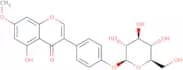
CAS:<p>Prunetin-4'-glucoside is a specialized flavonoid compound, categorized as a glucoside, which is derived from natural plant sources. This glycosylated form of prunetin is found in various plants and serves as part of the plant's defense mechanism. Its mode of action involves antioxidative properties that neutralize free radicals, thus protecting cellular structures from oxidative damage. This mechanism is crucial as oxidative stress is implicated in numerous diseases.</p>Formula:C22H22O10Purity:Min. 95%Molecular weight:446.4 g/mol