Backbone Sugars and Nucleobases
Found 1001 products of "Backbone Sugars and Nucleobases"
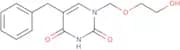
5-Benzyl-1-(2-hydroxyethoxymethyl)uracil
CAS:5-Benzyl-1-(2-hydroxyethoxymethyl)uracil is a cytostatic drug that has been shown to inhibit the growth of cancer cells by inhibiting the enzyme activities necessary for DNA replication and transcription. This compound has been found to be effective in treating metastatic colorectal cancer in experimental models, as well as skin cancers in mice. 5-Benzyl-1-(2-hydroxyethoxymethyl)uracil is also an inhibitor of HIV infection, which may be due to its ability to block the synthesis of uridine. The symptoms that are caused by this drug are not yet known.Formula:C14H16N2O4Purity:Min. 95%Color and Shape:PowderMolecular weight:276.29 g/mol3’,5’-Bis-O-benzoyl-2’-Deoxy-2’-fluoro-4-deoxy-arabinouridine
CAS:Please enquire for more information about 3’,5’-Bis-O-benzoyl-2’-Deoxy-2’-fluoro-4-deoxy-arabinouridine including the price, delivery time and more detailed product information at the technical inquiry form on this pagePurity:Min. 95%5-Methoxyuracil
CAS:5-Methoxyuracil is a labile, colorless and crystalline compound that occurs spontaneously in the presence of oxygen. It has a chemical structure similar to thiourea, with one methyl group substituted for the amino group on the heterocycle. 5-Methoxyuracil is used as a precursor for synthesis of thymine and uracil. It also acts as an antioxidant, preventing reactive oxygen species from causing cellular damage. 5-Methoxyuracil can be used in regenerative medicine to increase the production of messenger RNA (mRNA) and ribosomal RNA (rRNA). This drug is used as a prebiotic agent and can be synthetically produced by dimethylation of uridine followed by ethyl formate oxidation.Formula:C5H6N2O3Purity:Min. 95%Color and Shape:PowderMolecular weight:142.11 g/mol6-Azathymine
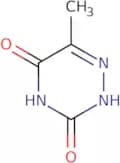
CAS:6-Azathymine is a compound that belongs to the group of amides. It has shown bacterial strain specificity and can be used for the treatment of infections caused by Group P2 bacteria. 6-Azathymine inhibits the enzyme activity of toll-like receptor, which is responsible for immune response and inflammation. It also has been shown to inhibit photosynthetic activity in plants. This drug may also be useful for eye disorders, such as retinitis pigmentosa and macular degeneration. 6-Azathymine is activated by hydroxyl groups, which leads to its toxicity at high concentrations.
Formula:C4H5N3O2Color and Shape:PowderMolecular weight:127.1 g/mol8-Methylxanthine
CAS:8-Methylxanthine is a metabolite of caffeine and theophylline. It has been shown to be a pro-inflammatory cytokine that stimulates the production of other pro-inflammatory cytokines such as interleukin (IL)-1β, IL-6, and tumor necrosis factor alpha (TNFα). 8-Methylxanthine is also a substrate for cytochrome P450 enzyme activity, which is responsible for metabolizing many drugs and other chemicals in the body. This compound has been detected in human liver and urine samples. 8-Methylxanthine has cytotoxic properties and may serve as an antioxidant. Mass spectrometric detection methods are used to identify this compound in biological fluids.Formula:C6H6N4O2Purity:Min. 95%Color and Shape:PowderMolecular weight:166.14 g/mol7-[4-[4-(4-Fluorobenzoyl)Piperidin-1-Yl]Butyl]-1,3-Dimethylpurine-2,6-Dione
CAS:Controlled Product7-[4-[4-(4-Fluorobenzoyl)Piperidin-1-Yl]Butyl]-1,3-Dimethylpurine-2,6-Dione is a drug that belongs to the group of adenosine receptor antagonists. It has been shown to inhibit phosphodiesterase activity and is used as a pharmaceutical dosage. 7-[4-[4-(4-Fluorobenzoyl)Piperidin-1-Yl]Butyl]-1,3-Dimethylpurine-2,6-Dione has been shown to bind to the 5HT2C receptor in vitro. This drug may have therapeutic potential for obesity and type 2 diabetes mellitus treatment.Formula:C23H28FN5O3Purity:Min. 95%Molecular weight:441.5 g/mol2-Chloroinosine 3',4',6'-triacetate
CAS:2-Chloroinosine 3',4',6'-triacetate is a reagent, useful intermediate, fine chemical, and speciality chemical. It is used as an important building block in organic synthesis. 2-Chloroinosine 3',4',6'-triacetate can be used as a versatile building block for the synthesis of many other compounds. The high quality and usefulness of this compound make it a good choice for research chemicals.Formula:C16H17ClN4O8Purity:Min. 95%Color and Shape:White to pale yellow solid.Molecular weight:428.78 g/molN2-Pivaloylguanine
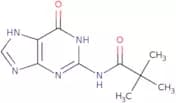
CAS:N2-Pivaloylguanine is a versatile building block that can be used in the synthesis of many complex compounds. It has been shown to be an excellent reagent for the synthesis of heterocyclic molecules, and is also used as a reactant in a number of chemical reactions. N2-Pivaloylguanine is a high quality, useful intermediate that can be used to make other compounds, such as pharmaceuticals and agrochemicals. It is also a useful scaffold for the synthesis of research chemicals.Formula:C10H13N5O2Purity:Min. 95%Color and Shape:Yellow PowderMolecular weight:235.24 g/mol2',3'-Di-O-isopropylidene-5-hydroxymethyl uridine
CAS:2',3'-Di-O-isopropylidene-5-hydroxymethyl uridine (DIOI) is a fine chemical that can be used as a versatile building block or an intermediate in the research of complex compounds. DIOI is also a useful reagent, which may be used as a starting material for the synthesis of other compounds. It has been shown to have high quality and is available at CAS No. 3816-77-1.Formula:C13H18N2O7Purity:Min. 95 Area-%Color and Shape:PowderMolecular weight:314.29 g/mol5,6-Dihydrouracil
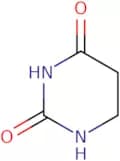
CAS:5,6-Dihydrouracil is a model system and a drug that belongs to the class of inhibitors. It inhibits DNA polymerase, RNA polymerase, and other enzymes by binding to their active sites. 5,6-Dihydrouracil has been shown to inhibit hydrogen bonding interactions with the DNA template or matrix effect in vitro. This drug has also been shown to have an effect on energy metabolism in humans. 5,6-Dihydrouracil is used as a probe for enzyme activity and receptor binding studies in vitro. Additionally, it can be used as an analytical method for determining the presence of dihydrouracil in human serum.Formula:C4H6N2O2Purity:Min. 98 Area-%Color and Shape:PowderMolecular weight:114.1 g/mol5-Azauracil
CAS:5-Azauracil is a glycosylase that specifically hydrolyzes the N-glycosidic bond in uridine. It is a potential anticancer agent that inhibits the growth of cancer cells by targeting intracellular targets and inhibiting enzyme activities. 5-Azauracil binds to nitrogen atoms in the enzyme active site, causing an alteration in the hydrogen bonding network and resulting in inhibition of enzyme activity. The reaction mechanism involves the formation of orotic acid as a product. 5-Azauracil also has been shown to inhibit x-ray diffraction data, which may be due to its ability to bind to an enzyme's metal cofactors such as iron or copper.Formula:C3H3N3O2Purity:Min. 95%Color and Shape:White PowderMolecular weight:113.07 g/mol5,6-Dihydro-ara-uridine
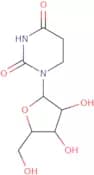
CAS:5,6-Dihydro-ara-uridine is a fine chemical that belongs to the group of compounds known as uridine analogues. It can be used as a versatile building block in the synthesis of other compounds and has been shown to be an effective intermediate in the synthesis of various research chemicals. 5,6-Dihydro-ara-uridine is also commonly used as a reaction component and reagent in the polymerization process. This compound is high quality and has CAS No. 30100-83-5.
Formula:C9H14N2O6Purity:Min. 95%Color and Shape:White PowderMolecular weight:246.22 g/molN2-Phenoxyacetyl guanine
CAS:N2-Phenoxyacetyl guanine is a labile nucleoside that can be synthesized by the aminoacylation of guanosine with phenoxyacetic acid. It has been shown to have an important role in oxidative DNA damage, which may lead to mutagenesis and cancer. N2-Phenoxyacetyl guanine is stereoselective and binds preferentially to the GGC sequence, and it is also aminopropylated at its 2′ position. This nucleoside is not ionizing but can be degraded by radiation or enzymes such as deaminases.Formula:C13H11N5O3Purity:Min. 95%Molecular weight:285.26 g/molUracil-4-acetic acid
CAS:Uracil-4-acetic acid is a monocarboxylic acid that is synthesized in mammalian cells. It can also be obtained by hydrolysis of orotic acid, which was previously synthesized from uridine and phosphorolysis of sephadex g-100. Uracil-4-acetic acid is used to produce uridine through the action of an enzyme called uridine phosphorylase. This enzyme catalyzes the reaction between ATP and uracil, as well as the conversion of orotic acid to orotidine 5′-monophosphate decarboxylase. Uracil-4-acetic acid has been shown to inhibit the growth of toxoplasma, but it has not been determined whether this inhibition is due to its role in the synthesis of uridine or its toxic effects on the parasite.Formula:C6H6N2O4Purity:Min. 95%Color and Shape:White SolidMolecular weight:170.12 g/mol6-Methylmercaptopurine
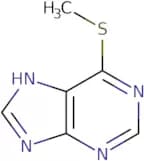
CAS:6-Methylmercaptopurine is an important metabolite of 6-methylmercaptopurine, which is a vital component of the nucleotide synthesis pathway. It is used in analytical methods to determine levels of nucleotides, as well as in biological studies for its effect on autoimmune diseases. 6-Methylmercaptopurine can inhibit replication by inhibiting the methyltransferase enzyme.Formula:C6H6N4SPurity:Min. 95%Color and Shape:Off-White Yellow PowderMolecular weight:166.2 g/mol5-Bromouracil
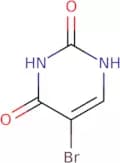
CAS:5-Bromouracil is a cytotoxic agent that inhibits the synthesis of DNA by inhibiting the enzyme thymine-5-bromo-2'-deoxyribonucleotide synthetase. It also has genotoxic effects on the organism, which can be observed in transfection experiments with human lymphocytes and polymerase chain reaction (PCR) experiments. 5-Bromouracil binds to the hydroxyl group of thymine and interacts with the nucleic acid bases, blocking the process of DNA synthesis. This drug is used to treat cancer in humans, but it is also toxic to eosinophils, which are white blood cells that produce chemicals such as peroxidases that help fight infections. The mechanism of action for 5-Bromouracil is not yet fully understood.Formula:C4H3BrN2O2Purity:Min. 95%Color and Shape:Yellow PowderMolecular weight:190.98 g/molN2-Acetylguanine
CAS:N2-Acetylguanine is a reactive compound that inhibits the growth of cancer cells in leukemia. It is an antimicrobial agent that has significant cytotoxicity against leukemia cells and other bacterial cells. N2-Acetylguanine reacts with dihydrozeatin to form acyclic nucleoside phosphonate, which inhibits the synthesis of DNA, RNA, and protein. This reaction yields a high yield of this product in a short period of time. The modification process also creates a more efficient method for synthesizing this compound. N2-Acetylguanine can be used to treat dyslipidemia by decreasing cholesterol levels in the blood and can also be used as an active substance in the treatment of diabetes mellitus type II and insulin resistance.Formula:C7H7N5O2Purity:Min. 95%Color and Shape:PowderMolecular weight:193.17 g/mol3’,5’-Di-O-acetyl-2’-azido-2’-deoxyuridine
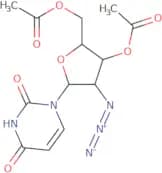
CAS:Please enquire for more information about 3’,5’-Di-O-acetyl-2’-azido-2’-deoxyuridine including the price, delivery time and more detailed product information at the technical inquiry form on this pagePurity:Min. 95%N2-Acetyl-O6-diphenylcarbamoylguanine
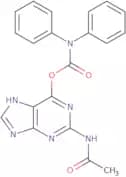
CAS:N2-Acetyl-O6-diphenylcarbamoylguanine is an amide nucleoside that is a potent antiviral agent. It inhibits the synthesis of viral DNA by inhibiting viral DNA polymerase. N2-Acetyl-O6-diphenylcarbamoylguanine also has reactive functional groups that can react with other molecules, such as human serum albumin, to form conjugates that are more stable and can be used for long periods of time. This nucleoside is synthesized by reacting uridine with chloroacetamide and then reacting the resulting product with diphenylcarbamoyl chloride in the presence of triethylamine. The ring opening reaction leads to the formation of a glycosidic linkage between N2-Acetyl-O6-diphenylcarbamoylguanine and the sugar molecule. This nucleoside has been shown toFormula:C20H16N6O3Purity:Min. 95%Color and Shape:PowderMolecular weight:388.38 g/molO6-Diphenylcarbamoyl-N2-isobutyrylguanine
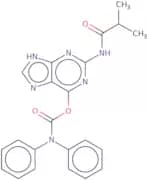
CAS:Synthetic building block for nucleic acid researchFormula:C22H20N6O3Purity:Min. 95%Color and Shape:PowderMolecular weight:416.43 g/mol



![7-[4-[4-(4-Fluorobenzoyl)Piperidin-1-Yl]Butyl]-1,3-Dimethylpurine-2,6-Dione](/_next/image/?url=https%3A%2Fstatic.cymitquimica.com%2Fproducts%2F3D%2Fthumb-webp%2FFF99814.webp&w=3840&q=75)