Lipids
Lipids are a diverse group of hydrophobic molecules essential for cellular structure, energy storage, and signaling. They include fats, oils, phospholipids, sterols, and waxes, each playing unique roles in biological membranes and metabolic processes. In this category, you will find a variety of lipids suitable for research in biochemistry, cell biology, and nutrition. At CymitQuimica, we provide high-quality lipids to support your studies on lipid metabolism, membrane dynamics, and lipid-protein interactions, ensuring reliable and reproducible outcomes in your experiments.
Subcategories of "Lipids"
- Fatty Acids and Derivatives(3,198 products)
- Glycerolipids(97 products)
- Glycerophospholipids / Phospholipids(381 products)
- Isoprenes / Phenyl Lipids(550 products)
- Physiologically Active Lipids(3,313 products)
- Polyketides(533 products)
- Sphingolipids(226 products)
- Sterols(200 products)
Found 1431 products of "Lipids"
Sort by
Purity (%)
0
100
|
0
|
50
|
90
|
95
|
100
LANOSTEROL
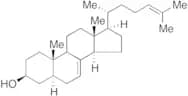
CAS:<p>Lanosterol (3β-Hydroxy-8,24-lanostadiene) is a tetracyclic triterpenoid which is the compound from which all steroids are derived.</p>Formula:C30H50OPurity:97.99% - 99.67%Color and Shape:SolidMolecular weight:426.72Triarachidin
CAS:<p>Triarachidin (1,2,3-Trieicosanoyl Glycerol) is a triarachidic acid triglyceride. Triglycerides (TGs) are also known as triacylglycerols or triacylglycerides.</p>Formula:C63H122O6Purity:≥95%Color and Shape:SolidMolecular weight:975.64Tricaprilin
CAS:<p>Tricaprilin (Glycerol Tri-n-octanoate) is used in study for patients with mild to moderate Alzheimer's disease. It is an anticonvulsant and a plant metabolite.</p>Formula:C27H50O6Purity:98.40% - 99.57%Color and Shape:Clear Colorless To Amber Liquid Physical Description Odorless Viscous Clear Colorless To Amber-Brown Liquid (Ntp 1992)Molecular weight:470.68Glycidol
CAS:Controlled Product<p>Applications Stabilizer in manufacturing of vinyl polymers; intermediate in synthesis of glycerol, glycidyl ethers, and amines; additive for oil and synthetic hydraulic fluids; epoxy resin diluent.<br> Not a dangerous good if item is equal to or less than 1g/ml and there is less than 100g/ml in the package<br>References Hiles, R.A., et al.: Food Cosmet. Toxicol., 19, 347 (1981); Thompson, E.D., et al.: Food Chem. Toxicol., 22, 665 (1984);<br></p>Formula:C3H6O2Color and Shape:ColourlessMolecular weight:74.081-Palmitoyl-2-arachidoyllecithin
CAS:Controlled ProductFormula:C44H80NO8PColor and Shape:NeatMolecular weight:782.082(E)-3-(4-Hydroxy-3,5-dimethoxyphenyl)acrylaldehyde
CAS:<p>Stability Air Sensitive<br>Applications (E)-3-(4-Hydroxy-3,5-dimethoxyphenyl)acrylaldehyde (cas# 4206-58-0) is a useful research chemical.<br></p>Formula:C11H12O4Color and Shape:NeatMolecular weight:208.21Ursodeoxycholic Acid-d4
CAS:Controlled Product<p>Applications Ursodeoxycholic Acid-d4 is a deuterated form of Ursodeoxcholic Acid (U850000), which is used as an anticholelithogenic. Ursodeoxcholic Acid is an epimer with Chenodiol with respect to the hydroxyl group at C7. Ursodeoxycholic Acid-d4 was used as an internal standard for rapid quantification of bile acids by liquid chromatography-tandem mass spectrometry.<br>References Tint, G.S., et al.: Gastroenterology, 91, 1007 (1986), Poupon, R.E, et al.: N. Engl. J. Med., 324, 1548 (1991), MacKenzie, P., et al.: J. Biol. Chem., 283, 36205 (2008); Scherer, M., et al.: J. Chromatogr. B, 877, 3920 (2009(<br></p>Formula:C242H4H36O4Color and Shape:White To Off-WhiteMolecular weight:396.603-Hydroxydodecanoic Acid Methyl Ester
CAS:Controlled Product<p>Applications 3-Hydroxydodecanoic Acid Methyl Ester is a 3-hydroxyl fatty acid Me ester as methionine regulator.<br>References Akamatsu, Y., et al.: J. Biol. Chem., 245, 709 (1970); Alvarez, L., et al.: Biochem. J., 301, 557 (1994), Varbanova, M., et al.: Plant Cell, 19, 32 (2007), Atsumi, S., et al.: Nature, 451, 86 (2008),<br></p>Formula:C13H26O3Color and Shape:NeatMolecular weight:230.34Corticosterone
CAS:Controlled Product<p>Applications Glucocorticoid; an intermediate in the biosynthesis of aldosterone, isolated from the adrenal cortex.<br>References Schmidt, M., et al.: Endocrinol., 150, 2709 (2009), Bailey, M., et al.: J. Immunol., 182, 7888 (2009), Brunton, P., et al.: J. Neurosci., 29, 6449 (2009), Pruett, S., et al.: Toxicol. Sci., 109, 265 (2009),<br></p>Formula:C21H30O4Color and Shape:NeatMolecular weight:346.46C24 Ceramide
CAS:Controlled Product<p>Applications Production of ceramide occurs upon hydrolysis of sphingomyelin by a specific isoform of phospholipase C, appropriately named sphingomyelinase.<br>References Gu, Q, et al.: Anal. Biochem., 244, 347 (1997), Perry, D.K., et al.: Trends Cardiovasc. Med., 6, 158 (1996), Clayton, R.B., et al.: J. Lipid Res., 15, 557 (1974),<br></p>Formula:C42H83NO3Color and Shape:White To Light BeigeMolecular weight:650.11Propacetamol Hydrochloride
CAS:Controlled Product<p>Applications Propacetamol HCl (cas# 66532-86-3) is a useful research chemical.<br></p>Formula:C14H20N2O3·ClHColor and Shape:NeatMolecular weight:300.78Cholesterol 3-Acetate
CAS:Controlled Product<p>Applications Cholesterol (C432501) derivative. Cholesterol is a major component of all biological membranes; ~25% of total brain lipid is Cholesterol. Cholesterol is the principal sterol of the higher animals. Cholesterol was found in all body tissues, especial in the brain, spinal cord, and in animal fats or oils. Cholesterol is the main constituent of gallstones.<br>References Rosin, Z., et al.: Physiol. Chem., 124, 282 (1923), Schoenheimer, et al.: J. Biol. Chem., 105, 355 (1934), Gemant, et al.: Life Sci., 1, 233 (1962), Johnson, K., et al.: 4, 457 (1964),<br></p>Formula:C29H48O2Color and Shape:NeatMolecular weight:428.69(E,E)-Farnesol 11,11,11,12,12,12-d6
CAS:Controlled ProductFormula:C15H20D6OColor and Shape:NeatMolecular weight:228.42-(5Z)-5-Tetradecen-1-yl-cyclobutanone
CAS:Controlled ProductFormula:C18H32OColor and Shape:NeatMolecular weight:264.451,2-Dilinoleoyl-3-oleoyl-rac-glycerol
CAS:Controlled Product<p>Stability Light Sensitive, Temperature Sensitive<br>Applications 1,2-Dilinoleoyl-3-oleoyl-rac-glycerol is a triacylglycerol found in sesame oil.<br>References Lee, D., et al.: Analytica Chimica Acta, 429, 321 (2001); Jahaniaval, F., et al.: J. AM. Oil Chem. Soc., 77,847 (2000)<br></p>Formula:C57H100O6Color and Shape:NeatMolecular weight:881.40Tetrahydro 11-Deoxycorticosterone
CAS:Controlled Product<p>Applications Tetrahydro 11-Deoxycorticosterone is a metabolite of 11-Deoxycorticosterone (DOC) (D232590).<br>References Fedele, E., et al.: J. Neurochem., 75, 782 (2000), Adkins, C., et al.: J. Biol. Chem., 276, 38934 (2001), Erceg, S., et al.: Brain Res., 1036, 115 (2005),<br></p>Formula:C21H34O3Color and Shape:White To Off-WhiteMolecular weight:334.4924-Epicerebrosterol
CAS:Controlled ProductFormula:C27H46O2Color and Shape:NeatMolecular weight:402.6520-HETE (>80%)
CAS:Controlled Product<p>Applications 20-HETE is a cytochrome P450 (CYP450) metabolite that may play an autacoid role in cerebral and renal vasculature.<br>References McGiff, J.C., et al.: Am J Physiol, 277, R607-R623 (1999);<br></p>Formula:C20H32O3Purity:>80%Color and Shape:NeatMolecular weight:320.466Glycoursodeoxycholic Acid-d4 (Major)
CAS:Controlled ProductFormula:C26D4H39NO5Color and Shape:White To Off-WhiteMolecular weight:453.6517α-Estradiol
CAS:Controlled Product<p>Impurity Estradiol 17?-Hydroxy Impurity; Estradiol EP Impurity B; Ethinylestradiol EP Impurity L<br>Applications Estradiol (known as α-Estradiol or 17 α-Estradiol) is a biologically active estrogen in human breast cancer cells in tissue culture. 17-Εstradiol and its selective receptor, ER-X, are not part of a classical hormone/receptor endocrine system but of a system with important autocrine/paracrine functions in the developing and adult brain(1,2). 17-Estradiol may have enormous implications for hormone replacement strategies at the menopause and in the treatment of such neurodegenerative disorders as Alzheimer’s disease and ischemic stroke(3).This compound is a contaminant of emerging concern (CECs). Drinking water contaminant candidate list 3 (CCL 3) compound as per United States Environmental Protection Agency (EPA). Environmental contaminants; Food contaminants.<br>References 1. Lievertz, R. et al.: J. Obstet. Gynecol. 1987 May;156(5):1289-932. Kuhnz, W. et al.: Arzneimittelforschung. 1993 Sep;43(9):966-73.3. Toran-Allerand, C. et al.: Endocrinology. 2005 Sep;146(9):3843-50.<br></p>Formula:C18H24O2Color and Shape:WhiteMolecular weight:272.38Glycidyl Myristate
CAS:<p>Applications Glycidyl Myristate is formed from monoacylglycerols and are present in edible fats and oils.<br>References Zuzana, Z et al.: 77, 65 (2017);<br></p>Formula:C17H32O3Color and Shape:NeatMolecular weight:284.437β-Hydroxy Cholesterol
CAS:Controlled Product<p>Applications A metabolite of Cholesterol. Its membrane organizing properties could have implications in Altzheimer’s disease.<br>References Wang, J., et al.: Biochemistry, 43, 1010 (2004), Lemaire-Ewing, S., et al.: Cell Biol. Toxicol., 21, 97 (2005), Fuda, H., et al.: J. Lipid Res., 48, 1343 ( 2007), Sasaki, H., et al.: Metabolism, 56, 357 (2007); S.L. Regen et al.: J. Amer. Chem. Soc., 131, 12354 (2009)<br></p>Formula:C27H46O2Color and Shape:NeatMolecular weight:402.65Diosgenin
CAS:Controlled Product<p>Applications Aglicone of saponin dioscin. Diosgenin exists in some food supplements and herbal medicines and lowers plasma cholesterol by increasing fecal cholesterol excretion. It can be converted to Pregnenolone and Progesterone.<br>References Cayen, M., et al.: J. Lipid Res., 20, 162 (1979), Nervi, F., et al.: J. Clin. Invest., 74, 2226 (1984), Davis, H., et al.: J. Biol. Chem., 279, 33586 (2004), Brown, J., et al.: Biochem. J., 406, 273 (2007),<br></p>Formula:C27H42O3Color and Shape:White To Light YellowMolecular weight:414.62C20 Dihydroceramide
CAS:Controlled Product<p>Applications C20 Dihydroceramide (cas# 121459-06-1) is a compound useful in organic synthesis.<br></p>Formula:C38H77NO3Color and Shape:NeatMolecular weight:596.02dl-Menthyl Myristate
CAS:Controlled ProductFormula:C24H46O2Color and Shape:NeatMolecular weight:366.6212-Palmitoyl-sn-glycero-3-phosphocholine
CAS:Controlled Product<p>Applications Food preservative, having the ability to form complexes with starch, retarding its retrodegradation during storage.<br>References Yu, S., et al.: J. Agric. Food Chem., 54, 4482 (2006),<br></p>Formula:C24H50NO7PColor and Shape:NeatMolecular weight:495.6420(S)-Ginsenoside Rg2
CAS:Controlled Product<p>Stability Hygroscopic<br>Applications 20(S)-Ginsenoside Rg2 is used as an aldose reductase inhibitor and my exert anti-inflammatory and immunomodulatory activity. It exists as a bioactive metabolite of the ginsenoside component of Panax ginseng.<br>References Cho, K. et al.: Biomol. Ther., 22, 55 (2014); Fatmawati, S. et al.: Bioorg. Med. Chem. Lett., 24, 4407 (2014);<br></p>Formula:C42H72O13Color and Shape:NeatMolecular weight:785.01(S) FTY720 Phosphate
CAS:<p>Applications FTY720 is a sphingosine 1-phosphate receptor modular, ameliorates experimental autoimmune encephalomyelitis by inhibition of T cell infiltration. FTY720 Phosphate is the active metabolite of FTY720-phosphate.<br>References Chiba, K., et al.: J. Immunol., 160, 5037 (1998), Brinkmann, V., et al.: J. Biol. Chem., 277, 21453 (2002), Kiuchi, M., et al.: Bioorganic & Medicinal Chemistry, 13, 425 (2005<br></p>Formula:C19H34NO5PColor and Shape:WhiteMolecular weight:387.45Campesterol
CAS:Controlled Product<p>Applications Campesterol is a phytosterol that may inhibit the intestinal absorption of cholesterol.<br>References Fransen, H., et al.: J. Nut., 140, 1062 (2010), Kojoma, M., et al.: Plant Biotechnol., 27, 59 (2010), Orozco-Solano, M., et al.: J. Agric. Food Chem., 58, 7539 (2010),<br></p>Formula:C28H48OColor and Shape:WhiteMolecular weight:400.68(-)-Norgestrel-d6
CAS:Controlled Product<p>Applications Labelled (-)-Norgestrel, an emergency contraceptive. Levonorgestrel is safe, tolerated and effective in emergency contraception in woman.<br>References Fotherby, K., et al.: J. Steroid Biochem., 19(1C), 817 (1983), Stanczyk, F. Z., et al.: Contraception, 42, 67 (1990), Bednarek, P., et al.: Drugs, 67, 2478 (2007),<br></p>Formula:C21D6H22O2Color and Shape:NeatMolecular weight:318.48rac 1-Oleoyl-2,3-dipalmitoyl Glycerol
CAS:Controlled Product<p>Applications Acylglycerols and fatty acids in olive oil from pulp, seed, and whole fruit.<br>References Ninni, V., et al.: J. Sci. Food Agric., 79, 2113 (1999), Salas, J., et al.: Prog. Lipid Res., 39, 151 (2000), Mannina, L., et al.: J. Agric. Food Chem., 49, 2687 (2001),<br></p>Formula:C53H100O6Color and Shape:NeatMolecular weight:833.36Lathosterol
CAS:<p>Applications A Cholesterol (C432501) metabolite. Lathosterol (indicating cholesterol synthesis) and Sitosterol (indicating cholesterol absorption) also decreased with deteriorating health. Low Lathosterol, Sitosterol (S497050), and Cholesterol (C432501) predicted mortality additively and independently of each other.<br>References Chyou, P., et al.: Age Ageing, 29, 69 (2000), Schatz, I., et al.: Lancet, 358, 351 (2001), Bjorkman, M., et al.: Eur. J. Endocrinol., 158, 749 (2008),<br></p>Formula:C27H46OColor and Shape:White To Off-WhiteMolecular weight:386.65Glycerol Monoleate
CAS:<p>Applications Glycerol Monoleate is used to synthesize water soluble drugs in need of sustained-release for drug delivery.<br>References Chang, C. et al.: Int. J. Pharm., 276, 83 (2004); Chang, C. et al.: Int. J. Pharm., 173, 51 (1998);<br></p>Formula:C21H40O4Color and Shape:NeatMolecular weight:356.54γ-Linolenic Acid
CAS:Controlled Product<p>Stability Light Sensitive<br>Applications γ-Linolenic Acid is a fatty acid found mainly in vegetable oil. Studies suggest that γ-Linolenic Acid may have immune regulating and anti-inflammatory effects. γ-Linolenic Acid has also been used in the treatment of atopic eczeme although its efficacy is disputed.<br>References Ziboh, V. et al.: Fatty Acids Food Health Implic., 791 (2008); Kapoor, R. et al.: Curr. Phar, Biotechnol., 7, 531 (2006); Horrobin, D. et al.: Am. J. Nutrit., 71, 367S (2000);<br></p>Formula:C18H30O2Color and Shape:NeatMolecular weight:278.431-Myristoyl-sn-glycero-3-phosphocholine
CAS:<p>Applications 1-Myristoyl-sn-glycero-3-phosphocholine is a derivative of sn-Glycero-3-phosphocholine (G598700) and can be used as a biomarker in biological studies.<br>References Bowers, J., et al.: J. Chromatogr. B, 966, 154 (2014)<br></p>Formula:C22H46NO7PColor and Shape:WhiteMolecular weight:467.58(+)-cis-Diltiazem-d3 HCl (acetoxy-d3)
CAS:Controlled Product<p>Applications (+)-cis-Diltiazem-d3 HCl (acetoxy-d3) (CAS# 1217860-13-3) is a useful isotopically labeled research compound.<br></p>Formula:C22D3H23N2O4S·ClHColor and Shape:NeatMolecular weight:454.0(all-cis)-7,10,13,16,19-Docosapentaenoic Acid
CAS:Controlled ProductFormula:C22H34O2Color and Shape:NeatMolecular weight:330.50(25R)-26-Hydroxycholesterol
CAS:Controlled Product<p>Applications (25R)-26-Hydroxycholesterol is a desmosterol metabolite that is found in the brain. 26-Hydroxycholesterol has been used as a biomarker for carbon cycling in the northwestern Mediterranean Sea.<br>References Meljon, A., et. al.: J. Lipid Res., 53, 2469 (2012); Christodoulou, S., et. al.: Marine Chem., 113, 25 (2009)<br></p>Formula:C27H46O2Color and Shape:NeatMolecular weight:402.652(S)-Equol
CAS:Controlled Product<p>Applications (S)-Equol and R-Equol are metabolites of the soy isoflavones Daidzein (D103500) and Genistein. Both have significant biological actions.<br>References Heinonen, S., et al.: Anal. Biochem., 274, 211 (1999), Setchell, K., et al.: J. Nutr., 132, 3577 (2002), Thigpen, J., et al.: Comp. Med., 53, 607 (2003), Yee, S., et al.: Food Chem. Toxicol., 46, 2713 (2008),<br></p>Formula:C15H14O3Color and Shape:WhiteMolecular weight:242.27β-Muricholic Acid
CAS:Controlled Product<p>Applications β-Muricholic Acid is an bile acid found in urine. β-Muricholic Acid has been used in studies of down regulation of transporter protein through ubiquitin dependent protein degradation.<br>References Miyata, M., et al.: Euro. J. Pharmacol., 714, 507 (2013);<br></p>Formula:C24H40O5Color and Shape:White To Off-WhiteMolecular weight:408.5720(S)-Ginsenoside Rh1
CAS:Controlled Product<p>Applications 20(S)-Ginsenoside Rh1 is an anti-cancer agent found in the leaves of ginseng.<br>References Zheng, M. et al.: Biomed. Res., 26, 646 (2015);<br></p>Formula:C36H62O9Color and Shape:NeatMolecular weight:638.871,2-Dipalmitoyl-rac-glycero-3-phosphoethanolamine
CAS:Controlled Product<p>Applications 1,2-Dipalmitoyl-rac-glycero-3-phosphoethanolamine is a long chain fatty acid, acting as a luminescence marker. Is used in enhancing radiotherapy for cancer treatment<br>References Dotsikas, Y. et al.: Anal. Sci., 28, 753 (2012); Choi, J. et al.: J. Nanomet., 8, 863704, (2012);<br></p>Formula:C37H74NO8PColor and Shape:NeatMolecular weight:691.96(7Z)-7-Hexadecenoic Acid (Solution in Ethanol)
CAS:Controlled Product<p>Applications (7Z)-7-Hexadecenoic acid is a fatty acid that may be useful for determining the specific genus of a bacterial population present in a variety of natural environments.<br>References Kneif, C., et al.: Environ Microbiol., 5, 1155-67 (2003)<br></p>Formula:C16H30O2Color and Shape:ColourlessMolecular weight:254.41(+)-20-Hydroxyecdysone
CAS:<p>Applications (+)-20-Hydroxyecdysone regulates gene transcription via a genomic pathway through a transcription complex that is formed.<br>References Liu, W. et al.: Endocrinol., 155, 1738 (2014); Wang, Q. et al.: Plant Physiol. Biochem., 84, 1 (2014);<br></p>Formula:C27H44O7Color and Shape:White To Off-WhiteMolecular weight:480.63N-Stearoyl Phytosphingosine
CAS:<p>Applications An intercellular lipid that benefits skin hydration and protects against SLS irritation.<br>References Yoshimura, Y., et al.: J. Biochem., 132, 229 (2002), Yilmaz, E., et al.: Int. J. Pharm., 307, 232 (2006), Huang, H., et al.: Int. J. Dermatol., 47, 812 (2008),<br></p>Formula:C36H73NO4Color and Shape:NeatMolecular weight:583.97C12 Ceramide
CAS:Controlled Product<p>Applications Ceramide is one of the simplest sphingolipids, consisting of a sphingosine base N-linked to a fatty acid, and is a membrane mediator for cell-signaling events. N-Acyl chain length of membrane ceramides can influence bidimensional transitions, condensed domain morphology, and interfacial thickness.<br>References Shimshick, E., et al.: Biochemistry, 1973, 12, 2351 (1973), Kolesnick, R., et al.: J. Cell Physiol., 184, 285 (2000), Goni, F., et al.: Biochim. Biophys. Acta., 1758, 1902 (2006),<br></p>Formula:C30H59NO3Color and Shape:NeatMolecular weight:481.7910-Hydroxy-2-decenoic acid
CAS:<p>Applications 10-Hydroxy-2-decenoic acid<br></p>Formula:C10H18O3Color and Shape:WhiteMolecular weight:186.25