Vitamins
Vitamins are organic compounds required in small amounts for essential physiological functions and overall health. They play crucial roles in metabolism, immune function, and cellular maintenance. In this category, you will find a diverse range of vitamins, including water-soluble and fat-soluble types, necessary for research in nutrition, biochemistry, and health sciences. At CymitQuimica, we offer high-quality vitamins to support your research and development efforts, ensuring the accuracy and effectiveness of your studies on vitamin functions and deficiencies.
Found 1116 products of "Vitamins"
Sort by
Purity (%)
0
100
|
0
|
50
|
90
|
95
|
100
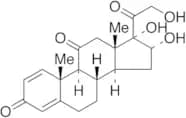
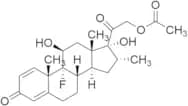
16α,17,21-Trihydroxy-pregna-1,4-diene-3,11,20-trione
CAS:Controlled Product<p>Applications A metabolite of Budesonide (B689490), an antiinflammatory agent.<br>References Cserhati, T., et al.: J. Pharm. Biomed. Anal., 22, 25 (2000), Dilger, K., et al.: J. Clin. Pharmacol., 47, 1532 (2007), Buchwald, P., et al.: Steroids, 73, 193 (2008),<br></p>Formula:C21H26O6Color and Shape:NeatMolecular weight:374.43Dodecahydro-3H-cyclopenta2-oxoethyl Acetate Dexamethasone
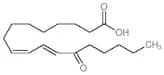
CAS:Controlled ProductFormula:C24H31FO6Color and Shape:NeatMolecular weight:434.513-OxoODE
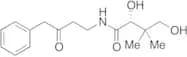
CAS:Controlled ProductFormula:C18H30O3Color and Shape:White To Off-WhiteMolecular weight:294.40(2R)-2-hydroxy-3-(hydroxymethyl)-3-methyl-N-(3-oxo-4-phenylbutyl)butanamide
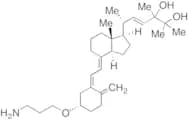
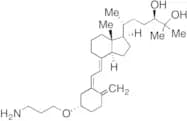
CAS:Controlled ProductFormula:C16H23NO4Color and Shape:NeatMolecular weight:293.363-Aminopropyl-24,25-dihydroxy Vitamin D2
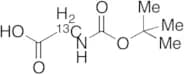
Controlled ProductFormula:C31H51NO3Color and Shape:NeatMolecular weight:485.74N-Boc-glycine-13C
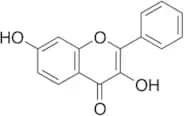
CAS:Controlled ProductFormula:CC6H13NO4Color and Shape:NeatMolecular weight:176.1757,3-Dihydroxyflavone
CAS:Controlled ProductFormula:C15H10O4Color and Shape:NeatMolecular weight:254.238Menaquinone 4-d7 (Mixture of cis-trans isomers) (100ug/mL in Acetonitrile)
CAS:Controlled ProductFormula:C31H33D7O2Color and Shape:Yellow To Light YellowMolecular weight:451.69Auraptene
CAS:Controlled Product<p>Applications Auraptene is a natural bioactive monoterpene coumarin ether. Auraptene has shown a remarkable effect in the prevention of degenerative diseases.<br>References Brunhofer, G., et al.: Bioorg. Med. Chem., 20, 669 (2012); Furukawa, Y., et al.: Int. J. Mole. Sci., 13, 5338 (2012);<br></p>Formula:C19H22O3Color and Shape:NeatMolecular weight:298.38GW 3965 Hydrochloride
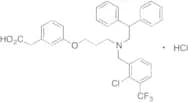
CAS:Controlled Product<p>Applications GW3965 Hydrochloride, is a potent, selective liver X receptor (LXR) agonist for hLXRα and hLXR. GW3965 has shown potent anti-inflammatory activity in both irritant and allergic contact models of dermatitis, requiring the participation of both LXRα and LXRβ.<br>References Fowler, A.J., et. al.: J. Invest. Dermatol., 120, 246 (2003)<br></p>Formula:C33H31ClF3NO3•HClColor and Shape:NeatMolecular weight:582.05364625-Hydroxy Vitamin D3 3,3'-Biotinylaminopropyl Ether
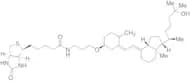
CAS:<p>Applications Vitamin D3 (V676045) analog.<br>References Roy, A., et al.: Steroids, 60, 530 (1995);<br></p>Formula:C40H65N3O4SColor and Shape:NeatMolecular weight:684.03Vitamin D5
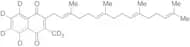
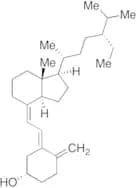
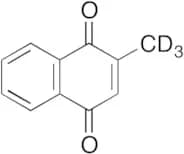
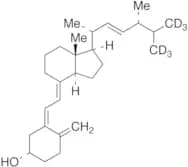
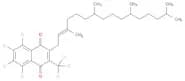
CAS:Controlled Product<p>Applications Vitamin D5 is used in the synthetic preparation of 1α-Hydroxyvitamin D5 a promising chemopreventive agent for breast cancer.<br>References Moriarty, R.M., Albinescu, D.: J. Org. Chem., 70, 7624 (2005)<br></p>Formula:C29H48OColor and Shape:NeatMolecular weight:412.6912-(Methyl-d3)-1,4-naphthalenedione (Vitamin K3-d3)
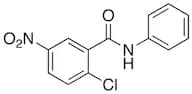
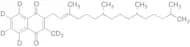
CAS:Controlled Product<p>Applications Isotope labelled d3; 1,4-Dihydro-1,4-dioxo-2-methylnaphthalene-d3; (Vitamin K3), precursor to various types of Vitamin K. Used as a micronutrient for livestock and pet foods.<br>References Sakamoto, S., et al.: Anal. Bioanal. Chem., 396, 2955 (2010), Gohil, V., et al.: Nat. Biotechnol., 28, 249 (2010), Hu, W., et al.: Anal. Biochem., 398, 245 (2010),<br></p>Formula:C11H5D3O2Color and Shape:NeatMolecular weight:175.22-Chloro-5-nitro-N-4-phenylbenzamide
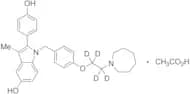
CAS:Controlled Product<p>Applications A cell-permeable, selective and irreversible PPARγ antagonist (IC50 = 3.3 nM, 32 nM, and 2 µM for PPARγ, PPARα, and PPARδ, respectively). Reported to covalently modify a cysteine residue in the binding site of PPAR. At a concentration of 10 µM, also acts as an agonist of human pregnane X receptor (PXR) and farnesoid X receptor (FXR). Does not activate liver X receptor-a (LXRa), retinoic acid receptor (RAR), retinoid X receptor-a (RXRa) and thyroid receptors a and b (TRa and TRb<br>References Huang, J.T., et al.: Nature, 400, 378 (1999), Wilson, T.M., et al.: J. Med. Chem., 43, 527 (2000), Leesnitzer, L.M., et al.: Biochemistry, 41, 6640 (2002)<br></p>Formula:C13H9ClN2O3Color and Shape:NeatMolecular weight:276.68Bazedoxifene-d4 Acetate
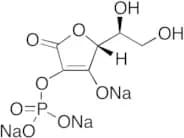
CAS:Controlled ProductFormula:C30H30D4N2O3Color and Shape:NeatMolecular weight:474.6272-Phospho-L-ascorbic Acid Trisodium Salt
CAS:Controlled Product<p>Applications 2-Phospho-L-ascorbic Acid Trisodium Salt is a long-lasting vitamin C derivative used in studies of gene repression. Maximizes the benefical properties of vitamins C for personal care and a main active ingredient in medicated cosmetics for whitening. Also, it is substrate in the chromoamperometric method to detect tungsten in water.<br>References Fuchihata, M.: Frag. J., 43, 64-68 (2015); Alvarado-Gamez, A. L., et al.: Sens., 15, 2232-2243 (2015);<br></p>Formula:C6H6Na3O9PColor and Shape:NeatMolecular weight:322.0513-cis-Retinoic Acid-d5
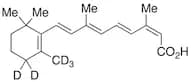
CAS:Controlled Product<p>Stability Light Sensitive, Temperature Sensitive<br>Applications Used as a treatment for severe acne. Presently being studied in conjuction with the treatment of photoaged skin.<br>References Lerche, C., et al.: Exp. Dermatol., 17, 972 (2008), Sato, T., et al.: J. Med. Chem., 51, 7705 (2008), Gan, J., et al.: Chem. Res. Toxicol., 22, 690 (2009), Macejova, D., et al.: Toxicol. Lett., 184, 114 (2009), Chen, P., et al.: Toxicol. App. Pharmacol., 234, 143 (2009),<br></p>Formula:C20D5H23O2Color and Shape:NeatMolecular weight:305.466Vitamin K1-d7 (100µg/mL in Acetonitrile)
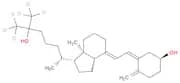
CAS:Controlled ProductFormula:C31H39D7O2Color and Shape:Single SolutionMolecular weight:457.743-Aminopropyl-24,25-dihydroxy Vitamin D3
Controlled Product<p>Stability Temperature and Light Sensitive<br>Applications 3-Aminopropyl-24,25-dihydroxy Vitamin D3 is a derivative of Vitamin D3 (V676045), an important factor in maintaining bone health, and has also been associated with cardiovascular health in humans.<br>References Dawson-Hughes, B., et al.: 16, 713 (2005); Lee, J., et al: J. Am. Coll. Cardio., 52, 1949 (2008)<br></p>Formula:C30H51NO3Color and Shape:NeatMolecular weight:473.731(24S)-24,25-Epoxycholesterol
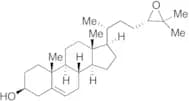
CAS:Controlled Product<p>Applications (24S)-24,25-Epoxycholesterol is a derivative of 4β-Hydroxy Cholesterol (H917980), a metabolite of Cholesterol. It is formed from Cholesterol by the drug-metabolizing enzyme cytochrome P 450 3A4. A potential ligand for the nuclear receptor LXR and also a new endogenous CYP3A marker.<br>References Breuer, O., et al.: J. Lipid Res., 36, 2275 (1995), Pikuleva, I., et al.: J. Biol. Chem., 273, 18153 (1998), Chawla, A., et al.: Science, 294, 1866 (2001), Bodin, K., et al.: J. Biol. Chem., 276, 38685 (2001),<br></p>Formula:C27H44O2Color and Shape:NeatMolecular weight:400.6371-O-Hexadecyl-sn-glycerol
CAS:Controlled Product<p>Applications 1-O-Hexadecyl-sn-glycerol restores plasmalogen levels in Chinese hamster ovary (CHO) cells and human pulmonary arterial endothelial cells (PAEC). Plasmalogen may play a role in protecting animal cells against photosensitized killing.<br>References Zoeller, R., et al.: J. Biol. Chem., 263, 11590 (1988); Zoeller, R., et al.: Am. J. Physiol., 283, H671 (2002)<br></p>Formula:C19H40O3Color and Shape:NeatMolecular weight:316.519AC 55649
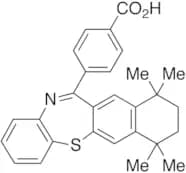
CAS:Controlled Product<p>Applications AC 55649 is a potent and selective RARβ2 receptor agonist (1). RARβ2 receptor agonists are potential drug candidates for developing treatment for type 2 diabetes and hepatic steatosis (2).<br>References (1) Lund, B. W., et al.: J Med Chem. 48, 7517 (2005) (2) Trasino, S. E., et al.: Diabetes Obes Metab. 18, 142 (2016)<br></p>Formula:C21H26O2Color and Shape:NeatMolecular weight:310.433-epi-25-Hydroxy Vitamin D3
CAS:<p>Stability Light Sensitive, Temperature Sensitive<br>Applications The epimer metabolite of Calcifediol or 25-hydroxyvitamin D3 (C125700).<br> Not a dangerous good if item is equal to or less than 1g/ml and there is less than 100g/ml in the package<br>References Sakaki, T., et al.: Eur. J. Biochem., 267, 6158 (2000), Kamao, M., et al.: J. Biol. Chem., 278, 1463 (2003),<br></p>Formula:C27H44O2Color and Shape:NeatMolecular weight:400.641α,25-Dihydroxy Vitamin D2
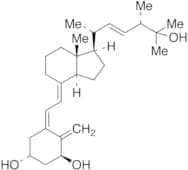
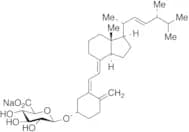
CAS:Controlled ProductFormula:C28H44O3Color and Shape:NeatMolecular weight:428.65Vitamin D2 β-D-Glucuronide Sodium Salt
CAS:Controlled ProductFormula:C34H51O7·NaColor and Shape:NeatMolecular weight:594.754CDDO Imidazolide
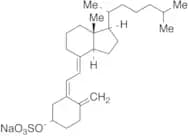
CAS:Controlled Product<p>Stability Light Sensitive<br>Applications CDDO Imidozolide (CDDO-Im) is a synthetic triterpenoid CDDO-Im inhibits fatty acid synthase expression and has antiproliferative and proapoptotic effects in human liposarcoma cells. Studies show that CDDO-Im is highly active in suppressing cellular proliferation of human leukemia and breast cancer cell lines as well as being an effective therapeutic agent in the treatment of other types of cancers.<br>References Hughes, D.T. et al.: Cancer Invest., 26, 118 (2008); Place, A.E. et al.: Clin. Cancer Res., 9, 2798 (2003); Samudio, I. et al.: J. Biol. Chem., 280, 36273 (2005);<br></p>Formula:C34H43N3O3Color and Shape:NeatMolecular weight:541.72Vitamin D3 Sulfate Sodium Salt (Technical Grade)
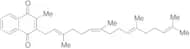
CAS:Controlled ProductFormula:C27H43O4S·NaColor and Shape:NeatMolecular weight:486.68Vitamin K
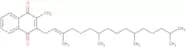
CAS:<p>Vitamin K is a fat-soluble vitamin, which is primarily sourced from leafy green vegetables, and is also synthesized by gut microbiota. Its mode of action involves functioning as a crucial cofactor for the enzyme gamma-glutamyl carboxylase, which catalyzes the carboxylation of specific glutamic acid residues on proteins required for blood coagulation. This modification enables the calcium-binding capacity of these proteins, facilitating essential physiological processes such as coagulation, bone metabolism, and vascular biology.</p>Formula:C31H46O2Purity:Min. 95%Molecular weight:450.7 g/molTachysterol
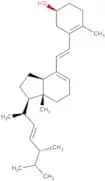
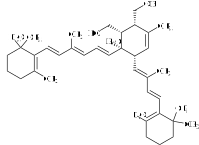
CAS:<p>Tachysterol is a sterol derivative that serves as a vitamin D analog, primarily sourced from the photochemical isomerization of ergosterol or lumisterol. Tachysterol undergoes further conversion processes to become active vitamin D metabolites that play crucial roles in calcium and phosphorus homeostasis. Though not biologically active in its original form, tachysterol is a precursor in the metabolic pathway, with conversion into active forms such as calcitriol occurring in the body.</p>Formula:C28H44OPurity:90% MinColor and Shape:PowderMolecular weight:396.65 g/molCalcipotriol monohydrate
CAS:<p>Calcipotriol monohydrate, a Vitamin D3 analog, binds well to the vitamin D receptor, used in psoriasis research.</p>Formula:C27H42O4Purity:99.95%Color and Shape:SolidMolecular weight:430.62γ-Tocotrienol
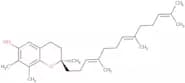
CAS:<p>Gamma-Tocotrienol is a form of vitamin E, which is a lipid-soluble antioxidant sourced predominantly from certain plant oils, including palm oil, rice bran oil, and annatto seeds. It possesses an unsaturated isoprenoid side chain, which differentiates it from tocopherols and contributes to its differing biological activities.</p>Formula:C28H42O2Purity:Min. 95%Molecular weight:410.63 g/molMaxacalcitol
CAS:<p>Maxacalcitol (22-Oxacalcitriol) is a ligand of VDR-like receptors and a non-serum calcium vitamin D3 analogue.</p>Formula:C26H42O4Purity:≥98%Color and Shape:SolidMolecular weight:418.61D-Biotin - 2%
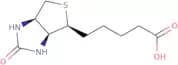
CAS:<p>Biotin is a water-soluble vitamin, also known as vitamin B7. Biotin is an essential coenzyme for five carboxylases in mammalian cells, which play key roles in the metabolism of glucose, amino acids and fatty acids (Zempleni, 2014). Biotin is also used in biochemistry in affinity purification of proteins in the biotin-avidin and biotin-streptavidin systems. Herein, free biotin is used in the elution step to release the recombinant protein from the resin (Diamandis and Christopoulos, 1991).Remainder of the material is maltodextrin.</p>Formula:C10H16N2O3SPurity:Min. 95%Color and Shape:PowderMolecular weight:244.31 g/molβ-Tocotrienol
CAS:<p>Beta-Tocotrienol is a biochemical compound that belongs to the vitamin E family. It is derived from sources such as palm oil, rice bran, and certain cereal grains. This compound exhibits its mode of action through the modulation of oxidative stress pathways and inhibition of certain enzymes involved in cell proliferation and cholesterol synthesis, which differentiates it from other tocopherols.</p>Formula:C28H42O2Purity:Min. 97 Area-%Color and Shape:Clear LiquidMolecular weight:410.63 g/molβ-Tocopherol
CAS:<p>β-Tocopherol is a type of product known as a naturally occurring form of vitamin E, which is a crucial lipid-soluble antioxidant. This compound is sourced primarily from plant-based oils, such as those derived from nuts, seeds, and vegetables. As an antioxidant, β-Tocopherol plays a pivotal role in the biological systems by scavenging free radicals. It interrupts the propagation of free radical chain reactions, thereby protecting cell membranes from oxidative damage. This is achieved through the donation of hydrogen atoms, which neutralize harmful free radicals.</p>Formula:C28H48O2Purity:Min. 95%Molecular weight:416.68 g/molRiboflavin-2,4,4α,10α-13C4-1,3-15N2
CAS:<p>Riboflavin-2,4,4α,10α-13C4-1,3-15N2 is a stable isotope-labeled form of riboflavin, which is a type of vitamin B2 molecule. This compound is synthesized with carbon-13 and nitrogen-15 isotopes, providing a distinct mass that enables precise tracking in metabolic studies. The source of this compound is derived from isotopically enriched materials, employing advanced chemical synthesis processes to incorporate stable isotopes into the riboflavin structure without altering its fundamental biochemical properties.</p>Formula:C13C4H20N2N2O6Purity:Min. 95%Molecular weight:382.32 g/molα-Tocotrienol
CAS:<p>alpha-Tocotrienol is a chemical compound known as a vitamin E isoform, which is derived primarily from certain plant oils, such as palm oil, rice bran oil, and annatto. This compound exhibits a unique unsaturated side chain, distinguishing it from tocopherols and enabling it to integrate into cellular membranes with greater efficiency.</p>Formula:C29H44O2Purity:Min. 95%Molecular weight:424.66 g/molVitamin D3 - 0.5m IU/g=500000 IU/g
CAS:<p>Vitamin D3 is a fat-soluble vitamin that can be obtained from some fish, mushrooms, and dairy products. The most common form of the vitamin is cholecalciferol (vitamin D3) which can be converted in the liver to calcidiol (25-hydroxycholecalciferol) and in the kidneys to calcitriol (1,25-dihydroxycholecalciferol). Vitamin D3 has been shown to have a positive effect on calcium absorption and bone mineralization. It also has important physiological functions such as regulation of cell growth and differentiation. The solubility of vitamin D3 is dependent on the presence of a hydroxy group at position 3' or 25'. This liquid chromatography method uses an experimental solubility data set for the determination of solubility data for compounds with a hydroxy group at position 3'.</p>Formula:C27H44OPurity:Min. 95%Color and Shape:PowderMolecular weight:384.64 g/mol5-Ethyl-3-methyllumiflavinium perchlorate
CAS:<p>5-Ethyl-3-methyllumiflavinium perchlorate is an organic compound that serves as a specialized biochemical reagent. It is synthetically derived, typically from the modification of flavin structures, which are known for their versatile roles in biological systems. The compound's unique configuration allows it to interact with various enzymes and proteins, often acting as an electron mediator due to its lumiflavinium core.</p>Formula:C16H19N4O2ClO4Purity:Min. 95%Molecular weight:398.8 g/molPyridoxamine Dihydrochloride Monohydrate
CAS:Formula:C8H12N2O2·2HCl·H2OPurity:>98.0%(HPLC)(N)Color and Shape:White to Almost white powder to crystalMolecular weight:259.13Menaquinone-7 (Vitamin K2)
CAS:<p>Other vitamins and their derivatives, nesoi</p>Formula:C46H64O2Color and Shape:Yellow PowderMolecular weight:648.49063Eicosapentaenoic Acid ((5Z,8Z,11Z,14Z,17Z)-Icosa-5,8,11,14,17-pentaenoic acid)
CAS:<p>Unsaturated acyclic monocarboxylic acids, their anhydrides, halides, peroxides, peroxyacids and their derivatives, nesoi</p>Formula:C20H30O2Color and Shape:Colorless LiquidMolecular weight:302.22458Carotenes
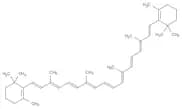
<p>Edible preparations, not canned or frozen, not containing cane and/or beet sugar, nesoi</p>Color and Shape:Opaque Red LiquidLutein
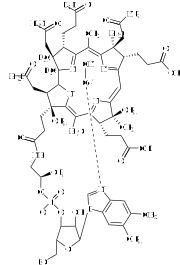
CAS:<p>Coloring matter of vegetable or animal origin</p>Formula:C40H56O2Color and Shape:PowderMolecular weight:568.42803Cobamamide (5,6-Dimethylbenzimidazolyl-Co-5'-deoxyadenosylcobamide)
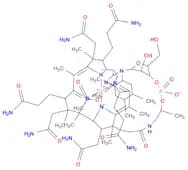
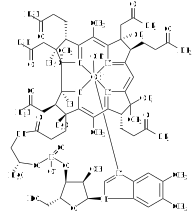
CAS:<p>Vitamin b12 (cyanocobalamin and related compounds with vitamin b12 activity) and its derivatives</p>Formula:C72H100CoN18O17PColor and Shape:PowderMolecular weight:1578.65834Hydroxocobalamin Chloride
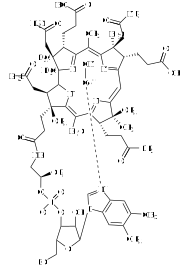
CAS:<p>Vitamin b12 (cyanocobalamin and related compounds with vitamin b12 activity) and its derivatives</p>Formula:C62H89CoN13O15P·HClColor and Shape:Red Brown Crystalline PowderMolecular weight:1381.54374Folic Acid Related Compound A (Calcium Formyltetrahydrofolate) (DISCONTINUED)
CAS:<p>Other vitamins and their derivatives, nesoi</p>Formula:C20H23N7O7·CaColor and Shape:PowderMolecular weight:513.12849L-Ascorbic acid, 2-(dihydrogen phosphate), magnesium salt (2:3)
CAS:Formula:C12H12Mg3O18P2Purity:98%Color and Shape:SolidMolecular weight:579.0754Ref: IN-DA00HCOA
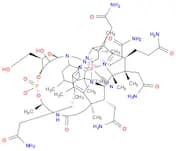
Discontinued productCobinamide, Co-(acetato-kO)-, dihydrogen phosphate (ester), innersalt, 3'-ester with(5,6-dimethyl-1-a-D-ribofuranosyl-1H-benzimidazole-kN3)
CAS:Formula:C64H91CoN13O16PPurity:98%Color and Shape:SolidMolecular weight:1388.3918Ref: IN-DA00FBNO
Discontinued productRef: IN-DA00IBRW
Discontinued productPyridoxine-d3 Hydrochloride (contains ~1% d0)
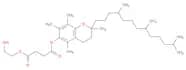
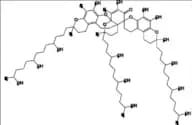
CAS:Formula:C8H9ClD3NO3Purity:≥98 atom % D, ≥96% (CP) ;Color and Shape:SolidMolecular weight:208.6573Poly(oxy-1,2-ethanediyl),a-[4-[[(2R)-3,4-dihydro-2,5,7,8-tetramethyl-2-[(4R,8R)-4,8,12-trimethyltridecyl]-2H-1-benzopyran-6-yl]oxy]-1,4-dioxobutyl]-w-hydroxy-
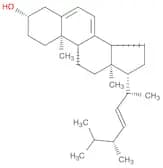
CAS:Formula:C39H66O8Color and Shape:SolidMolecular weight:662.9365Ergosta-5,7,22-trien-3-ol, (3b,22E)-
CAS:Formula:C28H44OPurity:95%Color and Shape:SolidMolecular weight:396.6484Ref: IN-DA00IKGQ
Discontinued productRef: 4Z-V-1233
Discontinued productRef: 4Z-V-1464
Discontinued productRef: 4Z-V-033024
Discontinued productRef: 4Z-V-1249
Discontinued productRef: 4Z-V-033012
Discontinued productRef: 4Z-V-1231
Discontinued productRef: 4Z-V-035016
Discontinued productRef: 4Z-V-1477
Discontinued productRef: 4Z-V-035015
Discontinued productRef: 4Z-V-1415
Discontinued productRef: 4Z-V-038013
Discontinued productRef: 4Z-V-038014
Discontinued productRef: 4Z-V-035017
Discontinued productRef: 4Z-V-1475
Discontinued productRef: 4Z-V-035020
Discontinued productRef: 4Z-V-035023
Discontinued productRef: 4Z-V-1423
Discontinued productRef: 4Z-V-045002
Discontinued productRef: 4Z-V-045031
Discontinued productRef: 4Z-V-045001
Discontinued productRef: 4Z-V-1476
Discontinued productRef: 4Z-V-035019
Discontinued productRef: 4Z-V-035022
Discontinued productRef: 4Z-V-035021
Discontinued productRef: 4Z-V-083
Discontinued productRef: 4Z-V-1473
Discontinued productRef: 4Z-V-1248
Discontinued productRef: 4Z-V-1426
Discontinued productRef: 4Z-V-037012
Discontinued productRef: 4Z-V-035024
Discontinued productRef: 4Z-V-035025
Discontinued productRef: 4Z-V-035026
Discontinued productRef: 4Z-V-1474
Discontinued productRef: 4Z-V-1466
Discontinued productRef: 4Z-V-1463
Discontinued productRef: 4Z-V-035009
Discontinued productRef: 4Z-V-1458
Discontinued productRef: 4Z-V-1232
Discontinued productVitamin E Related Compound 1 (2-Methyl-2-(4,8,12-Trimethyltridecyl)-6-Chromanol)
CAS:Formula:C26H44O2Molecular weight:388.64Ref: 4Z-V-086
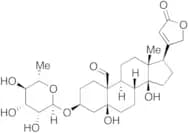
Discontinued productConvallatoxin
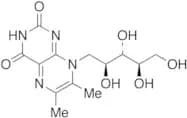
CAS:Controlled Product<p>Applications Convallatoxin is a cardenolide that is used in the treatment of congestive heart failure. It may also be used in the treatment of tumor cells at nanomolar concentrations due to its anti-proliferative effects; in particular, human lung cancer. It is naturally found in the roots of Adonis Amurensis.<br> Not a dangerous good if item is equal to or less than 1g/ml and there is less than 100g/ml in the package<br>References Schneider, N., et al.: Nat. Prod. Res., (2015); Yin, L., et al.: Zhong Cao Yao, 45, 3361 (2014);<br></p>Formula:C29H42O10Color and Shape:White To Off-WhiteMolecular weight:550.646,7-Dimethylribityl Lumazine
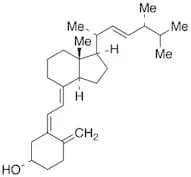
CAS:Controlled Product<p>Stability Light Sensitive<br>Applications 6,7-Dimethyl-8-ribityllumazine serves as fluorophore in Lumazine (L473800) proteins (LumP) of luminescent bacteria.<br>References Kulinski, T., et al.: Biochemistry, 26, 540 (1987), Chatwell, L., et al.: J. Mol. Biol., 382, 44 (2008), Sancar, A., et al.: J. Biol. Chem., 283, 32153 (2008),<br></p>Formula:C13H18N4O6Purity:>90%Color and Shape:Yellow To Dark BrownMolecular weight:326.31Calciferol (Vitamin D2), 97%
CAS:Formula:C28H44OPurity:min. 97%Color and Shape:White, Crystalline powderMolecular weight:396.65Cholecalciferol (Vitamin D3) for tissue culture, 97%
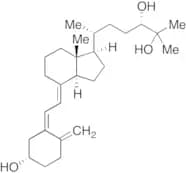
CAS:Formula:C27H44OPurity:min. 97%Color and Shape:White to off-white, Crystalline powder, Clear, Colorless to pale yellowMolecular weight:384.64(24S)-Secalciferol
CAS:Controlled Product<p>Stability Light and Temperature Sensitive<br>Applications (24S)-Secalciferol is an isomer of Secalciferol (S211500); a metabolite of Vitamin D and a possible anti-inflammatory steroid.<br> Not a dangerous good if item is equal to or less than 1g/ml and there is less than 100g/ml in the package<br>References Boyan, B., et al.: Steroids, 66, 363 (2001); Holick, M., et al.: J. Cell Biochem., 88, 296 (2003); Vogeser, M., et al.: Clin. Chem., 50, 1415 (2004); Singh, R., et al.: J. Clin. Endocrinol. Metab., 91, 3055 (2006)<br></p>Formula:C27H44O3Color and Shape:NeatMolecular weight:416.64