Nucleosides
Found 3569 products of "Nucleosides"
7-(2-C-Methyl-b-D-ribofuranosyl)-7H-pyrrolo[2,3-d]pyrimidin-2-amine
CAS:7-(2-C-Methyl-b-D-ribofuranosyl)-7H-pyrrolo[2,3-d]pyrimidin-2-amine (Ampyra) is a synthetic nucleoside activator of the deoxyribonucleoside monophosphate (dNMP) and dNMP diphosphate (dNDP) pathways. It has antiviral and anticancer activities, as well as an inhibitory effect on DNA synthesis by blocking the polymerization of deoxyribonucleotides. It is also an inhibitor of histone acetyltransferase and may be useful in the treatment of Alzheimer's disease. Ampryra is a novel compound with high purity and high quality. It is phosphoramidite that can be used for the preparation of oligodeoxynucleotides for use in DNA sequencing or gene therapy.Purity:Min. 95%Orotidine 5'-monophosphate trisodium salt
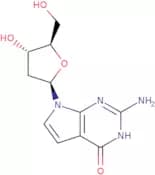
CAS:Ribonuclesides is a novel nucleoside that contains the 2'-deoxyribose phosphate moiety. It is an anticancer drug that inhibits DNA synthesis and blocks viral replication. Ribonucleosides are phosphoramidites and can be used for the synthesis of DNA or RNA, which are important for cellular metabolism. Ribonucleosides also have antiviral properties and can inhibit protein synthesis by blocking the enzyme ribonucleotide reductase.Formula:C10H10N2O11PNa3Purity:Min. 95%Color and Shape:White PowderMolecular weight:434.14 g/mol7-Deaza-2'-deoxyguanosine
CAS:7-Deaza-2'-deoxyguanosine is an analog of guanosine that has been shown to inhibit the activity of telomerase. This enzyme synthesizes a sequence of DNA called a telomere, which protects the ends of chromosomes from deterioration and prevents chromosomal end-to-end fusion. 7-Deaza-2'-deoxyguanosine has an inhibitory effect on the polymerase chain reaction (PCR) in mammalian cells and inhibits the transcription-polymerase chain reaction (PCR) in vitro. It has also been shown to be potent against cancer cells. 7-Deaza-2'-deoxyguanosine is synthesized by solid phase synthesis, which is a chemical process that involves attaching one molecule to another molecule with similar structure, using organic solvents as intermediates.Formula:C11H14N4O4Purity:Min. 95%Color and Shape:White PowderMolecular weight:266.26 g/mol2',3'-Dideoxy-2',3'-didehydroadenosine
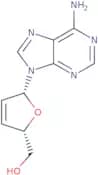
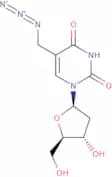
CAS:2′,3′-Dideoxy-2′,3′-didehydroadenosine, abbreviated to d4A, is a synthetic purine nucleoside analog. Possible applications are its use to study antiviral activity.Formula:C10H11N5O2Purity:Min. 95%Color and Shape:Off-White PowderMolecular weight:233.23 g/mol5-(Azidomethyl)-2’-deoxyuridine
CAS:5-azidomethyl-2-deoxyuridine (AmdU) is a nucleoside that contains an azide group. The structure of the nucleoside is similar to thymidine, and it is incorporated into nascent DNA by cellular polymerases, similarly to EdU (NE08701). Unlike EdU that needs to be further modified with azides in the presence of copper catalyst, AmdU can also react in the absence of copper catalyst using spAAC Click Chemistry with strained cycloalkynes, such as cyclooctynes. This enables detection of nascent DNA in benign, copper free conditions.
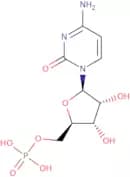
Formula:C10H13N5O5Purity:Min. 95%Color and Shape:PowderMolecular weight:283.24 g/molCytidine 5'-monophosphate free acid
CAS:Cytidine 5'-monophosphate is a nucleotide that is important in the synthesis of DNA and RNA. It is a precursor to uridine monophosphate (UMP) and uridylic acid (UDP). Cytidine 5'-monophosphate has been found to inhibit the growth of antibiotic-resistant strains of bacteria, such as those resistant to ampicillin, chloramphenicol, tetracycline, kanamycin, and streptomycin. Cytidine 5'-monophosphate also has inhibitory properties against energy metabolism and protein oxidation in bowel disease. This nucleotide has been shown to increase the rate constant for polymerase chain reaction (PCR) by up to 10-fold.Formula:C9H14N3O8PPurity:Min. 98 Area-%Color and Shape:White Off-White PowderMolecular weight:323.2 g/mol8-Bromoguanosine 3',5'-cyclic monophosphate sodium salt
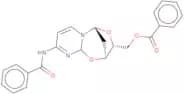
CAS:Activator of cGMP-dependent protein kinasesFormula:C10H10BrN5NaO7PPurity:Min. 95%Color and Shape:PowderMolecular weight:446.08 g/mol2,3'-Anhydro-5'-O-benzoyl-N4-benzoyl-2'-deoxycytidine
2,3'-Anhydro-5'-O-benzoyl-N4-benzoyl-2'-deoxycytidine is a novel nucleoside analog that has been shown to have anticancer, antiviral and antiretroviral activities. It binds to the ribonucleotide reductase enzyme and inhibits deoxyribonucleoside synthesis in cells. 2,3'-Anhydro-5'-O-benzoyl-N4-benzoyl-2'-deoxycytidine is also an activator of ribonucleotide reductase. This drug has been shown to be effective in treating leukemia, lymphoma, and breast cancer cells.Formula:C23H21N3O5Purity:Min. 95%Molecular weight:419.44 g/mol6-Amino-4-hydrazino-2-(b-D-ribofuranosyl)-2H-pyrazolo[3,4-d]pyrimidine
6-Amino-4-hydrazino-2-(b-D-ribofuranosyl)-2H-pyrazolo[3,4-d]pyrimidine is a modified nucleoside which has been shown to be active against HIV and other viruses. It is a phosphoramidate of 2'-deoxyadenosine 5'-monophosphate with an amino group at the 2' position. This compound inhibits the replication of DNA by binding to the enzyme reverse transcriptase and prevents the synthesis of viral DNA. 6-Amino-4-hydrazino-2-(b-D-ribofuranosyl)-2H-pyrazolo[3,4-d]pyrimidine also has anticancer properties, as it inhibits cell proliferation in vitro and in vivo.Purity:Min. 95%5'-O-p-Anisoyl-N4-benzoyl-3'-fluoro-2',3'-dideoxycytidine
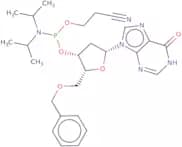
5'-O-p-Anisoyl-N4-benzoyl-3'-fluoro-2',3'-dideoxycytidine is a deoxyribonucleoside that has antiviral, anticancer, and novel properties. It has a CAS No. of 49811-91-7 and a molecular weight of 290.5 g/mol. The chemical formula for 5'-0-p-anisoyl-N4-benzoyl-3'-fluoro-2',3'-dideoxycytidine is C12H14FN2O9. It is synthesized by reacting 2,6-(1H,1'H)-benzoxazinones with 3' -deoxycytidines in the presence of phosphoric acid and anhydrous zinc chloride in methanol at room temperature to form the 5'-0 p anisoyl derivative, which is then reacted withFormula:C24H22FN3O6Purity:Min. 95%Molecular weight:467.45 g/mol5'-O-Benzyl-2'-deoxyinosine 3'-CE phosphoramidite
5'-O-Benzyl-2'-deoxyinosine 3'-CE phosphoramidite is an activator of DNA synthesis. It has antiviral and anticancer properties, which have been shown in animal models. This compound is a novel nucleoside phosphoramidite that can be used to synthesize oligonucleotides. The CAS number for this product is 98469-45-7.Formula:C26H35N6O5PPurity:Min. 95%Molecular weight:542.58 g/molRibavirin 5'-triphosphate tetrasodium salt - 10mM aqueous solution
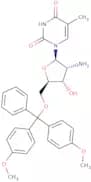
CAS:Ribavirin triphosphate is the biologically active metabolite of antiviral nucleoside analog ribavirin. In cells, the prodrug ribavirin gets triphosphorylated and in it inhibits viral RNA polymerases, interfering with the synthesis of newly formed RNA.Formula:C8H15N4O14P3·Na4Purity:Min. 95 Area-%Color and Shape:PowderMolecular weight:576.1 g/mol2’-Amino-2’-deoxy-5’-O-DMT-5-methyluridine
CAS:2’-Amino-2’-deoxy-5’-O-DMT-5-methyluridine is a novel nucleoside that has been modified to be phosphorylated on the 5' position. This modification provides the molecule with more stability in vivo and increases its anticancer potential. The synthesis of 2'-amino-2'-deoxy-5'-O-DMT-5 methyluridine is carried out by the conversion of 5'-O-(4,4'-dimethoxytrityl)-N,N-diisopropylphosphoramidite to 5'-O-(4,4'-dimethoxytrityl)-2',3',6'-triisopropylbenzoylphosphate. This compound can also inhibit viral replication by inhibiting dsRNA synthesis and is used to treat patients with chronic hepatitis B virus infection. The molecule has high purity and high quality.Purity:Min. 95%5'-Deoxyuridine
CAS:5'-Deoxyuridine is an inorganic, phosphite, and isomeric compound. It can be used as a chromatographic analog to purify uridylic acid. The epimerization reaction of 5'-deoxyuridine with galactose can be catalyzed by dehydrogenase or ion-exchange resin. In addition, 5'-deoxyuridine has the same chemical formula as uridine (C5H5N3O3) but has a different structure: in place of the hydroxyl group on carbon number 5, it has a hydrogen atom. 5'-Deoxyuridine has two isomers: one with the hydroxyl group on carbon number 4 and another with the hydroxyl group on carbon number 2.Formula:C9H12N2O5Purity:Min. 95%Color and Shape:White PowderMolecular weight:228.21 g/mol1-[(5E)-3-O-[(Bis-diisopropylamino)(2-cyanoethoxy) phosphino]-5,6-dideoxy-6-(diethoxyphosphinyl)-2-O-methyl-β-D- ribo-hex-5-enofu ranosyl]uracil
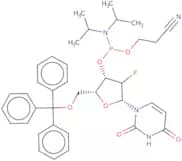
5-Deoxy-2'-O-methylcytidine is a phosphoramidite nucleoside that has antiviral, anticancer, and antifungal properties. It is used as an activator in the synthesis of oligonucleotides and as a reagent for the synthesis of other nucleotide analogues. 5-Deoxy-2'-O-methylcytidine has been shown to have a novel mechanism of action, which targets DNA polymerase alpha and inhibits replication. This drug also has antiangiogenic activity, which may be due to its ability to inhibit the production of VEGF.Purity:Min. 95%2'-Deoxy-2'-fluoro-5'-O-trityluridine 3'-CE phosphoramidite
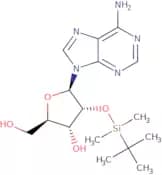
2'-Deoxy-2'-fluoro-5'-O-trityluridine 3'-CE phosphoramidite is a novel, modified nucleoside. It is a monophosphate and can be used as antiviral, activator or diphosphate. It has been shown to inhibit the growth of cancer cells in vitro. 2'-Deoxy-2'-fluoro-5'-O-trityluridine 3'-CE phosphoramidite also has activity against bacterial and viral pathogens and can be used for the synthesis of DNA, RNA, and other oligonucleotide compounds. This product is of high quality and purity with CAS No., Antiviral, Activator, diphosphate, Synthetic, Ribonuclesides, Deoxyribonucleosides.Formula:C37H42FN4O6PPurity:Min. 95%Molecular weight:688.74 g/mol2'-O-tert-Butyldimethylsilyladenosine
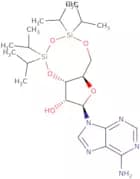
CAS:2'-O-tert-Butyldimethylsilyladenosine is a novel nucleoside. It is an anti-cancer and antiviral agent that is synthesized from ribonucleosides by the phosphoramidite method. 2'-O-tert-Butyldimethylsilyladenosine has been shown to be active against DNA polymerases, RNA polymerases, and enveloped viruses. This drug also inhibits cell proliferation in a variety of human tumor cells in vitro. 2'-O-tert-Butyldimethylsilyladenosine has been shown to exhibit anticancer activity by interfering with DNA synthesis and preventing the replication of damaged cells.Purity:Min. 95%3',5'-O-(1,1,3,3-Tetraisopropyl-1,3-disiloxanediyl)adenosine
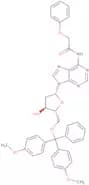
CAS:Used as a protected adenosine nucleoside in RNA synthesis. The 1,1,3,3-tetraisopropyl-1,3-disiloxanediyl (TIPDS or TBDPSi2) group is a bulky, acid-labile protecting group specifically designed to protect the 3' and 5' hydroxyl groups of ribonucleosides during RNA oligonucleotide synthesis.Formula:C22H39N5O5Si2Purity:Min. 95%Color and Shape:PowderMolecular weight:509.76 g/mol2'-Deoxy-5'-O-DMT-N6-phenoxyacetyladenosine
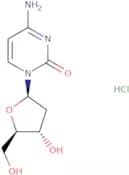
CAS:2'-Deoxy-5'-O-DMT-N6-phenoxyacetyladenosine is a novel phosphoramidite nucleoside that is an antiviral and anticancer agent. It can be used as a monophosphate or diphosphate. 2'-Deoxy-5'-O-DMT-N6-phenoxyacetyladenosine has been shown to inhibit the replication of DNA, RNA, and protein synthesis. This compound also has an activating effect on the immune system by inducing lymphocyte proliferation and increasing NK activity. It inhibits the growth of viruses such as HIV and influenza A virus. The purity of 2'-Deoxy-5'-O-DMT-N6-phenoxyacetyladenosine is high, with a CAS number of 11052282-2.Formula:C39H37N5O7Purity:Min. 95%Color and Shape:PowderMolecular weight:687.76 g/mol2'-Deoxycytidine HCl
CAS:2'-Deoxycytidine HCl is a nucleoside analogue that is used as a radiation sensitizer in the treatment of tumors. It is converted into 2'-deoxycytidine-5'-triphosphate by incorporation into DNA during replication and inhibits DNA synthesis. This compound has been shown to have anti-leukemic activity against murine leukemia virus (MLV) and murine sarcoma virus (MSV) in mice, although it does not inhibit the proliferation of Swiss-Webster mice. The protonated form of 2'-deoxycytidine HCl has been observed using nuclear magnetic resonance spectroscopy, with a cyclohexane ring as the proton acceptor. The monosodium salt also forms a stable complex with amino groups, which may be due to its acidic ph.Formula:C9H13N3O4·HClPurity:Min. 98 Area-%Color and Shape:White PowderMolecular weight:263.68 g/mol3'-O-[(Propan-2-ylidene)amino]-thymidine 5'-triphosphate
CAS:3'-O-[(Propan-2-ylidene)amino]-thymidine 5'-triphosphate is an antiviral and anticancer agent that is used for the synthesis of DNA and RNA. It is a novel nucleoside analog that has been modified to be activated by phosphoramidite chemistry. 3'-O-[(Propan-2-ylidene)amino]-thymidine 5'-triphosphate is synthesized from 2,6-diisopropylaniline, methyl 3-(aminomethyl)-1H-pyrrole-2,4-dicarboxylate, and propylamine in cyclohexane at reflux.Formula:C13H22N3O14P3Purity:Min. 95%Molecular weight:537.25 g/mol2'-Deoxy-5'-O-DMT-2'-fluoro-N4-phenoxyacetylcytidine 3'-CE-phosphoramidite
2'-Deoxy-5'-O-DMT-2'-fluoro-N4-phenoxyacetylcytidine 3'-CE-phosphoramidite is a novel nucleoside analog with anticancer and antiviral activity. It is a cytidine derivative that contains a fluorine atom at the 2' position of the ribose ring, which leads to reduced immunogenicity. The deoxyribonucleoside analogs are synthesized by chemical phosphorylation of 5'-O-DMT-2'-fluoro-N4-phenoxyacetylcytidine 3'-phosphoramidite in high purity and high quality as well as in small quantities.Formula:C47H55N5O9FPPurity:Min. 98 Area-%Color and Shape:Off-White Yellow PowderMolecular weight:883.94 g/mol2'-Deoxy-N6-DMF-5'-O-MMT-adenosine 3'-CE phosphoramidite
CAS:2'-Deoxy-N6-DMF-5'-O-MMT-adenosine 3'-CE phosphoramidite is a high purity, diphosphate nucleotide analog. It is an anticancer drug that inhibits DNA synthesis and can be used to treat cancer. The 2'-deoxy-N6-DMF moiety has been shown to inhibit the activity of DNA polymerase and other enzymes involved in DNA replication. This compound also has a novel mechanism of action that is not present in any other known anticancer drugs. CAS No. 195375-66-7.br>br>2'-Deoxy-N6-DMF 5'-O-MMT adenosine 3'-cephosphoramidite is often used as a building block for oligonucleotide synthesis because it is resistant to the removal of phosphate groups by alkaline phosphatases. The lack of phosphate groups makes this compound more stable than standard nucleotidesFormula:C42H51N8O5PPurity:Min. 95%Molecular weight:778.9 g/mol6-Amino-2-(2',3',5'-tri-O-benzoyl-b-D-ribofuranosyl)-4-methoxy-2H-pyrazolo[3,4-d]pyrimidine
6-Amino-2-(2',3',5'-tri-O-benzoyl-b-D-ribofuranosyl)-4-methoxy-2H-pyrazolo[3,4-d]pyrimidine (6APB) is a synthetic nucleoside that is an antiviral agent. It inhibits the viral enzyme DNA polymerase, which prevents synthesis of viral DNA. 6APB has been shown to be active against herpes simplex virus type 1 and 2, influenza A virus and cytomegalovirus. The compound also has a novel structure with an amino group at the 3'-position of the sugar moiety. This modification allows for selective incorporation of 6APB into oligonucleotides during chemical synthesis, which eliminates the need for purification steps following nucleotide addition. 6APB is also high purity, with a CAS number of 104057-61-8.Purity:Min. 95%1-Amino-8-benzyloxy-9-(b-D-xylofuranosyl)guanine
1-Amino-8-benzyloxy-9-(b-D-xylofuranosyl)guanine is a novel nucleoside that is chemically synthesized. It is an activator of ribonucleotide reductase and has been shown to have anti-cancer, antiviral, and antiproliferative activities.Purity:Min. 95%4-Chloro-7-(2-deoxy-3,5-bis-O-(p-toluoyl)-β-D- ribofuranosyl)-5-iodo-7H-pyrrolo[2,3-d]pyrimidine
4-Chloro-7-(2-deoxy-3,5-bis-O-(p-toluoyl)-beta-D-ribofuranosyl)-5-iodo-7H-pyrrolo[2,3-d]pyrimidine is a synthetic activator that selectively activates the transcription of genes in cells. It has been shown to have anticancer activity and may be useful as a therapeutic agent for the treatment of certain cancers. 4C 7 (2dEB 3,5BT) 5I is also known to be an antiviral agent against HIV and influenza virus. The modification on the 2'-deoxyribose sugar moiety can enhance both activation and antiviral activities.Purity:Min. 95%N6-Acetyladenosine
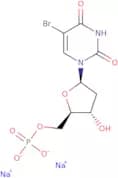
CAS:N6-Acetyladenosine is a nucleoside that belongs to the group of N-acetylated adenosines. It is found in thermophilic organisms and has been shown to be involved in optimal growth. N6-Acetyladenosine has also been found to be an important part of the coding and population modifications of crenarchaeota, archaeal organisms that are phylogenetically related to methanogens. Unfractionated populations of methanogen contain both N6-acetyladenosine residues and other modified adenosines, with each organism differing in the types of modifications they contain. Transfer of these modified adenosines from one organism to another can lead to changes in their coding and population modifications.Formula:C12H15N5O5Purity:Area-% Min. 90 Area-%Color and Shape:White PowderMolecular weight:309.28 g/mol5-Bromo-2'-deoxyuridine-5'-monophosphate sodium salt
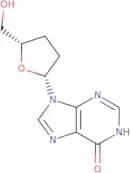
CAS:5-Bromo-2'-deoxyuridine-5'-monophosphate sodium salt (BrdUMP) is an antiviral agent that inhibits the synthesis of DNA. It has shown activity against herpes simplex virus and cytomegalovirus, and has been used in the treatment of Kaposi's sarcoma. BrdUMP is a monophosphate prodrug that is activated by ribonucleoside diphosphates to inhibit the production of viral DNA and RNA. This drug has anticancer properties due to its ability to inhibit cell division. BrdUMP is synthesized from 2'-deoxyuridine-5'-monophosphate, which is obtained from uracil or thymine. The CAS number for this compound is 51432-32-7, and it can be used as a phosphoramidite for the preparation of DNA, RNA, or oligonucleotide analogues.Formula:C9H12BrN2O8PNa2Purity:Min. 97 Area-%Color and Shape:PowderMolecular weight:433.06 g/mol2',3'-Dideoxyinosine
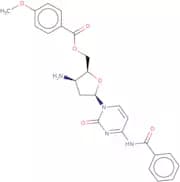
CAS:2',3'-Dideoxyinosine is a purine analog that can suppress human immunodeficiency virus (HIV) replication after intracellular metabolic conversionFormula:C10H12N4O3Purity:Min. 95 Area-%Color and Shape:White Off-White PowderMolecular weight:236.23 g/mol3'-Amino-5'-O-p-anisoyl-N4-benzoyl-2',3'-dideoxycytidine
3'-Amino-5'-O-p-anisoyl-N4-benzoyl-2',3'-dideoxycytidine is a synthetic nucleoside that inhibits DNA synthesis by competitively inhibiting the activity of deoxycytidine kinase. 3'-Amino-5'-O-p-anisoyl-N4-benzoyl-2',3'-dideoxycytidine is an antiviral agent and has been shown to be effective against herpes simplex virus type 1 and varicella zoster virus. It has also been shown to have anticancer properties, which may be due to its ability to inhibit the growth of human breast cancer cells in culture.Formula:C24H24N4O6Purity:Min. 95%Molecular weight:464.47 g/mol5'-O-Pixylthymidine
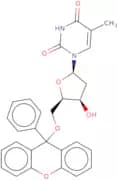
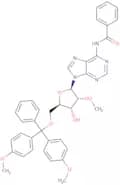
5'-O-Pixylthymidine is a modified nucleoside that has been shown to have anticancer and antiviral activity. It is an analog of thymidine, which is a deoxynucleoside. 5'-O-Pixylthymidine can be converted into diphosphate form by addition of phosphoramidites or ribonucleosides. This nucleotide can also be used as a building block for the synthesis of oligonucleotides, which are synthetic DNA molecules with therapeutic applications.Formula:C29H26N2O6Purity:Min. 95%Molecular weight:498.53 g/molN6-Benzoyl-5'-O-DMT-2'-O-methyladenosine
CAS:N6-Benzoyl-5'-O-DMT-2'-O-methyladenosine is a novel nucleoside that is structurally related to adenosine. It is synthesized through the reaction of N6-benzoyladenine with 2'-O-methyladenosine. This nucleoside has been shown to be an effective antiviral and anticancer agent.Formula:C39H37N5O7Purity:Min. 95%Color and Shape:White PowderMolecular weight:687.76 g/mol6-Amino-1-(2'-deoxy-a-D-ribofuranosyl)-4-methoxy-1H- pyrazolo[3,4-d]pyrimidine
6-Amino-1-(2'-deoxy-a-D-ribofuranosyl)-4-methoxy-1H- pyrazolo[3,4-d]pyrimidine is a modified nucleoside that is an antiviral agent and anticancer drug. It inhibits viral replication by inhibiting the activity of DNA polymerase. 6-[Amino(2'-deoxyribofuranosyl)]-1-(2'-deoxyribofuranosyl)-4-methoxypyrazolo[3,4-d]pyrimidine has been shown to inhibit the growth of cancer cells without affecting healthy cells.Purity:Min. 95%trans-Zeatin riboside
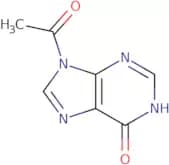
CAS:Trans-zeatin riboside is a cytokinin that is structurally related to adenosine. It has been shown to inhibit the adenosine a3 receptor, which decreases the production of reactive oxygen species in human serum and enhances the uptake of glucose. Trans-zeatin riboside also inhibits nuclear DNA fragmentation and increases water permeability in plant tissues. This chemical has been shown to stimulate photosynthetic activity in plants at an optimum concentration of 10 μg/ml. Trans-zeatin riboside should be stored at -20 degrees Celsius for long-term storage.Formula:C15H21N5O5Color and Shape:White Off-White PowderMolecular weight:351.36 g/molAcetyl hypoxanthine
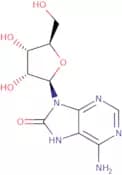
CAS:Acetyl hypoxanthine is an inorganic compound that has a cyclophosphate group. It can be synthesized from the reaction of acetic acid and 6-chloropurine, which is activated with trifluoroacetic acid and irradiated with ultraviolet light. Acetyl hypoxanthine can then be synthesized by ammonolysis of chloroacetone using ammonia or by chlorinating acetylene with chlorine. The advantages of this compound are its high yield and low cost.Formula:C7H6N4O2Purity:Min. 95 Area-%Color and Shape:PowderMolecular weight:178.15 g/mol8-Hydroxyadenosine
CAS:8-Hydroxyadenosine (8-OHdG) is a purine nucleoside that is formed as a result of oxidative DNA damage. It is not an essential metabolite because it can be synthesized de novo. 8-OHdG has been shown to have potent anti-tumor activity in vitro and in vivo, which may be due to its ability to inhibit DNA replication. The biological effects of 8-OHdG are attributed to its ability to form hydrogen bonds with guanine residues in the double helix, and electrochemical detectors have been developed for its detection.Formula:C10H13N5O5Purity:Min. 98 Area-%Color and Shape:PowderMolecular weight:283.25 g/mol5'-O-p-Anisoyl-2'-deoxyuridine
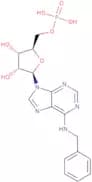
5'-O-p-Anisoyl-2'-deoxyuridine is a novel activator that is an analogue of pyrimidine and has been synthesized for the first time. It belongs to the group of nucleosides and has been modified chemically. This compound can be used as a pharmaceutical drug for the treatment of cancer or viral infections.Formula:C17H18N2O7Purity:Min. 95%Molecular weight:362.33 g/molN6-Benzyladenosine 5'-monophosphate sodium salt monohydrate
CAS:N6-Benzyladenosine 5'-monophosphate sodium salt is a nucleoside that is not identified. It has been shown to be metabolized by adenosine deaminase and may have antitumor activity. N6-Benzyladenosine 5'-monophosphate sodium salt is also a radioactively labeled adenine analog that has been used in the study of metabolic pathways.
Formula:C17H18N5Na2O7P·H2OPurity:Min. 97 Area-%Color and Shape:PowderMolecular weight:499.32 g/molTFA-aa-dUPhosphoramidite
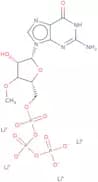
TFA-aa-dUPhosphoramidite is a high quality, novel DNA phosphoramidite. It is used for the synthesis of deoxyribonucleosides and ribonucleosides. TFA-aa-dUPhosphoramidite has been shown to be an activator in the synthesis of RNA and DNA, and it is also resistant to degradation by nucleases. This product has CAS No.Formula:C44H51N5O9PPurity:Min. 95%Molecular weight:824.88 g/mol3'-O-Methylguanosine 5'-triphosphate lithium
CAS:3'-O-Methylguanosine 5'-triphosphate lithium is a nucleotide that has been synthesized and characterized. It is a biochemical regulatory molecule that is involved in the synthesis of DNA, RNA, and proteins. 3'-O-Methylguanosine 5'-triphosphate lithium binds to the guanine nucleotide binding protein G, which acts as an allosteric activator of the enzyme ribonucleotide reductase. The reconstituted enzyme system containing 3'-O-methylguanosine 5'-triphosphate lithium has demonstrated a high level of fidelity in the replication of dna templates.
Formula:C11H18N5O14P3•Li4Purity:Min. 95%Color and Shape:PowderMolecular weight:564.97 g/mol3',5'-Di-O-acetyl-5-bromo-2'-deoxyuridine
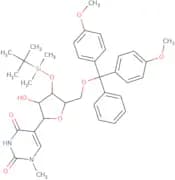
CAS:Please enquire for more information about 3',5'-Di-O-acetyl-5-bromo-2'-deoxyuridine including the price, delivery time and more detailed product information at the technical inquiry form on this pageFormula:C13H15BrN2O7Purity:Min. 95%Color and Shape:PowderMolecular weight:391.18 g/mol3’-O-tert-butyldimethylsilyl-5’-O-DMT-N1-methylpseudouridine
CAS:3′-O-tert-butyldimethylsilyl-5′-O-DMT-N1-methylpseudouridine is a synthetic nucleoside that is used in the synthesis of deoxyribonucleosides. It is an activator nucleoside that has antiviral activity and provides high purity, novel monophosphate nucleosides, and modified nucleosides. 3′-O-tert-butyldimethylsilyl-5′-O-DMT-N1 methylpseudouridine has CAS No. 875302–43–5 and can be used for the synthesis of phosphoramidites or ribonucleotides.Purity:Min. 95%6-O-Methylinosine
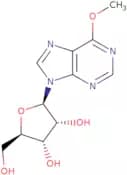
CAS:6-O-Methylinosine is a modified nucleoside that is used in the synthesis of recombinant proteins. It is synthesized from the reaction of methylphosphate and 6-O-methylguanosine. The phosphate group of the 6-O-methylguanosine molecule reacts with methylphosphate in an acid or neutral environment, while it reacts with phosphoric acid in a basic environment. This reaction can be monitored by measuring the amount of free phosphate groups present after the reaction. The rate of this reaction can be increased by increasing temperature and pH. 6-O-Methylinosine has been shown to have anticancer activity, which may be due to its ability to inhibit enzyme catalysis and modify DNA structure.Formula:C11H14N4O5Purity:Min. 95%Color and Shape:White PowderMolecular weight:282.25 g/molN4-Benzoyl-5'-O-benzoyl-2'-deoxycytidine
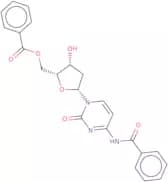
CAS:N4-Benzoyl-5'-O-benzoyl-2'-deoxycytidine is a nucleoside monophosphate that is used in the treatment of HIV infection. The antiviral activity of N4-Benzoyl-5'-O-benzoyl-2'-deoxycytidine is due to its ability to inhibit viral DNA synthesis by competing with natural substrates for incorporation into the growing chain. This compound also inhibits cancer cell proliferation and may be useful in the treatment of other forms of cancer. N4-Benzoyl-5'-O-benzoyl-2'-deoxycytidine is synthesized from 2,4,6,-trichlorophenylpiperazine (TCPP) and cyanogen bromide in a two step process using phosphoramidites.Formula:C23H21N3O6Purity:Min. 95%Molecular weight:435.44 g/molN4-Benzoyl-2’,3’-di-O-tert-butyldimethylsilyl-5’-O-DMT-N4-methylcytidine
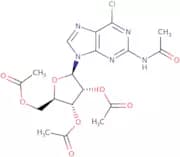
N4-Benzoyl-2’,3’-di-O-tert-butyldimethylsilyl-5’-O-DMT-N4-methylcytidine is a modified nucleoside that is used as an antiviral agent. It inhibits the activity of reverse transcriptase, which is an enzyme that catalyzes the conversion of RNA into DNA. This nucleoside inhibits viral replication and prevents the production of new viruses in cells infected by HIV. N4-Benzoyl-2’,3’-di-O -tert -butyldimethylsilyl -5’ -O -DMT -N4 methylcytidine also inhibits DNA synthesis by inhibiting the activity of DNA polymerases. This drug has been shown to be effective against cancer cells and may have anticancer properties.Purity:Min. 95%2-Acetamido-6-chloro-9-(2',3',5'-tri-O-acetyl-b-D-ribofuranosyl)purine
CAS:2-Acetamido-6-chloro-9-(2',3',5'-tri-O-acetyl-b-D-ribofuranosyl)purine is a modified purine nucleoside, protected with acetyl groups, which protect the sugar during chemical reactions. This compound is based on a purine ring and also contains an acetamido group at position 2, a chlorine atom at position 6 and a β-D-ribofuranosyl sugar.
Formula:C18H20ClN5O8Purity:Min. 95%Color and Shape:PowderMolecular weight:469.83 g/mol6-Amino-1-(2'-deoxy-b-D-ribofuranosyl)-4-hydrazino-1H-pyrazolo[3,4-d]pyrimidine
6-Amino-1-(2'-deoxy-b-D-ribofuranosyl)-4-hydrazino-1H-pyrazolo[3,4-d]pyrimidine (6ADRP) is a synthetic nucleoside that is used as an activator of ribonucleosides and diphosphates in DNA synthesis. 6ADRP has antiviral activity against HIV and herpes simplex virus type 1. It binds to the viral DNA polymerase and prevents the addition of nucleotides to the growing DNA strand. 6ADRP is phosphorylated by T7 kinase to form the active metabolite, 6-amino-1-(2'-deoxy-[alpha]-D-ribofuranosyl)-5'-triphosphate (6ATP), which inhibits viral replication by preventing the formation of RNA primers.Purity:Min. 95%N4-Benzoyl-3'-O-tert-butyldimethylsilyl-5'-O-DMT-N4-methylcytidine
N4-Benzoyl-3'-O-tert-butyldimethylsilyl-5'-O-DMT-N4-methylcytidine is a nucleoside that is chemically modified by the addition of a benzoyl group. It has antiviral, anticancer and antiretroviral activities. N4-Benzoyl-3'-O-tert-butyldimethylsilyl-5'-O-DMT-N4-methylcytidine inhibits viral DNA synthesis by inhibiting both viral DNA polymerase and reverse transcriptase, which are enzymes required for the production of viral DNA. It also inhibits cancer cell growth by forming covalent bonds with deoxyribonucleic acid (DNA) in the cancer cells and initiating apoptosis. This nucleoside has been shown to be active against HIV, Herpes Simplex Virus Type 1 (HSV1), and Human CytomegalovPurity:Min. 95%2'/3'-O-(N-Methylanthraniloyl)-N6-methyl-adenosine-5'-triphosphate triethylammonium salt
2'/3'-O-(N-Methylanthraniloyl)-N6-methyl-adenosine-5'-triphosphate triethylammonium salt is a nucleoside phosphoramidite. It is modified with a methylanthranilic acid group and an aminopropyl moiety at the 2' and 3' positions of the ribose sugar moiety. It has antiviral, anticancer, and novel properties. This compound is synthesized by reacting 2',3'-O-(dimethoxytrityl) -N6-methyl-adenosine-5'-triphosphate with triethylamine in the presence of a base like pyridine or DBU.Formula:C19H25N6O14P3Purity:Min. 95%Molecular weight:654.36 g/mol1', 2', 3', 4', 5'- ¹³C5-Adenosine
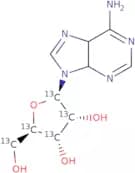
CAS:1', 2', 3', 4', 5'- ¹³C5-Adenosine is adenosine which has all five carbon atoms of the ribose sugar replaced with the stable isotope carbon-13 (^13C). Possible applications are in proteomics studies.Formula:C5C5H13N5O4Purity:Min. 97 Area-%Color and Shape:White PowderMolecular weight:272.2 g/mol
![7-(2-C-Methyl-b-D-ribofuranosyl)-7H-pyrrolo[2,3-d]pyrimidin-2-amine](/_next/image/?url=https%3A%2Fstatic.cymitquimica.com%2Fproducts%2F3D%2Fthumb-webp%2FNM14094.webp&w=3840&q=75)



![6-Amino-4-hydrazino-2-(b-D-ribofuranosyl)-2H-pyrazolo[3,4-d]pyrimidine](/_next/image/?url=https%3A%2Fstatic.cymitquimica.com%2Fproducts%2F3D%2Fthumb-webp%2FNA162981.webp&w=3840&q=75)



![1-[(5E)-3-O-[(Bis-diisopropylamino)(2-cyanoethoxy) phosphino]-5,6-dideoxy-6-(diethoxyphosphinyl)-2…](/_next/image/?url=https%3A%2Fstatic.cymitquimica.com%2Fproducts%2F3D%2Fthumb-webp%2FNB162929.webp&w=3840&q=75)
![3'-O-[(Propan-2-ylidene)amino]-thymidine 5'-triphosphate](/_next/image/?url=https%3A%2Fstatic.cymitquimica.com%2Fproducts%2F3D%2Fthumb-webp%2FNP145591.webp&w=3840&q=75)


![6-Amino-2-(2',3',5'-tri-O-benzoyl-b-D-ribofuranosyl)-4-methoxy-2H-pyrazolo[3,4-d]pyrimidine](/_next/image/?url=https%3A%2Fstatic.cymitquimica.com%2Fproducts%2F3D%2Fthumb-webp%2FNA162977.webp&w=3840&q=75)

![4-Chloro-7-(2-deoxy-3,5-bis-O-(p-toluoyl)-β-D- ribofuranosyl)-5-iodo-7H-pyrrolo[2,3-d]pyrimidine](/_next/image/?url=https%3A%2Fstatic.cymitquimica.com%2Fproducts%2F3D%2Fthumb-webp%2FNC162932.webp&w=3840&q=75)

![6-Amino-1-(2'-deoxy-a-D-ribofuranosyl)-4-methoxy-1H- pyrazolo[3,4-d]pyrimidine](/_next/image/?url=https%3A%2Fstatic.cymitquimica.com%2Fproducts%2F3D%2Fthumb-webp%2FNA162964.webp&w=3840&q=75)





![6-Amino-1-(2'-deoxy-b-D-ribofuranosyl)-4-hydrazino-1H-pyrazolo[3,4-d]pyrimidine](/_next/image/?url=https%3A%2Fstatic.cymitquimica.com%2Fproducts%2F3D%2Fthumb-webp%2FNA162940.webp&w=3840&q=75)