Alpha blockers
Alpha blockers are pharmaceutical compounds that work by inhibiting the activity of alpha-adrenergic receptors, which are responsible for the contraction of smooth muscles. These medications are commonly used to treat conditions such as high blood pressure and benign prostatic hyperplasia by causing blood vessels to relax and widen. At CymitQuimica, we provide a range of alpha blockers suitable for research in pharmacology and cardiovascular health.
Found 653 products of "Alpha blockers"
Sort by
Purity (%)
0
100
|
0
|
50
|
90
|
95
|
100
6,7-Dimethoxy-2-[4-[(tetrahydro-2-furanyl)carbonyl]-1-piperazinyl]-4(3H)-quinazolinone
CAS:6,7-Dimethoxy-2-[4-[(tetrahydro-2-furanyl)carbonyl]-1-piperazinyl]-4(3H)-quinazolinone is a drug product. It is an analytical standard for the impurity of CAS No. 1177261-73-2. This compound has been synthesized by custom synthesis and its purity is high. The compound has been used in research and development of drugs, pharmacopoeia, HPLC standards, and other related fields.Formula:C19H24N4O5Purity:Min. 95%Molecular weight:388.42 g/molLabetalol EP Impurity C
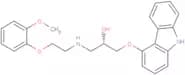
CAS:Labetalol EP Impurity C is a synthetic impurity standard that is used to calibrate HPLC columns and for the quantification of labetalol in drug products. Labetalol EP Impurity C is a metabolite of labetalol and has been shown to have similar pharmacological properties. Labetalol EP Impurity C is synthesized by ester hydrolysis. The purity of this compound exceeds 99%.Formula:C16H18N2O3Purity:Min. 95%Molecular weight:286.33 g/mol10-Oxo mirtazapine
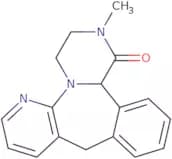
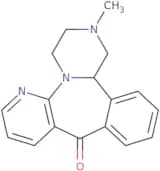
CAS:10-Oxo mirtazapine is a metabolite of the antidepressant drug mirtazapine. It is an impurity in the HPLC standard for mirtazapine and has been shown to be pharmacologically active in animal models. 10-Oxo mirtazapine has also been found to be an impurity in other drugs, such as fluoxetine hydrochloride, but it is not known if it has any activity.Formula:C17H17N3OPurity:Min. 95%Molecular weight:279.34 g/molN2-Methyl alfuzosin hydrochloride (1:x)
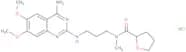
CAS:Alfuzosin is a drug used to treat the signs and symptoms of benign prostatic hyperplasia (BPH). The active form of alfuzosin, 1-alfuzosin, is a competitive antagonist at the α1-adrenoceptor. Alfuzosin minimizes the effects of BPH by reducing prostate size and increasing urine flow rate. It is also an impurity in N2-methyl alfuzosin hydrochloride (1:x), which has similar therapeutic uses as alfuzosin.Purity:Min. 95%[4-(4-Amino-6-hydroxy-7-methoxy-2-quinazolinyl)-1-piperazinyl](tetrahydro-2-furanyl)-methanone
CAS:4-(4-Amino-6-hydroxy-7-methoxy-2-quinazolinyl)-1-piperazinyl](tetrahydro-2-furanyl)-methanone (CAS No. 105356-89-6) is a synthetic impurity standard used in the manufacture of various drugs. Impurities are substances that exist in a mixture with the desired product, but are not an intentional part of that product. Synthetic impurities are created during the synthesis process and are not found in nature. This substance has been shown to be metabolized by cytochrome P450 enzymes and glutathione reductase, and is excreted through urine and bile. It also binds to markers expressed at high levels in Mycobacterium tuberculosis strains (e.g., ESX-1 secretion system protein) and inhibits cell growth in culture.Formula:C18H23N5O4Purity:Min. 95%Molecular weight:373.41 g/mol[4-(4-Amino-7-hydroxy-6-methoxy-2-quinazolinyl)-1-piperazinyl](tetrahydro-2-furanyl)-methanone
CAS:3-amino-2,6-dimethoxy-4-(4-amino-7-hydroxy-6-methoxyquinazolin-2(1H)-yl)piperazine (DMQA) is a synthetic compound. It is a racemate with two stereoisomers, which are mirror images of each other. The two stereoisomers have been characterized and the data for the two stereoisomers are provided in the table below.Formula:C18H23N5O4Purity:Min. 95%Molecular weight:373.41 g/molN2-Methyl alfuzosin-D7 hydrochloride
CAS:N2-Methyl alfuzosin-D7 is a drug product that belongs to the group of alfuzosin, which is a selective inhibitor of the enzyme phosphodiesterase type 5 (PDE5) and is used for the treatment of benign prostatic hyperplasia. It has been designed to reduce the risk of adverse effects associated with other PDE5 inhibitors, such as erectile dysfunction and urinary retention. N2-Methyl alfuzosin-D7 has been shown to be effective in animal studies and in vitro experiments. However, its metabolism remains unknown.Formula:C19H21D7ClN5O4Purity:Min. 95%Molecular weight:432.95 g/molN2-Methyl alfuzosin hydrochloride (1:1)
CAS:N2-Methyl alfuzosin hydrochloride (1:1) is a synthetic compound that is used as an impurity standard for the drug product Alfuzosin. It has been shown to be metabolized by the liver, and its metabolites are excreted through the bile. The N2-methyl group of this compound provides a marker for metabolism studies and it has been shown to inhibit bacterial growth in vitro.Formula:C19H28ClN5O4Purity:Min. 95%Molecular weight:425.91 g/mol[4-(4-Amino-6,7-dimethoxy-2-quinazolinyl)-1-piperazinyl][(5S)-tetrahydro-5-methyl-2-furanyl]-methanone
CAS:Furegrelate is an analytical reference standard for the hydroxylation of 4-(4-amino-6,7-dimethoxy-2-quinazolinyl)-1-piperazinyl[(5S)-tetrahydro-5-methyl-2-furanyl]-methanone. Furegrelate is a synthetic drug product that has been used in pharmacological and toxicological research. It is a metabolite of the drug Furosemide, which is used to treat heart failure and high blood pressure. Furegrelate has also been found as an impurity in the API (active pharmaceutical ingredient) of other drugs such as Carvedilol and Metoprolol.Formula:C20H27N5O4Purity:Min. 95%Molecular weight:401.46 g/mol2-[3-[4-(3-Chloro-4-ethylphenyl)-1-piperazinyl]propyl]-1,2,4-triazolo[4,3-a]pyridin-3(2H)-one
CAS:2-[3-[4-(3-Chloro-4-ethylphenyl)-1-piperazinyl]propyl]-1,2,4-triazolo[4,3-a]pyridin-3(2H)-one is a research and development impurity standard. Impurities are the substances that are not intentionally added to the drug product but can be generated from the synthesis process or from the raw materials. This substance has been used as a synthetic intermediate in the production of other drugs and as an analytical reference for HPLC analysis. It is used to help develop new drugs by providing data about metabolites and possible toxic effects on humans.Purity:Min. 95%1,4-Di-2-furoylpiperazine
CAS:1,4-Di-2-furoylpiperazine is a synthetic compound that has been shown to have anti-inflammatory and analgesic properties. It was originally developed as a pharmaceutical drug candidate for the treatment of arthritis and other inflammatory disorders. 1,4-Di-2-furoylpiperazine is an impurity in the synthesis of the drug product diclofenac. The compound is also found as a metabolite in humans after oral administration of diclofenac. 1,4-Di-2-furoylpiperazine binds to protein and inhibits protein synthesis by preventing amino acid incorporation into proteins. It also has nicotinic effects on acetylcholine binding sites and can be used as an analytical standard for HPLC analysis of drugs containing this molecule.Formula:C14H14N2O4Purity:Min. 95%Molecular weight:274.27 g/mol(S)-Carvedilol
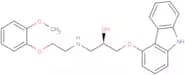
CAS:(S)-Carvedilol is a non-selective β/α-1 blocker.It exerts protection against the vascular or cardiac toxicity of Doxorubicin (DOX).Formula:C24H26N2O4Purity:98%Color and Shape:Less Crystalline Solid Colourless Crystalline SolidMolecular weight:406.47(R)-Carvedilol
CAS:(R)-Carvedilol is a non-selective blocker of β/α-1. (R)-Carvedilol exerts protection against the vascular or cardiac toxicity of Doxorubicin (DOX).Formula:C24H26N2O4Purity:98%Color and Shape:SolidMolecular weight:406.47(S)-Terazosin
CAS:(S)-Terazosin is an active S-enantiomer of Terazosin.Formula:C19H25N5O4Color and Shape:SolidMolecular weight:387.432,3,4,5-Tetradehydro alfuzosin hydrochloride
CAS:Alfuzosin is a potent, selective, and long-acting α1A-adrenergic receptor antagonist. It is used to treat benign prostatic hyperplasia (BPH) in males. Alfuzosin is also used as an antihypertensive agent, for the treatment of pheochromocytoma, and for the treatment of benign prostatic hyperplasia in males. The hydrogenation of 2,3,4,5-tetradehydroalfuzosin to alfuzosin hydrochloride is performed by liquid hydrogenation or by hydrogenation on a palladium catalyst in a mixture of dimethylformamide and hexamethylphosphoramide. This process minimizes the formation of impurities such as 2,3,4-trimethoxy alfuzosin.Formula:C19H24ClN5O4Purity:Min. 95%Color and Shape:White PowderMolecular weight:421.88 g/mol1-Oxo mirtazapine
CAS:1-Oxo mirtazapine is a metabolite of mirtazapine. It is a synthetic compound and is not found in nature. This product is a research and development impurity standard for the preparation of drug product, which has been synthesized to be highly pure. The material is used for drug development, including pharmacopoeia requirements for analytical studies and metabolism studies. 1-Oxo mirtazapine has been shown to have niche applications in pharmacopoeia and as an HPLC standard.
Formula:C17H17N3OPurity:Min. 95%Molecular weight:279.34 g/molRef: 4Z-T-3365
Discontinued productRef: 4Z-P-189013
Discontinued productRef: 4Z-P-189014
Discontinued productRef: 4Z-D-1420
Discontinued product
![6,7-Dimethoxy-2-[4-[(tetrahydro-2-furanyl)carbonyl]-1-piperazinyl]-4(3H)-quinazolinone](/_next/image/?url=https%3A%2Fstatic.cymitquimica.com%2Fproducts%2F3D%2Fthumb-webp%2FID63842.webp&w=3840&q=75)



-methanone](/_next/image/?url=https%3A%2Fstatic.cymitquimica.com%2Fproducts%2F3D%2Fthumb-webp%2FIA63846.webp&w=3840&q=75)
-methanone](/_next/image/?url=https%3A%2Fstatic.cymitquimica.com%2Fproducts%2F3D%2Fthumb-webp%2FIA63847.webp&w=3840&q=75)

![[4-(4-Amino-6,7-dimethoxy-2-quinazolinyl)-1-piperazinyl][(5S)-tetrahydro-5-methyl-2-furanyl]-metha…](/_next/image/?url=https%3A%2Fstatic.cymitquimica.com%2Fproducts%2F3D%2Fthumb-webp%2FIA63848.webp&w=3840&q=75)
![2-[3-[4-(3-Chloro-4-ethylphenyl)-1-piperazinyl]propyl]-1,2,4-triazolo[4,3-a]pyridin-3(2H)-one](/_next/image/?url=https%3A%2Fstatic.cymitquimica.com%2Fproducts%2F3D%2Fthumb-webp%2FIC171026.webp&w=3840&q=75)