


Beta Blockers
Subcategories of "Beta Blockers"
Found 1504 products of "Beta Blockers"
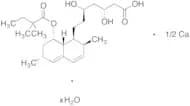
Tenivastatin Calcium Hydrate
CAS:Controlled ProductApplications Tenivastatin Calcium is derived from Simvastatin (S485000), which is a synthetic derivative of a fermentation product of Aspergillus terreus. A competitive inhibitor of HMG-CoA reductase. A synthetic analog of Lovastatin. Antilipemic. Simvastatin, the drug, is sold under the trade name Zocor.
References Hoffman, W.F., et al.: J. Med. Chem., 29, 849 (1986), Mol, M.J., et al.: Lancet, 2, 936 (1986)Formula:C25H39O6Ca·xH2OColor and Shape:NeatMolecular weight:965.3(3R,5R)-6-Cyano-3,5-dihydroxy-hexanoic Acid tert-Butyl Ester
CAS:Controlled ProductFormula:C11H19NO4Color and Shape:NeatMolecular weight:229.27(S)-(+)-Ibuprofen-d3
CAS:Controlled ProductApplications A labelled nonsteroidal anti-inflammatory drug (NSAID); activity resides primarily in the (S)-isomer.
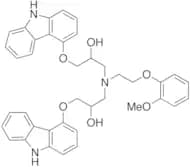
References Busson, M., et al.: J. Int. Med Res., 14, 53 (1986), Meade, E.A., et al.: J. Biol. Chem., 268, 6610 (1993), Davies, N.M., et al.: Clin. Pharmacokinet., 34, 101 (1998),Formula:C13H15D3O2Color and Shape:NeatMolecular weight:209.3Carvedilol Bis-carbazole
CAS:Controlled ProductImpurity Carvedilol EP Impurity B; Carvedilol Impurity B; Carvedilol USP B
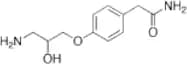
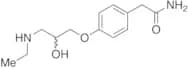
Applications Carvedilol Bis-carbazole (Carvedilol EP Impurity B; Carvedilol Impurity B; Carvedilol USP B) is an impurity from the process of Carvedilol (C184625).Formula:C39H39N3O6Color and Shape:Off-White To Light BeigeMolecular weight:645.744-(3-Amino-2-hydroxypropoxy)phenylacetamide
CAS:Controlled ProductImpurity Atenolol Impurity 3; Atenolol Impurity 1
Applications Atenolol Impurity 3. Atenolol Impurity 1.
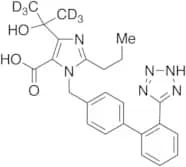
Not a dangerous good if item is equal to or less than 1g/ml and there is less than 100g/ml in the packageFormula:C11H16N2O3Color and Shape:NeatMolecular weight:224.26Olmesartan-d6 Acid
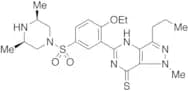
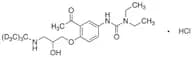
CAS:Controlled ProductFormula:C24D6H20N6O3Color and Shape:NeatMolecular weight:452.54Thioaildenafil
CAS:Applications A new Sildenafil (S435000) analogue.
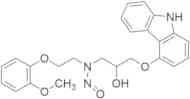
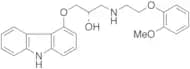
References Balayssac, S., et al.: J. Pharm. Biomed. Anal., 50, 602 (2009),Formula:C23H32N6O3S2Color and Shape:NeatMolecular weight:504.67N-Nitrosocarvedilol
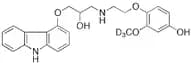
CAS:Controlled ProductFormula:C24H25N3O5Color and Shape:NeatMolecular weight:435.4724'-Hydroxyphenyl Carvedilol-d3
CAS:Controlled ProductApplications A labelled metabolite of Carvedilol (C184625). It is used in the treatment of hypertension.
References Sponer, G., et al.: J. Cardiovasc. Pharmacol., 9, 317 (1987), Fujimaki, M., ET AL.: Xenobiotica, 20, 1025 (1990), Ruffolo, R., et al.: Eur. J. Clin. Pharmacol., 38, S82 (1990), Schaefer, W.H., et al.: Drug Metab. Dispos., 26, 10, 958 (1998),Formula:C242H3H23N2O5Color and Shape:NeatMolecular weight:425.49(S)-(-)-Carvedilol
CAS:Controlled ProductStability Hygroscopic
Applications The optically active isomer of Carvedilol (C184625), a nonselective ß-adrenergic blocker with a1-blocking activity. An antihypertensive used in the treatment of congestive heart failure.
Not a dangerous good if item is equal to or less than 1g/ml and there is less than 100g/ml in the package
References Hirohashi, M., et al.: Arzneim.-Forsch., 40, 735 (1990),Formula:C24H26N2O4Color and Shape:Off White SolidMolecular weight:406.47Pindolol-d7
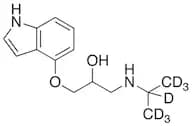
CAS:Controlled ProductApplications Mixed β-adrenergic blocker and serotonin 5HT1A-receptor antagonist. Antihypertensive; antianginal; antiarrhythmic; antiglaucoma.
Not a dangerous good if item is equal to or less than 1g/ml and there is less than 100g/ml in the package
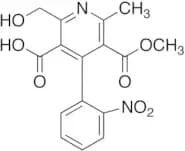
References Dreshfield, L.J., et al.: Neurochem. Res., 21, 557 (1996), Perez, V., et al.: Lancet, 349, 1594 (1997),Formula:C14D7H13N2O2Color and Shape:NeatMolecular weight:255.36Hydroxydehydro Nifedipine Carboxylate
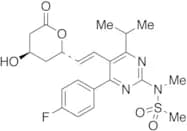
CAS:Controlled ProductFormula:C16H14N2O7Color and Shape:NeatMolecular weight:346.29(4R,6S)-6-[(1E)-2-[4-(4-Fluorophenyl)-6-(1-methylethyl)-2-[methyl(methylsulfonyl)amino]-5-pyrimidinyl]ethenyl]-2,2-dimethyl-1,3-dioxane-4-acetic Acid 1,1-Dimethylethyl Ester
CAS:Controlled ProductImpurity Rosuvastatin EP Impurity F
Applications (4R,6S)-6-[(1E)-2-[4-(4-Fluorophenyl)-6-(1-methylethyl)-2-[methyl(methylsulfonyl)amino]-5-pyrimidinyl]ethenyl]-2,2-dimethyl-1,3-dioxane-4-acetic Acid 1,1-Dimethylethyl Ester (Rosuvastatin EP Impurity F) is a Rosuvastatin (R700500) intermediate as HMG-CoA reductase inhibitor.
References Beck, et al.: J. Med. Chem., 33, 52 (1999),Formula:C29H40FN3O6SColor and Shape:NeatMolecular weight:577.71rac Bopindolol
CAS:Controlled ProductApplications Bopindolol is an ester prodrug of Pindolol (P468000). Bopindolol is a long acting β-adrenoceptor blocking agent. Bopindolol displays antispasmogenic activity mediated by α1-adrenoceptors and 5-HT2 receptors.
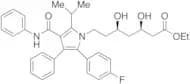
References Turner, D.R. et al.: Br. J. Clin. Pharmacol., 17, 295 (1984); Brodde, O.E. et al.: J. Cardio. Pharmacol., 8, S70 91986); Doggrell, S.A.: Med, Sci. Res., 17, 681 (1989);Formula:C23H28N2O3Color and Shape:NeatMolecular weight:380.48Atorvastatin Ethyl Ester
CAS:Controlled ProductApplications Atorvastatin (A791750) impurity.
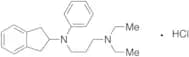
References Kearney, A.S., et al.: Pharm. Res., 10, 1461 (1993); Heinonen, T.M., et al.: Clin. Ther., 18, 853 (1996);Formula:C35H39FN2O5Color and Shape:Off White SolidMolecular weight:586.69Aprindine Hydrochloride
CAS:Applications Aprindine is a long-acting antiarrhythmic agent, effective when administered orally or intravenously in the treatment of ventricular arrhythmias of varying etiologies.
References Danilo, P. Jr., et al.: Am. Heart. J., 97, 119 (1979); Atarashi, H., et al.: Circulation. J., 66, 553 (2002);Formula:C22H30N2·ClHColor and Shape:NeatMolecular weight:358.955-Oxorosuvastatin Methyl Ester
CAS:Applications 5-Oxorosuvastatin methyl ester is an intermediate in the synthesis of Rosuvasatatin (calcium salt: R700500), a 3-hydroxy-3-methylglutaryl coenzyme A (HMG-CoA) reductase inhibitor that decreases high-sensitivity C-reactive protein (hsCRP) and cholesterol concentrations in the blood.
References McTaggart, F., et al.: Am. J. Cardiol., 87, 28 (2001); Ridker, P., et al.: Lancet, 373, 1175 (2009)Formula:C23H28FN3O6SColor and Shape:Yellow SolidMolecular weight:493.551,1'-[(1-Methylethyl)imino]bis[3-[4-(2-methoxyethyl)phenoxy]-2-propanol(Mixture of Diastereomers)(Metoprolol Impurity)
CAS:Controlled ProductImpurity Metoprolol EP Impurity O
Applications 1,1’-[(1-Methylethyl)imino]bis[3-[4-(2-methoxyethyl)phenoxy]-2-propanol (Metoprolol EP Impurity O) is an impurity of Metoprolol.
References Gyllenhaal, O., et al.: J. Biochem. Biophys. Methods, 43, 135 (2000), Chester, T., et al.: Anal. Chem., 74, 2801 (2002),Formula:C27H41NO6Color and Shape:NeatMolecular weight:475.62C-Desmethyl Atenolol
CAS:Controlled ProductImpurity Atenolol Desmethyl Impurity
Applications Cis-Desmethyl Atenolol is an impurity of Atenolol (A790075), a cardioselective β-adrenergic blocker and antihypertensive agent. Atenolol Desmethyl Impurity
References Caplar, V., et al.: Anal. Profiles Drug Subs., 13, 1 (1984);Formula:C13H20N2O3Color and Shape:White To Off-WhiteMolecular weight:252.31Nadolol-d9
CAS:Controlled ProductApplications Labelled Nadolol (N201052). β-Adrenergic blocker. Antihypertensive; antianginal.
References Dreyfuss, J., et al.: J. Clin. Pharmacol., 17, 300 (1977), Sibley, P.L., et al.: Toxicol. Appl. Pharmacol., 44, 379 (1978), Slusarek, L., et al.: Anal. Profiles Drug Subs., 9, 455 (1980),Formula:C17H18D9NO4Color and Shape:NeatMolecular weight:318.46N-2 Trityl Olmesartan Medoxomil
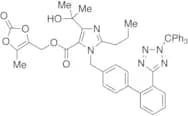
CAS:Impurity Olmesartan Medoxomil EP Impurity D
Applications Olmesartan medoxomil intermediate.
References Birkenhager, W., et al.: J. Hypertens, 17, 873 (1999), Whittaker, A., et al.: Br. J. Cardiol., 12, 125 (2005),Formula:C48H44N6O6Color and Shape:White To Light YellowMolecular weight:800.9(3-Ethyl-1-adamantyl)amine Hydrochloride
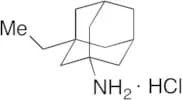
CAS:Controlled ProductApplications 3-Ethyl 3,5-Didemethyl Memantine is an impurity of Memantine (HCl salt, M218000) which is used as an antiparkinsonian and antispasmodic.
References Rohde, H., et al.: Fortschr. Med., 100, 2023 (1982), Kornhuber, J., et al.: Eur. J. Pharmacol., 166, 589 (1989), Gortelmeyer, R. and Erbler, H.: Arzneimittel-Forsch., 42, 904 (1992)Formula:C12H21N·ClHColor and Shape:NeatMolecular weight:215.764-(3-Chloro-2-hydroxypropoxy)benzeneacetamide (Atenolol Impurity D)
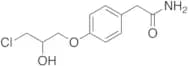
CAS:Controlled ProductImpurity Atenolol EP Impurity D
Applications 4-(3-Chloro-2-hydroxypropoxy)benzeneacetamide is an impurity of Atenolol (A790075), a cardioselective β-adrenergic blocker. Atenolol EP Impurity D
References Caplar, V., et al.: Anal. Profiles Drug Subs., 13, 1 (1984); Pai, N.R., et al.: J. Chem. Pharma. Rsch., 4, 375 (2012);Formula:C11H14ClNO3Color and Shape:WhiteMolecular weight:243.693'-Acetyl-4'-(2,3-epoxypropoxy)butyranilide
CAS:Impurity Acebutolol EP Impurity A
Applications 3’-Acetyl-4’-(2,3-epoxypropoxy)butyranilide (Acebutolol EP Impurity A) is a useful intermediate in the preparation of Acebutolol.
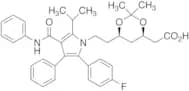
References Andresen, B., et al.: Drug Metab. Disposition, 7, 360 (1979),Formula:C15H19NO4Color and Shape:Off-WhiteMolecular weight:277.32Atorvastatin Acetonide
CAS:Applications Protected Atorvastatin.
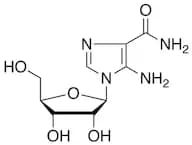
Formula:C36H39FN2O5Color and Shape:Off-White To Light YellowMolecular weight:598.75-Aminoimidazole-4-carboxamide-1-β-D-ribofuranoside
CAS:Applications AICAR is a nucleoside analogue that is able to enter nucleoside pools and is able to significantly increase levels of adenosine during periods of ATP breakdown. Adenosine-regulating agents (ARAs) have been recognized for therapeutic potential in myocardial ischemia. Cardioprotective.
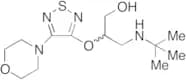
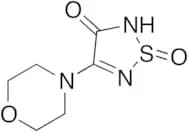
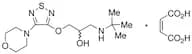
References Mullane, K., et al.: Trends Cardiovasc Med., 3, 227 (1993), Browne, G.J., et al.: J. Biol. Chem., 279, 13, 12220 (2004)Formula:C9H14N4O5Color and Shape:NeatMolecular weight:258.234-(4-Morpholinyl)-1,2,5-thiadiazol-3(2H)-one 1-Oxide
CAS:Controlled ProductImpurity Timolol EP Impurity G; Timolol BP Impurity G
Stability Moisture Sensitive
Applications 4-(4-Morpholinyl)-1,2,5-thiadiazol-3(2H)-one 1-Oxide (Timolol EP Impurity G; Timolol BP Impurity G) is an impurity of Timolol (T4437005), an antihypertensive, an adrenergic blocking agent (1); antiarrhythmic (class II); antianginal; antiglaucoma (2) and antihypertensive (3) agent.
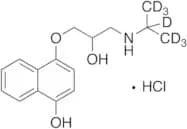
References 1. Wasson, B. et al.: J. Med. Chem. 1972 Jun;15(6):651-5.2. Heel, R. et al.: Drugs. 1979 Jan;17(1):38-55.3. Rofman, et al.: Hypertension. 1980 Sep-Oct;2(5):643-8.Formula:C6H9N3O3SColor and Shape:WhiteMolecular weight:203.22rac-4-Hydroxy Propranolol-d7 Hydrochloride
CAS:Controlled ProductStability Hygroscopic
Applications A labelled metabolite of Propranolol.
References Walle, T., et al.: Drug Metab. Dispos., 13, 204 (1985), Mason, R., et al.: J. Med. Chem., 34, 869 (1991), Anderson, R., et al.: Biochem. Pharmacol., 52, 341 (1996), Hung, D., et al.: J. Pharmacol. Exp. Ther., 297, 780 (2001),Formula:C16D7H14NO3·ClHColor and Shape:Light Red To BrownMolecular weight:318.85Celiprolol-d9 Hydrochloride
CAS:Controlled ProductApplications Labelled Celiprolol. Cardioselective β1-adrenergic blocker. Antihypertensive, antianginal.
References Mazzo, D.J., et al.: Anal. Profiles Drug Subs., 20, 237 (1991), Meininger, C., et al.: Biochem. J., 349, 353 (2000), Ruan, H., et al.: Diabetes, 51, 1319 (2002), Liao, Y., et al.: Circulation, 110, 692 (2004),Formula:C20H25D9ClN3O4Color and Shape:NeatMolecular weight:425.014,4'-[[(1-Methylethyl)imino]bis[(2-hydroxy-3,1-propanediyl)oxy]]bis-benzeneacetamide (Atenolol Impurity F)
CAS:Impurity Atenolol USP Related Compound D; Atenolol EP Impurity F
Applications 4,4'-[[(1-methylethyl)imino]bis[(2-hydroxy-3,1-propanediyl)oxy]]bis-benzeneacetamide (Atenolol USP Related Compound D; Atenolol EP Impurity F) is an impurity of Atenolol (A790075), a cardioselective β-adrenergic blocker.
References Caplar, V., et al.: Anal. Profiles Drug Subs., 13, 1 (1984); Caplar, V., et al.: Acta. Pharma. Jugoslavica., 33, 71 (1983);Formula:C25H35N3O6Color and Shape:Off-WhiteMolecular weight:473.563-[4-(2-Methoxyethyl)phenoxy]-1,2-propanediol
CAS:3-[4-(2-Methoxyethyl)phenoxy]-1,2-propanediol is a synthetic intermediate. It is metabolized from the drug product 3-[4-(2-Methoxyethyl)phenoxy]propionic acid and may be used as an impurity standard for this compound. This chemical is a high purity, pharmacopoeia grade material that is suitable for use in drug development and pharmaceutical research. 3-[4-(2-Methoxyethyl)phenoxy]-1,2-propanediol has a natural origin and can be produced synthetically or through biotransformation of other compounds.Formula:C12H18O4Purity:Min. 96 Area-%Color and Shape:White Off-White PowderMolecular weight:226.27 g/molrac-Diacetolol
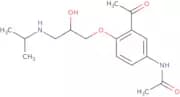
CAS:Rac-Diacetolol is a racemic mixture of two isomers, (+) and (-), of acebutolol. Rac-Diacetolol is used to treat bowel disease, chronic oral inflammation and cardiac arrhythmias. It is also used as an experimental solubility probe in the study of the interactions between drugs and biological membranes. Rac-Diacetolol has been shown to have a low affinity for cytochrome P450 enzymes, which are responsible for metabolizing many drugs in the body. Rac-Diacetolol has been found to reduce plasma concentrations of PCSK9 antibody in patients with inflammatory bowel disease. The drug also has anti-inflammatory properties that may be due to its inhibition of prostaglandin synthesis.
Formula:C16H24N2O4Purity:Min. 95%Color and Shape:PowderMolecular weight:308.37 g/mol3-Hydroxy-4-(1-naphthyloxy)-butanenitrile
CAS:Controlled ProductApplications 3-Hydroxy-4-(1-naphthyloxy)-butanenitrile is an intermediate in the synthesis of Nadoxolol (N201040), which is a beta-adrenergic receptor blocker.
References Kappor, M., et al.: Bioorg. Chem., 31, 259 (2003)Formula:C14H13NO2Color and Shape:NeatMolecular weight:227.264-(2,3-Epoxypropoxy)phenylacetic Acid
CAS:Formula:C11H12O4Color and Shape:NeatMolecular weight:208.21Esmolol hydrochloride
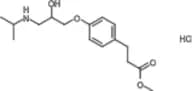
CAS:Esmolol is a cardioselective beta-blocker used in parenteral forms in the treatment of arrhythmias and severe hypertension.Formula:C16H25NO4·HClPurity:98.72% - 99.48%Color and Shape:White SolidMolecular weight:331.15Penbutolol sulfate
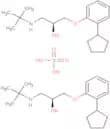
CAS:Penbutolol sulfate ((-)-Terbuclomine) is able to bind to both β2-adrenergic receptor and β1-adrenergic receptor, thus making it a non-selective β blocker.Formula:C18H29NO2H2O4SPurity:99.95%Color and Shape:SolidMolecular weight:340.47Bivalirudin 1-11 Fragment Trifluoroacetic Acid Salt
CAS:Controlled ProductApplications Bivalirudin 1-11 Fragment is an impurity of Bivalirudin, a direct thrombin inhibitor acting as an anticoagulant through inhibition of the enzyme thrombin.
References Bertrand, O. et al.: Am. J. Cardio., 110, 599 (2012); Patti, G. et al.: Am. J. Cardio., 110, 478 (2012)Formula:C43H63N15O15·(C2HF3O2)xColor and Shape:NeatMolecular weight:1030.0511402CMPD101
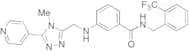
CAS:Controlled ProductApplications CMPD101 is a potent and selective GRK2/3 inhibitor.
References Lowe, J.D., et al.: Mol. Pharmacol., 88, 347 (2015); Ikeda, S., et al.: PCT Int. Appl. WO 2007034846 A1 20070329. Mar 29, 2007Formula:C24H21F3N6OColor and Shape:NeatMolecular weight:466.461-Chloro-3-(1H-indol-4-yloxy)-2-propanol
CAS:Controlled ProductApplications 1-Chloro-3-(1H-indol-4-yloxy)-2-propanol, is an impurity of Pindolol (P468000), a mixed β-adrenergic blocker and serotonin 5HT1A-receptor antagonist. Antihypertensive; antianginal; antiarrhythmic; antiglaucoma.
References Dreshfield, L.J., et al.: Neurochem. Res., 21, 557 (1996), Perez, V., et al.: Lancet, 349, 1594 (1997),Formula:C11H12ClNO2Color and Shape:NeatMolecular weight:225.67rac Timolol Maleate
CAS:Controlled ProductApplications Antihypertensive; antiarrhythmic (class II); antianginal; antiglaucoma agent.
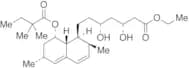
References Wasson, et al.: J. Med. Chem., 15, 651 (1972), Franciosa, et al.: Clin. Pharmacol. Ther., 13, 138 (1972), Heel, R.C., et al.: Drugs, 17, 38 (1979), Rofman, B.A., et al.: Hypertension, 2, 643 (1980), Mazzo, D.J., et al.: Anal. Profiles Drug Subs., 16, 641 (1987),Formula:C13H24N4O3S·C4H4O4Color and Shape:NeatMolecular weight:432.49Simvastatin Hydroxy Acid Ethyl Ester
CAS:Applications An impurity in Simvastatin (S485000).
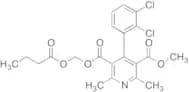
References Sankar, D. et al.: Asian J. Chem., 21, 4294 (2009); Vuletic, M. et al.: J. Pharmac. Biomed. Anal., 37, 715 (2005);Formula:C27H44O6Color and Shape:Off-WhiteMolecular weight:464.63Dehydro Clevidipine
CAS:Controlled ProductFormula:C21H21Cl2NO6Color and Shape:NeatMolecular weight:454.3(±)-2'-Methylpropranolol Hydrochloride
CAS:Controlled ProductApplications (±)-2'-Methylpropranolol Hydrochloride, is an impurity of Nadolol (N201050), a β-Adrenergic blocker. Antihypertensive; antianginal.
References Dreyfuss, J., et al.: J. Clin. Pharmacol., 17, 300 (1977); Sibley, P.L., et al.: Toxicol. Appl. Pharmacol., 44, 379 (1978); Slusarek, L., et al.: Anal. Profiles Drug Subs., 9, 455 (1980)Formula:C17H23NO2·ClHColor and Shape:NeatMolecular weight:309.83Rescinnamine
CAS:Controlled ProductApplications Rescinnamine is an angiotensin-converting enzyme inhibitor used as an antihypertensive drug.
References Fife, R., et al.: Brit. Med. J., 2, 1848 (1960); Balsevich, J., et al.: Planta Med., 44, 91 (1982)Formula:C35H42N2O9Color and Shape:NeatMolecular weight:634.721,1'-[(1-Methylethyl)imino]bis[3-(1H-indol-4-yloxy)-2-propanol
CAS:Controlled ProductApplications Pindolol (P468000) impurity.
Formula:C25H31N3O4Color and Shape:NeatMolecular weight:437.53


![(4R,6S)-6-[(1E)-2-[4-(4-Fluorophenyl)-6-(1-methylethyl)-2-[methyl(methylsulfonyl)amino]-5-pyrimidi…](/_next/image/?url=https%3A%2Fstatic.cymitquimica.com%2Fproducts%2FTR%2Fthumb-webp%2FF595400.webp&w=3840&q=75)


![1,1'-[(1-Methylethyl)imino]bis[3-[4-(2-methoxyethyl)phenoxy]-2-propanol(Mixture of Diastereomers)(…](/_next/image/?url=https%3A%2Fstatic.cymitquimica.com%2Fproducts%2FTR%2Fthumb-webp%2FM304900.webp&w=3840&q=75)


![4,4'-[[(1-Methylethyl)imino]bis[(2-hydroxy-3,1-propanediyl)oxy]]bis-benzeneacetamide (Atenolol Imp…](/_next/image/?url=https%3A%2Fstatic.cymitquimica.com%2Fproducts%2FTR%2Fthumb-webp%2FM304230.webp&w=3840&q=75)
![3-[4-(2-Methoxyethyl)phenoxy]-1,2-propanediol](/_next/image/?url=https%3A%2Fstatic.cymitquimica.com%2Fproducts%2F3D%2Fthumb-webp%2FIM63783.webp&w=3840&q=75)







![1,1'-[(1-Methylethyl)imino]bis[3-(1H-indol-4-yloxy)-2-propanol](/_next/image/?url=https%3A%2Fstatic.cymitquimica.com%2Fproducts%2FTR%2Fthumb-webp%2FM304895.webp&w=3840&q=75)