Others
Found 6297 products of "Others"
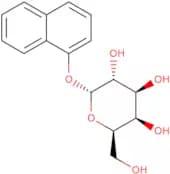
1-Naphthyl β-D-glucopyranoside
CAS:1-Naphthyl β-D-glucopyranoside can be used as a chromogenic substrate for beta-glucosidases. It can also be used as a fluorogenic substrate to study carbohydrate metabolism and in screening enzyme inhitibitors in pharmacologic research.
Formula:C16H18O6Purity:Min. 95%Color and Shape:White Off-White PowderMolecular weight:306.31 g/mol5-Bromo-4-chloro-3-indolyl-D-thymidine-3'-phosphate cyclohexylammonium salt
CAS:5-Bromo-4-chloro-3-indolyl-D-thymidine-3'-phosphate cyclohexylammonium salt is a chromogenic substrate used to detect the specific enzymatic activity of alkaline phosphatase. After cleavage, 5-bromo-4-chloro-indoxyl is released, resulting in a blue to blue-green color change in bacterial colonies or media. 5-Bromo-4-chloro-3-indolyl-D-thymidine-3'-phosphate cyclohexylammonium salt is used in immunohistochemistry (IHC) and Western blot detection, immunoassays used to detect proteins.Formula:C18H17BrClN3O8P·C6H14NPurity:Min. 95%Color and Shape:White PowderMolecular weight:649.86 g/mol4-Nitrophenyl-beta-D-galactopyranoside
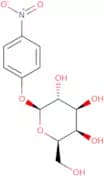
CAS:Chromogenic β-galactosidase substrate yielding a yellow solution upon cleavage. Can be used for the detection of coliforms due to their β-galactosidase activity.Formula:C12H15NO8Purity:Min. 98.0 Area-%Molecular weight:301.26 g/mol4-Nitrophenyl 2-acetamido-2-deoxy-β-D-glucopyranoside-6-sulfate potassium
CAS:4-Nitrophenyl 2-acetamido-2-deoxy-beta-D-glucopyranoside-6-sulfate potassium is a chromogenic substrate for N-acetylglucosamine-6-sulfatase. Upon hydrolysis, para-nitrophenol is released yielding a yellowish colour. 4-Nitrophenyl 2-acetamido-2-deoxy-beta-D-glucopyranoside-6-sulfate potassium is used in different applications such as the Mucopolysaccharidosis IIID (Sanfilippo D) screeningFormula:C14H17N2O11S•KPurity:Min. 95%Color and Shape:PowderMolecular weight:460.46 g/mol1-Naphthyl a-D-galactopyranoside
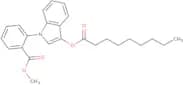
CAS:1-Naphthyl a-D-galactopyranoside is a chromogenic substrate use to detect alpha-galactosidase activity.Formula:C16H18O6Purity:Min. 95%Color and Shape:PowderMolecular weight:306.31 g/molAldol® 515 nonanoate hydrochloride, Biosynth Patent: EP 2427431 and US 8940909
CAS:Aldol® 515 nonanoate hydrochloride is a chromogenic and fluorogenic enzyme substrate for detection of lipase activity. The colorless product is cleaved by C9 esterases produced by bacteria in liquid or solid media, yielding a red color and red fluorescence when Aldol® 355 fluorescence enhancer or a suitable matrix is present. Aldol® 515 nonanoate can be used under aerobic and anaerobic conditions. Well detectable color/fluorescence of bacterial colonies or liquid cultures is obtained within 24-48 h. In the presence of a purified lipase, color and fluorescence develops within minutes to few hours.Formula:C32H36ClN2O3Purity:Min. 95 Area-%Molecular weight:533.1 g/mol4-Nitrophenyl 2-acetamido-2-deoxy-3-O-(b-D-galactopyranosyl)-a-D-galactopyranoside
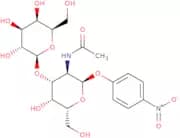
CAS:4-Nitrophenyl 2-acetamido-2-deoxy-3-O-(b-D-galactopyranosyl)-a-D-galactopyranoside is a superior chromogenic pNP enzyme substrate designed to deliver enhanced enzyme detection and outstanding assay performance. This cutting-edge substrate boasts excellent specificity, sensitivity, and stability, making it a powerful tool in the measurement of enzyme activity, substrate profiles, and inhibitor characterization. This premium substrate is perfect for researchers and professionals seeking reliable and efficient results for their enzyme-based investigations.Formula:C20H28N2O13Purity:Min. 98 Area-%Color and Shape:White PowderMolecular weight:504.44 g/mol3-Indoxyl choline phosphate
CAS:Please enquire for more information about 3-Indoxyl choline phosphate including the price, delivery time and more detailed product information at the technical inquiry form on this pageFormula:C13H19N2O4PPurity:Min. 99 Area-%Molecular weight:298.28 g/molRef: 3D-I-5696
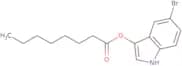
1gTo inquire5gTo inquire10gTo inquire500mgTo inquire2500mgTo inquire-Unit-ggTo inquire5-Bromo-3-indoxyl caprylate
CAS:Also known as Lapis-caprylate; targeting esterase with C8 activity; Blue colorFormula:C16H20BrNO2Purity:Min. 98 Area-%Color and Shape:PowderMolecular weight:338.24 g/mol5-Bromo-3-indolyl 2-acetamido-2-deoxy-b-D-glucopyranoside
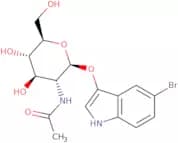
CAS:5-Bromo-3-indolyl 2-acetamido-2-deoxy-b-D-glucopyranoside is a lapis substrate, a chromogenic substrate that yields a deep blue color after cleavage. It is used in lysosomal storage disorder screening such as for Sanfilippo syndrome.Formula:C16H19BrN2O6Purity:Min. 98 Area-%Color and Shape:White Off-White PowderMolecular weight:415.24 g/mol2-Naphthyl-Beta-D-Glucuronide Sodium Salt
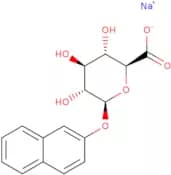
CAS:2-Naphthyl-beta-D-glucuronide sodium salt is an enzyme substrate to detect beta-glucuronidase. The enzyme cleaves the glycosidic bond in 2-naphthyl-beta-D-glucuronide to release 2-naphtol and glucuronic acid. Beta-glucuronidase activity assays are important in many fields such as cancer research, as the enzyme is expressed in some tumors and its activity can be targeted for cancer therapy. The enzyme has also an important role in drug metabolism as it recognizes and binds to drug glucuronide conjugate (as 2-naphthyl-beta-D-glucuronide) facilitating its hydrolysis to release the active part. 2-Naphthyl-beta-D-glucuronide sodium salt has a higher solubility as it is in its salt form.Formula:C16H15NaO7Purity:Min. 95%Color and Shape:PowderMolecular weight:342.28 g/mol2-Chloro-4-nitrophenyl phosphate
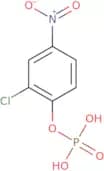
CAS:2-Chloro-4-nitrophenyl phosphate is a chromogenic substrate for phosphatases. Afer cleavage of the substrate, 2-chloro-4-nitrophenol is released, which can be quantified at 405 nm. 2-Chloro-4-nitrophenyl phosphate is used in clinical diagnostics to for prostate cancer, diagnosis of liver and bone diseases.Formula:C6H5ClNO6PPurity:Min. 95 Area-%Molecular weight:253.53 g/mol5-Bromo-4-chloro-3-indoxyl-beta-D-glucuronic acid, sodium salt trihydrate
CAS:Chromogenic substrate for beta-glucuronidase (GUS) yielding blue precipitate upon cleavage. Used for identification of beta-glucuronidase. X-beta-D-glucuronide has been reported as chromogenic substrate in a number of chromogenic E. coli/ coliform culture media. About 95% of common E. coli possess beta-D-glucuronidase activity. Such chromogenic culture media are used for detection and enumeration of E. coli in food samples such as meat, dairy products and shellfish and have clinical applications in the assessment of urinary infections. It has gained international acceptance as highly accurate test for the presence of E. coli in drinking water samples. It is also used for the detection of the expression of GUS (E. coli beta-glucuronidase) gene fusion marker constructs in plants. The sodium salt has advantages over the cyclohexylammonium salt as being non-electrostatic and possessing a naturally-occurring cation.Formula:C14H18BrClNNaO10Purity:Min. 99.0 Area-%Molecular weight:498.65 g/mol5-Bromo-4-chloro-3-indoxyl-3-acetate
CAS:5-Bromo-4-chloro-3-indolyl acetate (5BCIA) is an enzyme substrate that has been shown to inhibit the activity of a number of enzymes, such as proteases and phosphatases. It has also been shown to inhibit the growth of a number of human pathogens, including Staphylococcus aureus, Escherichia coli, Salmonella enterica, Pseudomonas aeruginosa, and Mycobacterium tuberculosis. 5BCIA inhibits bacterial growth by binding to the active site of the enzyme phosphatase and preventing it from hydrolyzing a phosphate group from ATP. This process is necessary for energy metabolism in all living cells. 5BCIA has been shown to be effective against methicillin resistant Staphylococcus aureus (MRSA).
Formula:C10H7BrClNO2Purity:Min. 98 Area-%Molecular weight:288.53 g/mol3-Indolyl β-D-galactopyranoside
CAS:Chromogenic substrate for β-D-galactosidase, yielding a blue precipitate upon cleavage.Formula:C14H17NO6Purity:Min. 95%Color and Shape:PowderMolecular weight:295.29 g/molAldol® 470 phosphate, disodium salt, Biosynth Patent: EP 2427431 and US 8940909
CAS:Aldol 470 phosphate is a chromogenic substrate for phosphatases yielding a yellow precipitate. Furthermore it shows some fluorescence (excitationat 320 nm to 490 nm). In contrast to classical indoxyl substrates, Aldolsubstrates work not only under aerobic but also under anaerobic conditions.Formula:C23H18NNa2O7PPurity:Min. 95.0 Area-%Molecular weight:497.34 g/mol2-Naphthyl-beta-D-galactopyranoside
CAS:2-Naphthyl-β-D-galactopyranoside is a substrate for β-galactosidase. 2-Naphthol is released upon hydrolyzation. By simultaneous coupling with a suitable staining reagent, such as hexazonium p-rosaniline, the corresponding reddish-brown azo-dye is formed. Naphthols can also be detected by fluorescence analysis.Formula:C16H18O6Purity:Min. 99 Area-%Molecular weight:306.32 g/mol4-Nitrophenyl sulfate potassium salt
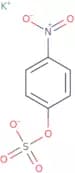
CAS:4-Nitrophenyl sulfate potassium salt is a chromogenic substrate for arylsulfatase. Upon hydrolysis, para-nitrophenol is released yielding a yellowish colour. 4-Nitrophenyl sulfate potassium salt is used in different applications such as the Metachromatic leukodystrophy diagnosis, sulfatase activity assaysFormula:C6H4KNO6SPurity:Min. 95%Color and Shape:PowderMolecular weight:257.26 g/molAldol® 458 nonanoate solution, 0.75 M in DMSO, Biosynth Patent: EP 2427431 and US 8940909
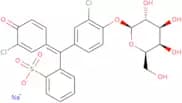
CAS:Controlled ProductAldol 458 nonanoate solution (0.75 M) is a substrate for enzymes and ligands, which is used in various applications such as food testing, staining, fluorogenic substrate, environmental testing, chromogenic substrate and conjugate. Aldol 458 nonanoate solution (0.75 M) has high purity and is highly stable at pH 2-12. This product can be used as a chemiluminescence or bioluminescence substrate. The CAS number for this product is 2484873-15-4.Formula:C25H29NO4Purity:Min. 95%Color and Shape:Clear LiquidMolecular weight:407.51 g/molChlorophenol red β-D-galactopyranoside sodium salt
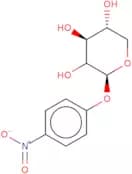
CAS:Chlorophenol red beta-D-galactopyranoside sodium salt is a water soluble, colorless salt that is used as a substrate for the reduction of contaminants in soil and water. It can be used to measure the activity of microorganisms in the environment and has been shown to inhibit growth of certain bacteria, such as methylotrophic bacteria. Chlorophenol red beta-D-galactopyranoside sodium salt is also used in biological treatment systems. This product can be mixed with other substances in order to regulate the microbial population and reduce nutrients.Formula:C25H21Cl2NaO10SPurity:Min. 96.0 Area-%Molecular weight:607.40 g/mol4-Nitrophenyl b-D-arabinopyranoside
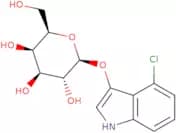
CAS:Chromogenic substrate targeting beta-L-arabinofuranosidasePurity:Min. 95%Molecular weight:271.22 g/mol4-Chloro-3-indolyl β-D-galactopyranoside
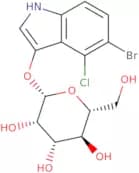
CAS:2-Chloro-4-nitrophenyl b-D-lactoside is a chromogenic enzyme substrate used to study the activity of enzymes. It produces a color when hydrolyzed, which makes it a valuable tool in screening for enzyme activity and studying enzyme kinetics.Formula:C14H16ClNO6Purity:Min. 95%Color and Shape:SolidMolecular weight:329.73 g/mol4-Nitrophenyl 2-acetamido-3-O-[2-O-a-L-fucopyranosyl-b-D-galactopyranosyl)-2-deoxy-b-D-galactopyranoside
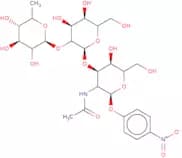
CAS:4-Nitrophenyl 2-acetamido-3-O-[2-O-a-L-fucopyranosyl-b-D-galactopyranosyl)-2-deoxyb-D-galactopyranoside is a water soluble, fluorescent probe that can be used for detecting the presence of β-(1→4) -linked galactosaminoglycans. The dye is a substrate for enzymes such as α--mannosidase, β--glucuronidase and β--galactosidase. The dye is also an excellent ligand for lectins such as concanavalin A and wheat germ agglutinin. This product is a diagnostic reagent that has been shown to have high purity and quality. It has CAS No. 93496-53-8 and can be used in food testing, bioluminescence, environmental testing, or high purity applications.
Formula:C26H38N2O17Purity:Min. 95%Molecular weight:650.58 g/mol5-Bromo-4-chloro-3-indolyl b-D-mannopyranoside
CAS:5-Bromo-4-Chloro-3-Indolyl b-D-Mannopyranoside, also known as X-Man, is an enzyme substrate commonly used for detecting mannosidase enzymes. Upon hydrolysis by the enzyme, it produces a blue-green colored compound that can be detected visually or measured spectrophotometrically. This substrate is useful in characterizing the activity of mannosidases involved in glycoprotein processing and quality control.Formula:C14H15BrClNO6Color and Shape:White Off-White PowderMolecular weight:408.63 g/mol2-Nitrophenyl-β-D-thiogalactopyranoside
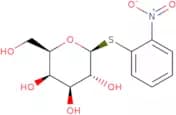
CAS:2-Nitrophenyl-beta-D-thiogalactopyranoside is a chromogenic substrate used to detect the presence of galactosidase enzymes in various biological and biochemical assays. It consists of a nitrophenyl group attached to a galactose sugar molecule through a thioglycosidic bond. When acted upon by enzymes such as galactosidases, it releases the colored nitrophenyl group, which can be detected using spectrophotometry. This substrate is commonly used in assays for the detection of LacZ activity in bacterial cultures, as lacZ encodes for β-galactosidase.Formula:C12H15NO7SPurity:Min. 98 Area-%Color and Shape:Yellow PowderMolecular weight:317.32 g/molAldol® 458 nonanoate, Biosynth Patent: EP 2427431 and US 8940909
CAS:Controlled ProductAldol 458 nonanoate is a fluorogenic substrate that can be used in the detection of enzyme activity particularly C8/C9-esterases, lipases activity producing a yellow/green-orange color. Aldol 458 nonanoate reacts with enzymes, such as oxidoreductases and hydrolases, to produce light. This product is a conjugate of aldol 458 nonanoate and an enzyme substrate for the detection of these enzymes. It has been shown to be useful in food testing, staining, fluorogenic substrate, environmental testing, chromogenic substrate, conjugate, high purity, enzyme substrate for diagnostics and ligand.
Formula:C25H29NO4Purity:Min. 95%Molecular weight:407.5 g/mol2-Naphthyl butyrate
CAS:2-Naphthyl butyrate is used as a chromogenic substrate in hematological studies via measuring esterase activity. This type of assays are important as it can help in distinguishing acute leukemias with monocytic or granulocytic differentiation. After hydrolysis of 2-naphthyl butyrate by the esterase (for example acylase), b-napthol is released that can be quantified spectrophotometrically (Exc 320 nm; Em 410 nm).Formula:C14H14O2Purity:Min. 98 Area-%Color and Shape:Colorless Clear LiquidMolecular weight:214.26 g/mol5-Bromo-3-indoxyl phosphate, p-toluidine salt
CAS:Used as substrate for chemiluminescent assay of alkaline phosphatase (ALP) to produce a blue colour precipitate when cleaved.Formula:C15H16BrN2O4PPurity:Min. 98.0 Area-%Molecular weight:399.19 g/mol2-Naphthyl-alpha-L-fucopyranoside
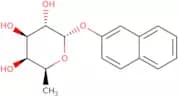
CAS:Chromogenic substrate for α-L-Fucosidase. 2-naphthol is released upon hydrolyzation. By simultaneous coupling with a suitable staining reagent, such as hexazonium p-rosaniline, the corresponding azo-dye is formed. Naphthols can also be detected by fluorescence analysis.Formula:C16H18O5Purity:Min. 98 Area-%Molecular weight:290.32 g/molAldol® 458 acetate, Biosynth Patent: EP 2427431 and US 8940909
CAS:Controlled ProductAldol 458 acetate is a fluoroquinolone antibiotic. It is an enzyme substrate that can be used in the detection of β-galactosidase, alkaline phosphatase, and other enzymes. Aldol 458 acetate can be used for the detection of β-galactosidase by chemiluminescence or bioluminescence. It has been shown to have high purity and high quality as well as being a ligand that can be conjugated with a fluorescent dye to provide a fluorescent substrate. Aldol 458 acetate can also be used in culture media for the growth of bacteria. It has been shown to have strong inhibitory effects on Escherichia coli, Bacillus subtilis, Pseudomonas aeruginosa, and Staphylococcus aureus.
Formula:C18H15NO4Purity:Min. 95%Color and Shape:PowderMolecular weight:309.32 g/mol2-Nitrophenyl butyrate
CAS:2-Nitrophenyl butyrate is a chromogenic enzyme substrate that is commonly used in enzymatic assays to detect lipases and esterases. When hydrolyzed by these enzymes, the substrate yields a yellow product that can be detected spectrophotometrically at 405 nm. The advantage of using 2-nitrophenyl butyrate is its high sensitivity and specificity for detecting lipolytic and esterolytic activities. This substrate is widely used in various applications, including enzyme kinetics studies, inhibitor screening, and the determination of esterase activity in biological samples such as serum, plasma, and cell lysates.
Formula:C10H11NO4Purity:Min. 95%Color and Shape:Clear LiquidMolecular weight:209.2 g/mol2-Naphthyl caprylate
CAS:Chromogenic substrate for carboxylesterase and lipase. 2-naphthol is released upon hydrolyzation. By simultaneous coupling with a diazonium salt, the corresponding azo-dye is formed. Naphthols can also be detected by fluorescence analysis. Used in an colorimetric assay for the extracellular lipase of Pseudomonas fluorescens B52.
Formula:C18H22O2Purity:Min. 98.0 Area-%Molecular weight:270.37 g/molRef: 3D-N-2220
1gTo inquire5gTo inquire250mgTo inquire500mgTo inquire2500mgTo inquire-Unit-ggTo inquire5-Bromo-6-chloro-3-indoxyl-beta-D-glucopyranoside
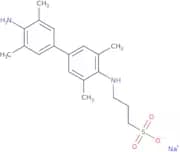
CAS:Chromogenic substrate for β-D-glucosidase yielding a magenta precipitate. Differentiation of Salmonella spp. (negative) from other Enterobacteriaceae.Formula:C14H15BrClNO6Purity:Min. 99 Area-%Molecular weight:408.64 g/molN-(3-Sulfopropyl)-3,3',5,5'-tetramethylbenzidine sodium
CAS:N-(3-Sulfopropyl)-3,3',5,5'-tetramethylbenzidine (TMB) sodium salt is a highly sensitive chromogenic substrate used for the detection and quantification of peroxidase enzyme activity. This water-soluble substrate undergoes a color change from colorless to blue upon oxidation by peroxidase enzymes in the presence of hydrogen peroxide. The reaction can be stopped by adding an acid, resulting in a yellow color that can be measured spectrophotometrically. TMB sodium salt is widely used in various applications, including enzyme-linked immunosorbent assays (ELISA), immunohistochemistry, and other diagnostic tests, due to its high sensitivity, low background signal, and excellent stability.
Purity:Min. 95%Color and Shape:PowderMolecular weight:384.47 g/mol6-Chloro-3-indoxyl phosphate, p-toluidine salt
CAS:A substrate for visualising alkaline phosphatase activity. Produces a red colored insoluble end product that is detected visually, when used together with nitroblue tetrazolium. The substrate system is versatile and functions in a variety of applications, including Northern, Southern, and Western blotting, in situ hybridization, ELISAs and immunohistochemistry. DMF soluble.Formula:C15H16ClN2O4PPurity:Min. 98.0 Area-%Molecular weight:354.73 g/mol5-Iodo-3-indolyl-b-D-galactopyranoside-6-sulfate sodium salt
5-Iodo-3-indolyl-b-D-galactopyranoside-6-sulfate sodium salt is a high purity, water soluble fluorogenic substrate for the detection of beta-galactosidase activity. This product is used in food testing, environmental testing, and diagnostics. 5-Iodo-3-indolyl-b-D-galactopyranoside (5IIAG) is a beta galactosidase substrate that provides a convenient method for determining beta galactosidase activity. This product is also used as an indicator to measure the rate of hydrolysis of ester bonds in other compounds that contain acid functional groups such as glycerides and oils.Purity:Min. 95%Molecular weight:523.24 g/molAldol® 470 acetate, Biosynth Patent: EP 2427431 and US 8940909
CAS:Controlled ProductAldol® 470 acetate is a Fluorogenic substrate that is used in enzymatic reactions to produce a fluorescent product. Aldol® 470 acetate can be used as a ligand or a chromogenic substrate. This product is also used in diagnostic tests, such as conjugates and chemiluminescence, to detect the presence of certain enzymes or microorganisms. It can be used in culture media to measure the amount of certain enzymes, such as phosphatases or proteases, and has been shown to have high purity and quality. This product has CAS No. 1318785-37-3, 1318785-38-4, 1318785-39-5, 1318785-40-6 and 1318785-41-7.
Formula:C25H21NO5Purity:Min. 95%Color and Shape:PowderMolecular weight:415.44 g/mol5-Bromo-4-chloro-3-indoxyl-α-L-arabinofuranoside
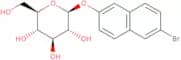
5-Bromo-4-chloro-3-indoxyl-alpha-L-arabinofuranoside is a fluorogenic substrate. It is also used as a ligand to detect the presence of an enzyme in a sample. 5BCIAF may be used as an enzyme substrate to measure the activity of enzymes such as beta-galactosidase, alpha-glucuronidase, and esterases. It is also used for diagnostic purposes, with the most common use being for the detection of Mycobacterium tuberculosis in clinical specimens. 5BCIAF can be conjugated to other compounds to form fluorescent probes for detecting specific compounds or cells within a sample. This compound has been shown to have activity against bacteria, fungi, and viruses when tested in culture media and food samples. The chemical structure of 5BCIAF is similar to that of fluorescein, which has been shown to have chemiluminescent propertiesFormula:C13H13BrClNO5Purity:Min. 99.0 Area-%Molecular weight:378.61 g/mol6-Bromo-2-naphthyl b-D-glucopyranoside
CAS:6-Bromo-2-naphthyl b-D-glucopyranoside is an enzyme substrate used in chromogenic assays with beta-glucosidases. It has been used in culture media for the identification of Legionella pneumophila.Formula:C16H17BrO6Purity:Min. 98 Area-%Color and Shape:PowderMolecular weight:385.21 g/mol5-Nitro-3-indoxyl-β-D-galactopyranoside
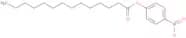
For the detection of beta-galactosidase activityFormula:C14H16N2O8Molecular weight:340.29 g/mol4-Nitrophenyl myristate
CAS:4-Nitrophenyl myristate (NphOMy) is a chromogenic enzyme substrate used as a diagnosis tool for detection of β-lactamase hydrolysis activities. In the presence of certain drugs, 4-nitrophenyl myristate HSA-Tyr411-catalyzed hydrolysis seems to be inhibited.Formula:C20H31NO4Purity:Min. 95 Area-%Color and Shape:White PowderMolecular weight:349.46 g/mol2-Naphthyl caprylate
CAS:2-Naphthyl caprylate is a substrate that is employed in an assays for carboxylesterase and lipase and when hydrolyzed, produces 2-naphthol, a compound that can also be identified via fluorescence analysis. By combining it with a diazonium salt, the formation of the corresponding azo dye occurs. In particular, this substrate is used to detect the extracellular lipase of Pseudomonas fluorescens B52.Formula:C18H22O2Purity:Min. 95%Color and Shape:White PowderMolecular weight:270.37 g/mol4-Nitrophenyl-beta-D-cellobioside
CAS:Chromogenic substrate for β-D-Cellobiosidase yielding a yellow solution upon cleavage.Formula:C18H25NO13Purity:Min. 98 Area-%Molecular weight:463.39 g/molAldol® 515 acetate, Biosynth Patent: EP 2427431 and US 8940909
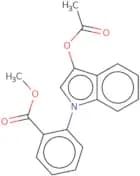
CAS:Aldol® 515 acetate is a chromogenic and fluorogenic substrate, used for detection of esterase activity. The colorless product is cleaved by purified esterase, or esterase secreted by microorganisms in liquid or solid media, yielding a red color and red fluorescence signal when Aldol® 355 fluorescence enhancer or a suitable matrix is present. Aldol® 515 acetate can be used under aerobic and anaerobic conditions. Well detectable color/fluorescence of bacterial colonies or liquid cultures is obtained within 16-48 h. In the presence of a purified esterase, color and fluorescence develops within minutes to few hours.Formula:C25H22N2O3Purity:Min. 95.0 Area-%Molecular weight:398.45 g/molChloro-3-indolyl a-D-glucopyranoside
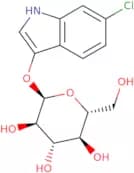
CAS:Chromogenic substrate for α-glucosidaseFormula:C14H16ClNO6Purity:Min. 97 Area-%Color and Shape:White PowderMolecular weight:329.73 g/mol4-Nitrophenyl-β-D-maltopyranoside
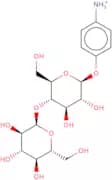
CAS:Chromogenic beta-maltosidase substrateFormula:C18H25NO13Purity:Min. 95%Color and Shape:White PowderMolecular weight:463.39 g/molAldol® 484 acetate, Biosynth Patent: EP 2427431 and US 8940909
CAS:Controlled ProductAldol® 484 acetate is a chromogenic substrate for carboxylesterases yielding a red precipitate. In contrast to classical indoxyl substrates, Aldol® substrates can be used under aerobic and anaerobic conditions.Formula:C22H16ClFN2O3Purity:Min. 95%Color and Shape:PowderMolecular weight:410.83 g/mol4-Nitrophenyl 6-O-(b-D-galactopyranosyl)-b-D-galactopyranoside
CAS:4-Nitrophenyl 6-O-(b-D-galactopyranosyl)-b-D-galactopyranoside is a fluorescent substrate that is used in diagnostics and culture media. It can be used to detect the presence of aminoglycoside antibiotics, such as gentamicin, by using the fluorogenic or chromogenic reaction. 4NP6BG has been shown to bind to the beta subunit of RNA polymerase and inhibit transcription, which can be useful for testing environmental samples for the presence of aminoglycosides.Purity:Min. 95%2-Nitrophenyl b-D-arabinopyranoside
2-Nitrophenyl b-D-arabinopyranoside is a chemical compound that is used in the detection of ATP by chemiluminescence. It acts as a substrate for enzymes such as luciferase and catalase, which catalyze the oxidation of 2-nitrophenyl b-D-arabinopyranoside to phenol and carbon dioxide with the release of light. This reaction can be used in diagnostic applications such as detecting bacteria in culture media or diagnosing food spoilage. 2-Nitrophenyl b-D-arabinopyranoside can also be used as a conjugate to detect proteins or nucleic acids by fluorescence spectroscopy. The CAS number for this compound is 107772-06-1.
Purity:Min. 95%Molecular weight:271.22 g/molAldol® 470 choline phosphate, Biosynth Patent: EP 2427431 and US 8940909
CAS:Aldol® 470 choline phosphate is a chromogenic and fluorogenic enzyme substrate used for detection of phosphatidyl-choline specific phospholipase C (PC-PLC, EC 3.1.4.3) activity. The colorless product is cleaved by PC-PLC positive microorganisms in liquid or solid media, yielding a yellow color and green fluorescence. Aldol® 470 choline phosphate therefore, enables the detection and identification of PC-PLC positive pathogenic bacteria, such as, Clostridium perfringens, Pseudomonas aeruginosa, Helicobacter pylori, Legionella pneumophila, Bacillus cereus, Bacillus anthracis, Listeria monocytogenes, and others. Aldol® 470 choline phosphate can be used under aerobic and anaerobic conditions.Formula:C28H31N2O7PPurity:Min. 95%Color and Shape:PowderMolecular weight:538.53 g/mol