Aminoacids and derivatives
Amino acids are compounds with a structure based on an amino group (-NH₂) and a carboxyl group (-COOH), both attached to a central carbon atom. This structure makes them essential for the synthesis of proteins and other biomolecules. Their derivatives can have regulatory properties over metabolic processes and biological systems, with applications in nutrition, health, and regenerative medicine.
At CymitQuimica, we offer a wide range of amino acids and their derivatives, ideal for research and the formulation of bioactive products.
Found 12270 products of "Aminoacids and derivatives"
Sort by
Purity (%)
0
100
|
0
|
50
|
90
|
95
|
100
N-(3S)-1-Azabicyclo[2.2.2]oct-3-yl-5,6-dihydro-1-Naphthalenecarboxamide
CAS:Controlled Product<p>Applications N-(3S)-1-Azabicyclo[2.2.2]oct-3-yl-5,6-dihydro-1-Naphthalenecarboxamide is an impurity of Palonosetron (P165800), a serotonin 5-HT3 receptor antagonist used in the prevention and treatment of chemotherapy-induced nausea and vomiting (CINV). Antiemetic.<br>References Clark, R.D., et al.: J. Med. Chem., 36, 2645 (1993), Wong, E.H.F., et al.: Br. J. Pharmacol., 114, 851 (1995), Grunberg, S.M., et al.: Expert. Opin. Pharmacother., 4, 2297 (2003), Eisenberg, P., et al.: Ann. Oncol., 15, 330 (2004), Siddiqui, M.A.A., et al.: Drugs, 64, 1125 (2004),<br></p>Formula:C18H22N2OColor and Shape:NeatMolecular weight:282.38Dapoxetine-d6 Hydrochloride
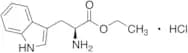
CAS:Controlled Product<p>Applications Labelled Dapoxetine (D185700). Selective serotonin reuptake inhibitor (SSRI).<br>References Feret, B., et al.: Formulary, 40, 227 (2005),<br></p>Formula:C21H18D6ClNOColor and Shape:NeatMolecular weight:347.91(S)-Ethyl 2-Amino-3-(1H-indol-3-yl)propanoate hydrochloride
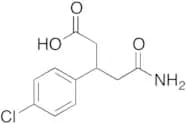
CAS:Controlled Product<p>Applications (S)-Ethyl 2-amino-3-(1H-indol-3-yl)propanoate hydrochloride (cas# 2899-28-7) is a useful research chemical.<br></p>Formula:C13H16N2O2·ClHColor and Shape:NeatMolecular weight:268.743-(4-Chlorophenyl)glutaramic Acid
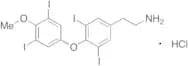
CAS:Controlled ProductFormula:C11H12ClNO3Color and Shape:NeatMolecular weight:241.67O-Methyl-3,3',5,5'-tetraiodothyronamine Hydrochloride
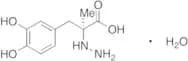
Controlled Product<p>Applications O-Methyl-3,3',5,5'-tetraiodothyronamine is a derivative of p-Tyramine (T898500); an adrenergic.<br>References Brandacher, G., et al.: Curr. Drug Metab., 8, 289 (2007); Oresic, M., et al.: J. Exp. Med., 205, 2975 (2008)<br></p>Formula:C15H13I4NO2•(HCl)Color and Shape:NeatMolecular weight:746.893646Carbidopa Monohydrate
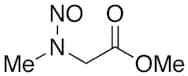
CAS:Controlled Product<p>Applications Carbidopa Monohydrate (cas# 38821-49-7) is a useful research chemical.<br></p>Formula:C10H14N2O4·H2OColor and Shape:White To Off-WhiteMolecular weight:244.24N-Nitroso Sarcosine Methyl Ester
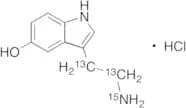
CAS:Controlled ProductFormula:C4H8N2O3Color and Shape:NeatMolecular weight:132.118Serotonin-13C2,15N Hydrochloride (~90%)
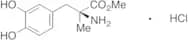
<p>Applications Serotonin-13C215N Hydrochloride, is a labelled Serotonin (S274980). Serotonin is a monoamine neurotransmitter.<br></p>Formula:C813C2H12N15NO•HClPurity:~90%Color and Shape:NeatMolecular weight:179.193646L-a-Methyl DOPA Methyl Ester Hydrochloride
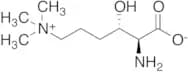
CAS:Controlled ProductFormula:C11H15NO4·ClHColor and Shape:Off WhiteMolecular weight:261.703S-Hydroxy-N6,N6,N6-trimethyl-L-lysine Inner Salt (~90%)
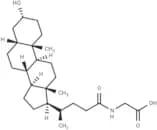
CAS:Controlled ProductFormula:C9H20N2O3Purity:~90%Color and Shape:NeatMolecular weight:204.27Glycine 6-Ethylchenodeoxycholate
CAS:Controlled Product<p>Stability Hygroscopic<br>Applications Glycine 6-Ethylchenodeoxycholate can be used as reactant/reagent in synthetic preparation of bile acid analogs as FXR/TGR5 agonists.<br>References Or, Y., et al.: PCT Int. Appl., WO 2016073767 A1 20160512 (2016)<br></p>Formula:C28H47NO5Color and Shape:NeatMolecular weight:477.68Betaine-15N
CAS:Controlled Product<p>Applications Betaine-15N is an isotopically labelled analog of Betaine (B325005), which is an endogenous zwitterioin present in many biological systems and referred to as Glycine Betaine. It can be used as an organic osmolyte, a methyl donor and it can also be used for the treatment of homocystinuria, an inherited disorder of the metabolism of amino acid methionine.<br>References Ashraf, M. & Foolad, M.: Environ. Exp. Bot., 59, 206 (2006);Yancey, P.: J. Exp. Biol., 208, 2819 (2005);Rees, W., et. al.: Biochem., 32, 137 (1993)<br></p>Formula:C5H1115NO2Color and Shape:NeatMolecular weight:118.14cis-Tranexamic Acid-13C2,15N
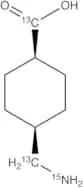
CAS:Controlled Product<p>Applications Labelled cis-Tranexamic Acid (T714500). Antifibrinolytic agent; blocks lysine binding sites of plasminogen. Hemostatic.<br>References Andersson, et al.: Scand. J. Haematol. 2, 230 (1965), Melander, B., et al.: Acta Pharmacol. Toxicol., 22, 340 (1965), Bonnar, J., et al.: Br. Med. J., 313, 579 (1996), Dunn, C.J., et al.: Drugs, 57, 1005 (1999),<br></p>Formula:C613C2H1515NO2Color and Shape:NeatMolecular weight:160.19Carbidopa Impurity 2
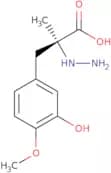
CAS:Controlled Product<p>Carbidopa Impurity 2 is an impurity of carbidopa, a drug product that is used to treat Parkinson's disease. Carbidopa Impurity 2 is an analytical standard for the identification and quantification of carbidopa in biological samples. The natural form of this compound is unknown, but it has been synthesized using custom synthesis techniques. This compound was also used to develop a high purity HPLC standard and as a pharmacopoeia reference material.</p>Formula:C11H16N2O4Purity:Min. 95%Molecular weight:240.26 g/molCarbidopa impurity F
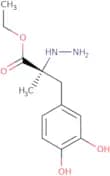
CAS:Controlled Product<p>Carbidopa is an impurity of the drug L-DOPA, which is used as a treatment for Parkinson's disease. Carbidopa is a prodrug that is converted to L-DOPA by decarboxylase, an enzyme in the body. The conversion process can be inhibited by the presence of carbidopa impurity F (CIF), which binds to carboxamides and forms a stable complex with them. This prevents CIF from binding to decarboxylase and blocking its ability to convert carbidopa into L-DOPA. CIF has been shown to have anti-parkinsonian effects by reducing the severity of symptoms associated with Parkinson's disease such as muscular rigidity and tremors.</p>Formula:C12H18N2O4Purity:Min. 95%Color and Shape:PowderMolecular weight:254.28 g/molUNC0224
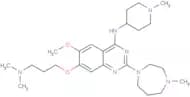
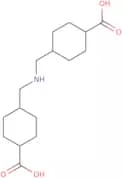
CAS:<p>UNC0224 is a selective inhibitor of G9a with a Ki of 2.6 nM and IC50 of 15 nM. UNC0224 also potently inhibits GLP with assay-dependent IC50 values of 20-58 nM.</p>Formula:C26H43N7O2Purity:99.80%Color and Shape:SolidMolecular weight:485.67trans-trans-4,4'-Iminodimethylenedi(cyclohexanecarboxylic acid)
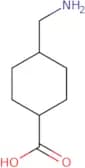
CAS:<p>Trans-trans-4,4'-Iminodimethylenedi(cyclohexanecarboxylic acid) is a hydrophobic particle that is soluble in water. It has an average particle diameter of 20 nm and a viscosity of 10 cps. Trans-trans-4,4'-Iminodimethylenedi(cyclohexanecarboxylic acid) is used in skin care products as a thickener and viscosity enhancer. It provides a silky feel to the skin and improves the skin's elasticity. This product also helps to protect the skin from UV radiation by forming a barrier on the surface of the skin. The natural polymer can be produced from glycerin or amide to produce different properties for different applications. Trans-trans-4,4'-Iminodimethylenedi(cyclohexanecarboxylic acid) is an amphoteric molecule that can react with both acidic</p>Formula:C16H27NO4Purity:Min. 95%Molecular weight:297.39 g/moltrans-4-(Aminomethyl)cyclohexanecarboxylic acid
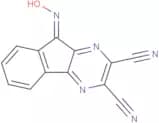
CAS:<p>Trans-4-(aminomethyl)cyclohexanecarboxylic acid (AMCA) is a histamine antagonist that is used to treat bowel disease. It may also be useful for the treatment of other inflammatory diseases and as an anticoagulant. AMCA has been shown to be safe and effective for the prevention of postoperative bleeding in patients who are undergoing major surgery. This drug is a potent inhibitor of platelet aggregation, but does not affect the function of erythrocytes or leukocytes. AMCA inhibits platelet aggregation by blocking the binding of adenosine diphosphate (ADP) to its receptor on platelets, thus inhibiting ADP-mediated activation of phospholipase A2 and arachidonic acid release from membranes. An increase in blood levels of AMCA may lead to cardiac toxicity and bleeding events.</p>Formula:C8H15NO2Purity:Min. 95%Molecular weight:157.21 g/molCysteine protease inhibitor-2
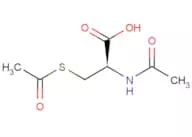
CAS:<p>Cysteine protease inhibitor from US20070032499A1; halts DCT116 at 6.5μM, PC3 at 4.4μM.</p>Formula:C13H5N5OPurity:98%Color and Shape:SolidMolecular weight:247.21Dacisteine
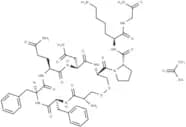
CAS:<p>Dacisteine (N,S-Diacetyl-L-cysteine) is an inhibitor of New Delhi metallo-beta-lactamase-1 (NDM-1, IC50 = 1000 μM).</p>Formula:C7H11NO4SPurity:99.57%Color and Shape:SolidMolecular weight:205.23Felypressin acetate
CAS:<p>Felypressin acetate (PLV-2) is an agonist of vasopressin 1 and acts on all arginine vasopressin receptors 1AS.</p>Formula:C48H69N13O13S2Purity:97.06%Color and Shape:SolidMolecular weight:1100.27Edrophonium
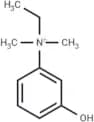
CAS:<p>Edrophonium: quick-acting, brief cholinesterase inhibitor for arrhythmias, myasthenia gravis diagnosis, and curare antidote.</p>Formula:C10H16NOColor and Shape:SolidMolecular weight:166.24V-9302
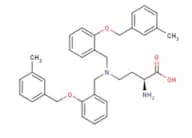
CAS:<p>V-9302 (V9302) is a competitive antagonist of transmembrane glutamine flux that selectively and potently targets the amino acid transporter ASCT2 (IC50: 9.6 uM</p>Formula:C34H38N2O4Purity:98% - 99.54%Color and Shape:SolidMolecular weight:538.68Trometamol hydrochloride
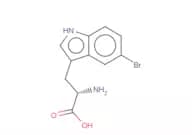
CAS:<p>TRIS hydrochloride is a low-toxicity amino alcohol used to buffer acids and CO2, and regulate pH in biological systems.</p>Formula:C4H12ClNO3Purity:99.89%Color and Shape:White Solid CrystallineMolecular weight:157.6L-5-BromoTryptophan
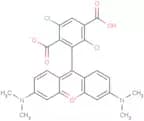
CAS:<p>L-5-BromoTryptophan (5-BrW) is an analog of the tryptophan (Trp) effector and inhibits the gelation of hemoglobin S.</p>Formula:C11H11BrN2O2Purity:99.86%Color and Shape:SolidMolecular weight:283.121,4-Dichloro 6-carboxytetramethylrhodamine
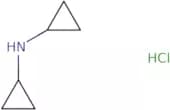
CAS:<p>1,4-Dichloro 6-carboxytetramethylrhodamine is a rhodamine-class fluorescent dye with excitation/emission wavelengths of 541/568 nm.</p>Formula:C25H20Cl2N2O5Purity:99.99%Color and Shape:SolidMolecular weight:499.34Dicyclopropylamine hydrochloride
CAS:<p>Dicyclopropylamine hydrochloride is a tyrosine kinase inhibitor that blocks the activity of jak2. It is an innovative molecule with the potential to be used in cancer treatment. Dicyclopropylamine hydrochloride has been shown to inhibit activation of tyrosine kinases, which are involved in cell signaling and proliferation. Dicyclopropylamine hydrochloride also has anti-inflammatory properties, which may be due to its ability to inhibit prostaglandin synthesis. This drug is not expected to have any toxicity or side effects because it can be easily metabolized by the liver.br>br> Dicyclopropylamine hydrochloride is a white solid with a melting point of 175°C. It has no detectable odor, and it is soluble in water and ethanol. The impurities found in this compound include myristic acid and amines, which can cause inflammatory diseases.br>br> D</p>Formula:C6H11N•HClPurity:Min. 95%Color and Shape:PowderMolecular weight:133.62 g/molZK824190
CAS:<p>ZK824190: oral uPA inhibitor, IC50 - uPA 237 nM, tPA 1600 nM, Plasmin 1850 nM.</p>Formula:C22H20F2N2O4Purity:98.84%Color and Shape:SolidMolecular weight:414.4Glycolithocholic acid
CAS:<p>Glycolithocholic acid (Lithocholic acid glycine conjugate) is a glycine conjugate of lithocholic acid.</p>Formula:C26H43NO4Purity:99.75%Color and Shape:SolidMolecular weight:433.62Soyacerebroside II
CAS:<p>Soyacerebroside II is a Ca2+ ionophore; both I and II inhibit IL-18 in PBMCs and modulate immune responses.</p>Formula:C40H75NO9Purity:98%Color and Shape:SolidMolecular weight:714.02Ref: 4Z-C-77110
Discontinued productRef: 4Z-H-087006
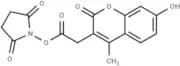
Discontinued product7-Hydroxy-4-methylcoumarin-3-acetic acid, SE
CAS:<p>7-Hydroxy-4-methylcoumarin-3-acetic acid, SE is a useful organic compound for research related to life sciences. The catalog number is T67683 and the CAS number is 96735-88-5.</p>Formula:C16H13NO7Color and Shape:SolidMolecular weight:331.28Ref: 4Z-C-7773
Discontinued productRef: 4Z-H-018031
Discontinued productRef: 4Z-A-4622
Discontinued productRef: 4Z-H-018033
Discontinued productRef: 4Z-C-77101
Discontinued productRef: 4Z-C-268003
Discontinued productAcetylcysteine Impurity 1 Sodium Salt
CAS:Formula:C5H6NO2S·NaColor and Shape:Off-White SolidMolecular weight:144.17 22.99Ref: 4Z-C-7715
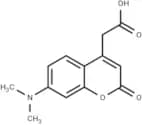
Discontinued product7-Dimethylaminocoumarin-4-acetic acid
CAS:<p>7-Dimethylaminocoumarin-4-acetic acid, catalog number T64950, CAS number 80883-54-1, is a valuable organic compound for life sciences research.</p>Formula:C13H13NO4Color and Shape:SolidMolecular weight:247.25Ref: 4Z-L-138049
Discontinued productRef: 4Z-C-7761
Discontinued productRef: 4Z-C-77107
Discontinued productAcetylcysteine Impurity 4 Disodium Salt
CAS:Formula:C5H7NO5S·2NaColor and Shape:White To Off-White SolidMolecular weight:193.18 2*22.99Ref: 4Z-C-7736
Discontinued productRef: 4Z-C-7744
Discontinued productAcetylcysteine Impurity 2 (L-Cysteic Acid)
CAS:Formula:C3H7NO5SColor and Shape:White To Off-White SolidMolecular weight:169.15Ref: 4Z-C-7723
Discontinued productAcetylcysteine EP Impurity B (L-Cysteine)
CAS:Formula:C3H7NO2SColor and Shape:White To Off-White SolidMolecular weight:121.16Ref: 4Z-C-773
Discontinued productRef: 4Z-C-7795
Discontinued product
![N-(3S)-1-Azabicyclo[2.2.2]oct-3-yl-5,6-dihydro-1-Naphthalenecarboxamide](/_next/image/?url=https%3A%2Fstatic.cymitquimica.com%2Fproducts%2FTR%2Fthumb-webp%2FA795305.webp&w=3840&q=75)