Aminoacids and derivatives
Amino acids are compounds with a structure based on an amino group (-NH₂) and a carboxyl group (-COOH), both attached to a central carbon atom. This structure makes them essential for the synthesis of proteins and other biomolecules. Their derivatives can have regulatory properties over metabolic processes and biological systems, with applications in nutrition, health, and regenerative medicine.
At CymitQuimica, we offer a wide range of amino acids and their derivatives, ideal for research and the formulation of bioactive products.
Found 12257 products of "Aminoacids and derivatives"
Sort by
Purity (%)
0
100
|
0
|
50
|
90
|
95
|
100
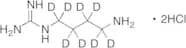
4-Aminobutyl-d8 Guanidine Dihydrochloride
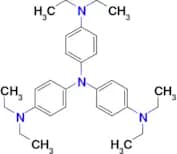
CAS:Controlled Product<p>Applications 4-Aminobutyl-d8 Guanidine is the labelled analog of the decarboxylation product of the amino acid arginine (A769500) and also an intermediate in polyamine biosynthesis.<br>References Golding, B.T., et al.: Biochem. Soc. Trans., 22, 391S (1994);<br></p>Formula:C5H6D8N4·2HClColor and Shape:NeatMolecular weight:211.16263N1,N1-Bis(4-(diethylamino)phenyl)-N4,N4-diethylbenzene-1,4-diamine
CAS:Purity:95+%Molecular weight:458.6940002441406N-(4-(AMINOMETHYL)PHENYL)BENZO[D]ISOXAZOL-3-AMINE HCL
CAS:Purity:95.0%Molecular weight:275.739990234375Pazopanib, Hydrochloride Salt
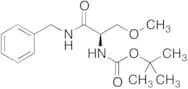
CAS:Purity:99.0%Color and Shape:SolidMolecular weight:473.9800109863281(R)-tert-Butyl 1-(Benzylamino)-3-methoxy-1-oxopropan-2-ylcarbamate
CAS:Controlled ProductFormula:C16H24N2O4Color and Shape:NeatMolecular weight:308.373N2-Lauroyl-L-glutamine-d23
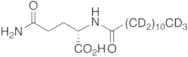
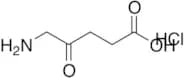
CAS:Controlled Product<p>Applications Labelled N2-Lauroyl-L-glutamine (L178650). N2-Lauroyl-L-glutamine is used as a solubilizing detergent in a novel protein refolding system. N2-Lauroyl-L-glutamine can be synthesized enzymatically in glycerol-water system useing acylase I from pig kidney.<br>References Kudou, M. et al.: Protein Express. Purif., 75, 46 (2011); Wada, E. et al.: J. Am. Oil Chem. Soc., 79, 41 (2002);<br></p>Formula:C17H9D23N2O4Color and Shape:WhiteMolecular weight:351.595-Aminolevulinic Acid Hydrochloride
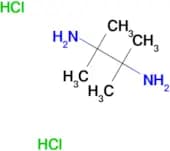
CAS:<p>Applications 5-Aminolevulinic Acid Hydrochloride (cas# CAS:5451-09-2) is a useful research chemical.<br></p>Formula:C5H9NO3·ClHColor and Shape:NeatMolecular weight:167.592,3-Dimethyl-2,3-butanediamine dihydrochloride
CAS:Purity:98.0%Color and Shape:Solid, PowderMolecular weight:189.1199951171875Carbocisteine Lactam Sodium Salt
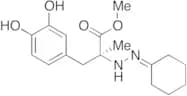
CAS:<p>Stability Hygroscopic<br>Applications Carbocisteine Lactam is an impurity of the mucolytic agent Carbocisteine (C178760).<br>References Anonymous., et al.: Biochem. J., 219, 345 (1984); Sanger, F., et al.: Biochem. J., 59, 509 (1955); Hekman, C., et al.: J. Pharm. Biomed. Anal., 20, 763 (1999);<br></p>Formula:C5H6NNaO3SColor and Shape:White SolidMolecular weight:183.16(S)-Carbidopa Methyl Ester N-Cyclohexylidene
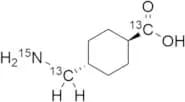
CAS:Controlled Product<p>Applications (S)-Carbidopa Methyl Ester N-cyclohexylideneis an impurity of Carbidopa (C175915), a prodrug inhibitor of aromatic amino acid decarboxylase.<br>References Sletzinger, M., et al.: J. Med. Chem., 6, 101 (1963)<br></p>Formula:C17H24N2O4Color and Shape:NeatMolecular weight:320.38Tranexamic Acid-13C2,15N
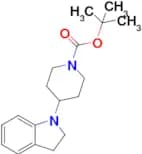
CAS:<p>Applications Labelled Tranexamic Acid (T714505). Antifibrinolytic agent; blocks lysine binding sites of plasminogen. Hemostatic.<br>References Andersson, et al.: Scand. J. Haematol. 2, 230 (1965), Melander, B., et al.: Acta Pharmacol. Toxicol., 22, 340 (1965), Bonnar, J., et al.: Br. Med. J., 313, 579 (1996), Dunn, C.J., et al.: Drugs, 57, 1005 (1999),<br></p>Formula:C613C2H1515NO2Color and Shape:White To Off-WhiteMolecular weight:160.19(S)-tert-Butyl 2-(dimethylcarbamoyl)piperazine-1-carboxylate hydrochloride
CAS:Purity:95%Molecular weight:293.7900085449219Tert-Butyl 4-(2,3-dihydro-1H-indol-1-yl)piperidine-1-carboxylate
CAS:Purity:97%Molecular weight:302.41799926757816-(6-(6-Aminohexanamido)hexanamido)hexanoic Acid
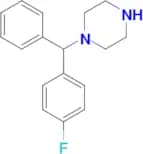
CAS:<p>Applications 6-(6-(6-Aminohexanamido)hexanamido)hexanoic Acid is used in the making of a preconjugate which serves as immunoreactive conjugate useful as a developer antigen in a competitive inhibition immunoassay for the polymorphic analyte. Also used in the efficient synthesis of a heterobifunctional coupling agent.<br>References Oh, C. S., et al.: PCT Int. Appl. (1994), WO 9416330 A1 19940721; Reddy, R. E., et al.: Bioconjug. Chem., 16, 1323 (2005)<br></p>Formula:C18H35N3O4Color and Shape:White To Off-WhiteMolecular weight:357.491-(4-Fluoro-a-phenylbenzyl)piperazine
CAS:Purity:98.0%Color and Shape:SolidMolecular weight:270.351013183593752-[2-[(5-carboxypentyl)amino]-2-oxoethyl]-2-hydroxybutanedioic Acid
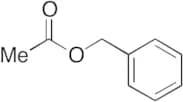
CAS:Controlled ProductFormula:C12H19NO8Color and Shape:NeatMolecular weight:305.28Benzyl Acetate
CAS:Controlled Product<p>Applications Benzyl Acetate, is found naturally in many flowers, It has pleasant sweet aroma reminiscent of jasmine, and thus is used widely in perfumery industry, and also as a flavouring agent. It is also used as a solvent.<br>References Schiestl, F. P., et al.: J. Chem. Ecology, 29 (2004); Qian-qian, M., et al.: Jingxi Huagong, 30, 442 (2013);<br></p>Formula:C9H10O2Color and Shape:NeatMolecular weight:150.17Spermidine
CAS:<p>Stability Hygroscopic<br>Applications Spermidine is a biogenic polyamine formed from putrescine. Spermidine is a precursor of Spermine. Spermidine is essential for both normal and neoplastic tissue growth.<br> Not a dangerous good if item is equal to or less than 1g/ml and there is less than 100g/ml in the package<br>References Abraham, A.K., et al.: Eur. J. Biochem., 106, 257 (1980), Mach, M., et al.: Biochem. J., 202, 153 (1982), Thyss, A., et al.: Eur. J. Cancer Clin. Oncol., 18, 611 (1982),<br></p>Formula:C7H19N3Color and Shape:NeatMolecular weight:145.25Stearoyl L-a-Lysolecithin
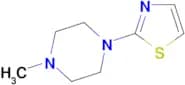
CAS:<p>Stability Hygroscopic, moisture sensitive<br>Applications Stearoyl L-α-Lysolecithin is an bioactive lysophosphatidylcholine derived compound found to be released by bronchial epithelial cells. Stearoyl L-α-Lysolecithin have also been utilized in the development of liposomes and michelles by drug transdermal delivery devices.<br>References Zhuge, Y., et al.: Allergy Asthma Immunol Res., 6, 66 (2014)<br></p>Formula:C26H54NO7PColor and Shape:NeatMolecular weight:523.682-(4-Methylpiperazin-1-yl)thiazole
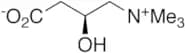
CAS:Formula:C8H13N3SPurity:95.0%Color and Shape:LiquidMolecular weight:183.27D-Carnitine
CAS:Controlled Product<p>Stability Hygroscopic<br>Applications Essential cofactor of fatty acid metabolism; required for the transport of fatty acids through the inner mitochondrial membrane. Synthetized primarily in the liver and kidney; highest concentrations found in heart and skeletal muscle. Dietary sources include red meat, dairy products, beans, avocado.<br>References Mitchell, M.E., et al.: Am. J. Clin. Nutr., 31, 293 (1978), Lango, R., et al.: Cardiovasc. Res., 51, 21 (2001), Vaz, F.M., et al.: Biochem. J., et al.: 361, 417 (2002), Karlic, H., et al.: Nutrition, 20, 709 (2004),<br></p>Formula:C7H15NO3Color and Shape:White To BeigeMolecular weight:161.206-CHLORO-9-[3-(2-CHLOROETHYLAMINO)PROPYLAMINO]-2-METHOXYACRIDINE DIHYDROCHLORIDE
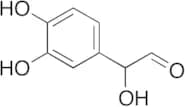
CAS:Purity:95%Molecular weight:451.2099914550783,4-Dihydroxyphenylglycolaldehyde (Dopegal)
CAS:<p>Stability Very Hygroscopic, Moisture Sensitive<br>Applications 3,4-Dihydroxyphenylglycolaldehyde (Dopegal) is the monoamine oxidase metabolite of dopamine which is toxic of in a concentrated amount and may be a target for Alzheimer or Parkinson’s therapy.<br>References Burke, W. et al.: Neurotoxical., 25, 101 (2004);<br></p>Formula:C8H8O4Color and Shape:NeatMolecular weight:168.15ε-Aminocaproic Acid-d10 Hydrochloride
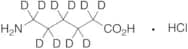
CAS:Controlled Product<p>Applications Labelled ε-Aminocaproic Acid. Used in the preparatiom of esters of 6-aminohexanoic acid as antibacterial agents. EACA is reported to inhibit chymotrypsin, Factor VIIa, lysine carbo xy peptidase, plasmin, and plasminogen activator.<br>References Dolezal, P., et al.: Pharm. Res., 10, 1015 (1993), Vavrova, K., et al.: Curr. Med. Chem., 12, 2273 (2005), Holas, T., et al.: Bioorg. Med. Chem., 14, 7671 (2006),<br></p>Formula:C6H4D10ClNO2Color and Shape:NeatMolecular weight:177.7Succinyl Carnitine Chloride Salt
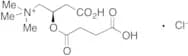
CAS:Controlled Product<p>Stability Very Very Hygroscopic<br>Applications A metabolic intermediate of L-Carnitine.<br>References Huffman, K. et al.: Diab. Care, 32, 1678 (2009);<br></p>Formula:C11H20NO6ClColor and Shape:NeatMolecular weight:297.73Ref: 10-F794544
1gTo inquire5gTo inquire10mgTo inquire25mgTo inquire50mgTo inquire100mgTo inquire250mgTo inquire1-Boc-4-[4-(methylsulfonyl)-2-nitrophenyl]piperidin-4-amine
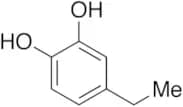
CAS:Formula:C17H25N3O6SPurity:95.0%Color and Shape:SolidMolecular weight:399.464-Ethylcatechol
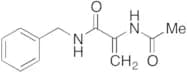
CAS:Controlled Product<p>Stability Hygroscopic<br>Applications 4-Ethylcatechol is one of the main phenolic off-flavour markers in French ciders.<br>References Alonso-Salces, R., et al.: Anal. Bioanal. Chem., 379, 464 (2004), Xu, Y., et al.: J. Agr. Food Chemi., 55, 3051 (2007),<br></p>Formula:C8H10O2Color and Shape:Off-WhiteMolecular weight:138.162-(Acetylamino)-N-(phenylmethyl)-2-propenamide
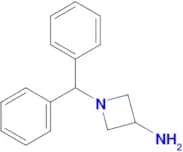
CAS:Formula:C12H14N2O2Color and Shape:NeatMolecular weight:218.25181-BENZHYDRYL-3-AMINOAZETIDINE
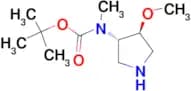
CAS:Purity:97.0%Color and Shape:Solid, Crystalline PowderMolecular weight:238.33399963378906TERT-BUTYL (3S,4S)-4-METHOXYPYRROLIDIN-3-YL(METHYL)CARBAMATE
CAS:Purity:95.0%Molecular weight:230.30799865722656Cadaverine
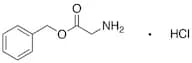
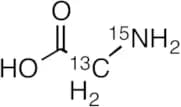
CAS:Controlled Product<p>Applications Cadaverine is a polyamine produced by the decarboxylation of L-lysine, and is also produced by Escherichia coli (E.coli) cells when grown in acidic pH. Cadaverine is known to inhibit porin-mediated outer membrane permeability in E.coli.<br> Not a dangerous good if item is equal to or less than 1g/ml and there is less than 100g/ml in the package<br>References Mimitsuka, T., et al.: Biosci., Biotech., Bioch., 71, 2130 (2007); Sanartzidou, H., et al.: J. Bacteriol., 185, 13 (2003)<br></p>Formula:C5H14N2Color and Shape:NeatMolecular weight:102.18Glycine Benzyl Ester Hydrochloride
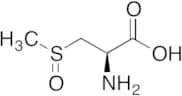
CAS:Controlled Product<p>Applications Potent crosslinking inhibitors.<br>References Sloan, J., et al.: J. Biol. Chem., 274, 23740 (1999).<br></p>Formula:C9H11NO2·ClHColor and Shape:Off-WhiteMolecular weight:201.65S-Methyl-L-cysteine sulfoxide
CAS:Controlled ProductFormula:C4H9NO3SColor and Shape:Off-WhiteMolecular weight:151.185-Aminolevulinic Acid Methyl Ester Hydrochloride
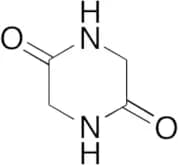
CAS:Controlled Product<p>Applications 5-Aminolevulinic Acid Methyl Ester Hydrochloride, is the methyl ester of Aminolevulinic Acid (ALA) (A611780), which has been shown to have higher lipophilicity, and to be highly efficient at inducing protoporphyrin IX (PpIX) production in cell culture.<br>References Morrow, D. I. J., et al.: J. Pharmac. Sci., 99, 3486 (2010); Peng, Q., et al.: Cancer, 79, 2282 (1997);<br></p>Formula:C6H11NO3·HClColor and Shape:NeatMolecular weight:181.62Glycine Anhydride(2,5-Piperazinedione)
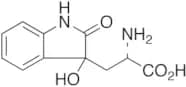
CAS:<p>Applications 2,5-Piperazinedione, can be used as an intermediate in the preparation of various pharmaceutical and biologically active compounds. It can be used in the synthesis of dipeptide isosteres by cross-metathesis.<br>References Enholm, J.E. et al.: Tetrahedron, 68, 6920 (2012);<br></p>Formula:C4H6N2O2Color and Shape:WhiteMolecular weight:114.10Dioxindolyl-L-alanine (Mixture of Diastereomers)
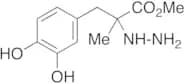
CAS:Controlled Product<p>Applications Dioxindolyl-L-alanine is used in the synthesis of peptides containing 5-Hydroxytryptophan, Oxindolylalanine, N-Formylkynurenine and Kynurenine.<br>References Berlett, B., et al.: J. Biol. Chem., 272, 20313 (1997), Chang, T., et al.: J. Biomed. Sci., 7, 357 (2000); Frolov, A., et al.: J. Pept. Sci., 13, 862 (2007);<br></p>Formula:C11H12N2O4Color and Shape:NeatMolecular weight:236.22Carbidopa Methyl Ester
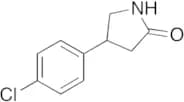
CAS:Controlled ProductFormula:C11H16N2O4Color and Shape:NeatMolecular weight:240.2564-(4-Chlorophenyl)-2-pyrrolidinone
CAS:Controlled Product<p>Impurity Baclofen EP Impurity A<br>Applications 4-(4-Chlorophenyl)-2-pyrrolidinone is used in the preparation of potential and selective antagonists of the α1A adrenergic receptor (1,2). It is an impurity of Baclofen (B108000), a specific GABA-B receptor agonist. Muscle relaxant (skeletal).<br>References (1) Whitlock, G. et al.: Bioorg. med. Chem. Lett., 19, 3118 (2009)(2) Brogden, R.N., et al.: Drugs, 8,1 (1974)<br></p>Formula:C10H10ClNOColor and Shape:NeatMolecular weight:195.65



![N-(4-(AMINOMETHYL)PHENYL)BENZO[D]ISOXAZOL-3-AMINE HCL](/_next/image/?url=https%3A%2Fstatic.cymitquimica.com%2Fproducts%2F10%2Fthumb-webp%2FF306211.webp&w=3840&q=75)





![2-[2-[(5-carboxypentyl)amino]-2-oxoethyl]-2-hydroxybutanedioic Acid](/_next/image/?url=https%3A%2Fstatic.cymitquimica.com%2Fproducts%2FTR%2Fthumb-webp%2FC181175.webp&w=3840&q=75)


![6-CHLORO-9-[3-(2-CHLOROETHYLAMINO)PROPYLAMINO]-2-METHOXYACRIDINE DIHYDROCHLORIDE](/_next/image/?url=https%3A%2Fstatic.cymitquimica.com%2Fproducts%2F10%2Fthumb-webp%2FF863350.webp&w=3840&q=75)
![1-Boc-4-[4-(methylsulfonyl)-2-nitrophenyl]piperidin-4-amine](/_next/image/?url=https%3A%2Fstatic.cymitquimica.com%2Fproducts%2F10%2Fthumb-webp%2FF023662.webp&w=3840&q=75)