


Benzimidazole and Imidazole Derivatives
Benzimidazole is a compound consisting of a benzene ring fused to an imidazole ring, a five-membered structure containing two nitrogen atoms. Benzimidazole derivatives, such as albendazole, are known for their antiparasitic and antifungal activity, used in the treatment of parasitic infections and certain parasitic diseases in animals and humans. Imidazole, on the other hand, is a five-membered structure with two nitrogen atoms found in various biologically active compounds. Imidazole derivatives, such as metronidazole, have antimicrobial and antiparasitic properties. These compounds are also used in the pharmaceutical industry for treating bacterial infections, parasitic diseases, and some fungal infections, as well as in organic chemistry as catalysts.
At CymitQuimica, we offer high-purity benzimidazoles and imidazoles for research in medicinal chemistry, pharmacology, and biotechnology.
Found 10376 products of "Benzimidazole and Imidazole Derivatives"
Sort by
Purity (%)
0
100
|
0
|
50
|
90
|
95
|
100
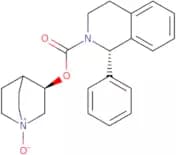
Solifenacin N-oxide
CAS:<p>Solifenacin N-oxide is an anti-cholinergic agent that has been shown to be effective in the treatment of overactive bladder. Solifenacin N-oxide is a prodrug that is hydrolyzed in vivo to solifenacin, its active form. The compound reversibly binds to muscarinic receptors and inhibits the release of acetylcholine. Solifenacin N-oxide has been shown to have low levels of impurities and is highly soluble in water. It was also found to be stable when stored at room temperature for two months. This drug has a high flow rate and moderate retention time, which makes it suitable for reversed-phase liquid chromatography (RPLC). RPLC is a chromatographic technique that separates compounds by size, hydrophobicity, or charge.</p>Formula:C23H26N2O3Purity:Min. 95%Color and Shape:White PowderMolecular weight:378.46 g/mol(R,R)-Solifenacin succinate
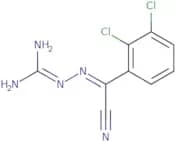
CAS:<p>(R,R)-Solifenacin succinate is a pharmaceutical agent that acts as an antimuscarinic drug. It has been shown to be effective in wastewater treatment, where it was found to reduce the amount of solifenacin and optimised organic chemicals in the water. This drug has also been shown to have antagonist properties against the muscarinic receptor M3.</p>Formula:C23H26N2O2•C4H6O4Purity:Min. 95%Color and Shape:PowderMolecular weight:480.55 g/mol2-(2,3-Dichlorophenyl)-2-(guanidinoimino) acetonitrile
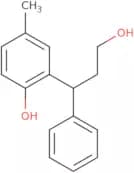
CAS:<p>Lamotrigine is a chemically unrelated compound, which is the active ingredient of a new class of adjuvant drugs for epilepsy. This drug has been found to be effective against seizures in patients with partial seizures and generalized seizures. Lamotrigine is an orally administered suspensoid that can be mixed with water or other liquids to form a suspension. It has been used as a flavouring agent and an adjuvant in pharmaceuticals, including tablets and capsules. The chemical structure of lamotrigine includes two 2,3-dichlorophenyl groups connected by an amino group (guanidinoimino). This structure gives lamotrigine its chemical name: 2-(2,3-dichlorophenyl)-2-(guanidinoimino) acetonitrile.</p>Formula:C9H7Cl2N5Purity:Min. 95%Molecular weight:256.09 g/mol2-Hydroxy-5-methyl-γ-phenylbenzenepropanol
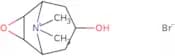
CAS:<p>2-Hydroxy-5-methylphenylbenzenepropanol is an aliphatic phenol that is used as a treatment for benzene poisoning. It is also used as a precursor to other compounds, such as the chlorides and alkylates of 2-hydroxy-5-methylphenylbenzenepropanol. This compound can be synthesized by reacting ethyl benzoylacetate with diisopropylamine in the presence of oxygen and chlorine gas. It is often immobilized using nutrients, l-tartaric acid, or cinnamic acid.</p>Formula:C16H18O2Purity:Min. 95%Molecular weight:242.31 g/molTiotropium Bromide EP Impurity G
CAS:<p>Tiotropium Bromide EP Impurity G is an anticholinergic bronchodilator that is used in the treatment of asthma. Tiotropium Bromide EP Impurity G has been shown to have long-acting properties, with a half-life of about 20 hours. It has a high affinity for the muscarinic receptor and acts as a competitive antagonist at this site. Tiotropium Bromide EP Impurity G also has a cavity, which may be necessary for its activity.</p>Formula:C9H6BrNO2Purity:Min. 95%Molecular weight:240.05 g/mol(4R)-1-(4-O-b-D-Galactopyranosyl-b-D-glucopyranosyl)-4-(2-methylpropyl)-2-pyrrolidinone
CAS:<p>(4R)-1-(4-O-b-D-Galactopyranosyl-b-D-glucopyranosyl)-4-(2-methylpropyl)-2-pyrrolidinone is a synthetic, impurity standard and research and development compound. (4R)-1-(4-O-b-D-Galactopyranosyl-b-D-glucopyranosyl)-4-(2-methylpropyl)-2pyrrolidinone is used as an analytical reference in the synthesis of other compounds. It is also used in drug development for the treatment of tuberculosis. This product has a high purity level and is pharmacopoeia grade.</p>Formula:C20H35NO11Purity:Min. 95%Molecular weight:465.49 g/mol2-[[(4-Chloro-3-methyl-2-pyridinyl)methyl]sulfinyl]-1H-benzimidazole
CAS:<p>2-[[(4-Chloro-3-methyl-2-pyridinyl)methyl]sulfinyl]-1H-benzimidazole (CAS No. 168167-42-8) is a synthetic compound that is used as an analytical reference standard for HPLC. It is also used in the study of drug metabolism, and it has been shown to induce natural oxidation in vitro. 2-[(4-Chloro-3-methylpyridinium)methylsulfinyl]-1Hbenzimidazole is an impurity found in pharmaceutical products that are synthesized from 1-(2,4,6trichlorophenyl)-3-[(4chloromethyl)phenyl]urea.</p>Formula:C14H12ClN3OSPurity:Min. 95 Area-%Color and Shape:Brown PowderMolecular weight:305.78 g/mol2-[[(4-Methoxy-3-methyl-2-pyridinyl)methyl]sulfinyl]-1H-benzimidazole
CAS:<p>2-[(4-Methoxy-3-methyl-2-pyridinyl)methyl]sulfinyl]-1H-benzimidazole is a synthetic, impurity standard that is used in the synthesis of drug products. It has been shown to inhibit the metabolism of drugs and may be used as a marker for drug metabolism. This compound may also be used as a marker in analytical studies to assess the purity of a drug product. 2-[(4-Methoxy-3-methyl-2-pyridinyl)methyl]sulfinyl]-1H-benzimidazole has not been evaluated for safety or efficacy.</p>Formula:C15H15N3O2SPurity:Min. 95%Molecular weight:301.36 g/molN-Desalkyl itraconazole
CAS:<p>N-Desalkyl itraconazole is a triazole antifungal drug that belongs to the group of medicines. It is used in the treatment of systemic mycoses, including blastomycosis and histoplasmosis. N-Desalkyl itraconazole has been shown to inhibit the growth of fungi by interfering with their cell membranes and inhibiting their production of ergosterol. Calibration studies have shown that this drug binds to human liver microsomes and plasma proteins, as well as transporters such as P-glycoprotein. These interactions may influence its pharmacokinetics, which can be determined using a bioanalytical method.</p>Formula:C31H30Cl2N8O4Purity:Min. 95%Molecular weight:649.53 g/mol7-Hydroxyhyoscyamine
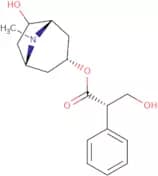
CAS:<p>7-Hydroxyhyoscyamine is an antibacterial agent that is used in the treatment of bacterial infections. It has been shown to inhibit the growth of a number of bacteria including Staphylococcus aureus, Streptococcus pyogenes, and Escherichia coli. 7-Hydroxyhyoscyamine has been shown to be more potent than 6-hydroxyhyoscyamine (6-OH Hya) for inhibiting protein synthesis in the bacteria. The compound does not have any psychoactive effects, unlike atropine sulfate, which is also an alkaloid found in plants from the Solanaceae family. 7-Hydroxyhyoscyamine can be synthesized by reacting atropine with nitrous acid or hydrochloric acid. This synthetic process leads to n-oxides as impurities, which can be removed by using a reversed phase high performance liquid chromatography (RP HPLC). Validation of this</p>Formula:C17H23NO4Purity:Min. 95%Color and Shape:PowderMolecular weight:305.4 g/mol2,12-Dihydro-1,3-dimethyl-8-methoxy-12-thioxobenzo [4,5] pyrido [1,2-c] imidazo [1,2-a] imidazol-2-one
CAS:<p>2,12-Dihydro-1,3-dimethyl-8-methoxy-12-thioxobenzo [4,5] pyrido [1,2-c] imidazo [1,2-a] imidazol-2-one is a metabolite of the drug 2-[2-(4,5,-dihydroimidazo[1,2a]imidazol -2(3H)-yl)ethoxy]-N-(methylsulfonyl)benzamide. It can be used as an impurity standard for the manufacture of drugs and as a research chemical.</p>Formula:C16H13N3O2SPurity:Min. 95%Molecular weight:311.36 g/mol1-Phenyl-1,2,3,4-tetrahydro-isoquinoline
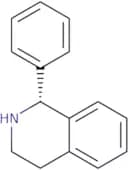
CAS:<p>1-Phenyl-1,2,3,4-tetrahydro-isoquinoline is a synthetic compound which has been used as a lead compound for the development of drugs with dopamine β-hydroxylase inhibitory activity. In vitro studies have shown that 1-phenyl-1,2,3,4-tetrahydro-isoquinoline inhibits human serum dopamine β-hydroxylase and can be used to study the possible role of this enzyme in Parkinson's disease. This drug is racemized in the body and has been found to be effective against Parkinson's disease in rats. It is also an enantiomer that has industrial applications for the production of polyurethane foam insulation coatings.</p>Formula:C15H15NPurity:Min. 95%Color and Shape:PowderMolecular weight:209.29 g/molAlbendazole impurity F
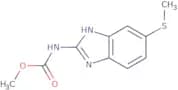
CAS:<p>Albendazole is an anti-helminthic drug that is structurally classified as a benzimidazole. It has been shown to be effective against a variety of helminths, including roundworms, pinworms, hookworms, and tapeworms. Albendazole impurity F is an analytical standard for the determination of albendazole in pharmaceutical products by HPLC. It also serves as a reference substance to establish the purity of drug products containing albendazole and its metabolites. Albendazole impurity F is not considered to be a metabolite of albendazole because it has been shown to be stable under acidic conditions and can be synthesized from other starting materials.</p>Formula:C10H11N3O2SPurity:Min. 95%Molecular weight:237.28 g/molDehydrodeoxy donepezil
CAS:<p>Dehydrodeoxy donepezil is an analytical standard that is used in the manufacture of pharmaceuticals. It is a synthetic drug impurity, and its CAS number is 120013-45-8. Dehydrodeoxy donepezil can be found in the API impurity grade of various drugs, including those that are manufactured by Custom synthesis and natural synthesis. The pharmacopoeia states that dehydrodeoxy donepezil has a purity level of 98% or greater. This product can also be found as a metabolite in humans, with its half-life being approximately 40 minutes.</p>Formula:C24H29NO2Purity:Min. 95%Molecular weight:363.49 g/molSolifenacin EP impurity F succinate
CAS:<p>Solifenacin is an anti-cholinergic drug that has been shown to have a potent antagonistic effect on muscarinic receptors. It is used in the treatment of overactive bladder, urinary incontinence, and irritable bowel syndrome. Solifenacin succinate is a metabolite of solifenacin and it has been found to be an antagonist of M3 muscarinic receptors. The presence of solifenacin and its metabolites in wastewater can interfere with treatment processes by inhibiting the removal of other organic chemicals such as tamsulosin hydrochloride. Optimisation studies for solifenacin production have shown that famotidine can be used as a process aid to reduce solifenacin impurities. Famotidine is also an antagonist of M3 muscarinic receptors and can be used to remove solifenacin from wastewater. Analytes detected in wastewater samples include solifenacin, famot</p>Formula:C27H32N2O6Purity:Min. 95%Molecular weight:480.55 g/mol(R)-1-Phenyl-1,2,3,4-tetrahydroisoquinoline
CAS:<p>(R)-1-Phenyl-1,2,3,4-tetrahydroisoquinoline is a chiral molecule with four stereocenters. It is synthesized by the reaction of sulfamic acid and cyclohexene in the presence of p-toluenesulfonic acid. The product formed is then dehydrogenated to produce (R)-1-phenyl-1,2,3,4-tetrahydroisoquinoline. This compound is soluble in organic solvents such as benzene and ethane and can be used as an acceptor for chiral stationary phases.</p>Formula:C15H15NPurity:Min. 95%Color and Shape:PowderMolecular weight:209.29 g/molPantoprazole sulfone N-oxide
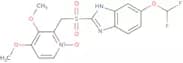
CAS:<p>Pantoprazole sulfone N-oxide is a prodrug that is converted to the active form pantoprazole in the stomach where it inhibits gastric acid secretion. Pantoprazole sulfone N-oxide has been shown to be genotoxic, and can cause polyvinyl chloride to degrade when stored together. Reconstituted solution of this drug should be used within 24 hours after reconstitution, as the chemical stability of this drug decreases rapidly. Validation studies have been conducted on different analytical methods for determining pantoprazole concentrations in reconstituted solutions, and these methods have been harmonized with those published by the United States Pharmacopeia (USP). The pump inhibitor activity of pantoprazole sulfone N-oxide has been demonstrated in dogs, and it is also useful for treating acid reflux disease in humans. Pantoprazole sulfone N-oxide is unstable at high temperatures (>25°C), so should not be refrigerated or</p>Formula:C16H15F2N3O6SPurity:Min. 95%Molecular weight:415.37 g/molAmino albendazole
CAS:<p>Albendazole is a sulfoxide anthelmintic drug that is used to treat worm infections in livestock and pets. Albendazole inhibits the synthesis of the parasitic cell membrane, which disrupts the integrity of the cell and leads to death. The analytical method for measuring albendazole includes extraction with hexane followed by analysis using gas chromatography. In humans, albendazole may be used to treat cancer, especially when it occurs in cavities or fatty tissues. It can also be used as a treatment for certain types of parasitic infections, such as toxoplasmosis, amebiasis, and cysticercosis. Albendazole is absorbed well after oral administration and plasma concentrations are proportional to dosage levels. The most common side effects are nausea and headache.</p>Formula:C10H13N3SPurity:Min. 95%Molecular weight:207.3 g/mol1-[[4-(3-Methoxypropoxy)-3-methyl-2-pyridinyl]methyl]-2-[[[4-(3-methoxypropoxy)-3-methyl-2-pyridinyl]methyl]sulfonyl]-1H-benzimidazo le
CAS:<p>1-[[4-(3-Methoxypropoxy)-3-methyl-2-pyridinyl]methyl]-2-[(4-(3-methoxypropoxy)-3-methyl-2-pyridinyl)methylsulfonyl]-1H-benzimidazole (MKC1807) is a synthetic drug product. MKC1807 is an analytical standard in the HPLC assay for the determination of Epiandrosterone sulfate and its metabolites. 1-[4-(3-Methoxypropoxy)-3,5,6,7,8 -pentamethylcyclohexyl]methyl 2-[(4-(3 -methoxypropoxy) 3,5,6,7,8 -pentamethylcyclohexyl)methylsulfonyl]-1H benzimidazole has been shown to be a natural metabolite of Epiandrosterone sulfate. This compound</p>Formula:C29H36N4O6SPurity:Min. 95%Molecular weight:568.69 g/molCarbamazepine impurity
CAS:<p>Carbamazepine is a drug that has been used to treat epileptic seizures and trigeminal neuralgia. Impurities in the drug are removed by using chromatographic methods, such as high-performance liquid chromatography (HPLC). The rotarod test is an animal model of motor coordination and balance that can be used to assess the effects of drugs on these functions. Carbamazepine impurities may cause depression and have an epileptic effect on animals. Chronic exposure to carbamazepine can lead to drug reactions and gene polymorphisms, which may alter the metabolism of the drug. Analytical methods for determining carbamazepine impurities include HPLC, gas chromatography mass spectrometry (GC-MS), and thin-layer chromatography (TLC).</p>Formula:C15H14N2OPurity:Min. 95%Molecular weight:238.28 g/mol



![2-[[(4-Chloro-3-methyl-2-pyridinyl)methyl]sulfinyl]-1H-benzimidazole](/_next/image/?url=https%3A%2Fstatic.cymitquimica.com%2Fproducts%2F3D%2Fthumb-webp%2FIC21226.webp&w=3840&q=75)
![2-[[(4-Methoxy-3-methyl-2-pyridinyl)methyl]sulfinyl]-1H-benzimidazole](/_next/image/?url=https%3A%2Fstatic.cymitquimica.com%2Fproducts%2F3D%2Fthumb-webp%2FIM21228.webp&w=3840&q=75)

![2,12-Dihydro-1,3-dimethyl-8-methoxy-12-thioxobenzo [4,5] pyrido [1,2-c] imidazo [1,2-a] imidazol-2…](/_next/image/?url=https%3A%2Fstatic.cymitquimica.com%2Fproducts%2F3D%2Fthumb-webp%2FID57924.webp&w=3840&q=75)



![1-[[4-(3-Methoxypropoxy)-3-methyl-2-pyridinyl]methyl]-2-[[[4-(3-methoxypropoxy)-3-methyl-2-pyridin…](/_next/image/?url=https%3A%2Fstatic.cymitquimica.com%2Fproducts%2F3D%2Fthumb-webp%2FIM25352.webp&w=3840&q=75)
