


Quinazoline and Quinoline Derivatives
Quinazolines and quinolines are nitrogen-containing heterocyclic compounds with aromatic structures that play a key role in the synthesis of drugs with anticancer, antimicrobial, and anti-inflammatory activity. Their derivatives feature structural modifications that optimise bioavailability and selectivity, enabling the development of new active ingredients for various therapeutic applications. These compounds are used in the manufacture of APIs for the treatment of cancer, infections, neurodegenerative diseases, and cardiovascular conditions. Additionally, quinazoline and quinoline derivatives are essential in the research of enzyme inhibitors and the design of innovative bioactive molecules.
At CymitQuimica, we offer high-purity quinazoline and quinoline derivatives for applications in chemical synthesis, pharmaceutical development, and biotechnology.
Found 65573 products of "Quinazoline and Quinoline Derivatives"
Sort by
Purity (%)
0
100
|
0
|
50
|
90
|
95
|
100
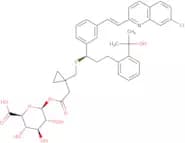
Montelukast acyl-b-D-glucuronide acetic acid salt
CAS:<p>Metabolite of montelukast</p>Formula:C41H44ClNO9S·CH3CO2HPurity:Min. 95%Color and Shape:Off-White PowderMolecular weight:822.36 g/molAlverine EP Impurity D
<p>Alverine EP Impurity D is a synthetic impurity that is the result of the synthesis of Alverine EP. It is a metabolite that can be found in blood plasma and urine. This substance has been shown to have pharmacological activity, but its exact function is unknown. It is not present in natural sources and it does not have pharmacopoeia listing. Alverine EP Impurity D has been detected by HPLC analysis.END></p>Formula:C20H33NPurity:Min. 95%Molecular weight:287.48 g/mol2-[[2-Oxo-3-[4-(3-oxo-4-morpholinyl)phenyl]-5-oxazolidinyl]methyl]-1H-isoindole-1,3(2H)-dione
CAS:<p>Please enquire for more information about 2-[[2-Oxo-3-[4-(3-oxo-4-morpholinyl)phenyl]-5-oxazolidinyl]methyl]-1H-isoindole-1,3(2H)-dione including the price, delivery time and more detailed product information at the technical inquiry form on this page</p>Formula:C22H19N3O6Purity:Min. 95%Molecular weight:421.4 g/molBupropion (R)-Isomer
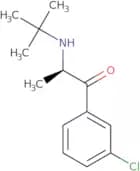
CAS:Controlled Product<p>Bupropion is a racemic mixture of two enantiomers. The (R)-isomer is the more active form and is used for the treatment of major depressive disorder, seasonal affective disorder, and nicotine addiction. Bupropion has been shown to inhibit monoamine oxidase type A in humans and other mammals. This inhibition may be responsible for its antidepressant effects. The drug also has an effect on the liver, which can lead to serious side effects such as seizures or death if not monitored carefully. Bupropion has a high affinity for α1-acid glycoprotein, which plays a role in drug interactions with other drugs that are metabolized by this protein.</p>Formula:C13H18ClNOPurity:Min. 95%Molecular weight:239.74 g/mol1-Desmethyl granisetron
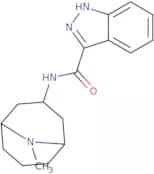
CAS:Controlled Product<p>1-Desmethyl granisetron is an impurity found in the synthesis of granisetron hydrochloride. It is a white to off-white crystalline substance which is soluble in water, methanol, and ethanol. 1-Desmethyl granisetron has a molecular weight of 328.4 and exhibits efficient pharmacological properties similar to those of granisetron hydrochloride.</p>Formula:C17H22N4OPurity:Min. 95%Molecular weight:298.38 g/molDeiodo amiodarone
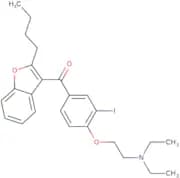
CAS:<p>Deiodo amiodarone is a noncompetitive inhibitor that binds to the active site of the enzyme and blocks the binding of substrate, thereby inhibiting the synthesis of catecholamines. Deiodo amiodarone has been shown to inhibit the oxidation of benzofuran derivatives in rat liver microsomes, human liver tissue samples, and chromatographic conditions. The inhibition constant for deiodo amiodarone was determined by liquid chromatography with a homogenizing technique.</p>Formula:C25H30INO3Purity:Min. 95%Molecular weight:519.42 g/mol2-(3,4-Dimethoxyphenyl)-5-[2-(3,4-dimethoxyphenyl)ethylamino]-2-propan-2-ylpentanenitrile hydrochloride
CAS:<p>2-(3,4-Dimethoxyphenyl)-5-[2-(3,4-dimethoxyphenyl)ethylamino]-2-propan-2-ylpentanenitrile hydrochloride (DMPP) is a fluorescent chemosensor that can be used to detect the presence of phenylacetonitrile. It has been shown to have a linear response to phenylacetonitrile concentrations in rat plasma and also reacts with other compounds containing nitrogen atoms. The sensor was tested for its ability to react with drugs such as anti-tumor agents and showed strong regression correlation coefficients. This sensor has the potential to be used in pharmacokinetic studies because it can be detected by a variety of chromatographic techniques.</p>Formula:C26H36N2O4·HClPurity:Min. 95%Molecular weight:477.04 g/molDefluoro pitavastatin
CAS:<p>Please enquire for more information about Defluoro pitavastatin including the price, delivery time and more detailed product information at the technical inquiry form on this page</p>Formula:C25H25NO4Purity:Min. 95%Molecular weight:403.47 g/mol3,4-Bis(2-methoxyethoxy)benzoic acid ethyl ester
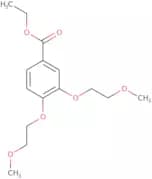
CAS:<p>3,4-Bis(2-methoxyethoxy)benzoic acid ethyl ester is a compound that has been shown to have bactericidal activity against Gram-positive bacteria. It is currently being evaluated for use in the preparation of samples for microbiological analysis and as an antimicrobial agent. 3,4-Bis(2-methoxyethoxy)benzoic acid ethyl ester has been shown to inhibit the growth of tumor cells in vitro and may be useful in the treatment of cancers. This compound also inhibits the production of nitric oxide by nitro groups and hydrogen bonds with amino acids on proteins or carbohydrates that are required for bacterial cell wall biosynthesis.</p>Formula:C15H22O6Purity:Min. 95%Molecular weight:298.33 g/molDi-destriazole anastrozole dimer impurity
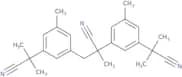
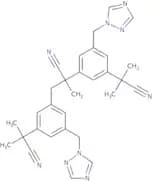
CAS:<p>Di-destriazole anastrozole dimer impurity is a synthetic impurity that is created during the synthesis of anastrozole. It has been studied as a possible metabolite of the drug, but its role in metabolism is not well understood. Di-destriazole anastrozole dimer impurity is soluble in water and methanol and has a melting point of between 1°C to 2°C. The purity of this compound is typically at least 99% with a specific gravity of 1.043 g/mL.</p>Formula:C26H29N3Purity:Min. 95%Molecular weight:383.53 g/molN2-Methyl alfuzosin hydrochloride (1:x)
CAS:<p>Alfuzosin is a drug used to treat the signs and symptoms of benign prostatic hyperplasia (BPH). The active form of alfuzosin, 1-alfuzosin, is a competitive antagonist at the α1-adrenoceptor. Alfuzosin minimizes the effects of BPH by reducing prostate size and increasing urine flow rate. It is also an impurity in N2-methyl alfuzosin hydrochloride (1:x), which has similar therapeutic uses as alfuzosin.</p>Purity:Min. 95%2-Ethoxy-1-[[2'-[1-(trityl)-1H-tetrazol-5-yl][1,1'-biphenyl]-4-yl]methyl]-1H-benzimidazole-4-carboxylic acid methyl ester
CAS:<p>2-Ethoxy-1-[2'-[1-(trityl)-1H-tetrazol-5-yl][1,1'-biphenyl]-4-yl]methyl]-1H-benzimidazole-4-carboxylic acid methyl ester is an impurity in the drug product, which is a synthetic drug for research and development. The impurity standard for 2-ethoxy-1-[2'-[1-(trityl)-1H-tetrazol-5-yl][1,1'-biphenyl]-4-yl]methyl]-1H benzimidazole 4 carboxylic acid methyl ester is available in quantities of 10g. The CAS number for the impurity is 150058-29-0. This compound has an API purity of 99.9%. Impurities are not expected to be present at greater than 1% by weight.</p>Formula:C44H36N6O3Purity:Min. 95%Molecular weight:696.8 g/mol3,4-Dimethoxy-a-(1-methylethyl)benzeneacetonitrile
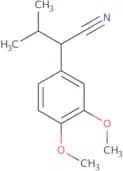
CAS:<p>3,4-Dimethoxy-a-(1-methylethyl)benzeneacetonitrile (DXM) is a synthetic phenylethylamine that is usually found in cough suppressant preparations. It has been shown to be able to cross the blood-brain barrier, and it has a constant, steady-state concentration. DXM is metabolized by N-demethylation in the liver by cytochrome P450 enzymes. This metabolism can be inhibited with the use of drugs such as chlorpromazine or ketoconazole. Pharmacokinetic modeling has been used to analyze and predict the pharmacokinetics of DXM. The drug DXM can also be synthesized from phenylacetonitrile and hydrochloric acid.</p>Formula:C13H17NO2Purity:Min. 95%Color and Shape:PowderMolecular weight:219.28 g/molLoxoprofen Related Compound 2 - mixture of diastereomers
CAS:<p>Loxoprofen Related Compound 2 is a mixture of diastereomers that is an impurity in the drug product, Loxoprofen. Loxoprofen Related Compound 2 is a metabolite of loxoprofen and its concentration in blood plasma after administration of loxoprofen can be used as an indicator for pharmacokinetics. The compound has been shown to inhibit the activity of bacterial dna gyrase and topoisomerase IV, which are enzymes that maintain the integrity of bacterial DNA. Loxoprofen Related Compound 2 was found to be less active than loxoprofen against MRSA and Clostridium perfringens, although it was more active than loxoprofen against Mycobacterium tuberculosis, Mycobacterium avium complex, and methicillin-resistant Staphylococcus aureus (MRSA).</p>Formula:C15H18O4Purity:Min. 95%Molecular weight:262.3 g/molDeschloro aripiprazole
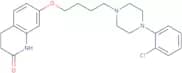
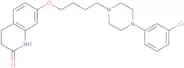
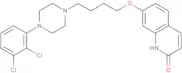
CAS:<p>Deschloro aripiprazole is a drug product that has been analyzed for impurities. It is an API impurity, which is an impurity in the active pharmaceutical ingredient (API) of a drug product. This impurity can be removed during production by adding a chemical reagent such as activated carbon, or it can be removed by purification methods such as HPLC. Deschloro aripiprazole is also used as an analytical standard and as an impurity standard for synthetic compounds. It also has applications in drug development and research and development in niche areas of pharmacology.</p>Formula:C23H28ClN3O2Purity:Min. 95%Molecular weight:413.94 g/molrac-3-Deacetyl-3-butanoyl acebutolol hydrochloride
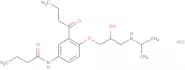
CAS:<p>3-Deacetyl-3-butanoyl acebutolol hydrochloride is a racemic mixture of two enantiomers, (+)-(S)-3-Deacetyl-3-butanoyl acebutolol and (-)-(R)-3-Deacetyl-3-butanoyl acebutolol. It is used as an impurity standard for the manufacture of acebutolol hydrochloride. The substance has a purity of at least 99% by HPLC. 3DBAH is also metabolized to the active form, which is (-)-(R)-3-Deacetylacebutanol.</p>Formula:C20H33ClN2O4Purity:Min. 95%Molecular weight:400.94 g/mol2-[[(4-Methoxy-3-methyl-2-pyridinyl)methyl]sulfinyl]-1H-benzimidazole
CAS:<p>2-[(4-Methoxy-3-methyl-2-pyridinyl)methyl]sulfinyl]-1H-benzimidazole is a synthetic, impurity standard that is used in the synthesis of drug products. It has been shown to inhibit the metabolism of drugs and may be used as a marker for drug metabolism. This compound may also be used as a marker in analytical studies to assess the purity of a drug product. 2-[(4-Methoxy-3-methyl-2-pyridinyl)methyl]sulfinyl]-1H-benzimidazole has not been evaluated for safety or efficacy.</p>Formula:C15H15N3O2SPurity:Min. 95%Molecular weight:301.36 g/mol1,4-Di-2-furoylpiperazine
CAS:<p>1,4-Di-2-furoylpiperazine is a synthetic compound that has been shown to have anti-inflammatory and analgesic properties. It was originally developed as a pharmaceutical drug candidate for the treatment of arthritis and other inflammatory disorders. 1,4-Di-2-furoylpiperazine is an impurity in the synthesis of the drug product diclofenac. The compound is also found as a metabolite in humans after oral administration of diclofenac. 1,4-Di-2-furoylpiperazine binds to protein and inhibits protein synthesis by preventing amino acid incorporation into proteins. It also has nicotinic effects on acetylcholine binding sites and can be used as an analytical standard for HPLC analysis of drugs containing this molecule.</p>Formula:C14H14N2O4Purity:Min. 95%Molecular weight:274.27 g/mol9,10-Dioxo ketotifen
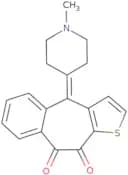
CAS:<p>9,10-Dioxo ketotifen is a drug product that belongs to the category of HPLC standards. It has been shown to be a metabolite of ketotifen and also an impurity in ketotifen. 9,10-Dioxo ketotifen has been shown to possess antihistamine activity and may have potential as a lead compound for the development of new drugs.</p>Formula:C19H17NO2SPurity:Min. 95%Color and Shape:PowderMolecular weight:323.41 g/mol2-[[(4-Chloro-3-methyl-2-pyridinyl)methyl]sulfinyl]-1H-benzimidazole
CAS:<p>2-[[(4-Chloro-3-methyl-2-pyridinyl)methyl]sulfinyl]-1H-benzimidazole (CAS No. 168167-42-8) is a synthetic compound that is used as an analytical reference standard for HPLC. It is also used in the study of drug metabolism, and it has been shown to induce natural oxidation in vitro. 2-[(4-Chloro-3-methylpyridinium)methylsulfinyl]-1Hbenzimidazole is an impurity found in pharmaceutical products that are synthesized from 1-(2,4,6trichlorophenyl)-3-[(4chloromethyl)phenyl]urea.</p>Formula:C14H12ClN3OSPurity:Min. 95 Area-%Color and Shape:Brown PowderMolecular weight:305.78 g/mol5-(Aminosulfonyl)-2-methoxy-benzoic acid methyl ester
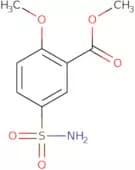
CAS:<p>5-(Aminosulfonyl)-2-methoxy-benzoic acid methyl ester is a synthetic compound that is used for pharmaceutical preparations. It is typically prepared by the reaction of ethylene and chloroacetic acid in the presence of an organic solvent. The reaction time can be adjusted to produce the desired amount of 5-(aminosulfonyl)-2-methoxy-benzoic acid methyl ester. This synthetic compound has been shown to have a high yield, with minimal contaminating impurities. It has also been shown to be effective in both pharmaceutical dosage and calibration.</p>Formula:C9H11NO5SPurity:Min. 95%Molecular weight:245.25 g/molMontelukast impurity I
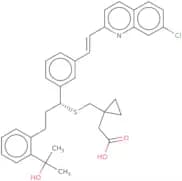
CAS:<p>Montelukast impurity I is an impurity found in the drug product, Montelukast. It is a natural substance and is produced as a result of metabolism studies. The chemical name for this impurity is 3-hydroxy-4-(2-methylpropyl)-5-(4-methoxyphenyl)pentanoic acid. This impurity can be used as an analytical standard and can be synthesized for use in pharmacopoeia. This compound has not been shown to have any therapeutic effects on humans or animals. This impurity has been shown to cause nausea, vomiting, and diarrhea in some patients.</p>Formula:C35H36ClNO4SPurity:Min. 95%Molecular weight:602.18 g/molEthyl 2-methoxy-5-sulfamoylbenzoate
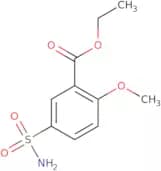
CAS:<p>Ethyl 2-methoxy-5-sulfamoylbenzoate is a research and development impurity standard. It is a white to off-white crystalline solid that is soluble in water. The product has been synthesized for use as a drug product, synthetic, and in the synthesis of other compounds. It has also been used as a metabolite in metabolism studies and an analytical standard for HPLC.</p>Formula:C10H13NO5SPurity:Min. 95%Molecular weight:259.28 g/molPhenobarbital impurity A
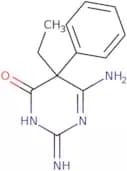
CAS:<p>Phenobarbital impurity A is a drug product that can be synthesized by Custom synthesis, and is available in high purity. It has been used for metabolic studies and as an analytical standard. Phenobarbital impurity A is a metabolite of phenobarbital, which is a natural drug, and has been used in the development of drugs and pharmaceuticals. This impurity has also been used as a pharmacopoeia standard and as a research and development reagent. CAS No. 69125-70-8</p>Formula:C12H14N4OPurity:Min. 95%Color and Shape:PowderMolecular weight:230.27 g/mol1-[[4-(3-Methoxypropoxy)-3-methyl-2-pyridinyl]methyl]-2-[[[4-(3-methoxypropoxy)-3-methyl-2-pyridinyl]methyl]sulfonyl]-1H-benzimidazo le
CAS:<p>1-[[4-(3-Methoxypropoxy)-3-methyl-2-pyridinyl]methyl]-2-[(4-(3-methoxypropoxy)-3-methyl-2-pyridinyl)methylsulfonyl]-1H-benzimidazole (MKC1807) is a synthetic drug product. MKC1807 is an analytical standard in the HPLC assay for the determination of Epiandrosterone sulfate and its metabolites. 1-[4-(3-Methoxypropoxy)-3,5,6,7,8 -pentamethylcyclohexyl]methyl 2-[(4-(3 -methoxypropoxy) 3,5,6,7,8 -pentamethylcyclohexyl)methylsulfonyl]-1H benzimidazole has been shown to be a natural metabolite of Epiandrosterone sulfate. This compound</p>Formula:C29H36N4O6SPurity:Min. 95%Molecular weight:568.69 g/molLosartan azide
CAS:<p>Please enquire for more information about Losartan azide including the price, delivery time and more detailed product information at the technical inquiry form on this page</p>Formula:C22H22ClN9Purity:Min. 95%Molecular weight:447.93 g/mol2-(Aminomethyl)-1-ethylpyrrolidine
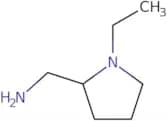
CAS:<p>2-(Aminomethyl)-1-ethylpyrrolidine is a pharmaceutical preparation that has been used in the analytical method for determining impurities in pharmaceuticals. It has also been used as an intermediate for pharmaceutical dosage preparations and as a reagent for chromatographic analysis of various substances. 2-(Aminomethyl)-1-ethylpyrrolidine is produced by acylation of pyrrole with ethyl chloride, followed by hydrolysis with sodium carbonate and hydrochloric acid. The substance can be separated into its two components using chromatography, which is based on the difference in their polarity. 2-(Aminomethyl)-1-ethylpyrrolidine is a dopamine receptor antagonist that blocks uptake of dopamine into cells by inhibiting the dopamine transporter (DAT). This leads to increased levels of extracellular dopamine and subsequent activation of postsynaptic D2 receptors.</p>Formula:C7H16N2Purity:Min. 95%Color and Shape:Clear LiquidMolecular weight:128.22 g/mol(1-Ethyl-1-methylpropyl)benzene
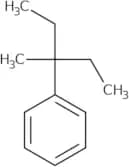
CAS:<p>(1-Ethyl-1-methylpropyl)benzene is an impurity of some drugs. It is a metabolite of the drug, and can be found in urine or blood samples as a result of its excretion from the body. (1-Ethyl-1-methylpropyl)benzene is used as an analytical standard for HPLC analysis. This chemical is not on the USP list of impurities, but it is listed on the pharmacopoeia. The CAS number for (1-Ethyl-1-methylpropyl)benzene is 1985-97-3.</p>Formula:C12H18Purity:Min. 95%Molecular weight:162.27 g/molDi(N-desethyl) amiodarone hydrochloride
CAS:<p>Di(N-desethyl) amiodarone hydrochloride is an impurity of Amiodarone Hydrochloride, which is a drug that is used to treat and prevent serious ventricular arrhythmias. Di(N-desethyl) amiodarone hydrochloride can be synthesized from the corresponding parent compound by desmethylation with trifluoroacetic acid. It has been shown to have a low solubility in water and it is soluble in acetones, ethers, and chloroform. This impurity can be used as a HPLC standard for the analysis of Amiodarone Hydrochloride or as an analytical reference material for other liquid chromatography methods.</p>Formula:C21H22ClI2NO3Purity:Min. 95%Molecular weight:625.67 g/molN-Methyl-N'-[2-[(5-methyl-1H-imidazol-4-yl)methylhio]ethyl]guanidine dihydrochloride
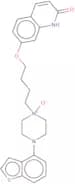
CAS:<p>N-Methyl-N'-[2-[(5-methyl-1H-imidazol-4-yl)methylhio]ethyl]guanidine dihydrochloride is an analytical standard used in HPLC. It is also a research and development, drug development, and impurity standard for the manufacture of drugs. CAS No. 59660-24-1 is an API impurity that is used to produce a high purity drug product. Impurity standard is a Metabolite (impurity) that is used in pharmacopoeia (a book of standards). Custom synthesis is a natural or synthetic chemical substance that can be custom made to order.</p>Formula:C9H17N5S·2HClPurity:Min. 95%Molecular weight:300.25 g/molBrexpiprazole impurity 10
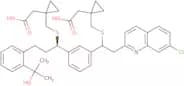
CAS:<p>Brexpiprazole impurity 10 is a drug product that is used as an analytical reference standard for the quality control of brexpiprazole. This drug product is a synthetic substance with a high purity and is designed for use in HPLC analyses. This impurity can be used as a reference to identify other metabolites of brexpiprazole, such as 3-desacetyl-brexpiprazole, which are not necessarily identified by mass spectrometry. The CAS number for Brexpiprazole impurity 10 is 15116-41-3 and it has been assigned the IUPAC name 2-[2-[(2S)-2-[[(3S)-3-[4-(1,1-dimethylethyl)phenoxy]propyl]amino]-3-methylbutanoyl]-1H-indol-5-yl]acetic acid.</p>Formula:C16H15NO2Purity:Min. 95%Molecular weight:253.3 g/molMontelukast Bis-sulfide(mixture of diastereomers)
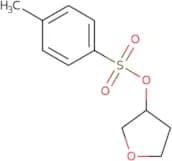
CAS:<p>Montelukast Bis-sulfide is a drug product that is custom synthesized with high purity. It has been studied for its metabolism, analytical properties, and natural sources. The metabolite of montelukast bis-sulfide has been extensively researched for pharmacopoeia as well as for drug development. Montelukast bis-sulfide is a synthetic compound that is not found in nature, but it has niche applications in research and development. CAS No.: 1242260-05-4</p>Formula:C41H46ClNO5S2Purity:Min. 95%Molecular weight:732.39 g/mol(3R)-Tetrahydrofuran-3-yl 4-Methylbenzenesulfonate
CAS:<p>Tetrahydrofuran-3-yl 4-methylbenzenesulfonate is a synthetic compound that has been used as an impurity standard for the drug product and as a metabolite in pharmacopoeia. Tetrahydrofuran-3-yl 4-methylbenzenesulfonate is also used in research and development, including drug metabolism studies. Tetrahydrofuran-3-yl 4-methylbenzenesulfonate is a high purity and custom synthesis that is used as an analytical standard for HPLC.</p>Formula:C11H14O4SPurity:Min. 95%Molecular weight:242.29 g/mol2-[2-[4-(5,5-Dioxidodibenzo[b,f][1,4]thiazepin-11-yl)-1-piperazinyl]ethoxy]ethanol
CAS:<p>Quetiapine is a drug that belongs to the class of sulfoxides. It is usually administered orally, but can also be given intravenously or intramuscularly. Quetiapine has been studied for its clinical use in the treatment of schizophrenia and bipolar disorder. The plasma concentrations of quetiapine are determined by high-performance liquid chromatography (HPLC) with tandem mass spectrometry (LC-MS/MS) detection. Validation studies have shown that the HPLC-MS/MS method is accurate and precise, with good linearity over a range of concentrations. Analysis was performed on plasma samples from healthy volunteers who were administered either 2 mg or 10 mg doses of quetiapine by intravenous injection. Concentrations were calculated and compared to those found in patients with schizophrenia and bipolar disorder who had been given oral doses of 300 mg per day for four weeks, yielding a therapeutic plasma concentration range from 100 to 300 ng/mL.</p>Formula:C21H25N3O4SPurity:Min. 95%Molecular weight:415.51 g/molNaproxen EP Impurity D
CAS:<p>Naproxen EP Impurity D is a research and development impurity standard that is used for pharmacopoeia drug product, synthetic, high purity, and analytical purposes. Naproxen EP Impurity D is a metabolite of naproxen and has been shown to be an active form of the drug in animal studies. The CAS number for Naproxen EP Impurity D is 116883-62-6.</p>Formula:C14H13IO3Purity:Min. 95%Molecular weight:356.16 g/mol3,4-Dimethoxyphenyl isopropyl ketone
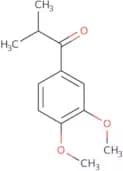
CAS:<p>3,4-Dimethoxyphenyl isopropyl ketone (DMPK) is a calcium antagonist that has been shown to be hypotensive in rats. It is also used as a pharmacological agent to study muscle physiology and biotransformations. DMPK has been shown to have microbial uptake and chronotropic properties, which may explain its use in the treatment of bacterial infections. DMPK binds to sulfoxides and chiral compounds, blocking their activity by inhibiting the enzyme systems involved in oxidation reactions. The drug is an analog of benzyl alcohol, with which it shares similar pharmacological profile.</p>Formula:C12H16O3Purity:Min. 95%Molecular weight:208.25 g/molRoflumilast Impurity E
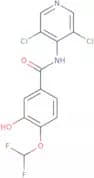
CAS:<p>Roflumilast Impurity E is a reagent that is used to monitor the pharmacokinetic properties of roflumilast. Roflumilast Impurity E is an acidic component of roflumilast that may be synthesized from acetone and acid hydrolysis. It has been shown to be hepatotoxic, but it does not have any adverse effects on the liver when taken with other drugs such as erythromycin and phenytoin. This substance also has a spectrum of action that includes pulmonary disease, which makes it useful for treating bronchitis and asthma.</p>Formula:C13H8Cl2F2N2O3Purity:Min. 95%Molecular weight:349.12 g/mol2-Deschloro aripiprazole
CAS:<p>2-Deschloro aripiprazole is a drug that belongs to the class of antipsychotics. It is an atypical antipsychotic with a high affinity for human albumin and α1-acid glycoprotein, which are plasma proteins. 2-Deschloro aripiprazole has been shown to interact with human albumin and α1-acid glycoprotein in vitro, and it has been suggested that this interaction may be responsible for its pharmacological effects. 2-Deschloro aripiprazole has also been shown to bind to the dopamine D2 receptor, which is thought to be responsible for its therapeutic effects as an antipsychotic. The molecular interactions between 2-deschloro aripiprazole and human albumin have been studied using isothermal titration calorimetry (ITC) and molecular docking studies. These studies have helped us understand how 2-deschloro aripiprazole binds to human album</p>Formula:C23H28ClN3O2Purity:Min. 95%Molecular weight:413.94 g/mol1-[[2-[(2-Aminophenyl)amino]-5-methyl-3-thienyl]carbonyl]-4-methyl-piperazine
CAS:<p>Please enquire for more information about 1-[[2-[(2-Aminophenyl)amino]-5-methyl-3-thienyl]carbonyl]-4-methyl-piperazine including the price, delivery time and more detailed product information at the technical inquiry form on this page</p>Formula:C17H22N4OSPurity:Min. 95%Molecular weight:330.45 g/molSalbutamol Impurity D
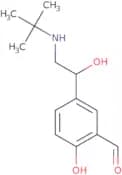
CAS:<p>Salbutamol Impurity D is a chiral, metal chelator impurity of the drug substance Salbutamol. It is a prodrug that is hydrolyzed to its active form, salbutamol sulfate, in vivo. Salbutamol Impurity D binds to chloride ions and has been shown to be an interferent for many analytical methods. The reversed-phase chromatography retention time for Salbutamol Impurity D is about 10 minutes shorter than for Salbutamol sulfate.</p>Formula:C13H19NO3Purity:Min. 95%Molecular weight:237.29 g/molBrexpiprazole impurity 2
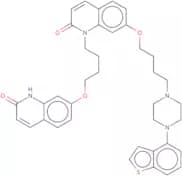
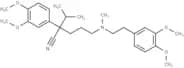
CAS:<p>Brexpiprazole impurity 2 is a product of research and development. It is an impurity standard that can be custom-synthesized in high purity. This product is a synthetic, pharmacopoeia-grade drug product that can be used as a metabolite in metabolism studies or as a QC in analytical assays. Brexpiprazole impurity 2 has CAS No. 2094559-58-5, and is available in natural form. It is also available for HPLC analysis with a purity of 99%.</p>Formula:C38H40N4O4SPurity:Min. 95%Molecular weight:648.81 g/mol(2R)-2-(3,4-Dimethoxyphenyl)-5-[2-(3,4-dimethoxyphenyl)ethyl-methylamino]-2-isopropylpentanenitrile hydrochloride
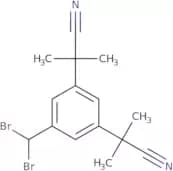
CAS:<p>(2R)-2-(3,4-Dimethoxyphenyl)-5-[2-(3,4-dimethoxyphenyl)ethyl-methylamino]-2-isopropylpentanenitrile hydrochloride (ZD4054) is a drug that has been shown to be sensitive to the efflux pump in Escherichia coli. It is also able to inhibit multidrug resistance in nematodes and cross-resistance in humans. ZD4054 inhibits multidrug resistance by inhibiting the efflux of drugs from cells. This prevents the development of resistance to antibiotics and other drugs. The mechanism of action for this drug is unknown, but it may affect chloride channels that are found on the cell membrane. ZD4054 has also been shown to be effective against C.elegans and Drosophila melanogaster, two species commonly used for research purposes.</p>Formula:C27H39ClN2O4Purity:Min. 95%Molecular weight:491.06 g/mola,a,a',a'-Tetramethyl-5-(dibromomethyl)-1,3-benzenediacetonitrile
CAS:<p>Tetramethyl-1,3-benzenediacetonitrile is a synthetic chemical that is used as an impurity in the synthesis of pharmaceuticals. It can be found in drug products and is used as an analytical standard for HPLC analysis. Tetramethyl-1,3-benzenediacetonitrile can also be found in natural sources such as plants and fungi. The metabolite has been studied for its metabolism and pharmacological properties. Tetramethyl-1,3-benzenediacetonitrile is not regulated by any pharmacopoeia standards.</p>Formula:C15H16Br2N2Purity:Min. 95%Molecular weight:384.11 g/mol4-Dibenzo[b,f][1,4]thiazepin-11-yl-1-piperazineethanol hydrochloride
CAS:<p>4-Dibenzo[b,f][1,4]thiazepin-11-yl-1-piperazineethanol hydrochloride is a drug product that is custom synthesized for research and development purposes. It has been shown to be an active metabolite of diazepam with a half life of 3 hours and low toxicity. 4-Dibenzo[b,f][1,4]thiazepin-11-yl-1-piperazineethanol hydrochloride is used as an analytical standard in the pharmaceutical industry. This compound has been studied in metabolism studies and pharmacopoeia. It has also been shown to have antiinflammatory properties.</p>Formula:C19H23Cl2N3OSPurity:Min. 95%Color and Shape:Off-white solid.Molecular weight:412.38 g/molBrexpiprazole impurity 3
CAS:<p>Brexpiprazole impurity 3 is a drug product that has been custom synthesized for research purposes. The purity of this product is high and it has been analyzed using analytical methods. This product can be used to study the metabolism of brexpiprazole, which is an atypical antipsychotic medication. Brexpiprazole impurity 3 also has pharmacopoeia standards, which can be used to develop new drugs or as a quality control standard in research and development.</p>Formula:C25H27N3O3SPurity:Min. 95%Molecular weight:449.57 g/mol6,7-Dimethoxy-2-[4-[(tetrahydro-2-furanyl)carbonyl]-1-piperazinyl]-4(3H)-quinazolinone
CAS:<p>6,7-Dimethoxy-2-[4-[(tetrahydro-2-furanyl)carbonyl]-1-piperazinyl]-4(3H)-quinazolinone is a drug product. It is an analytical standard for the impurity of CAS No. 1177261-73-2. This compound has been synthesized by custom synthesis and its purity is high. The compound has been used in research and development of drugs, pharmacopoeia, HPLC standards, and other related fields.</p>Formula:C19H24N4O5Purity:Min. 95%Molecular weight:388.42 g/molLosartan imidazo[1,5-b]isoquinoline impurity
CAS:<p>Losartan is a drug product that belongs to the class of losartan impurity. It is an impurity standard for research and development, as well as a custom synthesis. Losartan is also used in the synthesis of other drugs, such as losartan potassium, which is classified as a niche compound. Losartan impurity has been shown to be metabolized by several enzymes including CYP2C9 and CYP3A4. The metabolite identified from this study was N-desmethyl losartan.</p>Formula:C22H21ClN6Purity:Min. 95%Molecular weight:404.9 g/mol3-[2-[4-(6-Fluoro-2-benzoxazolyl)-1-piperidinyl]ethyl]-6,7,8,9-tetrahydro-2-methyl-4H-pyrido[1,2-a]pyrimidin-4-one
CAS:<p>3-[2-[4-(6-Fluoro-2-benzoxazolyl)-1-piperidinyl]ethyl]-6,7,8,9-tetrahydro-2-methyl-4H-pyrido[1,2-a]pyrimidin-4-one is a synthetic compound that functions as a drug product. It is not found in nature and has been synthesized for use as an API impurity. The CAS number for this compound is 1005191-81-0. 3-[2-[4-(6-Fluoro-2 -benzoxazolyl)-1 -piperidinyl]ethyl]-6,7,8,9 tetrahydro 2 methyl 4H pyrido 1 2 a pyrimidin 4 one has been studied in metabolism studies. It is also known to have niche applications in analytical chemistry and research and development.</p>Formula:C23H27FN4O2Purity:Min. 95%Molecular weight:410.48 g/molAlfuzosin hydrochloride EP Impurity F hydrochloride
CAS:<p>Alfuzosin EP Impurity F hydrochloride is a drug product that is used as an analytical standard for Alfuzosin hydrochloride. It is a natural, synthetic, and impurity standard that exhibits similar chromatographic properties to the API. The CAS number of this impurity is 19216-68-3. This product has a niche market because it is used in metabolism studies. It also exhibits high purity and pharmacopoeia grade quality.</p>Formula:C12H16N4O2•HClPurity:Min. 95%Molecular weight:284.74 g/molVerapamil
CAS:<p>Verapamil (CP-16533-1), an oral calcium channel blocker, inhibits P-gp and CYP3A4, used for hypertension, arrhythmias, and angina research.</p>Formula:C27H38N2O4Purity:99.61% - 99.93%Color and Shape:OilMolecular weight:454.6Dasatinib impurity
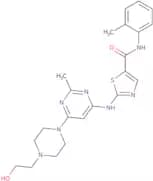
CAS:<p>Dasatinib is a cancer drug that is used to treat patients with chronic myeloid leukemia and Philadelphia chromosome-positive acute lymphoblastic leukemia. It inhibits the activity of tyrosine kinases, in particular Bcr-Abl and Src. Dasatinib is a structural analog of imatinib, which has been shown to be effective against chronic myeloid leukemia by inhibiting the activity of Bcr-Abl. Dasatinib impurity is an unwanted substance found in dasatinib. It can be synthesized from formic acid, chloride and chlorine using a series of industrial processes. The salt form of dasatinib impurity is acidic and synthetic.</p>Formula:C22H27N7O2SPurity:Min. 95%Molecular weight:453.56 g/molLisinopril diketopipirazine
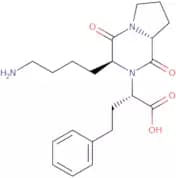
CAS:<p>Lisinopril diketopipirazine is an analytical drug product. The CAS number for this product is 219677-82-4. This product requires a custom synthesis and impurity standard. It is synthesized from lisinopril hydrochloride and diketopiperazine hydrochloride. Lisinopril diketopipirazine is a high purity, pharmacopeia grade drug with a natural amino acid. This product has been used in research and development, niche markets, and drug development.</p>Formula:C21H29N3O4Purity:90%MinColor and Shape:White To Off-White SolidMolecular weight:387.47 g/mol4-[1,5-Bis-(2-methylsulfamoylethyl)-1H-indol-3-yl]-1-methylpyridinium chloride
CAS:<p>Please enquire for more information about 4-[1,5-Bis-(2-methylsulfamoylethyl)-1H-indol-3-yl]-1-methylpyridinium chloride including the price, delivery time and more detailed product information at the technical inquiry form on this page</p>Formula:C20H27N4O4S2•ClPurity:Min. 95%Molecular weight:487.04 g/mol3-[(1E)-2-[4-[[(2-Carboxyethyl)amino]carbonyl]phenyl]diazenyl] balsalazide
CAS:<p>3-[(1E)-2-[4-[[(2-Carboxyethyl)amino]carbonyl]phenyl]diazenyl] balsalazide is a white to off-white solid that is soluble in water and acidic solutions. It has an impurity level of less than 0.5%. The melting point of 3-[(1E)-2-[4-[[(2-Carboxyethyl)amino]carbonyl]phenyl]diazenyl] balsalazide is approximately 195°C. This compound has been shown to have antibiotic activity against a variety of bacteria, including methicillin resistant Staphylococcus aureus (MRSA).</p>Formula:C27H24N6O9Purity:Min. 95%Molecular weight:576.51 g/molOmeprazole Impurity 65
<p>Impurity 65 is an impurity of Omeprazole, a drug used to treat gastroesophageal reflux disease and peptic ulcer. Impurity 65 is a metabolite of Omeprazole that can be found in the drug product at a concentration up to 0.5%. It has been shown to have anti-inflammatory effects and can be used as a research and development standard for HPLC analysis. Impurity 65 is also used as an impurity standard in the USP pharmacopoeia and other pharmacopoeias around the world.</p>Formula:C17H17N3O4Purity:Min. 95%Molecular weight:327.33 g/mol(1RS)-1-(6-Methoxy-2-naphthyl)ethanol
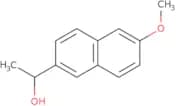
CAS:<p>(1RS)-1-(6-Methoxy-2-naphthyl)ethanol is a multiphase test drug that exhibits reactive properties. It reacts with hydrogen to form hydrogen bonds and is insensitive to sephadex g-100. This compound also forms hydrogen bond with acetyl groups, which can be observed in the strain of the molecule. (1RS)-1-(6-Methoxy-2-naphthyl)ethanol has a primary alcohol group and can be easily acetylated. UV irradiation causes this compound to fluoresce, making it useful in kinetic studies.</p>Formula:C13H14O2Purity:Min. 95%Molecular weight:202.25 g/mol10-Oxo mirtazapine
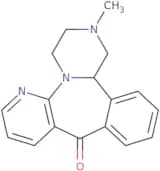
CAS:<p>10-Oxo mirtazapine is a metabolite of the antidepressant drug mirtazapine. It is an impurity in the HPLC standard for mirtazapine and has been shown to be pharmacologically active in animal models. 10-Oxo mirtazapine has also been found to be an impurity in other drugs, such as fluoxetine hydrochloride, but it is not known if it has any activity.</p>Formula:C17H17N3OPurity:Min. 95%Molecular weight:279.34 g/mol[1,1'-Biphenyl]-2'-(2H-tetrazol-5-yl)-4-carboxylic acid, [1,1'-biphenyl]-(2'-(2H-tetrazol-5-yl)-4-yl)methyl ester
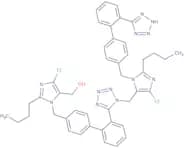
CAS:<p>Biphenyl-2'-(2H-tetrazol-5-yl)-4-carboxylic acid, [1,1'-biphenyl]-(2'-(2H-tetrazol-5-yl)-4-yl)methyl ester is a research and development impurity standard. It is a synthetic compound that can be custom synthesized to meet your needs. The product is available in high purity and pharmacopoeia grade. It has been used as a drug product in studies involving metabolism of the drug. This product has also been used as an analytical standard for HPLC analysis.</p>Formula:C28H20N8O2Purity:Min. 95%Molecular weight:500.51 g/molAripiprazole EP Impurity E
CAS:<p>Aripiprazole EP Impurity E is a potential impurity of aripiprazole, which is an antipsychotic drug. It has been detected as a major impurity in the drug. Aripiprazole EP Impurity E has been found to be present in human plasma and it is thought that this impurity may have pharmacological effects on humans similar to those of aripiprazole. The detection of this impurity has been achieved using LC-MS/MS methods. This method can be used for wastewater treatment due to the matrix effect of nitrogen atoms. Aripiprazole EP Impurity E may have significant implications in the diagnosis, prevention, and treatment of obesity and other metabolic disorders.</p>Formula:C23H25Cl2N3O2Purity:Min. 95%Molecular weight:446.37 g/molTopiramate impurity C
CAS:<p>Topiramate impurity C is an analytical reference standard, which is primarily sourced from the chemical synthesis of topiramate-related compounds. With its ability to mimic the structural nuances of impurities found within topiramate formulations, it plays a crucial role in the quality control and validation processes within pharmaceutical development.Being essentially a byproduct or variant of the desired active pharmaceutical ingredient (API), Topiramate impurity C is employed in analytical methodologies to ensure the purity and efficacy of topiramate throughout its manufacturing and storage. Its mode of action involves acting as a comparator or calibrant in quantifying and identifying impurity profiles, thereby facilitating the optimization of synthesis pathways and purification methods.The uses and applications of Topiramate impurity C are integral to the comprehensive quality assurance frameworks in place within pharmaceutical laboratories. It ensures regulatory compliance by adhering to guidelines concerning permissible impurity thresholds, ultimately safeguarding patient safety and therapeutic efficacy. Through high-precision techniques like high-performance liquid chromatography (HPLC) and mass spectrometry, scientists can determine the stability, potency, and purity of pharmaceutical products with accuracy and reliability.</p>Formula:C12H19ClO8SPurity:Min. 95%Molecular weight:358.79 g/molCetirizine impurity C
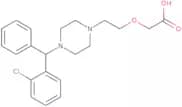
CAS:<p>Cetirizine impurity C is a potential impurity of cetirizine. It is used in the synthesis of cetirizine and as a drug substance. Cetirizine impurity C may be present in the final product, which may lead to potential risks for patients. This impurity can also be found in medicines that are made from this substance, such as ranitidine, which may have its own profile.</p>Formula:C21H25ClN2O3Purity:Min. 95%Molecular weight:388.89 g/mol4-Desmethyl-3-methyl celecoxib
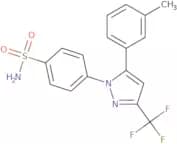
CAS:<p>This compound is a drug product that is used as an analytical standard for the identification of impurities. This compound is also a Metabolism studies, Natural, API impurity, Custom synthesis, Impurity standard, Synthetic and Drug development research chemical. The CAS number for this compound is 170570-01-1 and it has HPLC standards with high purity. This compound is also a Synthetic and Pharmacopoeia Research Chemical with a niche market.</p>Formula:C17H14F3N3O2SPurity:Min. 95%Molecular weight:381.37 g/molBisoprolol impurity G
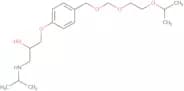
CAS:<p>Bisoprolol impurity G is a metabolite of bisoprolol. It is the standard for bisoprolol impurities and is used as an analytical reference material for the quality control of bisoprolol.</p>Formula:C19H33NO5Purity:Min. 95%Molecular weight:355.47 g/mol3'-Acetyl-4'-(2,3-epoxypropoxy)butyranilide
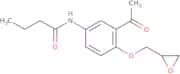
CAS:<p>3'-Acetyl-4'-(2,3-epoxypropoxy)butyranilide is an impurity found in the drug product of 3'-acetyl-4'-(2,3-epoxypropoxy)butyranilide hydrochloride. It has a molecular weight of 268.9 and chemical formula C12H18O6N2. 3'-Acetyl-4'-(2,3-epoxypropoxy)butyranilide is a synthetic compound that can be used as an analytical reference material for HPLC standardization or as an impurity standard for synthesis.</p>Formula:C15H19NO4Purity:Min. 95%Molecular weight:277.32 g/mol5-O-Desethyl amlodipine
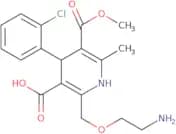
CAS:<p>5-O-Desethyl amlodipine is a metabolite of amlodipine. It has been used as an analytical reference standard for the determination of amlodipine and its metabolites in human plasma and urine. 5-O-Desethyl amlodipine has been reported to be excreted in human breast milk at a concentration that is about 20% of that found in maternal plasma. The drug product is manufactured by HPLC and is classified as a high purity pharmaceutical drug, which means it is free from extraneous substances such as other drugs, proteins, or bacteria.</p>Formula:C18H21ClN2O5Purity:Min. 95%Molecular weight:380.82 g/mol6-Des(1-methyl-2-benzimidazolyl)-6-carboxy telmisartan
CAS:<p>Telmisartan is a drug that belongs to the class of angiotensin II receptor antagonists and is used in the treatment of hypertension. Telmisartan can be quantitatively analyzed with high sensitivity by liquid chromatography. Impurities in telmisartan can be analyzed qualitatively and quantitatively by liquid chromatography, which requires a shorter time than GC analysis.</p>Formula:C26H24N2O4Purity:Min. 95%Molecular weight:428.48 g/mol4,8-Dichloro-5,6-dihydro-11H-benzo[5,6]cyclohepta[1,2-b]pyridin-11-one
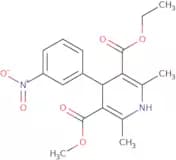
CAS:<p>4,8-Dichloro-5,6-dihydro-11H-benzo[5,6]cyclohepta[1,2-b]pyridin-11-one is a drug that has been developed for the treatment of cancer. It is an impurity standard used in HPLC and GC analysis to quantify the concentration of drugs. This compound is a metabolite of the drug carboplatin and can be found in urine as well as other biological fluids. Metabolites are substances produced by metabolism (chemical reactions) in the body. 4,8-Dichloro-5,6-dihydro-11H-benzo[5,6]cyclohepta[1,2-b]pyridin-11-one can also be found naturally in plants such as ivy or wild parsnip.</p>Formula:C14H9Cl2NOPurity:Min. 95%Molecular weight:278.13 g/mol(RS)-Methyl ethyl 1,4-dihydro-2,6-dimethyl-4-(3-nitrophenyl)pyridine-3,5-dicarboxylate - EP Grade
CAS:<p>Propranolol hydrochloride is a non-selective beta-adrenergic blocker that blocks the effects of epinephrine, norepinephrine and dopamine. Propranolol hydrochloride has been shown to inhibit the activity of proximal tubules in the kidney, which may be due to its inhibition of chemical ionization. This drug also has antihypertensive activity and can be used for the treatment of cardiac disorders such as hypertension. Propranolol hydrochloride is a monoclonal antibody that is activated by nitro groups and binds with high affinity to multiple-reaction monitoring (MRM) transitions for protonated molecular ions at m/z 289, 296, 305, 313, 320, 328, 336 and 344. Propranolol hydrochloride also has vasodilatory effects on the papillary muscle which aids in regulating blood pressure by maintaining vascular resistance.</p>Formula:C18H20N2O6Purity:Min. 95%Molecular weight:360.36 g/mol[4-(4-Amino-6-hydroxy-7-methoxy-2-quinazolinyl)-1-piperazinyl](tetrahydro-2-furanyl)-methanone
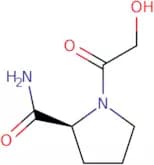
CAS:<p>4-(4-Amino-6-hydroxy-7-methoxy-2-quinazolinyl)-1-piperazinyl](tetrahydro-2-furanyl)-methanone (CAS No. 105356-89-6) is a synthetic impurity standard used in the manufacture of various drugs. Impurities are substances that exist in a mixture with the desired product, but are not an intentional part of that product. Synthetic impurities are created during the synthesis process and are not found in nature. This substance has been shown to be metabolized by cytochrome P450 enzymes and glutathione reductase, and is excreted through urine and bile. It also binds to markers expressed at high levels in Mycobacterium tuberculosis strains (e.g., ESX-1 secretion system protein) and inhibits cell growth in culture.</p>Formula:C18H23N5O4Purity:Min. 95%Molecular weight:373.41 g/mol1-Glycoloyl-L-prolinamide
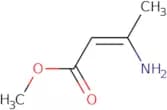
CAS:<p>1-Glycoloyl-L-prolinamide is a drug product that is an analytical standard for the impurity 1-glycoloyl-L-proline (CAS No. 96166-39-1) in the API 1,4,5,6-tetrahydrobenzothiazole (CAS No. 86687-93-0). It has been synthesized to be used as an impurity standard and is provided at a purity of 98.0% or greater by weight. This chemical compound can be used in research and development for the production of drugs as well as in pharmaceutical manufacturing.</p>Formula:C7H12N2O3Purity:Min. 95%Molecular weight:172.18 g/molMethyl 3-aminocrotonate
CAS:<p>Methyl 3-aminocrotonate is an intermediate in the synthesis of pyridinedicarboxylic acid. It is a white powder with a melting point of 160-165°C and a boiling point of 263°C. Methyl 3-aminocrotonate is soluble in water, alcohols, ethers, chloroform, and benzene. It has been detected by its UV absorption at 227 nm. The detection sensitivity for this compound was found to be 0.1 ppm. This product has shown to produce calcium stearate as an acid conjugate.<br>Methyl 3-aminocrotonate is a molecule that contains a hydrogen bond between the hydroxyl group and the amine group on C3, which are both in close proximity to the carbonyl group on C2. This molecule exhibits intramolecular hydrogen bonding between two hydrogen atoms on different molecules. <br>The IR spectrum for methyl 3-aminoc</p>Formula:C5H9NO2Purity:Min. 95%Color and Shape:White To Yellow SolidMolecular weight:115.13 g/mol4'-(Bromomethyl)-[1,1'-biphenyl]-2-carboxylic acid
CAS:<p>4'-(Bromomethyl)-[1,1'-biphenyl]-2-carboxylic acid (4BMBCA) is a chemical compound that is used as an analytical method in drug discovery and development. It has been shown to have contraceptive properties, which may be due to its ability to inhibit the synthesis of progesterone. 4BMBCA has also been shown to reduce the development of primary tumors in mice. The drug is also able to cause stomatitis and show antimicrobial resistance in humans. Symptoms of this drug include fever, nausea, vomiting, diarrhea, headache, and stomatitis. 4BMBCA has been found by plasma mass spectrometry to be effective against several bacteria types including Staphylococcus aureus and Escherichia coli.</p>Formula:C14H11BrO2Purity:Min. 95%Molecular weight:291.14 g/mol2-[(4-Chloro-3-methyl-2-pyridinyl)methylthio]-1H-benzimidazole
CAS:<p>2-[(4-Chloro-3-methyl-2-pyridinyl)methylthio]-1H-benzimidazole is a drug product. It is an impurity standard for the analytical determination of 2-[(4-chloro-3-methylpyridin)-2yl]thiohydantoin in pharmaceuticals and other chemical products. This compound is also used as a research and development (R&D) metabolite and impurity standard for the synthesis of 4-(4,5,6,7-tetrahydrobenzo[b]thiophen-2-yl)pyridine. The CAS number for this compound is 103312-62-5./END></p>Formula:C14H12ClN3SPurity:Min. 95%Molecular weight:289.78 g/molN2-Methyl alfuzosin hydrochloride (1:1)
CAS:<p>N2-Methyl alfuzosin hydrochloride (1:1) is a synthetic compound that is used as an impurity standard for the drug product Alfuzosin. It has been shown to be metabolized by the liver, and its metabolites are excreted through the bile. The N2-methyl group of this compound provides a marker for metabolism studies and it has been shown to inhibit bacterial growth in vitro.</p>Formula:C19H28ClN5O4Purity:Min. 95%Molecular weight:425.91 g/molMethyl 4-[[1-(ethoxycarbonyl)-2-oxocyclopentyl]methyl]-α-methylbenzeneacetate
CAS:<p>Please enquire for more information about Methyl 4-[[1-(ethoxycarbonyl)-2-oxocyclopentyl]methyl]-α-methylbenzeneacetate including the price, delivery time and more detailed product information at the technical inquiry form on this page</p>Formula:C19H24O5Purity:Min. 95%Molecular weight:332.39 g/molN-(3-hydroxytricyclo[3.3.1.1]dec-1-yl)glycyl-L-prolinamide
CAS:<p>N-(3-hydroxytricyclo[3.3.1.1]dec-1-yl)glycyl-L-prolinamide is a metabolite that is formed when the drug product, ticagrelor, undergoes metabolism in the liver. Ticagrelor is a prodrug that requires conversion to its active form, which is N-(3-hydroxytricyclo[3.3.1.1]dec-1-yl)glycyl-L-prolinamide, before it can be used as a platelet inhibitor and antiplatelet agent for the prevention of thrombotic events such as heart attack and stroke. It has been shown to have an excellent stability profile and high purity when produced by HPLC or synthesized using the latest methodology under GMP conditions.</p>Purity:Min. 95%1-[(1-Methylethyl)amino]-3-phenoxy-2-propanol
CAS:<p>1-[(1-Methylethyl)amino]-3-phenoxy-2-propanol is an organic compound that belongs to the class of phenoxyethanol derivatives. It has been used in milligram amounts to assist in the separation of racemic mixtures by countercurrent chromatography. The compound is a racemate and the enantiomers are separated by chiral high performance liquid chromatography. The β-adrenergic agonist activity of 1-[(1-methylethyl)amino]-3-phenoxy-2-propanol has been shown in rats.</p>Formula:C12H19NO2Purity:Min. 95%Molecular weight:209.28 g/molrac-Des(isopropylamino) acebutolol diol
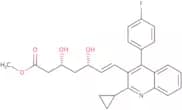
CAS:<p>rac-Des(isopropylamino) acebutolol diol is a synthetic drug substance that is used for research and development purposes. It has a purity of 99% or greater, does not contain any impurities, and is manufactured using the latest technology. The rac-Des(isopropylamino) acebutolol diol is a pharmaceutical grade product with high purity and quality standards that have been verified by HPLC analysis. This compound is an analytical standard that can be used to calibrate mass spectrometry instruments. Rac-Des(isopropylamino) acebutolol diol is also metabolized into the natural metabolite noracebutanol by cytochrome P450 enzymes in humans.</p>Formula:C15H21NO5Purity:Min. 95%Molecular weight:295.33 g/mol((3R,5S,6E)-Methyl-7-(2-cyclopropyl-4-(4-fluorophenyl)quinolin -3-yl)-3,5-dihydroxyhept-6-enoate
CAS:<p>((3R,5S,6E)-Methyl-7-(2-cyclopropyl-4-(4-fluorophenyl)quinolin -3-yl)-3,5-dihydroxyhept-6-enoate is a metabolite of the drug product. It is a white to off-white crystalline powder that is soluble in methanol and insoluble in water. This compound has been shown to be an impurity standard for HPLC analysis of the drug product. ((3R,5S,6E)-Methyl-7-(2-cyclopropyl-4-(4-fluorophenyl)quinolin -3-yl)-3,5-dihydroxyhept-6-enoate has been used in metabolism studies and pharmacopoeia as a reference substance for the analytical testing of drugs. It can also be synthesized for research purposes.</p>Purity:Min. 95%(2Z)-1-[5,6-Dihydro-3-(trifluoromethyl)-1,2,4-triazolo[4,3-α]pyrazin-7(8H)-yl]-4-(2,4,5-trifluorophenyl)-2-buten-1-one
CAS:<p>Please enquire for more information about (2Z)-1-[5,6-Dihydro-3-(trifluoromethyl)-1,2,4-triazolo[4,3-α]pyrazin-7(8H)-yl]-4-(2,4,5-trifluorophenyl)-2-buten-1-one including the price, delivery time and more detailed product information at the technical inquiry form on this page</p>Formula:C16H12F6N4OPurity:Min. 95%Molecular weight:390.28 g/mol2,12-Dihydro-1,3-dimethyl-8-methoxy-12-thioxobenzo [4,5] pyrido [1,2-c] imidazo [1,2-a] imidazol-2-one
CAS:<p>2,12-Dihydro-1,3-dimethyl-8-methoxy-12-thioxobenzo [4,5] pyrido [1,2-c] imidazo [1,2-a] imidazol-2-one is a metabolite of the drug 2-[2-(4,5,-dihydroimidazo[1,2a]imidazol -2(3H)-yl)ethoxy]-N-(methylsulfonyl)benzamide. It can be used as an impurity standard for the manufacture of drugs and as a research chemical.</p>Formula:C16H13N3O2SPurity:Min. 95%Molecular weight:311.36 g/molTadalafil spiro-urethane impurity (EP impurity F)
CAS:<p>Please enquire for more information about Tadalafil spiro-urethane impurity (EP impurity F) including the price, delivery time and more detailed product information at the technical inquiry form on this page</p>Formula:C22H19N3O6Purity:Min. 95%Molecular weight:421.4 g/mol1-[[4-(3-Methoxypropoxy)-3-methyl-2-pyridinyl]methyl]-2-[[[4-(3-methoxypropoxy)-3-methyl-2-pyridinyl]methyl]thio]-1H-benzimidazole
CAS:<p>1-[[4-(3-Methoxypropoxy)-3-methyl-2-pyridinyl]methyl]-2-[[[4-(3-methoxypropoxy)-3-methyl-2-pyridinyl]methyl]thio]-1H-benzimidazole is a drug product with analytical applications. It has been shown to have natural and synthetic origins, as well as impurities of its own. It is a custom synthesis and research and development compound that is used for HPLC standardization. The compound has been synthesized for the purpose of drug development and it is intended for niche use.</p>Formula:C29H36N4O4SPurity:Min. 95%Molecular weight:536.69 g/molSalbutamol EP Impurity F
CAS:<p>Salbutamol EP Impurity F is a drug impurity that is an analytical standard and pharmacopoeia reference material. It is used in the manufacture of pharmaceuticals to ensure that the product meets quality standards. Salbutamol EP Impurity F has been shown to be a metabolite of salbutamol, which is produced as a result of oxidative metabolism by cytochrome P450 enzymes such as CYP3A4. The compound has also been observed in human urine and plasma.</p>Formula:C26H40N2O5Purity:Min. 95%Molecular weight:460.61 g/mol4'-(Bromomethyl)-[1,1'-biphenyl]-2-carboxamide
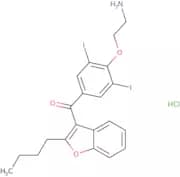
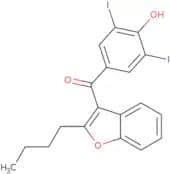
CAS:<p>4'-(Bromomethyl)-[1,1'-biphenyl]-2-carboxamide is a custom synthesis drug product. It is used as an analytical standard and has been shown to be metabolized in vitro. The main metabolites are 4'-hydroxymethyl-[1,1'-biphenyl]-2-carboxamide and 4'-carboxy-[1,1'-biphenyl]-2-carboxamide. The drug product is also a natural product and can be found in the human body.</p>Formula:C14H12BrNOPurity:Min. 95%Molecular weight:290.16 g/mol2-Butyl-3-(3,5-diiodo-4-hydroxybenzoyl)benzofuran
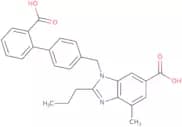
CAS:<p>2-Butyl-3-(3,5-diiodo-4-hydroxybenzoyl)benzofuran is a benzofuran. It is a yellow solid that can be dissolved in water and alcohol.</p>Formula:C19H16I2O3Purity:Min. 95%Molecular weight:546.14 g/mol4'-[(4'Methyl-2'-propyl[2,6'-bi-1H-benzimidazol]-1'-yl)methyl][1,1'-biphenyl]-2-carboxylic acid
CAS:<p>Gatifloxacin is a fluoroquinolone antibiotic that inhibits the DNA gyrase and topoisomerase IV, which are enzymes that maintain the integrity of bacterial DNA. It binds to bacterial 16S ribosomal RNA and inhibits protein synthesis, leading to cell death by inhibiting the production of proteins vital for cell division. Gatifloxacin has been shown to be effective against methicillin-resistant Staphylococcus aureus (MRSA) and Clostridium perfringens, although is not active against acid-fast bacteria such as Mycobacterium tuberculosis or Mycobacterium avium complex. Gatifloxacin has shown anti-inflammatory properties, which may be due to its inhibition of prostaglandin synthesis.<br>4'-[(4'Methyl-2'-propyl[2,6'-bi-1H-benzimidazol]-1'-yl)methyl][</p>Formula:C32H28N4O2Purity:Min. 95%Molecular weight:500.59 g/molAlverine EP Impurity C
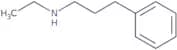
CAS:<p>Alverine EP Impurity C is a by-product of the synthesis of alverine, which is an ammonium salt. The process involves the use of high yield, high purity triflic acid, and organic solvents. The reaction system is typically carried out in a solvent such as toluene or dichloromethane. The organic solvent is then removed by filtration and the desired product can be obtained by crystallization or recrystallization. Alverine EP Impurity C has been shown to have insecticidal properties when applied externally, due to its interaction with insect stereoisomers. It also has anticancer activity and may be used in cancer therapy treatments that involve decompressing tumours and increasing blood supply to the area. Alverine EP Impurity C also has a citric acid binding property that makes it insoluble in water.</p>Formula:C11H17NPurity:Min. 95%Molecular weight:163.26 g/molDesmethyl fluvoxamine - EP
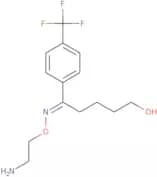
CAS:<p>Desmethyl fluvoxamine is the active metabolite of fluvoxamine, which is a drug used to treat depression. It has been shown that desmethyl fluvoxamine binds to the human liver and can be detected in the blood. A liquid chromatography method was used to measure desmethyl fluvoxamine in wastewater samples. The uptake of desmethyl fluvoxamine into human liver cells was also studied using a polymerase chain reaction technique on cell cultures. Desmethyl fluvoxamine has been shown to induce antidepressant response in people who were administered caffeine. Clinical studies have been conducted on the use of desmethyl fluvoxamine as an antidepressant treatment, with some success.</p>Formula:C14H19F3N2O2Purity:Min. 95%Molecular weight:304.31 g/mol(S)-5-Chloronaproxen
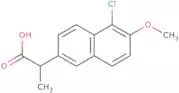
CAS:<p>(S)-5-Chloronaproxen is a synthetic drug product with a purity of 99.9%. It has been synthesized from natural, custom synthesis and analytical grade raw materials. Metabolism studies have been conducted to determine the metabolic pathways of (S)-5-chloronaproxen. The metabolite profile was analyzed by HPLC, and the impurity standard was developed for use in pharmacopoeia, niche research and development, and quality control laboratories.</p>Formula:C14H13ClO3Purity:Min. 95%Molecular weight:264.7 g/molAnastrozole dimer impurity
CAS:<p>Anastrozole is an aromatase inhibitor that has been used in the treatment of breast cancer. It binds competitively to the heme moiety of aromatase, blocking its access to substrate and thereby inhibiting estrogen production. Anastrozole dimer impurity is an analytical impurity found in drug products that is not a natural component of the API (active pharmaceutical ingredient). CAS No. 1216898-82-6 refers to this impurity standard as well as other synthetic analogues. This impurity is a custom synthesis with no pharmacopoeia standards for purity. The HPLC standard for this product is high purity (99%).</p>Formula:C30H31N9Purity:Min. 95%Molecular weight:517.63 g/molRivaroxaban impurity 79
CAS:<p>Please enquire for more information about Rivaroxaban impurity 79 including the price, delivery time and more detailed product information at the technical inquiry form on this page</p>Formula:C38H38N4O12Purity:Min. 95%Molecular weight:742.74 g/mol[5-[(Dimethylamino)methyl]furan-2-yl]methanol
CAS:<p>Dimethylaminoethyl methacrylate is a chemical compound that belongs to the group of dimeric monomers. It is an activated form of methacrylates, which are compounds containing the -C(O)OC-CH2-CH2-O-CO-R functional group. The activated form is prepared by the reaction of a primary amine with acetic acid and acrylic acid. Dimethylaminoethyl methacrylate has been used as a carbohydrate adduct to create glycoconjugates and it has been shown to have anti-mutagenic properties. This product can be found in high concentrations in China.</p>Formula:C8H13NO2Purity:Min. 95%Molecular weight:155.19 g/molN1-Losartanyl-losartan
CAS:<p>N1-Losartanyl-losartan is a new nonpolar, innovative pharmaceutical agent that fulfills the needs of pharmacological research. It has been shown to be pharmacologically active in vivo and in vitro. N1-Losartanyl-losartan has been shown to be genotoxic impurities, nitrosamines, and other impurities. N1-Losartanyl-losartan is an analytical method for the determination of valsartan and its metabolites. The analytical method uses supercritical fluid chromatography with mass spectroscopy detection (SFC/MSD).</p>Formula:C44H44Cl2N12OPurity:95%NmrMolecular weight:827.81 g/molRegorafenib metabolite M2 oxide
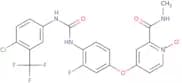
CAS:<p>Regorafenib metabolite M2 oxide (M2O) is a cancer drug that is an inhibitor of multikinase. It was developed as a prodrug for regorafenib, which is used to treat patients with metastatic colorectal cancer and has been shown to be effective against other cancers, such as lung and pancreatic cancer. M2O inhibits the efflux of drugs from cells by binding to the transporter protein P-glycoprotein. This prevents the accumulation of toxic concentrations of regorafenib in cells, which are responsible for its side effects, such as diarrhea and liver damage. The uptake of M2O by cells is also inhibited by light and acidic conditions. Oral administration of M2O leads to increased exposure to regorafenib in the body because it is not metabolized by CYP3A4 enzymes.</p>Formula:C21H15ClF4N4O4Purity:Min. 95%Molecular weight:498.81 g/mol6,7,8,9-Tetrahydro-3-[2-[4-(6-methoxy-1,2-benzisoxazol-3-yl)-1-piperidinyl]ethyl]-2-methyl-4H-pyrido[1,2-a]pyrimidin-4-one
CAS:<p>A custom synthesis of 6,7,8,9-tetrahydro-3-[2-[4-(6-methoxy-1,2-benzisoxazol-3-yl)-1-piperidinyl]ethyl]-2-methyl-4H-[1]pyrido[1,2-a]pyrimidin-4one<br>A synthetic analog of the natural product erythromycin A.<br>Metabolite: 3-[2-[4-(6-Methoxybenzo[d][1,3]dioxol-5(4H)-yl)-1piperidinyl)ethyl]-6,7,8,9 tetrahydro 4H pyrido [1',2' a] pyrimidin 4 one<br>Impurity: 1-(6 methoxy benzisoxazol 3 yl) piperidine<br>Custom synthesis: yes<br>High purity: yes</p>Formula:C24H30N4O3Purity:Min. 95%Molecular weight:422.52 g/molN,N'-Bis[2-(3,4-dimethoxyphenyl)ethyl]-N,N'-dimethyl-1,3-propanediamine dihydrochloride
CAS:<p>N,N'-Bis[2-(3,4-dimethoxyphenyl)ethyl]-N,N'-dimethyl-1,3-propanediamine dihydrochloride is a synthetic compound that is metabolized to the natural product naphthol AS. It is an impurity in the drug product and can also be used as an analytical reference standard.</p>Formula:C25H38N2O4·2HClPurity:Min. 95%Molecular weight:503.5 g/mol(3R,5R)-Pitavastatin Calcium Salt
CAS:<p>(3R,5R)-Pitavastatin Calcium Salt is a drug product that is used in the development of pharmaceuticals. It is a synthetic compound with an impurity standard and a metabolite impurity. The CAS number for this product is 254452-96-5. (3R,5R)-Pitavastatin Calcium Salt has been shown to be metabolized by CYP2C9 and CYP2C8 enzymes, which may result in a decrease in potency or activity. This product also has been shown to have anti-inflammatory properties and inhibit the production of inflammatory mediators such as prostaglandins and leukotrienes. (3R,5R)-Pitavastatin Calcium Salt was prepared by solid phase synthesis using a fluorous biphasic approach.</p>Formula:C25H24FNO4CaPurity:Min. 95%Color and Shape:White/Off-White SolidMolecular weight:441.5 g/mola,a'-[[[2-(3,4-Dimethoxyphenyl)ethyl]imino]di-3,1-propanediyl]bis[3,4-dimethoxy-α-(1-methylethyl)-benzeneacetonitrile
CAS:<p>2,3,4-Trimethoxybenzaldehyde is an organic compound that is used as a chemical intermediate in the synthesis of pharmaceuticals. It is also used as a reagent in the chemical industry and as a flavoring agent. 2,3,4-Trimethoxybenzaldehyde has been shown to be metabolized by human liver microsomes to yield metabolites that are not well characterized. The impurities found in this drug product are 2-methoxy-5-methylphenol and 2,6-dimethoxyphenol.</p>Formula:C42H57N3O6Purity:Min. 95%Molecular weight:699.92 g/molN-Methyl omeprazole (Mixture of isomers with the methylated nitrogens of imidazole)
<p>Please enquire for more information about N-Methyl omeprazole (Mixture of isomers with the methylated nitrogens of imidazole) including the price, delivery time and more detailed product information at the technical inquiry form on this page</p>Formula:C18H21N3O3SPurity:Min. 95%Molecular weight:359.44 g/mol

![2-[[2-Oxo-3-[4-(3-oxo-4-morpholinyl)phenyl]-5-oxazolidinyl]methyl]-1H-isoindole-1,3(2H)-dione](/_next/image/?url=https%3A%2Fstatic.cymitquimica.com%2Fproducts%2F3D%2Fthumb-webp%2FIO183175.webp&w=3840&q=75)
![2-(3,4-Dimethoxyphenyl)-5-[2-(3,4-dimethoxyphenyl)ethylamino]-2-propan-2-ylpentanenitrile hydrochl…](/_next/image/?url=https%3A%2Fstatic.cymitquimica.com%2Fproducts%2F3D%2Fthumb-webp%2FID26420.webp&w=3840&q=75)


![2-Ethoxy-1-[[2'-[1-(trityl)-1H-tetrazol-5-yl][1,1'-biphenyl]-4-yl]methyl]-1H-benzimidazole-4-carbo…](/_next/image/?url=https%3A%2Fstatic.cymitquimica.com%2Fproducts%2F3D%2Fthumb-webp%2FIE22869.webp&w=3840&q=75)
![2-[[(4-Methoxy-3-methyl-2-pyridinyl)methyl]sulfinyl]-1H-benzimidazole](/_next/image/?url=https%3A%2Fstatic.cymitquimica.com%2Fproducts%2F3D%2Fthumb-webp%2FIM21228.webp&w=3840&q=75)
![2-[[(4-Chloro-3-methyl-2-pyridinyl)methyl]sulfinyl]-1H-benzimidazole](/_next/image/?url=https%3A%2Fstatic.cymitquimica.com%2Fproducts%2F3D%2Fthumb-webp%2FIC21226.webp&w=3840&q=75)
![1-[[4-(3-Methoxypropoxy)-3-methyl-2-pyridinyl]methyl]-2-[[[4-(3-methoxypropoxy)-3-methyl-2-pyridin…](/_next/image/?url=https%3A%2Fstatic.cymitquimica.com%2Fproducts%2F3D%2Fthumb-webp%2FIM25352.webp&w=3840&q=75)
![N-Methyl-N'-[2-[(5-methyl-1H-imidazol-4-yl)methylhio]ethyl]guanidine dihydrochloride](/_next/image/?url=https%3A%2Fstatic.cymitquimica.com%2Fproducts%2F3D%2Fthumb-webp%2FIM58261.webp&w=3840&q=75)
![2-[2-[4-(5,5-Dioxidodibenzo[b,f][1,4]thiazepin-11-yl)-1-piperazinyl]ethoxy]ethanol](/_next/image/?url=https%3A%2Fstatic.cymitquimica.com%2Fproducts%2F3D%2Fthumb-webp%2FID27366.webp&w=3840&q=75)

![1-[[2-[(2-Aminophenyl)amino]-5-methyl-3-thienyl]carbonyl]-4-methyl-piperazine](/_next/image/?url=https%3A%2Fstatic.cymitquimica.com%2Fproducts%2F3D%2Fthumb-webp%2FIA183184.webp&w=3840&q=75)
![(2R)-2-(3,4-Dimethoxyphenyl)-5-[2-(3,4-dimethoxyphenyl)ethyl-methylamino]-2-isopropylpentanenitril…](/_next/image/?url=https%3A%2Fstatic.cymitquimica.com%2Fproducts%2F3D%2Fthumb-webp%2FID28684.webp&w=3840&q=75)
![4-Dibenzo[b,f][1,4]thiazepin-11-yl-1-piperazineethanol hydrochloride](/_next/image/?url=https%3A%2Fstatic.cymitquimica.com%2Fproducts%2F3D%2Fthumb-webp%2FID27364.webp&w=3840&q=75)
![6,7-Dimethoxy-2-[4-[(tetrahydro-2-furanyl)carbonyl]-1-piperazinyl]-4(3H)-quinazolinone](/_next/image/?url=https%3A%2Fstatic.cymitquimica.com%2Fproducts%2F3D%2Fthumb-webp%2FID63842.webp&w=3840&q=75)
![Losartan imidazo[1,5-b]isoquinoline impurity](/_next/image/?url=https%3A%2Fstatic.cymitquimica.com%2Fproducts%2F3D%2Fthumb-webp%2FIL24943.webp&w=3840&q=75)
![3-[2-[4-(6-Fluoro-2-benzoxazolyl)-1-piperidinyl]ethyl]-6,7,8,9-tetrahydro-2-methyl-4H-pyrido[1,2-a…](/_next/image/?url=https%3A%2Fstatic.cymitquimica.com%2Fproducts%2F3D%2Fthumb-webp%2FIF23377.webp&w=3840&q=75)


![4-[1,5-Bis-(2-methylsulfamoylethyl)-1H-indol-3-yl]-1-methylpyridinium chloride](/_next/image/?url=https%3A%2Fstatic.cymitquimica.com%2Fproducts%2F3D%2Fthumb-webp%2FIB183365.webp&w=3840&q=75)
![3-[(1E)-2-[4-[[(2-Carboxyethyl)amino]carbonyl]phenyl]diazenyl] balsalazide](/_next/image/?url=https%3A%2Fstatic.cymitquimica.com%2Fproducts%2F3D%2Fthumb-webp%2FIC19769.webp&w=3840&q=75)
![[1,1'-Biphenyl]-2'-(2H-tetrazol-5-yl)-4-carboxylic acid, [1,1'-biphenyl]-(2'-(2H-tetrazol-5-yl)-4-…](/_next/image/?url=https%3A%2Fstatic.cymitquimica.com%2Fproducts%2F3D%2Fthumb-webp%2FIB18639.webp&w=3840&q=75)

![4,8-Dichloro-5,6-dihydro-11H-benzo[5,6]cyclohepta[1,2-b]pyridin-11-one](/_next/image/?url=https%3A%2Fstatic.cymitquimica.com%2Fproducts%2F3D%2Fthumb-webp%2FID21639.webp&w=3840&q=75)
-methanone](/_next/image/?url=https%3A%2Fstatic.cymitquimica.com%2Fproducts%2F3D%2Fthumb-webp%2FIA63846.webp&w=3840&q=75)
![4'-(Bromomethyl)-[1,1'-biphenyl]-2-carboxylic acid](/_next/image/?url=https%3A%2Fstatic.cymitquimica.com%2Fproducts%2F3D%2Fthumb-webp%2FIB19247.webp&w=3840&q=75)
![2-[(4-Chloro-3-methyl-2-pyridinyl)methylthio]-1H-benzimidazole](/_next/image/?url=https%3A%2Fstatic.cymitquimica.com%2Fproducts%2F3D%2Fthumb-webp%2FIC21227.webp&w=3840&q=75)

![Methyl 4-[[1-(ethoxycarbonyl)-2-oxocyclopentyl]methyl]-α-methylbenzeneacetate](/_next/image/?url=https%3A%2Fstatic.cymitquimica.com%2Fproducts%2F3D%2Fthumb-webp%2FIM184082.webp&w=3840&q=75)
![N-(3-hydroxytricyclo[3.3.1.1]dec-1-yl)glycyl-L-prolinamide](/_next/image/?url=https%3A%2Fstatic.cymitquimica.com%2Fproducts%2F3D%2Fthumb-webp%2FIN176051.webp&w=3840&q=75)
![1-[(1-Methylethyl)amino]-3-phenoxy-2-propanol](/_next/image/?url=https%3A%2Fstatic.cymitquimica.com%2Fproducts%2F3D%2Fthumb-webp%2FIM63785.webp&w=3840&q=75)

![(2Z)-1-[5,6-Dihydro-3-(trifluoromethyl)-1,2,4-triazolo[4,3-α]pyrazin-7(8H)-yl]-4-(2,4,5-trifluorop…](/_next/image/?url=https%3A%2Fstatic.cymitquimica.com%2Fproducts%2F3D%2Fthumb-webp%2FID183167.webp&w=3840&q=75)
![2,12-Dihydro-1,3-dimethyl-8-methoxy-12-thioxobenzo [4,5] pyrido [1,2-c] imidazo [1,2-a] imidazol-2…](/_next/image/?url=https%3A%2Fstatic.cymitquimica.com%2Fproducts%2F3D%2Fthumb-webp%2FID57924.webp&w=3840&q=75)

![1-[[4-(3-Methoxypropoxy)-3-methyl-2-pyridinyl]methyl]-2-[[[4-(3-methoxypropoxy)-3-methyl-2-pyridin…](/_next/image/?url=https%3A%2Fstatic.cymitquimica.com%2Fproducts%2F3D%2Fthumb-webp%2FIM25351.webp&w=3840&q=75)

![4'-(Bromomethyl)-[1,1'-biphenyl]-2-carboxamide](/_next/image/?url=https%3A%2Fstatic.cymitquimica.com%2Fproducts%2F3D%2Fthumb-webp%2FIB19246.webp&w=3840&q=75)
![4'-[(4'Methyl-2'-propyl[2,6'-bi-1H-benzimidazol]-1'-yl)methyl][1,1'-biphenyl]-2-carboxylic acid](/_next/image/?url=https%3A%2Fstatic.cymitquimica.com%2Fproducts%2F3D%2Fthumb-webp%2FIM21329.webp&w=3840&q=75)
![[5-[(Dimethylamino)methyl]furan-2-yl]methanol](/_next/image/?url=https%3A%2Fstatic.cymitquimica.com%2Fproducts%2F3D%2Fthumb-webp%2FID57850.webp&w=3840&q=75)
![6,7,8,9-Tetrahydro-3-[2-[4-(6-methoxy-1,2-benzisoxazol-3-yl)-1-piperidinyl]ethyl]-2-methyl-4H-pyri…](/_next/image/?url=https%3A%2Fstatic.cymitquimica.com%2Fproducts%2F3D%2Fthumb-webp%2FIT81401.webp&w=3840&q=75)
![N,N'-Bis[2-(3,4-dimethoxyphenyl)ethyl]-N,N'-dimethyl-1,3-propanediamine dihydrochloride](/_next/image/?url=https%3A%2Fstatic.cymitquimica.com%2Fproducts%2F3D%2Fthumb-webp%2FIB145560.webp&w=3840&q=75)
![a,a'-[[[2-(3,4-Dimethoxyphenyl)ethyl]imino]di-3,1-propanediyl]bis[3,4-dimethoxy-α-(1-methylethyl)-…](/_next/image/?url=https%3A%2Fstatic.cymitquimica.com%2Fproducts%2F3D%2Fthumb-webp%2FID145565.webp&w=3840&q=75)
