


Flavonoids and Polyphenols
Flavonoids are phenolic compounds that contain a structure of 15 carbon atoms, consisting of two aromatic rings linked by a three-carbon bridge. Polyphenols are a broader class of organic compounds containing multiple phenolic groups. Both groups have potent antioxidant properties, allowing them to protect cells from damage caused by free radicals. Flavonoids are commonly found in fruits, vegetables, and tea and are associated with improved cardiovascular health and the prevention of chronic diseases. Polyphenols also have applications in cancer prevention and brain health promotion.
At CymitQuimica, we offer high-quality flavonoids and polyphenols for research in chemistry, pharmacology, and biomedicine.
Found 17012 products of "Flavonoids and Polyphenols"
Sort by
Purity (%)
0
100
|
0
|
50
|
90
|
95
|
100
Eugenol
CAS:Controlled Product<p>Stability Light Sensitive<br>Applications Eugenol is used in perfumes, flavorings, and essential oils. It is also used as a local antiseptic and anaesthetic. Eugenol is a dental compound which shows cytotoxicity to human oral squamous cell carcinoma and oral cells. When glucosylated, this compound exhibits anti-inflammatory activity.<br>References Koh, T. et al.: In Vivo, 27, 85 (2013); Zhang, P. et al.: Arch. Pharm. Res., 36, 109 (2013);<br></p>Formula:C10H12O2Color and Shape:YellowMolecular weight:164.20(+)-[6]-Gingerol
CAS:Controlled Product<p>Applications (+)-[6]-Gingerol is a bioactive compound found in ginger (Zingiber officinale) with antioxidant activity, which functions as an anti-inflammatory and antitumor agent. (+)-[6]-Gingerol down regulates proinflammatory cytokine release by macrophages. (+)-[6]-Gingerol has been shown to inhibit COX-2 expression by blocking the activation of p38 MAP kinase and NF-κB in phorbol ester-stimulated mouse skin.<br> Not a dangerous good if item is equal to or less than 1g/ml and there is less than 100g/ml in the package<br>References Aeschbach, R. et al.: Food Chem. Toxicol., 32, 31 (1994); Tripathi, S. et al.: J. Surg. Res., 130, 318 (2006); Kim, S.O., et al.: Oncogene 24, 2558 (2005);<br></p>Formula:C17H26O4Color and Shape:Dark Yellow SolidMolecular weight:294.39Eupatilin
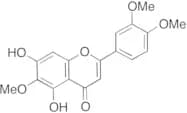
CAS:Controlled Product<p>Stability Hygroscopic<br>Applications Eupatilin maintains anticoagulant and antiplatelet activity isolated from the Artemisia princeps Pampanini flower.<br>References Ryu, R. et al.: Prev. Nutr. Food Sci., 18, 181 (2013);<br></p>Formula:C18H16O7Color and Shape:Light Yellow To BeigeMolecular weight:344.32Luteolin
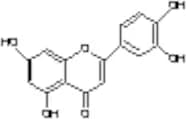
CAS:<p>Applications Hydroxylated flavone derivative with strong anti-oxidant and radical scavenging properties. Suggested to play a role in cancer prevention.<br>References Shimoi, L., et al.: Carcinogenesis, 15, 2669 (1994), Bors, W., et al.: Meth. Enzymol., 234, 420 (1994)Merck Index 12th ed. 5641<br></p>Formula:C15H10O6Color and Shape:NeatMolecular weight:286.24Honokiol
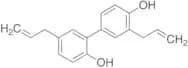
CAS:Controlled Product<p>Applications Honokiol is a small-molecule polyphenol isolated from the genus Magnolia. Recent studies show that Honokiol displays antiangiogenic, antiinflammatory, and antitumor properties in preclinical models, without appreciable toxicity. Honokiol has been shown to inhibit the bone metastatic growth of human prostate cancer cells.<br>References Fried, L.E. et al.: Antioxid. Redox Signal,. 11, 1139 (2009); Chen, X.R. et al.: Int. J. Oral Sci., 3, 34 (2011); Shigemura, K. et al.: Cancer, 109, 1279 (2007); Bai, X. et al.: J. Biol. Chem., 278, 35501 (2003);<br></p>Formula:C18H18O2Color and Shape:NeatMolecular weight:266.33rac-Pinocembrin
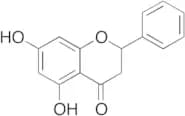
CAS:Controlled Product<p>Applications Pinocembrin is a flavanoid with antioxidant activity found in damiana, honey, and propolis. Recent studies show that Pinocembrin maybe be a therapeutic option in reducing cerebral ischemia/reperfusion injury as a result of its anti-oxidative and anti-apoptotic effects. Pinocembrin displayed neuroprotective effects in glutamate injury model partly by inhibiting p53 expression causing a lower Bax-Bcl-2 ratio and by inhibiting the release of cytochrome c.<br>References Zhao, J. et al.: J. Ethnopharmacol., 120, 387 (2008); Liu, R. et al.: Brain Res., 1216, 104 (2008); Gao, M. et al.: Eur. J. Pharmacol., 591, 73 (2008);<br></p>Formula:C15H12O4Color and Shape:Off-WhiteMolecular weight:256.25Diosmin
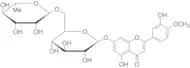
CAS:Controlled Product<p>Applications Naturally occurring flavonic glycoside; rhamnoglycoside of Diosmetin. Capillary protectant.<br>References Damon, M., et al.: Arzneim.-Forsch., 37, 1149 (1987), Laurent, R., et al.: Int. Angiol., 7, 39 (1988), Tajana, A., et al.: Minerva Med., 79, 387 (1988),<br></p>Formula:C28H32O15Color and Shape:NeatMolecular weight:608.54Erythrosine B Disodium Salt
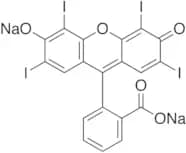
CAS:<p>Stability Hygroscopic, Light Sensitive<br>Applications Erythrosine B Disodium Salt is a derivative of fluorone and is used as a cherry-pink synthetic colour additives used on food products. Dyes and metabolites, Environmental Testing<br>References Xue, H., et al.: Adv. Mat. Res., 476, 2239 (2012); Harp, B. P., et al.: Food. Add. Contamin., 29, 886 (2012); Sarikaya, R., et al.: Chemosphere., 88, 974 (2012);<br></p>Formula:C20H6I4O5·2NaColor and Shape:NeatMolecular weight:879.863-[4-(benzyloxy)-3-methoxyphenyl]-5-methyl-4,5-dihydro-1,2-oxazole-5-carboxylic acid
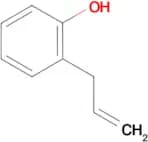
CAS:Purity:95.0%Molecular weight:341.36300659179692-(prop-2-en-1-yl)phenol
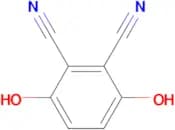
CAS:Formula:C9H10OPurity:95.0%Color and Shape:LiquidMolecular weight:134.1782,3-Dicyanohydroquinone
CAS:Formula:C8H4N2O2Purity:99.0%Color and Shape:SolidMolecular weight:160.1322-Fluoro-4-(trifluoromethyl)phenol
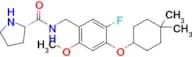
CAS:Purity:95.0%Color and Shape:LiquidMolecular weight:180.1020050048828(S)-N-(4-((4,4-DIMETHYLCYCLOHEXYL)OXY)-5-FLUORO-2-METHOXYBENZYL)PYRROLIDINE-2-CARBOXAMIDE
CAS:Purity:95.0%Molecular weight:378.48800659179695-(Bis(2-methyl-1H-indol-3-yl)methyl)-2-methoxyphenol
CAS:Purity:97%Molecular weight:396.4899902343757-BROMO-2-(4-METHOXYPHENYL)-[1,2,4]TRIAZOLO[1,5-A]PYRIDINE
CAS:Purity:95.0%Molecular weight:304.1470031738281


![(+)-[6]-Gingerol](/_next/image/?url=https%3A%2Fstatic.cymitquimica.com%2Fproducts%2FTR%2Fthumb-webp%2FG387205.webp&w=3840&q=75)


![3-[4-(benzyloxy)-3-methoxyphenyl]-5-methyl-4,5-dihydro-1,2-oxazole-5-carboxylic acid](/_next/image/?url=https%3A%2Fstatic.cymitquimica.com%2Fproducts%2F10%2Fthumb-webp%2FF526064.webp&w=3840&q=75)


![7-BROMO-2-(4-METHOXYPHENYL)-[1,2,4]TRIAZOLO[1,5-A]PYRIDINE](/_next/image/?url=https%3A%2Fstatic.cymitquimica.com%2Fproducts%2F10%2Fthumb-webp%2FF473707.webp&w=3840&q=75)