Quinones and Derivatives
Quinones are aromatic compounds containing a benzene ring system with two carbonyl groups in specific positions, forming a cyclohexene structure with oxygen. They are derived from compounds such as anthraquinone and 1,4-benzoquinone, which play important biological roles, including electron transfer in metabolic processes. Quinone derivatives, such as hydroquinones and antirheumatic agents, have applications in the pharmaceutical industry due to their antioxidant, antimicrobial, and anticancer properties. Additionally, quinones are used in the production of dyes and cosmetic products.
At CymitQuimica, we offer quinones and their derivatives for applications in organic chemistry, pharmaceuticals, and the cosmetic industry.
Found 24231 products of "Quinones and Derivatives"
Sort by
Purity (%)
0
100
|
0
|
50
|
90
|
95
|
100
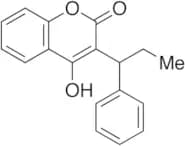
Phenprocoumon
CAS:Controlled Product<p>Applications Phenprocoumon is known for being an oral anti-coagulant.<br> Not a dangerous good if item is equal to or less than 1g/ml and there is less than 100g/ml in the package<br>References Kohl, C. et al.: Drug. Metab. Disp., 28, 161 (2000);<br></p>Formula:C18H16O3Color and Shape:White To Off-WhiteMolecular weight:280.32(alphaE)-α-[(3,4-Dihydroxy-5-nitrophenyl)methylene]-β-oxo-1-piperidinepropanenitrile
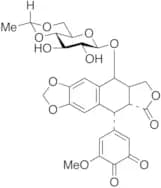
CAS:Controlled Product<p>Applications (αE)-α-[(3,4-Dihydroxy-5-nitrophenyl)methylene]-β-oxo-1-piperidinepropanenitrile is an impurity of Entacapone (E558500), a peripherally acting inhibitor of catechol-O-methyl transferase (COMT), an enzyme involved in the metabolism of catecholamine neurotransmitters and related drugs. Antiparkinsonian.<br>References Karlsson, M., et al.: J. Pharm. Biomed. Anal., 10, 593 (1992), Nissinen, E., et al.: Arch. Pharmacol., 346, 262 (1992), Wikberg, T., et al.: Eur. J. Drug Metab. Pharmacokinet., 18, 359 (1993),<br></p>Formula:C15H15N3O5Color and Shape:NeatMolecular weight:317.30Etoposide 3',4'-Quinone
CAS:Controlled Product<p>Applications Precursor to the semiquinone free radical of Etoposide, believed to inactivate φX174 DNA.<br>References Kagan, V., et al.: Biochem., 33, 9651 (1994), Gantchev, T., et al.: Mol. Pharmacol., 53, 422 (1998), Fan, Y., et al.: Chem. Res. Toxicol., 20, 1067 (2007), Alegria, A., et al.: Free Rad. Res., 42, 70 (2008),<br></p>Formula:C28H28O13Color and Shape:FluidMolecular weight:572.512-Amino-4-chlorophenol
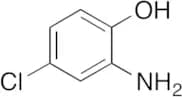
CAS:<p>Applications 2-Amino-4-chlorophenol is a widely used reagent in the synthesis of various drugs, dyes and pesticides. A reagent in the synthesis of aggrecanase-2 inhibitors based on acylthiosemicarbazide zinc-binding, used in the treatment of osteoarthritis.<br>References Arora, P. et al.: Microb. Cell Fact., 11, 150 (2012); Maingot, L. et al.: Eur. J. Med. CHem., 69, 244 (2013);<br></p>Formula:C6H6ClNOColor and Shape:BeigeMolecular weight:143.57(2E)-2-Cyano-3-(3-ethoxy-4-hydroxy-5-nitrophenyl)-N,N-diethyl-2-propenamide
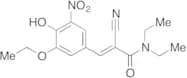
CAS:Controlled Product<p>Applications (2E)-2-Cyano-3-(3-ethoxy-4-hydroxy-5-nitrophenyl)-N,N-diethyl-2-propenamide is an impurity of Entacapone (E558500), a peripherally acting inhibitor of catechol-O-methyl transferase (COMT), an enzyme involved in the metabolism of catecholamine neurotransmitters and related drugs. Antiparkinsonian.<br>References Karlsson, M., et al.: J. Pharm. Biomed. Anal., 10, 593 (1992), Nissinen, E., et al.: Arch. Pharmacol., 346, 262 (1992), Wikberg, T., et al.: Eur. J. Drug Metab. Pharmacokinet., 18, 359 (1993),<br></p>Formula:C16H19N3O5Color and Shape:NeatMolecular weight:333.34Benzoyl-d5 Chloride
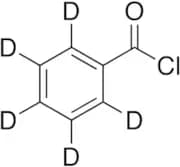
CAS:Controlled Product<p>Stability Moisture Sensitive<br>Applications Labelled Benzoyl Chloride. Used in the manufacturing of dye intermediates.<br> Not a dangerous good if item is equal to or less than 1g/ml and there is less than 100g/ml in the package<br></p>Formula:C72H5ClOColor and Shape:NeatMolecular weight:145.60Lubiprostone Impurity 2
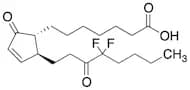
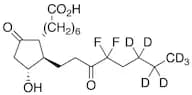
CAS:Controlled ProductFormula:C20H30F2O4Color and Shape:NeatMolecular weight:372.447Lubiprostone-d7
CAS:Controlled Product<p>Applications Labelled Lubiprostone is a bicyclic fatty acid metabolite analog of Prostaglandin E1. It activates specific chloride channels in the gastrointestinal tract to stimulate intestinal fluid secretion, increase gastrointestinal transit, and improve symptoms of constipation.<br>References Farthing, M., et al.: Drugs, 56, 11 (1998), Pare, P., et al.: Am. J. Gastroenterol., 96, 3130 (2001), Sloots, C., et al.: Aliment. Pharmacol. Ther., 16, 759 (2002), Coremans, G., et al.: Digestion, 67, 82 (2003),<br></p>Formula:C20H25D7F2O5Color and Shape:NeatMolecular weight:397.51(S)-7-Hydroxy Warfarin
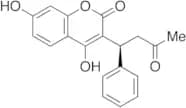
CAS:Controlled Product<p>Applications (S)-7-Hydroxywarfarin is the S-enantiomer of the 7-hydroxyl metabolite of Warfarin (W498500). (S)-7-Hydroxy Warfarin was present at levels 7-folds higher in chimeric mice with humanized liver (than that in controlled mice) following (S)-Warfarin metabolism.<br>References Wong, Y.W.J. et al.: Pharm. Res., 6, 982 (1989); O'Reilly, R.A. et al.: Clin. Pharmacol. Ther., 51, 656 (1992); Inoue, T. et al: Drug Metab. Dispos. 36, 2429 (2008);<br></p>Formula:C19H16O5Color and Shape:NeatMolecular weight:324.33Phenprocoumon-d5
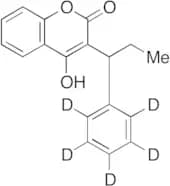
CAS:Controlled Product<p>Applications Phenprocoumon-d5, is the labeled analogue of Phenprocoumon (P318820), known for being an oral anti-coagulant.<br> Not a dangerous good if item is equal to or less than 1g/ml and there is less than 100g/ml in the package<br>References Kohl, C. et al.: Drug. Metab. Disp., 28, 161 (2000);<br></p>Formula:C18H11D5O3Color and Shape:NeatMolecular weight:285.35cis-Entacapone-d10
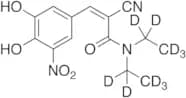
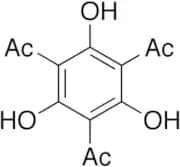
CAS:Controlled Product<p>Applications Labelled analogue of cis-Entacapone, the (Z)-Isomer of Entacapone (E558500) polymorphic form B. Antiparkinsonian.<br>References Karlsson, M., et al.: J. Pharm. Biomed. Anal., 10, 593 (1992), Nissinen, E., et al.: Arch. Pharmacol., 346, 262 (1992), Wikberg, T., et al.: Eur. J. Drug Metab. Pharmacokinet., 18, 359 (1993),<br></p>Formula:C14H5D10N3O5Color and Shape:NeatMolecular weight:315.352,4,6-Triacetylphloroglucinol
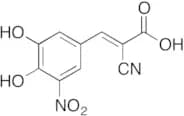
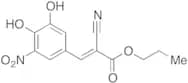
CAS:Controlled Product<p>Applications 2,4,6-Triacetylphloroglucinol (cas# 2161-87-7) is a compound useful in organic synthesis.<br></p>Formula:C12H12O6Color and Shape:NeatMolecular weight:252.22n-Propyl (2E)-2-Cyano-3-(3,4-dihydroxy-5-nitrophenyl)prop-2-enoate
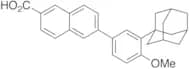
CAS:Controlled ProductFormula:C13H12N2O6Color and Shape:NeatMolecular weight:292.24Adapalene
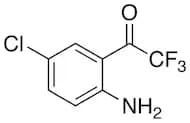
CAS:Controlled Product<p>Applications Retinoid selective for retinoic acid receptor (RAR) subtypes β and γ. Antiacne.<br>References Griffiths, C.E.M., et al.: J. Invest. Dermatol., 101, 325 (1993), Bernard, B.A., et al.: Skin Pharmacol., 6, 61 (1993), Waugh, J., et al.: Drugs, 64, 1465 (2004),<br></p>Formula:C28H28O3Color and Shape:WhiteMolecular weight:412.524-Chloro-2-trifluoroacetylaniline
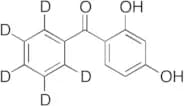
CAS:Controlled ProductFormula:C8H5ClF3NOColor and Shape:NeatMolecular weight:223.582,4-Dihydroxybenzophenone-d5
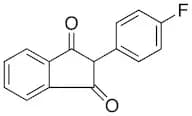
CAS:Controlled Product<p>Applications 2,4-Dihydroxybenzophenone-d5 is deuterium labelled of 2,4-Dihydroxybenzophenone (D451780), which is a metabolite of Benzophenone (B204980). Benzophenone can be used to synthesize antihistamines, hypnotics and insecticides.<br>References Li, M.H., et al.: Toxicol. Environ. Chem., 94, 566 (2012); Leon, Z.. et al.: Anal. Bioanal. Chem., 398, 831 (2010); Bechard, K., et al.: Aquat. Toxicol., 90, 310 (2008)<br></p>Formula:C13D5H5O3Color and Shape:Off-White To Light YellowMolecular weight:219.25Fluindione
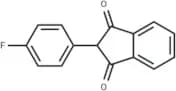
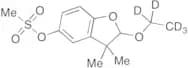
CAS:Controlled Product<p>Applications A vitamin K antagonist with anticoagulant applications<br>References Streiff, M., et al.: Am. J. Hematol., 81, 684 (2006), Vilar, S., et al.: J. Med. Chem., 49, 1118 (2006), Tavassoli, N., et al.: Eur. J. Clin. Pharmacol., 63, 221 (2007), Bodin, L., et al.: J. Thromb. Haemost., 6, 1436 (2008),<br></p>Formula:C15H9FO2Color and Shape:NeatMolecular weight:240.23Ethofumesate Ethyl-d5
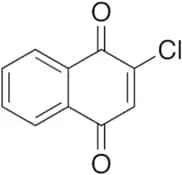
CAS:Controlled ProductFormula:C13H13D5O5SColor and Shape:NeatMolecular weight:291.372-Chloro-1,4-naphthoquinone
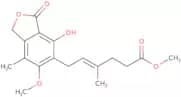
CAS:Controlled Product<p>Stability Moisture Sensitive<br>Applications A substituted naphthoquinones as insecticides and acaricides.<br>References Bhuyan, B., et al.: Cancer., Res., 37, 1057 (1977), Buffinton, G., et al.: Biochem. J., 257, 561 (1989), Hakura, A., et al.: Chem. Res. Toxicol., 7, 559 (1994), , Shimizu, N., et al.: Biol. Pharm. Bull., 20, 168 (1997),<br></p>Formula:C10H5ClO2Color and Shape:NeatMolecular weight:192.60Methyl mycophenolate impurity E
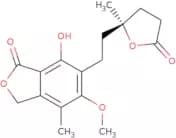
CAS:<p>Methyl mycophenolate impurity E is a reactive, propargylamine-containing, monosodium salt with immunosuppressive properties. It is used in the treatment of cancer by inhibiting the production of white blood cells, which are needed to fight infection. Methyl mycophenolate impurity E has shown antitumor activity and can be used for the treatment of some types of cancer. It is metabolized in vivo to methyl mycophenolate and inhibits protein synthesis by alkylating DNA.</p>Formula:C18H22O6Purity:Min. 95%Color and Shape:White PowderMolecular weight:334.36 g/molMycophenolic acid lactone - EP
CAS:<p>Mycophenolic acid lactone (MPA) is an analytical standard for HPLC, used as a reference material in drug development. It is also a metabolite of mycophenolate mofetil and mycophenolic acid, which are used to treat immunodeficiency disorders. MPA is not active by itself but it can be converted into the active form, mycophenolic acid, by esterases. MPA has been shown to have anti-inflammatory activities and can inhibit the production of prostaglandins in animals. Mycophenolic acid lactone is a metabolite of drugs that are used for the treatment of immunodeficiency disorders, such as mycophenolate mofetil and mycophenolic acid. The chemical structure of MPA is closely related to that of these drugs and it has been shown to have similar anti-inflammatory properties in animal studies.</p>Formula:C17H20O6Purity:Min. 95%Molecular weight:320.34 g/molTriacetyl aloe-emodin (impurity A)
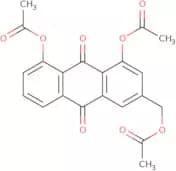
CAS:<p>Triacetyl aloe-emodin (impurity A) is an impurity found in the Triacetyl Aloe-Emodin HPLC standard, which is a drug product. It is not approved for use as a drug and should be used only for research and development purposes. The impurity can be custom synthesized or purchased from a specialty chemical supplier. Impurities are not typically found in the final drug product but can occur during synthesis or purification of the API. This impurity is not present in any pharmacopoeia and has no known biological activity. The CAS number of this impurity is 25395-11-3.</p>Formula:C21H16O8Purity:Min. 95%Molecular weight:396.35 g/molCamptothecin
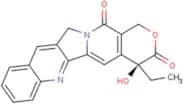
CAS:<p>Camptothecin (CPT) belongs to the alkaloid group of natural products and is a specific DNA topoisomerase I (Topo I) inhibitor (IC50=679 nM) with specificity.</p>Formula:C20H16N2O4Purity:99.52% - 99.88%Color and Shape:Solid PowderMolecular weight:348.35Ellipticine
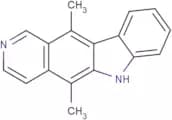
CAS:<p>Ellipticine is a powerful cancer drug with different actions, IC50: 0.27-1.48 μM for leukemia, breast cancer, neuroblastoma, glioblastoma.</p>Formula:C17H14N2Purity:97.26% - 99.88%Color and Shape:SolidMolecular weight:246.31Des[2-[(2-hydroxyethyl)amino]ethyl] mitoxantrone
CAS:<p>Des[2-[(2-hydroxyethyl)amino]ethyl] mitoxantrone is a research and development impurity standard for synthesis. It is a synthetic, high purity compound with a CAS number of 89991-52-6. The chemical is not found in nature and does not have any natural metabolites. Des[2-[(2-hydroxyethyl)amino]ethyl] mitoxantrone has been shown to be metabolized by the liver into various metabolites that have been identified through analysis of urine samples. The metabolite of des[2-[(2-hydroxyethyl)amino]ethyl] mitoxantrone may be used as an analytical standard for HPLC methods.</p>Formula:C18H19N3O5Purity:Min. 95%Molecular weight:357.36 g/molFlurochloridone
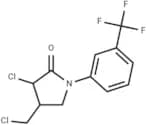
CAS:<p>Flurochloridone (R 40244) is a selective herbicide. Flurochloridone induces apoptosis and is regulated by mitochondrial dysfunction and oxidative stresses.</p>Formula:C12H10Cl2F3NOPurity:99.86%Color and Shape:SolidMolecular weight:312.12Hydroquinone monobenzoate
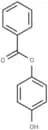
CAS:<p>Hydroquinone monobenzoate, used in skin lightening and photography, may inhibit topoisomerase II and damage DNA.</p>Formula:C13H10O3Color and Shape:SolidMolecular weight:214.22Ethacridine
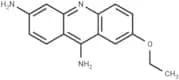
CAS:<p>Ethacridine acts as an inhibitor of poly (ADP-ribose) glycohydrolase (PARG) and functions as an activator of transcriptional coactivators. It induces apoptosis in thyroid cancer cells and promotes the differentiation of thyroid follicular cells.</p>Formula:C15H15N3OColor and Shape:SolidMolecular weight:253.30Phacolysine
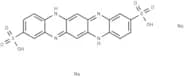
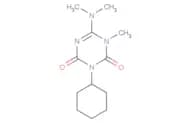
CAS:<p>Phacolysine is a chemical compound. Phacolysine is used in ophthalmologic eye lotions.</p>Formula:C18H10N4Na2O6S2Color and Shape:SolidMolecular weight:488.39Hexazinone
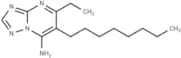
CAS:<p>Hexazinone: a triazine herbicide blocks photosynthesis by binding to D-1 protein in photosystem II.</p>Formula:C12H20N4O2Purity:99.99%Color and Shape:SolidMolecular weight:252.31Ametoctradin
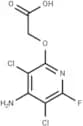
CAS:<p>Ametoctradin is a Qo-site inhibitor of mitochondrial respiratory complex III and is used in the study of oomycete diseases.</p>Formula:C15H25N5Purity:99.65%Color and Shape:SolidMolecular weight:275.39Fluroxypyr
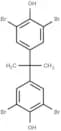
CAS:<p>Fluroxypyr is an herbicide in the class of synthetic auxins that is used to control broadleaf weeds and woody brush.</p>Formula:C7H5Cl2FN2O3Purity:99.89%Color and Shape:White Powde With The Smell Of SoapMolecular weight:255.03Tetrabromobisphenol A
CAS:<p>Tetrabromobisphenol A is an activator of the hepatic interferon pathway in rats.</p>Formula:C15H12Br4O2Color and Shape:SolidMolecular weight:543.87Talaporfin free acid
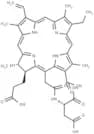
CAS:<p>Talaporfin, an effective tumor localizer, can produce the selective degradation of tumor tissue following light exposure.</p>Formula:C38H41N5O9Color and Shape:SolidMolecular weight:711.76Aminaftone
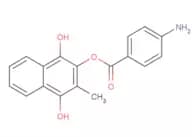
CAS:<p>Aminaftone, a derivative of 4-aminobenzoic acid, inhibits endothelin-1 (ET-1) production and can be used to study hypertension and systemic sclerosis.</p>Formula:C18H15NO4Purity:96.31% - 99.39%Color and Shape:SolidMolecular weight:309.32Fluindione
CAS:<p>Fluindione is a hematologic drug.</p>Formula:C15H9FO2Color and Shape:SolidMolecular weight:240.23Mequindox
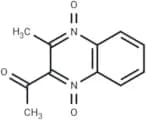
CAS:<p>Mequindox is an antimicrobial agent [1]. Mequindox, as an inhibitor of DNA synthesis, induces genotoxicity and carcinogenicity in mice [2].</p>Formula:C11H10N2O3Color and Shape:SolidMolecular weight:218.21Flupyrimin
CAS:<p>Flupyrimin is the insect nicotinic acetylcholine receptor (nAChR) antagonist [1].</p>Formula:C13H9ClF3N3OColor and Shape:SolidMolecular weight:315.68Naftazone
CAS:<p>Naftazone: vasoprotectant for hemostasis; boosts vein cell growth in vitro without affecting clotting.</p>Formula:C11H9N3O2Purity:98%Color and Shape:SolidMolecular weight:215.21Epirubicin
CAS:<p>Epirubicin, a doxorubicin derivative, is an antineoplastic, inhibits topoisomerase, DNA/RNA synthesis, and Foxp3, reducing T cell activity.</p>Formula:C27H29NO11Color and Shape:SolidMolecular weight:543.52Gnidimacrin
CAS:<p>Gnidimacrin activates latent HIV-1, kills infected cells, and inhibits R5 viruses at <10 pM.</p>Formula:C44H54O12Color and Shape:SolidMolecular weight:774.89Piroxantrone
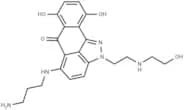
CAS:<p>Piroxantrone (CI942; PD111815) is an anthrapyrazole antibiotic that disrupts DNA replication and repair, with limited cardiotoxicity and antineoplastic range.</p>Formula:C21H25N5O4Color and Shape:SolidMolecular weight:411.45Mitoxantrone (2-hydroxyethyl)piperazine impurity
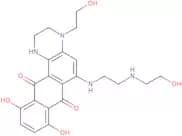
CAS:<p>Mitoxantrone is an anticancer drug that is used to treat various types of cancer. Mitoxantrone is a prodrug, which means it needs to be metabolized by the body to become active. The main metabolic pathway for mitoxantrone involves hydrolysis of the 2-hydroxyethyl piperazine impurity and formation of N-desmethylmitoxantrone, which is a metabolite that has been found to be more potent than the parent compound in inhibiting DNA synthesis. This impurity standard is used as a reference substance for quality control purposes during drug development. Mitoxantrone can also be synthesized with high purity and custom synthesis services are available upon request.</p>Formula:C22H26N4O6Purity:Min. 95%Color and Shape:Brown PowderMolecular weight:442.47 g/molCUR61414
CAS:<p>CUR61414 is a cell-permeable inhibitor of Hedgehog signaling pathway (IC50 =100-200 nM) and selectively binds to smoothened (Ki = 44 nM).</p>Formula:C31H42N4O5Purity:97.34% - 98%Color and Shape:SolidMolecular weight:550.69Duocarmycin DM free base
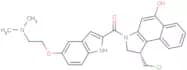
CAS:<p>Duocarmycin: DNA-binding, alkylating anticancer agent with a curved indole structure, used in ADCs.</p>Formula:C26H26ClN3O3Purity:98%Color and Shape:SolidMolecular weight:463.96Galaxolide
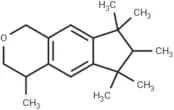
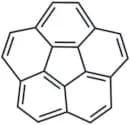
CAS:<p>Galaxolide can induce estrogenic activity (Estrogen Receptor/ERR), oxidative stress, and genotoxicity. It also stimulates the enzymatic activities of EROD and GST (Glutathione S-transferase).</p>Formula:C18H26OColor and Shape:SolidMolecular weight:258.40Corannulene
CAS:<p>Corannulene is an agonist of the aromatic hydrocarbon receptor (AhR). It induces a lower cytotoxic response in liver cancer cells compared to Benzo[a]pyrene and shows potential for use in cancer research.</p>Formula:C20H10Color and Shape:SolidMolecular weight:250.293Tembotrione
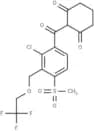
CAS:<p>Tembotrione is a chemical compound that may reduce the productivity of carrots. It possesses activity that degrades the quality of carrot stems. Additionally, Tembotrione can be used in studies focusing on the overall productivity of carrot cultivation.</p>Formula:C17H16ClF3O6SColor and Shape:SolidMolecular weight:440.82

![(alphaE)-α-[(3,4-Dihydroxy-5-nitrophenyl)methylene]-β-oxo-1-piperidinepropanenitrile](/_next/image/?url=https%3A%2Fstatic.cymitquimica.com%2Fproducts%2FTR%2Fthumb-webp%2FD454135.webp&w=3840&q=75)


![Des[2-[(2-hydroxyethyl)amino]ethyl] mitoxantrone](/_next/image/?url=https%3A%2Fstatic.cymitquimica.com%2Fproducts%2F3D%2Fthumb-webp%2FID21105.webp&w=3840&q=75)