Free Radicals and Oxidant/Reducing Agents
Found 212 products of "Free Radicals and Oxidant/Reducing Agents"
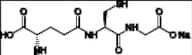
Glutathione Sodium Salt
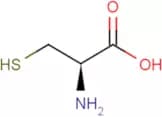
CAS:Formula:C10H16N3O6S·NaColor and Shape:White To Off-White SolidMolecular weight:306.31 22.99L-Cysteine
CAS:L-Cysteine: non-essential amino acid, aids protein synthesis, detox, collagen production, skin elasticity, and biochemical metabolism.Formula:C3H7NO2SPurity:99.70% - 99.89%Color and Shape:White Solid CrystallineMolecular weight:121.16JKE-1674
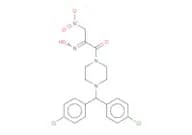
CAS:JKE-1674 is an orally active glutathione peroxidase 4 (GPX4) inhibitor and the active metabolite of ML-210.Cost-effective and quality-assured.Formula:C20H20Cl2N4O4Purity:98.02% - 98.4%Color and Shape:SolidMolecular weight:451.3Ref: TM-T37314
1mg49.00€5mg105.00€10mg170.00€25mg281.00€50mg439.00€100mg708.00€200mg964.00€1mL*10mM (DMSO)117.00€Diethylmaleate
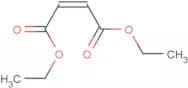
CAS:Diethylmaleate (Maleic acid, diethyl ester) is the diethyl ester of maleic acid and a glutathione-depleting compound that inhibits NF-kB.Formula:C8H12O4Purity:98%Color and Shape:Colourless LiquidMolecular weight:172.18Nitecapone
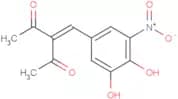
CAS:Nitecapone is a reversible inhibitor of S-COMT (IC50 values of 300 nM in rat liver)Formula:C12H11NO6Purity:98.39%Color and Shape:SolidMolecular weight:265.22L-xylo-2-Hexulosonic Acid Methyl Ester
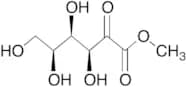
CAS:Controlled ProductFormula:C7H12O7Color and Shape:NeatMolecular weight:208.1662-Keto-L-gulonic Acid
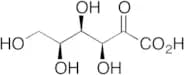
CAS:Controlled ProductStability Hygroscopic
Applications 2-Keto-L-gulonic Acid is used in biological studies for the formation of sorbitol metabolism by Acetobacter melanogenus.
References Okazaki, H., et al.: Agric. Biol. Chem., 33, 207 (1969)Formula:C6H10O7Color and Shape:NeatMolecular weight:194.14gamma-Glu-Cys Trifluoroacetic Acid Salt (~90%)
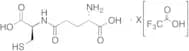
CAS:Controlled ProductStability Unstable in Solution
Applications γ-Glu-Cys is used in biological studies for the detection of thiols in yeast by HPLC coupled with LTQ-Orbitrap mass spectrometry after derivatization with p-(hydroxymercuri)benzoate.
References Rao, Y., et al.: J. Agri. Food Chem., 58, 3 (2010);Formula:C8H14N2O5S•x(C2HF3O2)Purity:~90%Color and Shape:NeatMolecular weight:250.2711402Glutathione (Glycine-13C2,15N) Trifluoroacetate
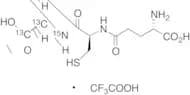
CAS:Stability Hygroscopic
Applications Glutathione-glycine-13C2,15N Trifluoroacetate Salt is the labelled disodium salt derivative of Glutathione (G597951), a tripeptide thiol (composed of L-Cysteine [C995015], Glycine [G615990] and Glutamate) that is found in all cells, possesses an important role in metabolism and protects against reactive oxygen species in the body.
References Cooper, A. & Kristal, B.: Biol. Chem., 378, 793 (1997); Meister, A.: Science, 220, 472 (1983);Formula:C813C2H17N215NO6S•C2HF3O2Color and Shape:NeatMolecular weight:310.3011402Edaravone D5
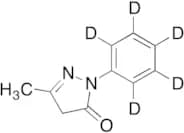
CAS:Controlled ProductApplications Edaravone D5 is the labelled compound of Edaravone(E335000). synthesized and used for relative quant. anal. of oligosaccharides by mass spectrometry (MS). Edaravone inhibits the disease activity in rheumatoid arthritis. Edaravone can significantly enhance IR flap viability and protect flap vessels, which is related to scavenging oxygen free radicals, reducing the consumption of SOD, reducing the extent of lipid peroxidation and inflammation, and protecting functional structure of vessels in the early stages of reperfusion. It also shows protective effects against STZ-induced cognitive impairment, oxidative stress, cholinergic dysfunction and altered protein expressions. Its acts like a free radical scavenger, decreased apoptotic cell death, oxidative damage to DNA and lipids, and angiogene
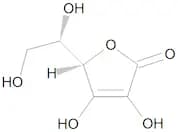
References Zhang, Ping, et al.: Anal. Biochem., 418, 1(2011)Formula:C10D5H5N2OColor and Shape:Off-WhiteMolecular weight:179.23Ascorbic Acid Acetonide
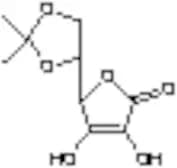
CAS:Controlled ProductApplications Ascorbic Acid Acetonide (cas# 15042-01-0) is a compound useful in organic synthesis.
References Shibayama, H., et al.: Biosci., Biotechnol., Biochem., 72, 1015 (2008), Choi, H., et al.: Bioorg. Med. Chem. Lett., 19, 2079 (2009),Formula:C9H12O6Color and Shape:NeatMolecular weight:216.19Glutathione Disulfide
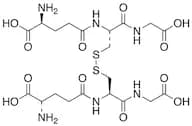
CAS:Controlled ProductStability Hygroscopic
Applications A biomarker for fatty liver disease.
References Tsou, P.-S., et al.: J. Pharmacol. Exp. Ther., 329, 649 (2009), Yu, Y-C., et al.: J. Neurosci. Res., 87, 1884 (2009),Formula:C20H32N6O12S2Color and Shape:White To Off-WhiteMolecular weight:612.63Glutathione (glycine-13C2,15N) Sodium
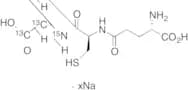
CAS:Applications Glutathione-glycine-13C2,15N Disodium Salt, is the labelled disodium salt derivative of Glutathione (G597951), a tripeptide thiol (composed of L-Cysteine [C995015], Glycine [G615990] and Glutamate) that is found in all cells, possesses an important role in metabolism and protects against reactive oxygen species in the body.
References Cooper, A. & Kristal, B.: Biol. Chem., 378, 793 (1997); Meister, A.: Science, 220, 472 (1983);Formula:C813C2H17N215NO6S•xNaColor and Shape:White To BeigeMolecular weight:310.3022992-Phospho-L-ascorbic Acid Trisodium Salt
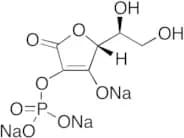
CAS:Controlled ProductApplications 2-Phospho-L-ascorbic Acid Trisodium Salt is a long-lasting vitamin C derivative used in studies of gene repression. Maximizes the benefical properties of vitamins C for personal care and a main active ingredient in medicated cosmetics for whitening. Also, it is substrate in the chromoamperometric method to detect tungsten in water.
References Fuchihata, M.: Frag. J., 43, 64-68 (2015); Alvarado-Gamez, A. L., et al.: Sens., 15, 2232-2243 (2015);Formula:C6H6Na3O9PColor and Shape:NeatMolecular weight:322.05Ascorbyl Tetraisopalmitate
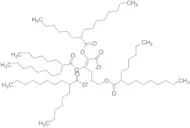
CAS:Controlled ProductFormula:C70H128O10Color and Shape:NeatMolecular weight:1129.76L-threo-Hex-2-enaric acid 1,4-Lactone 6-Methyl Ester
CAS:Formula:C7H8O7Color and Shape:NeatMolecular weight:204.13Glutathione
CAS:Controlled ProductStability Hygroscopic
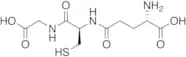
Applications Glutathione may decrease the concentrations of inflammatory cytokines (IL-6, IL-18), neutrophils in lung tissue and increase the level of serum Ca2+ and be useful for the treatment of ANP. Glutathione production is regulated via distinct pathways in stressed and non-stressed cortical neurons. This compound has neuroprotective properties.
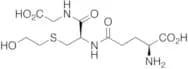
References Misko, T., et al.: J. Biol. chem., 273, 15646 (1998), Nakamura, K., et al.: J. Biol. Chem., 276, 34402 (2001) , Burdo, J., et al.: Brain Res. 1189, 12 (2008).Formula:C10H17N3O6SColor and Shape:Off-WhiteMolecular weight:307.32S-(2-Hydroxyethyl)glutathione
CAS:Controlled ProductStability Very Hygroscopic
Applications A glutathione derivative as inhibitor of glutathione S-transferase.
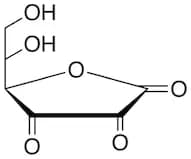
References Dirr, H., et al.: Eur. J. Biochem., 196, 693 (1991), Oakley, A., et al.: J. Mol. Biol., 274, 84 (1997), Alcaro, S., et al.: Bioorg. Med. Chem., 13, 3371 (2005),Formula:C12H21N3O7SColor and Shape:NeatMolecular weight:351.38L-Dehydro Ascorbic Acid (>90%)
CAS:Controlled ProductApplications The reversibly oxidized form of ascorbic acid.
References Moubasher, et al.: J. Biol. Chem., 176, 633 (1948), Sy, K., et al.: J. Food Prot., 68, 1176 (2005), Llorach, R., et al.: Food Chem., 2008, 108, 1028 (2008),Formula:C6H6O6Purity:>90%Color and Shape:NeatMolecular weight:174.11