Monosaccharides
Monosaccharides are the simplest form of carbohydrates and serve as fundamental building blocks for more complex sugars and polysaccharides. These single sugar molecules play critical roles in energy metabolism, cellular communication, and structural components of cells. In this section, you will find a wide variety of monosaccharides essential for research in biochemistry, molecular biology, and glycoscience. These compounds are crucial for studying metabolic pathways, glycosylation processes, and developing therapeutic agents. At CymitQuimica, we offer high-quality monosaccharides to support your research needs, ensuring precision and reliability in your scientific investigations.
Subcategories of "Monosaccharides"
- Alloses(11 products)
- Arabinoses(21 products)
- Erythroses(11 products)
- Fructoses(9 products)
- Fucoses(36 products)
- Galactosamine(41 products)
- Galactose(261 products)
- Glucoses(365 products)
- Glucuronic Acids(51 products)
- Glyco-substrates for Enzyme(77 products)
- Guloses(6 products)
- Idoses(4 products)
- Inositols(15 products)
- Lyxoses(4 products)
- Mannoses(65 products)
- O-Glycans(48 products)
- Psicoses(3 products)
- Rhamnoses(10 products)
- Riboses(61 products)
- Sialic Acids(100 products)
- Sorboses(4 products)
- Sugars(173 products)
- Tagatoses(4 products)
- Taloses(8 products)
- Xyloses(20 products)
Show 17 more subcategories
Found 6088 products of "Monosaccharides"
Sort by
Purity (%)
0
100
|
0
|
50
|
90
|
95
|
100
2-C-Methyl-D-arabono-1,4-lactone
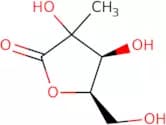
CAS:<p>2-C-Methyl-D-arabono-1,4-lactone is a synthetic sugar that can be custom synthesized to order. This product is fluorinated and methylated, which allows for the modification of any desired position. The product is also an oligosaccharide with a high purity and can be modified using click chemistry. 2-C-Methyl-D-arabono-1,4-lactone can be used as a sugar in glycosylation reactions or as a polysaccharide in complex carbohydrate synthesis.</p>Formula:C6H10O5Purity:Min. 95%Molecular weight:162.14 g/mol(R,R)-(+)-1,4-Dimethoxy-2,3-butanediol
CAS:<p>(R,R)-(+)-1,4-Dimethoxy-2,3-butanediol is a modification of the sugar 1,4-dimethoxy-2,3-butanediol. It is a carbohydrate that can be synthesized and purified to high purity. The synthesis of (R,R)-(+)-1,4-dimethoxy-2,3-butanediol starts with the methylation of glycerol followed by the addition of an alpha hydroxyl group. The final product is produced by glycosylation and polysaccharide synthesis. This modification has been shown to be effective in treating cancer cells and may have potential applications in other areas as well.</p>Formula:C6H14O4Purity:Min. 95%Molecular weight:150.17 g/molFluconazole D-glucuronide
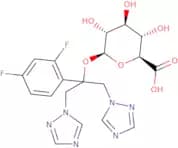
CAS:<p>Fluconazole D-glucuronide is a synthetic, fluorinated sugar that has been modified with a glycosylation. It is synthesized by reacting fluconazole with the sugar glucuronic acid in the presence of an enzyme called glycosyltransferase. Fluconazole D-glucuronide is a custom synthesis, and it can be used as a pharmaceutical intermediate to produce other compounds. Fluconazole D-glucuronide is also used as an analytical standard for quantifying fluconazole in biological samples.</p>Purity:Min. 95%b-L-Fucopyranosyl nitromethane
<p>b-L-Fucopyranosyl nitromethane is a synthetic carbohydrate that has been modified by fluorination and methylation. It can be used as a building block for the synthesis of complex carbohydrates including saccharides, oligosaccharides, and monosaccharides.</p>Formula:C7H13NO6Purity:Min. 95%Molecular weight:207.2 g/mol2,5-Anhydro-D-mannofuranose oxime
CAS:<p>2,5-Anhydro-D-mannofuranose oxime is a glycosylation inhibitor that prevents the formation of glycosidic bonds. It is used in the synthesis of complex carbohydrates, such as polysaccharides and oligosaccharides. This compound can be fluorinated or methylated to produce 2,5-anhydro-D-mannofuranose oxime derivatives that are useful for click chemistry. 2,5-Anhydro-D-mannofuranose oxime has been shown to inhibit the enzymatic conversion of mannitol to mannose and fructose by blocking the enzyme alpha mannosidase. The high purity of this compound makes it suitable for use in a variety of reactions, including glycobiology studies and carbohydrate modifications.</p>Formula:C6H11NO5Purity:Min. 95%Molecular weight:177.16 g/mol1,4:6,3-Glucarodilactone
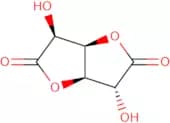
CAS:<p>1,4:6,3-Glucarodilactone is an undecenoate with a sustainable and degradable structure. It can be used as a monomer in the production of polyols that are used in various industries, such as the plastics industry. 1,4:6,3-Glucarodilactone is also an acidic compound that has been shown to have a crystalline product and isomeric transition. It is possible to produce this compound by ring-opening polymerization of p-xylylenediamine with butyl vinyl ether or isobutyl vinyl ether.</p>Formula:C6H6O6Purity:Min. 95%Molecular weight:174.11 g/mol2-epi-(-)-emtricitabine
CAS:<p>2-epi-(-)-emtricitabine is an analog of the nucleoside cytidine, which inhibits the phosphorylation and subsequent degradation of deoxycytidine kinase, thereby blocking the production of the viral DNA polymerase. The compound also inhibits tyrosine kinases, which are enzymes that play a vital role in cell signaling. This inhibition may contribute to its antiviral activity. 2-epi-(-)-emtricitabine has been shown to inhibit human immunodeficiency virus (HIV) replication in vitro and in vivo. It is a prodrug that is converted to emtricitabine, its active form, by deoxycytidine kinase and then hydrolyzed by esterases. 2-epi-(-)-emtricitabine has been shown to be effective against hepatitis B virus and cancer cells.</p>Formula:C8H10FN3O3SPurity:Min. 95%Molecular weight:247.25 g/molD-Glucose-BSA
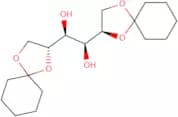
<p>Glucose covalently bound to BSA through a 3 atom spacer.</p>Purity:Min. 95%Color and Shape:Powder1,2:5,6-Di-O-cyclohexylidene-D-mannitol
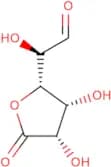
CAS:<p>1,2:5,6-Di-O-cyclohexylidene-D-mannitol is a ligand that binds to metal ions. It forms a complex with nitro groups, which has been shown to have synergistic effects in transfer reactions. The structure of 1,2:5,6-Di-O-cyclohexylidene-D-mannitol was determined by x-ray diffraction and the crystal structure was confirmed by single crystal x-ray diffraction. This ligand can be used for the synthesis of alkenes and it reacts with magnesium chloride to form a grignard reagent. As a ligand, this compound has anticancer activity and can be used as an antiangiogenic agent.</p>Formula:C18H30O6Purity:Min. 95%Molecular weight:342.43 g/molD-Glucofuranuronic acid,γ-lactone,1,6-13C2
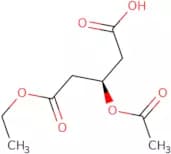
CAS:<p>D-Glucofuranuronic acid,gamma-lactone,1,6-13C2 is an organic compound that is a glycosidic acid with a uronic acid group. It is composed of a hydrocarbon group and an acetylated d-xylose. This compound has been shown to have inhibitory activities against glycosidases and glycoside hydrolases. D-Glucofuranuronic acid,gamma-lactone,1,6-13C2 is synthesized by the reaction of trifluoroacetic acid with glyceraldehyde in the presence of water and an acid catalyst. It can be used as medicine for treating blood sugar levels but should not be taken in conjunction with other medicines because it inhibits their absorption.</p>Formula:C2C4H8O6Purity:Min. 95%Molecular weight:178.12 g/mol(R)-Monoethyl 3-acetoxyglutarate
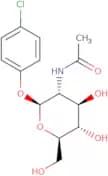
CAS:<p>(R)-Monoethyl 3-acetoxyglutarate is a synthetic molecule that is used in the synthesis of complex carbohydrates. It can be fluorinated, methylated and glycosylated. This compound has CAS No. 113036-11-6.</p>Formula:C9H14O6Purity:Min. 95%Molecular weight:218.2 g/mol4-Chlorophenyl 2-acetamido-2-deoxy-b-D-glucopyranoside
CAS:<p>4-Chlorophenyl 2-acetamido-2-deoxy-b-D-glucopyranoside is a molecule that belongs to the class of acid molecules and has been implicated in the metabolism of corynebacterium. The metabolic pathway for this molecule has been studied using databases and datasets, with population simulations and profile data being generated to help identify potential strategies for its positioning in the market. This molecule is also related to death, which may be related to its positioning.</p>Formula:C14H18ClNO6Purity:Min. 95%Molecular weight:331.75 g/molIsopropyl-β-D-thioglucopyranoside
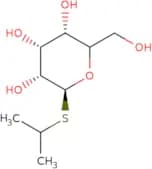
CAS:<p>Isopropyl-beta-D-thioglucopyranoside is a carbohydrate derivative that has the same chemical formula as glucose but with a different spatial arrangement. It is also known as beta-D-thioglucose or thioisopropylglucose, and it is an intermolecular hydrogen bond donor and acceptor. Isopropyl-beta-D-thioglucopyranoside absorbs light at wavelengths of 265 nm, 280 nm, and 320 nm. Carbohydrates are compounds containing carbon, hydrogen and oxygen atoms in a ratio of 1:2:1 by weight, with the general formula CHON. They consist of many isomers that differ from each other in the configurations of their carbonyl group and hydroxyl group. The molecular system for isopropyl-beta-D-thioglucopyranoside consists of one molecule with two hydrogen bonds to two other molecules.</p>Formula:C9H18O5SMolecular weight:238.3 g/molb-L-Xylose-1-phosphate
<p>b-L-Xylose-1-phosphate is a methylated, fluorinated, and custom synthesized monosaccharide that can be modified to produce an oligosaccharide or polysaccharide. This monomer is a sugar that is found in complex carbohydrates and has a purity of greater than 99%. It can be used for the synthesis of saccharides or as a fluorination agent.</p>Purity:Min. 95%rac-Lotaustralin
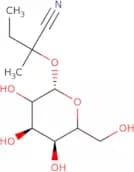
<p>Lotaustralin is a glycosylated, fluorinated, methylated, and modified synthetic compound. Lotaustralin has been shown to inhibit the growth of bacteria by binding to the ribosomes in bacterial cells. It also inhibits the production of inflammatory cytokines and lipopolysaccharide in mice. Lotaustralin is made synthetically through custom synthesis and modification. The purity of the drug exceeds 99%.</p>Formula:C11H19NO6Purity:Min. 95%Molecular weight:261.27 g/molPhenyl 3,4-di-O-acetyl-2-O-benzyl-a-L-thiorhamnopyranoside
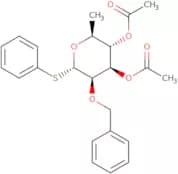
CAS:<p>Phenyl 3,4-di-O-acetyl-2-O-benzyl-a-L-thiorhamnopyranoside is an oligosaccharide that is a modification of the glycosidic linkage. It is synthesized by reacting phenyl 3,4 diacetate with 2,3,4 O benzyl thiorhamnose. Phenyl 3,4 diacetate can be prepared by reacting phenol with acetaldehyde in the presence of sodium ethoxide and then reacting with acetic anhydride to yield this product. This compound can also be prepared by methylating a L thiorhamnopyranoside and then glycosylating it with a carbonyl group. Phenyl 3,4 diacetate reacts with phenol in the presence of concentrated sulfuric acid to produce phenyl 3,4 diacetoxybenzoic acid which can be converted to phenyl 3,4 diacetoxy</p>Formula:C23H26O6SPurity:Min. 95%Molecular weight:430.51 g/molMethyl 4-deoxy-a-D-glucopyranoside
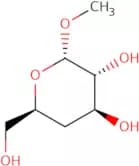
CAS:<p>Methyl 4-deoxy-a-D-glucopyranoside is a high purity synthetic sugar with the molecular formula C5H10O5. It has been custom synthesized for Click modification, fluorination, glycosylation and methylation. Methyl 4-deoxy-a-D-glucopyranoside is used in glycosylation as a monosaccharide or saccharide to form complex carbohydrates. This product can be used in the synthesis of oligosaccharides and polysaccharides.</p>Formula:C7H14O5Purity:Min. 95%Molecular weight:178.19 g/mol4,5-Desisopropylidene topiramate
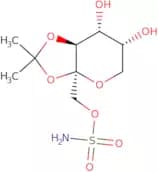
CAS:<p>4,5-Desisopropylidene topiramate is a synthetic monosaccharide that is not naturally occurring. This compound has been synthesized with a click modification and glycosylation. It has a molecular weight of 459.29 g/mol and the CAS number 106881-41-8. The chemical formula is C11H21NO6 and it's molecular structure is shown below:</p>Formula:C9H17NO8SPurity:Min. 95%Color and Shape:Off-white to pale yellow solid.Molecular weight:299.3 g/mol1,3,6-Tri-O-benzoyl-2-deoxy-a-D-glucopyranoside
<p>1,3,6-Tri-O-benzoyl-2-deoxy-a-D-glucopyranoside is a glycosylation molecule that is synthesized by the addition of a benzoyl group to the C1 position of glucose. This product is an example of an oligosaccharide with a triester linkage. The synthesis of this product involves methylation and fluorination reactions. 1,3,6-Tri-O-benzoyl-2-deoxy-a-D-glucopyranoside is stable in acidic environments and can be custom synthesized at high purity level.</p>Formula:C27H30O5Purity:Min. 95%Molecular weight:434.52 g/mol2,3,5-Tri-O-benzoyl-b-D-ribofuranose
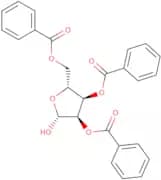
CAS:<p>2,3,5-Tri-O-benzoyl-b-D-ribofuranose is a custom synthesis of an oligosaccharide. It has been modified with fluorination and methylation. This is a synthetic carbohydrate that belongs to the class of saccharides. It has been synthesized from a monosaccharide and has glycosylation. The chemical formula for 2,3,5-Tri-O-benzoyl-b-D-ribofuranose is C10H14O7.</p>Formula:C26H22O8Purity:Min. 95%Molecular weight:462.45 g/mol2-Deoxy-N-phenylglucosylamine
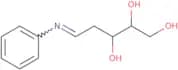
CAS:<p>2-Deoxy-N-phenylglucosylamine is a custom synthesis that can be modified to suit the needs of your project. It is a fluorinated compound with a methyl group on the phenyl ring and an amine at C2. This chemical has been shown to have anti-tumor activity against sarcoma 180 and leukemia L1210 in mice. 2-Deoxy-N-phenylglucosylamine is also known to inhibit the production of monosaccharides, oligosaccharides, and polysaccharides by inhibiting glycosylation. If you are looking for carbohydrate compounds for your next project, this chemical may be just what you need!</p>Formula:C12H17NO4Purity:Min. 95%Molecular weight:239.27 g/mol6-Chloro-6-deoxy-D-galactose
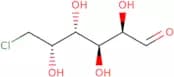
CAS:<p>6-Chloro-6-deoxy-D-galactose is a sugar that is found in the cell wall of Mycobacterium tuberculosis. This sugar is transported by chloride anions and has been shown to be essential for bacterial growth. 6-Chloro-6-deoxy-D-galactose has also been shown to inhibit the transport of dlucose into cells, which may contribute to its inhibitory effect on glucose transport. The process by which this sugar is transported across the membrane is still not fully understood, but it has been shown to involve hydrogen bonds and ionic interactions.</p>Formula:C6H11ClO5Purity:Min. 95%Molecular weight:198.6 g/mol6-O-Tosyl-D-mannose
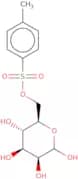
CAS:<p>6-O-Tosyl-D-mannose is a Carbohydrate, Modification, saccharide, Oligosaccharide with CAS No. 105265-64-3. It is fluorinated on the 6th carbon atom and methylated on the 3rd carbon atom. It can be used in custom synthesis and also has high purity and a custom synthesis. It can be synthesized by glycosylation or click modification.</p>Formula:C13H18O8SPurity:Min. 95%Color and Shape:PowderMolecular weight:334.34 g/molMethyl 6-deoxy-3,4-O-isopropylidene-2-O-methyl-α-D-galactopyranoside
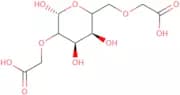
CAS:<p>Methyl 6-deoxy-3,4-O-isopropylidene-2-O-methyl-a-D-galactopyranoside is a custom synthesis that can be modified with fluorination, methylation, and monosaccharide modification. This product can also be used in click modification, oligosaccharide synthesis, saccharide modification, and glycosylation. Methyl 6-deoxy-3,4-O-isopropylidene-2-O-methyl-aD galactopyranoside is a CAS No. 7413523 2 and is a Polysaccharide. It has Carbohydrate properties and complex carbohydrate characteristics.</p>Formula:C11H20O5Purity:Min. 95%Molecular weight:232.28 g/mol3,6-Di-O-Carboxymethyl-D-glucose
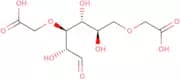
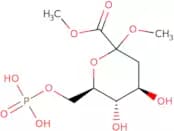
CAS:<p>3,6-Di-O-Carboxymethyl-D-glucose is a methylated sugar that is synthesized from D-glucose. It is a white powder that is soluble in water and has a molecular weight of 586.06 g/mol. 3,6-Di-O-Carboxymethyl-D-glucose can be used for the synthesis of oligosaccharides and glycosylations. It can also be used as an intermediate for the production of fluorinated saccharides, which are useful for click chemistry modifications. 3,6-Di-O-Carboxymethyl-D-glucose can be custom synthesized to meet specific requirements.</p>Formula:C10H16O10Purity:Min. 95%Molecular weight:296.23 g/molMethyl (methyl 3-deoxy-D-arabino-hept-2-ulopyranosid)onate-7-phosphate
CAS:<p>Methyl (methyl 3-deoxy-D-arabino-hept-2-ulopyranosid)onate-7-phosphate is a Glycosylation, Oligosaccharide, sugar, Synthetic, Fluorination, Custom synthesis, Methylation, Monosaccharide, Polysaccharide, saccharide with CAS No. 91382-80-8. It is typically used as a modifier of complex carbohydrate. This product has high purity and can be modified.</p>Formula:C9H17O10PPurity:Min. 95%Molecular weight:316.2 g/mol1,2-O-Isopropylidene-5-O-p-toluoyl-a-D-xylofuranose
CAS:<p>1,2-O-Isopropylidene-5-O-p-toluoyl-a-D-xylofuranose is a glycosylation product of orotic acid with 5,6-dihydroxybenzoic acid. It is a white solid that can be used for the synthesis of various saccharides. 1,2-O-Isopropylidene-5-O-p-toluoyl-a-D -xylofuranose is an effective reagent for the methylation of carbohydrates and also shows high reactivity with fluorine. This compound has a CAS number of 7509660 and has been modified with click chemistry to form an oligosaccharide. 1,2 -O -Isopropylidene -5 -O p -toluoyl -a D xylofuranose is synthesized by custom synthesis and has a purity</p>Purity:Min. 95%3,2',3',4'-Tetra-O-acetyl-6,6'-di-O-triisopropylsilyl-lactal
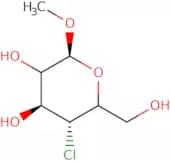
<p>3,2',3',4'-Tetra-O-acetyl-6,6'-di-O-triisopropylsilyl-lactal is a modification of the carbohydrate saccharide. This synthetic compound has been prepared by reacting 2,5-dichloro-1,4-benzoquinone with methyl 3,2',3',4'-tetraacetoxychalcone in the presence of triethylsilane. It can be used as an intermediate for the synthesis of oligosaccharides and complex carbohydrates.</p>Formula:C38H68O13Si2Purity:Min. 95%Molecular weight:789.11 g/molMethyl 4-chloro-4-deoxy-a-D-galactopyranoside
<p>Methyl 4-chloro-4-deoxy-a-D-galactopyranoside is a synthetic monosaccharide that has been modified with fluorination and methylation. The modification of this sugar provides it with the ability to be used in glycosylation reactions, click chemistry, and other modification reactions. This product is offered as a custom synthesis and can be synthesized for any desired specification. It is also available in high purity form.</p>Formula:C7H13ClO5Purity:Min. 95%Molecular weight:212.63 g/mol2,6-Di-O-Carboxymethyl-D-glucose
CAS:<p>2,6-di-O-carboxymethyl-D-glucose (2,6-CMG) is a modification of D-glucose. 2,6-CMG is a complex carbohydrate with CAS No. 95350-37-1 and has the molecular formula C8H14O9. It is an oligosaccharide that can be custom synthesized to meet customer specifications. 2,6-CMG has high purity and can be used as a sugar or polysaccharide. It also has been fluorinated to meet customer requirements. The glycosylation of 2,6-CMG is methylated and saccharides are then added to it in order to produce a monosaccharide or polysaccharide. This product can be used in the synthesis of glycoproteins and other biomolecules.</p>Formula:C10H16O10Purity:Min. 95%Color and Shape:Colourless LiquidMolecular weight:296.23 g/molPyrogallol a-D-glucopyranoside
<p>Pyrogallol a-D-glucopyranoside is a synthetic carbohydrate that is used in the synthesis of various saccharides and oligosaccharides. Pyrogallol a-D-glucopyranoside is also used in the modification of saccharides and oligosaccharides through glycosylation, methylation, and fluorination. This carbohydrate has CAS No. 810-12-0 and molecular weight of 368.</p>Formula:C12H16O8Purity:Min. 95%Molecular weight:288.25 g/mol2,3,4-Tri-O-acetyl-b-D-xylopyranosyl-Fmoc-L-serine
<p>2,3,4-Tri-O-acetyl-b-D-xylopyranosyl-Fmoc-L-serine is a carbohydrate which is modified by fluorination and methylation. It is a complex carbohydrate that can be custom synthesized to include saccharide or oligosaccharide. 2,3,4-Tri-O-acetyl-b-D-xylopyranosyl Fmoc L serine has CAS No. 1807631–35–0 and molecular weight of 703. It also has high purity and custom synthesis capabilities.</p>Formula:C29H31NO12Purity:Min. 95%Molecular weight:585.56 g/molEthyl a-L-thiorhamnopyranoside
<p>Ethyl a-L-thiorhamnopyranoside is a synthetic, fluorinated monosaccharide. It is an oligosaccharide with a complex carbohydrate structure and can be used as a building block for the synthesis of glycosides, polysaccharides, and other sugar derivatives. This product can also be modified by methylation, click reactions, or other chemical reactions to produce desired structures. The purity of this product is >98%.</p>Purity:Min. 95%1,2-O-Isopropylidene-3-O-benzyl-5-deoxy-5-C-(2-pyridyl)-D-xylofuranose
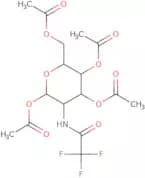
<p>1,2-O-Isopropylidene-3-O-benzyl-5-deoxy-5-C-(2-pyridyl)-D-xylofuranose is a fluorinated sugar. This compound has been synthesized by modifying the glycosylation site of N4,N4'-diisopropylidene-1,2,3,5,5'-pentaacetamido-[1,6]hexanedioic acid methyl ester to 1,2-O-isopropylidene. The structure of this compound consists of a C(2) pyridine moiety and an O(1) protonated methyl group on the terminal carbon atom.</p>Purity:Min. 95%Molecular weight:341.37 g/mol1,3,4,6-Tetra-O-acetyl-2-deoxy-2-trifluoroacetamido-D-glucopyranose
CAS:<p>1,3,4,6-Tetra-O-acetyl-2-deoxy-2-trifluoroacetamido-D-glucopyranose is a carbohydrate that has been modified with fluorine and acetyl groups. It is used as a precursor to other saccharides. The compound is synthesized by the reaction of 1,3,4,6-tetra -O-acetyl glucose with trifluoroacetic anhydride in methylene chloride. It can be custom synthesized for research purposes. This product has high purity and is sold in both liquid and powder form.</p>Formula:C16H20F3NO10Purity:Min. 95%Molecular weight:443.33 g/mol2,3,4-Tri-O-acetyl-α-L-fucopyranosyl bromide
CAS:<p>2,3,4-Tri-O-acetyl-alpha-L-fucopyranosyl bromide is a methylated alpha-L-fucopyranosyl bromide that is used as a glycosylation reagent for the synthesis of complex carbohydrates. It is also used in Click chemistry and has been shown to be an effective and selective glycosylation agent.<br>2,3,4-Tri-O-acetyl-alpha-L-fucopyranosyl bromide is available at high purity and can be custom synthesized to your specifications. This compound has CAS number 16741-27-8 and is listed on the FDA Inactive Ingredient Database (IID).</p>Formula:C12H17BrO7Molecular weight:353.16 g/molRef: 3D-T-5921
1gTo inquire5gTo inquire250mgTo inquire500mgTo inquire2500mgTo inquire-Unit-ggTo inquire5-Deoxy α-L-arabinose and 5-Deoxy β-L-arabinose
CAS:<p>5-Deoxy alpha-L-arabinose and 5-Deoxy beta-L-arabinose are enantiopure compounds that are used in the synthesis of 5-deoxy-l-ribose, which is a precursor to nucleic acids. The reaction products are produced by hydrolyzing rhamnan with hydrochloric acid. This product can be used as a substrate for DNA polymerase and RNA polymerase, which are enzymes involved in the synthesis of nucleic acids. This product also has an acidic nature, which makes it suitable for use in phase chromatography. It has been shown to have stereoselective properties and can be used as an acid catalyst for other reactions.</p>Formula:C5H10O4Purity:Min. 95 Area-%Molecular weight:134.13 g/molRef: 3D-W-201034
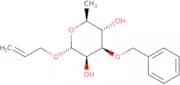
1gTo inquire5gTo inquire10gTo inquire500mgTo inquire2500mgTo inquire-Unit-ggTo inquireAllyl 3-O-benzyl-a-L-rhamnopyranoside
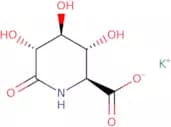
CAS:<p>Allyl 3-O-benzyl-a-L-rhamnopyranoside is an oligosaccharide that is a modification of the disaccharide, allyl 3-O-benzyl-a-D-galactopyranoside. Allyl 3-O-benzyl-a-L-rhamnopyranoside has been synthesized from D-(+)-glucose and L-(+)-rhamnose. The compound has a molecular weight of 756.40 g/mol. It is a white to off white powder that is soluble in water, but insoluble in ethanol at low concentrations. It can be used as a carbohydrate or sugar for research purposes.</p>Formula:C16H22O5Purity:Min. 95%Molecular weight:294.35 g/molD-Glucaro-1,5-lactam potassium salt
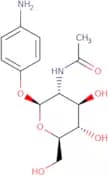
CAS:<p>D-Glucaro-1,5-lactam potassium salt is a synthetic compound that can be used as a building block for the synthesis of glycosylated carbohydrates. It is fluorinated to prevent hydrolysis and methylated to protect against oxidation. This product is also suitable for click modification, polysaccharide synthesis, and glycosylation reactions. D-Glucaro-1,5-lactam potassium salt has CAS No. 53834-55-2 and can be custom synthesized in high purity.</p>Formula:C6H9NO6·xKPurity:Min. 95%Color and Shape:PowderMolecular weight:191.14 g/mol4-Aminophenyl 2-acetamido-2-deoxy-b-D-glucopyranoside
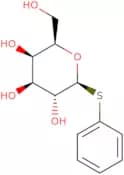
CAS:<p>4-Aminophenyl 2-acetamido-2-deoxy-b-D-glucopyranoside is a monosaccharide that belongs to the group of complex carbohydrates. It is a synthetic compound that has been modified by fluorination and methylation. 4-Aminophenyl 2-acetamido-2-deoxy-b-D-glucopyranoside has been used in the synthesis of polysaccharides and saccharides for various purposes, including as a fluorescence probe for carbohydrate binding proteins. It has also been used as an intermediate in the synthesis of oligosaccharides or polysaccharides.</p>Formula:C14H20N2O6Purity:Min. 95%Molecular weight:312.32 g/molPhenyl b-D-thiogalactopyranoside - non-animal origin
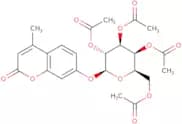
CAS:<p>Phenyl b-D-thiogalactopyranoside is a carbohydrate binding agent that has been shown to have anti-cancer properties. It binds to galectin, a carbohydrate receptor on the surface of tumour cells, thereby interfering with cell proliferation and tumor growth. Phenyl b-D-thiogalactopyranoside also blocks the activity of glycolytic enzymes and can be used as an adjuvant in cancer therapy. This molecule is synthesized by nature or chemically by means of alkylation of phenol. The chemical synthesis is more efficient and economical than the natural process.</p>Formula:C12H16O5SPurity:Min. 95%Molecular weight:272.32 g/mol4-Methylumbelliferyl 2,3,4,6-tetra-O-acetyl-b-D-galactopyranoside
CAS:<p>4-Methylumbelliferyl 2,3,4,6-tetra-O-acetyl-b-D-galactopyranoside is a custom synthesis that has been modified with fluorination and methylation. This product is glycosylated and has a complex carbohydrate structure. It can be used for the modification of saccharides or for the synthesis of oligosaccharides and polysaccharides. 4MUF2,3,4,6TetraOAcGalpyr is soluble in water and has a purity of >99%.</p>Formula:C24H26O12Purity:Min. 95%Molecular weight:506.46 g/mol3,5,6-Tri-O-benzyl-D-glucofuranose
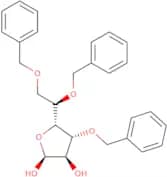
CAS:<p>3,5,6-Tri-O-benzyl-D-glucofuranose is a crystalline and white or off-white powder. It is soluble in water and toluene, but insoluble in chlorinated solvents. The chemical has been synthesized from benzoic acid and D-glucose. 3,5,6-Tri-O-benzyl-D-glucofuranose is used as a reagent for the synthesis of polyhydroxybutyrate (PHB) polymers that are biodegradable and can be used as thermoplastic polyesters. This compound has been shown to be potentially hazardous to the environment due to its high reactivity with chloride ions in the presence of benzyl alcohols.</p>Formula:C27H30O6Purity:Min. 95%Molecular weight:450.54 g/mol1-O-Acetyl-2,3,5-tri-O-benzyl-b-D-ribofuranose
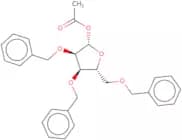
CAS:<p>1-O-Acetyl-2,3,5-tri-O-benzyl-b-D-ribofuranose is a synthetic sugar that has been modified with various chemical groups. It is a methylated saccharide and can be used for the synthesis of oligosaccharides or polysaccharides. 1-O-Acetyl-2,3,5-tri-O-benzyl-b-D-ribofuranose is soluble in water and ethanol. The purity of this product is greater than 98% and the CAS number is 91110–24–6.</p>Formula:C28H30O6Purity:Min. 95%Color and Shape:Colourless syrup.Molecular weight:462.53 g/molBenzyl b-D-glucopyranosiduronic acid methyl ester triacetate
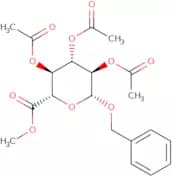
CAS:<p>Benzyl b-D-glucopyranosiduronic acid methyl ester triacetate is a synthetic sugar that can be modified to produce a wide range of oligosaccharides. It is suitable for glycosylation reactions, such as the synthesis of complex carbohydrates. This compound has high purity and is custom synthesized according to customer specifications. Benzyl b-D-glucopyranosiduronic acid methyl ester triacetate has been fluorinated, methylated, and monosaccharide modifications. These modifications provide this compound with many potential uses in the food industry, medicine, and other industries.</p>Formula:C20H24O10Purity:Min. 95%Molecular weight:424.4 g/molMethyl 2-deoxy-D-threo-pentofuranoside
CAS:<p>Methyl 2-deoxy-D-threo-pentofuranoside is a synthetic monosaccharide that has been modified by fluorination. It can be used for the synthesis of oligosaccharides and complex carbohydrates. Methyl 2-deoxy-D-threo-pentofuranoside can also be used for glycosylation, methylation, or click modification reactions. This product is available in high purity and will not contain any impurities.</p>Purity:Min. 95%2,3,4,6-Tetra-O-acetyl-a-D-galactopyranose
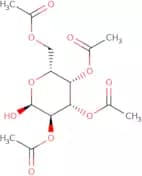
CAS:<p>2,3,4,6-Tetra-O-acetyl-a-D-galactopyranose (2,3,4,6-TA) is a sugar that has four acetyl groups and two galactose molecules. This compound is used as a substrate in glycosylation reactions and can be modified with fluorination or methylation. 2,3,4,6-TA is also a synthetic carbohydrate that can be used for the synthesis of oligosaccharides and monosaccharides. This compound is CAS No. 22554-70-7.</p>Formula:C14H20O10Purity:Min. 95%Molecular weight:348.3 g/molMethyl 5,7,8,9-tetra-O-acetyl-4-acylamino-2,6-anhydro-3,4-dideoxy-D-glycero-D-galacto-2-enonate
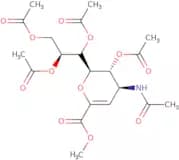
CAS:<p>Methyl 5,7,8,9-tetra-O-acetyl-4-acylamino-2,6-anhydro-3,4-dideoxy-D-glycero-D-galacto-2-enonate is a synthetic sugar that is used as a building block for the synthesis of polysaccharides. This compound can be modified with click chemistry and fluorination to create an array of possible saccharide structures. Methylated sugar derivatives are also used in custom synthesis applications.</p>Formula:C20H27NO12Purity:Min. 95%Molecular weight:473.43 g/mol1,2,3,4-Tetra-O-acetyl-b-D-glucuronide benzyl ester
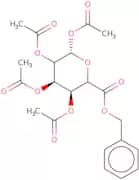
CAS:<p>1,2,3,4-Tetra-O-acetyl-b-D-glucuronide benzyl ester is a modification of the original 1,2,3,4-tetra-O-acetyl-b-D-glucuronide. It is an oligosaccharide that contains a complex carbohydrate. 1,2,3,4-Tetra-O-acetyl-b-D-[14C] glucuronide benzyl ester is a synthetic compound and has been shown to be high purity with monosaccharides and methylation. This substance also has glycosylation and polysaccharide properties. The fluorination of this carbohydrate has been shown to increase its stability under acid conditions.</p>Formula:C21H24O11Purity:Min. 95%Molecular weight:452.42 g/mol1,2:3,4-Di-O-isopropylidene-a-D-galacturonic acid hydrazide
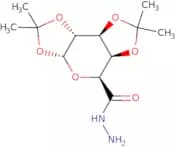
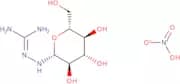
CAS:<p>This is a custom synthesis of a 1,2:3,4-di-O-isopropylidene-a-D-galacturonic acid hydrazide. This product has been modified with fluorination. The molecular weight of this compound is 498.88 g/mol and the purity is greater than 99%. It also has a CAS number: 262856-80-4.</p>Formula:C12H20N2O6Purity:Min. 95%Molecular weight:288.3 g/molN1-b-D-Glucopyranosylamino-guanidine HNO3
CAS:<p>N1-b-D-Glucopyranosylamino-guanidine HNO3 is a modification of the sugar N1-b-D-glucopyranosylamino. It is a monosaccharide that can be methylated and glycosylated, and is an example of a complex carbohydrate. The compound can also undergo fluorination or saccharide modifications such as click chemistry. It is synthesized with high purity and has been used in research to study the interactions between carbohydrates and proteins.</p>Formula:C7H16N4O5·HNO3Purity:Min. 95%Molecular weight:299.24 g/molMethyl salicylate b-D-O-glucuronide methyl ester
CAS:<p>Methyl salicylate b-D-O-glucuronide methyl ester is a glycosylated and fluorinated compound that is structurally similar to natural monosaccharides. It can be synthesized with high purity and custom modifications, such as Click chemistry. Methyl salicylate b-D-O-glucuronide methyl ester has been used in the synthesis of oligosaccharides, saccharides, and polysaccharides.</p>Formula:C15H18O9Purity:Min. 95%Molecular weight:342.3 g/mol3-Amino-3-deoxy-b-D-fructofuranose
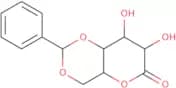
CAS:<p>3-Amino-3-deoxy-b-D-fructofuranose is a custom synthesis, Modification, Fluorination, Methylation, Monosaccharide, Synthetic, Click modification, Oligosaccharide, saccharide, Polysaccharide, Glycosylation, sugar. 3-Amino-3-deoxy-b-D-fructofuranose is a high purity with a purity of at least 98%.</p>Formula:C6H13NO5Purity:Min. 95%Molecular weight:179.17 g/mol4,6-O-Benzylidene-D-glucono-1,5-lactone
CAS:<p>4,6-O-Benzylidene-D-glucono-1,5-lactone is an oligosaccharide that is synthesized from D-glucose. It has a molecular weight of 536.7 g/mol and a CAS number of 62222-46-2. 4,6-O-Benzylidene-D-glucono-1,5-lactone is used for the modification of glycoproteins. The synthesis of this product starts with the fluorination of D glucose to give 1,2,3,4,6 tetrafluorohexane. This product can then be methylated to form 4,6 methylene dioxolanone or it can be benzylated to form 4,6 O benzylidene dioxolanone. Click chemistry can then be used to modify this product by adding an aminopropyl group at the C4 position</p>Formula:C13H14O6Purity:Min. 95%Molecular weight:266.25 g/molMethyl 3,4-O-isopropylidene-b-L-erythro-pentopyranosid-2-ulose
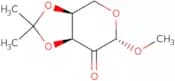
CAS:<p>Methyl 3,4-O-isopropylidene-b-L-erythro-pentopyranosid-2-ulose is a monosaccharide that has been synthesized using the Click chemistry. This compound is a fluorinated sugar and has been custom synthesized for the purpose of glycosylation. The synthesis of this compound was accomplished by first protecting the hydroxyl group with an acetate ester, followed by methylation of the hydroxyl group with dimethylchloromethylphosphonate. The resulting product was then subjected to acidolysis in order to cleave off the acetate ester and liberate free 3,4-O-isopropylidene b-L-erythro pentopyranosid 2 (1) as shown below:</p>Formula:C9H14O5Purity:Min. 95%Molecular weight:202.2 g/molp-Tolyl 2,3,4-tri-O-acetyl-a-L-rhamnopyranoside
CAS:<p>P-Tolyl 2,3,4-tri-O-acetyl-a-L-rhamnopyranoside is a glycosylation agent that is used in the synthesis of complex carbohydrates and polysaccharides. It has been shown to be useful in click chemistry reactions. P-Tolyl 2,3,4-tri-O-acetyl-a-L-rhamnopyranoside can be used to produce a variety of sugars including monosaccharides, oligosaccharides, and polysaccharides. This compound can also be fluorinated or saccharified with other chemical groups.</p>Formula:C19H24O7SPurity:Min. 95%Molecular weight:396.46 g/mol2-(2,3,4,6-Tetra-O-acetyl-b-D-galactopyranosyl)thiopseudourea hydrobromide
CAS:<p>2-(2,3,4,6-Tetra-O-acetyl-b-D-galactopyranosyl)thiopseudourea hydrobromide is a custom synthesis that can be modified with fluorination, methylation, monosaccharide and/or oligosaccharide. It can be synthesized by Click modification of saccharides with glycosylation or sugar. This product has a CAS No. 51224-13-6 and is a Carbohydrate complex carbohydrate.</p>Formula:C15H22N2O9S·HBrPurity:Min. 95%Molecular weight:487.32 g/mol3,6-Di-O-acetyl-4-O-benzyl-D-galactal
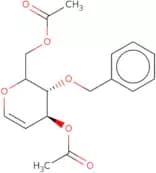
CAS:<p>3,6-Di-O-acetyl-4-O-benzyl-D-galactal is a custom synthesis of a polysaccharide. It is modified with fluorination, methylation, and click chemistry. The final product contains a glycosyl group that has been modified with an acetyl group. This modification occurs at the C3 position of the sugar unit. The CAS number for this compound is 165524-90-3.</p>Formula:C17H20O6Purity:Min. 95%Molecular weight:320.35 g/mol2-Acetamido-2-deoxy-D-galactopyranose diphospho undecapyrenyl
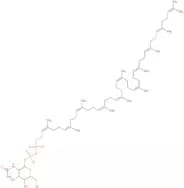
<p>This is a gene product that belongs to the family of histone proteins. It is a bacterial enzyme that participates in the biosynthesis of glycan, which plays an important role in bacterial pathogenicity and antigen expression. The 2-acetamido-2-deoxy-D-galactopyranose diphospho undecaprenyl (AGDP) has been shown to inhibit cancer cells by inhibiting histone protein acetylation. This inhibits DNA methylation, which may lead to tumorigenesis. Structural studies have also shown that AGDP binds to bacterial enzyme with high affinity and specificity, suggesting that it could be used as a potential antibacterial agent.</p>Formula:C63H103NO12P2Purity:Min. 95%Molecular weight:1,128.44 g/molMethyl 1-O-benzyl-2,3-O-isopropylidene-a-D-manno-hept-5-enofuranoside
<p>Methyl 1-O-benzyl-2,3-O-isopropylidene-a-D-manno-hept-5-enofuranoside is a custom synthesis of a glycoconjugate consisting of a methylated monosaccharide. This compound is modified with fluorination and methylation. It has been shown to inhibit the growth of methicillin resistant Staphylococcus aureus (MRSA) and Clostridium perfringens. The structure of this compound has not been determined yet.</p>Formula:C19H24O6Purity:Min. 95%Molecular weight:348.39 g/molEthyl 2,4,6-tri-O-benzoyl-a-D-thiomannopyranoside
<p>Ethyl 2,4,6-tri-O-benzoyl-a-D-thiomannopyranoside is a modification of the oligosaccharide mannan. It is an important component of glycoproteins and glycolipids found in plants, fungi, and bacteria. In plants, this modification plays a role in seed dormancy and germination. In fungi, it is involved in the synthesis of cell walls. In bacteria, it has been shown to be involved in the synthesis of peptidoglycan cell walls. Ethyl 2,4,6-tri-O-benzoyl-a-D-thiomannopyranoside is also used as a reagent for the methylation of carbohydrates and to introduce fluorine atoms into saccharides.<br>Methylation: The introduction of a methyl group into a molecule by the addition of S-adenosyl methionine (SAM) to form S-(</p>Formula:C29H28O8SPurity:Min. 95%Molecular weight:536.59 g/mol2-Acetamido-1,4-imino-1,2,4-trideoxy-L-arabinitol
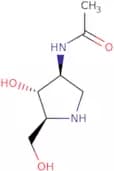
CAS:<p>2-Acetamido-1,4-imino-1,2,4-trideoxy-L-arabinitol is a competitive inhibitor of the enzyme arabinitol dehydrogenase. This compound has been shown to be an enantiomer of 1,4-imino-1,2,4-trideoxyglucitol and inhibits the growth of Mycobacterium tuberculosis in vitro assays. 2AITDG also has inhibitory properties against macrophage cells and noncompetitive inhibitors against glycoprotein glycoconjugates. 2AITDG binds to endoplasmic reticulum chaperones such as BiP/Grp78 to inhibit protein folding and cellular proliferation. It may also inhibit protein synthesis by binding to ribosomes or blocking the activity of factors involved in transcription and translation.</p>Formula:C7H14N2O3Purity:Min. 95%Molecular weight:174.2 g/mol4-O-Acetyl-3,6-di-O-triisopropylsilyl-D-galactal
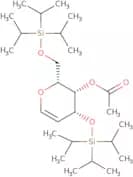
CAS:<p>4-O-Acetyl-3,6-di-O-triisopropylsilyl-D-galactal is a modified sugar that can be used as a chiral building block in the synthesis of complex carbohydrates. This product is available for custom synthesis.</p>Purity:Min. 95%6-O-Benzoyl-3-O-triisopropylsilyl-D-galactal
<p>This is a synthetic sugar that can be custom synthesized based on the customer's specifications. 6-O-Benzoyl-3-O-triisopropylsilyl-D-galactal is a monosaccharide and an oligosaccharide that can be modified with a click modification, methylation, and glycosylation. It is a complex carbohydrate that has been shown to have anti-inflammatory properties. The glycosylation of this sugar can also be customized for specific purposes. This product has CAS number 132702-24-2 and is available at 95% purity or higher.</p>Formula:C22H34O5SiPurity:Min. 95%Molecular weight:406.59 g/mol2-[(Azidoacetyl)amino]-2-deoxy-D-galactose
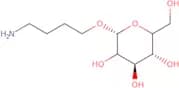
CAS:<p>Azide funcationalised galactosamine. Can be used in click chemistry.</p>Purity:Min. 95%Molecular weight:262.22 g/mol4-Aminobutyl β-D-galactopyranoside
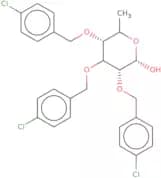
CAS:<p>4-Aminobutyl b-D-galactopyranoside is a methylated saccharide that is also a glycosylation reaction product of 4-aminobutyl b-D-galactopyranoside. It has been modified with Click chemistry and fluorinated for use in carbohydrate research, including glycoprotein synthesis, carbohydrate modification, and oligosaccharide synthesis. 4-Aminobutyl b-D-galactopyranoside has been shown to be a potent inhibitor of the enzyme aminoglycoside adenyltransferase 1 (AGT1), which is involved in the synthesis of bacterial cell wall peptidoglycan. This compound has been used as a model for glycosylation reactions as it contains both an amino and sugar moiety.</p>Formula:C10H21NO6Purity:Min. 95%Molecular weight:251.28 g/mol2,3,5-Tri-O-p-chlorobenzyl-L-fucopyranoside
CAS:<p>2,3,5-Tri-O-p-chlorobenzyl-L-fucopyranoside is a modified sugar and an effective inhibitor of the glycosidase enzymes. It has been shown to inhibit the synthesis of glycogen in vitro. 2,3,5-Tri-O-p-chlorobenzyl-L-fucopyranoside is a major component of commercially available agarose gel electrophoresis buffers and is also used for modification of proteins by click chemistry. The compound can be custom synthesised with a high degree of purity and can be fluorinated for use in mass spectrometry.</p>Formula:C27H27Cl3O5Purity:Min. 95%Molecular weight:537.86 g/molMethyl 3,6-dideoxy-a-D-arabino-hexopyranoside
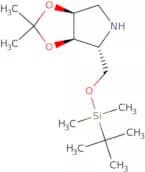
CAS:<p>Methyl 3,6-dideoxy-a-D-arabino-hexopyranoside is a fluorinated sugar analog. It is a monosaccharide that has been synthesized and modified to include an amine group for the purpose of glycosylation. Methyl 3,6-dideoxy-a-D-arabino-hexopyranoside has CAS number 6154-71-8 and can be found in the Polysaccharides category. The compound is soluble in water, ethanol, methanol, acetone, ethyl acetate and chloroform. Methyl 3,6-dideoxy-a-D-arabino-hexopyranoside has a molecular weight of 392.5 grams per mole and a density of 1.3 grams per cubic centimeter. Methyl 3,6 -dideoxy -a -D -arabino -hexopyranoside is</p>Formula:C7H14O4Purity:Min. 95%Molecular weight:162.19 g/mol5-O-tert-Butyldimethylsilyl-1,4-dideoxy-1,4-imino-2,3-O-isopropylidene-D-ribitol
CAS:<p>5-O-tert-Butyldimethylsilyl-1,4-dideoxy-1,4-imino-2,3-O-isopropylidene-D-ribitol is a custom synthesis of a complex carbohydrate. It is an Oligosaccharide and Polysaccharide that has CAS No. 153172-31-7. 5BDSR is modified with methylation and glycosylation and can be used for the synthesis of saccharides or carbohydrates. It is high purity with a fluorination modification and click chemistry to provide synthetic products.</p>Formula:C14H29NO3SiPurity:Min. 95%Molecular weight:287.47 g/molb-Glucosylglycerol 2,3,4,6-tetraacetate
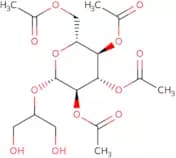
CAS:<p>b-Glucosylglycerol 2,3,4,6-tetraacetate is a fluorinated and modified carbohydrate. It is a complex carbohydrate that is synthesized from monosaccharide glucose. The product can be custom synthesized to meet the requirements of the customer. b-Glucosylglycerol 2,3,4,6-tetraacetate can be methylated to produce b-glucosylglycerol 3-(2H)fluoro-2-methylbutanoate (CAS No. 157024-68-5). This product has been shown to be useful in glycosylation reactions and click chemistry reactions.</p>Formula:C17H26O12Purity:Min. 95%Molecular weight:422.38 g/mol1,2,3-Tri-O-acetyl-4,6-O-benzylidene-a-D-mannopyranose
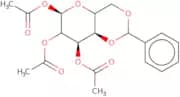
<p>1,2,3-Tri-O-acetyl-4,6-O-benzylidene-a-D-mannopyranose is a synthetic 1,2,3:4,6-di-O-(acetyloxy)-a-D-mannopyranose. It is a monosaccharide that has been selectively fluorinated at C1 and C2 positions. This sugar has been custom synthesized with high purity and methylated at the 3' and 4' positions of the ribose moiety. The synthesis of this carbohydrate is achieved by glycosylation using an acetal linker to attach the sugar fragment to a pentafluorophenyl ester and then click modification on the 4'-hydroxyl group.</p>Formula:C19H22O9Purity:Min. 95%Molecular weight:394.37 g/mol1,6-O-[(1R,2R)-1,2-Dimethoxy-1,2-dimethyl-1,2-ethanediyl]-3,4-O-[(1S,2S)-1,2-dimethoxy-1,2-dimethyl-1,2-ethanediyl]-5-benzoate-myo-i nositol
CAS:<p>1,6-O-[(1R,2R)-1,2-Dimethoxy-1,2-dimethyl-1,2-ethanediyl]-3,4-O-[(1S,2S)-1,2-dimethoxy-1,2-dimethyl-1,2-ethanediyl]-5-benzoate is an oligosaccharide with a complex structure. This chemical is fluorinated at the 1 and 6 positions of the glucose molecule. It has a total of 18 monosaccharides and two methyl groups. Its CAS number is 1068088-78-7. It has been shown to be synthesized by modifying the sugars with methylation or other chemical modifications. The molecular weight is 586.</p>Formula:C25H36O11Purity:Min. 95%Molecular weight:512.55 g/mol4-Aminophenyl 1-thio-b-D-xylopyranoside
CAS:<p>4-Aminophenyl 1-thio-b-D-xylopyranoside is a custom synthesis of an oligosaccharide that is used as a model compound for the study of glycosylation. The saccharide is modified with methyl groups and fluorinated at the C4 position. This product has CAS No. 62205-43-0 and has high purity, making it ideal for research purposes.</p>Formula:C11H15NO4SPurity:Min. 95%Molecular weight:257.31 g/mol2,6-Anhydro-3-deoxy-D-glycero-D-galacto-non-2-enoic-acid
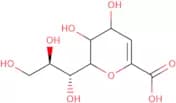
CAS:<p>2,6-Anhydro-3-deoxy-D-glycero-D-galacto-non-2-enoic acid is a carbohydrate that has been used to study the effect of immunocompromised patients on invasive aspergillosis. It has been shown to be an efficient substrate for sialidases and homologous sialidases. This carbohydrate has also been shown to have a reactive bond cleavage in the presence of catalytic enzymes, such as sialidases and glycosyltransferases. The kinetic data suggest that this carbohydrate is more accessible than other carbohydrates. The conformational change may be due to a barrier that is overcome by the catalytic enzyme.</p>Formula:C9H14O8Purity:Min. 95%Color and Shape:White Off-White PowderMolecular weight:250.21 g/mol1,3,4,6-Tetra-O-acetyl-2-O-trifluoromethanesulfonyl-b-D-talopyranose
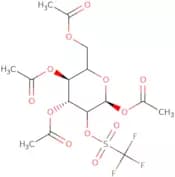
<p>1,3,4,6-Tetra-O-acetyl-2-O-trifluoromethanesulfonyl-b-D-talopyranose (TATP) is a radiopharmaceutical that is used in positron emission tomography (PET) scans. TATP has been shown to be sensitive to changes in the body's metabolism and can be used to identify areas of inflammation or disease. TATP is a nucleophilic compound that can be hydrolyzed by basic conditions such as hydroxide ion or hydrogen peroxide. Hydrolysis of TATP yields galactose and trifluoromethanesulfonic acid. The yield of TATP from the reaction with hydroxide ion is low because it reacts quickly with water. This compound has been used as a contrast agent for imaging because it is readily taken up by cells and accumulates in areas of high metabolic activity such as tumors</p>Formula:C15H19F3O12SPurity:Min. 95%Molecular weight:480.37 g/mol1,2,3,4-Tetra-O-acetyl-a-D-galacturonic acid methyl ester
CAS:<p>1,2,3,4-Tetra-O-acetyl-a-D-galacturonic acid methyl ester is a custom synthesis that has been modified with fluorination and methylation. The monosaccharide is an acetylated form of galacturonic acid. This synthetic compound has been shown to be effective in inhibiting the glycosylation of polysaccharides. Its saccharide chain includes four monosaccharides linked by glycosidic bonds. 1,2,3,4-Tetra-O-acetyl-a-D-galacturonic acid methyl ester is used as a sugar in the production of complex carbohydrates.</p>Purity:Min. 95%Ikshusterol 3-O-glucoside
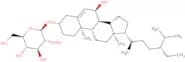
CAS:<p>Ikshusterol 3-O-glucoside is a glycosylation of the monosaccharide ikeshinolin. It is a synthetic, fluorinated, methylated, and modified oligosaccharide with a high purity. Ikshusterol 3-O-glucoside is used in various fields including as an additive to food products, pharmaceuticals, cosmetics and other chemical manufacturing. It has been used as a sugar substitute in low calorie foods and beverages. The modification of ikeshinolin to ikeshusterol 3-O-glucoside can be achieved by click chemistry.</p>Purity:Min. 95%Methyl (4'-O-hexanoyldaidzein-7-yl-b-D-2'',3'',4''-tri-O-acetylglucopyranosid)urinate
CAS:<p>Methyl (4'-O-hexanoyldaidzein-7-yl-b-D-2'',3'',4''-tri-O-acetylglucopyranosid)urinate is a synthetic glycosylate that has a number of sugar moieties attached to its uronic acid group. It can be used for the preparation of oligosaccharides, sugar derivatives, and fluorinated saccharides. This product is available in high purity and can be custom synthesized.</p>Formula:C34H36O14Purity:Min. 95%Molecular weight:668.64 g/mol1,6-Di-O-acetyl-2,3,4-tri-O-benzyl-D-glucopyranose
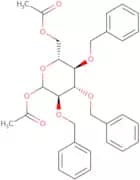
CAS:<p>1,6-Di-O-acetyl-2,3,4-tri-O-benzyl-D-glucopyranose is a synthetic compound that is used in the synthesis of vitamin D. It is used to treat vitamin D deficiency in women and children. The benzyl groups on the sugar molecule are crosslinked with benzyl alcohol and paraformaldehyde to form a polymerization reaction system for vitamin D. This product can be used as a strategy for treating vitamin D deficiency by providing an alternative source of this nutrient.</p>Formula:C31H34O8Purity:Min. 95%Molecular weight:534.6 g/molMethyl b-D-glucuronide
CAS:<p>Methyl b-D-glucuronide is a glucuronide compound, which is a derivative of D-glucuronic acid. It is typically sourced from the oxidation of glucose, which naturally occurs in plants and the human body. As a derivative, Methyl b-D-glucuronide is involved in the conjugation processes that aid in the detoxification and elimination of various compounds.The mode of action for Methyl b-D-glucuronide centers around its conversion by UDP-glucuronosyltransferases in the conjugation pathway, rendering xenobiotics and endogenous substances more water-soluble for excretion. This ability to facilitate glucuronidation makes it a valuable model compound in biochemical research and pharmacology, particularly in studying metabolism and pharmacokinetics of drugs.In terms of applications, Methyl b-D-glucuronide finds significant use in analytical chemistry and molecular biology. It serves as a reference or control compound in enzyme assays and studies investigating drug metabolism and transport. Additionally, its role in detoxification pathways offers insights into liver function and disease mechanisms, providing a foundation for developing therapeutic interventions. Such versatile uses make it an integral component in physiological and pharmacological research.</p>Purity:Min. 95%Color and Shape:Powder4-Fluorophenyl 2-acetamido-2-deoxy-b-D-glucopyranoside
CAS:<p>4-Fluorophenyl 2-acetamido-2-deoxy-b-D-glucopyranoside is a synthetic carbohydrate that has been modified with fluorine. It is a complex carbohydrate, which is a sugar composed of several monosaccharides linked together by glycosidic bonds. 4-Fluorophenyl 2-acetamido-2-deoxy-b-D-glucopyranoside can be methylated and glycosylated to produce desired structures. This product can be custom synthesized to meet your specifications. It is available in high purity and can be used for research purposes.</p>Formula:C14H18FNO6Purity:Min. 95%Molecular weight:315.29 g/molDibromodulcitol
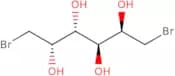
CAS:<p>Dibromodulcitol (DBD) is a water soluble compound that is used in analytical chemistry to measure the concentration of bromine. It has been used as a radioprotectant and is also an analog of the natural hormone, epidermal growth factor. DBD can be measured by colorimetric methods or by enzyme-linked immunosorbent assay (ELISA). This chemical is found in wastewater and has been shown to inhibit the growth of cancer cells through its effects on fatty acid metabolism. DBD has also been shown to have pharmacokinetic properties, as it can be detected in biological samples for up to 2 hours after injection.</p>Formula:C6H12Br2O4Purity:Min. 95%Molecular weight:307.97 g/molO-[2-Acetamido-2-deoxy-a-D-galactopyranosyl]-N-Fmoc-L-threonine 2-propen-1-yl ester
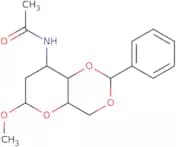
CAS:<p>O-[2-Acetamido-2-deoxy-a-D-galactopyranosyl]-N-Fmoc-L-threonine 2-propen-1-yl ester is a synthetic, high purity, custom synthesis that has been modified with fluorination, glycosylation, and methylation. This product can be used in the Click reaction to make an oligosaccharide or monosaccharide. The CAS number for this compound is 301843-65-2.</p>Formula:C30H36N2O10Purity:Min. 95%Molecular weight:584.61 g/molMethyl 3-acetamido-4,6-O-benzylidene-2,3-dideoxy-a-D-ribo-hexopyranoside
CAS:<p>Methyl 3-acetamido-4,6-O-benzylidene-2,3-dideoxy-a-D-ribohexopyranoside is an organic compound. It is a fluorescent glycosylation reagent used in the synthesis of oligosaccharides and polysaccharides. The modification of this product can be customized to suit your needs. This product is available in high purity and with a CAS No. 23819-31-0.</p>Formula:C16H21NO5Purity:Min. 95%Molecular weight:307.35 g/mol1,6-Anhydro-2,4-di-O-p-toluenesulfonyl-β-D-glucopyranose
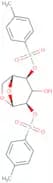
CAS:<p>1,6-Anhydro-2,4-di-O-p-toluenesulfonyl-b-D-glucopyranose is a fluorinated sugar that is synthesized by the reaction of 1,6 anhydro-2,4 di O p toluenesulfonyl b D glucopyranose and osmium tetroxide. The synthesis of this compound involves the use of high purity reagents and solvents. This product can be custom synthesized to order with a minimum quantity of 500 grams.</p>Formula:C20H22O9S2Purity:Min. 95%Molecular weight:470.52 g/mol2-O-Benzoyl-4,6-O-benzylidene-a-D-glucopyranoside
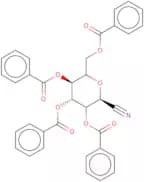
<p>2-O-Benzoyl-4,6-O-benzylidene-a-D-glucopyranoside is a synthetic carbohydrate with a structure that is similar to that of glucose. It has been shown to have anti-inflammatory properties in animal models and can be used for the treatment of inflammatory bowel disease and Crohn's disease. This compound has also been shown to inhibit the growth of bacteria such as Streptococcus pyogenes, Staphylococcus aureus, and Escherichia coli. 2-O-Benzoyl-4,6-O-benzylidene--aD glucopyranoside is soluble in water and has high purity with an average of 98%.</p>Formula:C20H20O7Purity:Min. 95%Molecular weight:372.37 g/mol2,3,4,6-Tetra-O-benzoyl-b-D-galactopyranosyl cyanide
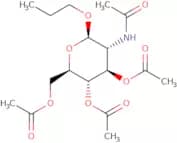
CAS:<p>2,3,4,6-Tetra-O-benzoyl-b-D-galactopyranosyl cyanide is a saccharide that can be custom synthesized. It is a modified form of galactose and contains a benzoyl group. The sugar is used in research on glycosylation and modification reactions.</p>Formula:C25H27NO9Purity:Min. 95%Molecular weight:485.48 g/molPropyl 2-acetamido-3,4,6-tri-O-acetyl-2-deoxy-b-D-glucopyranoside
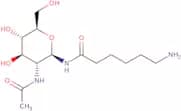
CAS:<p>Propyl 2-acetamido-3,4,6-tri-O-acetyl-2-deoxy-b-D-glucopyranoside is a synthetic glycosylamine that has been fluorinated at the C2 position and modified with a methyl group. It is used in the synthesis of complex carbohydrates for use as antigens or vaccines. This product can be custom synthesized to order and is available in high purity form.</p>Formula:C17H27NO9Purity:Min. 95%Molecular weight:389.4 g/mol2-Acetamido-N-(e-aminocaproyl)-2-deoxy-b-D-glucopyranosyl amine
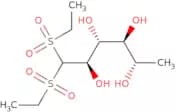
CAS:<p>2-Acetamido-N-(e-aminocaproyl)-2-deoxy-b-D-glucopyranosyl amine (Km) is a compound that has been shown to have hexosaminidase activity. It is a human liver enzyme that catalyzes the cleavage of the terminal alpha-1,4 linkage between N-acetylglucosamine and D-glucose residues from the nonreducing end of the beta 1,4 linked N-acetylglucosamine molecule. The KM value for this enzyme is 3.2 mM. This compound also has affinity chromatography properties, which allows it to be used in affinity chromatography experiments as a ligand for concanavalin A. 2KA can be used in gel electrophoresis to separate polypeptides by their size or charge. The corresponding KM value for this process is 22.5 mM. Denaturing conditions are required to</p>Formula:C14H27N3O6Purity:Min. 95%Molecular weight:333.38 g/molL-Rhamnose bis(ethylsulfone)
CAS:<p>L-Rhamnose bis(ethylsulfone) is a custom synthesis that belongs to the class of saccharides. L-Rhamnose bis(ethylsulfone) is often used in the production of complex carbohydrates, such as polysaccharides and glycosylation. It has been modified with fluorination, methylation, and click modification. L-Rhamnose bis(ethylsulfone) can be used for the synthesis of oligosaccharides or saccharides by glycosylation.</p>Formula:C10H22O8S2Purity:Min. 95%Molecular weight:334.41 g/molUDP-D-galactosamine disodium salt
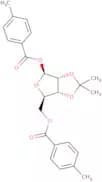
CAS:<p>UDP-D-galactosamine disodium salt is a type of sugar that is a substrate for UDP-glucuronosyltransferase (UGT), which catalyzes the transfer of galactose from UDP-D-galactose to other molecules. The product of this reaction is UDP-D-galacturonic acid. It is produced in the liver, where it participates in the synthesis of glycoproteins, glycolipids, and glycosaminoglycans. In addition, it can be found in the distal tubule of the kidney and in leukemia cells. The histological analysis of rat liver tissue showed that UDP-D-galactosamine disodium salt is present in hepatocytes. This sugar also helps with protein synthesis and activates uridine, which can be used as a carbon source. Histological analysis also revealed that UDP-D-galactosamine disodium salt plays an important role in glucose metabolism, as well as</p>Formula:C15H23N3O16P2Na2Purity:Min. 95%Color and Shape:PowderMolecular weight:609.28 g/mol2,3-O-Isopropylidene-1,5-di-O-toluoyl-b-D-ribofuranose
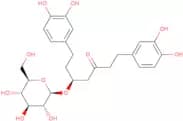
CAS:<p>2,3-O-Isopropylidene-1,5-di-O-toluoyl-b-D-ribofuranose (IPDT) is a saccharide that is modified with a methyl group at the 2' position of the ribose. This modification can be used to control the rate of glycosylation reactions, or to synthesize oligosaccharides and complex carbohydrates. IPDT is also an important precursor for click chemistry reactions, which are used in the synthesis of polymers and other organic compounds.</p>Formula:C24H26NO7Purity:Min. 95%Molecular weight:440.47 g/molHirsutanonol 5-O-glucoside
CAS:<p>Hirsutanonol 5-O-glucoside is an antral suppressant. It controls symptoms and parameters of the disease. It is a biopsy that has been carried out in patients with symptoms of gastric ulcer disease. The biopsy samples were stained with haematoxylin and eosin, and histological investigation showed that the interstitial cells are stained. Hirsutanonol 5-O-glucoside is also a symptomatic drug that can be used to investigate the correlation between gastric ulcer disease and gender.</p>Purity:Min. 95%?-Gal-nonoate
CAS:<p>β-Gal-nonoate is a high purity, custom synthesis, sugar modified with fluorination, glycosylation, and methylation. It is a synthetic molecule that has CAS No. 357192-77-9. β-Gal-nonoate is a modification of β-galactoside and it's glycosylated with oligosaccharides and monosaccharides. It is an oligosaccharide that can be complex carbohydrate.</p>Formula:C10H19N3O7Purity:Min. 95%Molecular weight:293.27 g/mol5-Hydroxymethyl tolterodine b-D-glucuronide
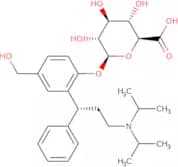
CAS:<p>5-Hydroxymethyl tolterodine b-D-glucuronide is a custom synthesis of a complex carbohydrate. It is an Oligosaccharide that is modified with Methylation, Glycosylation and Carbohydrate. The CAS No. is 210573-52-7, and it has a purity of >99%. This product has the following properties: Fluorination, Synthetic, Click modification, saccharide, sugar.</p>Formula:C28H39NO8Purity:Min. 95%Molecular weight:517.61 g/mol3,6-Di-O-tert-butyldiphenylsilyl-D-galactal
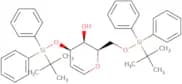
CAS:<p>3,6-Di-O-tert-butyldiphenylsilyl-D-galactal is an oligosaccharide that is a methylated and fluorinated derivative of the natural product D-galactal. The chemical structure of 3,6-di-O-tert-butyldiphenylsilyl-D-galactal is based on a beta-(1->4) linkage of two glucose residues with a terminal alpha-(1->3) linkage to form an alpha-(1->6) linkage. The compound is readily available in high purity, and can be custom synthesized to meet specific customer requirements for glycosylation, modification, or other special requests. 3,6-Di-O-tert-butyldiphenylsilyl--D--galactal has been shown in vitro to inhibit the growth of Mycobacterium tuberculosis and Mycobacterium av</p>Purity:Min. 95%Trichloroethyl 2,3,4-tri-O-acetyl-b-D-glucopyranosiduronic acid methyl ester
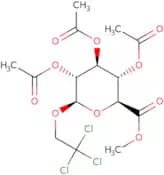
CAS:<p>Trichloroethyl 2,3,4-tri-O-acetyl-b-D-glucopyranosiduronic acid methyl ester is a synthetic carbohydrate that can be used for glycosylation reactions. Trichloroethyl 2,3,4-tri-O-acetyl-b-D-glucopyranosiduronic acid methyl ester is an intermediate in the synthesis of oligosaccharides and complex carbohydrates. It can be used to modify the sugar component of glycoproteins and glycopeptides.</p>Formula:C15H19Cl3O10Purity:Min. 95%Molecular weight:465.66 g/molR-Hydroxy topiramate
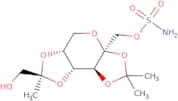
CAS:<p>R-Hydroxy topiramate is the stable isotope of the active pharmaceutical ingredient, topiramate. It can be used for the calibration of liquid chromatography and mass spectrometry methods. R-Hydroxy topiramate is prepared by dilution of a solution of topiramate with water, followed by elution from an ion exchange resin with methanol. The eluent is dried under vacuum to remove methanol and finally dissolved in a minimal volume of acetonitrile. R-Hydroxy topiramate is used to measure concentrations of lamotrigine and zonisamide in plasma and serum samples.</p>Formula:C12H21NO9SPurity:Min. 95%Molecular weight:355.36 g/molAllyl 2-acetamido-4,6,-O-benzylidene-2-deoxy-a-D-glucopyranoside
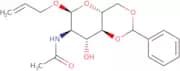
CAS:<p>Allyl 2-acetamido-4,6,-O-benzylidene-2-deoxy-a-D-glucopyranoside is a sugar that is used as a custom synthesis or modification. It is also called allyl 2-(1,3-dioxo-1,3,4,-thiadiazolidinium)acetamido 4,6,-O-(benzylidene)-2 deoxy erythro -a D glucopyranoside. Allyl 2 acetamido 4,6,-O -benzylidene -2 deoxy erythro -a D glucopyranoside is used in the glycosylation of proteins and oligosaccharides and in the synthesis of saccharides. This compound has been shown to be useful in identifying glycosaminoglycan chains in complex carbohydrates.</p>Formula:C18H23NO6Purity:Min. 95%Molecular weight:349.39 g/molMirabegron O-glucuronide
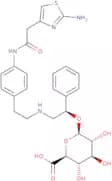
CAS:<p>Mirabegron is a drug that has been used to treat overactive bladder and urinary incontinence. Mirabegron is an agonist of the beta-3 adrenergic receptor and increases the levels of cAMP in cells by binding to this receptor. This leads to relaxation of smooth muscle tissue, which decreases resistance in the bladder and urethra and promotes urine storage. Mirabegron O-glucuronide is a metabolite of mirabegron that can be detected in urine using mass spectrometry methods. Mirabegron O-glucuronide has been found in human liver samples following oral administration, as well as in human blood samples after intravenous administration.</p>Purity:Min. 95%















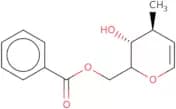
![2-[(Azidoacetyl)amino]-2-deoxy-D-galactose](/_next/image/?url=https%3A%2Fstatic.cymitquimica.com%2Fproducts%2F3D%2Fthumb-webp%2FMA32519.webp&w=3840&q=75)

![1,6-O-[(1R,2R)-1,2-Dimethoxy-1,2-dimethyl-1,2-ethanediyl]-3,4-O-[(1S,2S)-1,2-dimethoxy-1,2-dimethy…](/_next/image/?url=https%3A%2Fstatic.cymitquimica.com%2Fproducts%2F3D%2Fthumb-webp%2FMD16693.webp&w=3840&q=75)





![O-[2-Acetamido-2-deoxy-a-D-galactopyranosyl]-N-Fmoc-L-threonine 2-propen-1-yl ester](/_next/image/?url=https%3A%2Fstatic.cymitquimica.com%2Fproducts%2F3D%2Fthumb-webp%2FMA30714.webp&w=3840&q=75)