Monosaccharides
Monosaccharides are the simplest form of carbohydrates and serve as fundamental building blocks for more complex sugars and polysaccharides. These single sugar molecules play critical roles in energy metabolism, cellular communication, and structural components of cells. In this section, you will find a wide variety of monosaccharides essential for research in biochemistry, molecular biology, and glycoscience. These compounds are crucial for studying metabolic pathways, glycosylation processes, and developing therapeutic agents. At CymitQuimica, we offer high-quality monosaccharides to support your research needs, ensuring precision and reliability in your scientific investigations.
Subcategories of "Monosaccharides"
- Alloses(11 products)
- Arabinoses(21 products)
- Erythroses(11 products)
- Fructoses(9 products)
- Fucoses(36 products)
- Galactosamine(41 products)
- Galactose(261 products)
- Glucoses(365 products)
- Glucuronic Acids(51 products)
- Glyco-substrates for Enzyme(77 products)
- Guloses(6 products)
- Idoses(4 products)
- Inositols(15 products)
- Lyxoses(4 products)
- Mannoses(65 products)
- O-Glycans(48 products)
- Psicoses(3 products)
- Rhamnoses(10 products)
- Riboses(61 products)
- Sialic Acids(100 products)
- Sorboses(4 products)
- Sugars(173 products)
- Tagatoses(4 products)
- Taloses(8 products)
- Xyloses(20 products)
Show 17 more subcategories
Found 6088 products of "Monosaccharides"
Sort by
Purity (%)
0
100
|
0
|
50
|
90
|
95
|
100
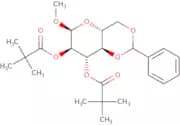
Methyl 4,6-O-benzylidene-2,3-di-O-pivaloyl-a-D-glucopyranoside
CAS:<p>Methyl 4,6-O-benzylidene-2,3-di-O-pivaloyl-a-D-glucopyranoside is a custom synthesis of a high purity and high quality. This product is an oligosaccharide with a complex carbohydrate structure. Methyl 4,6-O-benzylidene-2,3-di-O-pivaloyl-a-D-glucopyranoside has been shown to be highly stable in the presence of strong acids and bases. It can be modified using click chemistry reactions for further experimental research.</p>Formula:C24H34O8Purity:Min. 95%Molecular weight:450.53 g/mol1-Deoxy-1-vinylsulfonamido-b-D-glucuronide
<p>1-Deoxy-1-vinylsulfonamido-b-D-glucuronide is a synthetic sugar. It is a member of the group of compounds called sulfonamides. This drug has high purity, and can be custom synthesized to meet specific requirements. 1-Deoxy-1-vinylsulfonamido-b-D-glucuronide is used in the synthesis of oligosaccharides, monosaccharides, and saccharides.</p>Purity:Min. 95%Phenyl b-L-thiofucopyranoside
<p>Phenyl b-L-thiofucopyranoside is a custom-synthesized, fluorinated, modified sugar that is used in the synthesis of oligosaccharides and polysaccharides. This compound is an excellent choice for methylation reactions due to its high reactivity and stability under harsh conditions. Phenyl b-L-thiofucopyranoside can be used as a precursor for the synthesis of saccharide derivatives, such as monosaccharides and complex carbohydrates. It has been shown to be stable to heat and pH extremes, making it ideal for use in organic syntheses.</p>Formula:C12H16O4SPurity:Min. 95%Color and Shape:PowderMolecular weight:256.32 g/mol1,2,3,4-Tetra-O-acetyl-6-O-triisopropylsilyl-b-D-galactopyranose
<p>1,2,3,4-Tetra-O-acetyl-6-O-triisopropylsilyl-b-D-galactopyranose is a carbohydrate modified with fluorine and is a member of the saccharide family. It is a synthetic sugar that can be custom synthesized to produce high purity and high quality products. This product has been used in glycosylation reactions and click chemistry modifications.</p>Formula:C23H40O10SiPurity:Min. 95%Molecular weight:504.66 g/molL-Lyxonic acid potassium
CAS:<p>L-Lyxonic acid potassium salt is a synthetic, fluorinated sugar that can be modified with a variety of functional groups. It is an excellent starting material for the synthesis of glycosylations, oligosaccharides, and sugar derivatives. L-Lyxonic acid potassium salt is typically used as a sugar substitute in food products. L-Lyxonic acid potassium salt is also used in the synthesis of complex carbohydrates and saccharides. L-Lyxonic acid potassium salt has been modified to include Click chemistry or other modifications to improve its properties.</p>Formula:C5H9KO6Purity:Min. 95%Color and Shape:PowderMolecular weight:204.22 g/mol2, 5- Anhydro-4,6-O-isopropylidene-D- idonic acid
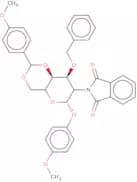
<p>2, 5-Anhydro-4,6-O-isopropylidene-D-idonic acid is a carbohydrate that can be used as a saccharide or oligosaccharide. This product has been fluorinated and methylated. It is also glycosylated and click modified. 2,5-Anhydro-4,6-O-isopropylidene-D-idonic acid can be synthesized to order and is available in high purity.</p>Purity:Min. 95%4-Methoxyphenyl 2-deoxy-3-benzyl-4,6-O-(4-methoxybenzylidene)-2-phthalimido-β-D-glucopyranoside
<p>4-Methoxyphenyl 2-deoxy-3-benzyl-4,6-O-(4-methoxybenzylidene)-2-phthalimido-b-D-glucopyranoside is a custom synthesis that has been modified with fluorination and carbamoylation. This product is an oligosaccharide that belongs to the group of polysaccharides. It is a complex carbohydrate that has been synthesized from monosaccharides and sugar. 4MPBGP is soluble in water and has high purity levels.<br>*The following content was automatically generated by eCommerce software:</p>Formula:C36H33NO9Purity:Min. 95%Molecular weight:623.65 g/molMethyl 2,3,4-tri-O-benzyl-6-O-tert-butyldiphenylsilyl-a-D-glucopyranoside
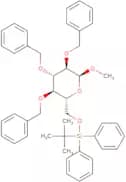
CAS:<p>Methyl 2,3,4-tri-O-benzyl-6-O-tert-butyldiphenylsilyl-a-D-glucopyranoside is a synthetic oligosaccharide that is used as an intermediate in the synthesis of complex carbohydrates. It has a high purity and is custom synthesized to meet the needs of the customer. This product can be fluorinated, glycosylated, and methylated to produce desired modifications. It may also be used for Click chemistry modifications. Methyl 2,3,4-tri-O-benzyl-6-O-tert-butyldiphenylsilyl-a -D -glucopyranoside is an important sugar building block for complex carbohydrate synthesis.</p>Formula:C44H50O6SiPurity:Min. 95%Molecular weight:702.97 g/molD-Glucuronolactone
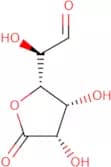
CAS:<p>D-Glucuronolactone is supposed to be involved in detoxification processes.</p>Formula:C6H8O6Molecular weight:176.13 g/molRef: 3D-G-3700
1kgTo inquire50gTo inquire5kgTo inquire10kgTo inquire2500gTo inquire-Unit-kgkgTo inquire1,3,4,6-Tetra-O-acetyl-2-deoxy-2-fluoro-D-galactopyranose
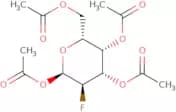
CAS:<p>1,3,4,6-Tetra-O-acetyl-2-deoxy-2-fluoro-D-galactopyranose is a fluorinated sugar that is used in the synthesis of glycosides. It is a synthetic compound that is prepared by reacting 1,3,4,6-tetraacetyl galactose with potassium bifluoride and diethyl oxalate in presence of anhydrous sodium sulfate. The product obtained has the following structural formula: The chemical name for this compound is 1,3,4,6-Tetraacetyl -2-[(1R)-1-(ethoxycarbonyl)propyl]-2-(fluorooxymethyl) -D-galactopyranose. The CAS number for this compound is 83697–45–4.</p>Formula:C14H19FO9Purity:(As Sum Of Anomers) Min. 98 Area-%Color and Shape:White PowderMolecular weight:350.3 g/molL-Arabinose diethyldithioacetal
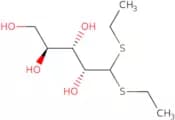
CAS:<p>L-Arabinose diethyldithioacetal is a potassium carbonate derivative of L-arabinose that reacts with sulfur to form 1,2-dithioketals. These dithioketals are used as glycosyl donors in the synthesis of L-fucitol and d-xylose. This reaction is catalyzed by acetobacter, which converts L-arabinose and carbon dioxide into acetaldehyde and acetic acid. The reaction mechanism for this transformation includes an epimerization of the hydroxyl group on the C5 position of L-arabinose to a hydroxyl group on C6, followed by glycosidation with sulfuric acid. The glycosidic bond formed between the hydroxyl group on C6 and the carbonyl group at C1 (in this case, from L-arabinose) is called an acetal linkage. In addition to being antithrombotic</p>Formula:C9H20O4S2Purity:Min. 95%Color and Shape:PowderMolecular weight:256.38 g/mol6-Hydroxyestradiol-6-O-b-D-glucuronide
<p>6-Hydroxyestradiol-6-O-b-D-glucuronide is a synthetic, 6-hydroxyestradiol derivative that is useful for the study of estrogen metabolism and the development of progesterone agonists. The compound has been shown to have high purity, and is custom synthesized in accordance with customer specifications. 6-Hydroxyestradiol-6-O-b-D-glucuronide can be modified by glycosylation, methylation, or fluorination. This product also has a number of applications in the biomedical field due to its ability to act as an intermediate in the synthesis of oligosaccharides and saccharides.</p>Purity:Min. 95%1,2,3,4-Tetra-O-benzoyl-6-O-trityl-b-D-glucopyranose
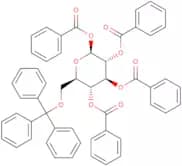
CAS:<p>1,2,3,4-Tetra-O-benzoyl-6-O-trityl-b-D-glucopyranose is a custom synthesis that can be used for methylation and Click modification. This compound is an oligosaccharide consisting of sugar molecules linked by glycosidic bonds. It is a polysaccharide with a saccharide repeating unit composed of monosaccharides. The carbohydrate chain contains 1,2,3,4 tetra O benzoyl groups and 6 O trityl groups. This product has a high purity and can be used in the synthesis of other compounds.<br>1,2,3,4 Tetra O benzoyl 6 O trityl b D glucopyranose (1) was synthesized from 4-(2'-hydroxyethyl)benzaldehyde (2), 4-(2'-hydroxyethyl)benzoic acid (3),</p>Formula:C53H42O10Purity:Min. 95%Molecular weight:838.89 g/mol2C-Hydroxymethyl-2,3:5,6-di-O-isopropylidene-D-mannono-1,4-lactone
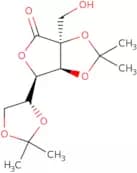
CAS:<p>2C-Hydroxymethyl-2,3:5,6-di-O-isopropylidene-D-mannono-1,4-lactone is a synthetic monosaccharide with a CAS number of 70147-48-7. This compound has been modified to include the hydroxymethyl group and the 2C designation. It is used as an ingredient in the synthesis of complex carbohydrates.</p>Formula:C13H20O7Purity:Min. 95%Color and Shape:PowderMolecular weight:288.29 g/molL-Erythrono-1,4-lactone
CAS:<p>L-Erythrono-1,4-lactone is a dicarboxylic acid that is synthesized from l-threonic acid and d-arabinose. L-Erythrono-1,4-lactone is biosynthesized by the conversion of l-serine to pyruvate and then to erythrose 4-phosphate. This compound is also produced by the oxidation of ascorbic acid and can be used for the synthesis of dermatan sulfates. The accumulation of L-Erythrono-1,4-lactone in high concentrations has been found in patients with dermatan sulfate deficiency.</p>Formula:C4H6O4Purity:Min. 95%Color and Shape:PowderMolecular weight:118.09 g/molVoglibose
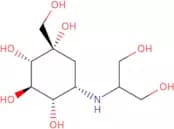
CAS:<p>Voglibose is a competitive inhibitor of α-glucosidase used for the control of blood sugar levels in patients with type 2 diabetes mellitus. The compound binds reversibly to intestinal carbohydrate-active digestive enzymes with α-glucosidase activity, inhibits breakdown of complex sugars and consequently delays the absorption of glucose into blood.</p>Formula:C10H21NO7Color and Shape:White PowderMolecular weight:267.28 g/molD-Xylose - Syrup
CAS:<p>Xylose (Xyl) is an aldopentose also known as wood sugar (Collins, 2006). The main sources of xylose are hemicelluloses found in hardwood and perennial plants, such as, grasses, cereals, and herbs (Petzold-Welcke, 2014) and some algae. Xylose is used in the production of xylitol, a low calory sugar substitute. Xylose is used in glycosaminoglycan (GAG) biosynthesis, which is initiated by peptide O-xylosyltransferases, which transfer xylose onto selected serine residues in the core proteins. The first enzyme in the pathway, peptide O-xylosyltransferase, catalyzes the transfer of xylose from uridine diphosphate (UDP)-α-D-xylose onto serine and thus determines the site(s) of GAG attachment on the core protein (Briggs, 2018).</p>Formula:C5H10O5Purity:Min. 95%Molecular weight:150.13 g/molChenodeoxycholic acid 24-acyl-b-D-glucuronide
CAS:<p>Chenodeoxycholic acid 24-acyl-b-D-glucuronide (CDCA) is a drug that is used to treat gallstones and primary biliary cirrhosis. CDCA has been shown to be effective in treating gallstones by reducing the amount of cholesterol and other bile salts in the bile. It is also prescribed for patients with primary biliary cirrhosis, which is an autoimmune disease that causes inflammation of the small intestine. CDCA has been shown to decrease cholesterol levels and improve liver function in clinical studies. It also has a low toxicity profile, making it safe for long-term treatment. The major side effects are nausea, vomiting, headache, and diarrhea.<br>CDCA binds to fatty acids in the liver cells and prevents their uptake into the cells by blocking fatty acid transporters such as LPL or FATP4 receptors. This increases the amount of free fatty acids available for oxidation by increasing β-oxidation rates within the cell</p>Formula:C30H48O10Purity:Min. 95%Color and Shape:White Off-White PowderMolecular weight:568.7 g/molL-Xylonic acid-1,4-lactone
CAS:<p>L-Xylonic acid-1,4-lactone is an enzyme that functions as a glycolytic enzyme. It catalyzes the conversion of D-xylose to L-xylonic acid and L-xylonic acid-1,4-lactone. This enzyme is expressed in leukemia HL60 cells and is activated by acidic conditions. L-Xylonic acid-1,4-lactone has been shown to be catabolized by the enzyme xylanase. The kinetic properties of this reaction have been studied using mass spectrometric techniques and biochemical methods. The rate of the reaction was found to be dependent on the presence of divalent cations (Mg2+ or Ca2+) or monovalent ions (Na+ or K+). L-Xylonic acid 1,4 lactone also catabolizes glucose with a similar rate constant.</p>Formula:C5H8O5Purity:Min. 95 Area-%Color and Shape:White PowderMolecular weight:148.11 g/molmyo-Inositol 1,3,4,5,6-pentakisphosphate decasodium salt
CAS:<p>Myo-inositol 1,3,4,5,6-pentakisphosphate decasodium salt is a complex carbohydrate that has been modified with fluorine. This modification has been shown to increase the solubility of myo-inositol 1,3,4,5,6-pentakisphosphate decasodium salt in organic solvents. Myo-inositol 1,3,4,5,6-pentakisphosphate decasodium salt is used in the synthesis of oligosaccharides and polysaccharides. It also serves as a substrate for methylation and glycosylation reactions. The synthesis of this compound can be achieved by a Click reaction.</p>Formula:C6H17O21P5·10NaPurity:Min. 95%Color and Shape:PowderMolecular weight:809.95 g/mol