Monosaccharides
Monosaccharides are the simplest form of carbohydrates and serve as fundamental building blocks for more complex sugars and polysaccharides. These single sugar molecules play critical roles in energy metabolism, cellular communication, and structural components of cells. In this section, you will find a wide variety of monosaccharides essential for research in biochemistry, molecular biology, and glycoscience. These compounds are crucial for studying metabolic pathways, glycosylation processes, and developing therapeutic agents. At CymitQuimica, we offer high-quality monosaccharides to support your research needs, ensuring precision and reliability in your scientific investigations.
Subcategories of "Monosaccharides"
- Alloses(11 products)
- Arabinoses(21 products)
- Erythroses(11 products)
- Fructoses(9 products)
- Fucoses(36 products)
- Galactosamine(41 products)
- Galactose(261 products)
- Glucoses(365 products)
- Glucuronic Acids(51 products)
- Glyco-substrates for Enzyme(77 products)
- Guloses(6 products)
- Idoses(4 products)
- Inositols(15 products)
- Lyxoses(4 products)
- Mannoses(65 products)
- O-Glycans(48 products)
- Psicoses(3 products)
- Rhamnoses(10 products)
- Riboses(61 products)
- Sialic Acids(100 products)
- Sorboses(4 products)
- Sugars(173 products)
- Tagatoses(4 products)
- Taloses(8 products)
- Xyloses(20 products)
Show 17 more subcategories
Found 6088 products of "Monosaccharides"
Sort by
Purity (%)
0
100
|
0
|
50
|
90
|
95
|
100
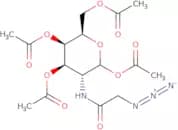
1,3,4,6-Tetra-O-acetyl-N-azidoacetylgalactosamine
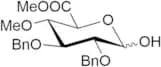
CAS:<p>1,3,4,6-Tetra-O-acetyl-N-azidoacetylgalactosamine is an azido-tagged analogue of N-acetylgalactosamine. It features azide functionality on the N-acyl side chain and is acetylated to aid in cell membrane permeation. It is metabolised by mammalian cells and incorporated into mucin-type-O-linked glycoproteins. The azide functionality is exploited as a biorthogonal functional group that can be reacted with phosphine probes by the Staudinger ligation.</p>Formula:C16H22N4O10Purity:Min. 95 Area-%Color and Shape:White Off-White PowderMolecular weight:430.37 g/molMethyl (2,3-di-O-benzyl-4-O-methyl-α,β-D-glucopyranoside)uronate
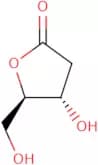
CAS:<p>A protected glucuronide which is an anomeric mixture.</p>Formula:C22H26O7Purity:Min. 95%Color and Shape:PowderMolecular weight:402.44 g/mol2-Deoxy-D-ribonic acid-1,4-lactone
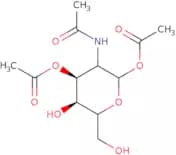
CAS:<p>2-Deoxy-D-ribonic acid-1,4-lactone (2DRA) is a chemical compound with physiological effects. 2DRA is an irreversible inhibitor of DNA polymerase that has been shown to be a potent inhibitor of nuclear DNA synthesis in vitro and in vivo. The 2DRA inhibits the transfer reactions that are required for the replication of DNA. 2DRA binds to the nuclease domain of the enzyme and prevents it from cutting the phosphodiester bonds, leading to inhibition of DNA synthesis. This compound also has genotoxic effects and can cause mutation in cells through radiation or chemical treatment.</p>Formula:C5H8O4Purity:Min. 95%Color and Shape:Colorless Yellow PowderMolecular weight:132.12 g/mol2-Acetamido-1,3-di-O-acetyl-2-deoxy-D-glucopyranose
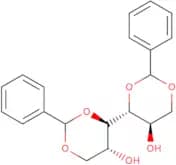
CAS:<p>2-Acetamido-1,3-di-O-acetyl-2-deoxy-D-glucopyranose is a synthetic sugar that is used in the synthesis of complex carbohydrates. It has been shown to be an effective fluorinating agent for glycosylations and can be methylated or click modified. 2-Acetamido-1,3-di-O-acetyl-2-deoxy-D-glucopyranose has high purity and can be custom synthesized to order.</p>Formula:C12H19NO8Purity:Min. 95%Color and Shape:White PowderMolecular weight:305.28 g/mol1,3:4,6-Di-O-benzylidene-D-mannitol
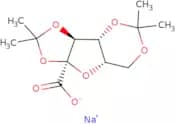
CAS:<p>1,3:4,6-Di-O-benzylidene-D-mannitol is a chiral sugar that is synthesized from d-mannitol. It is used for the preparation of polymers with acrylonitrile and phosphine. 1,3:4,6-Di-O-benzylidene-D-mannitol can be obtained by copolymerizing the monomers d-mannitol and acrylonitrile in an enantioselective manner. The yield of this compound depends on the analytical methods used to determine the composition of the polymer. The product is also used as a ligand in metal hydrides and simplifies the synthesis of chiral methyl esters.</p>Formula:C20H22O6Purity:Min. 95%Color and Shape:PowderMolecular weight:358.39 g/mol2,3:4,6-Di-O-isopropylidene-2-keto-L-gulonic acid sodium salt
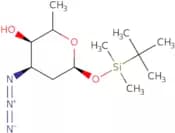
CAS:<p>2,3:4,6-Di-O-isopropylidene-2-keto-L-gulonic acid sodium salt is a fatty acid that has been used as an antipsychotic drug. It is the active metabolite of clozapine and has been shown to have similar efficacy to other first generation antipsychotics such as chlorpromazine and haloperidol. 2,3:4,6-Di-O-isopropylidene-2-keto-L-gulonic acid sodium salt also has a low energy content and can be audited for its locomotor activity. This drug is a metabolic product of clozapine and has been shown to have similar efficacy to other first generation antipsychotics such as chlorpromazine and haloperidol. 2,3:4,6-Di-O-isopropylidene-2-keto--L--gulonic acid</p>Formula:C12H17NaO7Color and Shape:White Off-White PowderMolecular weight:296.25 g/mol3-Azido-1-O-t-butyldimethylsilyl-2,3,6-trideoxy-b-L-arabino-hexopyranose
<p>3-Azido-1-O-t-butyldimethylsilyl-2,3,6-trideoxy-b-L-arabinohexopyranose is a modified sugar. It is used as a building block in the synthesis of oligosaccharides and polysaccharides. This product is custom synthesized to customer's specifications and is available in high purity.</p>Formula:C12H25N3O3SiPurity:Min. 95%Molecular weight:287.43 g/mol2-Methyl-(3,4,6-tri-O-acetyl-1,2-dideoxy-a-D-glucopyrano)-[2,1-d]-2-oxazoline
CAS:<p>2-Methyl-(3,4,6-tri-O-acetyl-1,2-dideoxy-a-D-glucopyrano)-[2,1-d]-2-oxazoline (TAO) is a molecule that is produced during the glycosylation of proteins. TAO has been shown to enhance chemotherapy by targeting and inhibiting the growth of cancer cells. TAO binds to the epidermal growth factor receptor (EGFR), which is a protein that regulates cell proliferation. TAO inhibits cancer cell growth by blocking the activation of EGFR and its downstream signaling pathways. This inhibition leads to tumor regression in xenografts in mice. TAO also blocks o-glycosylation, which is a process that enhances cancer therapy resistance.</p>Formula:C14H19NO8Purity:90%Color and Shape:Yellow PowderMolecular weight:329.31 g/mol2- Azido-3,5-di-O-benzoyl- 2- deoxy- 2- C- methyl-D- ribonic acid g- lactone
CAS:<p>2-Azido-3,5-di-O-benzoyl-2-deoxy--C-methyl-D--ribonic acid g--lactone is a methylated saccharide that can be used for the synthesis of polysaccharides. The 2'-azido group in this compound can be used to modify oligosaccharides and glycosylations. This compound is a custom synthesis and is not commercially available. It has been shown to have high purity and a yield of 99%.</p>Formula:C20H17N3O6Purity:Min. 95%Molecular weight:395.37 g/mol2-O-Acetyl-3,4,6-tri-O-benzyl-a-D-glucopyranosyl trichloroacetimidate
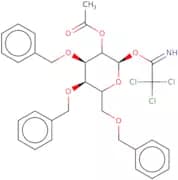
CAS:<p>2-O-Acetyl-3,4,6-tri-O-benzyl-a-D-glucopyranosyl trichloroacetimidate is a custom synthesis. It is a modified oligosaccharide with a fluorinated carbon atom in the 2 position of the acetyl group. This chemical has been shown to be effective for click modification and glycosylation reactions. The CAS number for this chemical is 108869-64-3.</p>Purity:Min. 95%Methyl 2,3,4,6-tetra-O-benzyl-α-D-glucopyranoside
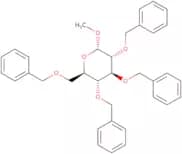
CAS:<p>Methyl 2,3,4,6-tetra-O-benzyl-α-D-glucopyranoside is a benzylated glycoside that inhibits the activity of β-glucosidases and glycoside hydrolases. It is used as an inhibitor in ecological studies to investigate the effects of benzyl groups on biotic and abiotic stressors. Methyl 2,3,4,6-tetra-O-benzyl-α-D-glucopyranoside has been shown to have inhibitory potency against the transition state in enzymatic reactions. This compound also has been shown to be effective in treating diabetes.</p>Formula:C35H38O6Purity:Min. 95%Color and Shape:PowderMolecular weight:554.67 g/mol6-O-Acetyl-D-glucose
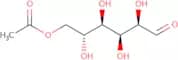
CAS:<p>6-O-Acetyl-D-glucose is a natural sugar that is found in Holothuria, a sea cucumber. It has been shown to have anti-cancer and anti-inflammatory properties. 6-O-Acetyl-D-glucose inhibits the production of extracellular Ca2+ and has shown therapeutic effects against colorectal carcinoma. This active substance also exhibits allergenic reactions, which may be due to its ability to bind to IgE antibodies on mast cells and basophils. 6-O-Acetyl-D-glucose is a glycoside that contains an acetate group linked by an O atom to the hydroxyl residue of glucose. The glycosidic bond can be hydrolyzed with the enzyme β glucosidase, releasing the aglycone (sugar) and β glucosidase.</p>Formula:C8H14O7Purity:Min. 95%Color and Shape:PowderMolecular weight:222.19 g/mol5-S-Methyl-5-thio-D-xylose
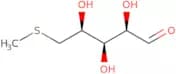
CAS:<p>5-S-Methyl-5-thio-D-xylose is a carbohydrate that can be synthesized from 5,5’ -dithiobis(2-nitrobenzoic acid) and D-xylose. It is a high purity, custom synthesis product. This carbohydrate has been modified with fluorination at the 5 position of the sugar ring and methylation of the alpha carbon to form a methylated xylose. The molecular weight is 488.1 g/mol and it has a CAS number of 53458-58-5. This product can be used to modify saccharides and oligosaccharides with fluorination and methylation reactions.</p>Formula:C6H12O4SPurity:Min. 95%Molecular weight:180.22 g/molDeoxygalactonojirimycin acetonide
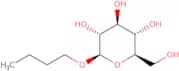
<p>Deoxygalactonojirimycin acetonide is a custom-synthesized, complex carbohydrate that belongs to the group of Oligosaccharides. It is a modified saccharide with methylation and glycosylation. Deoxygalactonojirimycin acetonide is an active ingredient that has been synthesized for use in cancer research. This compound is a high-purity, fluorinated sugar with Click modification that can be used to study the structure-activity relationships of carbohydrate-based drugs.</p>Purity:Min. 95%Butyl b-D-glucopyranoside
CAS:<p>Butyl b-D-glucopyranoside is a fluorinated monosaccharide that is used in the synthesis of oligosaccharides and polysaccharides. It is also used as a synthetic sugar for glycosylation, methylation, and click modification reactions. Butyl b-D-glucopyranoside has been shown to be stable under both acidic and basic conditions and has a CAS number of 5391-18-4.</p>Formula:C10H20O6Purity:Min. 95%Color and Shape:White PowderMolecular weight:236.26 g/molPhenyl 2,4,6-Tri-O-acetyl-3-O-allyl-b-D-thioglucopyranoside
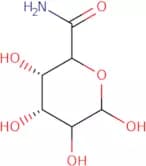
CAS:<p>Phenyl 2,4,6-tri-O-acetyl-3-O-allyl-β-D-thioglucopyranoside is an enantiomer that can be synthesized from the commercially available 2,4,6-triacetylphenyl boronic acid. It has been shown to have a positive effect on insulin sensitivity and uptake in plasma glucose in diabetic patients. Phenyl 2,4,6-tri-O-acetyl-3-O-allyl β D thioglucopyranoside also has a safety profile that is similar to other antidiabetic drugs. This drug has been shown to inhibit influenza virus uptake into cells by competitive inhibition of a transporter type.</p>Formula:C21H26O8SPurity:Min. 98 Area-%Color and Shape:White Off-White PowderMolecular weight:438.49 g/molD-Glucuronamide
CAS:<p>D-Glucuronamide is a kinetic model system for the glycosylation reaction, which is an important step in the biosynthesis of complex oligosaccharides and polysaccharides. It has been shown to be an amide analog that can be acetylated with acetic anhydride in a reaction mechanism that involves nucleophilic attack by the amino group of D-glucuronamide on the electrophilic carbonyl carbon of acetic anhydride. The second-order rate constants for this reaction were determined to be 2.3×10 M-1s-1 at pH 7 and 25°C. NMR spectra showed that the product was not a simple amide but rather a glycopolymer with a distribution of different sugar residues, including D-glucose, D-galactose, and D-mannose.</p>Formula:C6H11NO6Purity:Min. 95%Color and Shape:PowderMolecular weight:193.15 g/molepi-Inositol
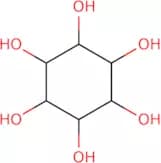
CAS:<p>Epi-inositol, also known as myo-inositol, is a member of the group of molecules known as sugar alcohols. It is a naturally occurring compound that is found in the human body and can be synthesized by the human body from glucose. Epi-inositol has been shown to have a number of biological effects, including inhibition of cell proliferation and energy metabolism in ovarian cancer cells. Epi-inositol has also been used in clinical trials for treatment of mood disorders such as depression.</p>Formula:C6H12O6Purity:Min. 98 Area-%Color and Shape:White PowderMolecular weight:180.16 g/mol3-O-benzyl-D-xylose
<p>3-O-benzyl-D-xylose is a sugar that belongs to the group of dimethyl, diisobutylaluminium, dicarboxylate, malonate, oxygenated, acetylation, cyclopentane. It has been shown to be effective in cleavage and condensation reactions. 3-O-benzyl-D-xylose can be used in the synthesis of pyridinium chlorochromate and chlorochromate. This compound also reacts with pyridinium via hydride reduction and hydroxide cleavage.</p>Purity:Min. 95%1,4-Anhydro-D-glucitol
CAS:<p>1,4-Anhydro-D-glucitol is a compound that belongs to the group of monosaccharides and has biological properties. It has also been used in the production of acetate extracts from fetal bovine erythrocytes. The ester linkages are formed between 1,4-anhydro-D-glucitol and sodium salt by reaction with acetic anhydride. The reaction mechanism has been studied in detail, and it was found that hydroxyl groups on the molecule react with sodium ions to form an ester linkage. This compound is toxicologically safe at high doses, but can become toxic at lower doses due to its acid formation potential.</p>Formula:C6H12O5Purity:Min. 97.0 Area-%Molecular weight:164.16 g/molRef: 3D-W-202151
5gTo inquire10gTo inquire25gTo inquire50gTo inquire2500mgTo inquire-Unit-ggTo inquire

![2-Methyl-(3,4,6-tri-O-acetyl-1,2-dideoxy-a-D-glucopyrano)-[2,1-d]-2-oxazoline](/_next/image/?url=https%3A%2Fstatic.cymitquimica.com%2Fproducts%2F3D%2Fthumb-webp%2FMM07263.webp&w=3840&q=75)