Monosaccharides
Monosaccharides are the simplest form of carbohydrates and serve as fundamental building blocks for more complex sugars and polysaccharides. These single sugar molecules play critical roles in energy metabolism, cellular communication, and structural components of cells. In this section, you will find a wide variety of monosaccharides essential for research in biochemistry, molecular biology, and glycoscience. These compounds are crucial for studying metabolic pathways, glycosylation processes, and developing therapeutic agents. At CymitQuimica, we offer high-quality monosaccharides to support your research needs, ensuring precision and reliability in your scientific investigations.
Subcategories of "Monosaccharides"
- Alloses(11 products)
- Arabinoses(21 products)
- Erythroses(11 products)
- Fructoses(9 products)
- Fucoses(36 products)
- Galactosamine(41 products)
- Galactose(261 products)
- Glucoses(365 products)
- Glucuronic Acids(51 products)
- Glyco-substrates for Enzyme(77 products)
- Guloses(6 products)
- Idoses(4 products)
- Inositols(15 products)
- Lyxoses(4 products)
- Mannoses(65 products)
- O-Glycans(48 products)
- Psicoses(3 products)
- Rhamnoses(10 products)
- Riboses(61 products)
- Sialic Acids(100 products)
- Sorboses(4 products)
- Sugars(173 products)
- Tagatoses(4 products)
- Taloses(8 products)
- Xyloses(20 products)
Show 17 more subcategories
Found 6088 products of "Monosaccharides"
Sort by
Purity (%)
0
100
|
0
|
50
|
90
|
95
|
100
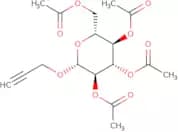
2-Propynyl-2,3,4,6-tetra-O-acetyl-b-D-glucopyranoside
CAS:<p>2-Propynyl-2,3,4,6-tetra-O-acetyl-b-D-glucopyranoside is a carbohydrate. It is an oligosaccharide that contains a glucose molecule with four acetyl groups at the 2 position. This type of modification can be used to create high purity compounds for research purposes. 2-Propynyl-2,3,4,6-tetra-O-acetyl-b-D-glucopyranoside also has methylation and glycosylation sites available for custom synthesis.</p>Formula:C17H22O10Purity:Min. 95%Color and Shape:White PowderMolecular weight:386.35 g/mol1,2-Di-O-tert.butyldimethylsilyl-3,4:5,6-di-O-isopropylidene-D-glycero-a-D-talopyranoside
<p>This compound is a high purity, custom synthesis. It is a sugar that can be fluorinated and glycosylated. It also has the ability to be modified with methylation and modification. The CAS Number is 1213-78-3. This carbohydrate has many functions: it can act as an oligosaccharide or monosaccharide and can also be used as a complex carbohydrate.</p>Purity:Min. 95%Tri-O-acetyl-4-pentulosonic acid methyl ester
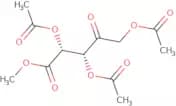
CAS:<p>Tri-O-acetyl-4-pentulosonic acid methyl ester is a high purity, custom synthesis sugar that has been modified by click chemistry. It is fluorinated, glycosylated and synthetically modified. The chemical name for this product is 3'-O-Acetyl-4'-O-(2,3,5,6-tetrafluoro)pentylosonic acid methyl ester. Tri-O-acetyl-4-pentulosonic acid methyl ester is a saccharide that has the CAS No. 108595-14-8 and has been shown to be useful in the synthesis of oligosaccharides and monosaccharides.</p>Formula:C12H16O9Purity:Min. 95%Molecular weight:304.25 g/mol1-O-Methyl-β-D-xylopyranoside
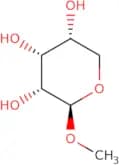
CAS:<p>1-O-Methyl-beta-D-xylopyranoside is a glycoside that consists of a glucose molecule linked to the hydroxyl group of p-hydroxybenzoic acid through an alpha glycosidic bond. It is found in many plants, such as in the leaves of the common bay tree (Laurus nobilis) and in the bark of the cinnamon tree (Cinnamomum verum). 1-O-Methyl-beta-D-xylopyranoside is used as a sweetener and flavoring agent. It is also used in some pharmaceutical drugs, including antiulcer agents and antidiarrheal agents. This compound has been shown to have an effective dose of 5 mg/kg when given orally to humans.</p>Formula:C6H12O5Purity:Min. 98.0 Area-%Molecular weight:164.16 g/mol3-O-Benzyl-4-(hydroxymethyl)-1,2-O-isopropylidene-α-D-ribofuranose
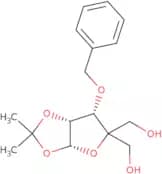
CAS:<p>Synthetic building block for nucleic acid research</p>Formula:C16H22O6Purity:Min. 98 Area-%Color and Shape:White PowderMolecular weight:310.34 g/mol(2R, 3S, 4S) -N-Benzyl-3- fluoro- 4- (hydroxymethyl) - 2- azetidinecarboxylic acid
<p>(2R, 3S, 4S)-N-Benzyl-3-fluoro-4-(hydroxymethyl)-2-azetidinecarboxylic acid is a synthetic sugar that is custom synthesized for pharmaceutical applications. It has a purity of 98% and is available in different quantities. The drug can be modified with fluorination, glycosylation, methylation, and modification. (2R, 3S, 4S)-N-Benzyl-3-fluoro-4-(hydroxymethyl)-2-azetidinecarboxylic acid can be used as a sugar or carbohydrate in the synthesis of oligosaccharide or monosaccharide. It has an CAS number of 58614-82-1 and can be found in the Glycosylations and Synthetic sections of the catalog.</p>Purity:Min. 95%6-Azido-6-deoxy-D-galactose
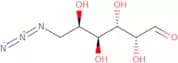
CAS:<p>6-Azido-6-deoxy-D-galactose is a mutagenic compound that is used as a carbon source in the synthesis of other compounds. It has been shown to have mutagenicity in TA100 cells and to be active against Staudinger's naphthol. The compound is synthesised by chemoenzymatic methods, which involve the use of alcohols and an acetyl group. 6-Azido-6-deoxy-D-galactose can be used as a mutagenic agent for the production of mutants with desired properties.</p>Formula:C6H11N3O5Purity:Min. 95%Color and Shape:White PowderMolecular weight:205.17 g/molD-Glucose-6-phosphate barium
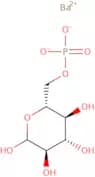
CAS:<p>D-Glucose-6-phosphate barium salt is a custom synthesis of the saccharide, which is a component of the carbohydrates. It has been modified by fluorination, methylation, and monosaccharide modification. The synthesis of this compound can be done in a single reaction, and it is an example of glycosylation. This product has been shown to have high purity.</p>Formula:C6H13O9P•BaxPurity:Min. 95%Color and Shape:PowderMolecular weight:395.453-Aminopropyl α-D-mannopyranoside
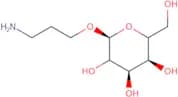
CAS:<p>Mannose with an aliphatic 3 carbon amine linker.</p>Formula:C9H19NO6Purity:Min. 95%Color and Shape:PowderMolecular weight:237.25 g/mol(2R, 3R, 4R) -3-Benzyloxy- 1- benzyl-4- (hydroxymethyl) - 2- azetidinecarboxylic acid methyl ester
<p>(2R, 3R, 4R) -3-Benzyloxy- 1- benzyl-4-(hydroxymethyl)- 2-azetidinecarboxylic acid methyl ester is an oligosaccharide. It is a modification of the Oligosaccharide which is a carbohydrate with multiple saccharides. This means that it contains two or more types of sugar monomers. The primary type of sugar in this compound is the Monosaccharide, which are single units of sugar that are joined together to form a sugar polymer. The other type of sugar in this compound is the Polysaccharide, which is made up of many different monomers. Carbohydrates are an important source of energy for living organisms and they can be found in many different forms such as sugars and starches. This compound has been modified by Methylation (addition of a methyl group), Glycosylation (addition of glycosidic</p>Purity:Min. 95%3,4-Di-O-benzyl-D-glucose
<p>3,4-Di-O-benzyl-D-glucose is a monosaccharide that is synthetically modified with an O-benzyl group at the 3' and 4' positions. It is a custom synthesis and has a CAS number. This sugar can be used as a building block for polysaccharides or oligosaccharides with the addition of other sugars. 3,4-Di-O-benzyl-D-glucose is highly pure and can be modified with fluorine to make it more stable for use in click chemistry reactions. This sugar is soluble in water, ethanol, DMSO, DMF, and acetonitrile. It has been shown to inhibit the growth of bacteria such as Staphylococcus aureus and Mycobacterium tuberculosis.</p>Purity:Min. 95%3,5-Di-O-(tert-butyldimethylsilyl)-2-deoxy-D-ribono-1,4-lactone
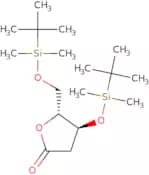
CAS:<p>3,5-Di-O-(tert-butyldimethylsilyl)-2-deoxy-D-ribono-1,4-lactone is a nucleoside analog that inhibits the synthesis of viral RNA. It can be hydrolyzed to uridine, which is then converted to phosphorylated uridine by uridine phosphorylase. 3,5-Di-O-(tert-butyldimethylsilyl)-2-deoxy-D-ribono-1,4-lactone binds to the enzyme ribonucleotide reductase and blocks the production of DNA precursors. This may lead to a decrease in DNA synthesis and cell proliferation. The antiviral properties of 3,5-Di-O-(tert-butyldimethylsilyl)-2-deoxy--D--ribono--1,4--lactone have been shown in animal models against cyt</p>Formula:C17H36O4Si2Purity:Min. 95%Color and Shape:PowderMolecular weight:360.65 g/mol6-O-Benzyl-1-(-)-carboxymenthyl-2,3:4,5-di-O-cyclohexylidene-L-myo-inositol
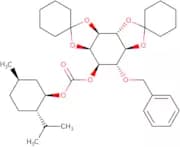
CAS:<p>6-O-Benzyl-1-(-)-carboxymenthyl-2,3:4,5-di-O-cyclohexylidene-L-myo-inositol is a synthetic oligosaccharide with the chemical formula C9H14FNO5. It is a monosaccharide composed of a single sugar unit, inositol, which has been modified with benzyl groups on the 6th and 1st positions of the inositol ring. This compound is used as an intermediate in the synthesis of other saccharides.</p>Formula:C36H52O8Purity:Min. 95%Molecular weight:612.79 g/molN- (2, 5- Anhydro- 3- azido- 3- deoxy- D- altronoyl) - 2, 5- Anhydro- 3- amino- 3- deoxy- D- altronic acid propyl ester
<p>N- (2, 5- Anhydro- 3- azido- 3- deoxy- D- altronoyl) - 2, 5- Anhydro- 3- amino - 3 - deoxy- D - altronic acid propyl ester is a synthetic compound that has been modified to include an N-(2,5 anhydroazido)-3,6 dideoxydulonic acid moiety. The chemical structure of this product includes a methyl group and two hydroxyl groups on the anomeric carbon. This product is a white powder at room temperature and can be used in the synthesis of oligosaccharides or polysaccharides.</p>Purity:Min. 95%2-Deoxy-D-xylose
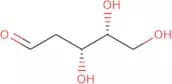
CAS:<p>2-Deoxy-D-xylose is a sugar that is metabolized by bacteria in the absence of oxygen. It has been shown to be highly chemotactic, inducing the migration of cells from the surrounding tissue into the area where it is present. 2-Deoxy-D-xylose has also been shown to inhibit the growth of cancer cells and induce apoptosis in vitro. 2-Deoxy-D-xylose binds to mitochondria and inhibits cytochrome oxidase, which may contribute to its anti-cancer activity. 2-Deoxy-D-xylose has also been shown to have angiogenic effects by stimulating endothelial cell proliferation and migration.</p>Formula:C5H10O4Purity:Min. 98 Area-%Color and Shape:White PowderMolecular weight:134.13 g/mol4-Aminophenyl b-D-glucopyranoside
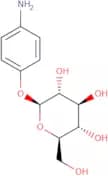
CAS:<p>4-Aminophenyl b-D-glucopyranoside is a membrane transport inhibitor that prevents the uptake of glucose by inhibiting the enzyme hexose transporter. It is used in biological treatment and has been shown to be effective against glutamicum. 4-Aminophenyl b-D-glucopyranoside can also be used in assays to identify bacteria based on their surface antigens. This compound was isolated from corynebacterium glutamicum and its metabolic pathway has been elucidated. 4-Aminophenyl b-D-glucopyranoside has also been shown to inhibit enzymatic activity, which may be due to inhibition of the enzyme dihydroorotate dehydrogenase.</p>Formula:C12H17NO6Purity:Min. 95%Color and Shape:White PowderMolecular weight:271.27 g/molMethyl 2,3,4-tri-O-benzoyl-6-O-trityl-a-D-galactopyranoside
CAS:<p>Methyl 2,3,4-tri-O-benzoyl-6-O-trityl-a-D-galactopyranoside is an oligosaccharide. It is a highly pure and custom synthesis of methylated saccharides. The modification is done by Click chemistry, which is a reaction between an azide and an alkyne in the presence of copper catalyst. This modification helps to introduce fluorine atoms into the saccharide chain. The glycosylation process is then carried out on the modified saccharides to form the desired oligosaccharides. Methyl 2,3,4-tri-O-benzoyl-6-O-trityl-a-D galactopyranoside can be used as a raw material for various applications such as pharmaceuticals, agrochemicals and food additives.</p>Formula:C47H40O9Purity:Min. 95%Molecular weight:748.84 g/mol2,6-Dideoxy-L- arabino- hexose
CAS:<p>2,6-Dideoxy-L-arabino-hexose is a carbohydrate that can be custom synthesized. It has a high purity with a custom synthesis and can be methylated and glycosylated. This modification changes the chemical structure of the sugar, which may have important therapeutic effects on cancer cells.</p>Formula:C6H12O4Purity:Min. 95%Molecular weight:148.16 g/mol2,3-Di-O-benzoyl-L-threonic acid-1,4-lactone
<p>2,3-Di-O-benzoyl-L-threonic acid-1,4-lactone is a custom synthesis of a fluorinated monosaccharide methylated at the C2 position. It is an oligosaccharide with a saccharide and polysaccharide linkage. The glycosylation of this compound has been modified by the Click chemistry reaction to create new sugar moieties.</p>Purity:Min. 95%2-Amino-2,6-dideoxy-L-mannose hydrochloride
<p>2-Amino-2,6-dideoxy-L-mannose hydrochloride is a high purity and custom synthesis sugar. It is synthesized from 2,6-Dideoxymannose with the use of Click chemistry. This modification allows for a variety of fluorinations, glycosylations, and methylations to be used in the synthesis process. The CAS number for this compound is 107625-00-3.</p>Purity:Min. 95%