Monosaccharides
Monosaccharides are the simplest form of carbohydrates and serve as fundamental building blocks for more complex sugars and polysaccharides. These single sugar molecules play critical roles in energy metabolism, cellular communication, and structural components of cells. In this section, you will find a wide variety of monosaccharides essential for research in biochemistry, molecular biology, and glycoscience. These compounds are crucial for studying metabolic pathways, glycosylation processes, and developing therapeutic agents. At CymitQuimica, we offer high-quality monosaccharides to support your research needs, ensuring precision and reliability in your scientific investigations.
Subcategories of "Monosaccharides"
- Alloses(11 products)
- Arabinoses(21 products)
- Erythroses(11 products)
- Fructoses(9 products)
- Fucoses(36 products)
- Galactosamine(41 products)
- Galactose(261 products)
- Glucoses(365 products)
- Glucuronic Acids(51 products)
- Glyco-substrates for Enzyme(77 products)
- Guloses(6 products)
- Idoses(4 products)
- Inositols(15 products)
- Lyxoses(4 products)
- Mannoses(65 products)
- O-Glycans(48 products)
- Psicoses(3 products)
- Rhamnoses(10 products)
- Riboses(61 products)
- Sialic Acids(100 products)
- Sorboses(4 products)
- Sugars(173 products)
- Tagatoses(4 products)
- Taloses(8 products)
- Xyloses(20 products)
Show 17 more subcategories
Found 6088 products of "Monosaccharides"
Sort by
Purity (%)
0
100
|
0
|
50
|
90
|
95
|
100
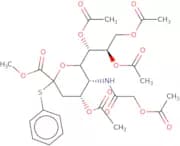
Phenyl 4,7,8,9-tetra-O-acetyl-2-thio-N-glycolyl-D-neuraminic acid methyl ester
Phenyl 4,7,8,9-tetra-O-acetyl-2-thio-N-glycolyl-D-neuraminic acid methyl ester is a monosaccharide with a four carbon chain. It is an analog of the natural product neuraminic acid. Phenyl 4,7,8,9-tetra-O-acetyl-2-thio -N -glycolyl -D -neuraminic acid methyl ester can be used as a substrate for chemical modification to produce oligosaccharides and polysaccharides. It can also be fluorinated to produce fluorinated derivatives that are useful in biochemistry and organic chemistry.Formula:C28H35NO14SPurity:Min. 95%Molecular weight:641.64 g/molMethyl 2,3,4,6-tetra-O-benzyl-b-D-glucopyranoside
<p>Methyl 2,3,4,6-tetra-O-benzyl-b-D-glucopyranoside (MBG) is a custom synthesis of a saccharide. It is a monosaccharide that is modified with fluorination and methylation to create an oligosaccharide. MBG has a CAS number of 68766-34-7. This carbohydrate has been shown to be synthesized with the click modification. Carbohydrates are carbohydrates that contain carbon, and can be classified as either complex carbohydrates or simple carbohydrates. Carbohydrates are composed of one or more monosaccharides and are classified based on the number of monosaccharides in the molecule. Complex carbohydrates include polysaccharides, which have many monosaccharides attached to each other by glycosidic bonds, and oligosaccharides, which have two to ten monosaccharides attached to each other by</p>Purity:Min. 95%4,6-Di-O-acetyl-2,3-O-carbonyl-a-D-mannopyranosyl bromide
CAS:<p>4,6-Di-O-acetyl-2,3-O-carbonyl-a-D-mannopyranosyl bromide is a structural analog of the endotoxin lipid A. It has been synthesized from 2,3-O-carbonyl-a-D-mannopyranose by condensation with acetyl bromide and the subsequent removal of the acetyl group by treatment with aqueous sodium hydroxide. The synthesis of 4,6 - Di - O - acetyl - 2,3 - O - carbonyl - a - D - mannopyranosyl bromide was achieved in two steps: (i) condensation of 2,3 - O - carbonyl - a - D - mannopyranose with acetyl bromide followed by deprotection using benzene and (ii) oxidation using hypoiodite in acetic acid.</p>Formula:C11H13BrO8Purity:Min. 95%Molecular weight:353.12 g/molNeocarrabiose (b anomer, crystalline)
CAS:<p>Neocarrabiose is a complex carbohydrate that is synthesized by the methylation of carrageenan. It has a molecular weight of about 1,000 Daltons and consists of a linear chain of alternating units of D-galactose and D-glucuronic acid. Neocarrabiose is used in the production of polysaccharides such as heparin, glycosaminoglycans, and polysulfated glycosaminoglycans. The enzyme modification process converts the anomeric configuration to L-arabinofuranose in order to produce polysaccharides with high purity.</p>Formula:C12H20O10Purity:Min. 95%Molecular weight:324.28 g/molMaltosyl-ascorbic acid
<p>Maltosyl-ascorbic acid is a glycosylated form of ascorbic acid that has been shown to have synergistic effects with thiobarbituric acid and ethanal. Maltosyl-ascorbic acid also exhibits antioxidative activity and is able to inhibit the formation of thiobarbituric acid-reactive substances and α-tocopherol in lipids. Maltosyl-ascorbic acid has been shown to have antioxidant effects in stearothermophilus, which may be due to its ability to reduce lipid peroxidation. Maltosyl-ascorbic acid is also able to inhibit the transfer of alpha-tocopherol from lipoproteins into cells, which may be due to its antioxidative effect.</p>Purity:Min. 95%3-Deoxy-1,2:5,6-di-O-isopropylidene-a-D-xylo-hexofuranose
CAS:<p>3-Deoxy-1,2:5,6-di-O-isopropylidene-a-D-xylo-hexofuranose is a synthetic sugar that is used in the preparation of oligosaccharides. It can be modified with fluorine and methyl groups and has many applications in research. 3-Deoxy-1,2:5,6-di-O-isopropylidene-a-D-xylo hexofuranose has been shown to be a key intermediate in the synthesis of glycosides. This sugar can also be used as a starting material to prepare polysaccharides by glycosylation or complex carbohydrate by oligosaccharide modification.</p>Formula:C12H20O5Purity:Min. 95%Molecular weight:244.28 g/mol1,2,3-Tri-O-benzoyl-4,6-O-(4-methoxybenzylidene)-a-D-mannopyranose
<p>1,2,3-Tri-O-benzoyl-4,6-O-(4-methoxybenzylidene)-a-D-mannopyranose is a carbonyl compound that is an intermediate in the synthesis of saccharides. The chemical modification of this compound can be used to synthesize complex carbohydrates. This compound has been fluorinated and methylated to produce a variety of derivatives with different properties. It also has been glycosylated and click modified for use in research and development.</p>Formula:C35H30O10Purity:Min. 95%Molecular weight:610.61 g/mol1,2,3-Tri-O-acetyl-4,6-O-(4-methoxybenzylidene)-a-D-mannopyranose
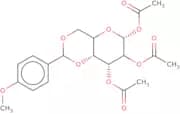
<p>1,2,3-Tri-O-acetyl-4,6-O-(4-methoxybenzylidene)-a-D-mannopyranose is a modification of the naturally occurring carbohydrate 1,2,3,4,6-pentaacetyl-aDmannopyranose. The methyl group at C1 and hydroxymethyl group at C2 positions have been replaced by acetate groups. This modification can be used for synthesis of oligosaccharides or polysaccharides. It has high purity and is available in custom synthesis quantities.</p>Formula:C20H24O10Purity:Min. 95%Molecular weight:424.4 g/molH Type II-APD-BSA
<p>H Type II-APD-BSA is a custom synthetic sugar that is used as an electron acceptor to reduce a variety of electron-deficient aromatic compounds. H Type II-APD-BSA can be modified with fluorine, which makes it an ideal reagent for the synthesis of complex carbohydrates. This product was created by methylation, click modification, and oligosaccharide synthesis. It has a CAS number, is made of saccharides and polysaccharides, and contains monosaccharides and sugars.</p>Purity:Min. 95%1,2,3-Tri-O-benzyl-4,6-O-benzylidene-a-D-mannopyranose
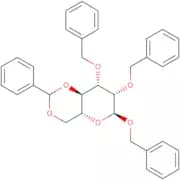
CAS:<p>1,2,3-Tri-O-benzyl-4,6-O-benzylidene-a-D-mannopyranose is a custom synthesis of a sugar. It is modified with fluorination, methylation and glycosylation. This sugar has an average molecular weight of 586.5 g/mol and is composed of three monosaccharides: D-(+)-mannose, D-(+)-glucose and D-(+)-galactose. 1,2,3-Tri-O-benzyl-4,6-O-benzylidene--a--D--mannopyranose can be used in the synthesis of oligosaccharides and polysaccharides.</p>Formula:C34H34O6Purity:Min. 95%Molecular weight:538.63 g/mol1,4:3,6-Dianhydro-2,5-di-O-methyl-L-mannitol
<p>1,4:3,6-Dianhydro-2,5-di-O-methyl-L-mannitol is a carbohydrate that belongs to the group of polysaccharides. It is a methylated saccharide that can be modified with Click chemistry or glycosylsation. This product has high purity and can be custom synthesized for specific applications. It is also available in fluorinated form and as a complex carbohydrate.</p>Formula:C8H14O4Purity:Min. 95%Molecular weight:174.19 g/mol4-Toluoyl 2-O-benzyl-4,6-O-benzylidene-3-O-p-methoxybenzyl-a-D-thiomannopyranoside
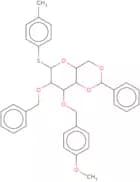
<p>4-Toluoyl 2-O-benzyl-4,6-O-benzylidene-3-O-p-methoxybenzyl a (1 → 4)-D-thiomannopyranoside is a carbohydrate with an α-(1→4) linkage. It is synthesized by the modification of the hydroxymethyl group on the C2 position of toluose with benzyl bromide and then methylation of the C6 position. This product has been custom synthesized for our customer and can be produced in high purity. It is also glycosylated and click modified.</p>Formula:C35H36O6SPurity:Min. 95%Molecular weight:584.72 g/molEthyl 2,3,6-tri-O-benzoyl-b-D-thioglucopyranoside
<p>Ethyl 2,3,6-tri-O-benzoyl-b-D-thioglucopyranoside is a synthetic monosaccharide with a complex carbohydrate structure. It can be custom synthesized to order and is available in high purity. This product is a glycosylation reagent that can be used for the synthesis of oligosaccharides and polysaccharides. The product has been shown to react with primary alcohols and amines in the presence of catalysts such as TMSOTf, DCC, or EDC to form ether bonds or amine bonds respectively. Ethyl 2,3,6-tri-O-benzoyl-b-D-thioglucopyranoside also reacts with thiols in the presence of catalysts such as HOBt or HOAt to form thioether bonds.</p>Purity:Min. 95%Ethyl 3,6-di-O-benzyl-2-deoxy-2-phtalimido-b-D-thioglucopyranose
<p>Ethyl 3,6-di-O-benzyl-2-deoxy-2-phtalimido-b-D-thioglucopyranose is a modification of the sugar thioglucose. It is an oligosaccharide that is a complex carbohydrate. This compound is synthesized using custom synthesis methods, and it has purity levels of >98%. Ethyl 3,6-di-O-benzyl-2-deoxy-2-phtalimido-b -D -thioglucopyranose has CAS number 78664–01–1. It can be found in the monosaccharide group, methylation group (methyl ethers), glycosylation group (glycosides), and polysaccharide group. The chemical formula for this compound is C11H21O8N3S.</p>Purity:Min. 95%2-Deoxy-3,5-di-O-toluoyl-D-ribofuranose
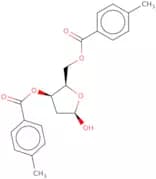
CAS:<p>2-Deoxy-3,5-di-O-toluoyl-D-ribofuranose is a sugar that can be custom synthesized. This product is a white to off-white crystalline solid with a melting point of approximately 200°C. It is soluble in water and ethanol, but not in ether or chloroform. The chemical structure of this sugar includes an oxygen atom at the 3 position of the anomeric carbon and a chlorine atom at the 5 position of the anomeric carbon. 2-Deoxy-3,5-di-O-toluoyl-D-ribofuranose has been shown to inhibit glycosylation, methylation, and modification reactions in both nucleic acids and proteins. This product also has been shown to be helpful in understanding complex carbohydrate synthesis by reducing the size of oligosaccharides and monosaccharides into smaller fragments for analysis.</p>Formula:C21H22O6Purity:Min. 95%Molecular weight:370.4 g/molN6-Isopentenyladenine-7-glucoside
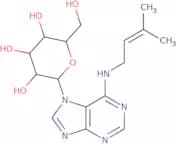
CAS:<p>N6-Isopentenyladenine-7-glucuronide is a synthetic monosaccharide that is used in the synthesis of complex carbohydrates. It is also a fluorinated compound that has been modified to form a glucuronide, which is an organic compound with a sugar and an alcohol group. N6-Isopentenyladenine-7-glucuronide can be used as a raw material for the production of oligosaccharides and polysaccharides, which are complex carbohydrates. This product can be custom synthesized to meet different requirements. It is available in high purity and the CAS number for this product is 59384-58-6.</p>Formula:C16H23N5O5Purity:Min. 95%Molecular weight:365.38 g/mol3-Deoxy-D-glucosone-bis(benzoylhydrazone)
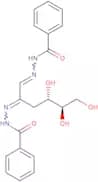
CAS:<p>3-Deoxy-D-glucosone-bis(benzoylhydrazone) is a synthetic compound that has been used in the synthesis of saccharides and oligosaccharides. This reagent can be used for the methylation of glycosyl groups, as well as the modification of carbohydrate chains to produce complex carbohydrates. 3-Deoxy-D-glucosone-bis(benzoylhydrazone) is a white powder with a molecular weight of 239. It is soluble in methanol, ethanol, acetone, and chloroform. The CAS number for this compound is 32443-70-2.</p>Formula:C20H22N4O5Purity:Min. 95%Molecular weight:398.41 g/molCMP-Pseudaminic acid
<p>CMP-Pseudaminic acid is a chemical compound that belongs to the group of thuringiensis. It is biosynthesized by the action of enzymes, which catalyze the conversion of sialic acid to CMP-pseudaminic acid. This process is carried out in two steps. The first step involves a reaction between sialic acid and ATP and the second step entails an enzymatic reaction between CMP-pseudaminic acid and UDP-glucose. X-ray crystal structures have been obtained for both steps of this process, with the second step being more complex than the first. Chemical diversity has been observed in pseudaminics, with some being glycosylated while others are not. Analysis with spectrometry has shown that pseudaminics are highly o-glycosylated at their hydroxy groups and have high levels of carbon atoms as well as hydroxyl groups. Structural analysis has revealed that pseudaminics</p>Formula:C22H32N5O15PPurity:Min. 95%Molecular weight:637.49 g/mol7-Hydroxycoumarin b-D-glucuronide sodium salt
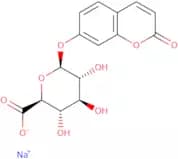
CAS:<p>7-Hydroxycoumarin b-D-glucuronide sodium salt is a metal ion chelator that has been shown to be synergistic with sulfate in the inhibition of virus replication. It does not inhibit the formation of ATP, but inhibits its utilization by competing for sulfate ions. 7-Hydroxycoumarin b-D-glucuronide sodium salt has also been shown to inhibit the formation of atp levels in protoplasts from rat thymus and liver. This substance is an analog of coumarin and is metabolized by glucuronidation and sulfation. The enzyme β-glucuronidase hydrolyzes 7-hydroxycoumarin b-D-glucuronide sodium salt, releasing 7-hydroxycoumarin, which can be excreted or further metabolized by oxidation or conjugation with glucuronic acid.</p>Formula:C15H13NaO9Purity:Min. 95%Color and Shape:White PowderMolecular weight:360.26 g/molPhenyl 2,3,4,6-tetra-O-acetyl-a-L-thioglucopyranoside
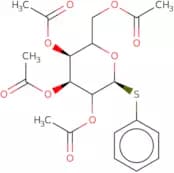
CAS:<p>Please enquire for more information about Phenyl 2,3,4,6-tetra-O-acetyl-a-L-thioglucopyranoside including the price, delivery time and more detailed product information at the technical inquiry form on this page</p>Formula:C20H24O9SPurity:Min. 95%Molecular weight:440.46 g/mol