Monosaccharides
Monosaccharides are the simplest form of carbohydrates and serve as fundamental building blocks for more complex sugars and polysaccharides. These single sugar molecules play critical roles in energy metabolism, cellular communication, and structural components of cells. In this section, you will find a wide variety of monosaccharides essential for research in biochemistry, molecular biology, and glycoscience. These compounds are crucial for studying metabolic pathways, glycosylation processes, and developing therapeutic agents. At CymitQuimica, we offer high-quality monosaccharides to support your research needs, ensuring precision and reliability in your scientific investigations.
Subcategories of "Monosaccharides"
- Alloses(11 products)
- Arabinoses(21 products)
- Erythroses(11 products)
- Fructoses(9 products)
- Fucoses(36 products)
- Galactosamine(41 products)
- Galactose(261 products)
- Glucoses(365 products)
- Glucuronic Acids(51 products)
- Glyco-substrates for Enzyme(77 products)
- Guloses(6 products)
- Idoses(4 products)
- Inositols(15 products)
- Lyxoses(4 products)
- Mannoses(65 products)
- O-Glycans(48 products)
- Psicoses(3 products)
- Rhamnoses(10 products)
- Riboses(61 products)
- Sialic Acids(100 products)
- Sorboses(4 products)
- Sugars(173 products)
- Tagatoses(4 products)
- Taloses(8 products)
- Xyloses(20 products)
Show 17 more subcategories
Found 6088 products of "Monosaccharides"
Sort by
Purity (%)
0
100
|
0
|
50
|
90
|
95
|
100
4,7,8,9-Tetra-O-acetyl-N- acetyl- 2- S- 2- propyn- 1- yl- 2- thio- a- neuraminic acid methyl ester
CAS:<p>This product is a custom synthesis of an oligosaccharide. It is a complex carbohydrate that is synthesized from monosaccharides and polysaccharides in the form of a sugar. The product has been fluorinated to improve its purity. This product can be used for glycosylation, methylation, or modification of complex carbohydrates.</p>Formula:C23H31NO12SPurity:Min. 95%Molecular weight:545.56 g/molGalnacβ(1-3)GlcNAc-β-PNP
CAS:<p>Galnacβ(1-3)GlcNAc-β-PNP is a modification of galactose. Galnacβ(1-3)GlcNAc-β-PNP is used in the synthesis of complex carbohydrates, including oligosaccharides and polysaccharides. It is also used as a glycosylation or methylation site for the synthesis of sugar chains on proteins and glycoproteins. This product has been fluorinated to increase its stability and solubility in organic solvents.</p>Formula:C22H31N3O13Purity:Min. 95%Molecular weight:545.5 g/molrac etodolac acyl-b-D-glucuronide
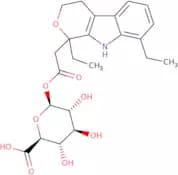
CAS:<p>Rac etodolac acyl-b-D-glucuronide is a synthetic, high purity, complex carbohydrate. It is custom synthesized and modified with fluorination, glycosylation, and acetylation. Rac etodolac acyl-b-D-glucuronide has the following CAS number: 79541-43-8.</p>Formula:C23H29NO9Purity:Min. 95%Molecular weight:463.48 g/molBenzyl 4,6-O-benzylidene-b-D-glucopyranoside
CAS:<p>Benzyl 4,6-O-benzylidene-b-D-glucopyranoside is a synthetic monosaccharide. It is an oligosaccharide that has undergone glycosylation and polysaccharide modifications. Benzyl 4,6-O-benzylidene-b-D-glucopyranoside can be used for the preparation of various carbohydrates with customized structures. This product can be synthesized in high purity.</p>Formula:C20H22O6Purity:Min. 95%Color and Shape:PowderMolecular weight:358.39 g/mol6-Deoxy-6-fluoro-L-galactose
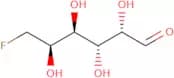
CAS:<p>6-Deoxy-6-fluoro-L-galactose is a sugar nucleotide that is extracted from the dithioacetal of l-fucose and d-galactose. It inhibits the synthesis of DNA and RNA by binding to the enzyme that catalyzes this reaction, thereby blocking these processes. 6DFLG has been shown to inhibit transformation in Escherichia coli. The mechanistic studies of 6DFLG show that it reacts with oxygen at the electrophilic site to produce an olefinic product, which then reacts with nucleophiles, such as water, to form a trackable product. This reagent can be used to determine whether or not a particular sugar is present in a sample.</p>Formula:C6H11FO5Purity:Min. 95 Area-%Color and Shape:PowderMolecular weight:182.15 g/molPhenyl 4,6-O-benzylidene-2,3-di-O-(4-methoxybenzyl)-a-D-thiomannopyranoside
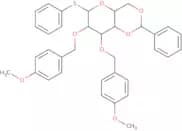
CAS:<p>Phenyl 4,6-O-benzylidene-2,3-di-O-(4-methoxybenzyl)-a-D-thiomannopyranoside is a synthetic glycosylated mannose oligosaccharide. It has a molecular weight of 756.85 and the chemical formula C36H43NO14. Phenyl 4,6-O-benzylidene-2,3-di-O-(4-methoxybenzyl)-a-D-thiomannopyranoside has been shown to be effective against fungus infections in mice models. This product is custom synthesized for research purposes only and does not contain any hazardous or toxic chemicals.</p>Formula:C35H36O7SPurity:Min. 95%Molecular weight:600.72 g/molBenzyl 2-acetamido-3,6-di-O-benzyl-2-deoxy-b-D-glucopyranoside
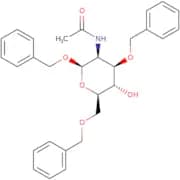
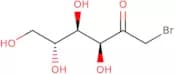
CAS:<p>Benzyl 2-acetamido-3,6-di-O-benzyl-2-deoxy-b-D-glucopyranoside is a glycosylation reagent that has been modified with the Click reaction. This product is a white powder that is soluble in water. It has a molecular weight of 637.3 and an assay of 99% by HPLC.</p>Purity:Min. 95%1-Bromo-1-deoxyfructose
CAS:<p>1-Bromo-1-deoxyfructose is a monosaccharide that is used in the synthesis of polysaccharides and oligosaccharides. It is also used for the click modification of proteins, which can be used to study protein function and activity. 1-Bromo-1-deoxyfructose can be synthesized from fructose by means of a fluorination reaction. This product is available with custom synthesis.</p>Formula:C6H11BrO5Purity:Min. 95%Molecular weight:243.05 g/mol2-Chloro-2-deoxy-1,3,4,6-tetra-acetyl-D-glucopyranose
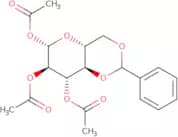
<p>2-Chloro-2-deoxy-1,3,4,6-tetra-acetyl-D-glucopyranose is a custom synthesis of a monosaccharide that contains a fluorine atom. It is synthesized by modifying the 2 position with chlorination and then methylation. This monosaccharide can be used for glycosylation and saccharide synthesis.</p>Purity:Min. 95%1,2,3-Tri-O-acetyl-4,6-O-benzylidene-b-D-glucopyranose
CAS:<p>This is a glycosylation product of 1,2,3-Tri-O-acetyl-4,6-O-benzylidene-b-D-glucopyranose with methyl and acetate groups. It is a synthetic oligosaccharide that has been fluorinated at the 4' position to provide protection from degradation. This product is custom synthesized for customers. It contains saccharides that are related to polysaccharides and complex carbohydrates. The compound is of high purity and does not contain any impurities. Click modification of the glucose moiety provides protection against enzymatic degradation by enzymes such as aminoglycoside N′ acetyltransferase.</p>Formula:C19H22O9Purity:Min. 95%Molecular weight:394.37 g/mol8-Methoxycarbonyloctyl 2-deoxy-2-phthalimido-b-D-glucopyranoside
CAS:<p>8-Methoxycarbonyloctyl 2-deoxy-2-phthalimido-b-D-glucopyranoside is a glycoconjugate that is used as an anti-tumor agent. It is a synthetic glycosaminoglycan with a polysaccharide backbone and fluorinated saccharide branches. The monosaccharides are linked by methylene bridges, and the oligosaccharides are modified with methoxycarbonyl groups. This compound has been shown to have activity against tumor cells in vitro and in vivo, and it may be useful for the treatment of cancer. 8-Methoxycarbonyloctyl 2-deoxy-2-phthalimido-b-D-glucopyranoside can be synthesized on request.</p>Formula:C24H33NO9Purity:Min. 95%Molecular weight:479.52 g/mol2,6-Di-O-acetyl-3,4-di-O-benzyl-a-D-mannopyranosyl trichloroactimidate
CAS:<p>2,6-Di-O-acetyl-3,4-di-O-benzyl-a-D-mannopyranosyl trichloroactimidate is a synthetic, glycosylate sugar that can be used in the synthesis of oligosaccharides and polysaccharides. This molecule has been fluorinated to increase its lipophilicity and stability. It has been modified with methyl groups to improve its reactivity with other molecules. The purity of 2,6-Di-O-acetyl-3,4-di-O-benzyl-a-D-mannopyranosyl trichloroactimidate is greater than 98%.</p>Formula:C26H28Cl3NO8Purity:Min. 95%Molecular weight:588.86 g/molEthyl 3-O-benzyl-4,6-O-benzylidene-2-deoxy-2-N-phthalamido-a-D-thioglucopyranoside
CAS:<p>Ethyl 3-O-benzyl-4,6-O-benzylidene-2-deoxy-2-N-phthalamido-a-D-thioglucopyranoside is a custom synthesis of a complex carbohydrate made up of saccharides. This compound is an oligosaccharide with four monosaccharides and two other saccharides. It has been shown to be a potent inhibitor of bacterial growth in the presence of various antibiotics, including penicillin G, erythromycin, tetracycline, and ampicillin. It also inhibits the growth of fungi by binding to their cell walls and disrupting membrane integrity.</p>Purity:Min. 95%1,2-Dideoxy-2'-piperidin-1-yl-a-D-glucopyranoso-[2,1-d]-2'-thiazoline
<p>1,2-Dideoxy-2'-piperidin-1-yl-a-D-glucopyranoso-[2,1-d]-2'-thiazoline is a synthetic glycosylation reagent that is used in the synthesis of oligosaccharides and polysaccharides. This product is also used for click modification of complex carbohydrates and for fluoroination. 1,2-Dideoxy-2'-piperidin-1-yl-a-D-glucopyranoso-[2,1-d]-2'-thiazoline can be used to fluorinate saccharides or monosaccharides with high purity. It has a CAS number and can be custom synthesized.</p>Purity:Min. 95%2-Amino-2,3,5-trideoxy-3-methyl-L-arabinonic acid-γ-lactone hydrochloride
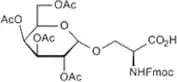
CAS:<p>2-Amino-2,3,5-trideoxy-3-methyl-L-arabinonic acid-gamma-lactone hydrochloride is a lipid biosynthesis inhibitor that blocks the first step of this pathway by inhibiting the enzyme d-arabinose 4,5-diphosphate aldolase. This compound inhibits bacterial growth and leads to cell lysis. It has been shown to be active against cryptococcus neoformans and Candida neopformans. 2AADL has also been shown to inhibit the production of cell wall polysaccharides in C. neoformans and other fungi. 2AADL is thought to bind to the cell membrane through its alcohol group, which may lead to changes in the redox potential of the cells.</p>Purity:Min. 95%2,3,4,6-Tetra-O-acetyl-a-D-galactopyranosyl-Fmoc serine
CAS:<p>2,3,4,6-Tetra-O-acetyl-a-D-galactopyranosyl-Fmoc serine is a custom synthesis that has been modified by fluorination and methylation. It is a monosaccharide with CAS No. 1351605-34-8 and Polysaccharide with Glycosylation and sugar Carbohydrate. This molecule has a complex carbohydrate structure with many glycosylation sites.</p>Formula:C32H35NO14Purity:Min. 95%Molecular weight:657.62 g/mol2-O-Methyl-D-galactopyranose
<p>2-O-Methyl-D-galactopyranose is a synthetic, fluorinated carbohydrate that is used in the synthesis of oligosaccharides and polysaccharides. This product has a CAS number of 65722-97-8 and a molecular weight of 192.17. 2-O-Methyl-D-galactopyranose has been modified with click chemistry to increase its reactivity for glycosylation reactions.</p>Formula:C7H14O6Purity:Min. 95%Molecular weight:194.18 g/molKifunensine diacetonide
CAS:<p>Kifunensine diacetonide is a modification of the natural oligosaccharide kifunensine. It is a complex carbohydrate with a high degree of purity, and is synthesized from a monosaccharide methylated and glycosylated with an oxygen-containing group. Kifunensine diacetonide has been shown to have anti-inflammatory effects in mice, which may be due to its ability to inhibit the production of prostaglandins. The molecular weight ranges from 500 to 1000 Daltons.</p>Formula:C14H20N2O6Purity:Min. 95%Color and Shape:PowderMolecular weight:312.32 g/mol(2S- trans) -4- Hydroxy- N- methyl 2- pyrrolidinecarboxami de
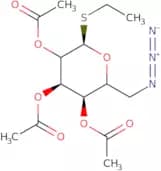
CAS:<p>(2S- trans)-4-Hydroxy-N-methyl 2-pyrrolidinecarboxamide is a modification of the sugar molecule. It is a complex carbohydrate that belongs to the group of oligosaccharides. It has CAS number 143035-54-5 and can be synthesized in high purity with a glycosylation process. This chemical can also be fluorinated and saccharide substituted to create a wide range of products with different properties.</p>Purity:Min. 95%Ethyl 2,3,4-tri-O-acetyl-6-azido-6-deoxy-a-D-thiomannopyranoside
<p>Ethyl 2,3,4-tri-O-acetyl-6-azido-6-deoxy-a-D-thiomannopyranoside is a synthetic sugar that is fluorinated with trifluoromethanesulfonic acid. It has been used in glycosylation reactions, as well as modifications of complex carbohydrates and polysaccharides. This product can be custom synthesized to meet the needs of our customers. Ethyl 2,3,4-tri-O-acetyl-6-azido-6-deoxy -a D -thiomannopyranoside is a high purity chemical with CAS number 181454.</p>Formula:C14H21N3O7SPurity:Min. 95%Molecular weight:375.4 g/mol





![1,2-Dideoxy-2'-piperidin-1-yl-a-D-glucopyranoso-[2,1-d]-2'-thiazoline](/_next/image/?url=https%3A%2Fstatic.cymitquimica.com%2Fproducts%2F3D%2Fthumb-webp%2FMD15732.webp&w=3840&q=75)