Monosaccharides
Monosaccharides are the simplest form of carbohydrates and serve as fundamental building blocks for more complex sugars and polysaccharides. These single sugar molecules play critical roles in energy metabolism, cellular communication, and structural components of cells. In this section, you will find a wide variety of monosaccharides essential for research in biochemistry, molecular biology, and glycoscience. These compounds are crucial for studying metabolic pathways, glycosylation processes, and developing therapeutic agents. At CymitQuimica, we offer high-quality monosaccharides to support your research needs, ensuring precision and reliability in your scientific investigations.
Subcategories of "Monosaccharides"
- Alloses(11 products)
- Arabinoses(21 products)
- Erythroses(11 products)
- Fructoses(9 products)
- Fucoses(36 products)
- Galactosamine(41 products)
- Galactose(260 products)
- Glucoses(365 products)
- Glucuronic Acids(51 products)
- Glyco-substrates for Enzyme(77 products)
- Guloses(6 products)
- Idoses(4 products)
- Inositols(15 products)
- Lyxoses(4 products)
- Mannoses(65 products)
- O-Glycans(48 products)
- Psicoses(3 products)
- Rhamnoses(10 products)
- Riboses(61 products)
- Sialic Acids(100 products)
- Sorboses(4 products)
- Sugars(173 products)
- Tagatoses(4 products)
- Taloses(8 products)
- Xyloses(20 products)
Show 17 more subcategories
Found 6088 products of "Monosaccharides"
Sort by
Purity (%)
0
100
|
0
|
50
|
90
|
95
|
100
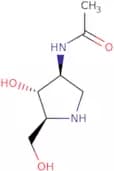
2-Acetamido-1,4-imino-1,2,4-trideoxy-L-arabinitol
CAS:<p>2-Acetamido-1,4-imino-1,2,4-trideoxy-L-arabinitol is a competitive inhibitor of the enzyme arabinitol dehydrogenase. This compound has been shown to be an enantiomer of 1,4-imino-1,2,4-trideoxyglucitol and inhibits the growth of Mycobacterium tuberculosis in vitro assays. 2AITDG also has inhibitory properties against macrophage cells and noncompetitive inhibitors against glycoprotein glycoconjugates. 2AITDG binds to endoplasmic reticulum chaperones such as BiP/Grp78 to inhibit protein folding and cellular proliferation. It may also inhibit protein synthesis by binding to ribosomes or blocking the activity of factors involved in transcription and translation.</p>Formula:C7H14N2O3Purity:Min. 95%Molecular weight:174.2 g/molD-Arabino-5-hexulosonic acid
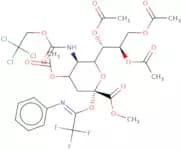
CAS:<p>D-Arabino-5-hexulosonic acid is an intermediate in the pentose phosphate pathway. It is a component of the hexuronate, which is an important precursor for galactitol, 6-phosphate, and acid dehydrogenase. D-Arabino-5-hexulosonic acid is also an important intermediate in the glycolytic pathway for ATP production. The gene product has been shown to be involved in aerobic glycolysis, which is utilized by Staphylococcus aureus to produce energy from glucose fermentation. D-Arabino-5-hexulosonic acid plays a role in ion exchange and mitochondrial metabolism as well.</p>Formula:C6H10O7Purity:Min. 95%Molecular weight:194.14 g/mol4,7,8,9-Tetra-O-acetyl-5-(2,2,2-trichloroethoxycarbonylamino)-2-(N-phenyltrifluoroacetimidate)-D-neuraminic acid methyl ester
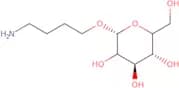
CAS:<p>4,7,8,9-Tetra-O-acetyl-5-(2,2,2-trichloroethoxycarbonylamino)-2-(N-phenyltrifluoroacetimidate)-D-neuraminic acid methyl ester is a custom synthesis of an oligosaccharide modification. It has been modified by glycosylation, methylation, and fluorination. This complex carbohydrate is a polysaccharide that has a CAS number of 874904-91-3. The Carbohydrate Click Modification is used to create this product with high purity and high quality.</p>Formula:C29H32N2O14Cl3F3Purity:Min. 95%Molecular weight:795.92 g/mol4-Aminobutyl β-D-galactopyranoside
CAS:<p>4-Aminobutyl b-D-galactopyranoside is a methylated saccharide that is also a glycosylation reaction product of 4-aminobutyl b-D-galactopyranoside. It has been modified with Click chemistry and fluorinated for use in carbohydrate research, including glycoprotein synthesis, carbohydrate modification, and oligosaccharide synthesis. 4-Aminobutyl b-D-galactopyranoside has been shown to be a potent inhibitor of the enzyme aminoglycoside adenyltransferase 1 (AGT1), which is involved in the synthesis of bacterial cell wall peptidoglycan. This compound has been used as a model for glycosylation reactions as it contains both an amino and sugar moiety.</p>Formula:C10H21NO6Purity:Min. 95%Molecular weight:251.28 g/molColitose
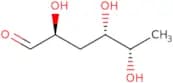
CAS:<p>Colitose is a sugar that has antimicrobial properties. It is a monosaccharide, which means it contains six carbon molecules. Colitose has been shown to inhibit bacterial growth and to prevent the development of resistant mutants in human serum. Colitose has also been shown to have therapeutic potential for infectious diseases such as bowel disease and other inflammatory bowel diseases. The structural analysis of colitose revealed that it contains terminal residues at the end of each chain, which are composed of glucose, galactose, and mannose. The glycan chains are linked together by alpha-1,6-glycosidic bonds. These terminal residues serve as a receptor for Toll-like receptors (TLRs), which are found on cells in the bowel wall and help regulate inflammation.</p>Formula:C6H12O4Purity:Min. 95%Color and Shape:PowderMolecular weight:148.16 g/mol1,2-O-Cyclohexylidene-3-O-methyl-a-D-glucofuranose
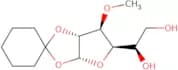
CAS:<p>1,2-O-Cyclohexylidene-3-O-methyl-a-D-glucofuranose is a synthetic cyclic oligosaccharide that can be modified with methyl groups or fluorine atoms. It is a monosaccharide that has been shown to have potential for use as a drug delivery system.</p>Formula:C13H22O6Purity:Min. 95%Molecular weight:274.31 g/mol1,2-O-Di-O-acetyl-5-O-benzoyl-3-O-methyl-D-ribofuranose
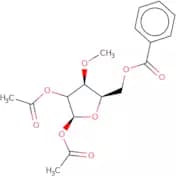
CAS:<p>1,2-O-Di-O-acetyl-5-O-benzoyl-3-O-methyl -D-ribofuranose is a custom synthesis of a fluorinated sugar. It has been modified through fluorination at the C5 position and methylation at the O1 and O2 positions. This product can be used in the synthesis of oligosaccharides and saccharides that are glycosylated with sugars.</p>Formula:C17H20O8Purity:Min. 95%Molecular weight:352.34 g/molCelecoxib carboxylic acid acyl-b-D-glucuronide
CAS:<p>Celecoxib is a nonsteroidal anti-inflammatory drug (NSAID) that has been used to treat pain and inflammation. Celecoxib carboxylic acid acyl-b-D-glucuronide is an active metabolite of celecoxib that is formed by the conjugation of celecoxib with glucuronic acid. It has been shown to inhibit the synthesis of prostaglandins, which are inflammatory mediators.</p>Formula:C23H20F3N3O10SPurity:Min. 95%Molecular weight:587.48 g/mol2-Methoxycarbonylphenyl 2-acetamido-3,4,6-tri-O-acetyl-2-deoxy-b-D-glucopyranoside
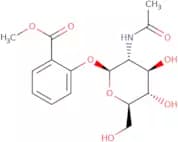
CAS:<p>2-Methoxycarbonylphenyl 2-acetamido-3,4,6-tri-O-acetyl-2-deoxy-b-D-glucopyranoside is a synthetic sugar with a fluorinated anomeric carbon. It is a saccharide with the molecular formula C14H13F3NO8. This compound can be used for the synthesis of oligosaccharides and polysaccharides. It is also useful in click chemistry and as a reagent for glycosylation reactions.</p>Formula:C16H21NO8Purity:Min. 95%Molecular weight:355.34 g/molα-D-Glucosamine 1-phosphate
CAS:<p>α-D-Glucosamine 1-phosphate is a methylated and glycosylated carbohydrate that is synthesized from glucose. It can be used as a building block for the synthesis of polysaccharides, such as chitin and cellulose. α-D-Glucosamine 1-phosphate can also be modified by fluorination to produce an active form with potent anticancer activity.</p>Formula:C6H14NO8PPurity:Min. 95%Molecular weight:259.15 g/moltrans-3'-Benzoyloxy cotinine 2,3,4-tri-O-acetyl-N-b-D-glucuronide methyl ester bromide
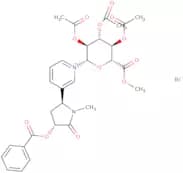
CAS:<p>Cotinine is a toxic alkaloid found in tobacco, which is used in the synthesis of a variety of drugs and other substances. Cotinine is used to prepare a range of modified and unmodified oligosaccharides, complex carbohydrates and polysaccharides. It can be synthesized by combining 3-benzoyloxy cotinine with glycosylation, methylation, or fluorination. The chemical structure of cotinine consists of a complex carbohydrate that contains an acidic sugar. Cotinine bromide can be used for the synthesis of saccharides with various chemical modifications.</p>Formula:C30H33BrN2O12Purity:Min. 95%Molecular weight:693.49 g/molBenzyl 2-acetamido-3,6-di-O-benzoyl-2,4-dideoxy-4-fluoro-a-D-glucopyranoside
CAS:<p>Benzyl 2-acetamido-3,6-di-O-benzoyl-2,4-dideoxy-4-fluoro-a-D-glucopyranoside is an oligosaccharide that possesses a complex sugar structure. It is custom synthesized in our laboratory and can be fluorinated, methylated, or modified with click chemistry. The compound is stable in water and has a high purity level.</p>Formula:C29H28FNO7Purity:Min. 95%Molecular weight:521.53 g/molD-Mannopyranose pentasulfate potassium
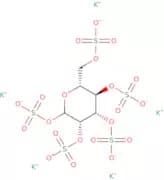
CAS:<p>D-Mannopyranose pentasulfate potassium salt is a synthetic carbohydrate with a saccharide backbone that has been fluorinated to introduce reactive sites. It is an oligosaccharide, which means it contains several sugar units linked together in a chain. This carbohydrate can be modified with methyl groups and glycosylations, and can have click modifications. This high purity product is suitable for use in a variety of applications, including as a custom synthesis or as a methylated glycosylated polysaccharide.</p>Formula:C6H12O21S5•KxPurity:Min. 95%Color and Shape:White to off-white solid.Molecular weight:770.93 g/mol1,2:5,6-Di-O-isopropylidene-3,4-di-O-benzyl-D-myo-inositol
CAS:<p>1,2:5,6-Di-O-isopropylidene-3,4-di-O-benzyl-D-myo-inositol is a synthetic compound that is used as a building block for the synthesis of oligosaccharides. It is a monosaccharide and can be methylated to form a glycosylation. 1,2:5,6-Di-O-isopropylidene-3,4-di-O-benzyl-D myo inositol can also be fluorinated to form a saccharide.</p>Formula:C26H32O6Purity:Min. 95%Molecular weight:440.53 g/mol2,3,4,6-Tetra-O-benzyl-a-D-glucopyranose
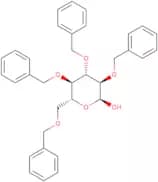
CAS:<p>2,3,4,6-Tetra-O-benzyl-a-D-glucopyranose is a synthetic derivative of galactose that can be used as a sugar donor in the synthesis of various types of glycosides. It is activated with phosphorus oxychloride and aluminium chloride to yield the corresponding anhydride. The hydroxy group on 2,3,4,6-tetra-O-benzyl-a-D-glucopyranose may be converted to an alkene by condensation with naphthalene or another electrophile. The stereoselective introduction of the hydroxy group using this method provides a valuable tool for chemists who are interested in synthesizing chiral molecules.</p>Formula:C34H36O6Purity:Min. 95%Color and Shape:White crystals.Molecular weight:540.65 g/molEthyl 3-O-benzyl-4,6-O-benzylidene-b-D-thioglucopyranoside
<p>Ethyl 3-O-benzyl-4,6-O-benzylidene-b-D-thioglucopyranoside is a custom synthesis of an oligosaccharide with a complex carbohydrate. It has been modified with methylation and glycosylation and can be used in the production of high purity saccharides. Ethyl 3-O-benzyl-4,6-O-benzylidene-b-D-thioglucopyranoside is synthesized by the fluorination of ethyl bromoacetate with sodium fluoride followed by alkylation with benzaldehyde. This product has a CAS number and can be used for food or pharmaceutical purposes.</p>Purity:Min. 95%4-Methoxyphenyl 2-O-benzoyl-3,6-di-O-benzyl-b-D-glucopyranoside
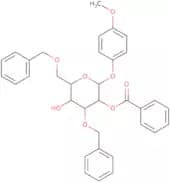
CAS:<p>4-Methoxyphenyl 2-O-benzoyl-3,6-di-O-benzyl-b-D-glucopyranoside is a mutant that has been identified in patients with cirrhosis. This variant is characterized by a transition from G to T at nucleotide position 1 of the coding region, which encodes for methionine at amino acid position 5. The mutant allele was found to be present in 53% of patients who had undergone abdominal ultrasonography and had liver cancer. In laboratory tests, this mutant demonstrated increased sensitivity to azide and an increased susceptibility to hepatoma. This variant has also been shown to be associated with an increased risk of developing cancer.</p>Formula:C34H34O8Purity:Min. 95%Molecular weight:570.63 g/molMethyl 6-O-trityl-a-D-galactopyranoside
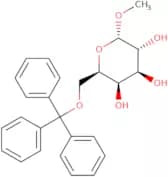
CAS:<p>Methyl 6-O-trityl-a-D-galactopyranoside is a custom synthesis, Click modification, and Oligosaccharide. It is a polysaccharide that consists of monosaccharides linked together with glycosidic bonds. This substance can be modified by fluorination and has a high purity. Methyl 6-O-trityl-a-D-galactopyranoside has CAS No. 35920-83-3 and is available in the form of white crystals.</p>Formula:C26H28O6Purity:Min. 95%Molecular weight:436.51 g/mol1,2,5-Tri-O-acetyl-3-deoxy-D-ribofuranose
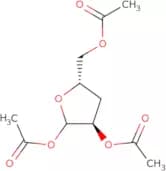
CAS:<p>1,2,5-Tri-O-acetyl-3-deoxy-D-ribofuranose is a modification of the sugar 3-deoxyribofuranose. It is a white to off-white powder that is soluble in water and methanol. 1,2,5-Tri-O-acetyl-3-deoxyribofuranose has been shown to be an inhibitor of bacterial growth in vitro as well as antiulcerogenic and cytotoxic. The compound also inhibits the growth of cancer cells and has been shown to inhibit the production of inflammatory cytokines such as tumor necrosis factor alpha and interleukin 1 beta.</p>Formula:C11H16O7Purity:Min. 95%Molecular weight:260.24 g/mol1,2:5,6-Di-O-isopropylidene-D-glucofuranosulose enolacetate
<p>1,2:5,6-Di-O-isopropylidene-D-glucofuranosulose enolacetate is a synthetic sugar that is used as a click modification to carbohydrates. It has been shown to have activity against methicillin resistant Staphylococcus aureus (MRSA) and Mycobacterium tuberculosis. This compound has been synthesized for the first time in 2018 by using a new approach of glycosylation. In this process, 1,2:5,6-Di-O-isopropylidene-D-glucofuranosulose enolacetate is modified with methyl groups at the C1 position and then fluorinated. The final product was obtained by reacting this sugar with glycine ethyl ester hydrochloride in the presence of sodium azide in refluxing ethanol.</p>Purity:Min. 95%