Monosaccharides
Monosaccharides are the simplest form of carbohydrates and serve as fundamental building blocks for more complex sugars and polysaccharides. These single sugar molecules play critical roles in energy metabolism, cellular communication, and structural components of cells. In this section, you will find a wide variety of monosaccharides essential for research in biochemistry, molecular biology, and glycoscience. These compounds are crucial for studying metabolic pathways, glycosylation processes, and developing therapeutic agents. At CymitQuimica, we offer high-quality monosaccharides to support your research needs, ensuring precision and reliability in your scientific investigations.
Subcategories of "Monosaccharides"
- Alloses(11 products)
- Arabinoses(21 products)
- Erythroses(11 products)
- Fructoses(9 products)
- Fucoses(36 products)
- Galactosamine(41 products)
- Galactose(261 products)
- Glucoses(365 products)
- Glucuronic Acids(51 products)
- Glyco-substrates for Enzyme(77 products)
- Guloses(6 products)
- Idoses(4 products)
- Inositols(15 products)
- Lyxoses(4 products)
- Mannoses(65 products)
- O-Glycans(48 products)
- Psicoses(3 products)
- Rhamnoses(10 products)
- Riboses(61 products)
- Sialic Acids(100 products)
- Sorboses(4 products)
- Sugars(173 products)
- Tagatoses(4 products)
- Taloses(8 products)
- Xyloses(20 products)
Show 17 more subcategories
Found 6090 products of "Monosaccharides"
Sort by
Purity (%)
0
100
|
0
|
50
|
90
|
95
|
100
Acedoben-acyl-b-D-glucuronide
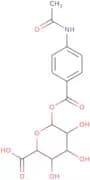
CAS:<p>Acedoben-acyl-b-D-glucuronide is a synthetic, fluorinated monosaccharide. It has been synthesized by glycosylation of the trichloroacetimidate with D-glucuronic acid and acetic anhydride. Acedoben-acyl-b-D-glucuronide is a glycoconjugate that has been modified by methylation, which stabilizes the carbohydrate moiety in the presence of metal ions. This product is also available in oligo and polysaccharide forms.</p>Formula:C15H17NO9Purity:Min. 95%Molecular weight:355.3 g/mol17b-Estradiol 17-(2,3,4-tri-O-acetyl-b-D-glucuronide methyl ester)
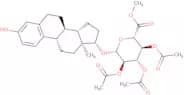
CAS:<p>17β-Estradiol 17-(2,3,4-tri-O-acetyl-b-D-glucuronide methyl ester) is a modified form of the natural estrogen estradiol. This product is a white to pale yellow powder that can be used in the synthesis of various drugs. It has been modified by glycosylation and methylation. The product is available for custom synthesis and modification.</p>Formula:C31H40O11Purity:Min. 95%Molecular weight:588.64 g/molPropargyl 2,3,4,6-tetra-O-acetyl-b-D-galactopyranoside
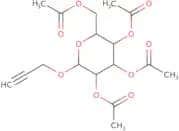
CAS:<p>Propargyl 2,3,4,6-tetra-O-acetyl-b-D-galactopyranoside is a custom synthesis of a fluorinated and methylated monosaccharide. This compound is an oligosaccharide that has been glycosylated with sugar. The CAS number for this compound is 211688-84-5.</p>Purity:Min. 95%S-Hydroxy topiramate
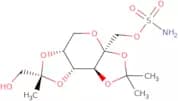
CAS:<p>S-Hydroxy topiramate is a modification of topiramate, which is a sugar. The chemical name for this compound is carbamic acid, N-[(1R,2S)-2-[[(3S)-3-methyl-4-(2,2,2-trifluoroethoxy)piperidin-1-yl]carbonyl]cyclopentyl]-3-[(phenylmethoxy)methyl]-, monosodium salt. It has the following properties: CAS No. 198215-62-2; Carbohydrate; complex carbohydrate; Custom synthesis; Oligosaccharide; High purity; Synthetic; Monosaccharide; Methylation; Glycosylation; Polysaccharide. This product can be used in the following applications: Fluorination, saccharide.</p>Formula:C12H21NO9SPurity:Min. 95%Molecular weight:355.36 g/molMethyl 4-deoxy-a-D-glucopyranoside
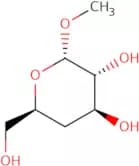
CAS:<p>Methyl 4-deoxy-a-D-glucopyranoside is a high purity synthetic sugar with the molecular formula C5H10O5. It has been custom synthesized for Click modification, fluorination, glycosylation and methylation. Methyl 4-deoxy-a-D-glucopyranoside is used in glycosylation as a monosaccharide or saccharide to form complex carbohydrates. This product can be used in the synthesis of oligosaccharides and polysaccharides.</p>Formula:C7H14O5Purity:Min. 95%Molecular weight:178.19 g/mol3,6-Di-O-tert-butyldimethylsilyl-D-glucal
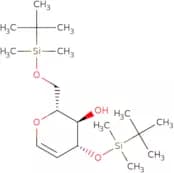
CAS:<p>3,6-Di-O-tert-butyldimethylsilyl-D-glucal is a stereoselective synthetic compound that can be used as a glycosyl donor in the synthesis of glycosides. It is an intermediate in the synthesis of uridine, which is an important component of nucleic acids. 3,6-Di-O-tert-butyldimethylsilyl-D-glucal has been shown to inhibit the action of glycogen synthase and amylo-(1→4)-α-(1→2)-glycosidases. This inhibition prevents the breakdown of glycogen, which leads to a build up of glucose in the body and produces insulin resistance.</p>Purity:Min. 95%1,2,3,4-Tetra-O-benzyl-b-D-galactopyranoside
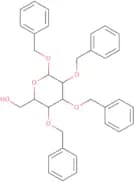
CAS:<p>1,2,3,4-Tetra-O-benzyl-b-D-galactopyranoside is a high purity oligosaccharide that can be custom synthesized. It is a complex carbohydrate that can be modified with methylation, glycosylation, and carbonylation. It has CAS No. 35017-04-0 and is a synthetic compound that can be fluorinated or click modified. This product also has high purity and is a synthetic saccharide sugar.</p>Formula:C34H36O6Purity:Min. 95%Molecular weight:540.65 g/mol4-Nitrophenyl 2-acetamido-3,6-di-O-benzoyl-2-deoxy-b-D-glucopyranoside
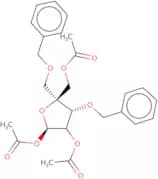
CAS:<p>4-Nitrophenyl 2-acetamido-3,6-di-O-benzoyl-2-deoxy-b-D-glucopyranoside is a synthetic saccharide that can be used in the production of complex carbohydrates. This product has been modified with fluorination, methylation, and click modification. 4NP2AG is a monosaccharide that can be synthesized by modifying acetamido group with nitrophenol (4NP). It can also be used as an Oligosaccharide or Polysaccharide.</p>Formula:C28H26N2O10Purity:Min. 95%Molecular weight:550.51 g/mol4-C-Acetoxymethyl-1,2-di-O-acetyl-3,5-di-O-benzyl-a-D-ribofuranose
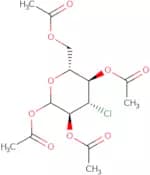
<p>4-C-Acetoxymethyl-1,2-di-O-acetyl-3,5-di-O-benzyl-a-D-ribofuranose is a custom synthesis that belongs to the class of complex carbohydrates. It is an oligosaccharide with a CAS number. This product is a modification of saccharides and has been methylated and glycosylated. This product has been fluorinated using the click chemistry reaction, which has made it more stable. 4CAMDBF is high purity and synthetic.</p>Formula:C26H30O9Purity:Min. 95%Color and Shape:Colourless syrup.Molecular weight:486.51 g/mol1,2,4,6-Tetra-O-acetyl-3-chloro-3-deoxy-D-glucopyranose
CAS:<p>1,2,4,6-Tetra-O-acetyl-3-chloro-3-deoxy-D-glucopyranose (1) is a synthetic oligosaccharide that has been modified with a fluorine atom at the 6 position of the glucose moiety. This modification has been shown to have increased stability in acidic environments. Glycosylation can be achieved by reacting 1 with an appropriate glycosylant such as bromoacetyl bromide or chloroacetyl chloride. The saccharide unit may also be methylated at the 2 and 4 positions of the glucose moiety to confer protection against enzymatic degradation. Click modification can be used to attach other molecules such as proteins or peptides to 1,2,4,6-tetra-O-acetyl-3-chloro-3-deoxy--D--glucopyranose via a covalent bond between</p>Formula:C14H19ClO9Purity:Min. 95%Molecular weight:366.75 g/mol2,3:4,5-Di-O-isopropylidene-b-D-fructopyranose-D12
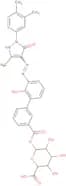
Controlled Product2,3:4,5-Di-O-isopropylidene-b-D-fructopyranose (2,3:4,5-di-OIPF) is a synthetic sugar that has been fluorinated and methylated. 2,3:4,5-Di-OIPF can be used as a building block for the synthesis of oligosaccharides or polysaccharides. It can also be modified with an acetal group to form an acetal sugar.Formula:C12H8D12O6Purity:Min. 95%Molecular weight:272.35 g/molEltrombopag Acyl Glucuronide
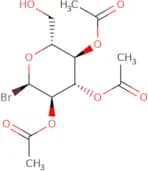
CAS:<p>Eltrombopag aryl glucuronide is a modified form of the drug eltrombopag that contains a methyl group at the 2 position and an acetyl group at the 3 position. It has been synthesized using click chemistry to modify the oligosaccharide, which is then fluorinated and reacted with an oligosaccharide-forming reagent. Eltrombopag aryl glucuronide can be used as a monosaccharide or in combination with other saccharides to form complex carbohydrates. This product is fully synthetic and is available in high purity.</p>Formula:C31H30N4O10Purity:Min. 95%Molecular weight:618.196192,3,4-Triacetate-beta- D- glucopyranosyl bromide
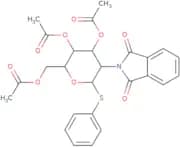
CAS:<p>2,3,4-Triacetate-beta-D-glucopyranosyl bromide is a custom synthesis of an oligosaccharide. It is a complex carbohydrate that can be modified to create a saccharide with methylation and glycosylation. This product has CAS No. 13032-61-6 and can be used in research for the modification of saccharides and carbohydrates.</p>Purity:Min. 95%Phenyl-3,4,6-tri-O-acetyl-2-deoxy-2-phthalimido-b-D-thioglucopyranoside
CAS:<p>Phenyl-3,4,6-tri-O-acetyl-2-deoxy-2-phthalimido-b-D-thioglucopyranoside is a glycosylation reagent that is used in the synthesis of complex carbohydrates. It reacts with an activated monosaccharide to form a glycosidic linkage between the sugar and the phenol group of the sugar. Phenyl 3,4,6 triacetate 2 deoxy 2 phthalimido B D thioglucopyranoside can be used for modifying polysaccharides and saccharides by fluorination or methylation. The compound has CAS No. 79528 49 7 and is available as custom synthesis. It is also available in high purity.</p>Purity:Min. 95%Benzyl 2,3-O-[(1S,2S)-1,2-dimethoxy-1,2-dimethyl-1,2-ethanediyl]-a-L-xylopyranoside
CAS:<p>Benzyl 2,3-O-[(1S,2S)-1,2-dimethoxy-1,2-dimethyl-1,2-ethanediyl]-a-L-xylopyranoside is a custom synthesis that is also a complex carbohydrate. It is an oligosaccharide and polysaccharide that has been modified by methylation and glycosylation. The product is a monomeric sugar with CAS No. 1084896-38-7. This product has high purity and fluoroination. It can be used in the synthesis of other compounds or as a sweetener for foods or beverages.</p>Formula:C18H26O7Purity:Min. 95%Molecular weight:354.39 g/mol3,4-O-Carbonyl-D-galactal
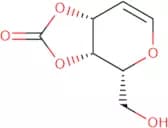
CAS:<p>3,4-O-Carbonyl-D-galactal is a custom synthesis that can be used to modify oligosaccharides, carbohydrates or complex carbohydrates. It has a high purity and is non-toxic in humans. 3,4-O-Carbonyl-D-galactal has been fluorinated and saccharide modified. This product has CAS No. 149847-26-7 and can be synthesized with methylation and glycosylation.</p>Purity:Min. 95%1,5-Anhydro-4,6-O-benzylidene-2-O-toluoyl-D-glucitol
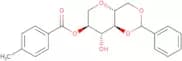
CAS:<p>1,5-Anhydro-4,6-O-benzylidene-2-O-toluoyl-D-glucitol is a methylated, saccharide that is used in the synthesis of polysaccharides. It can be modified with Click chemistry and has been shown to have high purity and good chemical stability. This product is also available as a custom synthesis.</p>Formula:C21H22O6Purity:Min. 95%Color and Shape:PowderMolecular weight:370.4 g/molN-(S-Nitroso-N-acetyl-D,L-penicillamine)-2-amino-2-deoxy-1,3,4,6-tetra-O-acetyl-b-D-glucopyranose
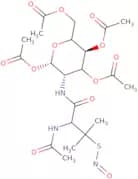
CAS:<p>N-(S-Nitroso-N-acetyl-D,L-penicillamine)-2-amino-2-deoxy-1,3,4,6-tetra-O-acetyl-b-D-glucopyranose is a synthetic saccharide that can be used for the modification of proteins and peptides. It is also used to study the glycosylation process. The CAS number for this compound is 202656–49–3.</p>Formula:C21H31N3O12SPurity:Min. 95%Molecular weight:549.55 g/mol1,3-Di-O-benzyl-4,6-O-benzylidene-2-deoxy-2-phthalimido-b-D-glucopyranoside
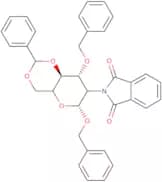
CAS:<p>1,3-Di-O-benzyl-4,6-O-benzylidene-2-deoxy-2-phthalimido-b-D-glucopyranoside is a complex carbohydrate which has been modified with methyl groups. Click chemistry is used to introduce the methyl groups at desired positions on the carbohydrate backbone. This modification can be done in a single step and does not require protecting groups for the sugar moieties. The product is a white powder that is soluble in water and ethanol. It has an elemental composition of C12H27NO9P, molecular weight of 586.5 g/mol, and CAS No. 80035-34-3. This product can be custom synthesized to order with high purity, making it ideal for use in research into glycosylation or saccharide polymerization reactions.</p>Formula:C35H31NO7Purity:Min. 95%Molecular weight:577.64 g/molFenofibryl b-D-glucuronide
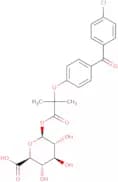
CAS:<p>Fenofibryl b-D-glucuronide is a potential anticancer drug that has been shown to inhibit growth and induce apoptosis in human liver cancer cells. Fenofibryl b-D-glucuronide is also known to have the ability to react with covalent adducts, which may be due to its reactive nature. It is not currently known how this compound interacts with other drugs or how it affects body mass index in humans.</p>Formula:C23H23ClO10Purity:Min. 95%Molecular weight:494.88 g/mol



![Benzyl 2,3-O-[(1S,2S)-1,2-dimethoxy-1,2-dimethyl-1,2-ethanediyl]-a-L-xylopyranoside](/_next/image/?url=https%3A%2Fstatic.cymitquimica.com%2Fproducts%2F3D%2Fthumb-webp%2FMB16614.webp&w=3840&q=75)