Monosaccharides
Monosaccharides are the simplest form of carbohydrates and serve as fundamental building blocks for more complex sugars and polysaccharides. These single sugar molecules play critical roles in energy metabolism, cellular communication, and structural components of cells. In this section, you will find a wide variety of monosaccharides essential for research in biochemistry, molecular biology, and glycoscience. These compounds are crucial for studying metabolic pathways, glycosylation processes, and developing therapeutic agents. At CymitQuimica, we offer high-quality monosaccharides to support your research needs, ensuring precision and reliability in your scientific investigations.
Subcategories of "Monosaccharides"
- Alloses(11 products)
- Arabinoses(21 products)
- Erythroses(11 products)
- Fructoses(9 products)
- Fucoses(36 products)
- Galactosamine(41 products)
- Galactose(261 products)
- Glucoses(365 products)
- Glucuronic Acids(51 products)
- Glyco-substrates for Enzyme(77 products)
- Guloses(6 products)
- Idoses(4 products)
- Inositols(15 products)
- Lyxoses(4 products)
- Mannoses(65 products)
- O-Glycans(48 products)
- Psicoses(3 products)
- Rhamnoses(10 products)
- Riboses(61 products)
- Sialic Acids(100 products)
- Sorboses(4 products)
- Sugars(173 products)
- Tagatoses(4 products)
- Taloses(8 products)
- Xyloses(20 products)
Show 17 more subcategories
Found 6088 products of "Monosaccharides"
Sort by
Purity (%)
0
100
|
0
|
50
|
90
|
95
|
100
3-Amino-2,3-dideoxy-D-myo-inositol
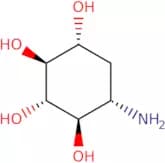
CAS:<p>3-Amino-2,3-dideoxy-D-myo-inositol (3ADMI) is a gene product that belongs to the class of chemical biology. It is an actuator that has been shown to be able to bind and activate enzymes. 3ADMI is used as a substrate in the calibration of enzyme kinetics and as an analog for aminoglycosides. The conjugates of 3ADMI have been shown to prevent viral replication by inhibiting the synthesis of DNA or RNA.</p>Formula:C6H13NO4Purity:Min. 95%Color and Shape:White/Off-White SolidMolecular weight:163.17 g/mol5-Deoxy-L-lyxono-1,4-lactone
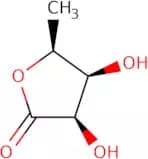
CAS:<p>5-Deoxy-L-lyxono-1,4-lactone is a crystalline solid that belongs to the class of hydroxamic acids. This compound has been shown to react with hydroxylamine in an aldonic reaction and to inhibit the enzyme xanthin oxidase. The monoclinic crystal structure of 5-Deoxy-L-lyxono-1,4-lactone was determined by XRD analysis. This compound is synthesized from glyoxylate and malonitrile in an efficient manner. It also inhibits glucose oxidation and can be used as an additive for food products.</p>Formula:C5H8O4Purity:Min. 95%Molecular weight:132.12 g/mol(R)-Ketoprofen b-D-glucuronide
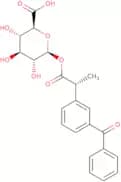
CAS:<p>(R)-Ketoprofen b-D-glucuronide is a synthetic modified sugar that is produced by the glucuronidation of ketoprofen, a nonsteroidal anti-inflammatory drug. The modification of ketoprofen with glucuronic acid can be achieved through an enzymatic process, which is catalyzed by UDP-glucuronyltransferase. This modification increases the solubility of ketoprofen and its ability to penetrate cells. (R)-Ketoprofen b-D-glucuronide has been shown to have antibacterial properties against Gram positive bacteria such as Staphylococcus aureus and Streptococcus pyogenes. It has also shown antiviral activity against HIV-1 due to its inhibition of reverse transcriptase, which is an enzyme important for viral replication.</p>Formula:C22H22O9Purity:Min. 95%Color and Shape:White to off-white solid.Molecular weight:430.4 g/molMethyl 2,3-O-isopropylidene-5-O-(4-toluenesulfonyl)-b-D-ribofuranoside
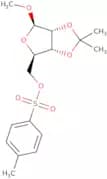
CAS:<p>Methyl 2,3-O-isopropylidene-5-O-(4-toluenesulfonyl)-b-D-ribofuranoside is a nucleoside derivative. It is a deprotected nucleoside that can be used as an alkylation agent. Methyl 2,3-O-isopropylidene-5-O-(4-toluenesulfonyl)-b-D-ribofuranoside is the sodium salt of 5'-O-(4-(methylsulfonyl)benzenesulfonate) -2'-deoxyadenosine. This compound is used in the preparation of other nucleosides, including 5'-O-(4-(methylsulfonyl)benzenesulfonate) -2'-deoxycytidine and 5'-O-(4-(methylsulfonyl)benzenesulfonate) -2'-</p>Purity:Min. 95%Myo-inositol-d6
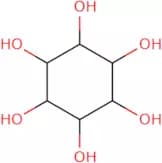
CAS:<p>Myo-inositol-d6 is a stable isotope of myo-inositol. It is used to monitor the biosynthesis of myo-inositol in yeast cells. Myo-inositol is a carbohydrate that has regulatory functions in yeast cells. Myo-inositol-d6 can be used as an extracellular bioassay for determining the uptake and intracellular distribution of myo-inositol in mammalian cells.</p>Formula:C6H12O6Purity:Min. 95%Color and Shape:PowderMolecular weight:186.19 g/mol3,4,6-Tri-O-acetyl-2-azido-2-deoxy-a-D-galactopyranosyl bromide - stabilised with 2% CaCO3
CAS:<p>3,4,6-Tri-O-acetyl-2-azido-2-deoxy-a-D-galactopyranosyl bromide - stabilised with 2% CaCO3 is a complex carbohydrate that is synthesized from 3,4,6-tri-O-acetylgalactose and 2-(bromoethyl) azide. This modification has been used to produce an oligosaccharide for use in the synthesis of glycoproteins. The modification was also used in the synthesis of a polysaccharide that is used as a reagent for the methylation of saccharides.</p>Formula:C12H16BrN3O7Purity:Min. 95%Molecular weight:394.18 g/mol1,2-Dichloro-1,2-dideoxy-myo-inositol
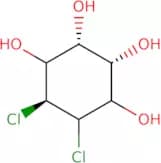
<p>1,2-Dichloro-1,2-dideoxy-myo-inositol is a methylated saccharide. It is used in the synthesis of complex carbohydrates and can be modified to include fluorine atoms. 1,2-Dichloro-1,2-dideoxy-myo-inositol has been shown to inhibit the growth of Staphylococcus aureus and Clostridium perfringens.</p>Purity:Min. 95%1,2,3,4-Tetra-O-acetyl-D-xylopyranose
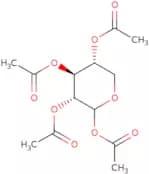
CAS:<p>1,2,3,4-Tetra-O-acetyl-D-xylopyranose is a molecule that is derived from D-xylose. It has been shown to inhibit the growth of fungi such as T. rubrum and L. candidum by acetylation of l-threonine at the C2 position. This molecule can be recycled and its inhibitory activity can be increased through acetylation of the hydroxymethyl group on the C4 position. The mechanism of inhibition is not known but it may be due to steric hindrance or peracylation.</p>Formula:C13H18O9Purity:Min. 95%Molecular weight:318.28 g/molEthyl a-D-thiomannopyranoside
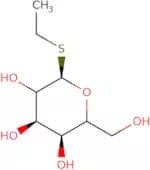
CAS:<p>Ethyl a-D-thiomannopyranoside is an oligosaccharide that is synthesized by the methylation of a-D-mannopyranoside. This product is also known as 3,6-O-(2-acetamido)-a-D-glucopyranose, which is a type of saccharide. It has been fluorinated for use in structural studies. The modification of this product includes click chemistry and glycosylation to produce a complex carbohydrate with high purity and high molecular weight. The monosaccharides include glucose, galactose, and mannose. This product has been used as a synthetic sugar to produce oligosaccharides or polysaccharides.</p>Formula:C8H16O5SPurity:Min. 95%Molecular weight:224.28 g/molD-Arabino-5-hexulosonic acid
CAS:<p>D-Arabino-5-hexulosonic acid is an intermediate in the pentose phosphate pathway. It is a component of the hexuronate, which is an important precursor for galactitol, 6-phosphate, and acid dehydrogenase. D-Arabino-5-hexulosonic acid is also an important intermediate in the glycolytic pathway for ATP production. The gene product has been shown to be involved in aerobic glycolysis, which is utilized by Staphylococcus aureus to produce energy from glucose fermentation. D-Arabino-5-hexulosonic acid plays a role in ion exchange and mitochondrial metabolism as well.</p>Formula:C6H10O7Purity:Min. 95%Molecular weight:194.14 g/mol1,2,3,4-Tetra-O-acetyl-D-fucopyranose
<p>1,2,3,4-Tetra-O-acetyl-D-fucopyranose is a glycosylation agent that can be used in the synthesis of complex carbohydrates or in the modification of natural polysaccharides. It can be fluorinated to produce 1,2,3,4-tetra-O-fluoro-D-fucopyranose or modified with a click reagent to produce 1,2,3,4-tetra-[5-(N'-diethylamino)pentyl]-D-fucopyranose. The CAS number for this product is 109712-63-7. This product is available for custom synthesis and is sold at a purity of >99%.</p>Purity:Min. 95%Clofibric acid acyl-b-D-glucuronide
CAS:<p>Clofibric acid acyl-b-D-glucuronide is a reactive chemical species that has been shown to have genotoxic effects. It binds to DNA and forms covalent adducts, leading to mutations in the DNA sequence. Clofibric acid acyl-b-D-glucuronide is a metabolite of clofibrate, which is used for the treatment of hyperlipidemia and atherosclerosis. This metabolite can be detected in human blood, serum, and liver samples by GC/MS, with a limit of detection of 0.1 ng/mL (0.0003 µg/L).</p>Formula:C16H19ClO9Purity:Min. 95%Molecular weight:390.77 g/mola-D-Xylopyranosyl azide
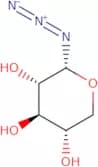
CAS:<p>a-D-Xylopyranosyl azide is a sugar that can be synthesized from the reaction of 1,2-dichloroethane with 2,3,4,6-tetra-O-acetyl-a-D-xylopyranose. This compound has a high purity and can be custom synthesized to order. It is used in glycosylation reactions to modify saccharides and oligosaccharides. It has been shown to be useful for click modification and fluorination reactions.</p>Purity:Min. 95%Mirabegron N-glucuronide
CAS:<p>Mirabegron is a drug that is used to treat overactive bladder. Mirabegron N-glucuronide is the major metabolite of mirabegron, which has been shown to be excreted in urine. This metabolite can be detected using a validated assay and can be measured using a mass spectrometer. The concentration of mirabegron N-glucuronide in the blood sample was measured at various timepoints after administration of mirabegron. Pharmacokinetic studies were performed in humans and human liver tissue, giving information on how long it takes for the drug to reach its maximum concentration in the body and how long it stays there before being eliminated.</p>Purity:Min. 95%3-Deoxy-3-fluoro-D-myo-inositol
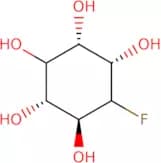
CAS:<p>3-Deoxy-3-fluoro-D-myo-inositol, also known as myo-inositol 3-O-(2'-deoxy) (dFMI), is a natural product found in the brain that has been shown to selectively inhibit the growth of trophozoites. It can bind to nonselective cations and block intracellular Ca2+ channels. This causes an increase in cytosolic Ca2+ concentration, which activates a cytosolic Ca2+ signal cascade. These effects show that dFMI is capable of inhibiting the growth of trophozoites by blocking the function of Ca2+ channels and increasing cytosolic Ca2+.</p>Formula:C6H11FO5Purity:Min. 95%Molecular weight:182.15 g/molHydroxyterbinafine b-D-glucuronide
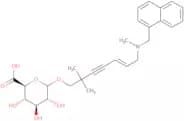
CAS:<p>Hydroxyterbinafine b-D-glucuronide is a synthetic monosaccharide that has been modified by the addition of a fluorine atom. Hydroxyterbinafine b-D-glucuronide is an oligosaccharide or polysaccharide, which is composed of at least two saccharides. It is obtained from the hydrolysis of methylated hydroxyterbinafine. This compound has been shown to have antiviral, antifungal and anticancer activities.</p>Formula:C27H33NO7Purity:Min. 95%Molecular weight:483.57 g/molAlphadolone 21-b-D-glucuronide
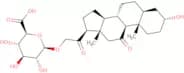
CAS:<p>Alphadolone 21-b-D-glucuronide (ADG) is a synthetic compound that belongs to the group of carbohydrates. ADG is a sugar that has been modified with fluorination and methylation. It is also glycosylated and click modified. This product is custom synthesized for research purposes only.</p>Formula:C27H40O10Purity:Min. 95%Molecular weight:524.6 g/mol2-Deoxy-2-fluoro-D-[1-13C]glucose
CAS:<p>2-Deoxy-2-fluoro-D-[1-13C]glucose is a pharmacopoeia that is used in the diagnosis of thyroid gland, myocardial ischemia and malignant tumors. It is also used for the study of glucose metabolism in the thyroid gland, cerebral cortex and myocardium. 2-Deoxy-2-fluoro-D-[1-13C]glucose binds to pyranose sugars and has been shown to be an effective agent in the treatment of malignant tumors. This drug has also been shown to inhibit glucose metabolism in the thyroid gland, cerebral cortex and myocardium.</p>Formula:C6H11FO5Purity:Min. 95%Molecular weight:183.14 g/mol3-Deoxy-3-fluoro-D-fructose
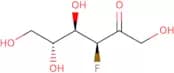
CAS:<p>3-Deoxy-3-fluoro-D-fructose is a monosaccharide that has been used as an inhibitor of glucose uptake and metabolism in the lymphocytic leukemia cell line. This compound has been shown to inhibit the glucose transporter GLUT1, which is responsible for the transport of glucose across the plasma membrane. 3-Deoxy-3-fluoro-D-fructose inhibits cancer cells by inhibiting galactitol production through inhibition of gluconeogenesis. It also inhibits oxidative phosphorylation in lymphocytic leukemia cells, leading to apoptosis. 3-Deoxy-3-fluoro-D-fructose has been shown to inhibit cancer growth by blocking glucose uptake in xenopus oocytes.</p>Purity:Min. 95%Psicose diacetonide
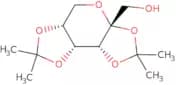
CAS:<p>Psicose diacetonide is a synthetic, custom-synthesized carbohydrate. It is a complex carbohydrate that is made of saccharides and has been modified to have a fluorinated monosaccharide. Psicose diacetonide is an oligosaccharide with a high purity and has been methylated and glycosylated.</p>Purity:Min. 95%




![2-Deoxy-2-fluoro-D-[1-13C]glucose](/_next/image/?url=https%3A%2Fstatic.cymitquimica.com%2Fproducts%2F3D%2Fthumb-webp%2FMD45025.webp&w=3840&q=75)