Monosaccharides
Monosaccharides are the simplest form of carbohydrates and serve as fundamental building blocks for more complex sugars and polysaccharides. These single sugar molecules play critical roles in energy metabolism, cellular communication, and structural components of cells. In this section, you will find a wide variety of monosaccharides essential for research in biochemistry, molecular biology, and glycoscience. These compounds are crucial for studying metabolic pathways, glycosylation processes, and developing therapeutic agents. At CymitQuimica, we offer high-quality monosaccharides to support your research needs, ensuring precision and reliability in your scientific investigations.
Subcategories of "Monosaccharides"
- Alloses(11 products)
- Arabinoses(21 products)
- Erythroses(11 products)
- Fructoses(9 products)
- Fucoses(36 products)
- Galactosamine(41 products)
- Galactose(261 products)
- Glucoses(365 products)
- Glucuronic Acids(51 products)
- Glyco-substrates for Enzyme(77 products)
- Guloses(6 products)
- Idoses(4 products)
- Inositols(15 products)
- Lyxoses(4 products)
- Mannoses(65 products)
- O-Glycans(48 products)
- Psicoses(3 products)
- Rhamnoses(10 products)
- Riboses(61 products)
- Sialic Acids(100 products)
- Sorboses(4 products)
- Sugars(173 products)
- Tagatoses(4 products)
- Taloses(8 products)
- Xyloses(20 products)
Show 17 more subcategories
Found 6088 products of "Monosaccharides"
Sort by
Purity (%)
0
100
|
0
|
50
|
90
|
95
|
100
Corchoionoside C
CAS:<p>Corchoionoside C is a natural compound classified as an iridoid glycoside. This compound is isolated from various plant species, particularly those within the Boraginaceae family. The mode of action of Corchoionoside C involves modulation of biological pathways, likely through its interaction with cellular enzymes and receptors, contributing to its potential therapeutic effects.</p>Purity:Min. 98%Onitin 2'-O-glucoside
CAS:<p>Onitin 2'-O-glucoside is a sugar that is custom synthesized and purified. It is a modification of oligosaccharides, complex carbohydrates, and polysaccharides. Onitin 2'-O-glucoside is an Oligosaccharide Carbohydrate which can be used in the synthesis of high purity monosaccharides and methylations. It also has the ability to form glycosylation with saccharides, such as glucose or fructose. This product can also be fluorinated to produce saccharides that are water soluble.</p>Purity:Min. 95%1,2,3-Tri-O-methyl-D-glucopyranoside
CAS:<p>1,2,3-Tri-O-methyl-D-glucopyranoside is a custom synthesis and modification of the natural product 1,2,3-tri-O-methyl-D-mannopyranoside. The compound was synthesized by fluorination of the 3' hydroxyl group followed by methylation of the 2', 3' hydroxyl groups to form a triol. This sugar was then glycosylated with D-glucose to produce an oligosaccharide. 1,2,3 - Tri -O - methyl - D - glucopyranoside is a natural product that can be found in plants such as barley and wheat. It has been shown to have antiinflammatory properties.</p>Formula:C9H18O6Purity:Min. 95%Molecular weight:222.24 g/molBacillithiol trifluoroacetic acid salt
CAS:<p>Bacillithiol (BSH) is a low molecular weight thiol molecule produced in Bacilli, which is also found in Firmicutes bacteria. It plays an important role in maintaining the balance of reactive oxygen species within cells and detoxifying certain harmful compounds. It is the α-anomeric glycoside of L-cysteinyl-D-glucosamine with L-malic acid and it seems to have antioxidant properties. Bacillithiol plays an important role in bacterial redox homeostasis and plays an important role in the detoxification of electrophiles as it is a cofactor for FosB (thiol transferase). <br>This is the salt form (trifluoroacetic acid salt, TFA) of Bacillithiol.</p>Formula:C13H22N2O10S·CF3CO2HPurity:Min. 95 Area-%Color and Shape:Colorless Clear LiquidMolecular weight:512.41 g/mol2,5-Dideoxy-2,5-imino-D-glucitol
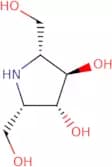
CAS:<p>2,5-Dideoxy-2,5-imino-D-glucitol is a potent inhibitor of glycosidases. It has been shown to have significant antifungal activity against Candida albicans in the caco-2 cell model system. 2,5-Dideoxy-2,5-imino-D-glucitol inhibits β-(1→3)-glycosidase activity by binding to the active site of the enzyme and preventing substrate hydrolysis. The compound is also an enantiopure and asymmetric synthesis. This drug has been shown to be a model system for studying glycosidase inhibition.</p>Formula:C6H13NO4Purity:Min. 95%Molecular weight:163.17 g/molBenzyl 2,3-O-isopropylidene-α-D-mannofuranoside
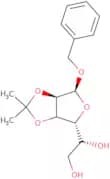
CAS:<p>Benzyl 2,3-O-isopropylidene-a-D-mannofuranoside is a fluorinated monosaccharide that is synthesized using glycosylation and polysaccharide modification. This product has a CAS number of 20689-03-6 and can be used for complex carbohydrate synthesis. It has been shown to have high purity.</p>Formula:C16H22O6Purity:Min. 95%Color and Shape:PowderMolecular weight:310.34 g/mol4-C-[[(Methylsulfonyl)oxy]methyl]-3-O-benzyl-1,2-di-O-acetyl 5-methanesulfonate D-erythro-pentofuranose
CAS:<p>Methyl 4-C-[[(methylsulfonyl)oxy]methyl]-3-O-benzyl-1,2-di-O-acetyl 5-methanesulfonate D-erythro-pentofuranose is a methylated saccharide used in the synthesis of LNA amidites</p>Formula:C19H26O12S2Purity:Min. 95%Color and Shape:PowderMolecular weight:510.53 g/molD-Sedoheptulose
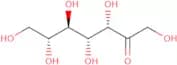
CAS:<p>D-Sedoheptulose is a sugar that is a member of the pentoses. It has been shown to have a ph optimum of 4.5 and oxidizing potential of -0.18 V. It is also an important intermediate in carbohydrate metabolism and can be used as an energy source by cells. D-Sedoheptulose plays a role in transcriptional regulation and cellular physiology, as well as being involved in the production of acyl chains and disulfide bonds for proteins. D-Sedoheptulose has also been found to have synergic effects with other sugars such as glucose, sucrose, or fructose, which may be due to its ability to act as an inducer of reductive enzymes such as glucose-6-phosphate dehydrogenase (G6PD).</p>Formula:C7H14O7Purity:Min. 95%Color and Shape:PowderMolecular weight:210.18 g/molD-Arabinose-5-phosphate
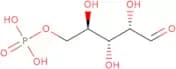
CAS:<p>D-Arabinose-5-phosphate is an intermediate in the pentose phosphate pathway. It is synthesized from D-xylulose-5-phosphate by xylitol dehydrogenase. D-Arabinose-5-phosphate inhibits the enzyme xylitol dehydrogenase, which converts xylulose to d-xylulose, and thus prevents the formation of 5-hydroxyisoxazole phosphate, a precursor to the synthesis of NADPH. In this way, it blocks the synthesis of NADPH, which is essential for aerobic metabolism. This inhibition leads to a decrease in ATP production and consequently cell death.</p>Formula:C5H11O8PPurity:Min. 95%Molecular weight:230.11 g/mol1,6-Di-O-galloyl-b-D-glucopyranose
CAS:<p>1,6-Di-O-galloyl-β-D-glucopyranose is a plant active compound that has been shown to have insecticidal and antifungal properties. It is also an inhibitor of serine proteases. 1,6-Di-O-galloyl-β-D-glucopyranose may be used to control the spread of human immunodeficiency virus (HIV) in humans. In an in vitro study, 1,6-di galloyl β-D glucopyranose was found to inhibit HIV by binding to the viral envelope gp120 protein and preventing it from attaching to CD4 receptor sites on T cells. This inhibition prevents the virus from entering the cell and infecting it. 1,6 - di - O - galloyl - β - D - glucopyranose also inhibits HIV by blocking its entry into the host cell through interaction with gp41 protein on the</p>Formula:C20H20O5Purity:Min. 95%Molecular weight:340.37 g/mol2-Acetamido-2-deoxy-D-glucopyranosyl serine
CAS:<p>2-Acetamido-2-deoxy-D-glucopyranosyl serine is a compound that belongs to the class of coumarins and monosaccharides. It contains a nitro group and a heterocycle, making it a unique and versatile molecule. This compound has been studied for its various properties, including its interaction with liver microsomes and its ability to undergo crystallization. Additionally, 2-Acetamido-2-deoxy-D-glucopyranosyl serine has shown promising effects on TGF-beta activation and has been found to inhibit aldehyde formation in trichloroacetic acid solutions. This compound also exhibits interactions with other molecules such as pyrazine, ofloxacin, and famotidine. Its diverse characteristics make it an intriguing compound for further research and potential applications in various fields.</p>Formula:C11H20N2O8Purity:Min. 95%Color and Shape:White PowderMolecular weight:308.29 g/mol3-Acetamido-3,6-dideoxy-D-galactose
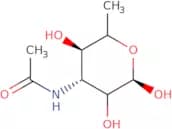
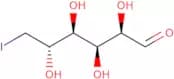
CAS:<p>3-Acetamido-3,6-dideoxy-D-galactose is a monosaccharide with two functional groups. It has been shown to be bifunctional and can act as a glycosyl donor or acceptor. 3-Acetamido-3,6-dideoxy-D-galactose was isolated from the type strain of Streptomyces venezuelae. It is also found in fatty acids and some strains of bacteria, such as Bacillus megaterium. The biological properties of 3-acetamido--3,6-dideoxy--D--galactose have been studied using monoclonal antibodies, magnetic resonance spectroscopy (MRS), and 13C nuclear magnetic resonance spectroscopy (NMR).</p>Formula:C8H15NO5Purity:Min. 95%Color and Shape:PowderMolecular weight:205.21 g/mol6-Deoxy-6-iodo-D-glucose
CAS:<p>6-Deoxy-6-iodo-D-glucose is a glucose analog that can be used as a bypassed substrate for the study of d-glucose metabolism in diabetic patients. 6-Deoxy-6-iodo-D-glucose has been shown to be an acceptable substrate for animal cells and can be used for the study of glucose uptake in the pancreas. This analog does not require insulin for uptake, which may help to elucidate the role of insulin resistance in diabetes. The use of 6-deoxy-6-[18F]fluoroethyl D-[1,2]-glucose ([18F]FDG) as an optical imaging agent has also been studied.</p>Formula:C6H11IO5Purity:Min. 95 Area-%Color and Shape:PowderMolecular weight:290.05 g/mola-D-Glucoheptonic acid calcium salt hydrate
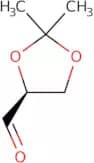
CAS:<p>a-D-Glucoheptonic acid calcium salt hydrate is a modification of a glycosylation reaction that is typically used in the synthesis of oligosaccharides. The modification is called Click chemistry, and it occurs through a copper-catalyzed reaction between an azide and an alkyne. This type of modification can be used to produce complex carbohydrates by linking together different monosaccharides or polysaccharides. It is also used for the production of high-purity monosaccharides and polysaccharides with custom syntheses. The methylation, glycosylation, fluorination, and saccharide modifications are all variations on this process.</p>Formula:C14H26CaO16·xH2OColor and Shape:White PowderMolecular weight:490.42 g/mol2,3-O-Isopropylidene-L-glyceraldehyde - 50% DCM solution
CAS:<p>2,3-O-Isopropylidene-L-glyceraldehyde (2,3-OIPA) is a synthetic compound that was developed as an alternative to paraformaldehyde for the synthesis of enantiopure compounds. It has been used in metathesis reactions and catalysed the conversion of β-unsaturated ketones to enantiopure products. 2,3-OIPA also has significant cytotoxic activity against a range of human cancer cell lines. This compound can be used in asymmetric syntheses to produce chiral molecules with a high degree of optical purity.</p>Formula:C6H10O3Purity:Min. 95%Color and Shape:Colorless PowderMolecular weight:130.14 g/mol2,3,4,6-Tetra-O-benzyl-5-thio-D-glucono-1,5-lactone
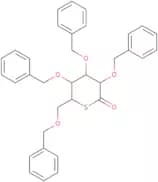
CAS:<p>2,3,4,6-Tetra-O-benzyl-5-thio-D-glucono-1,5-lactone is a complex carbohydrate that can be modified with methylation and glycosylation. It is a saccharide that can be modified by fluorination and click modification. This compound is synthesized by the polymerization of allose in the presence of an enzyme to produce 2,3,4,6-tetra-O-(benzyloxymethyl)-5-thio--D--glucono--1,5--lactone.</p>Formula:C34H34O5SPurity:Min. 95%Molecular weight:554.7 g/molOctanoyl b-D-glucosylamine
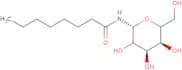
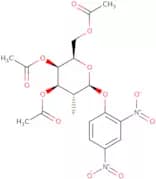
CAS:<p>Octanoyl b-D-glucosylamine is a synthetic compound that has been designed for use in the synthesis of complex carbohydrates. It is an octanoyl derivative of D-glucosamine, which is a sugar. This compound can be used for the modification of saccharides and polysaccharides, as well as sugars. It has been shown to be resistant to glycosylation and fluorination reactions.</p>Formula:C14H27NO6Purity:Min. 95%Molecular weight:305.37 g/mol2,4-Dinitrophenyl 3,4,6-tri-O-acetyl-2-deoxy-2-fluoro-b-D-galactoside
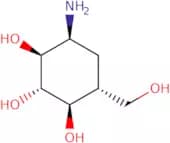
CAS:<p>2,4-Dinitrophenyl 3,4,6-tri-O-acetyl-2-deoxy-2-fluoro-b-D-galactoside is a glycosidase inhibitor that is used in the validation of β-glucosidases. It has been shown to inhibit the activity of a number of glycosidases, including α-, β-, and γ-. 2,4-Dinitrophenyl 3,4,6-tri-O-acetyl -2 -deoxy -2 -fluoro -b D galactoside inhibits the hydrolysis of oligosaccharides containing a terminal α-- or β--glucose moiety to produce smaller sugars. This compound can be used as an acceptor for spectrophotometric assays and as an analytical standard for measuring the degree of polymerization (DP) of oligosaccharides. The rate of its reaction with gly</p>Formula:C18H19FN2O12Purity:Min. 95%Color and Shape:PowderMolecular weight:474.35 g/molValidamine
CAS:<p>Inhibitor of alpha-glucosidase</p>Formula:C7H15NO4Purity:Min. 95%Color and Shape:PowderMolecular weight:177.2 g/molN-(Formylamidino)-N-b-D-ribofuranosylurea
CAS:<p>Please enquire for more information about N-(Formylamidino)-N-b-D-ribofuranosylurea including the price, delivery time and more detailed product information at the technical inquiry form on this page</p>Formula:C8H14N4O6Purity:Min. 95%Molecular weight:262.22 g/mol


![4-C-[[(Methylsulfonyl)oxy]methyl]-3-O-benzyl-1,2-di-O-acetyl 5-methanesulfonate D-erythro-pentofur…](/_next/image/?url=https%3A%2Fstatic.cymitquimica.com%2Fproducts%2F3D%2Fthumb-webp%2FMM76880.webp&w=3840&q=75)