Monosaccharides
Subcategories of "Monosaccharides"
- Alloses(11 products)
- Arabinoses(21 products)
- Erythroses(11 products)
- Fructoses(9 products)
- Fucoses(36 products)
- Galactosamine(41 products)
- Galactose(261 products)
- Glucoses(365 products)
- Glucuronic Acids(52 products)
- Glyco-substrates for Enzyme(78 products)
- Guloses(6 products)
- Idoses(4 products)
- Inositols(15 products)
- Lyxoses(4 products)
- Mannoses(65 products)
- O-Glycans(48 products)
- Psicoses(3 products)
- Rhamnoses(10 products)
- Riboses(61 products)
- Sialic Acids(100 products)
- Sorboses(4 products)
- Sugars(173 products)
- Tagatoses(4 products)
- Taloses(8 products)
- Xyloses(20 products)
Found 6088 products of "Monosaccharides"
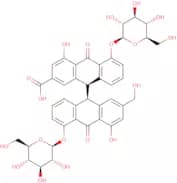
Sennoside C
CAS:Sennoside C is a bioactive phytochemical extracted from the leaves of Eclipta prostrata. It has been shown to have anti-tumor and anti-inflammatory properties. Sennoside C has also been found to be effective in treating autoimmune diseases, including psoriasis and rheumatoid arthritis. Sennoside C is a low-energy compound that binds with fatty acids to form a bound form. This bound form can be hydrolyzed by sodium hydroxide solution to release free sennosides, which are anthraquinone glycosides that can be used for the treatment of skin conditions such as eczema and dermatitis.
Formula:C42H40O19Purity:Min. 95%Color and Shape:SolidMolecular weight:848.76 g/molRef: 3D-MS74107
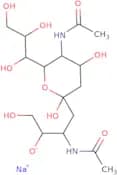
Discontinued product3'-a-Sialyl-N-acetyllactosamine sodium salt
CAS:3'-a-Sialyl-N-acetyllactosamine sodium salt is a high purity, custom synthesis sugar. It has been modified with fluorination, glycosylation, and methylation to provide the desired properties. This product is also available in other forms such as monosaccharide and saccharide. 3'-a-Sialyl-N-acetyllactosamine sodium salt can be used in various applications including Click modification, fluoroamination, glycosylation, carbonylation and methylation. CAS No. 350697-53-9
Formula:C25H42N2O19NaPurity:Min. 95%Molecular weight:697.59 g/molRef: 3D-MS182937
Discontinued productEthyl 2,3-di-O-(4-methoxybenzyl)-4,6-O-(4-methoxybenzylidene)-b-D-thiogalactopyranoside
Ethyl 2,3-di-O-(4-methoxybenzyl)-4,6-O-(4-methoxybenzylidene)-b-D-thiogalactopyranoside is a high purity, custom synthesis sugar that can be modified with fluorination, glycosylation, and methylation. This product has CAS number 401071-27-8. Ethyl 2,3-di-O-(4-methoxybenzyl)-4,6-O-(4-methoxybenzylidene)-b-D-thiogalactopyranoside is an oligosaccharide and monosaccharide of the carbohydrate complex.
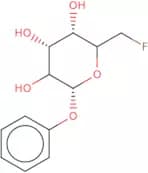
Formula:C32H38O8SPurity:Min. 95%Molecular weight:582.7 g/molPhenyl 6-deoxy-6-fluoro-a-D-glucopyranoside
Phenyl 6-deoxy-6-fluoro-a-D-glucopyranoside is a modification of the natural sugar, deoxyglucose. It is an oligosaccharide with a complex carbohydrate structure that has been modified by methylation and glycosylation. This product is synthesized from monosaccharides, and it can be fluorinated or saccharided. Phenyl 6-deoxy-6-fluoro-a-D-glucopyranoside is used in the synthesis of polysaccharides.
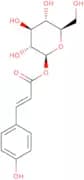
Formula:C12H15FO5Purity:Min. 95%Molecular weight:258.24 g/molp-Coumaroyl-b-D-glucose
CAS:P-Coumaroyl-b-D-glucose is a flavanone that belongs to the class of flavonoids. It is an intermediate in the synthesis of many other flavonoids, such as apigenin, labiatae, and rhamnetin. P-Coumaroyl-b-D-glucose has been shown to downregulate the expression of genes encoding proteins involved in the biosynthesis of proanthocyanidins and anthocyanins. This compound also induces apoptosis by binding to the mitochondria membrane and increasing reactive oxygen species production. P-Coumaroyl-b-D-glucose can be used as a marker for phenylpropanoid metabolism in plants.
Formula:C15H18O8Purity:Min. 95%Color and Shape:White PowderMolecular weight:326.3 g/molGlcnacβ(1-2)man-α-ethylazide
CAS:Glcnacβ(1-2)man-α-ethylazide is a modified oligosaccharide that has been synthesized from the sugar GlcNAcβ(1-2)mannose. It is a complex carbohydrate with a high purity, which can be used as a custom synthesis. The synthesis of this product involves fluorination and saccharide methylation. The CAS number for this product is 1858224-15-3.
Formula:C16H28N4O11Purity:Min. 95%Molecular weight:452.41 g/molRef: 3D-IZC22415
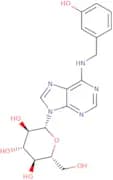
Discontinued productm-Topolin-9-glucoside
CAS:M-topolin-9-glucoside is a synthetic sugar that has been modified by the introduction of fluorine atoms at C-2, C-3, and C-4. This sugar is used to study the interactions between carbohydrates and proteins. It is also used for the synthesis of oligosaccharides as well as for glycosylation and methylation reactions. M-topolin-9-glucoside is a monosaccharide that has been glycosylated and methylated. It can be used as a replacement for glucose in some reactions due to its stability and low cost.
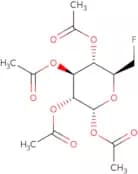
Formula:C18H21N5O6Purity:Min. 95%Color and Shape:PowderMolecular weight:403.39 g/mol1,2,3,4-Tetra-O-acetyl-6-deoxy-6-fluoro-a-D-glucopyranose
CAS:1,2,3,4-Tetra-O-acetyl-6-deoxy-6-fluoro-a-D-glucopyranose is a synthetic sugar that contains four acetyl groups and one fluorine atom. It can be used for the synthesis of oligosaccharides and glycosylations. This product is custom synthesized according to customers' requirements, with high purity and good quality.
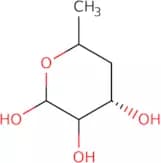
Formula:C14H19FO9Purity:Min. 95%Molecular weight:350.29 g/mol4-Deoxy-L-fucose
CAS:4-Deoxy-l-fucose is a molecule that has been found to inhibit the synthesis of gangliosides. It is an acetylated derivative of l-fucose and can be synthesized from ethyl 4-deoxy-D-glucuronate with the help of a multivorans enzyme. This molecule is metabolically unstable and reacts with oxygen to form a divalent alcohol that can be identified by magnetic resonance spectroscopy. 4-Deoxy-l-fucose inhibits the biosynthesis of gangliosides, which are important molecules in cell signaling, through its ability to inhibit enzymes such as acetyltransferase.
Formula:C6H12O4Purity:Min. 95%Color and Shape:White To Off-White SolidMolecular weight:148.16 g/molRef: 3D-MD03942
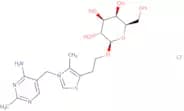
Discontinued productThiamine galactoside
CAS:Thiamine galactoside is a custom synthesis of a monosaccharide. It is modified with fluorination, methylation and saccharide. The resulting product has a molecular weight of 578.08 g/mol and the chemical formula C24H34N6O18S2.
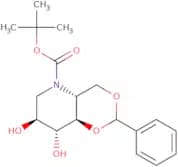
Formula:C18H27O6N4S·C2H3O2Purity:Min. 95%Molecular weight:486.54 g/mol4,6-O-Benzylidene-N-Boc-1,5-imino-D-glucitol
CAS:Methylation is a chemical reaction that transfers a methyl group to an organic molecule. It is one of the most common modifications in organic chemistry and can be used to synthesize saccharides and oligosaccharides, as well as to modify polysaccharides. This compound is a glycosylated benzylidene-N-Boc-1,5-imino-D-glucitol, which has been modified by Click chemistry. It was synthesized from 4,6-O-benzylidene-N-Boc-1,5-imino-D-mannitol with a custom synthesis protocol. The final product has high purity and is available for purchase at CAS No. 133697-16-2.
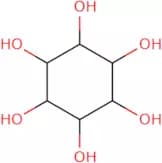
Formula:C18H25NO6Purity:Min. 95%Molecular weight:351.39 g/molMyo-inositol-d6
CAS:Myo-inositol-d6 is a stable isotope of myo-inositol. It is used to monitor the biosynthesis of myo-inositol in yeast cells. Myo-inositol is a carbohydrate that has regulatory functions in yeast cells. Myo-inositol-d6 can be used as an extracellular bioassay for determining the uptake and intracellular distribution of myo-inositol in mammalian cells.
Formula:C6H12O6Purity:Min. 95%Color and Shape:PowderMolecular weight:186.19 g/molRef: 3D-TCA92244
Discontinued productAllyl 4,6-O-benzylidene-b-L-glucopyranoside
Allyl 4,6-O-benzylidene-b-L-glucopyranoside is a carbohydrate that is synthesized from allyl alcohol and glucose. It is a complex carbohydrate made up of two different saccharides. This product can be custom synthesized to meet your needs. Allyl 4,6-O-benzylidene-b-L-glucopyranoside has been modified by fluorination, methylation and glycosylation. It has the CAS number 133394-02-0 and can be synthesized at high purity levels.
Formula:C16H20O6Purity:Min. 95%Molecular weight:308.33 g/molRef: 3D-MA45752
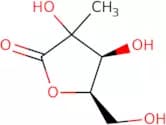
Discontinued product2-C-Methyl-D-arabono-1,4-lactone
CAS:2-C-Methyl-D-arabono-1,4-lactone is a synthetic sugar that can be custom synthesized to order. This product is fluorinated and methylated, which allows for the modification of any desired position. The product is also an oligosaccharide with a high purity and can be modified using click chemistry. 2-C-Methyl-D-arabono-1,4-lactone can be used as a sugar in glycosylation reactions or as a polysaccharide in complex carbohydrate synthesis.
Formula:C6H10O5Purity:Min. 95%Molecular weight:162.14 g/molRef: 3D-MM10516
Discontinued productD-Glucose (5-13C)
CAS:D-Glucose (5-13C) is a modification of glucose. It is an oligosaccharide that is used in the synthesis of complex carbohydrates. D-Glucose (5-13C) has been modified by methylation and glycosylation to produce monosaccharides and polysaccharides. This sugar can be fluorinated, which makes it useful for saccharide studies.
Formula:C6H12O6Purity:Min. 95%Molecular weight:181.15 g/molRef: 3D-VEA38824
Discontinued productD-Allose-1,2,3,4,5,6-13C6
CAS:D-Allose is a sugar that is modified with a fluorine atom at position 6. This modification can be used to trace the origin of D-allose in complex carbohydrates such as glycogen and glycosylated proteins. The addition of a 13C6 atom allows for the identification of this sugar through mass spectrometry and nuclear magnetic resonance (NMR) analysis.
Formula:C6H12O6Purity:Min. 95%Color and Shape:White PowderMolecular weight:186.06 g/molDaunorubicin
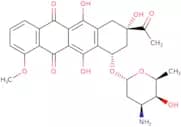
CAS:Anthracycline antibiotic with potent anti-tumoral activity. The compound interferes with DNA replication and RNA transcription since it intercalates between the base pairs of nucleic acids. It also inhibits the topoisomerase II, proteasome and generates free radicals, which leads to cell death of treated cells. Moreover, daunorubicin triggers apoptosis trough the stimulation of ceramide synthesis. It has been used as chemotherapy agent for the treatment of myeloid leukaemia (AML) and acute lymphocytic leukaemia (ALL).
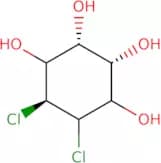
Formula:C27H29NO10Purity:Min. 95%Molecular weight:527.52 g/mol1,2-Dichloro-1,2-dideoxy-myo-inositol
1,2-Dichloro-1,2-dideoxy-myo-inositol is a methylated saccharide. It is used in the synthesis of complex carbohydrates and can be modified to include fluorine atoms. 1,2-Dichloro-1,2-dideoxy-myo-inositol has been shown to inhibit the growth of Staphylococcus aureus and Clostridium perfringens.
Purity:Min. 95%Ref: 3D-MD08932
Discontinued productD-Ribose-2,3,4,5-13C4
CAS:D-Ribose-2,3,4,5-13C4 is a complex carbohydrate with saccharide units. It is synthesized by the chemical modification of D-ribose. This product can be used to modify or methylate glucose and other carbohydrates. It has been shown to inhibit the formation of amyloid plaques in Alzheimer's disease, which may be due to its ability to reduce nitric oxide and reactive oxygen species levels. The purity of this product is at least 98%.
Formula:C5H10O5Purity:Min. 95%Molecular weight:154.1 g/molRef: 3D-DUA50623
Discontinued product1,2,3,5-Tetra-O-acetyl-D-ribofuranose
CAS:1,2,3,5-Tetra-O-acetyl-D-ribofuranose is a dietary supplement that can be found in the form of palladium complexes. This compound has been shown to have anti-inflammatory properties and may be effective against cancer cells. 1,2,3,5-Tetra-O-acetyl-D-ribofuranose is an acetylated pyridazine derivative with antimicrobial and antibacterial effects. It has also been shown to inhibit the synthesis of purines and pyrimidines by cleaving the 6th carbon from ribose. 1,2,3,5-Tetra-O-acetyl-D-ribofuranose is synthesized by chlorination of 2,6-, 3-, 5-, or 7-(chloropurinomethyl)pyridine with mercuric chloride or nitrosyl chloride. The cleavage products are hydroxyl group
Purity:Min. 95%