Monosaccharides
Monosaccharides are the simplest form of carbohydrates and serve as fundamental building blocks for more complex sugars and polysaccharides. These single sugar molecules play critical roles in energy metabolism, cellular communication, and structural components of cells. In this section, you will find a wide variety of monosaccharides essential for research in biochemistry, molecular biology, and glycoscience. These compounds are crucial for studying metabolic pathways, glycosylation processes, and developing therapeutic agents. At CymitQuimica, we offer high-quality monosaccharides to support your research needs, ensuring precision and reliability in your scientific investigations.
Subcategories of "Monosaccharides"
- Alloses(11 products)
- Arabinoses(21 products)
- Erythroses(11 products)
- Fructoses(9 products)
- Fucoses(36 products)
- Galactosamine(41 products)
- Galactose(261 products)
- Glucoses(365 products)
- Glucuronic Acids(51 products)
- Glyco-substrates for Enzyme(77 products)
- Guloses(6 products)
- Idoses(4 products)
- Inositols(15 products)
- Lyxoses(4 products)
- Mannoses(65 products)
- O-Glycans(48 products)
- Psicoses(3 products)
- Rhamnoses(10 products)
- Riboses(61 products)
- Sialic Acids(100 products)
- Sorboses(4 products)
- Sugars(173 products)
- Tagatoses(4 products)
- Taloses(8 products)
- Xyloses(20 products)
Show 17 more subcategories
Found 6088 products of "Monosaccharides"
Sort by
Purity (%)
0
100
|
0
|
50
|
90
|
95
|
100
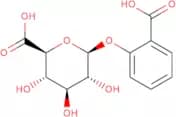
Salicylic acid D-glucuronide
CAS:<p>Salicylic acid D-glucuronide is the major metabolite of aspirin, which is formed by hydrolysis of acetylsalicylic acid. It has been demonstrated to have anti-inflammatory and analgesic effects. Salicylic acid D-glucuronide is excreted in urine and can be detected in human serum. The formation rate of this metabolite varies with the individual's age, sex, and kidney function.<br>Salicylic acid D-glucuronide can be formed in vitro using hydrochloric acid and acetylsalicylic acid as substrates. This reaction is catalyzed by the enzyme uridine diphosphate glucuronyltransferase (UGT). Salicylic acid D-glucuronide has been shown to form covalent adducts with hydroxyl groups from other molecules in vivo and in vitro, including proteins (e.g., albumin) and DNA bases (e.g.,</p>Formula:C13H14O9Purity:Min. 95%Color and Shape:PowderMolecular weight:314.24 g/mol1,2:3,5-Di-O-Isopropylidene-α-L-xylofuranose
CAS:<p>1,2:3,5-Di-O-Isopropylidene-a-L-xylofuranose is a fluorinated sugar that is used as a building block in the synthesis of complex carbohydrates and oligosaccharides. It has a CAS number of 131156-47-3. 1,2:3,5-Di-O-Isopropylidene-a-L-xylofuranose is an active component in the modification of saccharide and polysaccharide structures by click chemistry. It can be modified with various functional groups such as methylation or monosaccharide to produce specific compounds. This product is available for custom synthesis.</p>Formula:C11H18O5Purity:Min. 95%Color and Shape:PowderMolecular weight:230.26 g/molZiyuglycoside II
CAS:<p>Ziyuglycoside II is a steroidal alkaloid that has been shown to have anti-angiogenic properties. It is a natural compound extracted from the Chinese herb ziyuglycoside. This compound has been shown to inhibit the activation of toll-like receptor 4, which plays an important role in inflammation and immunity. Ziyuglycoside II also inhibits the production of reactive oxygen species and autophagy, leading to cell death by apoptosis. This compound has been shown to be effective against bowel disease and epithelial mesenchymal transition (EMT). Ziyuglycoside II has also been shown to have matrix effects on the cells Hl-60, which are related to tumor metastasis.</p>Formula:C35H56O8Purity:Min. 95%Color and Shape:White To Off-White SolidMolecular weight:604.81 g/mol6-O-Benzyl-D-mannose
<p>6-O-Benzyl-D-mannose is a methylated monosaccharide. It is an important intermediate in the synthesis of oligosaccharides and polysaccharides. 6-O-Benzyl-D-mannose can be used for modification of saccharides, carbohydrates and sugars. This product has high purity and a custom synthesis.</p>Formula:C13H18O6Purity:Min. 95%Molecular weight:270.28 g/molL-Sorbose
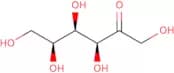
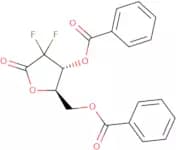
CAS:<p>Resource for the industrial synthesis of ascorbic acid alias Vitamin C</p>Formula:C6H12O6Purity:Min. 98 Area-%Color and Shape:White Off-White PowderMolecular weight:180.16 g/mol3,5-Di-O-benzoyl-2-deoxy-2,2-difluoro-D-ribonic acid-1,4-lactone
CAS:<p>3,5-Di-O-benzoyl-2-deoxy-2,2-difluoro-D-ribonic acid-1,4-lactone (3DBR) is a nucleoside that has been shown to have antiaging properties. It has been found to be an effective scavenger of peroxyl radicals and reactive oxygen species (ROS). 3DBR also inhibits the formation of aluminum oxide and styrene by catalyzing the salt formation reaction. This compound also has anti-tumour activity and can be used as a chemotherapeutic agent for the treatment of cancer. It is heat resistant and can be combined with gemcitabine hydrochloride in chemotherapy.</p>Formula:C19H14F2O6Purity:Min. 95%Color and Shape:White PowderMolecular weight:376.31 g/mol2,3-O-Isopropylidene-L-ribofuranose
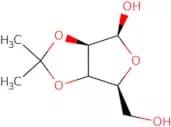
CAS:<p>2,3-O-Isopropylidene-L-ribofuranose is a chiral building block for the synthesis of α-amino acids. This compound can be obtained from l-arabinose and l-rhamnose by kinetic resolution reactions with reagents such as (R)-1,2,3,4,5,6-hexahydrobenzo[b]thiophene or (S)-1,2,3,4,5,6-hexahydrobenzo[b]thiophene. The product is an enantiospecifically pure mixture of 2,3-O-isopropylidene L-ribofuranose and its antipode. The use of acid catalysts such as sulfuric acid or hydrochloric acid will yield a higher yield of the desired product.</p>Formula:C8H14O5Purity:Min. 95 Area-%Color and Shape:PowderMolecular weight:190.19 g/mol6-Deoxy-L-talose
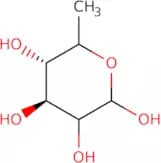
CAS:<p>6-Deoxy-L-talose is a sugar that is found in the cell walls of bacteria. It is a component of glycan, which are long chains of sugar molecules linked together. Glycans are important for the structural integrity and function of bacterial cell walls. 6-Deoxy-L-talose is a monosaccharide that has been detected in the type strain of Bacillus subtilis and in wild-type strains of Pseudomonas aeruginosa. This sugar can be chemically analyzed using gas chromatography and mass spectrometry to determine its structure and chemical composition. 6-Deoxy-L-talose can be used to detect specific monoclonal antibodies against it, which could be useful for detecting bacterial infections or determining how antibiotics affect bacteria.</p>Formula:C6H12O5Purity:Min. 98 Area-%Color and Shape:White PowderMolecular weight:164.16 g/mol2,3:4,5-Di-O-isopropylidene-D-arabitol
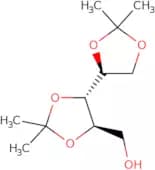
CAS:<p>2,3:4,5-Di-O-isopropylidene-D-arabitol is a synthetic sugar that is used for glycosylation, methylation, and fluorination. The compound is an oligosaccharide that has been modified with methyl groups and activated monosaccharides. 2,3:4,5-Di-O-isopropylidene-D-arabitol is white in color and has a melting point of 109°C. It can be synthesized from D-mannitol with the help of sodium methoxide in methanol.<br>2,3:4,5-Di-O-isopropylidene-D-arabitol is also known as 1-(2,3:4,5) triose; 1-(2,3:4)-diose; 1-(2,3:4)-triose; 1-(2,3:4)-</p>Formula:C11H20O5Purity:Min. 95%Color and Shape:Colorless PowderMolecular weight:232.27 g/mol4-O-Methyl-D-glucuronic acid
CAS:<p>Component of plant, especially grape, glucuronoxylans</p>Formula:C7H12O7Purity:Min. 95%Color and Shape:Colorless PowderMolecular weight:208.17 g/molPhenyl 2-acetamido-3,4,6-tri-O-acetyl-2-deoxy-α-D-galactopyranoside
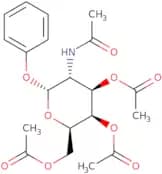
CAS:<p>Phenyl 2-acetamido-3,4,6-tri-O-acetyl-2-deoxy-a-D-galactopyranoside is a sugar that is used in the synthesis of oligosaccharides and polysaccharides. This compound has an acetamido group on the phenyl ring, which reacts with the aldehyde group of galactose to form an ether bond. The glycosylation reaction can be carried out using either an acid or base catalyst. Acetal formation is also possible when this compound reacts with alcohols. Phenyl 2-acetamido-3,4,6-tri-O-acetyl-2-deoxygalactopyranoside is soluble in water and other polar solvents. It has a CAS number of 130894350 and can be found under the name Oligosaccharide, Monosaccharide, saccharide, Carbohydrate</p>Formula:C20H25NO9Purity:Min. 95%Color and Shape:White to off-white solid.Molecular weight:423.41 g/molD-Ribose-1-phosphate bis(cyclohexylammonium)
CAS:<p>D-Ribose-1-phosphate bis(cyclohexylammonium) salt is a custom synthesis of D-ribose. It is a monosaccharide that has been fluorinated, methylated, and glycosylated. The chemical modification of the sugar allows for it to have properties such as high purity and custom synthesis. This product can be used in a number of applications including complex carbohydrate, glycosylation, Methylation, and click modification.</p>Formula:C5H11O8P•(C6H13N)2Purity:Min. 97 Area-%Color and Shape:PowderMolecular weight:428.46 g/molD-ido-Heptono-1,4-lactone
<p>D-ido-Heptono-1,4-lactone is a glycosylation product of heptose with d-ido-D-glucofuranose and is a synthetic sugar. It has an Oligosaccharide, sugar, Synthetic, Fluorination, Custom synthesis, Methylation, Monosaccharide, Polysaccharide, saccharide Click modification. It has CAS No., Modification.</p>Purity:Min. 95%Methyl 2,3:4,6-di-O-isopropylidene-D-mannopyranoside
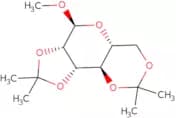
CAS:<p>Methyl 2,3:4,6-di-O-isopropylidene-D-mannopyranoside is a synthetic glycosylate sugar that has been modified with fluorination. It is a monosaccharide that is used in the synthesis of complex carbohydrates. Click modification of this molecule has been performed to yield high purity and desired modifications. CAS number 50705-56-1.</p>Formula:C13H22O6Purity:Min. 95%Color and Shape:PowderMolecular weight:274.31 g/mol6-Deoxy-D-lactose
CAS:<p>6-Deoxy-D-lactose is a custom synthesized, complex carbohydrate that is an Oligosaccharide. It is a polysaccharide with a CAS number of 52689-62-0. 6-Deoxy-D-lactose has been modified by methylation and glycosylation and can be used as a Modification of saccharides. 6-Deoxy-D-lactose has been fluorinated and it can be synthesized by Click modification of sugar or high purity. 6-Deoxy-D-lactose is a white, crystalline powder that is soluble in water, ethanol, and acetone.br><br>6 Deoxy Lactose (6DL) is an oligosaccharide that consists of one glucose molecule linked to one galactose molecule via alpha 1-->4 glycosidic linkage. The chemical formula for 6DL is C 12 H 22 O 11 . 6DL</p>Formula:C12H22O10Purity:Min. 95%Color and Shape:Off-White PowderMolecular weight:326.3 g/molPropofol-4-Hydroxy-4-D-glucuronide
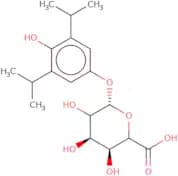
<p>Propofol-4-Hydroxy-4-D-glucuronide is a fluorinated monosaccharide that has been synthesized using the glycosylation, polysaccharide and modification methods. This compound is a custom synthesis that has been modified with methylation and click chemistry. The CAS number for this product is 54910-87-6. This product is a complex carbohydrate with high purity.</p>Formula:C18H26O8Purity:Min. 95%Molecular weight:370.39 g/molLosartan N2-glucuronide
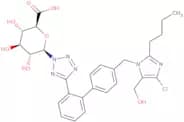
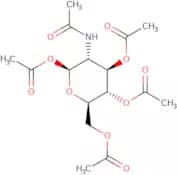
CAS:<p>Losartan N2-glucuronide is a custom synthesis that has been modified by fluorination, methylation, and monosaccharide modification. It is synthesized with click chemistry to create an oligosaccharide. This product is synthesized from saccharides (carbohydrates) and polysaccharides. Losartan glucuronide is a complex carbohydrate that has been glycosylated and sugar modified for high purity.</p>Formula:C28H31ClN6O7Purity:Min. 95%Color and Shape:White To Off-White SolidMolecular weight:599.03 g/mol2-Acetamido-1,3,4,6-tetra-O-acetyl-2-deoxy-b-D-glucopyranose
CAS:<p>Promotes hyaluronic acid production; synthetic building block</p>Formula:C16H23NO10Purity:Min. 98 Area-%Color and Shape:PowderMolecular weight:389.36 g/molN-Ethyldeoxynojirimycin hydrochloride
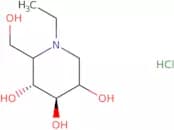
CAS:<p>N-Ethyldeoxynojirimycin hydrochloride is a mutant of the natural compound, deoxynojirimycin. The chemical structure of this compound is similar to that of the natural product and its molecular weight is 547.7 g/mol. N-Ethyldeoxynojirimycin hydrochloride has been shown to interact with the bacterial chaperone GroEL and enhance the activity of this protein. Further study has shown that this agent binds to GroEL in a manner that allows it to bind directly to ATPase domains I and II, leading to an increase in ATPase activity.</p>Formula:C8H17NO4·HClPurity:(%) Min. 95%Color and Shape:White Off-White PowderMolecular weight:227.69 g/molD-Glucose - monohydrate
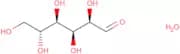
CAS:<p>D-Glucose - monohydrate is a glucose molecule that is found in the blood stream. It is the preferred source of energy for the brain and has been shown to enhance brain function. Glucose is also used to maintain the water balance of cells and tissues, as well as to prevent or treat hypoglycemia. This molecule can be found in many foods, such as honey, corn syrup, molasses, fruits and fruit juices. D-Glucose - monohydrate has antibacterial efficacy against a number of bacteria including staphylococcus aureus, Escherichia coli, Pseudomonas aeruginosa and Bacillus subtilis. It can also inhibit squamous cell carcinoma growth in vivo by preventing the proliferation of cancer cells. D-Glucose - monohydrate is structurally similar to adenosine diphosphate (ADP), which binds to dinucleotide phosphate (DP) enzymes that are involved in energy metabolism</p>Formula:C6H12O6·H2OPurity:(%) Min. 95%Color and Shape:White PowderMolecular weight:198.17 g/mol