Monosaccharides
Monosaccharides are the simplest form of carbohydrates and serve as fundamental building blocks for more complex sugars and polysaccharides. These single sugar molecules play critical roles in energy metabolism, cellular communication, and structural components of cells. In this section, you will find a wide variety of monosaccharides essential for research in biochemistry, molecular biology, and glycoscience. These compounds are crucial for studying metabolic pathways, glycosylation processes, and developing therapeutic agents. At CymitQuimica, we offer high-quality monosaccharides to support your research needs, ensuring precision and reliability in your scientific investigations.
Subcategories of "Monosaccharides"
- Alloses(11 products)
- Arabinoses(21 products)
- Erythroses(11 products)
- Fructoses(9 products)
- Fucoses(36 products)
- Galactosamine(41 products)
- Galactose(261 products)
- Glucoses(365 products)
- Glucuronic Acids(51 products)
- Glyco-substrates for Enzyme(77 products)
- Guloses(6 products)
- Idoses(4 products)
- Inositols(15 products)
- Lyxoses(4 products)
- Mannoses(65 products)
- O-Glycans(48 products)
- Psicoses(3 products)
- Rhamnoses(10 products)
- Riboses(61 products)
- Sialic Acids(100 products)
- Sorboses(4 products)
- Sugars(173 products)
- Tagatoses(4 products)
- Taloses(8 products)
- Xyloses(20 products)
Show 17 more subcategories
Found 6088 products of "Monosaccharides"
Sort by
Purity (%)
0
100
|
0
|
50
|
90
|
95
|
100
Methyl (E)-2-(a-D-ribosfuranosyl)acrylate
<p>Methyl (E)-2-(a-D-ribosfuranosyl)acrylate is a synthetic monomer that undergoes glycosylation to form a complex carbohydrate. It is used in the synthesis of saccharides and oligosaccharides, as well as the modification of proteins and nucleic acids. This product is highly pure with low impurity levels.</p>Purity:Min. 95%2,3,4-Tri-O-benzyl-L-fucopyranose
CAS:<p>2,3,4-Tri-O-benzyl-L-fucopyranose is a synthetic compound that activates the selectin receptor on the surface of white blood cells. It has been shown to activate the cell surface receptors for the lectin mannose and mannose-binding protein which are involved in the recognition of pathogens. 2,3,4-Tri-O-benzyl-L-fucopyranose is also able to inhibit magnesium ion binding to its target site on the bacterial surface. This inhibition prevents bacteria from attaching themselves to host tissues or other cells by binding with these sites. The compound was synthesized by a stereoselective method using silver trifluoromethanesulfonate as an activating reagent and can be used as an antimicrobial agent in mammals.</p>Formula:C27H30O5Purity:Min. 95%Color and Shape:White PowderMolecular weight:434.52 g/mol3,4,6-Tri-O-acetyl-2-deoxy-2-phthalimido-D-glucopyranose
CAS:<p>3,4,6-Tri-O-acetyl-2-deoxy-2-phthalimido-D-glucopyranose is a modified sugar that belongs to the group of carbohydrates. It is a monosaccharide that has been synthesized by the modification of 2,3,4,6-tetraacetyl glucose with 3,4,6-trihydroxybenzaldehyde. The compound is an off white powder and can be used in glycosylation reactions. This product has been shown to have high purity and can be custom synthesized to meet your needs.</p>Formula:C20H21NO10Purity:Min. 95%Molecular weight:435.38 g/mol1,2:5,6-Di-O-isopropylidene-α-D-gulofuranose
CAS:<p>1,2:5,6-Di-O-isopropylidene-alpha-D-gulofuranose is a sugar molecule that has a carbon and oxygen atoms in the 1,2 positions and an oxygen atom in the 5,6 position. It is an intermediate in the synthesis of lipids. The kinetic and clinical relevance of this compound have not been fully studied. 1,2:5,6-Di-O-isopropylidene-alpha-D-gulofuranose binds to fatty acid receptors on liver cells and initiates a cascade of events that lead to inflammation and cell death. This sugar molecule also inhibits hepatitis C virus RNA replication by binding to specific sequences on the virus’s RNA genome. The molecular interactions between 1,2:5,6-Di-O-isopropylidene alpha D gulofuranose and other molecules are determined by steric interactions with its hydroxyl group as</p>Formula:C12H20O6Purity:Min. 98.0 Area-%Molecular weight:260.28 g/molAllyl b-D-glucopyranoside
CAS:<p>Allyl b-D-glucopyranoside is a sweet and stable sugar that is used in the production of food and pharmaceutical products. It is sourced from corn starch or rice starch. Allyl b-D-glucopyranoside has been shown to be more efficient than chloride when added to tandospirone citrate, a herbal medicine, for the prevention of gastric ulcers. This sugar has also been used in clinical use as an additive in medicines such as alginic acid.</p>Formula:C9H16O6Purity:Min. 98 Area-%Color and Shape:White Off-White PowderMolecular weight:220.22 g/molTetra- O- benzoyl- b- D- xylofuranose
CAS:<p>Tetra-O-benzoyl-b-D-xylofuranose is a custom synthesis. It is an oligosaccharide with a saccharide chain of four sugar units that are linked by glycosylation. The first and third sugars have a benzoyl group, while the second and fourth sugars are xylopyranosyl residues. The molecule has been modified with fluorination, methylation, and click chemistry. Tetra-O-benzoyl-b-D-xylofuranose is soluble in water, methanol, acetone, chloroform, ethanol, ethylene glycol ethers, and acetonitrile.<br>Tetra-O-benzoyl-b-D-xylofuranose has CAS number 18530–90–0.</p>Formula:C33H26O9Purity:Min. 95%Molecular weight:566.55 g/molN-Acetyl-D-galactosamine-6-O-sulphate sodium salt - 95%
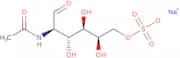
CAS:<p>N-Acetyl-D-galactosamine-6-O-sulphate sodium salt is a glycosylation product that can be used in the synthesis of oligosaccharides and saccharides. It is also used for the modification of proteins, polysaccharides, fluorination reactions, and click reactions. This compound has been synthesized from D-galactose and acetylated with sulfuric acid to form an ester. N-Acetyl-D-galactosamine-6-O-sulphate sodium salt has a molecular weight of 584.12 g/mol and a melting point of 236°C.</p>Formula:C8H14NO9SNaPurity:Min. 95 Area-%Color and Shape:PowderMolecular weight:323.25 g/molD-Galacturonic acid sodium
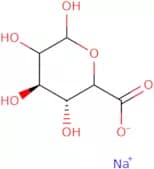
CAS:<p>D-Galacturonic acid sodium salt is a salt form of D-galacturonic acid. It is an extract from seaweed and has been shown to have the ability to be absorbed in the intestines. This compound can be used as a diagnostic tool, such as for detecting strontium or radioactive isotopes in urine samples. The esters of this compound have been shown to have chelating activity and may be useful as reagents in analytical chemistry.</p>Formula:C6H10O7•NaPurity:Min. 95%Color and Shape:PowderMolecular weight:217.13 g/mol5,6-O-Isopropylidene-L-gulono-1,4-lactone
CAS:<p>5,6-O-Isopropylidene-L-gulono-1,4-lactone is a glycerol derivative that has potent cytotoxic activity. It is able to inhibit the growth of cancer cells and induce apoptosis in human cell lines. 5,6-O-Isopropylidene-L-gulono-1,4-lactone can be used as an anti-cancer drug for the treatment of various types of cancers. The drug also has an ability to inhibit polyurethane synthesis and introduce new functional groups into polyurethanes. 5,6-O-Isopropylidene L gulono 1,4 lactone is not toxic to healthy cells because it does not bind to DNA or RNA; however it binds to polymers such as proteins and polyurethane chains. This compound has been shown to have a skeleton consisting of triterpenoid structures.</p>Formula:C9H14O6Molecular weight:218.20 g/molValibose
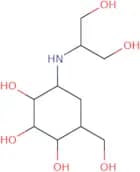
CAS:<p>Inhibitor of alpha-glucosidase</p>Formula:C10H21NO6Purity:Min. 95%Molecular weight:251.28 g/mol2-Deoxy-2-fluoro-L-fucose
CAS:<p>2-Deoxy-2-fluoro-L-fucose (2FF) is a fluorinated analogue of fucose that can be converted to GDP (Guanosine Diphosphate)-2FF in vitro, a competitive inhibitor of alpha-1,3-fucosyltransferase V. It can also be metabolised inside the cell to a substrate-based inhibitor of fucosyltransferases. 2FF reduces fucosylation of IgG in antibodies, which increases therapeutic efficacies of antibodies that cause antibody-dependent cellular cytotoxicity.</p>Formula:C6H11FO4Purity:Min. 98.0 Area-%Color and Shape:White PowderMolecular weight:166.15 g/mol1,2:5,6-Di-O-isopropylidene-a-D-gulofuranose
CAS:<p>Synthetic building block</p>Formula:C12H20O6Purity:Min. 98 Area-%Color and Shape:White PowderMolecular weight:260.28 g/mol2-Deoxy-D-glucose
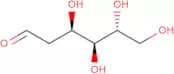
CAS:<p>Glycolytic inhibitor; pro-apoptotic; anti-cancer agent</p>Formula:C6H12O5Purity:Min. 98 Area-%Color and Shape:White Off-White PowderMolecular weight:164.16 g/molN-Amyl β-D-glucopyranoside
CAS:<p>N-Amyl b-D-glucopyranoside is a monosaccharide with a glucose residue at the 1 position and an amyl group at the 2 position. It is a synthetic sugar that can be used as a starting material in glycosylation reactions to modify oligosaccharides, saccharides, and complex carbohydrates. N-Amyl b-D-glucopyranoside can also be fluorinated, methylated, or modified by click chemistry to produce novel compounds. N-Amyl b-D-glucopyranoside is typically obtained by the glycosylation of amylamine with dibenzoyl glucose in the presence of an acid catalyst. This reaction produces a mixture of mono-, di-, tri-, tetra-, penta-, hexa-, hepta-, octa-, nona-, deca-, undeca-, dodeca-, and tetradecasaccharides, which</p>Formula:C11H22O6Purity:Min. 95%Color and Shape:White to off-white solid.Molecular weight:250.29 g/mol3,4,6-Tri-O-allyl-D-glucal
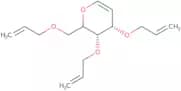
CAS:<p>3,4,6-Tri-O-allyl-D-glucal is a custom synthesis of a complex carbohydrate. It is an Oligosaccharide and Polysaccharide that can be modified by methylation and glycosylation. The product is a Modification of saccharides that has been shown to have Methylation, Glycosylation, Carbohydrate and Click modification. 3,4,6-Tri-O-allyl-D-glucal has CAS No. 434327-45-4 and is available in High purity with Fluorination.</p>Formula:C15H22O4Purity:Min. 95%Molecular weight:266.33 g/molGlycerone phosphate
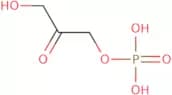
CAS:<p>Glycerone phosphate is a cytosolic calcium (Ca2+) substrate molecule that is used to measure the activity of phospholipase A2, an enzyme that catalyzes the hydrolysis of membrane lipids. Glycerone phosphate has been shown to inhibit neuronal death and may be useful in treating neurodegenerative diseases such as Alzheimer's disease. Glycerone phosphate has also been shown to bind to monoclonal antibodies, which are proteins that bind specifically to antigens on the surface of cancer cells, thereby preventing them from binding to their corresponding receptors on healthy cells. This may limit the spread of tumor growth and increase their sensitivity to platinum-based chemotherapy.</p>Formula:C3H7O6PPurity:Min. 95%Molecular weight:170.06 g/mol2,4,6-Tri-O-acetyl-3-O-benzyl-b-D-glucopyranosylamine
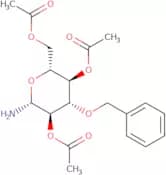
CAS:<p>Building block for 3-O-modified glucosylamide-linked glyconconjugates</p>Formula:C19H25NO8Purity:Min. 95%Color and Shape:PowderMolecular weight:395.4 g/molBenzyl α-D-glucopyranoside
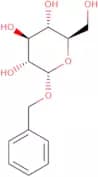
CAS:<p>Benzyl a-D-glucopyranoside is an organic compound with the chemical formula CHO. It is a benzoyl derivative of glucose, which has been shown to be useful in the synthesis of other glycosides. The reaction yield and condition are dependent on reaction temperature and yield rate. The chloride ion reacts with the benzoyl chloride to form an ester, which then hydrolyzes to produce the desired product and hydrogen chloride. The reaction can be carried out at room temperature or under reflux conditions.</p>Formula:C13H18O6Purity:Min. 95%Color and Shape:PowderMolecular weight:270.28 g/molb-D-Galactopyranosyl azide
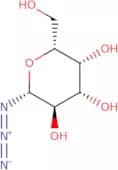
CAS:<p>b-D-Galactopyranosyl azide is a fluorescent probe that can be used to identify the presence of beta-glucosidase in muscle tissue. This compound is hydrolyzed by alpha-galactosidase and it is detectable under UV light, yielding a green fluorescence. The b-D-Galactopyranosyl azide has been shown to be able to differentiate between alpha-galactosidase and beta-glucosidase, which are both glycosidases, by measuring the rate of hydrolysis of the probe. This chemical can also be used as an indicator for detecting muscle glycogen in homogenates.</p>Formula:C6H11N3O5Purity:Min. 95%Color and Shape:PowderMolecular weight:205.17 g/molIbuprofen acyl-b-D-glucuronide
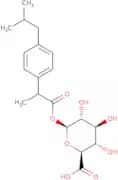
CAS:<p>Ibuprofen acyl-b-D-glucuronide is a biologically active molecule. It is metabolized in humans by first being hydrolyzed to ibuprofen and then glucuronidated. The enzyme that catalyzes this reaction is uridine 5'-diphosphate glucuronosyltransferase 1A1 (UGT1A1). Ibuprofen acyl-b-D-glucuronide has been shown to have an inhibitory effect on inflammation in vitro assays, such as the rat paw edema assay. This drug also has a reactive and chromatographic profile that allows it to be used in wastewater treatment.</p>Formula:C19H26O8Purity:Min. 95%Color and Shape:White PowderMolecular weight:382.4 g/mol