Monosaccharides
Subcategories of "Monosaccharides"
- Alloses(11 products)
- Arabinoses(21 products)
- Erythroses(11 products)
- Fructoses(9 products)
- Fucoses(36 products)
- Galactosamine(41 products)
- Galactose(261 products)
- Glucoses(365 products)
- Glucuronic Acids(52 products)
- Glyco-substrates for Enzyme(78 products)
- Guloses(6 products)
- Idoses(4 products)
- Inositols(15 products)
- Lyxoses(4 products)
- Mannoses(65 products)
- O-Glycans(48 products)
- Psicoses(3 products)
- Rhamnoses(10 products)
- Riboses(61 products)
- Sialic Acids(100 products)
- Sorboses(4 products)
- Sugars(173 products)
- Tagatoses(4 products)
- Taloses(8 products)
- Xyloses(20 products)
Found 6088 products of "Monosaccharides"
2-Acetamido-2,4-dideoxy-4-fluoro-D-glucopyranose
CAS:2-Acetamido-2,4-dideoxy-4-fluoro-D-glucopyranose (2ADFG) is a glycosaminoglycan that inhibits the biosynthesis of glycosaminoglycans by binding to the enzyme UDP-N-acetylglucosamine 2-epimerase. It is used in cellular control experiments to determine if cells are hepatocytes or not. This compound binds to glycosaminoglycans and prevents them from being synthesized, which leads to cell death. The binding of 2ADFG also results in a decrease in cellular protein synthesis and an increase in cellular lysosomal activity.Formula:C8H14FNO5Purity:Min. 95%Molecular weight:223.2 g/mol2,3,5-Tri-O-benzyl-b-D-ribofuranose
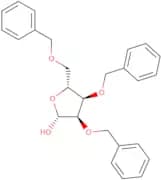
CAS:2,3,5-Tri-O-benzyl-b-D-ribofuranose is a synthetic monosaccharide that is used in the synthesis of complex carbohydrates such as glycosylation and polysaccharides. One use for this chemical is to modify the sugar moiety with methyl groups, yielding 2,3,5-tri-O-methyl b-D-ribofuranose. This modification helps prevent the sugar from being metabolized by enzymes in the body. The chemical can also be fluorinated to yield 2,3,5-trifluoro b-D-ribofuranose.
Formula:C26H28O5Purity:Min. 95%Color and Shape:White PowderMolecular weight:420.5 g/mol1,6-Anhydro-2,3,4-tri-O-benzyl-b-D-glucopyranose
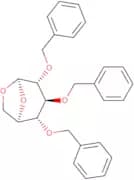
CAS:1,6-Anhydro-2,3,4-tri-O-benzyl-b-D-glucopyranose is a polymer that can be synthesized by copolymerizing the monomer with other reagents. The acetal linkage between the two glucose units allows for a cyclic structure, and this compound is soluble in water and methanol. 1,6-Anhydro-2,3,4-tri-O-benzyl-b-D-glucopyranose has been used to synthesize a variety of polymers such as polyacetals and polyesters.Formula:C27H28O5Purity:Min. 95%Color and Shape:White PowderMolecular weight:432.51 g/mol1,6-Anhydro-2-deoxy-2-iodo-β-D-glucopyranose
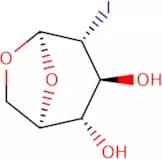
CAS:1,6-Anhydro-2-deoxy-2-iodo-b-D-glucopyranose is a sugar that has been used in the synthesis of a number of organic compounds. It is an intermolecular hydrogen bond donor, and it forms hydrogen bonds with other molecules. The molecular structure of 1,6-Anhydro-2-deoxy-2-iodo-b-D-glucopyranose consists of a six carbon chain with three hydroxyl groups and two ether groups.Formula:C6H9IO4Purity:Min. 95%Color and Shape:Off-White To Tan SolidMolecular weight:272.04 g/mol3-Deoxy-3-fluoro-D-galactose - Aqueous solution
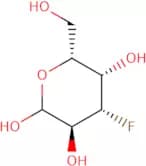
CAS:3-Deoxy-3-fluoro-D-galactose (3DFGal) is a potential drug that has been shown to shift the metabolic pathway of gram-positive pathogens from glycolysis to gluconeogenesis. This compound may be used as a tool for studying the enzymatic reaction catalyzed by galactokinase, which is involved in the conversion of 3DFGal to D-galactose. 3DFGal is a stereospecific carbohydrate and can be used as a substrate for biochemical studies. The bacterial surface profile of 3DFGal has been investigated and it has been found that 3DFGal is not significantly toxic to Gram-negative bacteria. The kinetics of 3DFGal hydrolysis have been studied and it was found that the hydrolysis rate was increased when the solution was acidified with hydrofluoric acid.Formula:C6H11FO5Purity:Min. 98 Area-%Color and Shape:PowderMolecular weight:182.15 g/molPhenyl-β-D-thioglucuronic acid
CAS:Phenyl-beta-D-thioglucuronic acid is a drug that is used to treat inflammatory diseases and autoimmune diseases. It is a basic structure that has been shown to have anti-estrogenic effects in vitro, although the mechanism of action is not well understood. Phenyl-beta-D-thioglucuronic acid can be crosslinked with proteins to form a matrix for wound healing. This drug has also been shown to be a potent inhibitor of proteases, and may inhibit other enzymes such as matrix metalloproteinases and serine proteases.
Formula:C12H14O6SMolecular weight:286.31 g/molRef: 3D-P-4300
1gTo inquire5gTo inquire10gTo inquire500mgTo inquire2500mgTo inquire-Unit-ggTo inquireD-Sorbitol hexaacetate
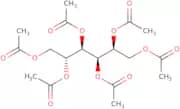
CAS:Sorbitol hexaacetate is a low-energy compound that has a hydroxyl group and a phenolic acid. It is used as an intermediate in the production of detergents, surfactants, and other industrial chemicals. In addition to this, sorbitol hexaacetate can be used as a radiation shield and an effective dose for radiation therapy. Sorbitol hexaacetate is also used as an ingredient in lipolytic enzymes. It has been shown to inhibit the activity of lipolytic enzymes by forming hydrogen bonds with the enzyme active site. Magnetic resonance spectroscopy studies have revealed that sorbitol hexaacetate has a cavity that can be filled with water molecules, which may explain its ability to act as an optical polarizer.Formula:C18H26O12Purity:Min. 97 Area-%Color and Shape:White PowderMolecular weight:434.39 g/mol1,2:5,6-Di-O-isopropylidene-a-D-ribo-hexofuranose-3-ulose monohydrate
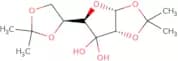
CAS:1,2:5,6-Di-O-isopropylidene-a-D-ribo-hexofuranose-3-ulose monohydrate is a fluorinated carbohydrate that has been synthesized in our lab. It is a complex carbohydrate and can be used as a building block for glycosylation. The synthesis of this compound is done through the use of click chemistry to modify the sugar. We have high purity levels for this compound and can provide custom synthesis services for your needs.Formula:C12H20O7·H2OPurity:Min. 95%Color and Shape:White PowderMolecular weight:294.3 g/mol2,3,4,6-Tetra-O-acetyl-α-D-glucopyranosyl chloride
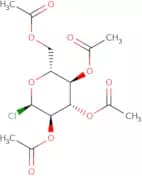
CAS:2,3,4,6-Tetra-O-acetyl-a-D-glucopyranosyl chloride (TAOC) is a nuclear magnetic resonance (NMR) probe that has been used to study the structure of nuclei. It is synthesised by reacting acetyl chloride with sucrose in a reaction catalyzed by sodium hydroxide. The compound can be detected in quadrupole and resonance spectroscopy due to its high sensitivity to nuclear magnetic resonance. This NMR probe is typically used to study the structures of nuclei or for the analysis of polysaccharides.
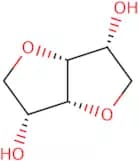
Formula:C14H19ClO9Purity:Min. 95%Color and Shape:PowderMolecular weight:366.8 g/mol1,4:3,6-Dianhydro-D-mannitol
CAS:Building block for polymers synthesis, ionic liquids and chiral auxiliaries
Formula:C6H10O4Purity:Min. 95%Color and Shape:PowderMolecular weight:146.14 g/molPeonidin-3-O-arabinoside chloride
CAS:Peonidin-3-O-arabinoside chloride is a flavonol glycoside that is found in the plant peony and inhibits lipid absorption. It has inhibitory properties on fat absorption in vitro. Peonidin-3-O-arabinoside chloride also inhibits the activity of enzymes that break down dietary fats, such as pancreatic lipase, thereby preventing fat absorption. This compound has been shown to lower serum cholesterol levels and reduce blood pressure in vivo human trials. Peonidin-3-O-arabinoside chloride is extracted from the bark of the tree species Paeonia suffruticosa and is used as an ingredient in some weight loss supplements.Formula:C21H21O10·ClPurity:Min. 95%Color and Shape:White Off-White PowderMolecular weight:468.84 g/mol4-Methoxyphenyl 3-O-benzyl-4,6-O-benzylidene-2-deoxy-2-phthalimido-β-D-glucopyranoside
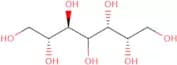
CAS:4-Methoxyphenyl 3-O-benzyl-4,6-O-benzylidene-2-deoxy-2-phthalimido-b-D-glucopyranoside is a complex carbohydrate that has been modified with methylation and glycosylation. It has been synthesized using the following reactants: 4-(methoxy)phenol, benzaldehyde, and 2,3,4,6,-tetraacetylpiperidine. This product has a CAS number of 129575–88–8 and is available for custom synthesis in quantities from 1 gram to 50 kilograms. This product is used as a custom synthesis for oligosaccharides or polysaccharides.Formula:C35H31NO8Purity:Min. 95%Molecular weight:593.62 g/molPerseitol
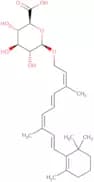
CAS:Perseitol is a nutrient solution that contains fatty acids and is used in tissue culture to supplement the growth of cells. It can be used as a substitute for animal serum, which is usually derived from bovine or porcine sources. Perseitol provides all essential components required for cell growth, including amino acids, vitamins, minerals, and lipids. Perseitol is also used in vitro assay systems to determine the redox potential of substances. This solution has been shown to have anti-inflammatory properties due to its ability to inhibit prostaglandin synthesis.Formula:C7H16O7Purity:Min. 95%Color and Shape:White Off-White PowderMolecular weight:212.2 g/molE-Retinyl b-glucuronide
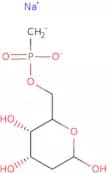
CAS:E-Retinyl b-glucuronide is a metabolite of vitamin A that is formed in the liver by glucuronidation of retinol. It has been shown to have immunomodulatory effects and can be used to activate various immune cells, such as T lymphocytes, monocytes, and natural killer cells. E-Retinyl b-glucuronide binds to cell surface antigens and induces the expression of surface markers on mononuclear cells. In vitro studies have shown that this metabolite has growth-promoting activity for certain types of cancerous cells including colon carcinoma, breast carcinoma, and thyroid carcinoma. E-Retinyl b-glucuronide is also known to inhibit the binding of 13-cis retinoic acid to its receptor, thereby preventing the activation of genes in target tissues.Formula:C26H38O7Purity:Min. 95%Molecular weight:462.58 g/mol2-Deoxy-D-glucose-6-phosphate sodium salt
CAS:Glucose 6-phosphatase substrate
Formula:C6H12NaO8PPurity:Min. 98 Area-%Color and Shape:White PowderMolecular weight:266.12 g/molUDP-a-D-xylose
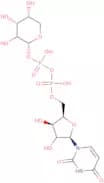
CAS:Substrate for xylosyltransferasesFormula:C14H22N2O16P2Purity:Min. 90 Area-%Color and Shape:PowderMolecular weight:536.28 g/mol1-O-Benzyl-2N, 3-O-carbonyl-α-L-sorbofuranosylamine
CAS:Apigenin is a flavone, which is a type of phenolic compound. It is one of the most widely distributed plant flavonoids found in nature. Apigenin has been shown to inhibit glucose uptake and intestinal transport in mice. Apigenin also has been shown to have anti-inflammatory properties, as well as the ability to suppress the growth of cancer cells in vitro. The expression of apigenin was observed after incubation with caco-2 cells and was upregulated when maltose was added to the media. Apigenin can be used as an additive for food products that are high in sugar content, such as cakes and cookies.Formula:C14H17NO6Purity:Min. 95%Color and Shape:Colourless LiquidMolecular weight:295.29 g/molMethyl a-D-xylopyranoside
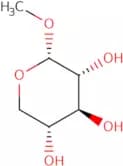
CAS:Methyl a-D-xylopyranoside is an iron chelator that can be used as a mycobacterial drug candidate. It binds to both ferric and ferrous iron, and has been shown to inhibit the uptake of ferric iron by Mycobacterium tuberculosis. It also inhibits the synthesis of siderophores, which are molecules produced by bacteria in order to acquire iron from their environment. Methyl a-D-xylopyranoside does not bind to the alpha-d-glucopyranoside moiety typically found in iron complexes. This is due to its hydroxamate group, which causes it to have an increased affinity for Fe3+. This compound is active against gram negative bacteria such as E. coli and Salmonella enterica serovar Typhimurium, but not against gram positive organisms such as Staphylococcus aureus or Streptococcus pneumoniae.Formula:C6H12O5Purity:Min. 95%Color and Shape:White Off-White PowderMolecular weight:164.16 g/mol4-Methoxyphenyl 2,3,4,6-tetra-O-acetyl-α-D-mannopyranoside
CAS:4-Methoxyphenyl 2,3,4,6-tetra-O-acetyl-a-D-mannopyranoside is an extracellular calcium modulator that can be used to treat viral infections. It binds to the viral envelope and alters the virus's ability to fuse with cells. 4MPTAA also has antiviral activity against herpes simplex virus type 1 (HSV1) and influenza A virus (IAV). The compound also has anticancer activity by blocking the growth of cancer cells. 4MPTAA can be used for the treatment of microprocessor viruses such as tenella and myxoma. This drug also has a structural analysis profile that can be accessed using a variety of methodologies, including thermodynamic profiling and coagulation profiling.Formula:C21H26O11Purity:Min. 95%Molecular weight:454.42 g/molβ,β-Trehalose
CAS:β,β-Trehalose is a carbohydrate that is synthesized by the expression of a trehalose synthase enzyme from the yeast Saccharomyces cerevisiae. β,β-Trehalose is an acidic sugar with two glucose subunits. It has been shown to have an enzymatic mechanism similar to that of glucose. β,β-Trehalose has been found to increase the solubility and stability of proteins in acidic phs (pHs) by binding to hydroxyl groups on protein surfaces. β,β-Trehalose also binds to alcohols such as ethanol and methanol, which may be due to its ability to form hydrogen bonds between oxygen atoms. This sugar also forms hexamers in solution, which may contribute to its effectiveness as a stabilizer for proteins and other molecules. The optimum ph for β,β-trehalose synthesis is around 5.5-6.0 and it can be used at higher phFormula:C12H22O11Purity:Min. 99 Area-%Color and Shape:White Off-White PowderMolecular weight:342.3 g/mol