Monosaccharides
Monosaccharides are the simplest form of carbohydrates and serve as fundamental building blocks for more complex sugars and polysaccharides. These single sugar molecules play critical roles in energy metabolism, cellular communication, and structural components of cells. In this section, you will find a wide variety of monosaccharides essential for research in biochemistry, molecular biology, and glycoscience. These compounds are crucial for studying metabolic pathways, glycosylation processes, and developing therapeutic agents. At CymitQuimica, we offer high-quality monosaccharides to support your research needs, ensuring precision and reliability in your scientific investigations.
Subcategories of "Monosaccharides"
- Alloses(11 products)
- Arabinoses(21 products)
- Erythroses(11 products)
- Fructoses(9 products)
- Fucoses(36 products)
- Galactosamine(41 products)
- Galactose(261 products)
- Glucoses(365 products)
- Glucuronic Acids(52 products)
- Glyco-substrates for Enzyme(78 products)
- Guloses(6 products)
- Idoses(4 products)
- Inositols(15 products)
- Lyxoses(4 products)
- Mannoses(65 products)
- O-Glycans(48 products)
- Psicoses(3 products)
- Rhamnoses(10 products)
- Riboses(61 products)
- Sialic Acids(100 products)
- Sorboses(4 products)
- Sugars(173 products)
- Tagatoses(4 products)
- Taloses(8 products)
- Xyloses(20 products)
Show 17 more subcategories
Found 6088 products of "Monosaccharides"
Sort by
Purity (%)
0
100
|
0
|
50
|
90
|
95
|
100
3-O-Benzyl-1,2-O-isopropylidene-a-D-xylopentodialdo-1,4-furanose
CAS:3-O-Benzyl-1,2-O-isopropylidene-a-D-xylopentodialdo-1,4-furanose is a synthetic sugar that can be used as a building block for the synthesis of glycoproteins, polysaccharides and other complex carbohydrates. It is also used for the modification of saccharide chains by methylation and fluorination. 3Bz DAPF was custom synthesized using high purity chemicals and has been shown to have an excellent level of purity.Formula:C15H18O5·xH2OPurity:Min. 95%Color and Shape:Colourless LiquidMolecular weight:278.32,3,4,6-Tetra-O-acetyl-a-D-galactopyranosyl fluoride
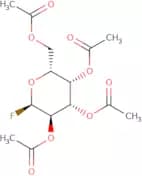
CAS:2,3,4,6-Tetra-O-acetyl-a-D-galactopyranosyl fluoride is a custom synthesis of Monosaccharide, Oligosaccharide and Polysaccharides. The product can be modified by Fluorination, Methylation and Click modification. It has CAS No. 4163-44-4. It is used as a Modification in saccharides and Carbohydrates.Formula:C14H19O9FPurity:Min. 95%Color and Shape:PowderMolecular weight:350.29 g/molMethyl 6-O-tert-butyldiphenylsilyl-2,3,4-tri-O-pivaloyl-a-D-galactopyranoside
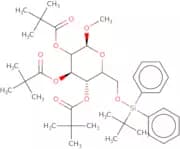
Methyl 6-O-tert-butyldiphenylsilyl-2,3,4-tri-O-pivaloyl-a-D-galactopyranoside is a high purity custom synthesis sugar. The methyl group on the sugar prevents it from being hydrolyzed by esterases and glucuronidases. This product can be used in glycosylation and sialylation reactions to create saccharides with a modified oligosaccharide. This product is synthesized in lab conditions, which includes fluorination, glycosylation, methylation, and modification steps. It has CAS number 1314897-28-5 and molecular weight of 454. Methyl 6-O-tert-butyldiphenylsilyl -2,3,4 -tri - O -pivaloyl -a - D -galactopyranoside is an oligosaccharFormula:C38H56O9SiPurity:Min. 95%Molecular weight:684.95 g/mol3,4,6-Tri-O-benzyl-b-D-galactopyranoside
3,4,6-Tri-O-benzyl-b-D-galactopyranoside is a synthetic glycosylation of a monosaccharide with a polysaccharide. This compound is modified by fluorination as well as other chemical reactions to synthesize an Oligosaccharide. The product is custom synthesized for research purposes and can be ordered in high purity, which can be verified with the CAS number.Purity:Min. 95%Ezetimibe-D-glucuronide D4
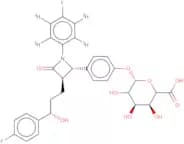
CAS:Controlled ProductEzetimibe-D-glucuronide D4 is a deuterated version of the active molecule, ezetimibe. It is a white to off-white crystalline powder with a molecular weight of 592.1 Da and an empirical formula of C31H41NO7F2·C6H8O7. It is soluble in ethanol and water, and insoluble in ether or chloroform.Formula:C30H25D4F2NO9Purity:Min. 85 Area-%Color and Shape:White Off-White PowderMolecular weight:589.57 g/mol1,2-O-Cyclohexylidene-a-D-glucofuranose
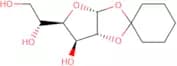
CAS:1,2-O-Cyclohexylidene-a-D-glucofuranose is a fluorinated cyclic monosaccharide. It is a synthetic oligosaccharide that belongs to the class of complex carbohydrates. This product has been modified by glycosylation, methylation, and click chemistry. The chemical name for this compound is 1,2:6,7-di-O-isopropylidene-α-D-glucofuranose. This product has not been evaluated by the U.S. Food and Drug Administration (FDA) so it should be used in laboratory research only.Formula:C12H20O6Purity:Min. 95%Color and Shape:PowderMolecular weight:260.28 g/mol1-Deoxy- 3- C- methyl- 3, 4- O-isopropylidene -D- psicofuranose
1-Deoxy-3-C-methyl-3,4-O-isopropylidene -D-psicofuranose is a synthetic monosaccharide that contains an OCH2CH2O group at the 3 position. It is also known as 3,4-dimethylpyranose. 1-Deoxy -3 C methyl -3, 4 O isopropylidene -D psicofuranose can be used for the synthesis of polysaccharides and glycosides with various sugar donors.Purity:Min. 95%2-Azido-2-deoxy-3,4:5,6-di-O-isopropylidene-L-gulonic acid methyl ester
This product is a custom synthesized and modified monosaccharide. It is an oligosaccharide, which is made up of two or more sugars that are linked together by glycosidic bonds. The sugar in this product is a glycosylation, which is a type of sugar that has been modified by adding a new chemical group to it. This modification can be done by fluorination, methylation, or click modification. This product also contains a saccharide, which is a large carbohydrate molecule that consists of many sugar molecules. This type of carbohydrate can be either polysaccharides or complex carbohydrates. This product has high purity and CAS number (CAS No.).Purity:Min. 95%2, 4- Anhydro- 6- deoxy- L- mannonic acid methyl ester
CAS:2, 4-Anhydro-6-deoxy-L-mannonic acid methyl ester is a modified oligosaccharide that is synthesized from D-mannose. This compound can be used as a building block for the synthesis of complex carbohydrates and glycosides. It can also be used for the fluorination of saccharides and glucose derivatives. 2,4-Anhydro-6-deoxy-L-mannonic acid methyl ester is an important intermediate in the production of fluoroquinolones and other pharmaceuticals. It is also a precursor to antihistamines, antiarrhythmics, antibiotics, anticancer drugs, and antimalarial drugs.Formula:C7H12O5Purity:Min. 95%Molecular weight:176.17 g/mol4-Deoxy-D-glucose
CAS:4-Deoxy-D-glucose is a neutral, odorless chemical that is used in the synthesis of glycosides. It has a hydroxy group and a methyl group attached to the 4th carbon atom. The hydroxy group on the 4th carbon atom can act as a nucleophile and react with electrophilic groups such as ketones or alcohols. This reaction mechanism leads to the formation of sugar products called methyl glycosides. There are many side effects associated with this chemical, including allergic reactions, which can be due to its structural similarity to glucose. The optimum pH for this chemical is 7.4, which makes it an acid-stable molecule. 4-Deoxy-D-glucose is found in nature and is biosynthesized by plants and animals in order to produce blood group antigens (ABO system). It also plays an important role in the ternary complex that regulates cell division in bacteria.Formula:C6H12O5Purity:Min. 98 Area-%Color and Shape:PowderMolecular weight:164.16 g/mol1,4-Dideoxy-1,4-imino-D-mannitol HCl
CAS:1,4-Dideoxy-1,4-imino-D-mannitol HCl is a custom synthesis, modification and fluorination of mannitol. This compound is synthesized by the click modification of a monosaccharide and oligosaccharide. It is a saccharide with an average molecular weight of 584.45 g/mol. 1,4-Dideoxy-1,4-imino-D-mannitol HCl has been used to study glycosylation and sugar binding in carbohydrate research. CAS No.: 114976-76-0Formula:C6H13NO4·HClPurity:Min. 95%Color and Shape:PowderMolecular weight:199.63 g/mol(2R, 3R, 4R, 5S) -3,4-Dihydroxy-2, 5- pyrrolidinedimethano l
CAS:(2R, 3R, 4R, 5S) -3,4-Dihydroxy-2, 5- pyrrolidinedimethanol is an organic compound that is a modification of the sugar erythrose. It has been synthesized from 2,3,4,5-tetrahydroxybenzaldehyde and 2-fluoro-1-(trifluoromethyl)benzene. The compound has been used for the preparation of oligosaccharides and polysaccharides. It is also used as a raw material for the synthesis of complex carbohydrate compounds and saccharide derivatives. (2R, 3R, 4R, 5S) -3,4-Dihydroxy-2, 5- pyrrolidinedimethanol is used in the production of fluorinated saccharides.Purity:Min. 95%2,4,7,8,9-Pentaacetyl-N- [(2- propyn- 1- yloxy) carbonyl] - b- neuraminic acid methyl ester
CAS:2,4,7,8,9-Pentaacetyl-N-[(2-propen-1-yloxy)carbonyl]-b-neuraminic acid methyl ester is a Glycosylation reagent that is used in the synthesis of oligosaccharide and polysaccharide. The product can be modified to produce Click modifications and complex carbohydrates. It has been shown to have high purity and can be custom synthesized.Formula:C24H31NO15Purity:Min. 95%Molecular weight:573.5 g/mol4-Formylphenyl 2-acetamido-2-deoxy-b-D-glucopyranoside
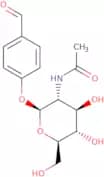
CAS:This product is a custom synthesis of a complex carbohydrate. It has the CAS number 135608-48-9, and is a fluorinated saccharide with an acetamide group in the 4-position. It is synthesized from 2,3-dihydroxybenzoic acid and methyl bromoacetate, which are reacted to form the mesylate ester. This product can be modified by methylation or glycosylation to produce desired derivatives. The purity of this compound is high, with no contaminants detected.Formula:C15H19NO7Purity:Min. 95%Color and Shape:PowderMolecular weight:325.31 g/molD-[UL-13C6]Fructose 6-phosphate disodium salt hydrate
CAS:D-[UL-13C6]Fructose 6-phosphate disodium salt hydrate is a compound that inhibits sperm motility by binding to the transmembrane proteins of the plasma membrane. This inhibition leads to an increase in spermatozoa's mitochondrial transmembrane potential, which is necessary for fertilization. D-[UL-13C6]Fructose 6-phosphate disodium salt hydrate also has been shown to significantly increase the fertility of cryopreserved semen samples and can be used as an extender for animal spermatozoa.Formula:C6H11Na2O9P•(H2O)xPurity:Min. 95 Area-%Color and Shape:PowderMolecular weight:310.1 g/mol2- C- Methyl- 3, 4- O- isopropylidene -L- arabinonic acid d- lactone
2-C-Methyl-3,4-O-isopropylidene-L-arabinonic acid d-lactone is a synthetic chemical compound that has been shown to inhibit the growth of bacteria. This compound has been shown to inhibit the growth of bacteria by inhibiting ribulose bisphosphate carboxylase activity and causing cell death. It also inhibits glycosylation reactions in bacteria. 2-C-Methyl-3,4-O-isopropylidene -L-arabinonic acid d -lactone is an oligosaccharide with a complex carbohydrate structure. It contains saccharides and monosaccharides with a methylated C2’ position on the glucose moiety. 2CMOA has a molecular weight of 516.Purity:Min. 95%3-(2,3,5-Tri-O-benzyl-1-b-D-ribofuranosyl)benzamide
CAS:3-(2,3,5-Tri-O-benzyl-1-b-D-ribofuranosyl)benzamide is a sugar derivative with the chemical formula C14H19N5O6. This compound belongs to the group of saccharides and is a synthetic glycoside. 3-(2,3,5-Tri-O-benzyl-1-b-D-ribofuranosyl)benzamide is used in the synthesis of oligosaccharides and polysaccharides for use in medical applications. It can be custom synthesized and has a purity level of >99%.Formula:C33H33NO5Purity:Min. 95%Molecular weight:523.62 g/mol5-Azido-6-benzylamino-N-fluorenylmethoxycarbonyl-5,6-dideoxy-1,2-O-isopropylidene-L-idofuranose
5-Azido-6-benzylamino-N-fluorenylmethoxycarbonyl-5,6-dideoxy-1,2-O-isopropylidene-L-idofuranose is a custom synthesis that is used in the methylation of saccharides. It is also used for Click and azide modifications as well as fluorination. 5ABAFM is soluble in methanol and DMSO and has a CAS number of 2591402.Purity:Min. 95%1-Deoxy-L-tagatose
1-Deoxy-L-tagatose is a sugar that can be used as a substrate for enzymes in the glycolysis pathway. It can also be converted to d-psicose, which has been shown to have anti-inflammatory properties and may be useful as a therapeutic agent in the treatment of asthma. 1-Deoxy-L-tagatose can be used as an equilibrating agent in reactions with different sugars such as d-fructose and L-rhamnose. 1-Deoxy-L tagatose is not an isomer of L tagatose because it has one less hydroxyl group on carbon 3 on the ring. The conversion of 1 deoxy L tagatose to d psicose, however, does require hydrolysis of the epimeric bond between C1 and C2.Purity:Min. 95%3-O-Acetyl-1,2:5,6-di-O-isopropylidene-α-D-glucofuranose
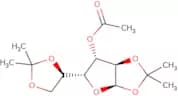
CAS:3-O-Acetyl-1,2:5,6-di-O-isopropylidene-a-D-glucofuranose is a synthetic sugar that contains an acetyl group at the C3 position and an isopropylidene group at the C6 position. It can be fluorinated at either the C3 or C6 position to produce 3-fluoro-, 3,5-, or 3,6-diacetyl derivatives. This molecule has a molecular weight of 514.2 g/mol and a melting point of 158 °C. It has been used in glycosylation reactions to prepare oligosaccharides for use as nonfouling materials and as biomaterials for drug delivery.Formula:C14H22O7Purity:Min. 95%Color and Shape:PowderMolecular weight:302.32 g/mol




![2,4,7,8,9-Pentaacetyl-N- [(2- propyn- 1- yloxy) carbonyl] - b- neuraminic acid methyl ester](/_next/image/?url=https%3A%2Fstatic.cymitquimica.com%2Fproducts%2F3D%2Fthumb-webp%2FMP168633.webp&w=3840&q=75)
![D-[UL-13C6]Fructose 6-phosphate disodium salt hydrate](/_next/image/?url=https%3A%2Fstatic.cymitquimica.com%2Fproducts%2F3D%2Fthumb-webp%2FMF167754.webp&w=3840&q=75)