Monosaccharides
Monosaccharides are the simplest form of carbohydrates and serve as fundamental building blocks for more complex sugars and polysaccharides. These single sugar molecules play critical roles in energy metabolism, cellular communication, and structural components of cells. In this section, you will find a wide variety of monosaccharides essential for research in biochemistry, molecular biology, and glycoscience. These compounds are crucial for studying metabolic pathways, glycosylation processes, and developing therapeutic agents. At CymitQuimica, we offer high-quality monosaccharides to support your research needs, ensuring precision and reliability in your scientific investigations.
Subcategories of "Monosaccharides"
- Alloses(11 products)
- Arabinoses(21 products)
- Erythroses(11 products)
- Fructoses(9 products)
- Fucoses(36 products)
- Galactosamine(41 products)
- Galactose(261 products)
- Glucoses(365 products)
- Glucuronic Acids(51 products)
- Glyco-substrates for Enzyme(77 products)
- Guloses(6 products)
- Idoses(4 products)
- Inositols(15 products)
- Lyxoses(4 products)
- Mannoses(65 products)
- O-Glycans(48 products)
- Psicoses(3 products)
- Rhamnoses(10 products)
- Riboses(61 products)
- Sialic Acids(100 products)
- Sorboses(4 products)
- Sugars(173 products)
- Tagatoses(4 products)
- Taloses(8 products)
- Xyloses(20 products)
Show 17 more subcategories
Found 6088 products of "Monosaccharides"
Sort by
Purity (%)
0
100
|
0
|
50
|
90
|
95
|
100
2-Keto-L-galactonic acid
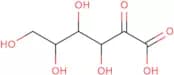
CAS:<p>2-Keto-L-galactonic acid is a chemical compound that belongs to the group of fatty acids. It is produced by the degradation of polyunsaturated fatty acids and has been shown to be a potential control agent for hepatic steatosis. 2-Keto-L-galactonic acid also inhibits the synthesis of dinucleotide phosphate in rat liver cells, leading to an accumulation of intracellular potassium ion. This compound inhibits the uptake of glucose by activating ATPase, which leads to an increase in intracellular pH. The uptake of 2-keto-L-galactonic acid into cells has been shown using cell culture experiments with wild type and mutant strains.</p>Formula:C6H10O7Purity:Min. 95%Molecular weight:194.14 g/molD-Ribulose, 0.5-1.0 mol/L aqueous solution
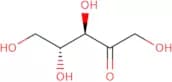
CAS:<p>D-Ribulose is a type of sugar that belongs to the carbohydrate family. It is not metabolized by humans and is used as an energy source by certain bacteria. D-Ribulose is a substrate for bacterial xylitol dehydrogenase, which produces the intermediate xylitol. This product can be used in probiotic bacteria or as an antioxidant compound in biological samples such as coli k-12. D-Ribulose also has conformational properties that are different from other sugars, which may be due to its lack of hydroxyl groups on the ring. The reaction mechanism for this product has been identified and involves hydrogen fluoride (HF) and ribitol dehydrogenase to produce ribulose and hydrogen gas.</p>Formula:C5H10O5Purity:Min. 98 Area-%Color and Shape:PowderMolecular weight:150.13 g/mol2-Deoxy-2-fluoro-D-arabinofuranose
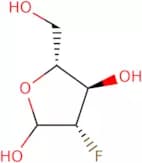
CAS:<p>2-Deoxy-2-fluoro-D-arabinofuranose is a purine nucleoside that is used in the diagnosis and treatment of herpes simplex virus infection. It inhibits viral replication by competitively inhibiting acycloguanosine, an enzyme that catalyzes the conversion of 2’-deoxyguanosine to deoxyadenosine. 2-Deoxy-2-fluoro-D-arabinofuranose has been shown to be active against cancer cells and can be used as chemotherapeutic agent. This drug may also be used for the diagnosis of cancer by detecting the presence of activated T cells in patients with tumor necrosis factor α (TNFα) receptor gene polymorphism.</p>Formula:C5H9FO4Purity:Min. 95%Color and Shape:PowderMolecular weight:152.12 g/mol2,3,4,6-Tetra-O-methyl-D-glucose
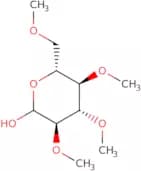
CAS:<p>methyl ether of glucose with the anomeric position free.</p>Formula:C10H20O6Purity:Min. 95%Color and Shape:PowderMolecular weight:236.26 g/mol9-(b-D-Galactopyranose)-nonanoic acid
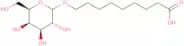
CAS:<p>9-(b-D-Galactopyranose)-nonanoic acid is a custom synthesis, modification and fluorination of a methylated monosaccharide in the form of an oligosaccharide. This synthetic compound is polysaccharide with a carbohydrate group at one end, which can be modified to be glycosylated or saccharified. It has been shown to have anti-inflammatory properties, which may be due to its ability to inhibit prostaglandin synthesis.</p>Formula:C15H28O8Purity:Min. 95%Color and Shape:SolidMolecular weight:336.38 g/mol2-Deoxy-2-fluoro-D-galactose - non-animal origin
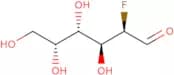
CAS:<p>2-Deoxy-2-fluoro-D-galactose, also called 3-fluoro-6-hydroxymethyl-tetrahydro-pyran-2,4,5-triol, can be added to the medium of primary cultured rat hepatocytes to inhibit N-glycosylation of proteins. Immunoglobulin G (IgG) is the most common antibody found in blood and 2-deoxy-2-fluoro-D-galactose modifies the galactosylation of the N-linked glycan in the IgG-Fc receptor. We also have the same product MD04718.</p>Formula:C6H11FO5Purity:Min. 97 Area-%Color and Shape:White Off-White PowderMolecular weight:182.15 g/molEthyl 2,3,4-tri-O-benzyl-b-L-thiofucopyranoside
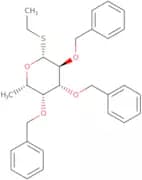
CAS:<p>Synthetic building block. Glycosyl donor used in oligosaccharide chemistry to incorporate L-fucose into a structure.</p>Formula:C29H34O4SPurity:Min. 98 Area-%Color and Shape:White PowderMolecular weight:478.64 g/molN-Acetyl-D-galactosamine
CAS:<p>N-Acetyl-D-galactosamine (GalNAc) is an aldohexose (2-acetamido-2-deoxygalactose) in which the hydroxyl group at position 2 is replaced by a N-Acetyl group (Collins, 2006). GalNAc forms a key part of both N- and O-linked glycoproteins, glycolipids, gangliosides, blood groups, glycosaminoglycans (chondroitin and dermatan sulfate) and human milk oligosaccharides. The number of acetylgalactosamine residues attached to the IgA O-linked glycans of Crohn'sdisease patients is significantly decreased, and strongly correlated with clinical activity. It is suggested that alterations of GalNAc attachment in IgA may be useful as a novel diagnostic and prognostic marker of Crohn's disease (Inoue, 2012).</p>Formula:C8H15NO6Purity:Min. 97 Area-%Color and Shape:White PowderMolecular weight:221.21 g/molMethyl 2-acetamido-2-deoxy-a-D-galactopyranoside
CAS:<p>Methyl 2-acetamido-2-deoxy-a-D-galactopyranoside is a metabolite of the drug 6-fluoro-3-indoxyl-beta-D-galactopyranoside. It has been shown to induce apoptosis in cells, which is mediated by the activation of caspase 3 and cleavage of poly(ADP)ribose polymerase (PARP). Methyl 2-acetamido-2-deoxy-a-D-galactopyranoside also induces transcriptional regulation and decreases the expression of proteins that are involved in cell proliferation. These effects have been seen in clinical pathology, including cancer and infectious diseases. This metabolite binds to mouse monoclonal antibodies, which are used as a diagnostic tool for several types of cancer. The electrochemical impedance spectroscopy technique has demonstrated that methyl 2 acetamido 2 deoxy a D galactopyranoside inhibits</p>Formula:C9H17NO6Purity:Min. 98 Area-%Color and Shape:White PowderMolecular weight:235.23 g/molMethyl b-D-thioglucopyranoside
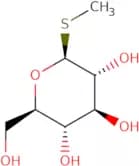
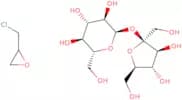
CAS:<p>Methyl b-D-thioglucopyranoside is a mucolytic that is used to treat respiratory disorders such as chronic bronchitis, asthma, and emphysema. It can be used topically or orally, and is typically taken twice a day. Methyl b-D-thioglucopyranoside works by breaking down the mucus coating in the lungs, making it easier to cough up. This drug also has viscosity-lowering properties due to its ability to break down mucus.</p>Formula:C7H14O5SPurity:Min. 95%Molecular weight:210.25 g/molPolysucrose 400
CAS:<p>Water-soluble, nontoxic, enzyme-resistant polymer for biological applications</p>Color and Shape:White PowderMolecular weight:400.02,3,5-Tri-O-benzoyl-2- C- methyl- D- arabinonic acid γ-lactone
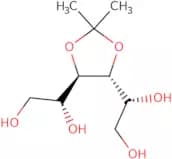
<p>2,3,5-Tri-O-benzoyl-2- C- methyl- D- arabinonic acid gamma-lactone is a modification of an oligosaccharide. It is synthesized by the benzoylation of 2,3,5-trihydroxybenzoic acid with methyl iodide and sodium carbonate in acetic acid. The product is purified by recrystallization from methanol and water to yield a white crystalline solid.<br>The chemical formula for 2,3,5-tri-O-benzoyl-2- C- methyl--D--arabinonic acid gamma lactone is C14H16O8. The molecular weight of the compound is 478.26 g/mol</p>Purity:Min. 95%3,4-O-Isopropylidene-D-mannitol
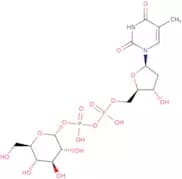
CAS:<p>3,4-O-Isopropylidene-D-mannitol (IPM) is a d-mannitol that has been synthesized by an acid-catalyzed condensation reaction. It is a highly reactive compound with acidic properties and, as such, can be used as a buffer in acid environments. The product of this synthesis was also found to have anticancer activity in vitro, which may be due to its ability to induce apoptosis and inhibit cell proliferation. IPM possesses a hydroxyl group at the 3 position of the molecule and a hydrophilic nature. This makes it suitable for surface-enhanced Raman spectroscopy (SERS) studies and other detection methods.</p>Formula:C9H18O6Purity:Min. 95%Color and Shape:White Off-White PowderMolecular weight:222.24 g/molThymidine-5'-diphosphate-D-glucose disodium salt
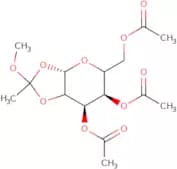
CAS:<p>Starting point for the biosynthesis of more rare sugars such as deoxysugars</p>Formula:C16H24N2O16P2Na2Purity:Min. 95%Color and Shape:White Off-White PowderMolecular weight:608.29 g/mol3,4,6-Tri-O-acetyl-b-D-mannopyranose 1,2-(methyl orthoacetate)
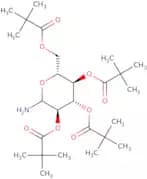
CAS:<p>3,4,6-Tri-O-acetyl-b-D-mannopyranose 1,2-(methyl orthoacetate) is a glycosylation product that is used in the synthesis of oligosaccharides. 3,4,6-Tri-O-acetyl-b-D-mannopyranose 1,2-(methyl orthoacetate) is synthesized by the reaction of 3,4,6-triacetyl b D mannopyranose with methyl orthoacetate in aqueous solution containing an acid catalyst. This compound can be used to modify saccharides and complex carbohydrates. It is also used in click chemistry to create modified sugars. The molecular weight of this compound ranges from 200 to 600 grams per mole and it has a CAS number of 4435 05 6.</p>Formula:C15H22O10Purity:Min. 95%Color and Shape:PowderMolecular weight:362.33 g/mol2,3,4,6-Tetra-O-pivaloyl-D-glucopyranosyl amine
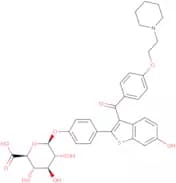
CAS:<p>2,3,4,6-Tetra-O-pivaloyl-D-glucopyranosyl amine is a monosaccharide that is custom synthesized and modified with fluorination. It also has saccharide properties such as methylation and glycosylation. This product can be used in the synthesis of complex carbohydrates or polysaccharides. It is a high purity compound with CAS No. 888963-33-5.</p>Formula:C26H45NO9Purity:Min. 95%Molecular weight:515.64 g/molRaloxifene 4'-D-glucuronide
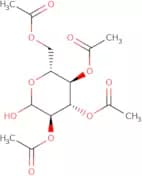
CAS:<p>Raloxifene 4'-D-glucuronide is a drug that is a prodrug of raloxifene, and it can be used to treat osteoporosis. The compound is metabolized by glucuronidation in the liver, and it has been found to have bioequivalence with the parent drug. Raloxifene 4'-D-glucuronide is marketed under the trade name Evista.</p>Formula:C34H35NO10SPurity:Min. 95%Color and Shape:PowderMolecular weight:649.71 g/mol2,3,4,6-Tetra-O-acetyl-D-glucopyranose
CAS:<p>2,3,4,6-Tetra-O-acetyl-D-glucopyranose is a carbohydrate that is used in the synthesis of besifloxacin. This compound has been studied as an analog for many other natural compounds and its derivatives have shown to be effective against bacteria such as Staphylococcus aureus and Clostridium perfringens. The acetyl groups on this molecule allow it to be easily converted into other compounds with desired properties. This compound has been found to be acidic and can be used as a medicinal preparation or analytical chemistry reagent. The hydroxyl group on the 2 carbon atom allows the molecule to form glycoside derivatives. The halides on this molecule are also important for making new molecules by replacing one of the hydrogen atoms with another halogen atom. The phenylpropanoid glycosides are found in plants and may contain an enantiomeric form of 2,3,4</p>Formula:C14H20O10Purity:Min. 95%Color and Shape:White PowderMolecular weight:348.3 g/molGlucotropaeolin potassium
CAS:<p>Glucotropaeolin potassium is a dietary compound that is found in plants. It contains the flavonoids progoitrin, glucosinolates, and isothiocyanates. Glucotropaeolin potassium can be extracted from plant tissue using a stable isotope to increase the quantity of extract. This extract can then be analyzed by high-performance liquid chromatography (HPLC) and colorimetric methods for its content of glucoraphanin and gluconapin. The profile of this extract can also be determined using silver ions.</p>Formula:C14H18NO9S2·KPurity:Min. 98 Area-%Color and Shape:PowderMolecular weight:447.52 g/mol2,3,4,6-Tetra-O-benzyl-a-D-glucopyranosyl fluoride
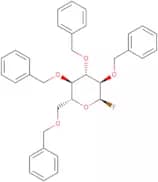
CAS:<p>2,3,4,6-Tetra-O-benzyl-a-D-glucopyranosyl fluoride is a modification of a carbohydrate. It is a complex carbohydrate that has the CAS No. 89025-46-7 and is custom synthesized. The product contains an oligosaccharide and high purity that are synthetic and monosaccharides that are methylated, glycosylated, and polysaccharides that are sugars with fluorination. The product also contains saccharides with glycosylation and polysaccharide sugar units.</p>Formula:C34H35FO5Purity:Min. 95%Color and Shape:White To Off-White SolidMolecular weight:542.64 g/mol